

Choosing the Right Food Service Carts for LA Restaurants
Food service carts are some of the hardest working, most overlooked pieces of gear in any commercial kitchen. They’re the mobile workhorses that handle the heavy lifting, moving everything from raw ingredients to fully plated meals. The right restaurant equipment like this is essential for boosting your efficiency, smoothing out your workflow, and keeping everyone safe when things get hectic. Their impact is felt everywhere, from the back of house to the dining room floor, especially in the dynamic Los Angeles food scene.
Why the Right Cart Is a Game Changer for Your LA Eatery
In the crowded and competitive Los Angeles food scene, every second and every square foot of space matters. That’s why good food service carts aren't just metal on wheels—they're a key part of your operational strategy. A well-chosen cart can tighten up your whole process, take the physical strain off your staff, and ultimately help create a better experience for your customers.
Picture a packed Koreatown BBQ spot during the dinner rush. Instead of a server running back and forth to clear a big table, a single utility cart lets one person do the job in one trip. That simple change frees up your team to take more orders and check on guests, which means turning tables faster and bringing in more revenue.
Boosting Kitchen and Service Workflow
This advantage reaches deep into the kitchen, too. Think about a high-end Japanese restaurant in Downtown LA. A mobile prep station brings ingredients straight from the commercial refrigerator to the sushi bar, keeping fish perfectly chilled and everything organized. It cuts down on wasted steps, reduces clutter, and makes it easier to maintain the strict food safety standards for raw fish.
You can see this playing out all across LA's diverse food landscape:
- Mexican Restaurants & Food Trucks: A cart can hold hot fillings, salsas, and packaging, creating a quick assembly line to serve the lunch rush in Santa Monica even faster. It's the backbone of a successful Los Angeles food truck operation.
- Thai Restaurants: In a busy kitchen, a cart is perfect for wheeling big batches of prepped veggies from the prep area to the cook line, keeping the workflow seamless.
- Chinese Dim Sum Service: The classic dim sum cart is the perfect example of bringing the menu right to the customer, showing off the food and making service incredibly efficient.
- Korean BBQ Joints: Utility carts are essential for transporting banchan, raw meats, and clearing grills, making the interactive dining experience smooth and efficient.
For any Los Angeles restaurant, from a huge catering operation to a tiny food truck, the right cart is a silent partner. It connects the back of house to the front, making sure food gets from your commercial freezers and ovens to the customer's table safely and smoothly.
At the end of the day, buying the right food service carts is an investment in how your business runs. It’s a practical move that pays you back with faster service, better organization, and a safer workplace for your crew. This guide is here to help LA's amazing food businesses find the cart that works just as hard as they do.
Matching Cart Types to Your Culinary Concept
Let's get specific. Thinking about a cart as just a tray on wheels is like calling a chef’s knife a simple blade—it completely misses the point. Each type of food service cart is engineered to solve a real-world problem in the fast-paced Los Angeles food scene, from keeping food hot for hours to creating extra prep space out of thin air.
The trick is to match the cart’s function directly to what your kitchen actually does day in and day out. A cart that’s a lifesaver for a big catering kitchen in Beverly Hills could be a total nightmare for a tiny Los Angeles food truck in the Arts District. Getting to know the core categories is the first step toward making a smart investment in your operation.
This diagram shows just how different the environments are where these carts need to perform.
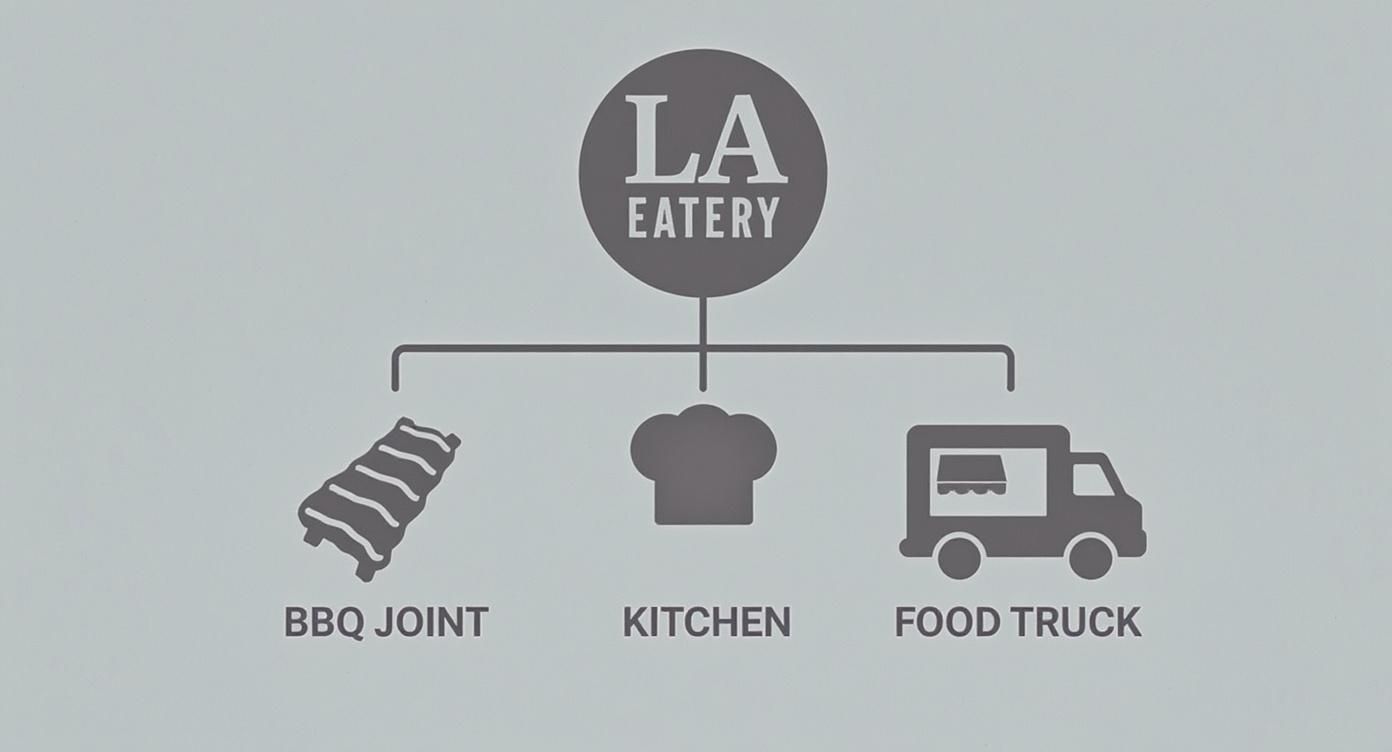
From a stationary kitchen to a mobile food truck, you can see how specialized equipment is essential for any LA culinary business to thrive.
Versatile Utility Carts: The All-Purpose Workhorse
Utility carts are the most common food service carts you'll see, and for good reason. Think of them as the reliable multi-tool of your kitchen. Usually made from stainless steel or tough plastic, they have multiple shelves to haul as much as possible. Their simple, open design makes them perfect for all sorts of jobs.
Picture a busy Japanese spot in Sawtelle. A slick stainless steel utility cart can zip clean dishes from the wash station, ferry prepped ingredients from the walk-in commercial refrigerator, and help staff clear tables in a flash during the dinner rush. Its versatility is its greatest asset.
Insulated Carts: Protecting Temperature and Quality
If you're moving food that needs to stay hot or cold, an insulated cart isn't a luxury—it's a necessity. These enclosed cabinets are designed to lock in temperature for hours, protecting both the flavor of your food and its safety. They're a must-have for caterers, banquet halls, and large restaurants.
Imagine a Mexican food caterer in East LA gearing up for a big event. They can load pans of carnitas, rice, and beans straight from the oven into an insulated cart. Hours later, when they get to the venue, everything is still at a safe, delicious serving temperature. It’s all about preserving quality and staying on the right side of health codes.
Banquet Carts: Built for High-Volume Service
Banquet carts are the heavyweights. These are large, enclosed cabinets built to hold dozens of pre-plated meals, keeping them perfectly warm and ready to go. You can’t run a hotel, event center, or large-scale catering operation without them, especially when you need to serve hundreds of guests at once.
A banquet cart is essentially a mobile warming station. It lets your kitchen plate meals way ahead of time, which frees up the line and ensures every single guest gets a hot plate of food at the exact same moment. For weddings and corporate events, that’s everything.
Mobile Prep Stations: The Kitchen Extender
Mobile prep stations are an absolute game-changer for kitchens tight on space. These food service carts often come with a cutting board top, ingredient bins, and utensil storage, basically creating an extra workstation wherever you need it. For Los Angeles food trucks, where every inch is prime real estate, these carts are priceless.
Think of a Thai food truck at a music festival. They can use a mobile prep station to assemble fresh spring rolls or papaya salads to order. The cart keeps everything from the commercial freezers and fridges organized and within easy reach, speeding up service and making a tiny footprint feel a lot bigger.
This trend is part of a bigger shift. The mobile food cart market is expected to explode to $12.5 billion by 2035, thanks to the growing love for street food and flexible dining. You can read more about the mobile food cart market growth to see where this part of the industry is headed.
To make things even clearer, here's a quick look at how these different cart types stack up for common LA food businesses.
Comparison of Food Service Cart Types for LA Eateries
| Cart Type | Primary Use | Ideal LA Scenario | Common Materials |
|---|---|---|---|
| Utility Cart | General transport, bussing, storage | A bustling Downtown LA Chinese restaurant needing to move ingredients and clean dishes quickly. | Stainless Steel, Polypropylene |
| Insulated Cart | Transporting hot/cold food safely | A Silver Lake caterer delivering family-style Mexican meals for an off-site event. | Polyethylene, Aluminum |
| Banquet Cart | Holding and moving plated meals | A large hotel in Century City serving a 300-person wedding reception. | Stainless Steel, Aluminum |
| Mobile Prep Station | Creating extra workspace on the fly | A Thai food truck in Venice Beach needing an extra station for assembling orders. | Stainless Steel, Wood Top |
This table should help you quickly pinpoint which cart aligns best with your kitchen’s daily grind.
Decoding Materials, Load Capacity, and Casters
Once you’ve settled on the type of cart you need, it’s time to get into the details that truly matter. A cart’s real performance comes down to its construction—the materials used, the weight it can handle, and the wheels it rolls on. These are the specs that separate a reliable workhorse from a costly headache.
For any L.A. operator, these details dictate whether a cart can handle the daily chaos of a busy kitchen or the unique demands of a mobile food business.
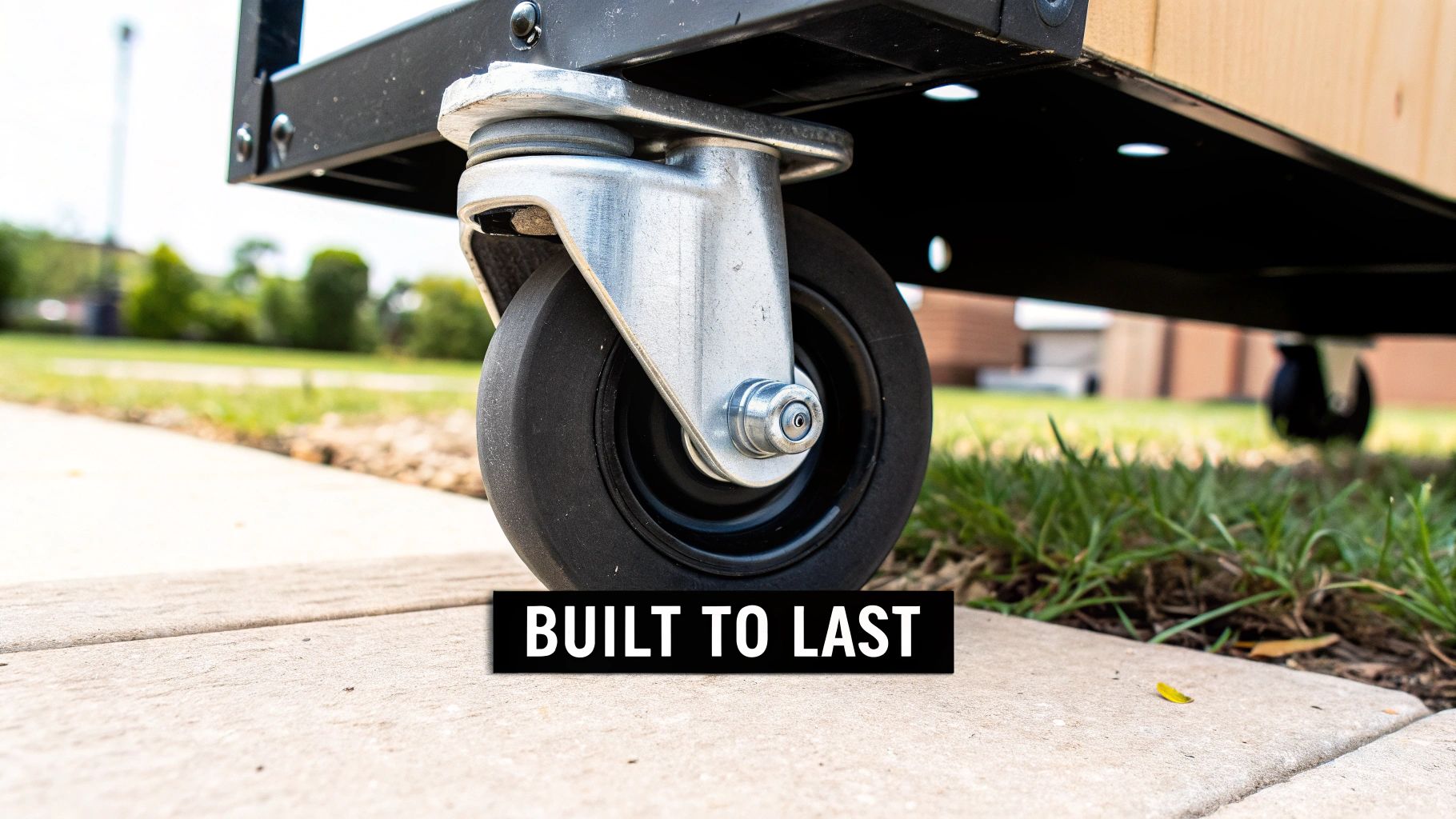
This is where you shift from thinking about what a cart does to how well it will last. A cart for a downtown banquet hall hauling hundreds of plated meals needs a very different build than one used for bussing tables at a cozy café. Getting these specs right is the key to a smart investment.
Choosing the Right Material for Your LA Environment
The material of your food service cart is its first line of defense against the daily grind. The two most common choices, stainless steel and high-density plastic, each bring something different to the table, and one is likely a better fit for your L.A. restaurant.
Stainless Steel: This is the gold standard in most commercial kitchens for a reason. It's tough as nails, non-porous (which means bacteria has nowhere to hide), and stands up to harsh cleaning chemicals without a problem. For any spot—from a Korean BBQ joint in K-Town to a high-end Japanese restaurant—that puts hygiene and durability first, stainless steel is the obvious choice. It also handles heat like a champ, making it perfect for moving pans straight from the oven.
High-Density Plastic (Polypropylene/Polyethylene): Plastic carts are the lighter, more affordable, and often quieter option. They’re also great at resisting dents and scratches. A plastic utility cart is an excellent pick for front-of-house tasks, like clearing tables in a casual Thai spot, or for storing dry goods away from the kitchen heat.
The global market for merchandizing carts, which includes food service carts for street vendors and small businesses, is projected to hit $6.02 billion by 2035. This growth is fueled by the boom in mobile food models, highlighting just how critical durable, specialized equipment has become.
Understanding Load Capacity
Load capacity isn't just a suggestion—it's a critical number for safety and longevity. It tells you the absolute maximum weight a cart can safely hold. Pushing that limit is a recipe for disaster, leading to warped shelves, broken wheels, and even potential injuries for your team.
A cart's load capacity comes down to its overall construction, the thickness of its materials, and the strength of its casters.
- Light-Duty Carts (up to 200 lbs): Perfect for bussing tables, moving stacks of plates, or grabbing light ingredients from a commercial refrigerator.
- Medium-Duty Carts (200-500 lbs): These are the workhorses of most kitchens. They can handle cases of drinks, sacks of flour, or multiple hotel pans loaded with prepped food.
- Heavy-Duty Carts (500+ lbs): Built for the really tough jobs, like moving large equipment, full kegs of beer, or servicing a massive banquet.
Rule of thumb: Always pick a cart with a capacity that’s comfortably more than your heaviest typical load. That extra buffer gives you a margin of safety and prevents the cart from wearing out too soon.
Why Casters Are the Most Important Component
A cart is only as good as its wheels. Seriously. The casters—the entire wheel and mount assembly—are what determine how easily the cart moves, how stable it feels, and what kind of floors it can handle. For a Los Angeles food truck that might roll over everything from smooth asphalt to cracked sidewalks, the right casters are non-negotiable.
Here’s a quick breakdown of what to look for:
- Swivel Casters: These rotate a full 360 degrees, giving you maximum maneuverability. Carts with four swivel casters can turn on a dime, which is a lifesaver in tight kitchen spaces.
- Rigid (or Fixed) Casters: These only move back and forth in a straight line, which adds a ton of stability, especially when you’re moving it a long distance. A common setup is two swivel casters in the front and two rigid ones in the back for a nice balance of control and agility.
- Locking Casters: Brakes on the wheels are a must-have safety feature. They stop the cart from rolling away while you're loading or unloading, which is especially important on the slightly sloped streets of L.A. or inside a moving food truck.
The wheel material itself matters, too. A Chinese restaurant with polished wood floors will want soft, non-marking polyurethane wheels to protect their investment and keep the noise down. On the other hand, a food truck parked near the beach needs bigger, heavy-duty rubber wheels that can take on sand and uneven ground without failing.
Navigating LA County Health Codes and Sanitation
In Los Angeles, a killer menu and a great marketing plan can only take you so far. The true backbone of any successful food business is a rock-solid commitment to health and safety. The LA County Department of Public Health keeps a close eye on all restaurant equipment, and you can bet mobile gear like food service carts is high on their list.
Staying compliant isn't just about dodging fines or a bad letter grade in the window. It's about protecting your customers, your crew, and the reputation you've worked so hard to build. For any LA spot, from a Korean BBQ joint in K-Town to a Thai food truck cruising through Venice, knowing these rules is non-negotiable.
What NSF Certification Really Means
You’ve probably seen the little "NSF" logo on everything from commercial refrigerators to prep tables. It stands for the National Sanitation Foundation, and it’s basically your seal of approval that a piece of equipment is built for a professional food environment.
So what does that actually mean for your food service carts? When a cart is NSF-certified, it has passed a tough set of tests for things like:
- Safe Materials: The cart is made from stuff that is non-toxic, doesn’t absorb liquids, and won't leach anything funky into your food.
- Cleanable Design: Every surface is smooth, without tiny cracks, corners, or crevices where bacteria can throw a party.
- Durability: It’s built tough enough to handle the daily grind of a commercial kitchen, including getting scrubbed down with powerful sanitizers over and over again.
For a food truck operator slinging Mexican street corn, an NSF-certified cart means they can prep ingredients without a second thought. For a Japanese restaurant, it’s the peace of mind knowing the cart moving fish from the commercial freezers to the sushi bar isn't a hiding place for nasty pathogens.
Creating Your Sanitation Game Plan
Acing your next health inspection really comes down to a consistent cleaning routine. Cross-contamination is a huge risk, and your carts are constantly rolling between clean and not-so-clean areas. That’s why a clear, non-negotiable sanitation schedule is absolutely essential.
Think of it as the final, crucial step in your prep process. A chef would never use the same cutting board for raw chicken and fresh vegetables. By that same logic, you can't use a cart to haul out the trash and then use it to deliver clean plates without a serious deep clean in between.
"A well-maintained and properly sanitized food service cart is a direct reflection of a kitchen's commitment to safety. It's a mobile piece of your food safety system, and inspectors will treat it as such."
The best way to keep everything on track is to create a simple checklist for your team. It takes the guesswork out of the equation and helps build good habits until they become second nature.
A Simple Sanitation Checklist
Your cleaning schedule should be broken down into daily, weekly, and monthly tasks, tweaked for the specific materials your carts are made of.
-
Daily Tasks (After Each Shift):
- Wipe Down All Surfaces: Grab a clean cloth and a food-safe detergent to get rid of all visible crumbs, spills, and grime.
- Sanitize Contact Points: Hit all surfaces, including shelves and handles, with a food-grade sanitizer. Make sure to follow the manufacturer's directions for contact time.
- Clean the Wheels: Caster wheels pick up everything off the floor. Give them a good wipe-down to stop tracking dirt and bacteria all over your kitchen.
-
Weekly Deep Clean:
- Disassemble Removable Parts: If shelves or attachments come off, take them apart and wash them separately for a more thorough clean.
- Scrub and Detail: Use a brush to get into any corners or joints that a quick daily wipe might have missed.
- Inspect for Damage: Look for any cracks, rust, or other damage. A small crack can quickly become a five-star hotel for bacteria.
This disciplined approach ensures your food service carts stay valuable assets, helping you run a smooth operation and meet the high standards of food safety that Los Angeles demands.
Customizing Your Cart with Local LA Suppliers
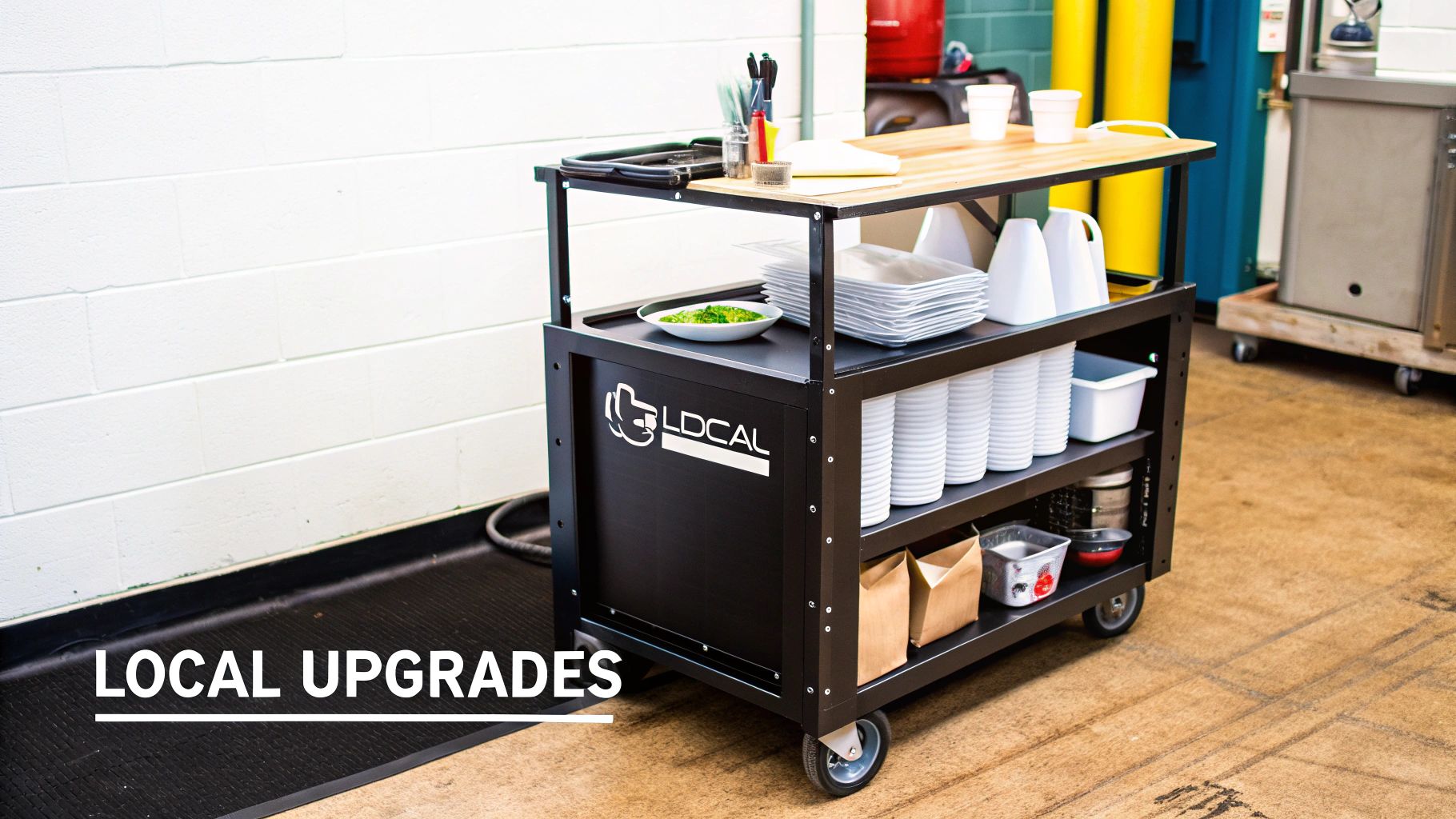
An off-the-shelf utility cart is a start, but turning it into a workhorse for your specific needs is where the magic happens. Think of a basic food service cart as a blank canvas—with the right accessories and a good local partner, you can transform it into a specialized tool that streamlines your restaurant's unique workflow right here in Los Angeles.
Customization isn't just about moving plates faster; it's also a branding opportunity. For a bustling Los Angeles food truck, a custom vinyl wrap with your logo can turn a simple cart into a mobile billboard, catching eyes at a crowded farmer's market or festival. It’s these small details that help you stand out.
Essential Accessories to Boost Functionality
A few smart add-ons can completely change how your cart performs. The trick is to look at what your team does day in and day out and find accessories that make those tasks just a little bit easier.
- Extra Shelves and Bins: Running out of space? Many carts are designed to add adjustable shelves or clip-on side bins, perfect for stashing small but essential items like condiment packets or cutlery.
- Utensil and Pan Holders: Keep your tools organized and always within reach. If you’re in a high-volume kitchen, racks designed for sheet pans or hotel pans are an absolute must.
- Trash Receptacles: A dedicated waste bin attached to your bussing cart is a simple but effective way to streamline cleanup and keep your dining areas looking sharp.
This kind of smart outfitting is a big deal in the mobile food world. The global food cart and truck market was valued at around $15 billion in 2025 and it’s only getting bigger. Growth in this space is all about innovation and efficiency, where every little improvement helps you get ahead.
The Advantage of Working with LA-Based Suppliers
While you can find anything online, there’s a real benefit to partnering with a local Los Angeles restaurant equipment supplier. A local pro understands the unique rhythm of the LA market, from squeezing through tight urban kitchens to knowing the ins and outs of local health codes.
Working with a local supplier means you're not just another order number. You get face-to-face service from people who know the LA scene and can give you real advice for your business, whether you're running a high-end sushi bar or a neighborhood taco truck.
Beyond just carts, a good local supplier becomes your go-to for other essential restaurant equipment, like commercial refrigerators and freezers. Building that relationship simplifies everything from purchasing to repairs. You get faster delivery, quicker service calls, and a partner who truly understands what it takes to thrive in the demanding Los Angeles food industry.
Making a Smart Investment in Your Restaurant Equipment
Every dollar counts in the Los Angeles restaurant world. Your equipment budget isn't just a line item; it's one of the most critical financial decisions you'll make. When you're looking at essential gear like food service carts, commercial refrigerators, or new ovens, the choice between buying new or used can seriously impact your bottom line and your day-to-day grind.
Making a smart investment isn't just about snagging the lowest price tag—it’s about getting real long-term value. New equipment gives you that peace of mind with a full warranty and the latest features, but the upfront cost can be a huge hurdle. For a brand new Los Angeles food truck or a cozy little cafe, that initial cash hit might be better spent on marketing or stocking the pantry.
New Versus Used Restaurant Equipment
Deciding between shiny and new versus tested and true is a classic dilemma for any operator. Each path has its own set of pros and cons that you’ve got to weigh against your budget and what your kitchen really needs.
- Buying New: You get a pristine piece of gear with a manufacturer's warranty, which means repairs are covered for a while. That predictability is gold when you're trying to budget and avoid the nightmare of unexpected downtime.
- Buying Used: The biggest win here is the cost savings, hands down. You can often find high-quality, pre-owned restaurant equipment for a fraction of what it costs new, freeing up cash for other parts of your business.
But with used gear, "buyer beware" is the name of the game. A hidden problem in a second-hand commercial freezer could lead to a massive loss of inventory and a repair bill that completely erases any money you thought you saved.
The Used Equipment Inspection Checklist
If you decide to go the used route, a thorough inspection is non-negotiable. Before you hand over a single dollar, run through this checklist to make sure you're protecting your investment:
- Check for Physical Damage: Look for rust, big dents, or cracks, especially on stainless steel. These are weak spots and can become serious hygiene risks.
- Test All Moving Parts: Give the cart a good roll to check the casters. Open and close every door and test all the hinges on refrigerators and cabinets.
- Verify Electrical Components: If you can, plug it in. Make sure commercial freezers and refrigerators get down to their target temperatures quickly and without making a racket.
- Confirm NSF Certification: Hunt for the NSF sticker. This is a crucial mark for sanitation and something the LA County health inspectors will be looking for.
The right financing can make even new equipment feel more accessible. By spreading the cost over time, you can get the gear you need now without draining your working capital, which is the lifeblood of any small business.
Financing Options to Preserve Cash Flow
For a lot of LA businesses, dropping thousands of dollars on an outright purchase just isn't realistic. This is where financing can be a lifesaver. Options like equipment leasing or lease-to-own programs let you get the food service carts and other tools you need while making payments that don't break the bank.
These programs are built to help you hold onto your cash for daily expenses like payroll and supplies. To see how this can work for your local business, you should explore these options for Los Angeles restaurant equipment financing. Getting a handle on warranties, delivery details, and what kind of support you get after the sale will help you make a solid investment that sets you up for long-term success.
Common Questions About Food Service Carts in LA
Buying new equipment always brings up a few questions, especially when you're trying to pick the perfect gear for your specific Los Angeles business. This final section tackles some of the most common questions we hear about food service carts, with clear, straightforward answers to help you invest with confidence.
Getting the details right, from the type of steel to health code rules, is what keeps an operation running smoothly.
What is the best material for a food service cart in a busy LA kitchen?
For most fast-paced Los Angeles kitchens, 304-grade stainless steel is the undisputed champion. It’s incredibly durable, fights off corrosion naturally, and its non-porous surface gives bacteria nowhere to hide, which makes sanitation a whole lot easier. This kind of resilience is exactly what you need to meet strict LA County health codes, whether you’re running dim sum service for a Chinese restaurant or a Japanese sushi bar.
Sure, heavy-duty plastic carts are a great, lighter-weight option for the front-of-house, but nothing beats stainless steel for the longevity and hygiene standards you need in a professional kitchen or one of LA's famous food trucks.
How do I choose the right casters for my food service cart?
The right casters really come down to two things: your floor and your load. For the smooth indoor floors you find in most restaurants, you’ll want non-marking polyurethane wheels. They’re quiet and won’t scuff up your surfaces. But if you’re rolling that cart from the kitchen out to a patio or the street, bigger rubber wheels are the way to go for handling uneven pavement.
Always double-check the weight rating on each caster. The combined capacity of all four wheels should be well over the heaviest load you plan on moving. A classic, effective setup is two swivel casters for easy turning and two rigid casters for stability.
Here's a detail people often miss: the caster brake. Locking casters are a critical safety feature. They're non-negotiable for food trucks or any spot on an incline, keeping the cart from rolling away while you're trying to load or unload.
Do I need an NSF certified food service cart for my LA food truck?
Yes. It's not just recommended—it's often required by the LA County Department of Public Health. NSF certification is your guarantee that the cart was designed with food safety as the top priority. It means the materials are non-toxic, easy to clean, and built without little cracks or crevices where germs can build up.
Using non-certified restaurant equipment that comes in direct contact with food can get you into trouble, from health code violations and fines to a temporary shutdown. Always look for that NSF seal when you’re buying equipment like carts, commercial refrigerators, or commercial freezers.
Where can I find reliable restaurant equipment suppliers in Los Angeles?
Los Angeles has plenty of great restaurant equipment suppliers. The trick is to find a local dealer who offers a solid mix of new and certified used equipment, because they’re the ones who usually provide crucial warranties and service plans. Going with a local supplier also means faster delivery and quicker access to a technician when you need a repair.
Your best bet is to check online reviews and ask for recommendations from other local owners. See who the folks running the neighborhood Thai restaurant, Korean BBQ joint, or Mexican catering business trust with their kitchens.
For professional-grade food service carts and other essential restaurant equipment built for the LA market, Los Angeles Restaurant Equipment has a wide selection with flexible financing to support your business. Check out our full catalog at https://losangelesrestaurantequipment.com and get the gear you need to thrive.