

Boost efficiency with stainless steel kitchen prep tables
Step into any serious Los Angeles kitchen, from a bustling food truck to a high-end restaurant, and you'll spot them immediately. They’re not as flashy as the commercial refrigerators or as high-tech as the combi ovens, but stainless steel prep tables are the true workhorses of the culinary world. This is where all the action begins.
The Unsung Hero of Every Professional Kitchen
These tables are the non-negotiable foundation of any professional kitchen in Los Angeles. They provide a durable, hygienic, and easy-to-clean surface that's absolutely essential for food safety and keeping the kitchen humming along. It’s a critical piece of restaurant equipment for any operation, from a bustling downtown restaurant to a nimble food truck hitting the streets of LA.
Think about the dinner rush. Orders are flying, and the team is moving fast. On one table, a line cook is portioning fresh fish. Over on another, a pastry chef is rolling out dough. This whole symphony is only possible because of the clean, reliable workspace provided by stainless steel kitchen prep tables. They create the organized, sanitary environment where quality and consistency are born.
It's where the magic starts, whether you’re assembling carnitas tacos for a food truck rush in East LA, meticulously plating sushi in Little Tokyo, chopping kimchi in Koreatown, or prepping vegetables for a fragrant Thai curry in Hollywood. These tables are far more than just furniture; they are the bedrock of a successful kitchen.
Why Your Prep Table Is a Critical Business Asset
The right prep table isn't an expense—it's a strategic asset that directly impacts your bottom line, especially in the competitive Los Angeles food scene.
- Operational Efficiency: A properly sized and configured table keeps tools and ingredients within easy reach, cutting down on wasted steps. This speeds up prep, smooths out the workflow, and helps your team handle a bigger rush.
- Food Safety and Compliance: Stainless steel has a non-porous surface, which means it doesn't harbor bacteria and is a breeze to sanitize. That’s a huge deal when it comes to passing those strict Los Angeles County health inspections.
- Long-Term Durability: These tables are built to take a beating. Constant chopping, heavy stock pots, and harsh cleaning chemicals—a quality table resists it all. It’s a one-time purchase that pays you back for years.
In essence, your prep table is the stage where your culinary vision comes to life. A shaky, undersized, or hard-to-clean table just creates bottlenecks, compromises safety, and costs you money in wasted time and effort. Investing in the right surface is the first step toward building a more profitable and professional kitchen.
Decoding Steel Grades and Gauges for Your Kitchen
When you start shopping for stainless steel kitchen prep tables, you'll see terms like "304-grade" and "16-gauge" thrown around. It might sound a little technical, but getting a handle on these two things is absolutely crucial for picking a table that will survive the grind of a real Los Angeles kitchen. Get this right, and you're buying a workhorse for years. Get it wrong, and you've got a dented, rusty liability on your hands.
Think of steel grades like different recipes. Each one has a unique mix of ingredients that gives it specific qualities—in this case, its ability to fight off rust and corrosion.
The Right Grade for the Job
In the commercial kitchen world, two grades really run the show.
-
304-Grade Stainless Steel: This is the best of the best, the top-shelf choice. It's packed with more chromium and nickel, making it incredibly resistant to corrosion from just about anything you can throw at it—salt, acidic foods, and constant moisture. For any L.A. restaurant, from a Thai kitchen splashing around lime juice and fish sauce to a Mexican spot prepping gallons of salsa, 304-grade is the only way to go for prep areas, dish pits, and any surface that touches food directly.
-
430-Grade Stainless Steel: This is your budget-friendly, workhorse alternative. It's still plenty durable, but with less nickel in the mix, it's a bit more likely to corrode over time, especially if it's always wet. It’s a great pick for dry storage areas, stands for restaurant equipment, or light-duty prep where moisture isn’t a big issue.
Choosing the grade isn't about being fancy; it's about being practical. If you're outfitting a food truck that's exposed to the marine layer or setting up a station for prepping raw fish in a Japanese restaurant, investing in 304-grade steel pays for itself over and over in durability and food safety.
This simple diagram shows why a solid prep table is at the very heart of a well-run kitchen.
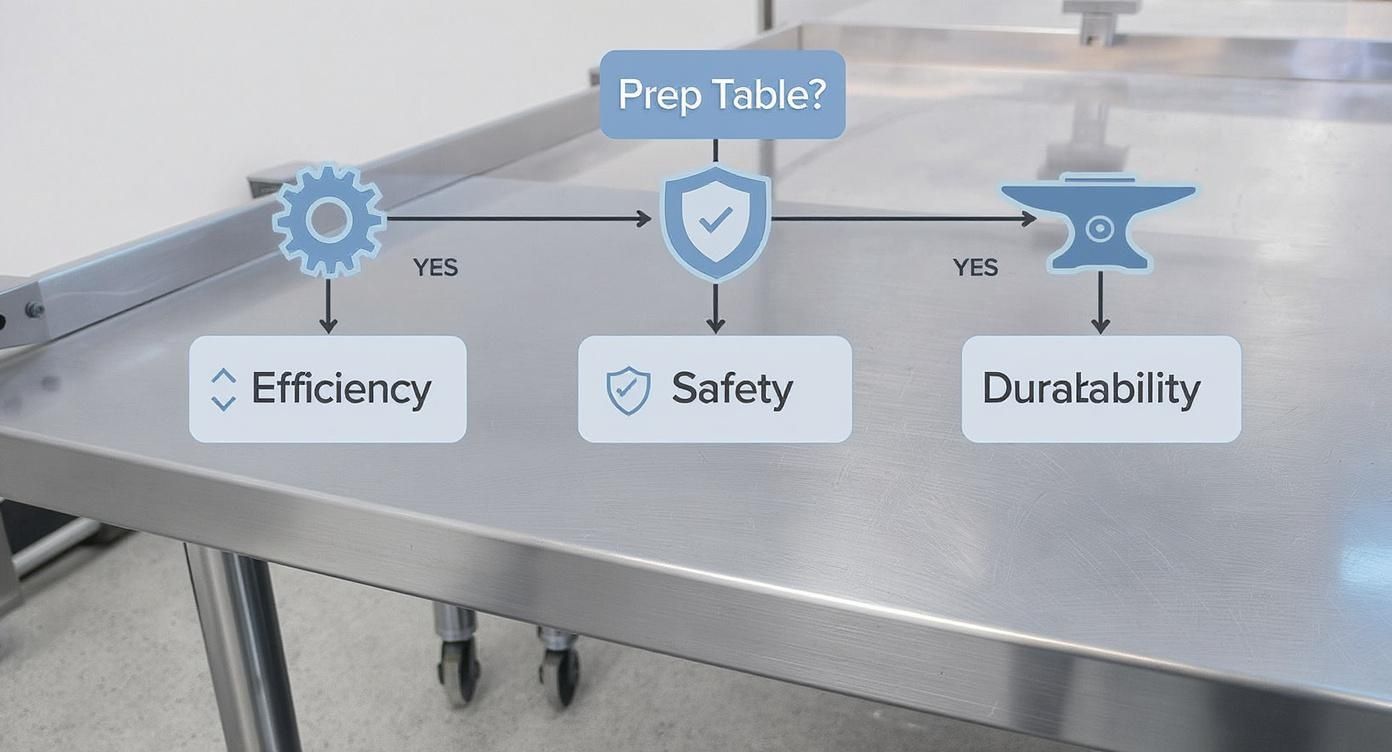
As you can see, the right table is a direct line to better efficiency, safety, and durability—the three legs that every successful kitchen stands on.
Understanding Steel Thickness with Gauge
So, if grade is about rust-proofing, gauge is all about pure muscle and thickness. It’s like the difference between a delicate filleting knife and a heavy-duty meat cleaver. With steel gauge, just remember this one counterintuitive rule: the lower the number, the thicker and stronger the steel.
A lower gauge means your table can handle more weight and take a beating without denting. It's just a more solid, stable surface to work on.
In a busy kitchen, the gauge is your table's backbone. A flimsy, high-gauge table will buckle under a heavy mixer or get dinged up from a dropped pot, turning into a wobbly hazard in no time.
Here's how the common gauges stack up in the real world:
-
14-Gauge: This is the undisputed heavyweight champion. It's super thick and tough, built for serious abuse like butcher stations, stands holding heavy fryers, or any spot that gets slammed all day long.
-
16-Gauge: This is the industry go-to for most all-purpose stainless steel kitchen prep tables. It hits that sweet spot of strength, durability, and price. A 16-gauge table is tough enough for everyday chopping, mixing, and general prep, making it a reliable choice for almost any spot in the kitchen.
-
18-Gauge: This is your lighter-duty option. It’s still commercial-grade, but it’s better suited for tasks that don’t involve heavy gear or hard impacts. Think assembling salads, plating desserts, or simple storage shelves.
Matching Steel Specs to Your Kitchen's Demands
To make it even simpler, here’s a quick guide to help you match the steel to the job.
| Kitchen Task | Recommended Steel Grade | Recommended Gauge | Why It's the Right Choice |
|---|---|---|---|
| Main Prep Line (Salsas, Marinades, Sauces) | 304-Grade | 16-Gauge | Resists acid and moisture from constant food contact; durable enough for daily chopping. |
| Dishwashing Area / "Dish Pit" | 304-Grade | 14 or 16-Gauge | Maximum corrosion resistance against harsh chemicals and constant water exposure. |
| Heavy Equipment Stand (Mixer, Slicer, Griddle) | 304 or 430-Grade | 14-Gauge | Needs the thickest steel for maximum strength and stability to support heavy machinery. |
| Dry Storage Shelving / Light Assembly | 430-Grade | 18-Gauge | Corrosion isn't a major concern, and lighter gauge is cost-effective for simple storage. |
| Butcher's Station / Heavy Butchering | 304-Grade | 14-Gauge | Combines top-tier hygiene and corrosion resistance with the strength to withstand heavy cleavers. |
By pairing the right grade with the right gauge, you’re not just buying a table—you’re making a smart investment that’s perfectly tuned to the demands of your kitchen's daily service.
Optimizing Your Workspace with Smart Configurations
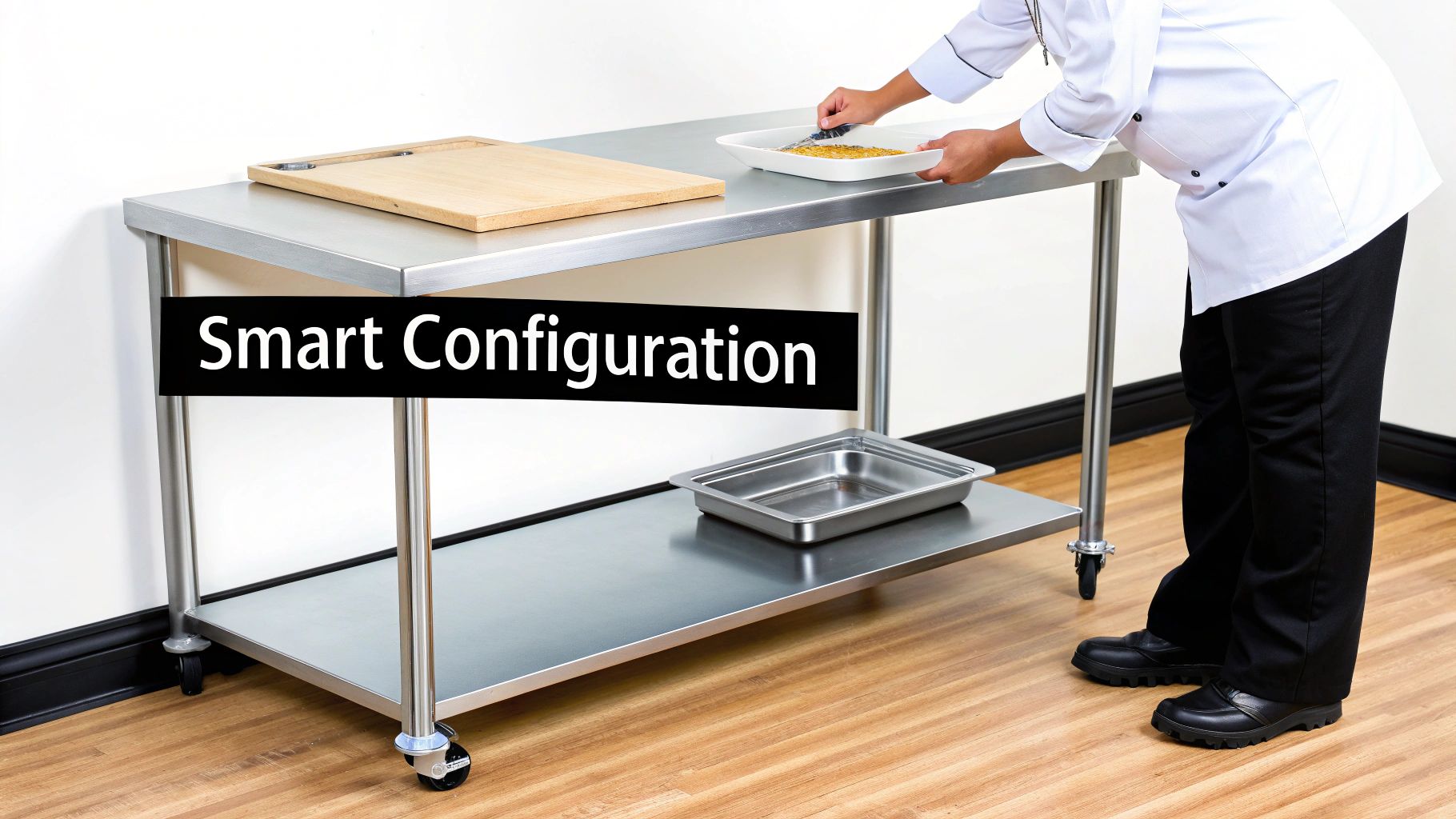
Getting the right grade and gauge of steel is the starting point. But the real game-changer is how you configure your prep tables to fit the unique flow of your kitchen. A basic flat top is fine, but a well-thought-out table becomes a powerhouse workstation that cuts down on clutter and saves precious time during a chaotic rush.
These smart additions transform a simple sheet of metal into the command center of your prep line. Every feature is designed to turn wasted motion into productive, profitable action. Whether you're trying to contain a mess or create a mobile prep station, the right setup is what unlocks your kitchen's true potential.
Backsplashes: The Kitchen’s Built-In Guardrails
Think of a backsplash as your prep station’s guardrail. It’s a simple raised edge along the back of the table with a crucial job: keeping food, splashes, and spills from hitting the wall behind it. For any "wet" prep, this is a must-have.
Picture a busy L.A. Mexican restaurant prepping gallons of fresh salsa, or a Thai spot dicing up ingredients for rich curries. A backsplash contains that controlled chaos, making cleanup at the end of a long night worlds easier. More importantly, it stops moisture and food bits from getting trapped in that impossible-to-clean gap between the table and the wall, keeping your whole operation more sanitary.
Undershelves: Maximizing Your Kitchen Real Estate
In the tight quarters of many Los Angeles kitchens—especially food trucks and ghost kitchens—every single inch of space is gold. An undershelf is the easiest way to double your table's storage capacity without taking up more floor space. It turns all that empty air below the work surface into prime real estate.
An undershelf isn't just for storage; it's an organizational system. It gets bulk ingredients, Cambro containers, small appliances, and extra pans off the floor and puts them right where you need them.
For a food truck operator, that means extra supplies are stored securely and within reach. For a Koreatown BBQ joint, it’s the perfect spot to tuck away heavy briskets or tubs of marinade. This one addition is one of the most effective ways to boost your efficiency in a small kitchen. And while we’re focused on standard tables here, it’s worth noting that specialized units, like the ones in our collection of pizza prep tables, take this a step further with built-in refrigerated storage.
Accessories That Create Adaptable Workstations
Beyond the basics, a few key accessories can completely change how your stainless steel kitchen prep tables function. These small upgrades offer a huge return by making your kitchen more flexible and organized.
-
Casters (Wheels): Pop a set of casters on your prep table, and it’s no longer just a table—it’s a mobile workstation. This gives you incredible freedom to rearrange your kitchen for deep cleaning, a special event, or a menu change. For an L.A. food truck, a table on wheels can be moved exactly where it’s needed most at any given moment.
-
Drawers: Built-in drawers give you a clean, enclosed spot for all those essential hand tools—knives, whisks, peelers, and thermometers. This keeps your main work surface clear and stops your team from wasting time hunting for the right utensil.
-
Overshelves: An overshelf adds another tier of storage above the work surface. A Japanese restaurant, for example, could use an overshelf for plating, keeping garnishes and finishing sauces at arm's length without cluttering up the main prep area. It’s the perfect way to add storage for detailed assembly tasks.
Why NSF Certification Is a Non-Negotiable Standard
When you’re outfitting a professional kitchen, you'll see one acronym pop up more than any other: NSF. That little seal on a stainless steel kitchen prep table isn't just a fancy sticker or a helpful suggestion. For any serious restaurant in Los Angeles, it's the single most important detail—a hard-and-fast rule that affects your business from day one.
Think of it as your guarantee of public safety. The NSF stamp is your absolute assurance that the restaurant equipment has been put through the wringer, tested, and certified to meet incredibly strict standards for food safety and sanitation. It’s the baseline for passing health inspections and running a legitimate, professional kitchen in L.A. County.
Sure, you might save a few bucks on a non-certified table, but that’s a massive gamble. An inspector can shut you down on the spot for using equipment that isn't up to code. That means lost revenue, fines, and a serious hit to your restaurant's reputation.
What NSF Certification Actually Means for Your Kitchen
The NSF standard isn't just about the type of steel used; it’s about the entire design and construction of the table. Every last detail is engineered to promote hygiene and stop harmful bacteria in its tracks.
This obsessive approach to design is exactly why certified equipment is so crucial. A non-certified table might have sharp corners, open seams, or tiny crevices where food particles and microbes can hide. Before you know it, you've got a breeding ground for bacteria that’s nearly impossible to fully sanitize.
An NSF-certified table is designed with no place for germs to hide. Its surfaces are smooth, non-porous, and easy to clean, while corners are coved and edges are rounded to eliminate bacteria-trapping crevices. This isn't a feature—it's the fundamental principle of sanitary kitchen design.
The growing focus on food safety is a major force in the restaurant equipment world. The global market for food prep tables was valued at USD 1.18 billion in 2023 and is expected to climb to USD 1.62 billion by 2029. This growth shows just how essential properly designed, hygienic equipment has become for modern kitchens. You can check out more insights on food prep table market trends on Arizton.com.
Protecting Your Customers and Your Brand
At the end of the day, NSF certification is about more than passing inspections—it’s about protecting the people who trust you with their health. A foodborne illness outbreak traced back to your kitchen can be a catastrophic, business-ending event.
By using only NSF-certified equipment, you're putting a critical control point into your food safety plan. It’s a commitment that shows professionalism and a dedication to quality that both your staff and your customers will notice.
Here’s how it breaks down for different L.A. operations:
- For Food Trucks: With tight space and high-volume service, easy sanitation is everything. NSF tables ensure you can maintain a clean, safe environment on the move.
- For Japanese & Sushi Restaurants: When you’re dealing with raw fish, the stakes are incredibly high. The non-porous surface of a certified table is essential for preventing cross-contamination.
- For High-Volume Mexican, Korean & Thai Kitchens: Sauces, marinades, and fresh produce demand surfaces that won't absorb flavors or harbor bacteria. NSF certification guarantees that integrity.
For any food business in Los Angeles, from a pop-up to a fine dining spot, the NSF logo is your first line of defense. It's an investment in safety, compliance, and peace of mind that you simply can’t afford to skip.
Choosing the Right Table for Your LA Restaurant Concept
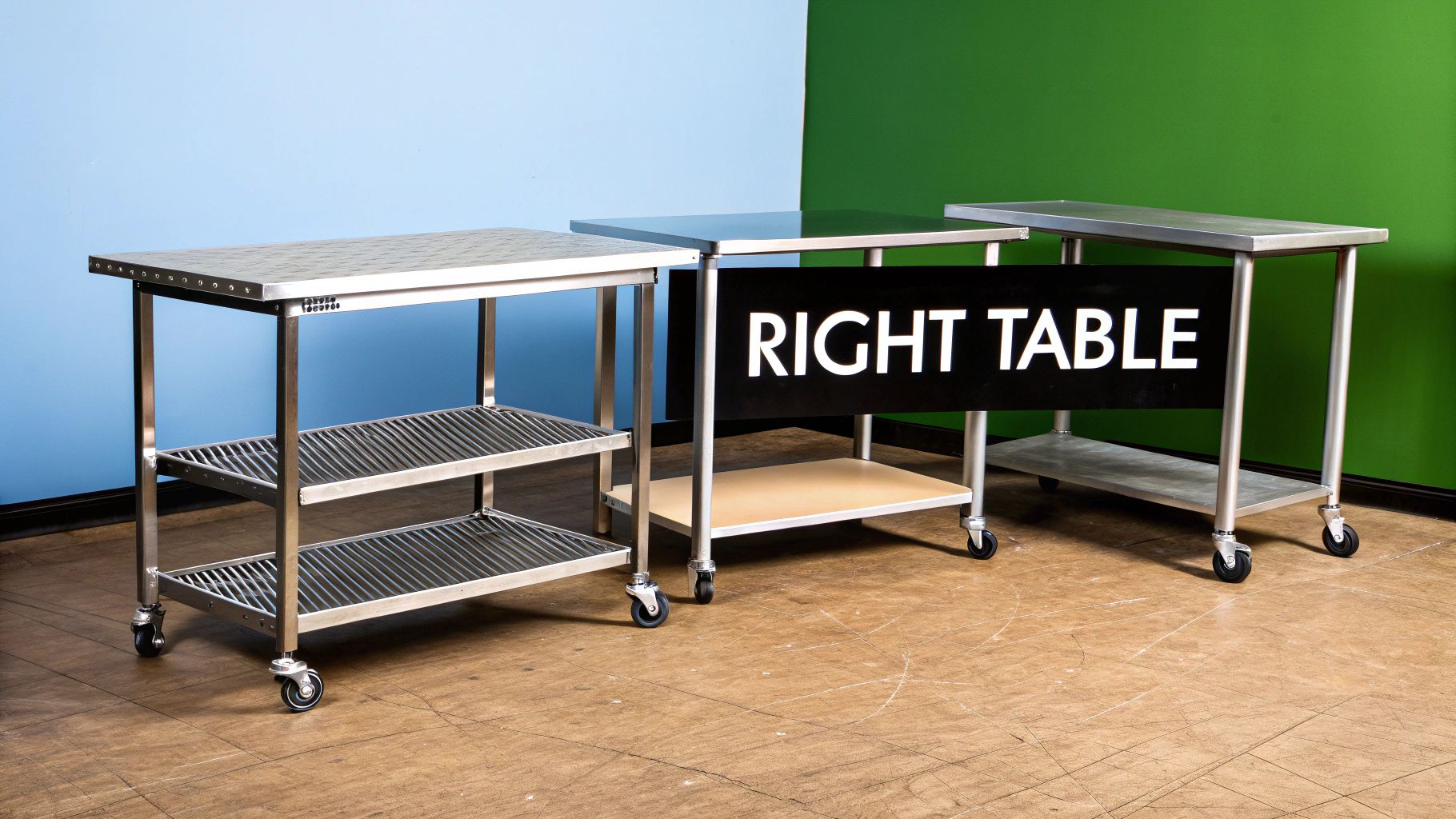
A stainless steel prep table is never a one-size-fits-all piece of equipment. The table that works perfectly in a massive Beverly Hills kitchen would be a total disaster for a food truck hustling on the Venice boardwalk. Picking the right stainless steel kitchen prep tables comes down to matching its size, strength, and features to what your L.A. restaurant actually does day in and day out.
This isn't just about having a place to chop vegetables; it's a decision that directly affects how fast your kitchen moves and how you handle the nightly dinner rush. Let's break down what works for some classic L.A. food operations.
For the High-Volume Mexican or Korean Restaurant
Picture the scene at a popular East LA taqueria or a K-Town BBQ joint. We're talking hundreds of pounds of onions and cilantro to dice, massive batches of meat to marinate, and fresh tortillas to press. This is a tough, high-volume environment that needs space and brute strength more than anything else.
The go-to setup here involves a line of long, deep, 16-gauge tables built from 304-grade steel. These give your crew maximum workspace and can take a beating from acidic lime juice, gochujang, and salsas without a hint of rust.
-
Key Features:
- Length and Depth: You'll want tables in the 72 to 96-inch range to create a real assembly line for tacos and burritos.
- Backsplash: A tall backsplash is a must-have. It keeps splashes from marinades and sauces contained, making cleanup way easier.
- Heavy-Duty Undershelf: A strong undershelf is crucial for holding heavy stockpots, big Cambros full of prepped ingredients, and sacks of produce.
For the Agile LA Food Truck
For L.A. food trucks, it’s all about mobility and making every square inch count. Your equipment has to be nimble enough to adapt to whatever the day throws at you.
Here, the hero is a compact prep table on heavy-duty casters, usually between 36 and 48 inches long. This lets you completely reconfigure your tiny kitchen on the fly—turning a prep station into a service counter or a storage spot in seconds.
In a food truck, a prep table on wheels isn't just a nice-to-have; it's a core part of the business. Being able to lock it down for prep and then roll it out of the way for cleaning is a massive advantage in such a tight space.
-
Key Features:
- Casters with Brakes: Mobility is great, but you need to be able to lock that table down for safety when you’re chopping.
- Integrated Storage: Look for tables that have both an undershelf and a few drawers. This keeps your tools and essential supplies organized and secure while you're driving.
- Compact Footprint: Choosing a narrower table—say, 24 inches deep instead of 30—can make a world of difference in a cramped galley kitchen.
For the Full-Service Kitchen or Ghost Kitchen
A full-service kitchen, whether it's slinging Korean BBQ in K-Town or classic Chinese dishes, needs a more strategic approach. You're supporting a diverse menu, so you need a mix of specialized workstations, often combining standard tables with commercial refrigerators and freezers.
You'll see a main prep line of standard stainless steel tables for chopping and dry prep, right alongside refrigerated prep tables that keep cold ingredients like meats, cheeses, and produce safely chilled and right where you need them. This setup creates a smooth, efficient path from raw prep to the final plate.
For the Bustle of the Bar
Bar operations are a different beast. It's less about heavy-duty chopping and more about speed, cleanliness, and easy access to garnishes and tools. The perfect bar work table is sleek, easy to wipe down, and set up specifically for making drinks.
A 304-grade steel table is still the right call to fight off corrosion from citrus juice and spilled liquor, but a lighter 18-gauge table is usually plenty strong. Look for smart features like built-in speed rails for bottles or cutouts for ice bins to build the ultimate cocktail station.
Thinking carefully about your menu and workflow is the key. By doing so, you can explore the wide world of stainless steel kitchen prep tables and find the one that will make your kitchen faster, safer, and more profitable.
Sourcing and Financing Your Equipment in Los Angeles
Finding the right stainless steel prep tables is just the first step. The real challenge is getting them into your kitchen in a way that makes financial sense for your L.A. business. This is where working with a dedicated local supplier gives you a serious edge over just clicking "buy" on some massive, faceless website.
A local dealer gets the L.A. food scene. They know the high-volume chaos of a Koreatown BBQ spot is completely different from the tight-squeeze reality of a food truck rolling through Venice. Their team can steer you toward the right restaurant equipment, handle the delivery and installation, and save you from making mistakes that cost you time and money down the road.
Smart Financing for LA Restaurants
If you're launching a new restaurant or food truck, you know that every dollar of startup capital counts. That’s where smart financing options really come into play. Instead of dropping a huge chunk of cash upfront, lease-to-own programs let you get the gear you need now and spread the cost out with manageable monthly payments.
Choosing a lease-to-own option is a strategic financial move. It helps protect your cash flow for other vital expenses like payroll, inventory, and marketing, setting your business on a more stable financial footing from day one.
This approach doesn't just save your cash reserves; it can also help build your business credit. Taking the time to explore these programs can be the difference between a fully-equipped dream kitchen and one that's forced to compromise on quality. To see what might fit your budget, you can learn more about restaurant equipment financing options in Los Angeles.
The Value of Warranties and After-Sales Support
Your relationship with a supplier shouldn't end once the sale is complete. A good local dealer stands by their products with solid warranties and reliable support, which gives you long-term peace of mind. Think about it: if a commercial refrigerator's compressor gives out in the middle of a July heatwave, you need a local crew that can get there and fix it fast.
This kind of local support system is priceless. While online searches for equipment can go up and down, professionals always invest in quality they can depend on. For instance, even though online search interest for NSF stainless steel tables has dipped, sales have held steady because pros know what they need. You can find more insights on commercial equipment trends at Accio.com. Choosing a supplier with a strong warranty ensures your investment is protected for the long haul.
Common Questions About Stainless Steel Prep Tables
Even after you've landed on the right materials and setup for your new prep table, a few practical questions always pop up. It's completely normal. Getting these details sorted out ensures you don’t just buy the right stainless steel kitchen prep tables, but that you get every ounce of value out of that investment for years to come.
These are the little things that make a huge difference in the daily grind, from keeping your gear spotless to making sure it’s a stable, safe part of your kitchen's flow.
What Is the Best Way to Clean a Prep Table?
Keeping your table clean is simple, but doing it right is what extends its life and guarantees food safety. It all comes down to consistency and using the right stuff.
Give your table a daily wipe-down with a soft cloth, some warm water, and a mild detergent. Here’s a pro tip: always wipe in the direction of the steel's grain. This little trick prevents tiny scratches. For that stubborn, caked-on gunk, a simple paste of baking soda and water works wonders without being too harsh. After any cleaning, always rinse it with clean water and dry it completely—that’s how you stop water spots and rust before they start.
A critical note: stay far away from abrasive cleaners. Steel wool or anything with chlorine is a big no-no. They can strip the steel’s protective layer right off, leaving it open to rust and corrosion.
How Can I Stabilize a Table on Uneven Floors?
Uneven floors are just a fact of life in many Los Angeles buildings, but that doesn't mean you have to put up with a wobbly workspace. Commercial prep tables are built for this very problem.
Just about every table you'll buy comes with adjustable, bullet-style feet. You can literally screw each foot up or down to match any dips or slopes in your floor. To get it perfect, just place a spirit level on top and tweak each corner until the bubble is dead center. This gives you a rock-solid surface that’s safe for all your chopping and heavy equipment.
How Long Does a Quality Table Last?
A top-notch, NSF-certified prep table is one of the most rugged, long-lasting investments you can make for your kitchen. When you take care of it, the lifespan is seriously impressive.
A well-maintained table made from 16-gauge or 14-gauge, 304-grade stainless steel can easily last 15 to 20 years or more. That holds true even in a crazy-busy L.A. kitchen, whether it's a high-volume Thai spot or a food truck that never stops. Its pure durability makes it an incredibly smart buy for the long haul.
Ready to find the perfect workhorse for your Los Angeles kitchen? At Los Angeles Restaurant Equipment, we offer a huge selection of durable, NSF-certified stainless steel kitchen prep tables to fit any operation, from compact food trucks to full-scale restaurants. Explore our collection and build a more efficient kitchen today at https://losangelesrestaurantequipment.com.