

How to Start Restaurant Business: A Guide for Los Angeles Entrepreneurs
So you've got a killer concept for a Los Angeles restaurant. That's the spark. But turning that spark into a roaring fire means getting real about what it takes to succeed in one of the most competitive food cities on the planet.
This first phase is all about translating your passion for food into a solid business idea. It's where you decide if you're bringing a high-end sushi experience to Beverly Hills, a laid-back Korean BBQ joint to Koreatown, or hitting the streets with a Thai food truck. Every decision from here on out, right down to the commercial refrigerator you choose, flows from this initial groundwork.
Turning Your LA Restaurant Idea into a Reality
Before you even think about signing a lease or ordering ingredients, you have to nail down your concept. Your passion is the engine, but solid research is the roadmap that will guide you through LA’s complex culinary landscape.
Los Angeles isn't just one market; it's a sprawling collection of unique neighborhoods, each with its own vibe, customer base, and palate. A concept that kills it in Silver Lake could easily fall flat in Boyle Heights. You have to know the turf.
Defining Your Niche in a Crowded Market
The secret is finding a gap in the market or putting a unique spin on something familiar. Instead of opening just another taqueria, maybe you focus on regional Oaxacan cuisine. Rather than a generic Chinese spot, you could specialize in the fiery, authentic flavors of Sichuan cooking that truly stand out.
- Scope out the competition: Check out the restaurants in the neighborhoods you’re targeting. What’s working? What’s missing? If an area is flooded with fast-casual spots, maybe a more intimate, sit-down dining experience is what people are craving.
- Know your customer: Who are you feeding? Is it the downtown lunch crowd, families looking for a weekend dinner spot, or foodies chasing the next hot thing on Instagram? Your target audience will shape everything from your menu prices to your service style.
- Think about a food truck: If you're not ready to commit to a brick-and-mortar, a food truck is a fantastic, lower-cost way to test your concept. You can hit different spots—from the lunch rush in Downtown LA to the weekend crowds at Venice Beach—and gather priceless, real-world feedback.
This process is about moving from a dream to a plan.
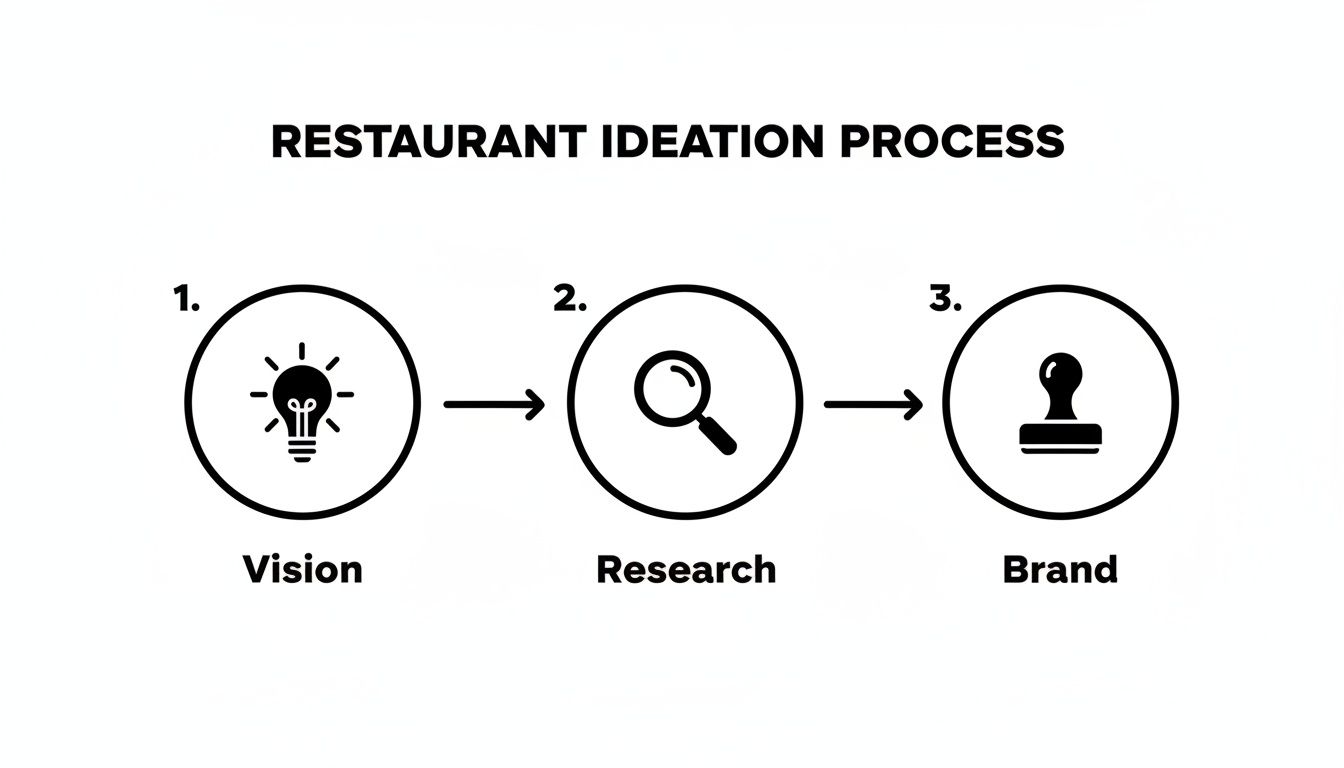
It's a clear path from a creative vision to a well-researched brand, and it's absolutely essential for making it in this town.
Crafting Your Restaurant's Identity
Once you've done your homework and validated your idea, it's time to build your brand. This is so much more than a cool logo. It’s the story you tell, the vibe you create, and the experience you deliver from the moment someone walks through your door.
Your brand is what people say about you when you're not in the room. In the restaurant world, this means creating a memorable and consistent experience that makes customers want to return and tell their friends.
Think about the atmosphere. A minimalist, serene design is perfect for a Japanese restaurant, while a Mexican concept might call for bold, vibrant colors. Your brand also extends to your menu philosophy—are you farm-to-table, classic comfort food, or innovative fusion? To get a better feel for the city's culinary DNA, it helps to learn more about the unique Los Angeles cuisine and what makes it tick.
Finally, your service style is what ties it all together. A food truck needs to be fast and friendly, while a fine dining spot demands attentive, detailed service. Getting this foundation right ensures that every piece of restaurant equipment you buy and every person you hire is pulling in the same direction, guided by one clear, powerful vision. That clarity will be your best friend on the wild ride of launching a restaurant in LA.
Building a Bulletproof Restaurant Business Plan

Once you've nailed down your concept, it's time to build your business plan. Think of this document as more than just a stuffy requirement for a bank loan. It's your personal roadmap, the financial story you'll tell investors, and frankly, the single most important tool for proving your vision is both delicious and profitable.
For anyone asking how to start a restaurant business in a city as competitive as L.A., a detailed plan is completely non-negotiable. It’s where you'll hash out every single detail, from your mission statement to your five-year financial projections. This is your chance to show you’ve really done your homework on the L.A. market, whether you're opening a Korean fusion joint in K-Town or a modern Thai spot in Echo Park.
Estimating Your Los Angeles Startup Costs
Getting a handle on your startup costs is all about sweating the details. You have to account for everything, from the big-ticket items to the little recurring expenses that can sneak up on you. In a pricey market like Los Angeles, getting these numbers right can make or break your first year.
Your biggest costs will almost always fall into these buckets:
- Real Estate: This isn't just rent. Think security deposit, first month's rent, and the cash you'll need for renovations to get the space up to code and looking the part.
- Permits and Licenses: Be ready to budget for city business licenses, LA County health permits, and, if you're serving alcohol, a potentially very expensive liquor license.
- Professional Fees: Don’t overlook the cost of having a lawyer review your lease, an accountant set up your books, or an architect plan your layout.
- Initial Inventory: This is all the food and drink you need just to open the doors, from specialty Japanese ingredients to your everyday staples.
I see it all the time: new owners completely underestimate their initial cash needs. It’s not just about covering the build-out. You absolutely need a solid cash runway to get you through that critical first year before you start turning a consistent profit.
Of course, one of your largest single expenses will be your restaurant equipment. Every piece, from the cooktops on the line to the POS system out front, needs a line in your budget. This is especially true for the workhorses of any kitchen, like your commercial refrigerators and freezers.
Projecting Your Cash Flow and Securing Funding
With your startup costs tallied up, you can start building your financial projections. This means creating a break-even analysis, a projected profit and loss statement, and a cash flow statement. Trust me, any potential investor will be looking at these documents with a magnifying glass to see if your business is viable.
Understanding your cash flow is everything. Initial capital for a full-service spot in a city like Los Angeles typically runs anywhere from $275,000 to $750,000. You should plan on a break-even timeline of 12 to 24 months and have enough cash on hand to cover the build-out plus at least 6–12 months of operating expenses. You can dig into more restaurant industry statistics on sculpturehospitality.com.
Once your numbers are solid, you can start talking to funding sources:
- Traditional Bank Loans: These usually demand a strong credit history and plenty of collateral.
- SBA Loans: A great option for new entrepreneurs, as they are government-backed and often more accessible.
- Local LA Investor Networks: Look for angel investors or venture capital groups that focus on Southern California's hospitality scene.
- Friends and Family: A common way to get seed money, but make sure you keep it professional with clear, legal agreements.
Smart Financing for Essential Restaurant Equipment
The sticker shock from new restaurant equipment can drain your startup capital before you've even served a single customer. This is where getting smart about financing can be a game-changer for managing your cash.
Instead of dropping tens of thousands of dollars upfront for your entire kitchen, look into alternatives. Lease-to-own programs are a fantastic strategy, letting you get high-quality commercial refrigerators, ovens, and prep tables for manageable monthly payments. This frees up your precious cash for other vital things like payroll, marketing, and inventory.
For many new L.A. restaurateurs, especially those launching a food truck or a small cafe, this approach just makes sense. It helps you align your equipment costs with your revenue as it starts coming in. To see how it works, you can explore different options for Los Angeles restaurant equipment financing and find a plan that fits your budget. It’s a strategic move that can be the difference between a successful launch and closing your doors too soon.
Navigating LA's Permits, Licenses, and Real Estate
Alright, you’ve got your business plan locked and loaded. Now comes the part that can make or break even the most brilliant restaurant concept in Los Angeles: the tangled web of real estate, permits, and licenses.
This is where the dream meets the pavement, and honestly, it’s where a lot of aspiring restaurateurs get stuck. Los Angeles has a well-earned reputation for being a tough place to open any business, and restaurants are at the top of that list. But don't let that intimidate you. With a solid strategy and a healthy dose of patience, you can navigate the bureaucracy, whether you're opening a sleek Japanese spot in a brick-and-mortar or a killer Korean BBQ food truck.
Securing Your Perfect LA Location
Finding the right spot in this city is so much more than just a cool address. It means digging deep into zoning laws, getting a feel for neighborhood demographics, and knowing what to look for in the physical property. Trust me, a cheap lease in the wrong part of town is a recipe for disaster.
When you’re out there scouting locations, keep these absolute essentials in mind:
- Foot Traffic and Visibility: Is the spot easy to find? Will people walking or driving by actually see you? A corner location on a busy street might come with higher rent, but the built-in marketing can be worth every penny.
- Zoning and Building Code: This is non-negotiable. The property must be zoned for a commercial restaurant. Your life will be infinitely easier if the previous tenant was also a restaurant, as critical infrastructure like grease traps and proper ventilation might already be in place.
- Neighborhood Vibe: Your concept has to click with the community. A high-end Thai restaurant might be a smash hit in West Hollywood, while a casual, family-friendly Mexican joint could be the go-to spot on the Eastside.
Once you’ve found a space that feels right, the lease negotiation kicks off. This is not the time for DIY. Get a lawyer who lives and breathes commercial real estate. They can help you negotiate crucial terms like a tenant improvement allowance, which is basically cash from the landlord to help you with renovations.
The Essential Permits and Licenses Checklist
Getting your paperwork straight is a tedious, detail-oriented slog, but it's absolutely necessary. In LA, you're not just dealing with the city; you're juggling city, county, and state agencies. Forgetting even one permit can bring your opening to a screeching halt and hit you with some painful fines.
Your biggest relationship will be with the LA County Department of Public Health. These are the folks who ensure your entire operation is up to code, from the specific layout of your kitchen to the NSF-certified commercial refrigerators and freezers you install.
Beyond the health department, you'll have a few other key pieces of paper to chase down:
- City Business License: A basic requirement from the City of Los Angeles to legally operate.
- Seller's Permit: This comes from the California Department of Tax and Fee Administration and allows you to collect sales tax.
- ABC License: Planning to serve alcohol? You'll need a license from the California Department of Alcoholic Beverage Control. Buckle up, because this one is a journey.
Let me be crystal clear: do not underestimate the timeline for permits. In Los Angeles, getting a full liquor license (Type 47) can easily take over a year and cost tens of thousands of dollars. They are limited, so you often have to buy one from an existing business. Plan for this from day one.
Special Considerations for LA Food Trucks
Thinking of going mobile? Operating a food truck in Los Angeles frees you from a long-term lease, but it swaps that headache for a completely different set of rules and regulations.
First and foremost, you absolutely must have a contract with a licensed commissary kitchen. This is your home base for everything—prepping food, storing inventory, and deep-cleaning your truck. LA County is incredibly strict about this, and you won’t get your health permit without a valid commissary agreement.
On top of that, you'll need a specific Mobile Food Facility Permit from the health department. You also have to become an expert on local parking rules and vending zones, which change dramatically from one neighborhood to the next. Staying compliant is the name of the game if you want to keep your wheels on the road and serve the hungry people of LA.
Designing Your Kitchen and Sourcing Equipment
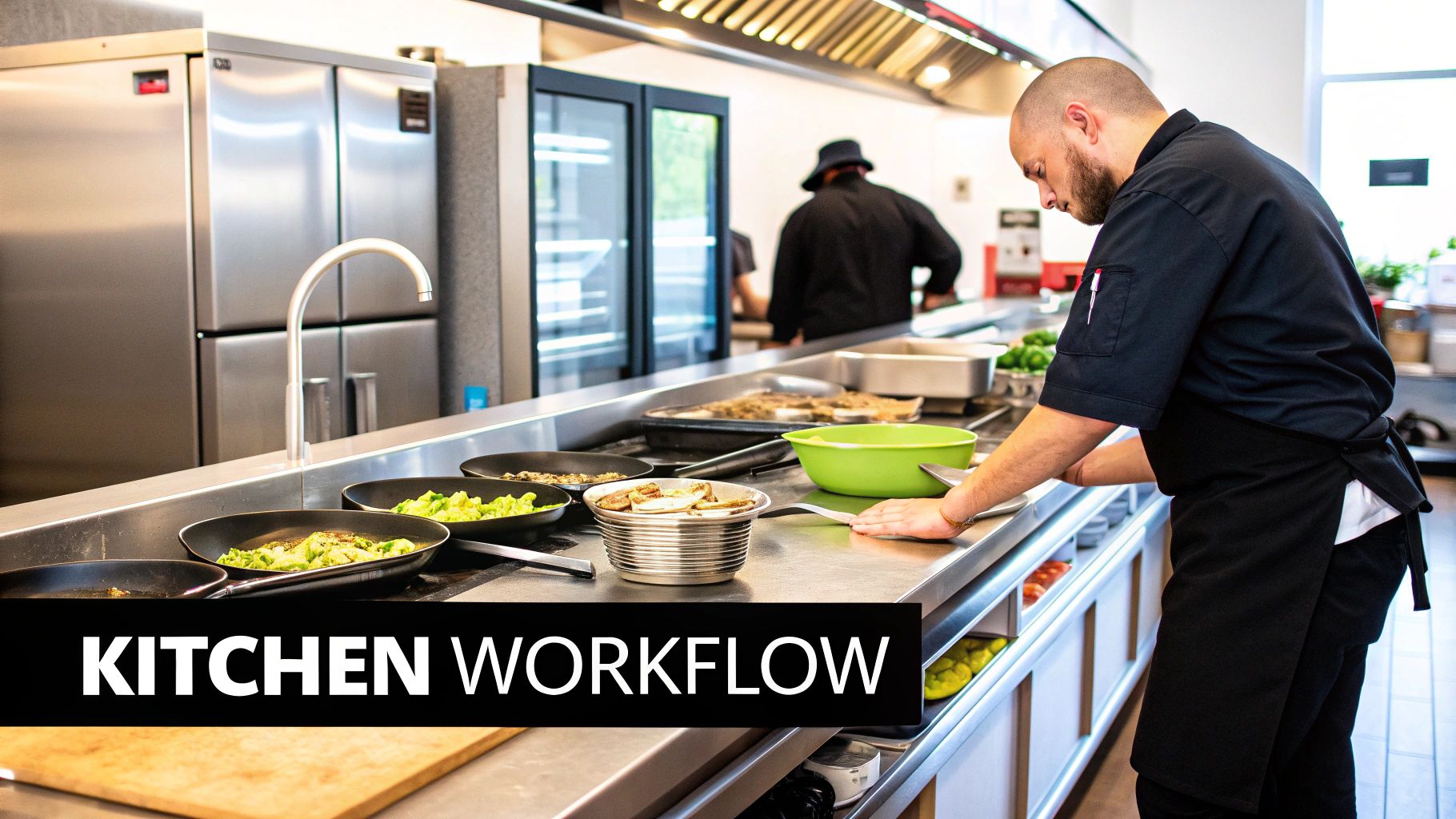
The heart of any successful Los Angeles restaurant isn't the dining room—it's the kitchen. A well-designed kitchen is a finely tuned engine that powers your whole operation, keeping the chaos at bay and pushing out plates efficiently.
For anyone figuring out how to start a restaurant business, your kitchen layout and equipment choices are some of the most important decisions you'll make. This is where your menu concept, whether it's a high-volume Thai spot or a meticulous Japanese sushi bar, becomes a real, physical workspace. A bad layout creates bottlenecks, frustrates your staff, and leads to slow ticket times, which can quickly sink a new restaurant in LA's competitive market.
Mapping Out a Functional Kitchen Workflow
A great kitchen is all about flow. The layout needs to follow the natural path food takes through your restaurant, from the delivery door all the way to the customer's plate. This keeps things moving and prevents cross-contamination, even during a slammed dinner service.
Think of it like creating zones for each key function:
- Receiving and Storage: This is where all your ingredients come in. It should be right by the back door with easy access to your dry storage, commercial refrigerators, and freezers.
- Food Preparation: Your wash, chop, and mix stations. This area sits perfectly between storage and the main cooking line.
- Cooking Line: This is the main event. Here, your ranges, fryers, and grills are set up for maximum speed and efficiency.
- Service and Plating: The last stop before food heads out. This zone needs to be close to the dining room entrance for quick hand-offs.
- Warewashing: The dish pit should be away from the prep and cooking areas to avoid contamination, but still easy for servers to get to.
A smart layout is your best defense against chaos. Every extra step a cook has to take costs you time. By minimizing movement and creating a logical workflow, you're not just organizing space—you're building speed and consistency right into your operation.
Selecting the Right Restaurant Equipment for Your LA Concept
Once you’ve got a layout, it's time to pick your restaurant equipment. You need pieces that are durable, reliable, and a perfect match for your menu. A Chinese restaurant specializing in high-heat wok cooking will need powerful ranges, while a Korean BBQ joint will be investing heavily in specialized tabletop grills and a serious ventilation system.
It's the same story for a Mexican taqueria, which can't function without a quality flattop griddle and steam tables to keep everything at the perfect temperature. Don't fall into the trap of buying equipment you think you might need someday. Every square foot in an LA kitchen is prime real estate, so stick to the essentials that directly support your menu. This same logic applies to Los Angeles food trucks, where space is an even bigger luxury.
The Critical Role of Commercial Refrigerators and Freezers
No piece of equipment is more crucial than your cold storage. Your commercial refrigerators and freezers run 24/7, protecting thousands of dollars in inventory. If one of them fails, it's not just an inconvenience—it can be a catastrophe for a new business.
The type of refrigeration you need is dictated entirely by your cuisine:
- Japanese Sushi Bar: You'll need undercounter refrigerators right on the line for quick access to fish and a top-notch reach-in freezer that can hold precise, ultra-low temperatures for freshness and safety.
- Thai or Chinese Kitchen: Requires large walk-in coolers for bulk produce and sauces, plus reach-in freezers for things like dumplings and spring rolls.
- Mexican Restaurant: Benefits hugely from low-boy prep table refrigerators. These combine chilled storage with a workspace, keeping ingredients for tacos and burritos cold and right at your fingertips.
For bigger spots, a combination unit can be a smart, space-saving choice. You can find more specific advice on this by checking out our post on the benefits of a walk-in cooler and freezer combination.
Here's a quick guide to help you choose the right cold storage for your LA restaurant concept.
Essential Commercial Refrigeration Checklist for LA Restaurants
A guide to selecting the right type of commercial refrigeration and freezer units based on your restaurant concept and needs in Los Angeles.
| Unit Type | Best For (Cuisine/Concept) | Key Feature | LA Sourcing Tip |
|---|---|---|---|
| Reach-In Refrigerator | Virtually any concept; essential backup. | Vertical, space-saving design with easy access. | Look for ENERGY STAR models to combat high SoCal electricity bills. |
| Undercounter/Worktop | Sushi bars, sandwich shops, pizza prep. | Combines workspace with cold storage. | Measure your line space precisely; these need to fit perfectly. |
| Walk-In Cooler/Freezer | High-volume restaurants, catering. | Bulk storage capacity for large inventory. | Consider a combo unit to save space and installation costs. |
| Merchandiser (Glass Door) | Cafes, markets, grab-and-go spots. | Displays products to encourage impulse buys. | Ensure it has good lighting to make products look appealing. |
Choosing the right refrigeration isn't just about storage—it's about protecting your investment and ensuring the quality of every dish you serve.
Sourcing Equipment in Los Angeles: New vs. Used
Finally, you need a plan to get all this equipment without draining your budget. Luckily, in Los Angeles, you have plenty of options for both new and used gear.
- New Equipment: Buying new gets you the latest tech, a full manufacturer's warranty, and peace of mind. For your most critical items, like commercial refrigerators and ice machines, going new is often the smartest move.
- Used Equipment: You can save a lot of money by sourcing from reputable LA restaurant supply dealers, especially on things like stainless steel prep tables, sinks, and shelves. Always inspect used equipment in person and, if you can, see it run before you buy.
A blended approach usually works best. Splurge on new for the workhorse pieces you'll use constantly and save with quality used items for the supporting cast. This strategy is a key part of learning how to start a restaurant business on a realistic budget, setting up your kitchen for success from day one.
Assembling Your Team and Launching Your Restaurant
You've got the kitchen designed and your restaurant equipment is ready to go. Now, it's all about the people—the team that will bring your Los Angeles eatery to life. Your staff is the heart and soul of your business, the critical link between your food and your customers.
Let's be real: in LA's cutthroat hospitality scene, finding and keeping a talented, reliable crew is one of the toughest hurdles you'll clear. The right people can make your concept soar. The wrong ones can sink you before you even get your sea legs. It all begins with knowing exactly who you need on your side.
Building Your Core Restaurant Staff
Before you even think about posting a job ad, map out the key roles that will keep your restaurant humming. This isn't a one-size-fits-all situation. A bustling, high-volume Chinese kitchen needs a completely different brigade than an intimate Japanese sushi bar.
Get specific about the essential positions for your unique concept:
- Executive Chef/Kitchen Manager: This is your back-of-house general. They’re running the show, from executing the menu and nailing food costs to managing inventory and leading the whole kitchen crew.
- Line Cooks: These are the engines of your kitchen. You need specialists who fit your menu like a glove—think a wok master for a Thai spot or a grill expert for a classic steakhouse.
- Front-of-House Manager: They’re the conductor of the entire dining experience. This person is in charge of staffing, training, smoothing over customer issues, and making every single guest feel important.
- Servers and Bartenders: These are the faces of your brand. You need people who are not just friendly but also deeply knowledgeable and can sell your menu with genuine passion.
Your job descriptions need to do more than just list tasks. Tell a story. Sell your vision, your culture, and what makes your restaurant an incredible place to work. In a market like LA, you’re not just hiring; you’re competing for the best talent out there.
Generating Buzz Before You Open
With your team starting to take shape, it's time to get people excited. A great restaurant launch doesn't just happen—it’s the result of a smart, calculated marketing push that builds a groundswell of anticipation and puts you on the map for LA foodies.
You need to start making noise at least a month or two before your doors officially open. The goal is to have a built-in audience before you've served a single plate. Nailing the pre-launch is a massive part of learning how to start a restaurant business that hits the ground running.
Here are a few tactics to get the word out on the street:
- Engage with LA Food Influencers: Find the local food bloggers and Instagrammers whose followers are your ideal customers. Invite them for a private, early tasting. One solid post from the right person can create a massive wave of interest.
- Leverage Social Media: Start sharing behind-the-scenes glimpses. Show the renovation progress, introduce your star chef, and post drool-worthy sneak peeks of menu items. Use LA-specific hashtags to pull in a local crowd.
- Connect with the Neighborhood: Don't be an anonymous new business. Get out there, introduce yourself to other local shop owners, and get involved in community events. Your neighbors can become your most powerful and loyal advocates.
Executing a Flawless Soft Opening
Think of your soft opening as the final dress rehearsal. This is an invite-only event, usually for friends, family, and local insiders, designed to test your entire operation in a friendly, controlled setting. It's your golden opportunity to iron out all the wrinkles before you're facing a full house of paying customers.
Use this night to really push your systems. Can the kitchen keep up with a rush? Are the POS terminals working without a hitch? Is the flow of service actually smooth? Ask your guests for blunt, honest feedback and use it to make changes on the fly.
A great soft opening gives your team a huge confidence boost. It ensures that when the grand opening finally arrives, you're not just hoping for the best—you're ready to deliver an unforgettable experience and make your mark on the incredible Los Angeles food scene.
Common Questions About Starting an LA Restaurant
Even the most buttoned-up business plan will run into a few LA-specific quirks. Getting straight answers to these common questions is key for anyone trying to figure out how to start a restaurant business in this town. Let's tackle some of the most frequent queries we hear from new restaurateurs.
How Much Does a Liquor License Cost in Los Angeles?
This is a big one, and the answer can vary wildly. A Type 41 license, which lets you serve beer and wine, is relatively straightforward. You're mostly looking at application fees, which usually run a few thousand dollars.
But if you want to serve hard liquor, you’ll need a Type 47 license. That's a whole different ballgame. The city limits the number of these licenses, so you have to buy one from an existing owner on the open market. In hot spots around LA County, that price can be anywhere from $50,000 to over $250,000.
What Are the First Steps to Starting a Food Truck Business in LA?
The path for Los Angeles food trucks has its own unique roadmap compared to a brick-and-mortar spot. Before you even think about where you’ll park, you have to get these ducks in a row:
- Lock in your concept and draft a solid business plan.
- Register your business (LLC is a popular choice) and get your EIN.
- Secure a California Seller's Permit so you can collect sales tax.
- Buy or lease a truck that already meets LA County health and safety codes.
- Sign a contract with a licensed commissary kitchen. This is a non-negotiable requirement.
- Apply for your Public Health Permit directly from the LA County Department of Public Health.
Once you’ve checked all those boxes, you can start applying for city business licenses and hunting for the best places to operate.
Should I Buy New or Used Restaurant Equipment in Los Angeles?
The smart answer here is usually a mix of both. It really depends on your budget and what piece of restaurant equipment you're talking about.
For your absolute workhorses—the gear you can't afford to have fail, like your commercial refrigerators and freezers—buying new is the safest play. The peace of mind that comes with a full warranty is worth every penny when a breakdown could wipe out thousands of dollars in inventory.
On the other hand, things like stainless steel prep tables, heavy-duty shelving, and even some cooking ranges are built to last. A high-quality used piece from a reputable LA supplier can save you a ton of cash. Just make sure you inspect it in person and ask about its history before you hand over your money.
This balanced approach lets you be strategic with your startup capital, investing in new where it counts and saving where it makes sense. It’s one of the most practical ways to manage your budget effectively.
Ready to equip your LA kitchen with reliable, high-performance gear? At Los Angeles Restaurant Equipment, we offer a full range of Atosa commercial refrigerators, freezers, and cooking equipment designed for the demands of a professional kitchen. Explore our selection and take advantage of free delivery and flexible financing at https://losangelesrestaurantequipment.com.