

A Chef's Guide to Industrial Immersion Blenders in Los Angeles
Picture a busy Los Angeles kitchen during the dinner rush. In Thai Town, a chef is perfecting a fragrant curry paste. Across town in Koreatown, another is crafting a velvety gochujang sauce. In a professional kitchen, the demand for perfectly smooth soups, sauces, and emulsions never stops. This is exactly where the industrial immersion blender shines, acting as the powerhouse of your prep line.
The Unsung Hero of the Professional Kitchen
An industrial immersion blender is so much more than a gadget; it’s a cornerstone of professional restaurant equipment. Think of it as the undisputed workhorse of your culinary operation. A home blender is like a scooter—great for small, quick jobs. A commercial model, on the other hand, is a delivery truck, built from the ground up to handle heavy volumes and tough ingredients, day in and day out.
This guide is designed for the demanding world of Los Angeles foodservice, from the bustling food trucks feeding downtown crowds to established restaurants known for their flawless Japanese ramen broths. We'll cover everything you need to know to choose a machine that can handle the heat of a commercial kitchen, making your team more efficient, boosting creativity, and delivering a real return on your investment.
Built for the LA Food Scene
Whether you’re setting up a new kitchen or upgrading your existing tools, understanding the value of an immersion blender is key. Chefs across Los Angeles rely on these blenders for tasks specific to the city’s incredible culinary diversity:
- Mexican Restaurants: Effortlessly puréeing huge batches of salsa, mole, and refritos right in the stockpot.
- Thai & Chinese Kitchens: Pulverizing tough ingredients like galangal, lemongrass, and ginger for authentic, silky-smooth pastes.
- Japanese & Korean Cuisines: Creating perfectly emulsified broths and flavorful sauces that are the heart and soul of their dishes.
An industrial immersion blender cuts out the slow, messy, and dangerous step of transferring hot liquids to a countertop blender. This one change can dramatically speed up prep work, lower the risk of burns, and seriously improve your kitchen’s workflow.
That kind of efficiency is non-negotiable in a fast-paced kitchen where every second counts. The right equipment—from your commercial refrigerators and freezers to your prep stations—is the backbone of a successful restaurant. In fact, how you organize your space around essential tools like an immersion blender is just as important as the tool itself. For more on setting up an efficient kitchen, check out our guide on the benefits of stainless steel kitchen prep tables.
The growing importance of these tools is clear from market trends. The global hand blender market, which includes these powerful industrial models, was valued at around USD 4.9 billion and is expected to hit USD 6.8 billion by 2034. The commercial sector is the main driver of this growth, making up nearly 59.7% of the market share. This just goes to show how critical industrial immersion blenders have become in professional kitchens all over the world.
Decoding the Specifications That Truly Matter
When you’re staring at a spec sheet for professional restaurant equipment, it can feel like you’re trying to read a foreign language. But for an industrial immersion blender, just a handful of numbers separate a true kitchen workhorse from a glorified paperweight. Getting these right is everything for a Los Angeles chef or operator looking to make a smart buy.
This diagram hits on the core concepts—power, durability, and capacity—that define a high-performance industrial immersion blender.
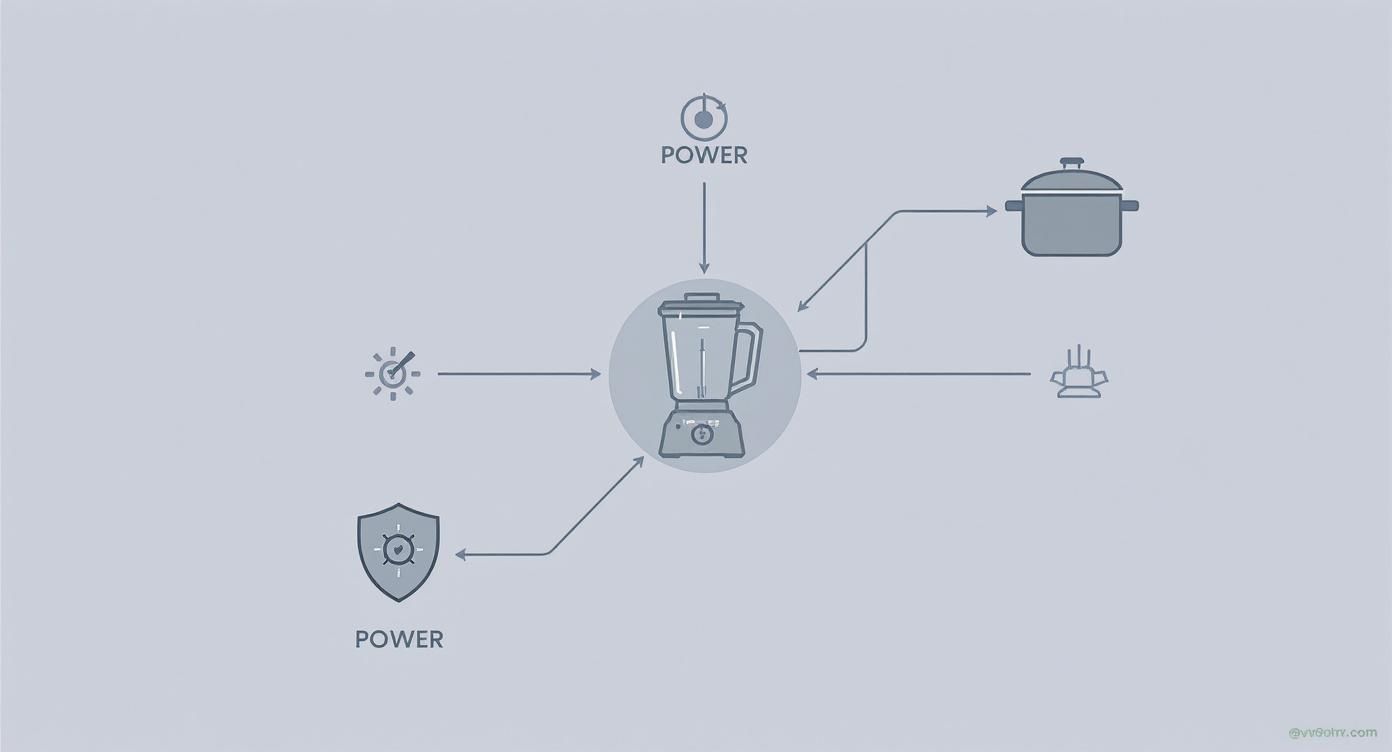
As you can see, these pillars all work together. A reliable, efficient tool has to be strong enough and big enough for the job. Let’s dive into what these specs really mean for your day-to-day grind in the kitchen.
Motor Power Horsepower and Watts
The motor is the heart and soul of your blender. Its power, measured in either horsepower (HP) or watts, tells you exactly what it can handle. A wimpy motor might get you through a thin soup, but it’s going to choke—and probably burn out—when you throw it into the thick mole sauce a Boyle Heights spot makes daily or a dense root vegetable purée.
Think of it like this: a 0.5 HP motor is fine for light-duty stuff, like whipping up vinaigrettes. But something in the 1 HP range, like the beastly Spika MS 500 Heavy-Duty Immersion Blender, brings the serious torque you need for thick sauces and heavy mixtures. It's a fantastic, versatile choice for most pro kitchens. For big-time production, you can find models that go even higher.
Shaft Length Reaching New Depths
Shaft length is one of those practical details that people often miss until it's too late. It determines how deep you can go and how much you can blend in one go. A short, 12-inch shaft is great for a small prep station, but it’s completely useless for a catering operation trying to blend a 50-quart stockpot of tomato soup.
Here’s a quick guide to matching shaft length to what you actually do in a busy LA kitchen:
- 12-14 inches: Perfect for smaller batches. Think Los Angeles food trucks creating their signature sauces or a café blending smoothie bases.
- 16-18 inches: This is the sweet spot for most mid-sized restaurants. It can handle stockpots up to 25 gallons, making it ideal for the weekly tom yum soup production in a Thai Town kitchen.
- 21 inches and longer: These are the big guns. They're built for high-volume commissary kitchens and large-scale caterers blending in pots holding 50 gallons or more.
Choosing the right shaft length means you aren't dangerously and inefficiently blending in a bunch of small batches. It also keeps the motor housing safely away from hot liquids, protecting both your staff and your equipment.
RPM Rotations Per Minute
RPM (Revolutions Per Minute) is all about how fast the blade spins. A higher RPM often means a quicker blend, but this isn't just about speed—it's about control and texture. Most good industrial models come with variable speed controls, which are absolutely critical for getting things just right.
A lower RPM is what you want for a chunky, rustic salsa where you need to keep some of that texture. On the flip side, a high RPM is essential for getting that silky-smooth velouté or a perfectly stable aioli. For a ramen shop in Sawtelle trying to create a flawless, emulsified broth, being able to dial in the RPM is a complete game-changer.
Duty Cycle The Endurance Test
Finally, the duty cycle is what really separates the pros from the amateurs. This spec tells you how long the blender can run without a break before it needs to cool down. A home blender might have a duty cycle of one minute, which is just not going to cut it in a commercial kitchen.
An industrial immersion blender is built for the long haul. Its duty cycle shows it can handle the pressure of a busy service, whether it’s blending pot after pot of sauce or running for several minutes straight to emulsify a huge batch of dressing. This kind of durability is the foundation of an efficient kitchen that can keep up with the hungry Los Angeles public.
Matching the Right Blender to Your Menu
Picking the right industrial immersion blender isn't just about grabbing the most powerful model off the shelf. Think of it as hiring a specialist for your kitchen—it has to be the right fit for the job your menu demands. The perfect blender for a high-volume Mexican spot in LA is worlds apart from what an intimate Japanese ramen shop needs.
Your menu tells a story, and the right equipment helps you tell it consistently, day in and day out. A mismatch here just leads to headaches, wasted cash, and food that isn't quite right. That beast of a blender with a long shaft might be total overkill for a small café, but it's a lifesaver for a catering operation pumping out hundreds of gallons of soup for a big event.
LA Cuisines and Blender Needs
Los Angeles is a city defined by its food. A single tool like an industrial immersion blender plays a completely different role depending on the kitchen it's in. Let's look at a few real-world examples from around town.
For a busy East LA Mexican restaurant, the name of the game is raw power and the grit to keep going. The daily prep list is no joke: gallons of complex mole, vats of fresh salsa. This kitchen needs a blender with a high-horsepower motor and a long, tough shaft that can tear through dense mixtures for hours without breaking a sweat. It’s all about volume and consistency, turning tough dried chiles and nuts into a perfectly smooth sauce every single time.
Head over to a Japanese ramen shop in Sawtelle, and the needs change completely. Power is still a factor, but precision is king. The goal is to create a flawless, emulsified broth—a silky, perfectly bound mixture of fats and liquids. For this, a blender with variable speed control is non-negotiable. Starting slow and ramping up the RPMs lets the chef build a stable emulsion without it breaking. It’s a small detail that makes all the difference in authentic, top-tier ramen.
From Food Trucks to Thai Kitchens
This same logic holds true across LA's food scene. A Thai kitchen in Hollywood needs a machine that can absolutely pulverize fibrous ingredients like lemongrass, galangal, and lime leaves for their curry pastes. That task calls for more than just a strong motor; it needs a specialized blade that can shred those tough ingredients into a fine paste, leaving no stringy bits behind.
Then you have the incredible Los Angeles food truck scene. A truck whipping up smoothie bases or signature sauces has precious little space and probably isn't blending in a 50-gallon pot. For them, a more compact, medium-duty industrial immersion blender with a 14- to 16-inch shaft hits the sweet spot. It delivers that professional-grade muscle without hogging the whole prep station.
It all boils down to a simple idea: match the machine to your menu. When you invest in a blender that lines up with your production volume, ingredients, and the textures you're aiming for, it stops being just a tool and becomes a true asset to your kitchen.
There's a reason these versatile blenders are popping up in more kitchens. They are a huge part of the overall blender market, which was recently valued between USD 2.82 billion and USD 3.61 billion, and it's only expected to climb by 2030. Commercial kitchens, especially in high-demand hospitality and catering, love them for their power, convenience, and safety. You can discover more insights about the blender market growth and see the full analysis. This trend just proves how vital the right industrial immersion blender has become. When you put your menu first, you make sure your investment pays off with every single plate you send out.
Unlocking Versatility With Attachments and Accessories
A great industrial immersion blender is a powerhouse on its own, but the real magic happens when you start adding attachments. Think of the motor as the engine and the attachments as the specialized tools that transform it into a multi-functional kitchen workhorse, saving you space, time, and money. For any Los Angeles food business, from a food truck to a full-service restaurant, the right add-ons are what really boost your efficiency and expand your menu.
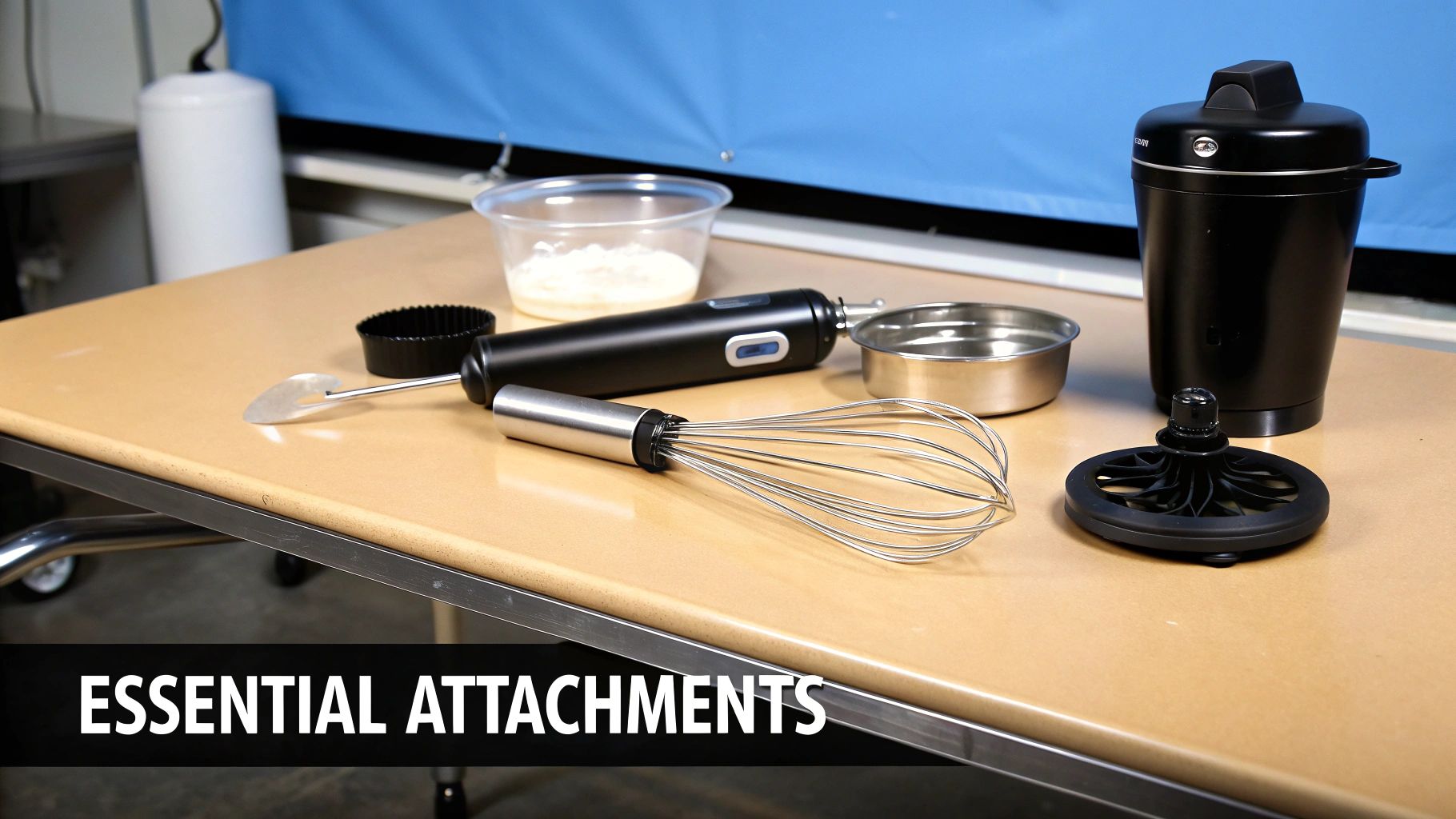
This kind of adaptability is everything in a busy kitchen. One minute you're making soup, and the next you're whipping up a huge batch of cream.
Essential Attachments for Every Kitchen
Some attachments are so incredibly useful they pretty much become essential in any professional kitchen. They make common tasks faster, guarantee consistency, and cut down on the need for separate, bulky equipment like countertop mixers or food processors.
Here are a few of the most valuable add-ons to consider:
- Whisk Attachments: These are an absolute game-changer for high-volume jobs. Imagine trying to whip five gallons of heavy cream by hand. A commercial whisk attachment gets it done in minutes, producing perfectly aerated creams, meringues, and light batters with unbelievable speed.
- Emulsifying Blades: Your standard blade is great for chopping and puréeing, but an emulsifying blade is engineered to create incredibly stable sauces and dressings. For a Korean restaurant making a creamy gochujang aioli or a Chinese kitchen perfecting a sesame vinaigrette, this tool ensures fats and liquids bind together without separating.
- Chopping and Frothing Blades: Other specialized blades can push your blender's capabilities even further. A chopping blade attachment can make quick work of soft fruits and vegetables, while a frother is perfect for aerating milk for lattes or creating foam for specialty cocktails.
To give you a clearer picture, here’s a quick rundown of what each attachment does best.
Common Attachments and Their Kitchen Applications
| Attachment | Primary Function | Ideal For (Menu Items) |
|---|---|---|
| Standard Blending Blade | Puréeing, mixing, and basic blending. | Soups, sauces, basic smoothies, tomato sauce. |
| Whisk Attachment | Aerating, whipping, and creating light textures. | Whipped cream, meringues, mousses, light batters. |
| Emulsifying Blade | Binding liquids and fats into a stable mixture. | Vinaigrettes, aioli, mayonnaise, creamy dressings. |
| Chopping/Mincing Blade | Coarsely processing soft ingredients. | Salsas, pâtés, processing cooked vegetables. |
| Frothing/Aerating Blade | Creating foam and light, airy textures. | Milk foam for coffee, cocktail foams, light sauces. |
Choosing the right tool for the job not only saves time but also guarantees you get the exact texture and consistency your recipe calls for, every single time.
Accessories That Improve Workflow
Beyond the attachments that actually process the food, a few key accessories are designed to make using your immersion blender safer and more efficient. These simple additions can have a major impact on your kitchen’s daily flow.
Investing in the right accessories isn't about spending more money; it’s about maximizing the return on your initial investment. A wall mount prevents costly damage, and a pot clamp frees up a staff member for other critical prep tasks.
For instance, wall mounts give you a safe, accessible place to store the blender, keeping it off crowded prep tables where it could get knocked over. This is especially critical for mobile operations like LA food trucks where every inch of space is precious. Another must-have is the pot clamp, which fastens the blender securely to the side of a large stockpot. This allows for hands-free operation during long blending jobs, preventing fatigue and keeping everything stable.
Mastering Sanitation and Safety Protocols
In any professional Los Angeles kitchen, from a high-end restaurant to a bustling food truck, your industrial immersion blender is a powerful asset. But with that power comes a serious responsibility. Proper maintenance isn't just about protecting your investment; it's about safeguarding your staff, your customers, and your reputation with the health department.
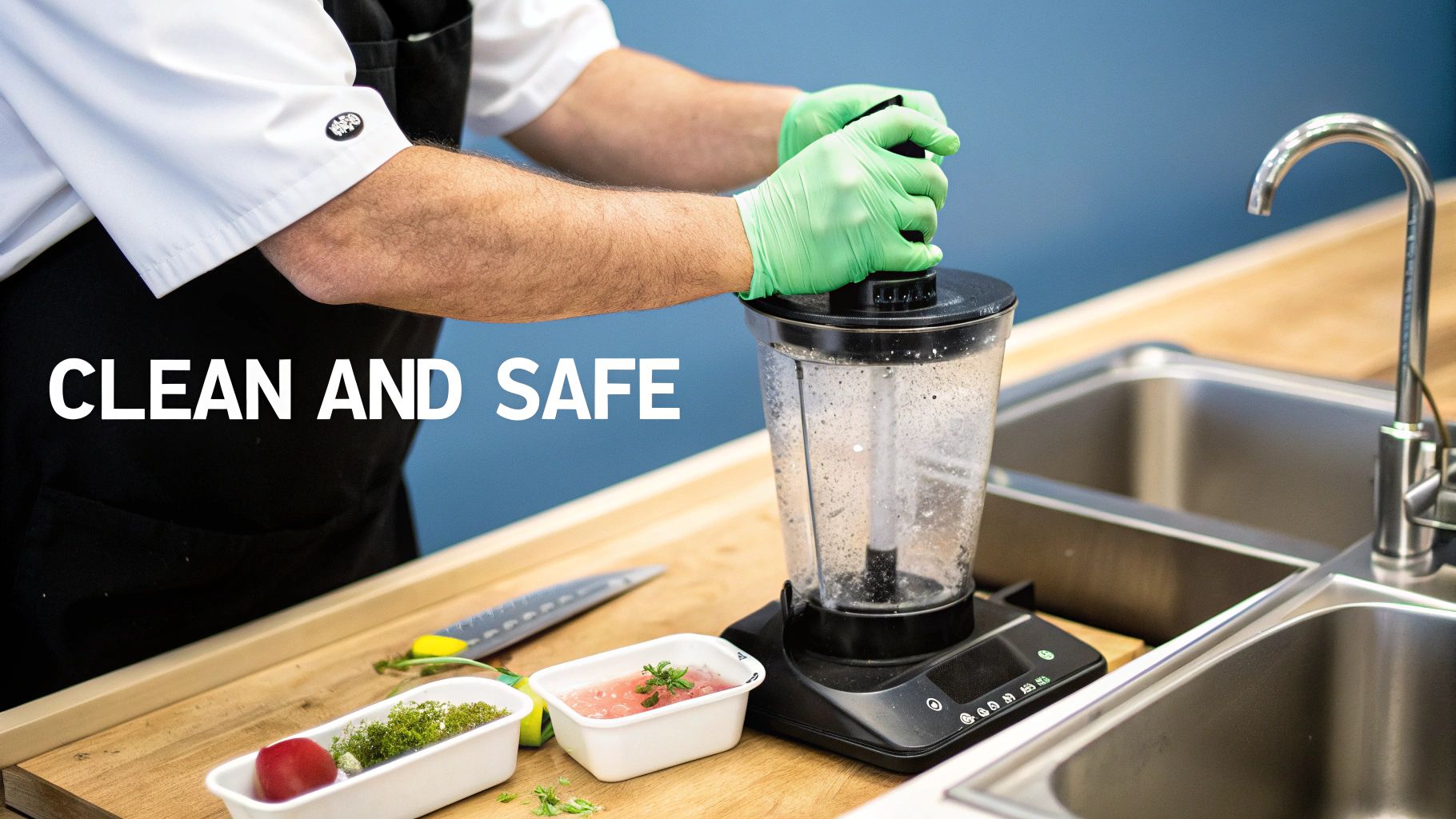
Treating this tool with respect ensures it remains a reliable workhorse, not a liability. If you cut corners, you're risking cross-contamination, equipment failure, and some pretty nasty injuries.
Step-by-Step Cleaning for Health Code Compliance
A quick rinse under the tap just won’t cut it. A commercial stick blender needs a thorough cleaning after every single use to stop bacteria from growing and to keep your food safe. This is especially true when you're switching from savory Korean sauces to sweet Thai desserts.
Follow this routine every time:
- Initial Rinse: The moment you're done blending, run the blender in a bucket of clean, hot water for about 30 seconds. This is a huge first step—it gets most of the gunk off before it can dry and cake onto the blade.
- Disassembly: Unplug the unit first. This is non-negotiable. Then, carefully twist off the blending shaft from the motor. The motor can never go in the water.
- Wash and Sanitize: Take the shaft and blade over to your three-compartment sink. Wash it with hot, soapy water, using a brush to get into all the crevices around the blade guard. Rinse it well, then let it soak in a food-safe sanitizing solution, following the directions on the label.
- Air Dry Completely: Set the clean parts on a sanitized surface to air dry. Trapped water is a breeding ground for bacteria and can cause rust. Don't even think about putting it back together until it's bone dry.
This disciplined approach keeps your gear ready for action and ensures you'll pass any inspection from the Los Angeles County Department of Public Health.
Think of the motor housing as the heart of your machine—you have to protect it from water. Just wipe the outside with a damp, sanitized cloth. Never dunk the motor or let water get into the vents. That’s a fast track to frying the electronics and creating a serious electrical hazard.
Critical Safety Protocols for Operators
The raw torque of an industrial immersion blender is no joke. A moment of distraction can lead to some serious injuries or gouged-up stockpots.
Drill these safety rules into your kitchen crew:
- Always Submerge Before Starting: Make sure the blade is completely under the surface of your ingredients before you hit the power button. Starting it in the open air will splatter product all over your kitchen, creating a hot, dangerous mess.
- Use a Two-Handed Grip: Always keep two hands on the blender. One on the motor handle and the other guiding the shaft. This gives you the stability you need to control it, especially when you’re pushing through thick soups or sauces.
- Keep the Blade Off the Bottom: Don't let the spinning blade grind against the bottom or sides of your metal pots. The high RPMs will chew up your cookware and can even send tiny metal shavings into your food.
- Utilize Pot Clamps: For big batches that need a long blend time, a pot clamp is your best friend. It locks the blender onto the side of the pot, letting it run hands-free without any chance of it slipping.
Make these practices second nature in your kitchen. That’s how you guarantee every blend is not just delicious, but perfectly safe.
How to Source Your Blender in Los Angeles
For any restaurant operator in Los Angeles, getting your hands on the right industrial immersion blender is about more than just matching specs to a recipe. The local market is full of different ways to get your equipment, and making the right call here can seriously affect your budget and how smoothly your kitchen runs. Your strategy for buying a blender should be just as thoughtful as sourcing ingredients for a signature Chinese dish or picking out your commercial refrigerators.
A smart purchase is all about balancing that initial price tag with long-term performance. You need a clear game plan to navigate the LA restaurant supply scene.
New vs Certified Used Equipment
There's a lot to be said for buying a brand-new industrial immersion blender. It comes with the peace of mind of a full manufacturer's warranty and all the latest tech. It’s a clean, simple purchase that guarantees you a pristine machine ready to handle the daily grind in your Korean or Japanese kitchen. The downside, of course, is that the upfront cost can be a tough pill to swallow, especially if you're a startup or running a food truck.
This is where certified used or refurbished equipment from a trusted LA supplier comes in. You can find some fantastic deals on units that have been thoroughly inspected, serviced, and even come with a limited warranty. It’s a great middle ground. The secret is to partner with a local dealer who truly stands behind their refurbished gear so you don't end up with someone else's headache.
Always think about the total cost of ownership. A cheaper used model might look good at first, but that initial savings can disappear fast with expensive repairs if it doesn't have a solid warranty or local service to back it up.
Financing and Leasing Options
For so many LA businesses—especially new food trucks and pop-ups—cash flow is king. This is where equipment leasing can be a brilliant move, letting you get a top-tier industrial blender without draining your bank account. Lease-to-own programs are also popular, allowing you to make manageable monthly payments while you work toward owning the equipment outright.
This approach gets the powerful tools you need right now to perfect your Mexican restaurant's signature mole or your Thai kitchen's curry pastes, letting your expenses grow alongside your revenue.
Logistics and Long-Term Support
Finally, don't forget the details that come after the purchase. Before you sign anything, ask about the warranty and find out if there are local service techs in the Los Angeles area. When a crucial piece of equipment like an industrial blender breaks down in the middle of a dinner rush, you need a fast fix, not a week-long wait for a part to be shipped.
The global demand for these blenders is booming, with the market expected to jump from USD 870 million in 2023 to USD 1.43 billion by 2030. This just goes to show how essential they are in modern commercial kitchens. If you want to dig into the numbers, you can read the full research about immersion blender market projections. Always remember to factor in potential shipping costs, and when you need some expert advice on sourcing any restaurant equipment in the area, feel free to contact our team for local guidance.
Common Questions About Industrial Immersion Blenders
Even the most seasoned chefs in Los Angeles have a few questions when a new piece of gear lands in their kitchen. It's smart to get the full story before you put an industrial immersion blender to work. Getting the right answers protects your investment, keeps your team safe, and helps you get incredible results.
Let's dive into some of the most common questions we hear from L.A. restaurant owners and kitchen managers.
Can I Use an Industrial Immersion Blender in a Plastic Container?
You really shouldn't. An industrial immersion blender's motor is a powerhouse, and all that power and friction create a surprising amount of heat at the blade. That heat can easily warp, melt, or even crack plastic containers—even the ones labeled "food-safe."
This not only trashes your container but also puts your blender's blade at risk. More importantly, you could contaminate a whole batch of food with plastic particles. For the safety of your customers and the life of your equipment, always stick to heavy-duty stainless steel pots and other heat-resistant metal containers.
What Is the Difference Between a Standard Blade and an Emulsifying Blade?
Think of a standard blade as the brute force option. Its main job is to chop, purée, and liquefy whatever you put in front of it. The sharp edges are designed to break down solids, making it your go-to for turning roasted vegetables into a velvety soup or whipping up a simple tomato sauce.
An emulsifying blade, on the other hand, is all about finesse. It's engineered to create a powerful vortex that pulls liquids and fats together, forcing them through tiny openings at incredibly high speeds. This action violently shatters the fat molecules, allowing them to bind tightly with the liquid. The result? A super stable, silky-smooth emulsion that won't break—perfect for that signature aioli, mayonnaise, or vinaigrette.
How Do I Know When to Replace My Blender's Motor or Blade?
For the blade, let its performance be your guide. If your purées start coming out a bit gritty, you see visible nicks or dings on the blade's edges, or it just seems to take longer to get the job done, it's time for a replacement.
The warning signs for the motor are a lot more serious. Listen for any strange grinding sounds, and pay close attention to any burning smells or if the motor housing feels way too hot to the touch. If the blender is struggling with jobs it used to handle with ease, get it serviced immediately or start looking for a replacement. You don't want it failing you in the middle of a dinner rush.
For all your kitchen needs, from commercial refrigerators to the most durable smallwares, trust Los Angeles Restaurant Equipment to supply your operation. Explore our full catalog of professional-grade tools at https://losangelesrestaurantequipment.com.