

A Restaurant Owner's Guide to Mop Basin Faucet Height in LA
In the fast-paced world of a Los Angeles restaurant, a detail as small as your mop basin faucet height can make a huge difference in your day-to-day operations. If you’re looking for the short answer, you’ll want to aim for a height of 36 to 43 inches from the floor. This isn't just a random number; it’s a crucial measurement that helps create a safe, efficient, and compliant kitchen, whether you're running a Thai food spot in Hollywood or a Mexican restaurant in East LA.
Why Faucet Height Matters in Your LA Restaurant

For any foodservice business, from a high-volume Koreatown BBQ spot to one of the many Los Angeles food trucks, the janitorial setup is the foundation of cleanliness. The height of your mop faucet directly impacts how fast your team can handle spills, tackle end-of-day deep cleans, and uphold the strict sanitary standards set by the LA County Department of Public Health.
Get this measurement wrong, and you’re setting yourself up for a chain reaction of problems. A faucet that’s too low forces your staff to awkwardly tilt heavy buckets, creating a serious risk of back strain and slowing everything down. On the other hand, a faucet that’s too high will cause water to splash everywhere, turning your floor into a slip-and-fall hazard—a liability no LA restaurant owner wants to deal with.
The Sweet Spot for Efficiency and Safety
The goal is to strike that perfect balance between having enough clearance and maintaining control. That 36 to 43-inch range is the industry sweet spot for a reason. It's high enough to fit a standard mop bucket underneath without a struggle but low enough to prevent water from splashing all over the floor. This simple detail promotes both safety and good hygiene. For a deeper dive, you can find more great info on mop sink dimensions on katom.com.
Think about how this plays out in real-world LA kitchens:
- A busy Mexican restaurant in East LA: A server drops a tray of salsa during the dinner rush. A perfectly placed faucet means a busser can fill a bucket in seconds, no mess, no fuss, and clear the hazard before it becomes a bigger problem.
- A Japanese sushi bar in Downtown LA: Here, cleanliness is absolutely essential. An ergonomic faucet height allows the closing crew to do their job without physical strain, ensuring every surface is spotless for the next day.
- A Thai food truck parked in Venice: Space is tight, and every inch is precious. The mop faucet has to be just right to avoid soaking nearby commercial refrigerators and freezers while still being functional.
The right mop basin faucet height isn’t just a plumbing detail. It's an investment in your operational speed, your staff's well-being, and the long-term success of your restaurant. When you get it right, nobody notices—because everything just works the way it should.
Ultimately, this straightforward measurement is what keeps your restaurant clean, safe, and always ready for service.
Navigating Los Angeles Plumbing and Health Codes
Putting a mop basin in a Los Angeles restaurant isn't just a simple plumbing task—it’s a major checkpoint for local health and safety regulations. You have to satisfy the specific rules set by the Los Angeles Department of Building and Safety (LADBS) and the LA County Department of Public Health, which control every single detail of your janitorial station.
These aren't just gentle suggestions; they're hard-and-fast requirements. They exist to stop cross-contamination and make sure your place is safe for your team and your customers, regardless of the cuisine you serve, be it Japanese, Korean, or Chinese food.
Falling short of these standards can mean expensive delays and a big "FAIL" on your inspection report. Picture this: a new sushi spot in Downtown LA is all set for its grand opening. The health inspector comes for the final look-over and finds the mop sink is missing a proper backflow preventer. That's a deal-breaker in LA, where you need one to stop dirty water from getting back into the clean water supply. That one mistake could push the opening back for weeks, killing revenue and creating a ton of stress.
The Role of Faucet Height in LA Code Compliance
While the local codes might not give you an exact number for mop basin faucet height, where you place it is directly linked to other rules you must follow. The faucet has to be installed at a height that allows all the other required parts to work correctly.
For example, your setup needs to make room for a code-required backflow preventer, usually a vacuum breaker. This device needs enough clearance to do its job. On top of that, the entire installation has to prevent splashing and keep all the dirty water inside the basin. A faucet that’s too high can easily splash contaminated water onto the floor, which is an instant health code violation.
This is why you have to look at the whole picture. You can get all the essential details and check out a full lineup of compliant Los Angeles restaurant equipment to make sure your kitchen is ready to go from day one.
Learning from Other Municipal Codes
It can be helpful to see what other cities are doing to understand the thinking behind LA's rules. Take Maricopa County, Arizona, for instance. Their local codes demand a mop basin that’s at least 3 feet square with a curb that's at least 4 inches high to contain spills.
When you see detailed specs like that, it's clear the main goal is to stop cross-contamination during cleaning. You can even read the fine print of these sanitation codes and their impact on construction to get inside the head of a health inspector.
A compliant mop basin setup in Los Angeles is a system where every component works together. The faucet height, basin dimensions, and required plumbing hardware are all interconnected parts of a sanitation strategy that protects your business.
At the end of the day, you want a janitorial station that's efficient, safe, and totally compliant. Nailing the mop basin faucet height is a huge piece of that puzzle. It ensures you’ll pass your inspections and keep your great reputation in the cutthroat LA food scene.
Boosting Staff Safety and Kitchen Ergonomics
Let's be honest, the height of your mop basin faucet probably isn't the first thing you think about when designing a kitchen. But getting it right goes way beyond just passing a health inspection. It’s a crucial detail for creating a safe, efficient workspace for your staff. The human element of your cleaning setup can make a real difference in workflow, morale, and even your bottom line by cutting down on workplace injuries.
Think about it. A faucet that’s too low forces your crew to bend and stoop awkwardly every single time they fill a bucket. Over a long shift, that repetitive strain can lead to serious back pain and injuries. It's a small detail that can have a huge impact, potentially leading to workers' comp claims and high staff turnover.
On the flip side, a faucet set way too high creates its own set of problems. Water dropping from that height will splash everywhere, creating a slick mess on the floor. In a busy kitchen, a wet floor is a recipe for a slip-and-fall disaster, putting everyone at risk.
Designing for People First
Picture a packed Friday night at a bustling Mexican restaurant in East LA. Spills happen, and the crew needs to clean them up fast. A perfectly placed mop faucet lets them fill buckets quickly without breaking their backs or turning the floor into a puddle. This simple ergonomic choice not only speeds things up but also sends a clear message to your staff: you care about their well-being.
This is also about making your kitchen accessible for everyone. ADA guidelines offer a great starting point for building more functional spaces. Generally, these guidelines suggest sink installation heights between 29 to 36 inches. Some specific designs might allow for heights up to 44 inches to ensure the right clearance and reach. You can dig deeper into these ergonomic dimensions on the Access Board's website.
Thoughtful ergonomic design in your janitorial area is an investment in your people. It minimizes physical strain, reduces the risk of accidents, and fosters a more positive and productive work environment.
Small Changes, Big Impact
You don’t need to do a massive overhaul to create a more ergonomic kitchen. It's often about making small, smart choices that focus on how your team interacts with their tools and their space.
- Observe Your Team: Just watch how your staff uses the mop sink. Are they struggling to get the bucket under the spout? Is water splashing all over the place?
- Invest in Better Hoses: A longer, more flexible hose can make a world of difference, reducing the need for staff to lift and position heavy, full buckets directly under the faucet.
- Clear the Area: The space around the mop basin needs to be clear of clutter. This is just as vital as the faucet height for preventing trips and falls.
Thinking about the entire workflow, from the janitor's closet to the prep line, is what really ties it all together. For example, making sure your team has durable, well-designed workspaces can boost both safety and efficiency. On that note, you might find our guide on choosing the right stainless steel kitchen prep tables helpful for rounding out your ergonomic kitchen layout.
A Practical Guide to Measuring and Installing Your Faucet
Okay, let's move from the regulations to the real world—where the tape measure meets the wall. Getting your faucet installation right the first time is a huge money-saver, avoiding frustrating and expensive plumbing fixes down the road. It ensures your janitorial station just works from day one. We’re going to skip the generic stuff and get right into the practical side of things, especially in a Los Angeles commercial kitchen where every single inch counts.
Picture this: you're setting up the commissary kitchen for your brand-new Korean fusion food truck. Space is at a premium, and efficiency is the name of the game. Your goal is to get that faucet installed at a height that’s not only compliant but also perfectly dialed in for your team’s workflow.
Preparing for a Flawless Installation
Before you or your plumber even think about touching a pipe, getting all the right tools and materials together is a must. A little prep work here saves you from those annoying last-minute runs to the hardware store and guarantees a professional finish. This isn't just about having wrenches and some sealant; it's about being ready to create a tough, leak-free setup that can take the daily beating of a busy kitchen.
To make things easier, here’s a quick look at the essentials your plumber will need for a standard mop basin faucet install.
Essential Tools and Materials Checklist
| Item Category | Specific Item | Pro Tip |
|---|---|---|
| Measuring Tools | Tape Measure, Level | Always double-check your measurements before you drill. A crooked faucet is a permanent headache and can mess with usability. |
| Plumbing Tools | Pipe Wrenches, Basin Wrench | Make sure you have adjustable wrenches on hand. Commercial-grade fixtures love to use different nut and fitting sizes. |
| Sealing Materials | Plumber's Putty, Teflon Tape | When you apply Teflon tape, wrap it clockwise. This ensures it tightens right along with the fitting for a much more secure seal. |
| Safety Gear | Safety Glasses, Gloves | Protect your eyes from debris when drilling and your hands from sharp pipe edges or sealant chemicals. It’s a simple step that matters. |
Having these items ready to go will make the entire process smoother and more professional.
The Measurement Process in Action
Let’s get back to our food truck commissary. The first thing to look at is the basin itself. Most of those floor-mounted mop basins have a raised lip or curb that’s usually a few inches high. Your measurements need to start from the finished floor, not the bottom of the basin. That’s a common mistake.
Next, find the mop bucket your team actually uses every day. Measure its height from the floor to the rim. Let's say your bucket is 15 inches tall. You'll want enough clearance to fill it easily and avoid splashing everywhere. A good rule of thumb is to add an extra 10 to 12 inches of clearance above the bucket.
Calculation Example: 15-inch bucket + 12-inch clearance = 27 inches above the basin’s top edge. If the basin's lip is 10 inches off the floor, your final faucet height would be 37 inches from the floor, landing perfectly within the ideal ergonomic range.
This simple math for the mop basin faucet height is your ticket to a functional setup. This diagram really shows the difference it makes—a faucet set too low, just right, and way too high.
As you can see, the right height prevents back strain from bending over and cuts down on splashes that create slip hazards. It’s all about creating a safer workspace.
Accounting for Hoses and Fixtures
Don't forget to think about the faucet’s other parts. A wall-mounted faucet usually has a support brace that needs to be anchored securely into the wall. You also have to consider the hose and how it moves. Make sure there’s enough space around the faucet so the hose doesn’t kink or snag on nearby restaurant equipment, like a big commercial freezer or a shelving unit.
By keeping these physical details in mind—the basin lip, the bucket size, and the hose clearance—you can give your contractor clear, confident instructions. This hands-on approach makes sure the final installation is a perfect fit for the unique needs of your Los Angeles kitchen, promoting safety and efficiency for years to come.
Selecting the Right Faucet for Your Kitchen's Needs
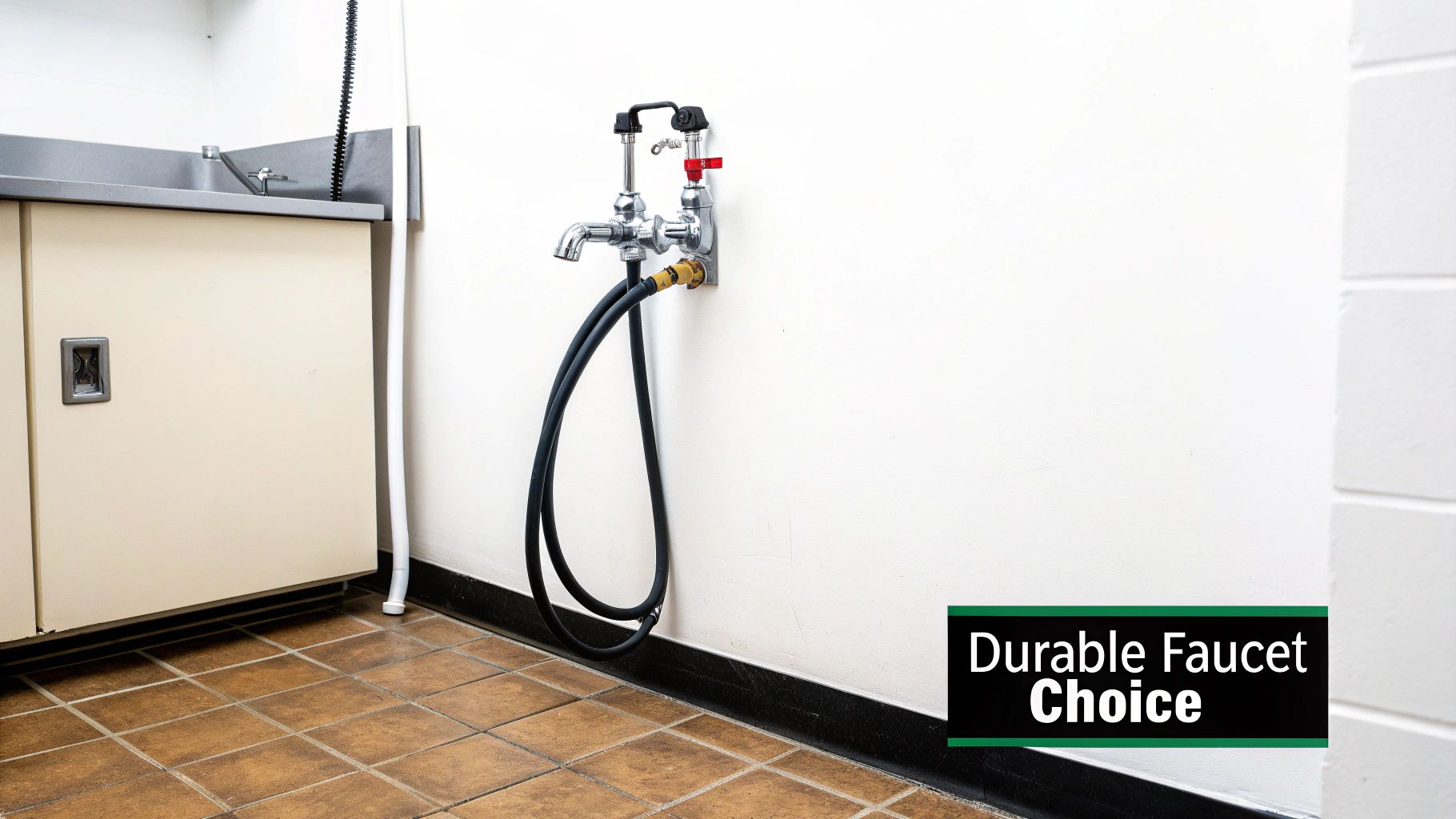
The faucet you pick for your mop basin is much more than a simple tap. It’s a true workhorse that has to stand up to the daily grind of a busy Los Angeles commercial kitchen. Not all hardware is created equal, and choosing a durable, functional faucet is just as critical as getting the mop basin faucet height perfect.
For almost any restaurant situation, a wall-mount faucet is the clear winner. This setup keeps all the plumbing up off the floor, which makes the whole area worlds easier to clean. It also saves precious floor space—a huge benefit in a tight food truck or a bustling kitchen line.
Features That Matter in a Commercial Setting
When you're shopping for a faucet, you have to look past the basic design and zero in on the features that provide real, long-term value and keep you on the right side of the health inspector. A cheap faucet can quickly become a major headache, leading to leaks, unexpected downtime, and expensive plumbing calls.
Here are the key things to look for in a faucet built for a high-traffic kitchen:
- Vacuum Breaker: This is non-negotiable; it's a code requirement here in Los Angeles. A vacuum breaker is a backflow prevention device that stops dirty water from being pulled back into your clean water supply. It's an absolute must for passing health inspections.
- Sturdy Support Brace: Wall-mounted faucets get pulled and tugged on constantly. A heavy-duty support brace anchors the faucet securely to the wall, keeping it from getting loose over time and causing leaks you can't even see.
- Heavy-Duty Hose: Look for a hose that’s both flexible and tough. It needs to handle constant use and exposure to harsh cleaning chemicals without cracking, kinking, or failing when you need it most.
The right faucet choice is a balance of operational need and material durability. Don't compromise on quality—a well-built faucet made from chrome-plated brass will save you money and headaches in the long run.
Matching the Faucet to Your Operation
The best faucet for your kitchen comes down to your daily cleaning routine. The needs of a small cafe are completely different from a high-volume Chinese restaurant, and your equipment choices should reflect that reality.
For instance, a Chinese kitchen with a greasy wok station needs constant, aggressive floor cleaning. For that kind of environment, a faucet with a high flow rate and an industrial-strength hose is essential for getting cleanups done fast. A small bakery with lighter daily cleaning tasks, on the other hand, could probably get by just fine with a more compact, water-efficient model.
Ultimately, investing in a high-quality, commercial-grade faucet is a must. Look for models made from chrome-plated brass, a material famous for its ability to resist corrosion from cleaning chemicals. By choosing the right hardware for your specific restaurant—whether you’re running a food truck or a full-service dining room—you'll create a more efficient workflow and ensure your janitorial station is built to last.
Common Questions About Mop Basin Faucets
Even when you've planned everything down to the last detail, a few specific questions always seem to come up during a commercial kitchen build-out. For restaurant owners in Los Angeles, getting these answers right is crucial for sidestepping expensive delays and making sure your janitorial setup is actually usable.
Let's dive into some of the questions we hear all the time about mop basin faucets.
What Is the Ideal Clearance for a Mop Bucket?
You'll want to aim for at least 10-12 inches of clearance between the faucet spout and the rim of your biggest mop bucket. This gives your staff plenty of room to get the bucket in and out without a wrestling match, which is a lifesaver during a busy service.
Before your plumber even thinks about the rough-in, grab the bucket you use most often. Measure it, add that clearance, and you'll have a fantastic starting point for where the faucet needs to go.
Do I Need a Licensed Plumber for This Installation in Los Angeles?
Absolutely, yes. For a commercial property in Los Angeles, it's not just a recommendation—it's almost always a legal requirement. Commercial plumbing has to meet strict LADBS and health codes, and that’s not something you want to guess at.
A licensed commercial plumber will make sure the mop basin faucet height is correct and that everything is up to code, including critical parts like a vacuum breaker to prevent backflow. Going the DIY route is a recipe for failed inspections, fines, and serious water damage. For more on what it takes to run a kitchen here, check out our guide on essential Los Angeles restaurant equipment.
Hiring a licensed pro isn’t just about checking a box; it’s about protecting your business. A proper installation prevents the kind of slow leaks that can destroy your flooring or ruin expensive equipment like the commercial refrigerators and freezers nearby.
How Does a Food Truck Mop Sink Setup Differ?
The basic goals of hygiene and ease of use are the same, but for Los Angeles food trucks, it's a whole different ballgame because of the tight space. The mop basin is going to be smaller, and the plumbing will be much more compact.
But don't forget, LA County health codes still apply. You still need enough faucet height for bucket clearance and you absolutely need proper drainage. This usually means a small, floor-mounted basin with a wall-mounted faucet positioned just right to save every possible inch without becoming a trip hazard.
At Los Angeles Restaurant Equipment, we provide the durable, code-compliant faucets and fixtures you need to build a safe and efficient kitchen. Explore our full catalog of professional-grade equipment at https://losangelesrestaurantequipment.com.