

A Guide to Restaurant Food Storage Bins for LA Kitchens
In the wild, competitive Los Angeles food scene, the right restaurant food storage bins are your secret weapon. For a slammed downtown LA taco spot or a food truck hustling on the Westside, proper storage is everything—it's the backbone of food safety, protecting your profits, and keeping the kitchen humming.
Building an Efficient Kitchen with the Right Storage Bins
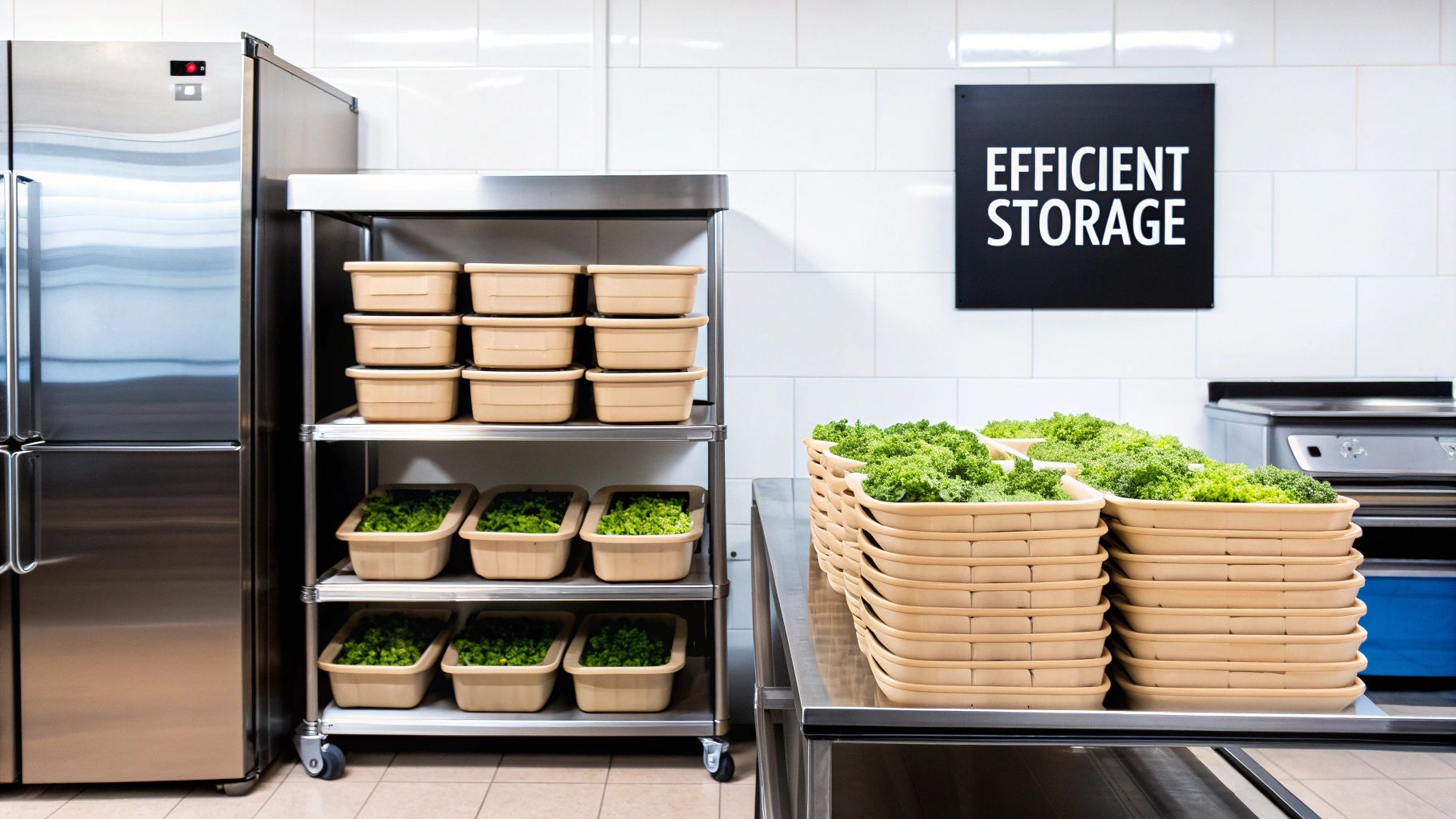
This guide is about more than just plastic boxes. We’re going to show you how making strategic choices with your bins can completely change your LA operation. We'll get into why picking between polycarbonate and polypropylene is as critical as choosing the right knife, and how that little NSF stamp protects your entire business.
Think of this as your roadmap to a tighter, more profitable kitchen. It’s about making sure every ingredient, from your Atosa commercial refrigerator to the prep line, is fresh, safe, and ready to go.
Why Your Bin Choice Matters More Than You Think
In the high-pressure world of a Los Angeles kitchen—whether it’s a high-volume Thai spot in Hollywood or a meticulously prepped sushi bar in Sawtelle—every single detail counts. That humble food storage bin is easy to overlook, but it’s at the center of maintaining food quality, tracking inventory, and stopping costly spoilage in its tracks.
The wrong bin can lead to cross-contamination, make your produce wilt faster, and create a cluttered mess in tight spaces like a Los Angeles food truck galley. But get it right, and a solid system of restaurant food storage bins creates a smooth, seamless flow from the walk-in all the way to the line.
Choosing the right storage container is a direct investment in your kitchen’s profitability. An organized system prevents waste, speeds up service, and ensures you're always serving the freshest ingredients possible.
The Financial Impact of Smart Storage
Let's talk numbers. Food waste is a massive drain on profits for any restaurant. In the U.S. restaurant industry, where every minute of a busy shift counts, food storage bins are a key tool for fighting a staggering problem.
Restaurants in the U.S. throw out between 22 to 33 billion pounds of food every single year, and a huge chunk of that comes from improper storage. This reality has fueled major growth in the food storage container market, which is expected to jump by USD 2.33 billion between 2023 and 2028. You can dive deeper into these market trends on Technavio.
By putting a smart storage strategy in place, you’re not just organizing your walk-in; you’re protecting your inventory and turning potential losses back into profit.
Quick Guide to Selecting Food Storage Bins
To help you get started, we've put together a quick breakdown of what LA restaurant owners need to zero in on when choosing their commercial food storage bins.
| Key Factor | Why It Matters in an LA Kitchen | What to Look For |
|---|---|---|
| Material Durability | Prevents cracks and breakage during hectic service, especially in high-volume settings like K-Town BBQ spots. | NSF-certified polycarbonate for high visibility and impact resistance; polypropylene for cost-effectiveness and chemical resistance. |
| Space Efficiency | Maximizes every square inch of expensive LA real estate, which is crucial for compact Los Angeles food trucks and ghost kitchens. | Square, stackable designs with interlocking lids that fit neatly into commercial refrigerators and onto shelving units. |
| Food Safety Compliance | Essential for passing LA County health inspections and protecting your customers and your reputation. | Smooth, non-porous surfaces with rounded corners that are easy to clean and prevent bacteria buildup. |
This table is just the starting point. When you nail these basics, you're setting the foundation for a kitchen that runs smoother, safer, and more profitably.
Choosing the Best Material for Your Menu
When you're outfitting your kitchen with restaurant equipment, picking the right material for your restaurant food storage bins is just as important as choosing the right knife for a specific cut. You wouldn't use a heavy cleaver for a delicate fish, right? The same logic applies here. The plastic you choose has a direct impact on your food's safety, its shelf life, and how smoothly your kitchen operates day-to-day.
In a city like Los Angeles, where the culinary scene is everything from a Korean BBQ spot in K-Town to a Venice food truck slinging Thai curries, your storage needs are just as diverse. The three plastics you'll see most often are Polycarbonate, Polypropylene, and Polyethylene. Each one has its own job to do.
Polycarbonate: The Clear Powerhouse
Picture a high-end Japanese sushi bar in Little Tokyo. The chef needs to see the freshness of the tuna, salmon, and yellowtail at a glance, without fumbling with lids. That's where polycarbonate containers come in—they're the crystal-clear, nearly indestructible workhorses of the kitchen.
Their biggest selling point is that you can see exactly what’s inside, which is a huge time-saver during a busy service and makes inventory a breeze. These bins are also tough, handling a temperature range from -40°F to 212°F. That means they can go from the commercial freezer to holding hot soups without a problem.
The downside? Polycarbonate is usually the priciest option. It can also get scratched up by abrasive sponges and isn't the best fit for acidic foods, like the tomato-based salsas you'd find in an East L.A. Mexican restaurant, which can cause staining over time.
Polypropylene: The Versatile Champion
Now, think about that Thai food truck. They’re making big batches of curry pastes and citrusy marinades. They need something that’s tough, affordable, and won't get stained by all those vibrant spices and acids. This is the perfect job for polypropylene.
It’s not perfectly clear like polycarbonate—it has more of a milky, translucent look—but it’s a champion when it comes to chemical resistance. This makes it the go-to for anything acidic. It’s also a bit more flexible, so it's less likely to crack if it gets dropped during a hectic rush.
Polypropylene hits that sweet spot between cost and performance for most everyday storage needs. It’s the reliable, all-around player that handles most ingredients without putting a dent in your budget.
These bins are typically good for temperatures from -20°F to 170°F, so they're great for general use in commercial refrigerators but not for the deep freezer or for holding boiling-hot liquids. Because they're so affordable, they're a staple for all kinds of Los Angeles restaurant equipment budgets.
Polyethylene: The Freezer Master
For the Chinese dumpling spot in the San Gabriel Valley that's freezing thousands of dumplings, or a catering company stocking up on bulk meats, polyethylene is the specialist you call in. It's the undisputed master of cold storage.
Polyethylene’s superpower is its flexibility, even when it’s freezing cold. Where other plastics get brittle and crack in a commercial freezer, polyethylene stays pliable and strong. It's usually rated for temperatures from -40°F to 160°F, making it the absolute best choice for anything you plan on storing long-term in a commercial freezer.
The trade-off is that it’s not as rigid as the other plastics and it’s usually opaque, so you can't see what's inside. It also can't handle high heat, so keep it far away from hot foods.
Making the Right Choice for Your Cuisine
It all comes down to matching the container to what’s on your menu. If you understand what each plastic does best, you can build a smarter, safer kitchen.
- Japanese & Sushi Restaurants: Go with polycarbonate. Its clarity is perfect for showing off and quickly grabbing high-value fish.
- Mexican & Thai Kitchens: Stock up on polypropylene. You need its stain and acid resistance for all those salsas, marinades, and curry pastes.
- Chinese & Korean BBQ Restaurants: Polyethylene is your friend for freezing bulk meats, dumplings, and other prepped items.
Investing in the right mix of restaurant food storage bins is a strategic move. It keeps every ingredient in its best condition, protecting both your bottom line and your reputation.
Sizing Bins to Maximize Your Kitchen Space
In any Los Angeles kitchen, whether you’re running a huge Koreatown BBQ joint or a tiny downtown food truck, space is everything. Choosing the right size for your restaurant food storage bins isn't just about making them fit on a shelf; it's about eliminating wasted space and making your prep line run smoother. It's a strategic move to get the most out of every single square inch of your kitchen.
Getting the size wrong leads to pure chaos. Bins that are too big just take up valuable cold air in your commercial refrigerators. On the other hand, containers that are too small mean your cooks are constantly stopping to refill them during a crazy dinner rush. The real goal is to create a system where the bin size perfectly matches how much of an ingredient you use and fits seamlessly with your restaurant equipment, like prep tables and shelving units.
From Quarts to Real-World Use
Let's stop thinking in abstract terms like quarts and gallons and start thinking about what those numbers actually mean for your kitchen. A bin's capacity should directly connect to your menu and how many customers you serve. For a busy Mexican restaurant in East LA, a 22-quart bin isn't just a plastic box; it's what holds enough carnitas for 200 tacos, making sure the line keeps moving without a hitch.
Thinking this way completely changes how you buy your bins. You start matching sizes to specific jobs, creating a kitchen that just flows.
A well-sized bin system acts like a perfectly organized toolbox. Every ingredient has its designated spot, is easy to find, and is portioned for the demands of service, cutting down on both prep time and food waste.
This chart breaks down the common materials, giving you a quick visual on where each one shines in a hectic kitchen environment.
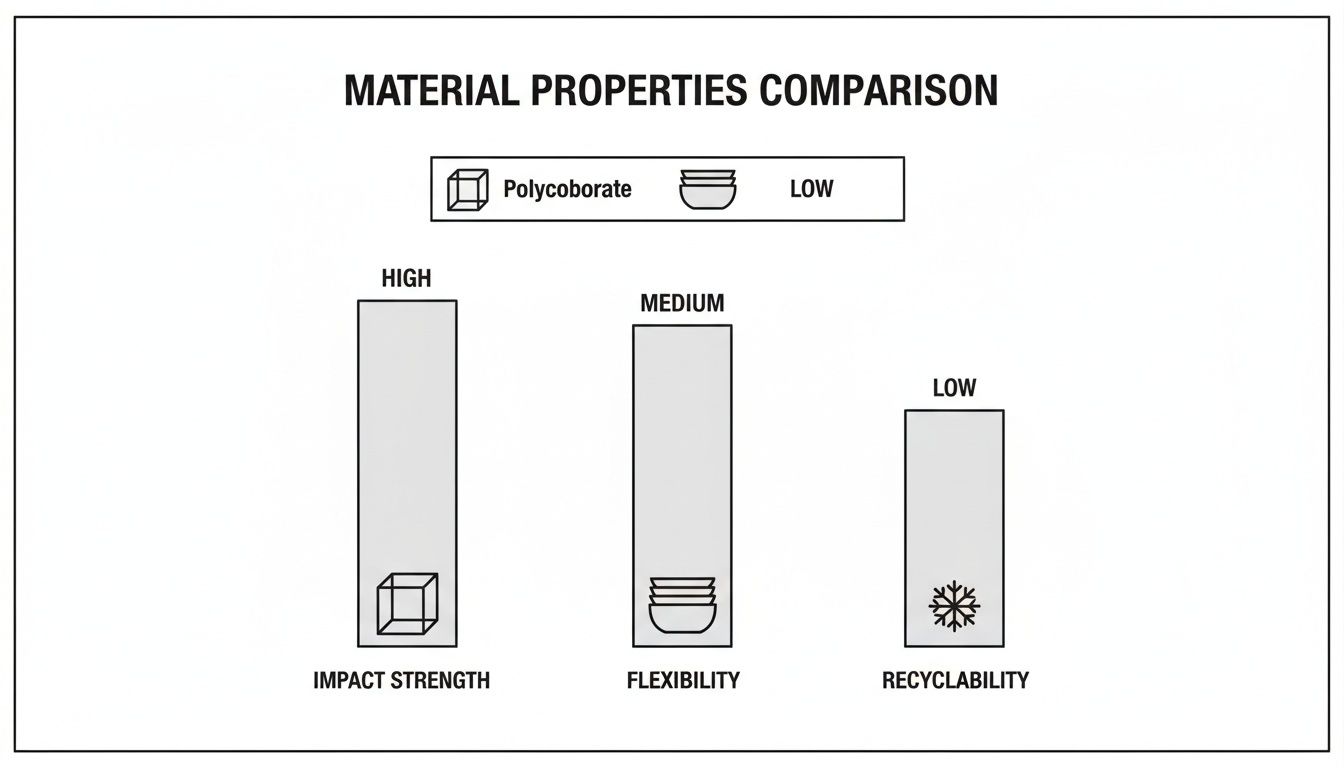
As you can see, while polycarbonate is tough as nails and great for high-traffic areas, polyethylene’s flexibility makes it a much better choice for freezer storage where things get brittle.
Matching Bins to Your LA Restaurant Concept
The perfect bin size is totally unique to your operation. A one-size-fits-all approach just doesn't cut it in a city with so many different kinds of restaurants.
To get a clearer picture, here’s a quick guide that matches bin sizes to common ingredients and restaurant types you’ll find all over Los Angeles.
Restaurant Food Storage Bin Capacity Guide
| Bin Size (Quarts/Gallons) | Common Use Case | Best For Restaurant Type | Ideal Placement |
|---|---|---|---|
| 2-6 Quart | Prepped veggies, sauces, herbs, garnishes | Los Angeles Food Trucks, Cafes, Sushi Bars | Prep table inserts, small reach-ins |
| 8-12 Quart | Marinating meats, batters, salad greens | Quick-Service (QSR), Pizzerias | Walk-in cooler shelving, undercounter units |
| 18-22 Quart | Bulk prepped ingredients, soup bases, rice | High-Volume Restaurants, Catering | Walk-in cooler, dry storage shelves |
| 26-32 Gallon | Flour, sugar, grains, bulk dry goods | Bakeries, Korean BBQ, Large Restaurants | Rolling bins under prep tables or in dry storage |
This chart helps you visualize how different sizes fit into the daily workflow of various LA kitchens, making it easier to pick what’s right for you.
- For a Chinese Dumpling Food Truck: Space is unbelievably tight. Small, stackable 2-quart or 4-quart square bins are your best friend. They slide perfectly into undercounter commercial refrigerators, letting you store different fillings like pork, chive, and shrimp without any cross-contamination.
- For a Large Korean BBQ Restaurant: Here, it's all about bulk. Big, 32-gallon rolling ingredient bins are a must-have for staples like rice, gochugaru, and flour. These giants on wheels can be easily moved from dry storage to the main kitchen, making large-batch prep for marinades and banchan a breeze.
- For a Japanese Sushi Bar: It’s all about precision. A set of 1/6 and 1/9 size food pans (which act as bins in this setup) are absolutely critical. They hold delicate, ready-to-use items like uni, ikura, and sliced fish, keeping them fresh and organized in the refrigerated prep stations.
This targeted approach turns your storage into a genuine asset, not an obstacle. The global market for food containers is huge, valued at USD 163.5 billion, which shows how vital this is. For LA operators, the most popular sizes are in the 500-1000 ml range for single servings, while containers over 2000 ml are taking off for bulk restaurant needs. By picking durable bins that work with your current restaurant equipment, you could cut down on how often you need to restock by 15-25%.
When you really take the time to analyze your menu, workflow, and kitchen layout, you can build a custom system of restaurant food storage bins that not only saves space but also makes your team faster and more efficient when things get intense.
Meeting LA Food Safety and NSF Standards
For any restaurant in Los Angeles, from a Korean BBQ joint to a Thai Town hotspot, you know that keeping the LA County health department happy is a top priority. Your restaurant food storage bins are on the front lines, and you can bet inspectors will be looking at them closely. This is about more than just dodging fines—it's about protecting your customers and the reputation you've worked so hard to build.
Think of the NSF (National Sanitation Foundation) stamp on a bin as its official seal of approval. It’s your guarantee that the container is built from food-safe materials, won't leach nasty chemicals into your ingredients, and is designed to be cleaned and sanitized without a fight.
Decoding the NSF Stamp
That NSF certification isn't just about the type of plastic. Health inspectors are trained to spot design flaws that let bacteria hide and multiply. Choosing the right bins is a basic, but critical, move for any commercial kitchen, whether you're handling delicate raw fish for Japanese sushi or prepping fresh salsa in a Mexican food truck.
NSF-certified bins always have a few things in common:
- Smooth Interiors: No crevices or rough patches where food particles can get trapped and become a breeding ground for bacteria.
- Rounded Corners: Sharp, 90-degree corners are a nightmare to clean properly. Rounded corners mean you can get every last bit sanitized.
- Durable Construction: The material has to be tough enough to resist chipping, cracking, or pitting, because any damage can become a safe harbor for germs.
These features don't just pass inspections; they make your team's cleaning routine faster and far more effective. Your storage system should support your food safety plan, not work against it.
Beyond Bins: Your Entire Storage Ecosystem
Your commitment to safety has to extend to the entire storage environment. The bins need to work in concert with your other restaurant equipment to create a system that’s truly compliant. For example, using NSF Certified shelving solutions is just as important as the bins you put on them.
This big-picture approach is crucial for organizing different food types. Everyone knows raw meats must always be stored below ready-to-eat produce to stop cross-contamination. Having a clear system of compliant bins and shelving inside your commercial refrigerators and freezers makes this a no-brainer. To get more ideas on organizing your cold storage, check out our guide on the walk-in cooler and freezer combination.
An LA health inspector sees your food storage setup as a direct reflection of your restaurant's commitment to safety. NSF-certified bins are an immediate signal that you take public health seriously.
There's no doubt these containers are big business. The North American food storage container market, which is essential to L.A.'s buzzing restaurant scene, was valued at USD 34 million and is on track to hit USD 46.54 million by 2032. The U.S. makes up over 50% of that market, thanks to its 749,000 restaurants where bins are used for everything from pizza prep to storing charbroiled meats.
Implementing Smart Storage to Reduce Food Waste
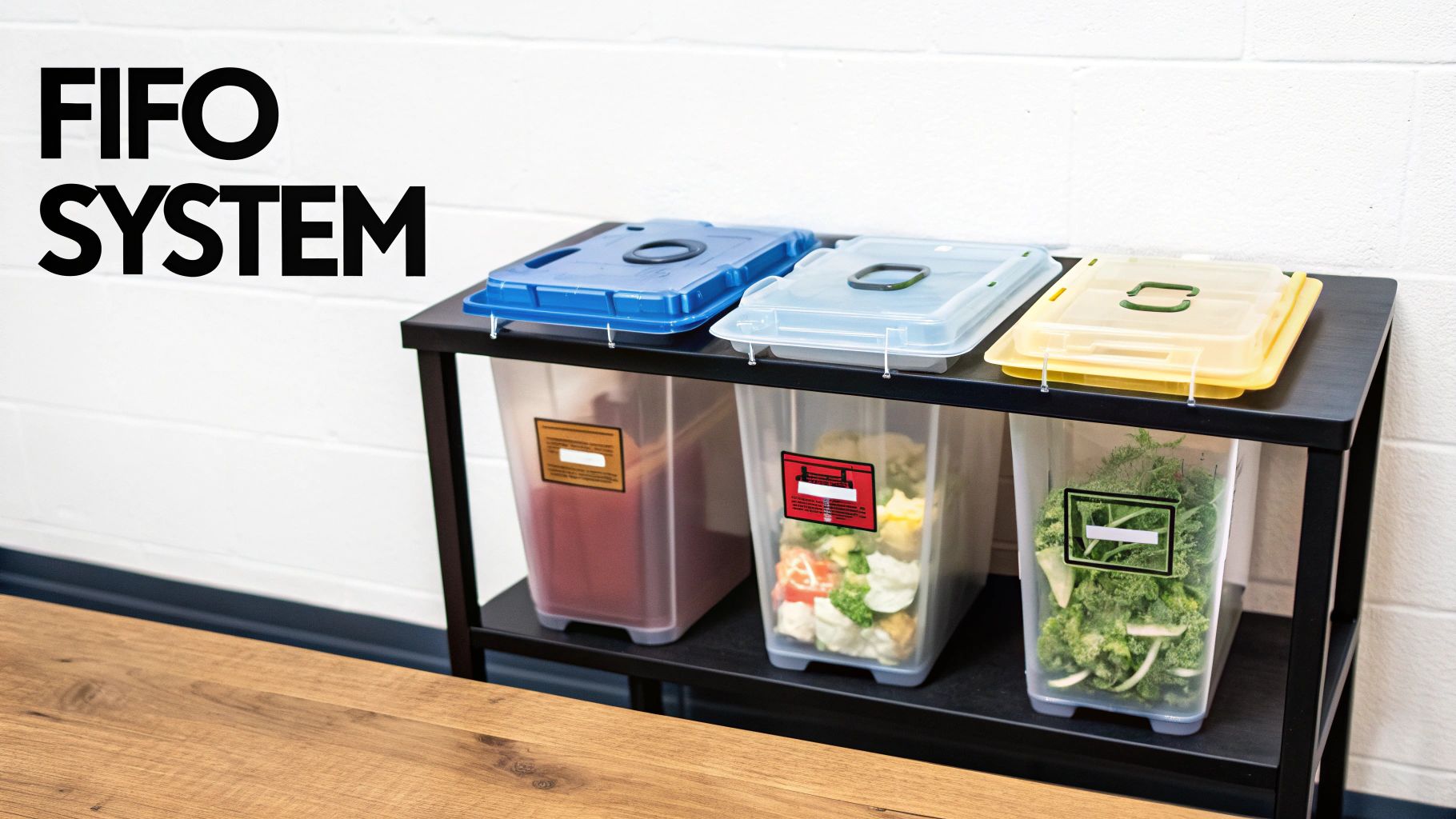
A well-organized Los Angeles kitchen is a profitable one. Precision is everything, and a smart storage system using your restaurant food storage bins is one of the best ways to slash food waste and save your crew from headaches during a chaotic dinner rush. It all boils down to one powerful, simple rule.
That rule is FIFO, or First-In, First-Out. Think of it as the golden rule for your inventory. It guarantees you’re always grabbing the oldest ingredients first, right when they’re at their best. This simple habit is what stops that forgotten box of prepped veggies from wilting away in the back of the walk-in.
Mastering the FIFO Method
Putting FIFO into practice isn't some complex culinary school theory. It’s just a disciplined way of arranging your stock so new deliveries always go behind the stuff you already have. This creates a natural rotation, making it second nature for your cooks to grab the right container without having to guess at its freshness.
Once your team gets in the groove with FIFO, you'll see a huge drop in spoilage. This is a game-changer for a Sawtelle Japanese spot managing pricey, perishable fish or a Thai kitchen in Hollywood that relies on ultra-fresh herbs and chiles.
The Power of Color-Coding
To make your FIFO system truly foolproof, bring in a color-coding strategy. It’s a visual shortcut your entire staff can understand in a split second, cutting down on mistakes and the dangerous risk of cross-contamination. You can dive deeper into this practice with this excellent guide to safe food storage.
A common and highly effective system gives each food category its own color:
- Red Bins: Strictly for raw meats like beef and pork.
- Blue Bins: Kept for raw seafood only.
- Green Bins: Used for all your fresh fruits and vegetables.
- Yellow Bins: Reserved for raw poultry.
- White Bins: For dairy, cheeses, and ready-to-eat foods.
For a busy Mexican food truck, this means there’s zero chance raw carne asada ever touches the fresh cilantro and onions. This kind of separation isn't just a good idea—it's essential for food safety. The same logic applies when you're stocking your commercial freezers; keeping different proteins separate is key to preventing contamination.
Creating a Bulletproof Labeling System
The final piece of your smart storage puzzle is a clear, consistent labeling system. An unlabeled bin is a mystery box that wastes time and money. Every single container, from the walk-in cooler to the low-boy on the line, needs a label. No exceptions.
A proper label is more than just the item's name. It's a snapshot of that food's journey, telling your staff everything they need to know to maintain safety and quality.
An effective label needs to have three key pieces of information, just as the FDA requires:
- Product Name: Be specific. "Diced Onions," not just "Onions."
- Prep Date: The exact date the item was prepped or stored.
- Use-By Date: The last day the food can be used to ensure quality and safety.
For extra accountability, have the employee who prepped the item add their initials. This creates a rock-solid system that tracks every ingredient from the delivery dock to the plate, helping your team work safer and faster while shielding your profits from the high cost of food waste.
Making a Smart Investment in Your Bins
When you’re outfitting a kitchen with restaurant equipment, it’s easy to see restaurant food storage bins as just another line item on a long list of expenses. But that’s the wrong way to look at it. Buying quality bins is a serious investment in your kitchen’s efficiency and safety, one that pays off big time down the road.
Especially for restaurant owners here in Los Angeles, you have to think beyond the sticker price. A cheap, flimsy bin might save you a few bucks today, but it’s going to cost you more later. It’s like buying a cheap knife instead of a solid chef's knife—you’ll be replacing it constantly, and it’s never going to perform when you need it most.
Think about it. A tough polycarbonate bin can take a beating. It’ll handle the high heat of your commercial dishwasher and survive the occasional drop during a chaotic dinner rush. Cheaper plastics? They get brittle in the walk-in commercial freezer, crack under pressure, and those little cracks become breeding grounds for bacteria. That's a health code violation waiting to happen, not to mention the cost of constantly buying replacements.
Beyond the Price Tag: The Value of a Local Supplier
For anyone running a Los Angeles food truck or launching a new restaurant in LA, we know that cash flow is everything. This is where partnering with the right local restaurant equipment supplier gives you a massive edge that the big online stores just can't compete with. A good local partner doesn't just sell you boxes; they give you advice that’s tuned into the realities of the LA food scene.
They get that a food truck in Silver Lake has different space constraints than a full-service restaurant in Beverly Hills. They can recommend the exact bins and shelving to squeeze every last inch of utility out of your space. Plus, many local suppliers offer financing or lease-to-own plans, which can be a lifesaver for new businesses. You get the professional-grade gear you need without draining your capital.
The right supplier acts as a partner in your success. Their responsive support and understanding of the local landscape are invaluable assets, especially when you need equipment or advice quickly.
Building a Secure Kitchen Ecosystem
Your storage bins aren’t operating on an island. They’re a key part of a bigger system that includes your commercial refrigerators, freezers, and prep tables. Everything needs to work together seamlessly, and a solid warranty on your major appliances is the safety net that protects your entire operation.
For instance, Atosa refrigerators and freezers come with some of the best warranties in the business—typically two years on parts and labor and a full five years on the compressor. That peace of mind is priceless. It means if your walk-in cooler goes down on a hot August day, you have a network of technicians ready to get you back up and running fast, protecting the thousands of dollars of inventory you have stored in those bins.
When you build a secure kitchen with quality restaurant equipment and strong warranties, every single component, right down to your restaurant food storage bins, works together to give your business the stability it needs to thrive.
Common Questions About Restaurant Food Storage
Even with the best game plan, questions always pop up when you're setting up your Los Angeles kitchen. We hear a lot from local restaurant and food truck owners, so here are some straight answers to the most common questions about restaurant food storage bins to help you get your operation running smoothly.
What Is the Best Way to Clean Polycarbonate Bins Without Clouding Them?
To keep those clear polycarbonate bins looking brand new, the biggest rule is to stay away from anything abrasive. Harsh chemicals, cleaners with bleach or ammonia, and scrubby sponges will scratch the surface, and over time, that's what causes that ugly cloudy look.
The best approach is actually the simplest: just use a mild soap, warm water, and a soft cloth. When it's time to sanitize, grab a food-safe sanitizer that doesn't have chlorine—it’ll get the job done without hurting the plastic. Always let them air dry completely before you stack them up. Trapping even a little bit of moisture can become a breeding ground for bacteria.
How Can I Organize Bins in a Small Food Truck Kitchen?
In a tight LA food truck kitchen, every single inch counts. You have to think vertically and make sure everything fits together like a puzzle. Square, stackable bins are your best friend here; round ones just waste valuable space between them.
Look for bins that have interlocking lids. This creates a really stable stack that won't slide around while you're driving. You can also get a lot more room by installing wall-mounted shelves above your prep counters. Don't forget to measure your under-counter commercial refrigerators carefully to find bins that slide in and out perfectly. For a Los Angeles food truck, a strict color-coding system with big, clear labels is non-negotiable—it makes service faster and more accurate when you've got a long line of customers.
In a food truck, your storage system is your workflow. An organized bin setup means faster ticket times and a whole lot less stress for your crew.
Are Plastic Storage Bins Safe for All Kinds of Food?
They absolutely are, but only if they're NSF-certified and made from the right food-grade plastic, like polycarbonate, polypropylene, or polyethylene. Using the right container for the right food and temperature is key.
- Polyethylene is what you want for your commercial freezers.
- Polycarbonate is your tough, all-around workhorse that can handle a big range of temperatures.
- Polypropylene is the go-to for acidic ingredients like tomato sauce or citrus marinades because it resists stains so well.
Always double-check that your bins are BPA-free and only use them for what they were designed for. A bin that isn't rated for high heat should never go under a heat lamp or in the microwave. It could warp or, even worse, leach chemicals into your food. Sticking to these rules ensures every ingredient you serve is safe.
Ready to build a smarter, safer, and more efficient kitchen? Los Angeles Restaurant Equipment has the professional-grade restaurant food storage bins, Atosa commercial refrigerators, and expert advice you need to succeed in the competitive LA food scene. Explore our full catalog and find the perfect solutions for your operation today at https://losangelesrestaurantequipment.com.