

Finding the Best Commercial Refrigerator for Your LA Restaurant
For any restaurant in Los Angeles, the best commercial refrigerator isn't just about finding the coldest box—it's about striking the perfect balance between size, features, and energy efficiency for your specific kitchen. A reach-in refrigerator might be the go-to workhorse for general storage, but in a fast-paced Los Angeles food truck or a cramped Thai Town kitchen, specialized prep tables and undercounter units are what keep the line moving.
Why Your Refrigerator is a Cornerstone Investment
Picking a commercial refrigerator is a massive decision for any LA food business, whether you’re running a Koreatown BBQ spot, a Japanese sushi bar in Little Tokyo, or a bustling food truck. It’s so much more than a place to keep ingredients cold; this is a critical piece of restaurant equipment that directly impacts your food safety, your utility bills, and the daily rhythm of your kitchen.
Making the wrong choice can lead to a world of hurt: spoiled inventory, sky-high energy costs, and endless service calls. But the right one? That becomes a reliable workhorse you can count on day in and day out. This guide is built specifically for the unique—and often tight—kitchen spaces we see all over Los Angeles. We'll walk through how to match a unit to your menu, whether you're storing delicate sashimi, fresh ingredients for Thai curries, or bulk produce for a busy Mexican taqueria, and how to protect that investment from day one.
What This Guide Will Cover
To find the best commercial refrigerator, you need to know what you're looking at. We'll break down the essential factors to consider, making sure you can make a choice that’s both confident and cost-effective.
Here's what we'll dive into:
- Types of Refrigeration: We'll explore everything from powerful reach-in units and commercial freezers to compact undercounter models and specialized prep tables.
- Essential Features: It's time to analyze the guts of the machine—compressors, door types, and materials that affect how well it works and how long it lasts.
- Sizing and Layout: Get practical tips for squeezing maximum storage into tight LA footprints without overloading your HVAC system.
- Cost and Procurement: We'll talk about upfront costs, warranties, maintenance plans, and smart ways to buy, like lease-to-own financing.
Think of your refrigerator as the heart of your back-of-house. It’s silently working 24/7 to protect the quality and safety of your most valuable asset: your food inventory. Investing wisely here pays you back with less waste, consistent product, and a whole lot of peace of mind.
Our goal here is simple: to give you the knowledge you need to choose a refrigerator that not only meets your needs today but can also support your restaurant as you grow in LA's tough food scene.
Quick Guide to Commercial Refrigerators in LA
Navigating the world of commercial refrigeration can feel overwhelming, but it doesn't have to be. We've put together this quick comparison table to help you get a feel for the most common types and where they shine in a busy Los Angeles foodservice operation, from a Mexican restaurant to a Chinese kitchen.
| Refrigerator Type | Ideal For | Key Benefit |
|---|---|---|
| Reach-In Refrigerator | General bulk storage in full-service kitchens. | High-capacity storage for everything from produce to prepped ingredients. |
| Undercounter Refrigerator | Tight spaces, satellite prep stations, and bars. | Maximizes floor space by fitting directly under countertops. |
| Worktop Refrigerator | Prep lines needing refrigerated storage at hand. | Combines a durable work surface with cold storage below. |
| Sandwich/Salad Prep Table | High-volume sandwich shops, pizzerias, and salad bars. | Keeps cold ingredients organized and accessible for fast assembly. |
| Glass Door Merchandiser | Cafes, markets, and grab-and-go spots. | Drives impulse sales by showcasing drinks, snacks, and prepared foods. |
| Walk-In Cooler/Freezer | High-volume restaurants, catering, and wholesale operations. | Massive, centralized storage for bulk inventory and palletized goods. |
This table is just a starting point. As we go deeper into this guide, you'll learn how to spec the perfect unit based on your menu, volume, and unique kitchen layout. Each type has its own set of features and trade-offs that are critical to understand before you make a purchase.
Matching Refrigerator Types to Your Menu and Space
The term 'commercial refrigerator' covers a huge range of specialized gear, and each one is built for a very specific job in your kitchen’s ecosystem. Picking the right one means really understanding these roles and matching the unit to your Los Angeles restaurant's specific menu and floor plan. Getting this right from the start is the key to a smoother, more efficient kitchen.
This decision is more important than ever. The demand for cold storage is booming, with the commercial refrigeration market valued at $29.6 billion in 2023 and expected to jump to $56.2 billion by 2035. This whole wave is being pushed by our love for fresh and frozen foods, especially in busy cities like L.A. While big chest freezers still hold a lot of the market, the real action is in the smaller, smarter units like under-counter and prep table fridges. These are the space-savers that LA’s food trucks and quick-service spots absolutely depend on. You can get more market insights over at einpresswire.com.
The Workhorse Reach-In Refrigerator
For most full-service restaurants, the reach-in refrigerator is the undisputed MVP. Think of it as the main library for all your kitchen's ingredients. A packed Korean BBQ spot in K-Town couldn't survive without these, using them to hold big batches of marinated meats, all the banchan, and fresh produce, keeping everything organized and ready to grab during a chaotic dinner rush.
Their biggest plus is capacity. You can get them with one, two, or even three doors, giving you a ton of vertical storage. They’re perfect for holding everything from cases of produce for a Chinese restaurant to tubs of prepped sauces for a Thai kitchen.
Space-Saving Undercounter and Worktop Models
In Los Angeles, space is the ultimate luxury. That's where undercounter and worktop refrigerators become the heroes of tight kitchens, whether it's a downtown LA coffee shop or a cool bar in Silver Lake. These units slide right under standard countertops, putting cold storage exactly where you need it without eating up an inch of floor space.
An undercounter unit lets a bartender grab garnishes and juices in a split second. A worktop model gives you a tough stainless steel surface for plating or assembly. Picture a food truck dishing out Japanese onigiri; a worktop fridge keeps all the fillings perfectly chilled right below the prep area, creating a super-efficient, self-contained station.
A well-placed undercounter unit can eliminate dozens of wasted steps per hour for your staff. By decentralizing cold storage, you create efficient micro-stations that reduce kitchen traffic and speed up ticket times.
This chart can help you make that first big decision based on what your operation truly needs.
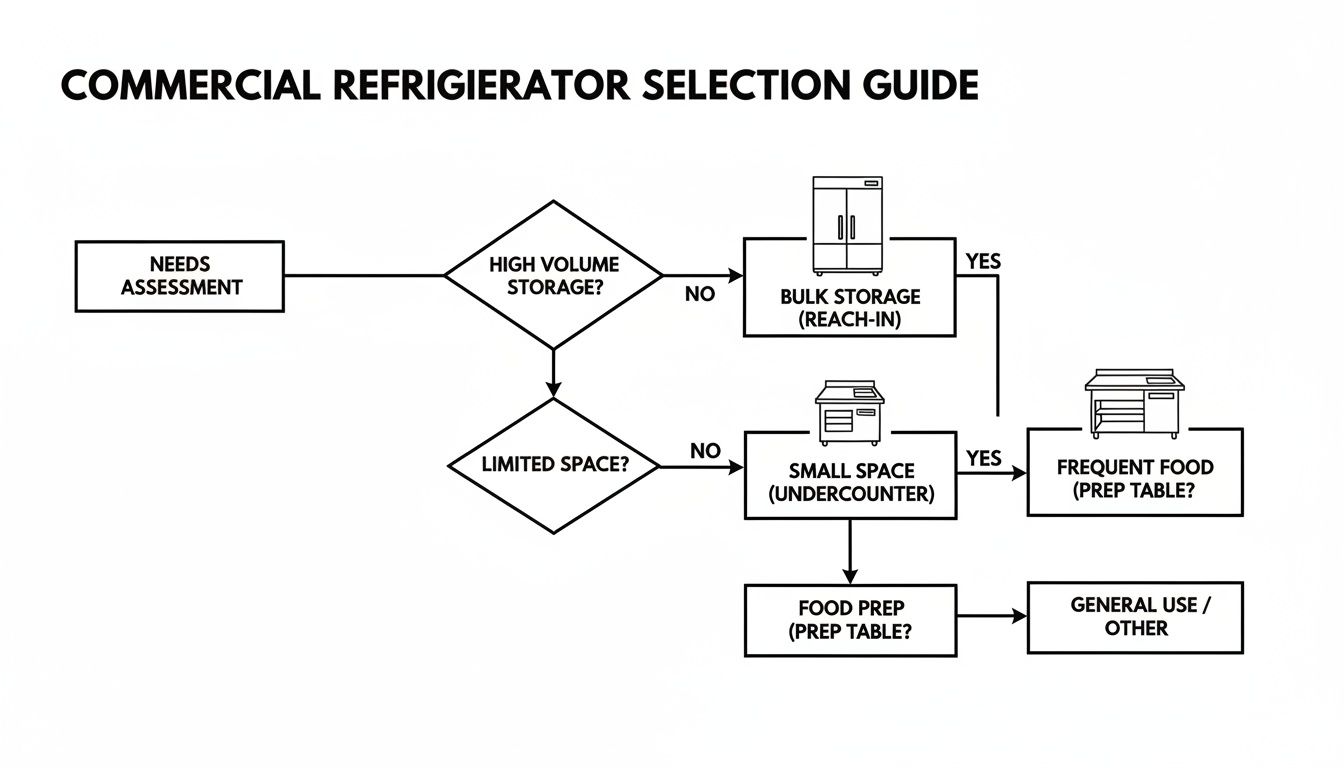
As you can see, your choice really starts with your main goal: are you looking for bulk storage, trying to fit into a tiny space, or needing to make food prep faster?
Streamlining with Sandwich and Pizza Prep Tables
For any restaurant that’s all about fast assembly, sandwich and pizza prep tables are absolutely essential. These specialized units are the engine for a Mexican food truck building burritos or a fast-casual spot making custom salads. They combine a refrigerated base for storage with a top rail holding multiple pans of cold ingredients.
This design keeps everything—shredded cheese, diced tomatoes, different salsas—at safe temperatures and literally at your fingertips. The built-in cutting board gives you a dedicated workspace, letting one person build orders quickly and consistently without ever having to move.
Merchandisers and High-Volume Walk-Ins
Finally, there are two other key players that serve very different but important purposes in Los Angeles restaurants.
- Glass Door Merchandisers: These are for your customer-facing areas and are designed to drive impulse buys. They show off bottled drinks, grab-and-go meals, and desserts, making them a must-have for cafes, markets, and quick-service spots.
- Walk-In Coolers & Freezers: If you're running a high-volume operation like a huge restaurant or a catering company, a walk-in is essential. It gives you the most storage possible for bulk ingredients, letting you cash in on wholesale prices and cut down on how often you need deliveries. These units are crucial for Mexican, Chinese, and Korean restaurants that use large quantities of fresh produce.
Key Features That Drive Performance and Efficiency
Once you’ve settled on the type of refrigerator you need, it’s time to get into the details. The specific features of a unit are what really determine its day-to-day performance, how long it’ll last in a demanding kitchen, and how much it’s going to cost you on your utility bill.
Getting these features right is a huge deal for any Los Angeles kitchen. Efficiency and reliability aren't just buzzwords; they directly impact your bottom line. Think of it like this: the features are the engine and build quality of your investment. They make all the difference.
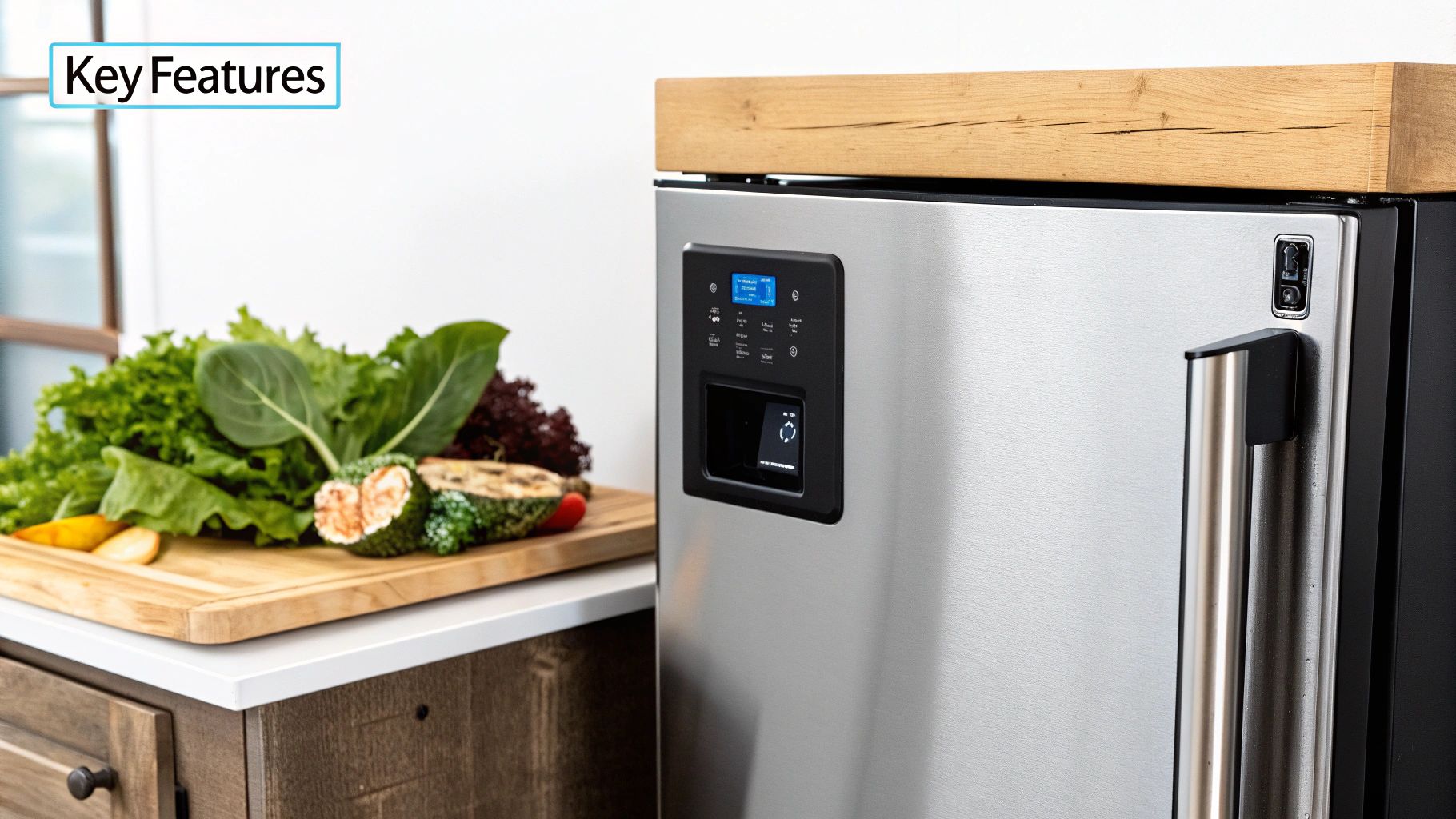
The market for commercial refrigeration is all about innovation right now. Energy-efficient commercial refrigerators are quickly becoming the standard, and new smart systems with IoT and AI are showing they can cut energy use by up to 30%.
This push for smarter, eco-friendly tech is fueling major growth, with the market projected to hit $99.8 billion by 2036. This trend is great for LA's diverse food scene, leading to more modular, adaptable designs perfect for the tight footprints of our city's bars, breweries, and food trucks.
Understanding Compressor Placement
The compressor is the heart of your refrigerator. It’s the workhorse pulling heat out of the cabinet to keep your ingredients cold. Where it’s located—either on the top or bottom of the unit—makes a big difference in how it performs and how you’ll maintain it.
-
Bottom-Mounted Compressors: These are the go-to for most hot kitchens, like you’d find in a busy Chinese or Mexican restaurant. Since heat rises, a compressor near the floor pulls in cooler air, which means it works more efficiently and uses less energy. The trade-off? It’s right in the line of fire for floor debris, dust, and grease, so it needs more frequent cleaning to avoid clogs and overheating.
-
Top-Mounted Compressors: These units are a better fit for spots with a lot of dry particles in the air, like a bakery using tons of flour or a Japanese spot frying up tempura all day. Placing the compressor up high keeps it away from all that floor gunk. Just keep in mind, it will pull in hotter air from near the kitchen ceiling, forcing it to work a little harder to keep things cool.
Doors and Materials Built for the LA Grind
The doors and exterior of your refrigerator are going to take a beating, day in and day out. Choosing the right style and material is about more than just looks; it's about efficiency and durability.
Door Types The choice between solid and glass doors is the classic trade-off: insulation versus visibility.
- Solid Doors: These offer the best insulation, hands down. That helps the unit keep a consistent temperature and run more efficiently. They’re the perfect choice for back-of-house storage where you’re holding bulk ingredients and don’t need to see inside all the time.
- Glass Doors: Perfect when you need to do a quick inventory check without opening the door and letting all the cold air rush out. They’re ideal for prep lines where a chef in a busy Thai or Korean kitchen needs to see ingredients at a glance or for customer-facing merchandisers in your storefront.
Construction Materials For any LA restaurant, stainless steel is the only way to go. It's tough enough to handle the bumps and dings of a busy service, it resists corrosion from spills and cleaning chemicals, and it’s easy to sanitize—a must for passing health inspections. It might cost more upfront than something like aluminum, but its sheer durability makes it a much smarter long-term investment.
Your refrigerator's construction is its armor against the daily battle of a commercial kitchen. Investing in heavy-duty stainless steel and robust door hinges prevents the kind of wear and tear that leads to premature equipment failure and costly emergency service calls.
The Financial Impact of Energy Efficiency
In a city with utility costs as high as Los Angeles, your refrigerator's energy consumption is a major piece of your operating budget. Choosing an energy-efficient model is one of the smartest financial moves you can make.
Look for certifications like ENERGY STAR. An ENERGY STAR certified commercial refrigerator can be 20% to 40% more efficient than a standard model. Over the life of the unit, that can translate into hundreds, or even thousands, of dollars in savings. These models typically have better components like high-efficiency compressors, superior insulation, and LED lighting.
To dig deeper into the specific benefits, check out our guide on energy-efficient commercial refrigerators that breaks down exactly how these upgrades can lower your monthly bills.
Sizing Your Unit for LA's Compact Kitchens
In Los Angeles, every square foot of kitchen space is prime real estate. Choosing the right commercial refrigerator isn't just about cold storage—it's a strategic move that balances your menu, your customer volume, and the actual physical space you have to work with. Get this right, and you avoid workflow bottlenecks and protect your inventory without surrendering precious floor space.
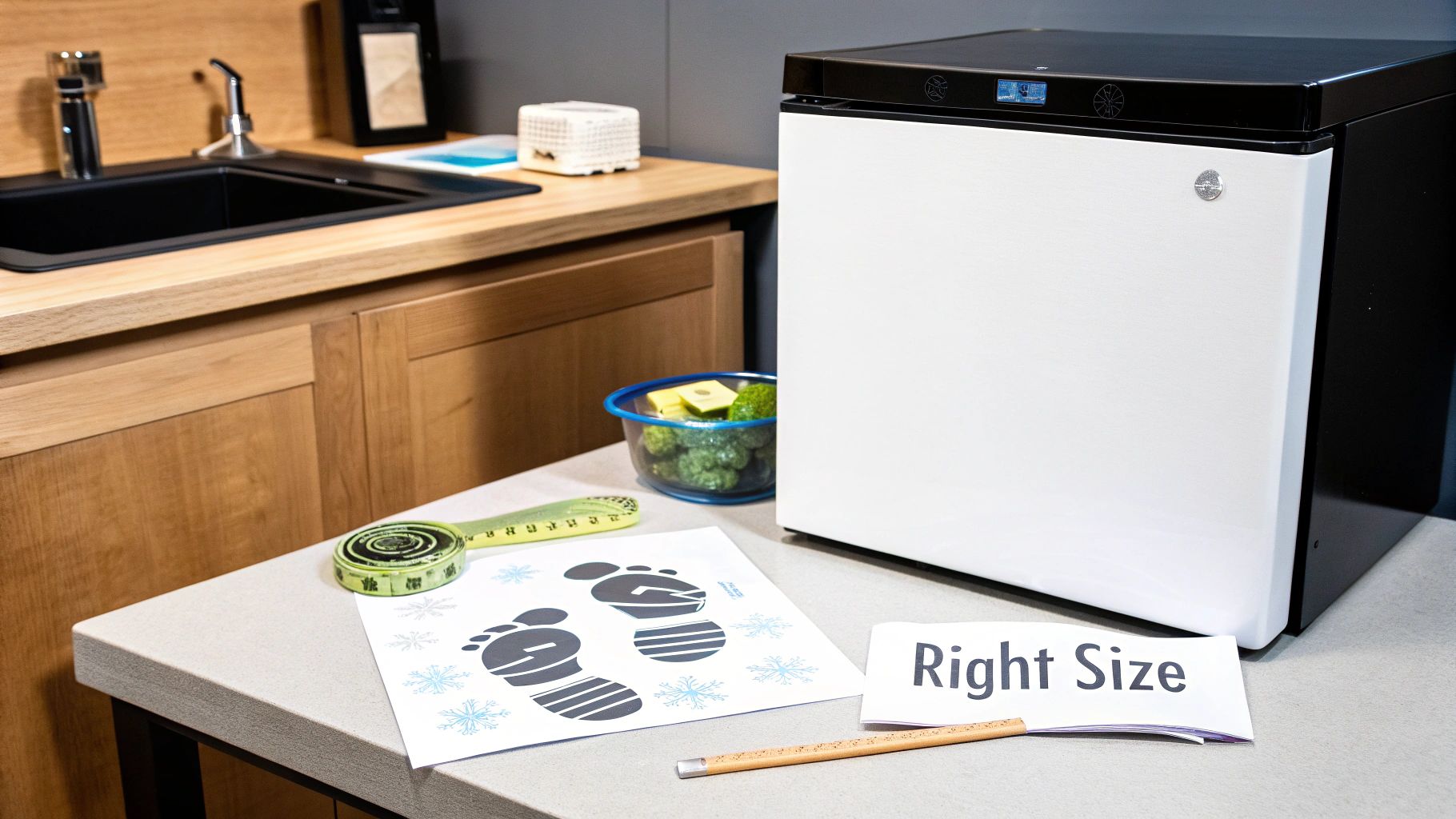
The needs across LA's food scene are all over the map. A busy Chinese restaurant in the San Gabriel Valley getting daily produce deliveries has a completely different refrigeration puzzle to solve than a Japanese onigiri food truck stocking up for the week. Your goal is simple: have enough room to safely hold ingredients between deliveries without buying a beast of a unit that clogs up your kitchen.
Calculating Your True Storage Needs
Before you even start browsing models, you need to get real about what your operation demands. Take a hard look at three things: menu complexity, service volume, and delivery frequency. A simple, focused menu means fewer unique ingredients and, you guessed it, less space needed.
On the other hand, a complex menu, like those found in many Mexican or Korean restaurants, with a mountain of prep is going to chew up refrigerated real estate. Think about your busiest night. How much prepped food do you need on deck to crush a Friday night rush? Lastly, look at your delivery schedule. Daily drops of protein and produce mean you can get by with less on-site storage than if you're only getting bulk orders twice a week.
A good starting point is to budget about 1.5 to 2 cubic feet of refrigeration space per seat in your restaurant. But that's just a guideline. Los Angeles food trucks and ghost kitchens should base their math on how much food they plan to push out and how quickly they turn over ingredients.
Think of your refrigerator's capacity like a bank account for your ingredients. You want enough funds (space) to cover daily expenses (service volume) without having so much that it becomes difficult to manage and track. Oversizing is just as problematic as undersizing.
For a closer look at fitting units into tight spots, check out our guide on undercounter refrigerator sizes to see how they can transform your layout.
The Critical HVAC Connection
Your refrigerator isn't an island. It's a key player in your kitchen's ecosystem, working hand-in-hand with your HVAC system. A fridge pulls heat from inside the cabinet and pumps it out into the kitchen. In a cramped LA kitchen, that extra heat can really crank up the ambient temperature.
If your unit is working too hard or its condenser coils are caked in grime, it dumps even more heat into the room. This forces your HVAC to run constantly just to keep the kitchen from feeling like a sauna, creating a vicious cycle of energy waste. Your utility bills for both refrigeration and air conditioning will skyrocket.
Planning for Proper Airflow and Placement
Where you put your refrigerator is crucial for its health and efficiency. It needs room to breathe to get rid of all that heat it's pulling out. If you shove it into a tight corner or right up against a wall, you're choking its airflow and setting the condenser up for an early death.
Here are a few layout tips that make a huge difference in LA kitchens:
- Leave Clearance: Always follow the manufacturer’s specs for clearance. This is usually 2-3 inches of breathing room on the sides and back of the unit.
- Avoid Heat Sources: This is a big one. Never put a refrigerator right next to a range, fryer, or charbroiler. That ambient heat forces the compressor to work overtime just to keep up.
- Plan Door Swing: Make sure the doors can swing fully open without blocking a busy walkway or slamming into other equipment. An obstructed door is a recipe for slow service and a frustrated crew.
Understanding Costs, Warranties, and Maintenance in LA
A commercial refrigerator isn't just a purchase; it's a serious investment in your restaurant's future. To get the full picture, you have to look past the sticker price and think about the total cost of ownership. This means factoring in the upfront cost, the safety net of a good warranty, and the day-to-day maintenance that keeps it humming along for years.
The initial price tag can swing wildly. A compact undercounter unit perfect for a food truck might set you back around $1,500. On the other hand, a big, three-door reach-in for a high-volume Chinese restaurant could easily top $7,000. Walk-in coolers and freezers are the heavyweights, often landing deep into five-figure territory.
This restaurant equipment is the lifeblood of the foodservice industry. In North America, commercial freezers and refrigerators are the dominant players, making up over 27% of the market. These units are the workhorses for every LA kitchen, from Thai spots to Mexican taquerias, keeping perishable ingredients safe and fresh. With the U.S. market expected to jump from $20.18 billion in 2026 to $31.93 billion by 2034, it’s clear the demand from quick-service cafes and full-service restaurants isn't slowing down. You can learn more about commercial refrigeration market trends.
Demystifying Warranties and Service Networks
Think of a warranty as your equipment’s insurance policy. It's the manufacturer’s promise to have your back if something goes wrong. A solid warranty isn't just nice to have—it's essential. Imagine your compressor failing during a blistering LA heatwave in July. You could be looking at thousands of dollars in spoiled food and lost business.
A good, standard warranty, like the ones you'll find with Atosa units, usually includes:
- Parts and Labor Coverage: Typically for one to two years, this covers the cost of new components and the technician’s time to get them installed.
- Compressor Coverage: The compressor is the heart of the system and its most expensive part. That's why it often gets its own, longer warranty—usually five years or more.
A great warranty is useless if you can't get service. Before you buy anything, make sure the manufacturer has a reliable and authorized service network right here in the Los Angeles area. When your fridge dies, you need a pro on-site fast, not waiting for someone to drive in from two counties over.
Proactive Maintenance: A Simple Checklist
The smartest way to dodge those expensive, panic-inducing repair bills is to stick to a simple preventative maintenance schedule. A little bit of care goes a long way, extending your unit’s life, keeping it energy-efficient, and making sure it stays a dependable asset instead of a constant headache. Besides maintenance, it's also wise to understand what your commercial property insurance coverage includes to protect valuable equipment from unexpected disasters.
Here’s an easy checklist to keep you on track:
- Clean Condenser Coils Regularly: When coils get dusty, the compressor has to work overtime, which wastes energy and leads to burnout. Give them a good cleaning with a stiff brush every 90 days.
- Check and Clean Door Gaskets: A torn or loose gasket is like leaving the door open. Cold air escapes, and the unit runs non-stop. Wipe them down every day and check that you have a tight seal.
- Ensure Proper Airflow: Don’t just cram product in there. Keep your inventory organized and make sure you’re not blocking the interior vents. Also, never pile boxes around the outside of the unit—it needs space to breathe and release heat.
- Monitor Temperatures: Don’t just trust the built-in display. Use a separate thermometer to double-check that the unit is holding the right temperature. If it starts to fluctuate, that’s a red flag that something might be wrong.
How to Purchase Restaurant Equipment in Los Angeles
Figuring out where you buy your commercial refrigerator is just as important as picking the right model. For restaurant owners here in Los Angeles, the right purchasing strategy can save you money, cut down on stress, and guarantee your equipment is up to the unique challenges of the region. This is about finding a partner, not just a place to swipe your card.
There's a real advantage to working with a specialized local supplier. They just get what it's like to operate in LA—from knowing the ins and outs of local health codes to figuring out the logistics of delivering a massive unit to a food truck in a crowded downtown market or a restaurant with a super-tight back alley.
Strategic Purchasing Options
Beyond just buying your equipment outright, you need to think about smart financing and delivery. These options can protect your cash flow, which is absolutely critical for any new or growing food business in a city this competitive. Getting a handle on these choices is key to making a solid financial decision.
Here are a couple of powerful purchasing strategies to consider:
- Free Freight Shipping: The cost of shipping heavy equipment can easily tack on hundreds of dollars to your final bill. Finding a supplier who offers free freight shipping completely erases this significant hidden cost, keeping your budget right where you need it to be.
- Lease-to-Own Financing: For new restaurant concepts or anyone trying to hold onto capital for other expenses, lease-to-own programs are a total game-changer. This gets you the best commercial refrigerator you need right away, but you pay for it with small, manageable payments that line up with your incoming revenue.
Choosing a supplier is like hiring a key employee; their expertise and reliability directly impact your operation's success. A good supplier in Los Angeles acts as a consultant, helping you select equipment that not only fits your space but also complies with local regulations, saving you from costly mistakes down the line.
Questions to Ask Any Vendor
To feel confident you're making a smart, informed decision, you have to vet any potential supplier. The answers to these questions will tell you everything about their expertise, the quality of their support, and how committed they are to your success long after the sale is done.
Before you commit to anything, make sure you ask:
- What are the complete warranty details for the parts, labor, and the compressor?
- Do you have an authorized service network right here in the Los Angeles area for quick repairs?
- Can you give me detailed spec sheets to confirm the unit meets all LA health code requirements?
- What are all the logistical details for delivery to my specific location, including any extra fees I should know about?
Making the right choice goes beyond just the equipment itself. While you're selecting the right refrigeration, don't forget that understanding your commercial kitchen flooring options is crucial for safety, hygiene, and durability in a busy restaurant. To take a closer look at specific models, you can also learn more about the best commercial refrigerator brands in our detailed review.
Common Questions About Commercial Refrigerators
Choosing the right commercial refrigerator for your restaurant usually brings up a few final, important questions. For restaurant owners here in Los Angeles, getting straight answers is key to making a smart investment. We’ve rounded up some of the most common questions to help you feel confident in your decision.
How Often Should a Commercial Refrigerator Be Serviced?
For most operations, you’ll want to get your units professionally serviced at least twice a year. This checkup isn't just a quick look-over; it should include cleaning the condenser coils, checking refrigerant levels, and making sure your door gaskets have a tight seal to keep the cold in.
Now, if you’re running a busy LA kitchen that puts out a lot of grease—think a Thai spot with woks firing all night or a Korean BBQ joint—quarterly servicing is a smart move. It's a proactive step that helps you avoid a catastrophic failure during a dinner rush and keeps your energy bills from creeping up.
What Is the Difference Between Commercial and Residential Models?
The real difference boils down to three things: how tough they are, how fast they cool, and whether they meet health codes.
- Durability: Commercial refrigerators are built for war. They use heavy-duty parts and tough stainless steel to handle the constant opening, closing, and general chaos of a professional kitchen.
- Cooling Power: Their compressors are much more powerful, designed to get the temperature back down to a safe level quickly. This is essential when your line cooks are grabbing ingredients every 30 seconds during service.
- Sanitation Standards: This is the big one. Professional models have to be NSF-certified. This certification means they meet the strict public health codes required for any licensed food business in Los Angeles, whether you’re running a food truck or a fine-dining restaurant.
The NSF (National Sanitation Foundation) certification isn't just a sticker on the side. It’s your guarantee that the fridge is built with materials that are easy to clean and won't harbor bacteria, keeping your food safe.
Can I Put Hot Food Directly into a Commercial Refrigerator?
It’s tempting when you’re in the weeds during a busy service, but you should avoid this at all costs. Shoving a large, hot pot of soup or sauce inside forces the compressor to run nonstop.
This not only puts a huge strain on your equipment but can also raise the inside temperature of the entire unit, putting everything else you’re storing into the "danger zone" for bacterial growth. This is especially critical for delicate items in Japanese or Thai cuisine.
The right way to do it is to cool hot foods down first. Use an ice bath in the sink, an ice paddle, or even just transfer the food into several smaller, shallow pans to increase the surface area. This cools it down fast and safe, protecting your inventory and your refrigerator.
Ready to find the perfect refrigeration solution for your LA kitchen? Los Angeles Restaurant Equipment offers a wide selection of Atosa commercial refrigerators and freezers designed for reliability and efficiency. Explore our catalog and benefit from free freight, lease-to-own financing, and expert support. Visit us at https://losangelesrestaurantequipment.com to get started.