

Energy Efficient Commercial Refrigerators: Cut Costs and Boost Profits for Your LA Restaurant
An energy-efficient commercial refrigerator is a game-changer for any Los Angeles kitchen, designed from the ground up to use way less electricity than older, standard models. By packing in advanced tech like high-efficiency compressors and superior insulation, they keep your ingredients perfectly chilled while cutting down your utility bills. It's a smart investment that lowers your operating costs and your environmental footprint, especially for restaurants and food trucks in Los Angeles.
Your Kitchen's Secret to Higher Profits in Los Angeles
In the L.A. food scene, every dollar counts, whether you're running a Korean BBQ joint in K-Town, a Mexican restaurant in East LA, or a Thai food truck cruising along the PCH. Sky-high utility costs can quietly chip away at your profits, which makes choosing the right restaurant equipment more important than ever. Think of an energy-efficient commercial refrigerator not just as a cold box, but as a strategic tool for boosting your business's financial health.
Your standard commercial fridge or freezer is like an old, gas-guzzling car—it gets the job done but it's running, and costing you money, 24/7. A modern, energy-efficient unit is more like a hybrid vehicle, using power smartly and only when it’s absolutely necessary. This guide is your roadmap to understanding how that smarter technology adds up to real savings for your L.A. restaurant or food truck.
Why Efficiency Matters in the LA Market
For any foodservice operator in Los Angeles, from a bustling Chinese restaurant in the San Gabriel Valley to a brand-new Japanese sushi bar downtown, keeping operational costs in check is a constant battle. High-efficiency restaurant equipment, including commercial refrigerators and freezers, gives you a direct way to lower your overhead and strengthen your bottom line.
Here’s exactly what you stand to gain:
- Significant Utility Savings: Refrigeration is a huge chunk of your electricity bill. Making an upgrade can slash that specific cost by 20-40%, freeing up cash you can put back into other parts of your business.
- Compliance with California Standards: California has some of the toughest energy and environmental regulations in the nation. Choosing compliant equipment helps you steer clear of potential fines and makes sure your business is set for the future.
- Enhanced Kitchen Workflow: Efficient refrigerators and freezers don’t just save power; they often have better designs and provide more consistent cooling. That means less food spoilage, more reliable inventory, and a smoother-running kitchen, whether you're serving Mexican, Korean, or Thai food.
Upgrading your refrigeration is one of the most direct moves you can make to cut operational expenses. The savings on your LADWP or SoCal Edison bill can be huge, often paying for the new equipment in just a few years.
This guide will walk you through everything you need to know. We’ll help you make sense of energy labels, show you how to calculate the real return on your investment, and find the perfect unit for your specific cuisine and kitchen space. Whether you're setting up a new Los Angeles food truck or giving an established restaurant a much-needed upgrade, a smarter, more profitable equipment choice starts right here.
How These Refrigerators Actually Save You Money
To really get why an energy-efficient commercial refrigerator is such a smart move, you have to look at what’s going on inside. Imagine your old, standard refrigerator is like a car that’s always running at full throttle, guzzling gas just to stay put. It works, sure, but it’s a massive waste. Today’s units are a whole lot smarter, built to deliver precise cooling using the least amount of energy possible.
This modern approach is all about advanced tech and strict performance standards. For any restaurant or food truck owner in Los Angeles, understanding these pieces is the key to making an investment that pays for itself.
The Smarts Behind the Savings
The secret to a lower electricity bill comes down to a few key innovations working together. Every component is designed to cut waste and boost cooling power, which directly helps your bottom line.
Here’s a quick look at the core technologies:
- Variable-Speed Compressors: This is the heart of your refrigerator. Old models had compressors that were either all-on or all-off—no in-between. A variable-speed compressor is more like cruise control in a car. It adjusts its speed based on what’s needed in real-time, using only the exact amount of power required to hold the right temperature.
- Advanced Insulation: Think of top-tier insulation as a high-tech thermos for your kitchen. High-density, polyurethane foam is shot into the refrigerator walls, creating an airtight seal that traps the cold air inside. This means the compressor doesn't have to kick on nearly as often, saving you energy all day and all night.
- Smart Defrost Cycles: When frost builds up on the coils, your fridge has to work harder. Instead of running a defrost cycle on a fixed timer like older models, smart systems monitor the actual conditions. A defrost cycle only starts when it’s truly needed, which stops a ton of unnecessary energy use.
These features all work in sync, creating a seriously efficient system that keeps your ingredients perfectly chilled while protecting your profits.
Making Sense of Efficiency Ratings and Standards
To make sure you’re getting a unit that’s genuinely efficient, government and industry groups have set up clear standards. You can think of these as a guarantee of performance and savings. For any food truck or restaurant in Los Angeles, these often aren't just suggestions—they're the law.
The two most important labels you need to know are:
- ENERGY STAR: This is the gold standard for efficiency. When you see the ENERGY STAR label, it means the product is certified by the EPA to be way more energy-efficient than standard models, often using 20-30% less energy. Picking an ENERGY STAR unit is the fastest way to lock in big savings and get yourself in line for local utility rebates.
- Department of Energy (DOE) Standards: The DOE sets the minimum legal efficiency requirements for every piece of commercial refrigeration sold in the U.S. These standards have gotten tougher and tougher over the years.
A huge change came in January 2020 with the Annual Walk-In Energy Factor (AWEF) requirement. This federal rule forced manufacturers to design walk-in coolers and freezers that are 20–40% more efficient than the older models.
This regulatory push has completely changed the game, making powerful, energy-saving technology the new normal for commercial kitchens. You can learn more about how the DOE’s efficiency metrics have impacted modern equipment design. By understanding these ratings, you can confidently choose an energy efficient commercial refrigerator that meets all legal standards and brings real savings to your Los Angeles business.
Calculating Your True Return on Investment
The sticker price on a new piece of restaurant equipment is rarely the full story. For a smart investment like an energy efficient commercial refrigerator, that initial cost is just the starting point. To see the bigger financial picture, Los Angeles restaurant owners need to look at the Total Cost of Ownership (TCO), which reveals how an appliance actually pays you back over time.
Think of it like comparing two cars. One is cheaper upfront but guzzles gas and needs constant repairs. The other costs a bit more initially but sips fuel and runs reliably for years. Over the long haul, the "more expensive" car is actually the cheaper, smarter choice. It's the exact same principle with your commercial kitchen equipment.
Breaking Down the Real Costs and Savings
To figure out the true ROI for your business—whether you run a Thai restaurant in Hollywood or a Mexican food truck in East LA—we have to look beyond the purchase price. The real math includes what you'll save on your LADWP bill, reduced maintenance headaches, and any local utility rebates you can snag.
Here are the key pieces of a TCO calculation:
- Initial Purchase Price: This is the upfront cost. An efficient model might be a little higher, but this is where the calculation begins, not where it ends.
- Annual Energy Costs: This is where the savings really start to add up. An ENERGY STAR certified model can use 20-40% less electricity than an older, standard unit. That means hundreds of dollars back in your pocket each year.
- Maintenance and Repair Costs: Newer, efficient units are built with better components, like tougher compressors and sealed systems. That means fewer breakdowns, less spoiled product, and lower repair bills over the unit's lifespan.
- Utility Rebates and Incentives: Many LA-area utilities offer cash back for buying ENERGY STAR certified equipment, which can take a nice chunk out of your initial investment.
This chart really puts the energy consumption differences into perspective.
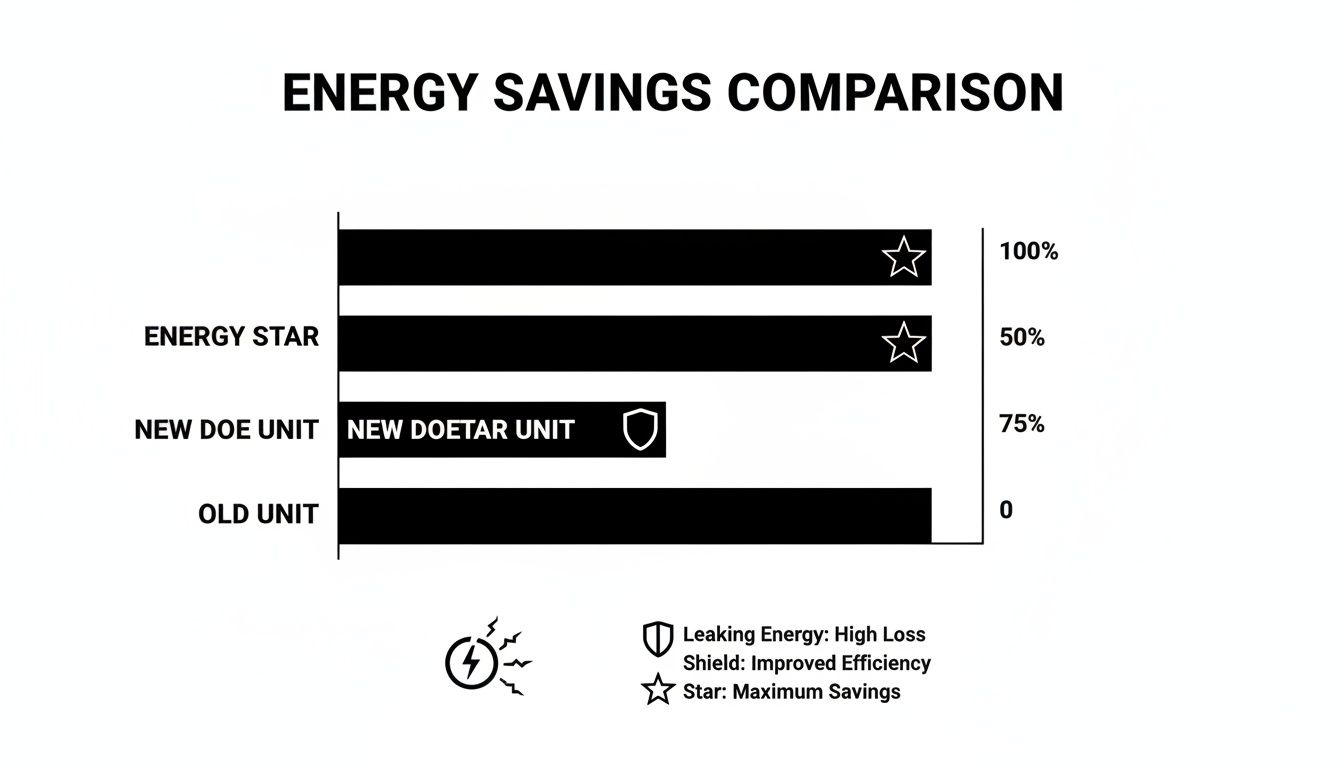
As you can see, the jump in efficiency from an old clunker to a modern DOE-compliant or ENERGY STAR model is huge. That difference hits your monthly utility bill directly.
These financial benefits aren't just theoretical. The numbers show that upgraded refrigeration standards are projected to create up to $6.5 billion in utility bill savings for U.S. businesses. Even better, the payback period is often as short as 1.6 to 3 years.
TCO Comparison of Standard vs Energy Efficient Refrigerators in LA
To make this real, let's put an older, standard commercial refrigerator head-to-head with a modern, efficient Atosa model. This table breaks down the long-term financial impact for a typical LA restaurant, factoring in our local energy costs.
| Cost Factor | Standard Refrigerator | Atosa Energy Efficient Model | Financial Impact |
|---|---|---|---|
| Initial Cost | ~$2,500 | ~$3,500 | Higher upfront investment |
| Annual Energy Cost (LADWP) | ~$1,100/year | ~$650/year | $450+ in annual savings |
| Est. 3-Year Savings | $0 | $1,350 | Covers the initial price difference |
| Est. 5-Year Savings | $0 | $2,250 | Unit has paid for itself |
| Est. 10-Year Savings | $0 | $4,500+ | Significant long-term profit |
As the table shows, that initial price difference is often recovered in just a couple of years. After that, the energy savings go straight to your bottom line. When you consider a refrigerator’s lifespan is easily 10 years or more, the decision becomes a no-brainer.
While you're weighing your options, you can also explore our guide on the pros and cons of used restaurant equipment in Los Angeles. But when it comes to long-term value, investing in a new energy efficient commercial refrigerator is one of the smartest financial moves you can make for your kitchen's future.
Matching the Right Refrigerator to Your Cuisine
There’s no such thing as a one-size-fits-all commercial refrigerator. The perfect unit for your kitchen is a direct reflection of your menu and the unique rhythm of your workflow. For a city with a culinary scene as diverse as Los Angeles, matching your refrigeration to your specific needs isn't just a good idea—it's essential. The right fridge does more than keep things cold; it simplifies prep, protects your valuable inventory, and ultimately, supports your unique brand of hospitality.
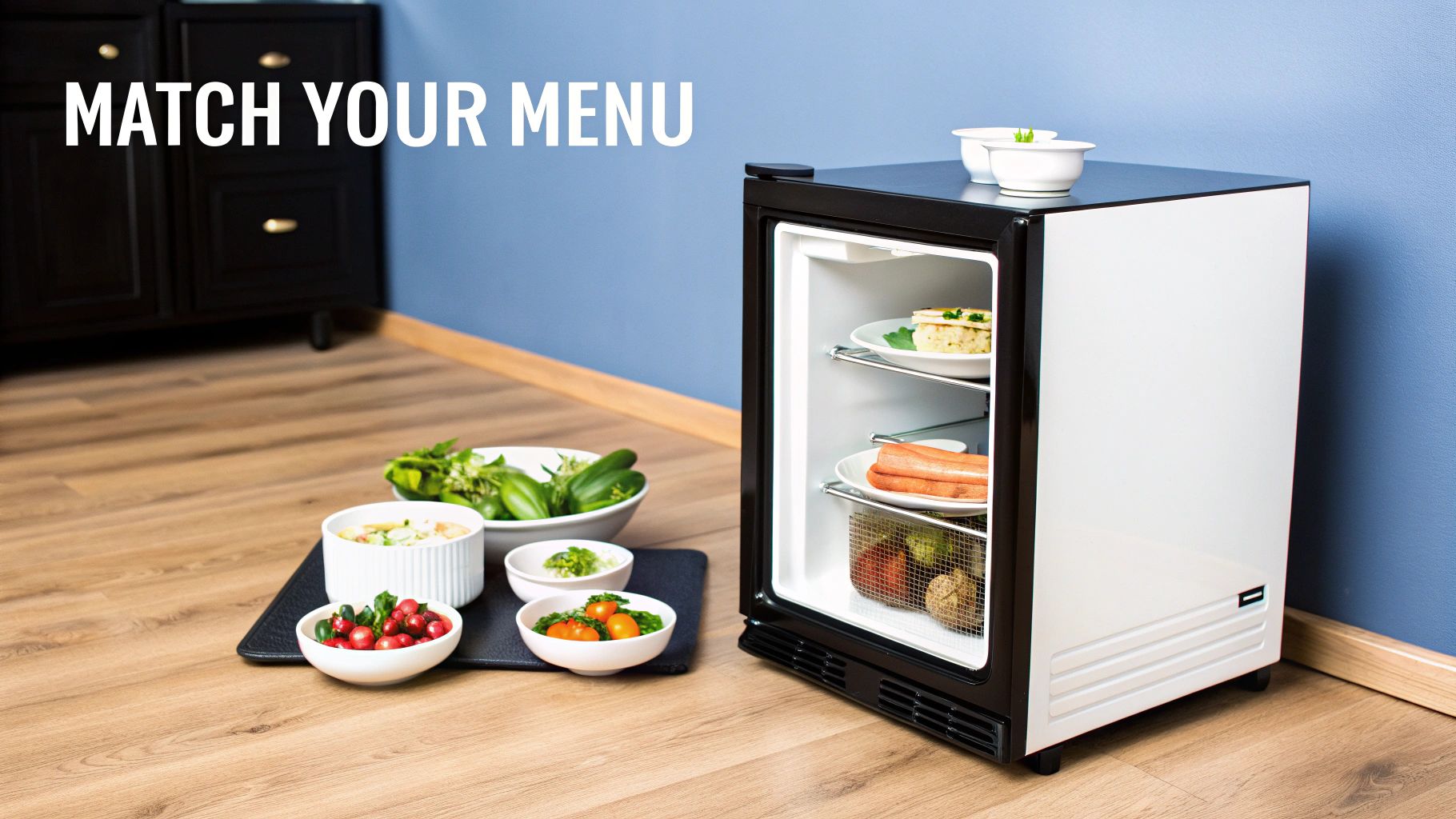
Think about it: a sprawling Mexican restaurant in Boyle Heights has completely different requirements than a tiny Japanese food truck cruising through Santa Monica. The restaurant needs high-capacity storage for bulk produce, meats, and signature sauces. The food truck, on the other hand, needs space-saving efficiency and lightning-fast access to prepped ingredients. Your choice in refrigeration should be as specialized as your recipes.
Tailoring Refrigeration to Your LA Kitchen
Picking the right energy efficient commercial refrigerators starts with a good, hard look at how your kitchen actually runs day-to-day. How much fresh produce are you holding? How many pans of prepped items need to be ready to go on the line? Answering these questions will point you toward a setup that feels like it was built just for you.
Let's look at a few examples of cuisines in LA:
- For a high-volume Chinese kitchen in the San Gabriel Valley, workflow is king. This kitchen needs multiple reach-in refrigerators to keep different food categories separate and prevent cross-contamination. A large walk-in cooler is also a must for storing crates of vegetables and proteins. And with the intense heat and pace, durable stainless steel construction is non-negotiable.
- A Korean BBQ spot in K-Town needs powerful refrigeration that can handle both the kitchen's heat and the constant demand. Undercounter units are perfect for keeping banchan close to the service area, while glass-door merchandisers can show off specialty drinks, boosting sales and enhancing the customer experience.
- A Thai food truck is all about maximizing a small footprint. Every inch counts. Low-profile undercounter and worktop refrigerators are the heroes here, providing essential cold storage right below the prep surfaces. This makes assembling dishes like Pad Thai or fresh spring rolls incredibly efficient.
The real goal is to create a seamless "cold chain" right inside your kitchen. Your layout should minimize the steps your chefs take, which means doors are open for less time and ingredients stay at safe, consistent temperatures from the moment they arrive to the final plate.
Key Features for Different Cuisines
Looking beyond just the size and type of refrigerator, certain features can make a world of difference in your kitchen's productivity. Optimizing your restaurant equipment for your menu is a smart move that protects both your food and your bottom line.
For Produce-Heavy Menus (Mexican, Thai, Vegan)
If your menu is loaded with fresh vegetables, fruits, and herbs, a refrigerator with excellent humidity control is key.
- High-Capacity Walk-In Coolers: Absolutely essential for storing bulk produce like avocados, tomatoes, and cilantro found in many Mexican dishes. To learn more about sizing and options, you can check out our guide on commercial walk-in refrigerators.
- Adjustable Shelving: Lets you customize storage for everything from small herb containers to big boxes of lettuce.
For Protein-Focused Kitchens (Japanese, Korean, Pizzerias)
When you’re working with high-value proteins like fresh fish or marinated meats, precise and unwavering temperature control is everything.
- Digital Temperature Controls: These offer pinpoint accuracy, which is crucial for safely storing delicate items like sushi-grade fish for a Japanese restaurant.
- Separate Freezer and Refrigerator Units: This setup prevents temperature swings and ensures items like pizza dough or marinated meats for Korean BBQ are kept under perfect conditions.
- Durable Stainless Steel Interior: A must-have for any kitchen handling raw proteins, as it resists odors and is incredibly easy to sanitize.
When you take the time to choose an energy efficient commercial refrigerator that truly fits your cuisine, you're setting your kitchen up for success. It’s a foundational choice that improves everything from food quality to your daily operational flow.
Navigating California's Rebates and Regulations
For restaurant owners in Los Angeles, choosing an energy efficient commercial refrigerator is more than just a smart move for your utility bill. It’s a direct line to serious financial incentives and a sure-fire way to stay compliant with California’s tough environmental laws. The state essentially created a system where the smartest, most efficient choice is also the most profitable one for your kitchen.
Think of it as the state and your local utility company giving you a financial high-five for upgrading your restaurant equipment. When you pick a high-efficiency model, you’re not just saving your own money. You’re helping ease the strain on the whole power grid—a huge deal in a city like Los Angeles.
Unlocking Local Utility Rebates
Your local utility is your best friend when it comes to making a new refrigerator more affordable. Both the Los Angeles Department of Water and Power (LADWP) and Southern California Edison (SoCal Edison) have rebate programs designed for commercial customers who buy ENERGY STAR certified appliances.
These programs can knock a huge chunk off your upfront cost, putting hundreds or even thousands of dollars right back in your pocket. Getting the rebate is usually pretty simple:
- Buy Qualified Equipment: Make sure the refrigerator or freezer you purchase has that all-important ENERGY STAR label.
- Submit an Application: You'll fill out a form (usually online) and show them your proof of purchase.
- Get a Rebate Check: The utility sends you a check, which directly slashes your total investment.
It's a true win-win. The utility hits its energy-saving targets, and your business gets a top-tier, money-saving appliance for way less than the list price. This puts high-end restaurant equipment within reach for everyone, from established restaurants to brand-new Los Angeles food trucks.
Staying Compliant with California's Refrigerant Laws
Energy use is just one piece of the puzzle. California is a national leader in policing the chemicals used inside refrigeration systems. The California Air Resources Board (CARB) has put strict limits on refrigerants with high Global Warming Potential (GWP), pushing to get rid of chemicals that harm the environment.
This is where knowing a little bit about refrigerants becomes really important for your business. Older fridges often run on hydrofluorocarbons (HFCs), which are potent greenhouse gases. In contrast, modern energy efficient commercial refrigerators have switched to natural, eco-friendly options like R-290 (propane).
Choosing a unit with R-290 isn't just about being green—it's good for business. Federal and state rules, including CARB regulations that kicked in back in 2022, have forced the industry to move to low-GWP refrigerants. This has made R-290 the new standard, and it just so happens to improve the cooling power and efficiency of the system compared to the old HFCs. You can get into the nitty-gritty of how these rules are changing equipment and the performance benefits of modern refrigerants if you want to dig deeper.
By picking an R-290 refrigerator, you're knocking out two birds with one stone. First, you guarantee your kitchen is up to code with California law, so you won't have to worry about fines or being forced to upgrade later. Second, you get a fridge that cools down faster and uses less electricity to do it. These regulations are set up to guide you toward a smarter investment that future-proofs your entire operation.
Why LA Chefs Choose Atosa Refrigeration
For any chef in Los Angeles, a broken-down piece of restaurant equipment isn't just a headache—it’s a full-blown crisis. It can mean shutting down service for the night and watching thousands of dollars in fresh inventory go to waste. In a market as fierce as L.A.'s, reliability isn't just a nice-to-have; it's the very backbone of your business. This is exactly why so many local restaurants and food trucks are turning to Atosa. They're finding more than just a refrigerator; they're finding a partner that gets the job done with performance, efficiency, and fantastic local support.
Atosa didn't just build a generic commercial fridge; they engineered their equipment for the intense heat and high-volume demands of a professional kitchen. Their energy efficient commercial refrigerators and freezers are designed to meet California's tough standards, blending powerful cooling with smart features that help slash your utility bills. You get a unit that can take the heat of a busy kitchen while keeping your ingredients perfectly chilled and your operating costs in check.
Local Service and Support That Matters
One of the biggest wins for an L.A. business is Atosa’s solid local presence. When a refrigerator gives out, you don't have time to sit around waiting for a technician to drive in from another state.
The peace of mind that comes with accessible, local service is invaluable. Atosa's authorized service network in the Los Angeles area ensures that if an issue ever arises, help is just a phone call away, minimizing downtime and protecting your profits.
This commitment to local support is a total game-changer. It turns a potential disaster into a minor hiccup, letting chefs focus on creating amazing food instead of stressing over equipment failures.
Making Premium Equipment Accessible
Getting top-tier, compliant restaurant equipment shouldn't mean draining your bank account. Atosa gets the financial reality of running a food business, whether you're a well-known spot or a new Los Angeles food truck hitting the streets. To make these critical investments easier, they offer flexible financing options. These programs let you get the premium, energy efficient commercial refrigerators you need with payments that work for your cash flow. You can explore a wide selection of Atosa refrigeration options for your LA kitchen to find the perfect match for your operation.
By bringing together tough, energy-saving tech, dependable local service, and sensible financing, Atosa has earned its spot as the go-to choice for L.A. chefs. It’s about more than just buying a fridge; it’s about partnering with a brand that truly understands the unique pressures of the Los Angeles market and gives you the tools you need to thrive.
A Few Common Questions
We get it. Diving into the world of commercial refrigeration brings up a lot of questions, especially when you’re a busy restaurant or food truck owner here in Los Angeles. To help you feel confident about your next purchase, we’ve answered a few of the most common things we hear from local operators.
How Much Will I Actually Save on My LA Utility Bill?
This is the big one, right? While the exact savings depend on your specific unit and how you use it, LA businesses often see a 20-40% drop in that particular refrigerator's energy use. For a standard reach-in, that can easily add up to hundreds of dollars a year shaved off your LADWP or SoCal Edison bill. The best way to lock in those savings is to look for an ENERGY STAR certified model—that label is your guarantee of top-tier efficiency.
Are There Special Rebates for LA Food Trucks?
Most utility rebates are tied to a fixed commercial energy meter, which is perfect for brick-and-mortar restaurants. For Los Angeles food trucks, the savings show up in other, equally important ways. Think lower fuel costs for your generator or a smaller bill when you plug in at the commissary kitchen. Plus, with accessible financing, these efficient units become a smart, cash-flow-friendly investment for any mobile kitchen in LA. It’s always a good idea to check with your local utility provider just in case they have new programs rolling out.
What’s the Difference Between DOE and ENERGY STAR?
It’s kind of like grades in school. The Department of Energy (DOE) sets the minimum standard every commercial refrigerator sold in the U.S. has to meet—that’s your basic passing grade.
ENERGY STAR, on the other hand, is a voluntary program run by the EPA. It’s like getting an "A+" for being way more efficient than the legal requirement. For a restaurant owner, that ENERGY STAR logo is your quick guide to finding the models that will save you the most money and qualify for the best local rebates.
How Does My Menu Affect Which Refrigerator I Should Buy?
Your menu is everything when it comes to choosing the right restaurant equipment. A Japanese sushi bar needs precise temperature control and special drawers to protect thousands of dollars’ worth of pristine fish. A busy Mexican restaurant needs massive walk-in space for all that fresh produce and refrigerated prep tables to keep toppings perfectly crisp.
Think about a high-heat kitchen, like a Korean BBQ joint. You'll need a seriously robust system that can hold its temperature even when every grill is fired up. The best refrigerator is never just about size; it's the one that’s built to support your specific ingredients and your kitchen's unique rhythm.
Ready to outfit your kitchen with a reliable, compliant, and cost-effective refrigeration solution? The team at Los Angeles Restaurant Equipment is here to help you find the perfect Atosa refrigerator for your menu and your budget.