

Finding The Best Commercial Refrigerators For LA Restaurants
For any restaurant owner in Los Angeles, picking out the best commercial refrigerators is a delicate balance of performance, space, and of course, cost. From a bustling Thai food truck in the Valley to a high-end Japanese restaurant in Sawtelle, the right equipment is non-negotiable. The top contenders are almost always durable, energy-efficient models from brands like Atosa, built to take the heat of a busy professional kitchen. The right unit keeps your temperatures locked in, fits your kitchen's unique layout, and won't send your utility bills through the roof.
Choosing The Best Commercial Refrigerators In Los Angeles
In the non-stop L.A. culinary scene, a commercial refrigerator is basically the heart of your entire operation. Whether it’s a bustling Thai spot in Hollywood or a packed Korean BBQ joint in K-town, keeping your ingredients at the perfect temperature isn't just a suggestion—it’s essential for food safety and quality. Making the right choice here affects everything from your kitchen's daily flow to your bottom line, especially when dealing with diverse cuisines like Mexican, Japanese, or Chinese food that rely on fresh, specific ingredients.
The market for this kind of restaurant equipment is blowing up. Globally, commercial refrigeration is set to jump from USD 85.6 billion to USD 161 billion by 2034. The U.S. is a huge piece of that pie, ringing in USD 23.5 billion in revenue already. For L.A. business owners trying to navigate this, the real challenge is finding gear that can handle the constant grind of high-volume service without breaking the bank.
Key Factors for LA's Diverse Kitchens
When you're shopping for a refrigerator, a few key things really matter in the competitive Los Angeles landscape. Space is almost always tight, whether you're working out of a compact food truck downtown or managing a restaurant with a kitchen that feels like a shoebox.
- Footprint and Capacity: Your unit has to give you maximum storage without eating up your entire workspace. Under-counter models are a lifesaver for LA food trucks, while big multi-door reach-ins are a must for larger kitchens.
- Energy Efficiency: With Southern California utility costs being what they are, an ENERGY STAR certified refrigerator can genuinely lower your operating expenses over time.
- Durability and Reliability: The constant opening and closing in a slammed kitchen demands a tough build—usually stainless steel—to make sure it lasts.
For any food business in Los Angeles, from a Japanese sushi bar to a Mexican taqueria, the refrigerator is more than just an appliance. It's your partner in delivering freshness and quality. Investing smart means putting reliability and efficiency first, right from day one.
To make a solid choice, you need to understand how different models serve different needs. This table gives you a quick look at what works best where. You can also check out our guide on the best commercial refrigerator brands to get even more detail.
| Refrigerator Type | Ideal LA Use Case | Key Benefit |
|---|---|---|
| Reach-In Refrigerator | High-volume restaurant (e.g., Koreatown BBQ) | Large capacity for bulk ingredient storage |
| Under-Counter Unit | Food truck or compact bar | Space-saving design for tight quarters |
| Refrigerated Prep Table | Sandwich shop or taqueria | Combines refrigerated storage with a workspace |
| Glass-Door Merchandiser | Cafe or convenience store | Boosts sales through attractive product display |
Comparing Commercial Refrigerator Types For LA Kitchens
Picking the right commercial refrigerator for your Los Angeles spot is about more than just size. You have to really understand how different units fit into the day-to-day chaos of a professional kitchen. It’s all about matching the fridge’s design to your workflow, your menu, and the actual space you have to work with. The right choice is a cornerstone of efficiency, whether you're running a busy Mexican restaurant in East LA or a sleek Japanese sushi bar in Sawtelle.
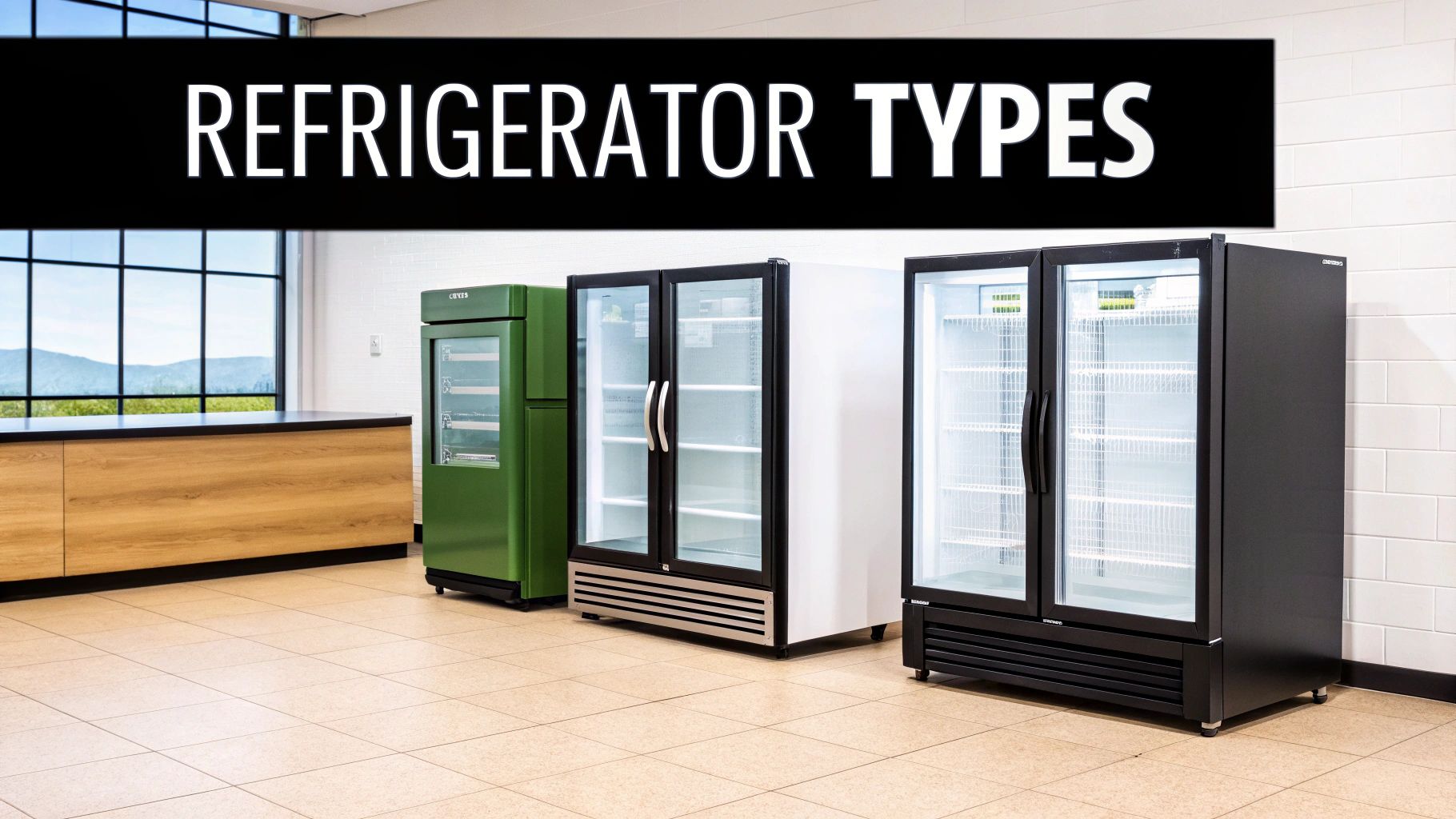
Let’s break down the most common types and see how they plug into LA’s amazing food scene. This should help you picture exactly which model will serve your business best.
Reach-In Refrigerators: The Kitchen Workhorse
For almost any full-service restaurant, the reach-in refrigerator is the undisputed king of the back-of-house. These are the upright units you see in one, two, or three-door styles, built to hold bulk ingredients from fresh produce to prepped sauces. A high-volume Chinese spot in the San Gabriel Valley, for example, would depend on a big multi-door reach-in to keep tons of vegetables, meats, and house-made ingredients ready and within arm's reach during a hectic service.
Their biggest advantage is sheer capacity. That said, LA operators have to be smart about the footprint. These units demand a good amount of floor space and vertical clearance, not to mention room to breathe for ventilation.
The most important job of a reach-in is holding a consistent temperature, even when the doors are constantly being opened. Always look for models with powerful compressors and quality insulation—it directly impacts food safety and keeps your energy bills from getting out of control.
If you need even more storage, you might want to look into our guide on commercial walk-in refrigerators. They offer unmatched capacity for serious bulk inventory.
Under-Counter and Worktop Units: Maximizing Tight Spaces
In Los Angeles, every square inch counts. This is especially true for food trucks parked along Abbot Kinney or those cozy little bars in Silver Lake. Under-counter and worktop refrigerators are life-savers in these tight spots, fitting perfectly under standard countertops to make the most of your layout.
These units pull double duty. They give you cold storage right where you need it, and many come with a durable stainless steel top that adds extra prep space.
- Los Angeles Food Trucks: An under-counter unit is a non-negotiable for an LA food truck, keeping taco or sandwich ingredients chilled without eating into your limited prep area.
- Bars: A back bar cooler, which is a type of under-counter unit, is perfect for keeping bottled drinks and garnishes organized and ready for the bartender.
- Prep Stations: In any kitchen, dropping an under-counter fridge at a specific station—like for salads or desserts—makes the whole line more efficient and cuts down on staff running around.
Refrigerated Prep Tables: Streamlining Assembly
Refrigerated prep tables, which you'll often hear called sandwich/salad or pizza prep tables, are essential for any business that builds dishes to order. An East LA taqueria would use one to keep toppings like cilantro, onions, and salsa chilled and organized in pans up top. A pizza place in North Hollywood would have a pizza prep table with a wide rail to hold all their cheeses, meats, and veggies.
It's all about efficiency. A chef has everything they need in one spot: refrigerated storage below, an ingredient rail up top, and a cutting board work surface. This setup seriously speeds up service and guarantees ingredients stay at safe temps while you work.
Glass-Door Merchandisers: Driving Impulse Sales
Finally, we have glass-door merchandisers, and these are all about showing off your products. You’ll see these front-of-house in cafes, convenience stores, and markets all over LA. By making bottled Thai teas, cold-pressed juices, or grab-and-go salads look great, they encourage customers to make impulse buys. While they aren't quite as insulated as solid-door models, their visual appeal is a powerful sales tool, making them a smart move for any customer-facing food business.
Key Decision Criteria For Your Next Refrigerator
Picking the right commercial refrigerator for your Los Angeles business isn’t just about size and price. It’s about finding a unit that can handle the specific, relentless demands of your kitchen. The right choice will do more than just keep ingredients safe—it will improve your workflow and protect your profits.
Think about it: a high-end Japanese restaurant in Little Tokyo has completely different refrigeration needs than a busy Thai food truck in North Hollywood. One needs absolute temperature precision for pricey, delicate fish, while the other needs a tough, compact unit that can handle life on the road. Let’s break down what every LA restaurateur should be looking at.
Energy Efficiency and Operating Costs
In Southern California, utility bills can really sting. That makes energy efficiency a top priority. Commercial refrigerators are on 24/7, and an inefficient model can quietly suck hundreds, if not thousands, of dollars from your bottom line every year.
Always look for the ENERGY STAR certification. It's not just a sticker; on average, ENERGY STAR certified commercial refrigerators are 20% more energy-efficient than standard models. This is thanks to smarter designs like high-performance compressors, better insulation, and special fan motors that cut down on heat and energy waste.
Imagine a Koreatown BBQ joint running several big reach-ins. Switching to certified models could mean huge annual savings that quickly pay back the initial higher cost. To dig deeper into this, check out our guide on finding energy-efficient commercial refrigerators.
Capacity and Footprint
Let's be real, kitchen space in Los Angeles is gold. Whether you're in a historic Downtown LA building with a funky layout or a tiny food truck, every square inch counts. You're always trying to balance internal capacity with the unit's external footprint.
Before you buy anything, get out the tape measure. Measure your space, but don't forget the doorways and hallways you need to get it through. You also have to leave room for ventilation—usually 3-4 inches around the unit—so the compressor doesn’t burn out. It's a simple step that so many people forget.
- High-Volume Kitchens: A big Mexican restaurant in East LA can justify a three-door reach-in for all its bulk produce, meats, and sauces.
- Compact Operations: A Los Angeles food truck selling Chinese street food gets more value from under-counter units that keep ingredients cold without stealing precious prep space.
Temperature Consistency and Control
For a lot of cuisines, the right temperature is everything. A small fluctuation can spoil expensive ingredients, risk food safety, and hurt your reputation. Temperature consistency is what separates a great refrigerator from a metal box that’s just cold-ish.
This is critical for restaurants handling sensitive products. A Thai kitchen in the Valley needs steady cold to keep herbs and specialty produce fresh. A Japanese sushi bar depends on exact temperatures to protect the quality of its fish.
A truly reliable refrigerator holds its temperature, even when the doors are swinging open and shut during a frantic dinner rush. You want a unit with a powerful compressor, thick insulation, and a digital thermostat for precise control.
This level of control keeps your food safely below 40°F, stopping bacteria in its tracks and preventing waste.
Durability and Construction
A professional kitchen is a battlefield. Your equipment has to survive high heat, constant use, and the occasional collision with a prep cook in a hurry. The durability of your refrigerator, which comes down to its materials and build, determines how long it will last and how reliable it will be.
Stainless steel is the industry standard for good reason. It’s tough, resists corrosion, and is a breeze to clean and sanitize. Pay attention to the grade of the steel—higher grades are more durable. You should also look for reinforced shelves, heavy-duty door hinges, and quality gaskets that create a perfect seal. A well-built unit is an investment that saves you from the headache of constant repairs and costly downtime.
To make things easier, we've broken down how these features apply to different refrigerators popular in Los Angeles kitchens.
Comparing Refrigerator Features For Los Angeles Kitchens
This table compares key refrigerator types based on critical selection criteria to help Los Angeles restaurant owners make an informed decision.
| Refrigerator Type | Ideal LA Use Case | Typical Footprint | Energy Efficiency | Best For |
|---|---|---|---|---|
| Reach-In Refrigerator | High-volume Chinese or Mexican restaurant | Large (25-75 sq. ft.) | Moderate to High (look for ENERGY STAR) | Bulk storage of diverse ingredients |
| Under-Counter Unit | Food truck, bar, or small cafe | Small (8-15 sq. ft.) | High (smaller compressors, less space to cool) | Space optimization and station-specific storage |
| Refrigerated Prep Table | Taqueria, sandwich shop, or pizzeria | Medium (15-40 sq. ft.) | Moderate (open top rail increases energy use) | Streamlining assembly and high-speed service |
| Glass-Door Merchandiser | Cafe, convenience store, or Thai market | Varies | Lower (glass is less insulating than solid doors) | Driving impulse sales and product visibility |
By considering these key factors, you can choose a refrigerator that not only meets your operational needs but also supports the long-term success of your LA-based food business.
Real World Scenarios For LA Food Businesses
Picking out the right commercial refrigerator isn't just about comparing spec sheets. It’s about picturing how that piece of equipment will hold up in your actual Los Angeles food business, day in and day out. The perfect unit for a big Mexican restaurant in East LA is going to be worlds apart from what a cramped LA food truck needs to make it through a blistering summer day in DTLA.
When you look at specific, real-world situations, you can start connecting the dots between features and your own success. This way, the technical jargon starts to mean something real for your kitchen, and you can be sure your investment is actually going to help you meet your goals.
This decision tree breaks the whole process down into three basic questions: what’s your space, what’s your use case, and what’s your budget?
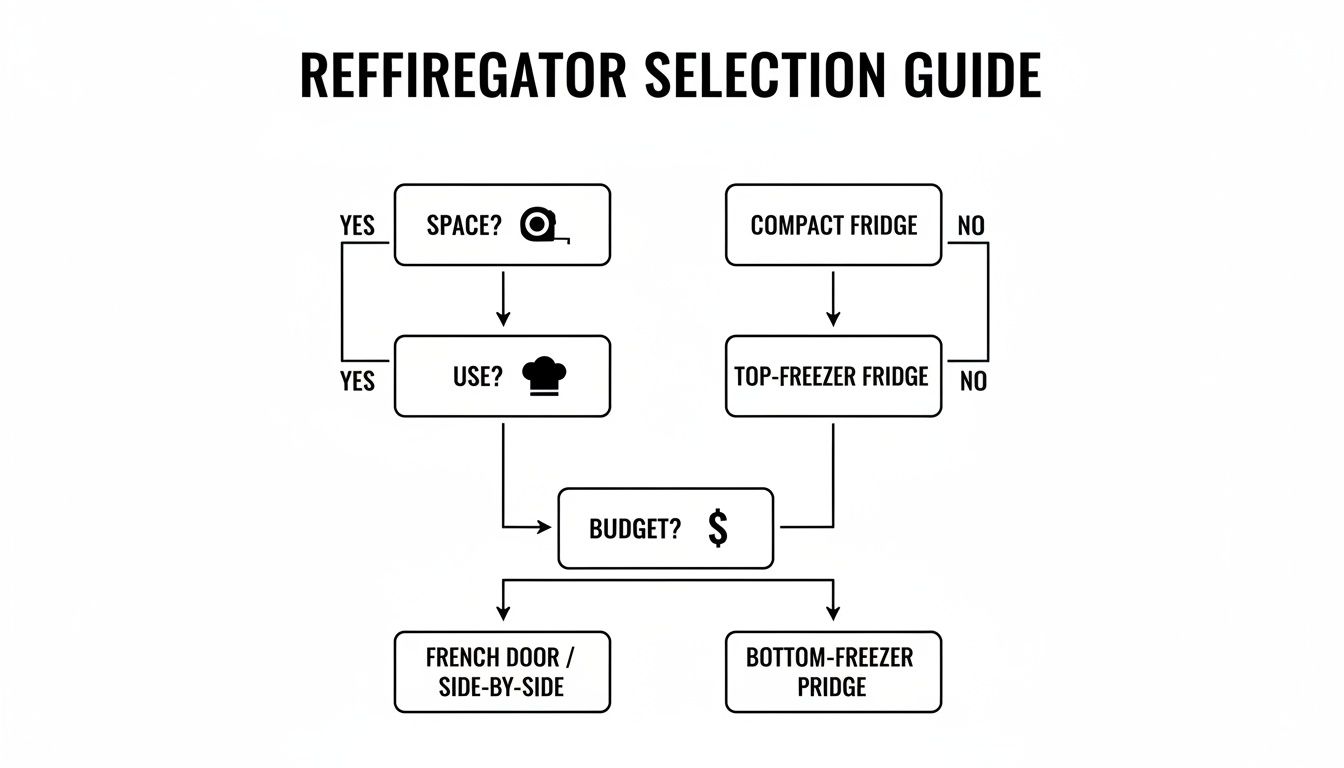
The flowchart makes it clear: before you even start looking at models, you need to have a solid handle on your physical limits and what you need the unit to do.
The Bustling Downtown LA Food Truck
A food truck parked near Grand Park has its own unique set of problems. Space is everything, and your restaurant equipment has to be tough enough to handle being on the move and the crazy heat of a mobile kitchen. Every single inch has to work for you.
For this kind of setup, under-counter refrigerators are a must. They give you that essential cold storage without eating up precious floor space, tucking right under your prep counters. An Atosa MGF8401GR under-counter refrigerator is an ideal choice here, with a small footprint and a tough stainless steel exterior that can take a beating. Its powerful cooling system also makes sure ingredients stay safe, even when you're getting slammed with the lunch rush.
For a Los Angeles food truck, it's all about multifunctional, space-saving design. An under-counter unit isn't just a fridge; it's a core part of an efficient mobile workspace that keeps ingredients exactly where the chef needs them.
The Full-Service East LA Mexican Restaurant
An established Mexican restaurant over in East Los Angeles is playing a completely different game. The kitchen is a high-volume machine, juggling a huge inventory of fresh produce, meats, homemade salsas, and all the prepped items for a big menu. Capacity and workflow are what matter most here.
This kitchen needs a mix of high-capacity reach-ins and specialized prep tables. A three-door reach-in like the Atosa MBF8006GR becomes the workhorse of the back-of-house, holding all your bulk items. Its reliable temperature control is key for keeping everything from delicate cilantro to large cuts of meat perfectly preserved.
To keep the line moving, a refrigerated prep table is absolutely non-negotiable. An Atosa MSF8302GR Sandwich/Salad Prep Table gives you refrigerated storage down below and a rail of chilled ingredient pans right on top. This lets chefs assemble tacos, burritos, and salads at top speed, keeping every dish fresh and the service fast. It’s the perfect one-two punch of bulk storage and point-of-use access.
The Modern Koreatown Bar
A trendy K-town bar needs refrigeration that looks as good as it works. The priority is getting to bottled drinks, garnishes, and infusions quickly, often right in front of the customer. The equipment has to be sleek while keeping everything perfectly chilled.
Glass-door back bar coolers are the answer. Models like the Atosa MBB59GR Back Bar Cooler let you see exactly what you have, so bartenders can grab what they need without holding the doors open and letting all the cold air out. Plus, the glass doors double as a merchandiser, showing off your premium selection of craft beers and soju, which can definitely help drive sales.
- Functionality: Gives bartenders instant access to drinks, which cuts down on service times.
- Aesthetics: The clean look and bright interior lighting fit right in with modern bar designs.
- Efficiency: While glass isn't as insulating as a solid door, seeing the product first means the doors are open for less time, which helps balance out energy use in a busy spot.
By matching the right type of commercial refrigerator to the unique needs of your LA business—whether it's a food truck, a restaurant, or a bar—you’re investing in equipment that will actually help you succeed.
Why Atosa Refrigerators Are A Smart Investment
Picking the right commercial refrigerator isn't just about buying a piece of equipment; it's a decision that echoes through your daily operations and hits your bottom line. For restaurant owners in Los Angeles, a city with one of the fiercest food scenes in the country, this choice has to be a careful mix of performance, cost, and straight-up reliability. This is where Atosa has really made a name for itself, hitting on the biggest pain points for LA's diverse kitchens—from the high-volume hustle of a Koreatown BBQ joint to a nimble food truck navigating downtown.
The brand has built its reputation on a simple but powerful promise: dependable performance at a price that makes sense. This approach brings top-tier restaurant equipment within reach, so you don't need a massive upfront investment. That’s a huge plus for new spots just getting off the ground and for established restaurants looking to upgrade their gear. By delivering solid, reliable cooling, Atosa helps you nail food safety and keep your ingredients pristine, which is something you just can't compromise on in a professional kitchen.
Unpacking The Atosa Warranty And Support
Honestly, one of the biggest reasons to go with Atosa is its warranty. It’s pretty much an industry leader. Every Atosa refrigerator comes with a two-year warranty on all parts and labor and, get this, a five-year warranty on the compressor. In a place like Los Angeles, where a single day of downtime can cost you thousands in lost sales, that kind of comprehensive coverage is more than just nice to have—it’s peace of mind.
Think of the warranty as a financial safety net. If a key part gives out, you aren't suddenly facing a massive, unexpected repair bill. Instead, you have access to an authorized service network that can get you back up and running with as little disruption as possible.
For any busy restaurant, an equipment failure is a full-blown crisis. The strength of the Atosa warranty turns a potential financial disaster into a manageable problem, protecting your cash flow and keeping your doors open.
Flexible Financing For LA's Dynamic Food Scene
Beyond the warranty, the financial flexibility is a major selling point. Here at Los Angeles Restaurant Equipment, we offer lease-to-own financing options that let you get the best commercial refrigerators without having to tie up all your working capital. This is a game-changer, especially for startups that need to keep cash free for things like inventory, payroll, and getting the word out.
- Manage Cash Flow: You’re making predictable monthly payments that fit your revenue cycle instead of dropping a huge lump sum.
- Build Business Credit: Making those payments on time can help strengthen your business's financial reputation.
- Acquire Better Equipment: Financing lets you get the high-performance unit your kitchen actually needs right now, instead of settling for a cheaper option that might not cut it.
This turns a major capital purchase into a manageable operational expense. It's just a smarter way to invest in quality.
A Practical Choice For A Demanding Market
The commercial refrigeration world is growing fast—the US market was valued at USD 12.63 billion and is expected to climb to USD 25.02 billion by 2033. We're seeing more smart tech, like leak detection and app controls, become standard. In this shifting landscape, Atosa really shines by sticking to practical, high-value solutions. They make great under-counter units and pizza prep tables that are perfect for the tight footprints and high-volume demands of LA kitchens.
When you add in clear pricing, live support, and flexible financing, Atosa stands out as a financially sound and incredibly reliable choice for anyone in the demanding Los Angeles culinary scene. You can discover more insights about the growing commercial refrigeration market trends and see how technology is shaping the future of the industry.
Maximizing The Lifespan Of Your Equipment
A top-tier commercial refrigerator is a serious investment for any food business in Los Angeles. Its real value, though, isn't just the price tag—it’s measured in years of dependable service. To get the most out of your restaurant equipment, you absolutely have to be proactive about maintenance and smart about sizing. This isn't just about preventing breakdowns; it's about protecting your inventory, keeping utility bills in check, and making sure your kitchen runs like a well-oiled machine.
With the right care, you can push your unit's operational life well beyond the standard 10-15 years. By sticking to a straightforward maintenance routine, you can dodge the expensive downtime and emergency repair calls that can cripple a busy restaurant.
Essential Maintenance Checklist
Regular upkeep is the single best thing you can do to keep your refrigerator running efficiently and make it last. A simple, consistent checklist can save you thousands in the long run by catching little problems before they turn into huge headaches.
Here’s a practical checklist any LA kitchen can follow:
- Clean Condenser Coils Quarterly: In a busy kitchen, condenser coils are magnets for dust and grease. This build-up forces the compressor to work harder and guzzle more energy. A quick cleaning with a stiff brush every three months will keep the airflow optimal and reduce strain.
- Inspect and Clean Door Seals Monthly: Gaskets that are cracked or dirty can't create a proper seal. This lets cold air escape and warm air creep in. Give them a wipe-down weekly and check for any damage once a month to keep temperatures steady.
- Monitor Temperatures Daily: Make it a habit to check the internal temperature at the start of every single shift. This simple step is your first warning sign of a failing thermostat or compressor, protecting you from dangerous food spoilage.
- Ensure Proper Airflow: Never jam-pack your refrigerator. When you block vents and fans, cold air can't circulate evenly, which creates warm spots and forces the unit to run nonstop.
The Importance Of Right-Sizing Your Refrigerator
Picking the right size for your commercial refrigerator is just as critical as maintaining it. Too many Los Angeles restaurant owners make one of two common mistakes: they buy a unit that’s way too big, or one that's too small. Both options lead to inefficiency and can even create food safety risks.
A refrigerator that’s too large for your inventory is just wasting energy cooling empty space and hogging a valuable footprint in a tight LA kitchen. On the flip side, an undersized unit that's always stuffed to the brim will struggle to hold a safe temperature, risking your food quality and putting a ton of stress on the compressor.
To get the size right, you need to be realistic about your weekly inventory needs, factoring in your busiest service times and delivery schedules. For instance, a Thai restaurant that gets fresh herbs delivered daily will need less bulk storage than a Chinese restaurant that orders produce twice a week. When you match the refrigerator’s capacity to how your business actually operates, you’re setting it up for top performance, energy efficiency, and a much longer life.
A Few Final Questions
Even after you've weighed all the options, a few questions can pop up. Let's tackle some of the most common ones we hear from LA restaurant owners to make sure you're ready to make a great choice.
What Is The Biggest Mistake LA Restaurant Owners Make When Buying A Refrigerator?
Hands down, the biggest mistake is underestimating the space you actually have. Too many owners focus only on the inside capacity and forget to measure doorways, hallways, or the final spot where the unit will live. This is especially true in LA, where kitchens in older buildings and food trucks are notoriously tight.
Even more critical is leaving enough room for the unit to breathe. You absolutely have to leave 3-4 inches of clearance around the refrigerator for proper airflow. Ignoring this is a surefire way to overwork the compressor and cause an early breakdown, especially in the Southern California heat.
How Does Lease To Own Financing Work For Restaurant Equipment?
Lease-to-own is a lifesaver for managing cash flow. Instead of a huge upfront payment for essential gear like an Atosa refrigerator, you make regular monthly payments for a set period. It's predictable and helps align your spending with your income.
Once the term is up, you typically have the option to buy the equipment outright for a very small price. It's a smart way for new restaurants to get started or for established spots to upgrade their kitchen without draining their capital. Plus, it can offer some nice tax benefits.
Are Glass Door Or Solid Door Refrigerators More Energy Efficient?
If you're just talking pure insulation, a solid door refrigerator is almost always more energy-efficient. It's simply better at holding in the cold, which means less work for the compressor. That makes them perfect for back-of-house, long-term storage.
But here's a twist: in a fast-paced environment like a prep line for a busy Thai or Chinese spot, glass doors can actually save energy. Your staff can see what they need before opening the door, which cuts down on how long the cold air escapes. So for storage, go solid; for high-traffic areas, glass is often the smarter, more practical pick.
Ready to find the perfect refrigeration solution for your Los Angeles business? Explore a wide selection of top-tier Atosa models at Los Angeles Restaurant Equipment and get the performance and reliability your kitchen deserves. https://losangelesrestaurantequipment.com