

The Ultimate Guide to Commercial Convection Ovens in Los Angeles
In the fast-paced world of the Los Angeles food scene, you can’t afford to be slow or inconsistent. A commercial convection oven isn't just another piece of restaurant equipment; it's the key to cranking out food faster and getting better, more reliable results. It's the kind of advantage that helps your kitchen keep up with the rush, whether you're running a bustling Japanese restaurant in Sawtelle, a Korean BBQ spot in Koreatown, or a popular food truck on the Westside.
Why Convection Ovens Are a Game Changer for LA Kitchens
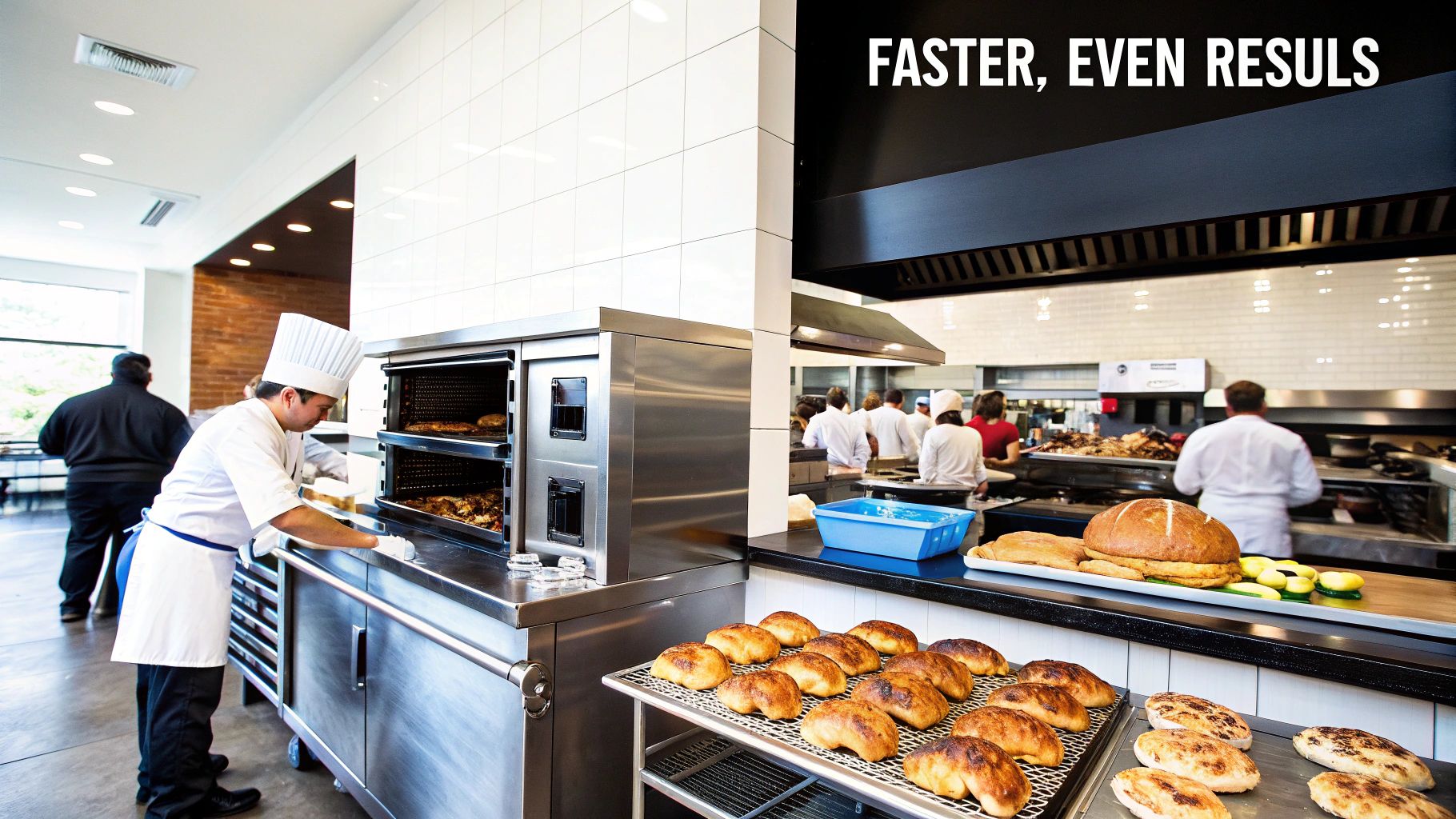
Think about the Santa Ana winds, but trapped inside a stainless steel box. That’s pretty much how a commercial convection oven works. There's a fan inside that blows hot air all around, creating an even, super-hot environment that cooks food way faster and more evenly than a regular oven ever could.
That constant blast of hot air gets rid of the "hot spots" you always find in traditional ovens—you know, where the stuff near the back corner burns while the front is still undercooked. With convection, you get perfect browning and cooking across every single tray, every single time.
The Impact on Los Angeles Cuisines
For a city with a food scene as diverse as Los Angeles, this kind of technology is a huge deal. A Thai spot can get the perfect roast on its ingredients, and a Chinese kitchen can churn out duck with impeccably crispy skin. It’s the secret weapon behind a downtown cafe's consistently golden-brown pastries and a busy Mexican restaurant's perfectly roasted carnitas.
The upsides go way beyond just quality, impacting the entire operation of an LA food business:
- Increased Throughput: Cooking faster means you can serve more plates during the lunch and dinner rush, which is a make-or-break factor for any high-volume spot.
- Menu Consistency: Every customer gets the same delicious product, whether they show up right at open or just before closing.
- Operational Efficiency: This powerhouse appliance works right alongside other essential gear like your commercial refrigerators and freezers to make the whole kitchen run smoother.
For a Los Angeles food truck, space and speed are everything. A compact countertop convection oven can dramatically increase output, allowing operators to serve more customers and boost profitability on the go.
At the end of the day, a commercial convection oven gives LA chefs the kind of reliable, high-quality results they need to survive in this city. It helps the bottom line, makes the food better, and keeps customers coming back for more.
How Convection Cooking Unlocks Menu Potential
To really get a feel for what a commercial convection oven can do, it helps to think about your standard home oven first. A conventional oven uses what’s called radiant heat. It's a lot like sitting next to a bonfire—some spots get blasted with heat while others stay cooler. This is what causes those frustrating hot spots where one side of your food burns while the other is still undercooked.
A convection oven completely changes the game by adding a fan into the mix. This one simple addition circulates hot air all around the cooking chamber. The result is a consistent, even heat that cooks everything uniformly and way more efficiently.
From Science to Service
This shift from static to circulated heat brings some serious benefits that directly impact your Los Angeles kitchen's output and the quality of your menu.
- Faster Cooking Times: That moving air strips away the little pocket of cool air that surrounds food, letting it cook up to 25-30% faster than in a regular oven.
- Superior Browning and Crisping: The constant flow of hot air is perfect for creating that beautiful golden-brown color on baked goods. It's the secret to perfectly crispy skin on roasted duck for a Chinese restaurant and evenly cooked meats every single time.
- Increased Moisture Retention: When food faster, it doesn't have as much time to dry out. This means your baked goods come out fluffier, and roasted meats stay juicy and tender right where they should be.
For a bustling Korean BBQ spot in Los Angeles, this means side dishes like japchae can be prepped faster and held at perfect quality. For a local bakery, it means achieving a flawless golden crust on every single pastry, batch after batch.
The Financial and Operational Edge
The perks of a commercial convection oven go straight to your bottom line, which is a huge deal in the competitive L.A. market. Cooking faster means turning tables quicker during a rush, letting you serve more customers. All that efficiency also leads to lower energy use, which helps trim your monthly utility bills. There's a reason this technology is becoming a kitchen standard.
The global market for these ovens is expected to hit a massive $5,500 million by 2025. This growth is all about the demand for energy-efficient models that make kitchens more productive. It really shows how important this equipment is for any high-volume restaurant or food truck trying to get ahead. You can discover more insights on the commercial convection oven market growth. Ultimately, putting a quality commercial convection oven in your kitchen is a smart move for any L.A. business aiming for consistency, efficiency, and profit.
Choosing The Right Oven For Your Los Angeles Business
Picking out the perfect commercial convection oven for your LA spot isn't about finding the single "best" model on the market. It's about finding the right one for your kitchen. An oven that’s a powerhouse for a busy downtown Japanese restaurant could be total overkill for a little food truck cruising Venice Beach. The whole game is matching the oven’s capabilities to what your operation actually needs.
The process boils down to three big questions: what capacity do you need, what's your power source, and what kind of controls make sense? Your answers will shape your kitchen’s entire flow, what you can put on the menu, and even what you'll be paying for utilities each month. Get this right, and you're not just buying a piece of equipment; you're investing in a tool that will help you grow.
Sizing Up Your Options
First things first, let's talk size and capacity. Are you looking for a big, floor-standing unit, or will a more compact countertop model do the trick?
-
Full-Size Ovens: These are the workhorses. Think full-service restaurants, high-volume bakeries, and large-scale catering kitchens. They're built to handle multiple full-size sheet pans at once, making them perfect for roasting huge batches of meat for a Korean BBQ joint or baking endless trays of pastries for a bustling café.
-
Countertop Ovens: Space is everything in an LA food truck or a small coffee shop with a tight menu. A commercial convection oven that sits on the counter gives you serious cooking power without eating up precious floor space. It’s the ideal solution for baking off fresh empanadas for a Mexican food pop-up or toasting gourmet sandwich buns on demand.
This decision tree helps visualize how your menu points you toward the right oven choice. It’s a simple way to connect your kitchen’s needs directly to the equipment you should be looking at.
As the chart shows, different ovens excel at different things. Aligning your main cooking style—be it baking or roasting—with the right model from the get-go is a critical step for a smooth-running kitchen.
Picking the right oven is a big deal for any food business in Los Angeles. To make it a bit easier, here’s a quick guide to help you match an oven to your specific operation.
Convection Oven Sizing Guide for LA Food Businesses
| Business Type | Recommended Oven Type | Key Features | Ideal for Cuisines |
|---|---|---|---|
| Food Truck / Pop-Up | Countertop Electric | Compact footprint, easy installation, precise temperature control for smaller batches. | Mexican (empanadas, melting cheese), sandwiches, pastries, reheating small plates. |
| Small Café / Coffee Shop | Half-Size Gas or Electric | Balances capacity with a smaller footprint. Good for consistent baking and light roasting. | Scones, muffins, cookies, light lunch items like quiche or flatbreads. |
| Quick-Service Restaurant (QSR) | Full-Size Gas (Single Deck) | Fast preheating and recovery for high-volume, quick-turnaround items. | Chinese (roast duck), Thai (roasted vegetables), pizza, roasted chicken. |
| Full-Service Restaurant | Full-Size Gas or Electric (Single or Double Deck) | High capacity, durable construction. Double-deck models offer menu flexibility. | Roasting meats for Korean BBQ, vegetables for Japanese dishes, baking bread. |
| Bakery / Pâtisserie | Full-Size Electric (Bakery Depth) | Exceptionally even heat, programmable controls for delicate items. Deeper cavity for more pans. | Artisan breads, Japanese milk bread (shokupan), cakes, croissants, macarons. |
| Catering / Ghost Kitchen | Full-Size Gas (Double Deck) | Maximum throughput for large-batch production. Gas for quick temperature changes. | High-volume production of roasted meats, vegetables, and baked goods for events. |
This table is a starting point, but it shows how different business models in LA have very different needs. A food truck in Silver Lake has a different set of priorities than a fine-dining spot in Beverly Hills.
Gas vs. Electric Power and Controls
Next up, you’ve got to decide between a gas or electric hookup. Gas ovens are known for heating up super fast and giving chefs responsive temperature control, which is great when you need to make adjustments on the fly. The catch is they require a dedicated gas line and the right ventilation setup.
Electric ovens, on the other hand, are champs at providing incredibly even and consistent heat—perfect for delicate baked goods that can't handle hot spots. They're often simpler and cheaper to install, making them a go-to choice for many LA businesses.
Finally, think about the controls. Old-school manual dials are straightforward and reliable. But programmable digital controls let you save recipes, so anyone on your team can get perfect, consistent results with the push of a button. For any LA business, choosing the right gear is just one piece of the puzzle; you also need to think about smart Local Marketing Campaigns to get customers in the door.
By really thinking through these factors—size, power, and controls—and weighing them against your menu, customer volume, and kitchen space, you can confidently pick a commercial convection oven that will become a true workhorse for your LA restaurant.
Installation and Maintenance for Peak Performance
Your new commercial convection oven is a serious piece of restaurant equipment and a major investment in your kitchen's success. To get the most out of it for years to come, you need to start with a proper installation and stick to a solid maintenance plan. Getting this wrong can lead to spotty performance, dangerous kitchen conditions, and expensive downtime—headaches no Los Angeles restaurant needs.
In Los Angeles County, a professional installation isn't just a suggestion; it's about following local building and safety codes to the letter. This is more than just plugging in an appliance. It’s about making sure your kitchen’s infrastructure can safely handle the oven, whether it’s a gas or electric model.
Getting Your Oven Set Up Correctly
Before that shiny new oven even crosses your threshold, you've got some prep work to do. We always recommend hiring a professional for the install; it’s the best way to guarantee everything is safe and up to code.
- Ventilation First: Just about every commercial convection oven, especially gas units, needs to live under a ventilation hood. This is a non-negotiable for pulling heat, greasy air, and combustion fumes safely out of your kitchen.
- Utility Connections: For gas ovens, you need a certified technician to handle the gas line—this is not a DIY job. With electric models, you’ll want an electrician to confirm your circuit can handle the amperage draw without tripping breakers or creating a fire hazard.
- Proper Placement: The oven needs some breathing room. Make sure there’s enough clearance between it and any walls or other equipment. This prevents fires and allows air to circulate around the unit's components, keeping it from overheating.
A smart setup isn’t just about safety—it makes your entire kitchen flow more efficiently. You can learn more about laying out your space in our guide to commercial kitchen layout and design.
Once it’s in place, the secret to a long-lasting oven is simple: keep it clean. Letting grease and grime build up is a recipe for disaster. It can become a serious fire risk and mess with the oven's airflow, leading to unevenly cooked food.
A Simple Maintenance and Cleaning Schedule
A few minutes of care each day will do wonders for keeping your commercial convection oven in prime condition. Consistency is everything. For a deeper dive into upkeep, you can adapt principles from a good general commercial equipment maintenance checklist for your own kitchen.
Daily Tasks (5-10 minutes):
- After service, give the inside of the oven a good wipe-down to get rid of any spills or grease.
- Clean the door glass, inside and out. This lets you check on food without opening the door and letting all that precious heat escape.
Weekly Tasks (15-20 minutes):
- Pull out the racks and give them a thorough scrub in your three-compartment sink.
- With the oven completely off and cool, carefully wipe down the fan blades. Keeping them clean is key to good airflow.
Finally, pay attention to your warranty. A solid warranty that covers both parts and labor is your safety net. Having access to an authorized service network for quick repairs can be the difference between a minor hiccup and days of lost revenue. It keeps your Los Angeles kitchen running smoothly when you need it most.
Elevating LA Cuisines with Your Convection Oven
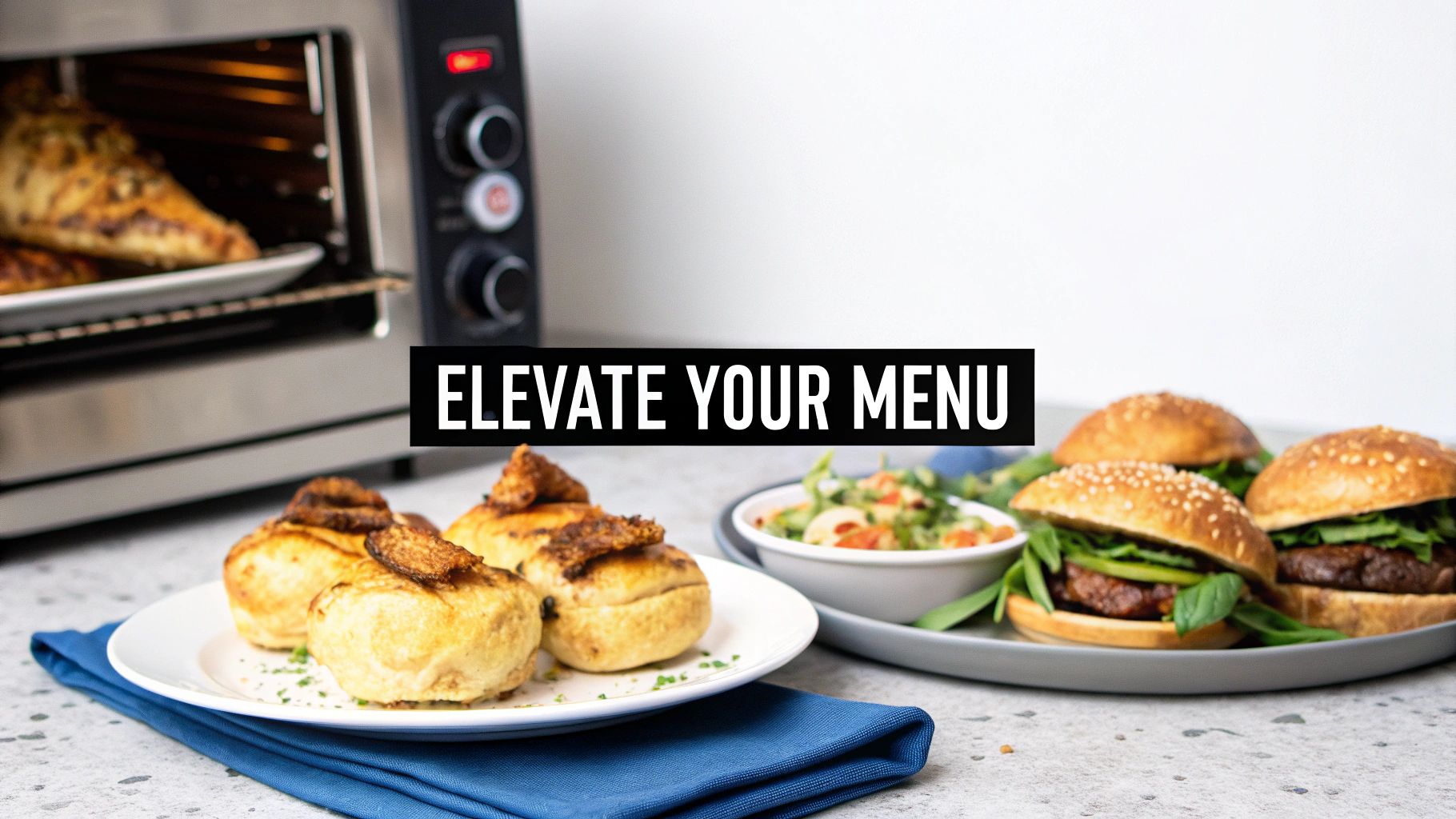
Let's move past the technical specs and talk about what really matters: how a commercial convection oven can elevate the incredible food we see all across Los Angeles. This isn't just about shaving off a few minutes of cook time. It's about getting that perfect texture and consistency that turns a good dish into a signature one. From Koreatown to East LA, the right oven is a serious creative tool in any kitchen.
Picture a food truck rolling through Silver Lake. With a compact countertop convection oven, they can pump out fresh, flaky empanadas to order. Every single customer gets one that's perfectly hot and crispy. That same oven can toast up gourmet brioche buns for burgers with an evenness you can't fake—a small detail that makes the whole meal better and keeps people lining up.
From Roasting to Baking Across LA
A convection oven’s impact is felt in every kind of kitchen. A Thai spot can get a perfect, deep roast on aromatics like lemongrass and galangal, pulling out more flavor for their curries. The constant, circulating heat cooks everything evenly without scorching the edges, which is absolutely critical for balanced flavors.
For a Chinese restaurant obsessed with getting that flawless crispy duck skin, a convection oven is the secret weapon. The dry, moving air renders the fat and crisps the skin beautifully, all while keeping the meat succulent and moist. Trying to get that kind of control in a regular oven is a headache; hot spots always lead to uneven results.
Think about a busy Mexican restaurant during the dinner rush. A convection oven lets them slide in multiple trays of carnitas at once, roasting the pork evenly until it's fall-apart tender inside with those perfect crispy bits on the outside. That multi-rack capacity is a game-changer for workflow.
Practical Applications for Your Menu
Let’s get specific. Here’s how certain oven features translate directly to better food and can spark some ideas for your next menu special.
-
Multi-Rack Baking: A Japanese bakery can produce huge batches of shokupan (milk bread), and every single loaf on every rack has the same golden-brown crust. A powerful fan makes sure the heat gets everywhere, so you don't have to waste time rotating pans.
-
Precise Temperature Control: A Korean kitchen can perfectly roast vegetables for banchan, ensuring each piece is tender without becoming mushy. That kind of precision is also a lifesaver for delicate desserts like cheesecake, helping prevent cracks.
-
Fast Heat Recovery: For a bustling café, the oven’s ability to get back up to temperature quickly after the door has been opened is huge. It means you can bake batches of scones and cookies back-to-back without any drop in quality.
At the end of the day, a commercial convection oven does more than just heat food. It gives you the consistency and control you need to nail your culinary vision, every single time. It's a foundational piece of restaurant equipment that gives you the power to perfect your classics and experiment with new ideas confidently.
Making a Smart Investment in Your Kitchen's Future
Bringing a commercial convection oven into your kitchen is a big move. But it's not just another line item on your budget—it's a real investment in your restaurant's future, one that pays off in speed, consistency, and happy customers. Figuring out the financial side is key to getting this workhorse without tying up all your cash.
Oven prices can be all over the map. A small countertop unit might just be a few thousand dollars, but a big, double-deck gas oven is a much larger commitment. The trick is to see it for what it is: a long-term asset that will make you money.
Strategic Financing for Growth
Financing isn't just about borrowing money; it's a smart way to grow. Lease-to-own options are a fantastic tool for Los Angeles restaurant owners, letting you get the gear you need right now while keeping your cash free for essentials like payroll, ingredients, or getting the word out.
By spreading the cost out over time, you match your monthly payments to your revenue. This makes a top-tier commercial convection oven totally achievable and helps you scale your business without a huge upfront hit.
Working with a local supplier who gets the LA food scene is also a crucial part of the puzzle. They’re not just selling you a box; they’re providing backup and quick service to keep you from losing a single dinner service. A good partner makes sure your oven stays a money-maker for years. For a full picture of what your kitchen might need, take a look at our commercial kitchen equipment list. This decision is all about setting your kitchen up for success down the road.
Answering Your Top Questions
Stepping into the world of commercial kitchen equipment can feel overwhelming, but it doesn't have to be. Here are some straightforward answers to the questions we hear most often from Los Angeles restaurant owners looking to add a convection oven to their kitchen.
Can I Use My Regular Baking Recipes?
Yes, absolutely. You'll just need to make a couple of simple tweaks. A commercial convection oven is a powerhouse of efficiency compared to a standard home oven, meaning your recipes will cook a lot faster.
A great rule of thumb is to either lower the recipe's temperature by 25°F or cut the cooking time by about 25%. It's always a good idea to peek at your food a little earlier than you normally would, especially when you're making a dish for the first time.
What’s the Difference Between a Convection and a Combi Oven?
The big difference here comes down to one thing: moisture. A commercial convection oven is a master of dry, circulating heat. It's what gives you that perfect browning, roasting, and even baking—an absolute workhorse for most bakeries, cafes, and restaurants.
A combi oven, on the other hand, is a bit more specialized. It combines that same convection heat with steam, letting you do everything a convection oven can, plus poach, steam, and roast with pinpoint humidity control. They're incredibly versatile, but they're also a bigger investment and often more firepower than many LA kitchens really need.
Do I Need a Gas or Electric Oven for My LA Kitchen?
This choice usually boils down to what your kitchen is already set up for and what your chef prefers.
- Gas ovens are famous for heating up in a flash and giving you instant, responsive temperature control. Just remember, they need a professionally installed gas line and the right ventilation setup.
- Electric ovens are loved for their incredibly consistent, even heat, which is a dream for delicate baked goods. They're often easier and cheaper to install, making them a go-to choice for LA food trucks and smaller spots that aren't already hooked up for gas.
Ready to bring a new level of efficiency and consistency to your kitchen? Check out the wide selection of high-performance commercial convection ovens at Los Angeles Restaurant Equipment. We'll help you find the perfect model for your business and even offer flexible financing to make it happen. Visit us at https://losangelesrestaurantequipment.com to get started.