

The Ultimate Commercial Kitchen Equipment List For LA Restaurants
A complete commercial kitchen equipment list is going to cover several major categories, from your big-ticket appliances right down to your smallwares. The essentials always boil down to refrigeration and cold storage, cooking equipment, food preparation stations, warewashing and sanitation, and storage and shelving. Getting your space kitted out correctly from day one is the key to a smooth workflow, staying on the right side of health codes, and setting your restaurant up for success in the competitive Los Angeles food scene.
Your Foundational Equipment Checklist For LA Kitchens
Building a successful restaurant in Los Angeles—whether it’s a packed Thai spot in Hollywood or a new Korean BBQ joint in K-town—starts with a solid equipment foundation. The sheer number of choices can feel like a lot to handle, but breaking it all down into logical categories makes the whole process much easier. Think of this guide as your roadmap for identifying the non-negotiable items that form the backbone of any professional kitchen.
Picking out the right restaurant equipment is more than just a shopping trip; it's a strategic investment that directly impacts your efficiency, the quality of your food, and your bottom line. In a market as competitive as LA, you need every advantage you can get. This reality is part of a much bigger picture, with North America holding the largest market share in a global commercial appliance industry valued at a staggering USD 98.34 billion. As the hospitality world keeps growing, that number is only going up. You can dig deeper into these commercial kitchen equipment trends from Grandview Research.
Core Kitchen Categories
To design a kitchen that actually works, you have to understand how all the equipment pieces fit together. From a high-level view, everything falls into a few key operational zones. To help you get a quick overview, here's a simple breakdown of the main equipment categories you'll be looking at.
Quick Reference Equipment Categories For LA Kitchens
| Equipment Category | Essential Items | Primary Function |
|---|---|---|
| Cooking Equipment | Ranges, Ovens, Grills, Fryers | The heart of the kitchen where raw ingredients are transformed into finished dishes through heat application. |
| Refrigeration | Reach-In Coolers, Walk-In Freezers | Crucial for food safety, preserving ingredient freshness, and meeting health code requirements. |
| Food Preparation | Prep Tables, Mixers, Slicers | The zone for chopping, mixing, and assembling ingredients before they head to the cooking line. |
| Warewashing | 3-Compartment Sinks, Dishwashers | Essential for sanitation, cleaning dishes, glassware, and utensils to maintain a hygienic environment. |
| Storage & Shelving | Dunnage Racks, Wall Shelves | Organizes dry goods, supplies, and equipment, maximizing space and ensuring an efficient workflow. |
Each of these categories plays a vital role, and a weakness in one can easily bottleneck your entire operation. Now, let's visualize how they connect.
The diagram below breaks down the three pillars of any kitchen operation: cooking, prep, and sanitation.
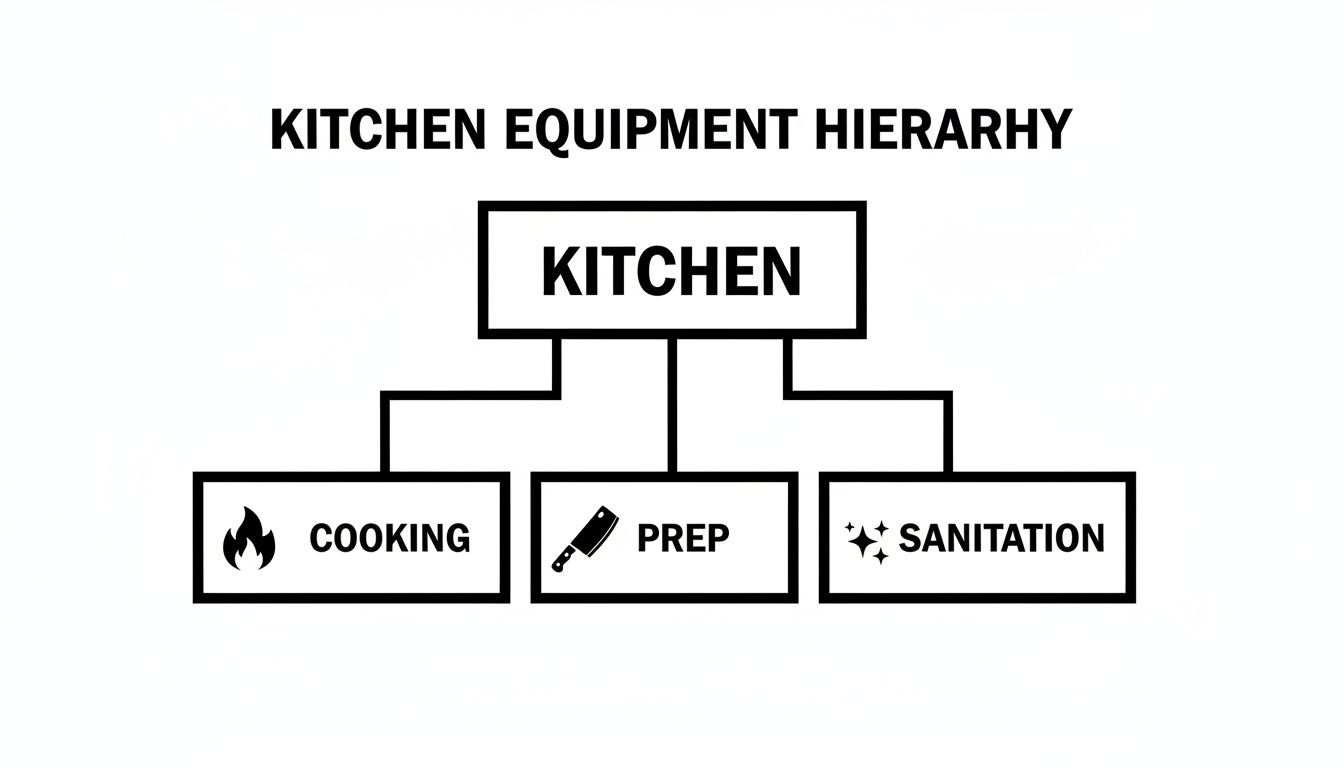
This hierarchy makes it clear: a well-oiled kitchen needs all three areas to work in harmony. A powerful cookline is only as good as the prep station feeding it, and your whole operation hinges on solid sanitation practices to keep things safe. Whether you're running a high-volume Chinese restaurant in the San Gabriel Valley or a tiny Los Angeles food truck, getting these three domains right is everything. We’ll dive into each of these categories in more detail next.
Mastering Cold Storage With Commercial Refrigerators And Freezers
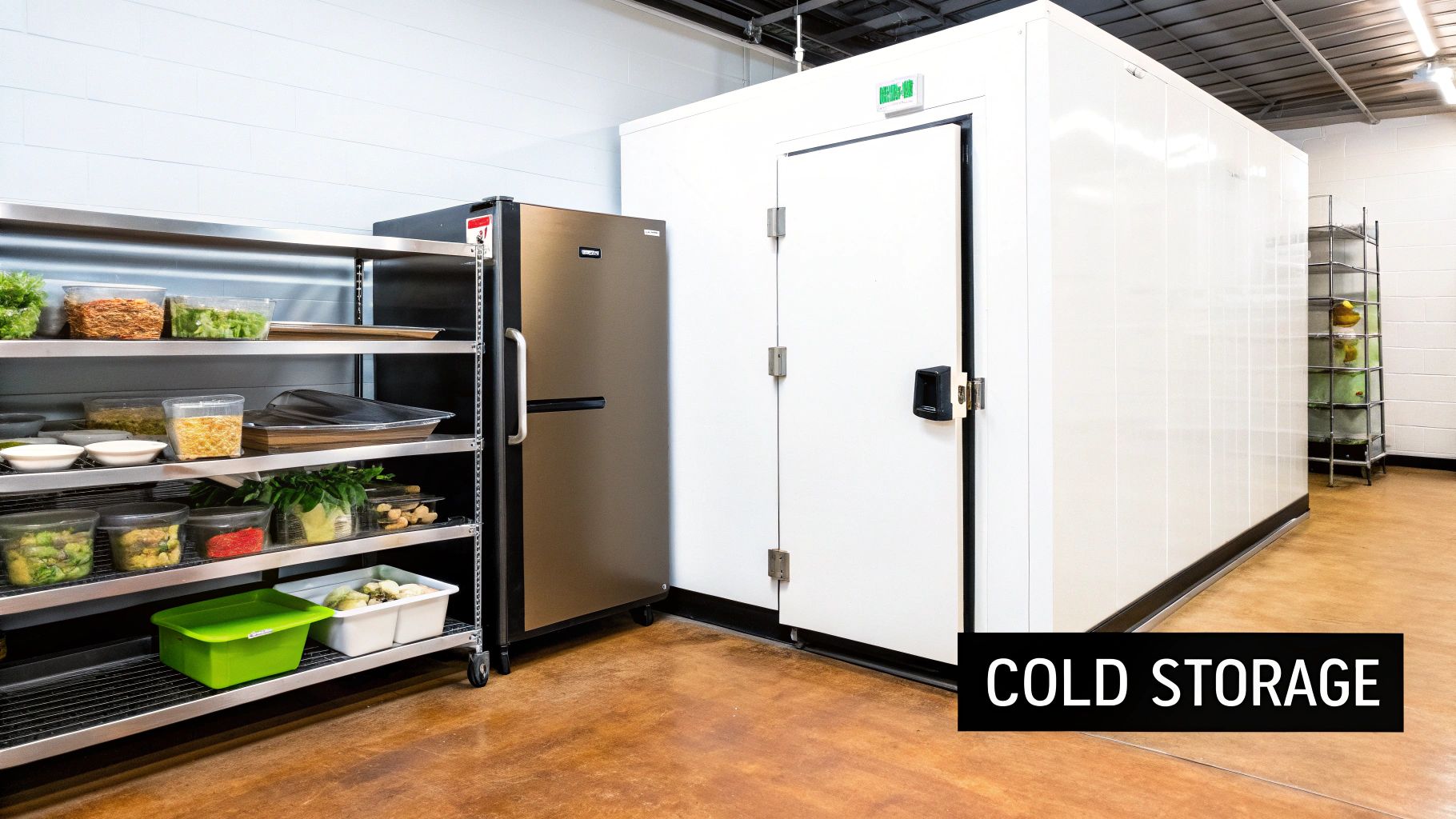
The real heart of any Los Angeles restaurant isn't the hot line—it's the cold storage. Getting refrigeration right is completely non-negotiable for keeping food safe, ensuring your ingredients are top-quality, and keeping a lid on costs. The choices you make here will echo through everything from how smooth your daily prep is to the size of your monthly utility bill, making this a critical part of your commercial kitchen equipment list.
For any food business, whether you're running a high-volume Thai kitchen in Silver Lake or a bustling Korean BBQ spot in Koreatown, picking the right commercial refrigerators and freezers is a strategic move. Your equipment has to stand up to the demands of your menu, fit into your kitchen's footprint, and handle the relentless pace of service.
Choosing The Right Refrigeration For Your LA Restaurant
What's on your menu and how many customers you serve will dictate the kind and size of cold storage you'll need. A small food truck can get by just fine with a few compact under-counter units, but a large Chinese restaurant will absolutely need the massive capacity of a walk-in cooler.
Here are the main types of commercial refrigeration to think about:
- Reach-In Refrigerators & Freezers: These are the workhorses you'll find in most kitchens. They're perfect for keeping frequently used ingredients right where you need them, close to prep and cooking stations. An Atosa reach-in freezer, for instance, gives you reliable storage for bulk meats and frozen goods—a must-have for any busy kitchen.
- Walk-In Coolers & Freezers: If your operation buys ingredients in huge quantities, a walk-in unit is essential. They offer the most storage space possible, which lets you take advantage of bulk pricing and cut down on how often you need deliveries.
- Under-Counter & Worktop Refrigerators: These are lifesavers in tight spaces like food trucks or satellite prep areas. They cleverly combine refrigerated storage with a valuable stainless steel work surface, helping you get the most out of every square inch.
- Prep Tables (Sandwich/Pizza): These specialized tables come with refrigerated wells to keep toppings and ingredients perfectly chilled and right at your fingertips. That's a huge deal when you're trying to assemble dishes fast during a dinner rush.
Smart Investments For Long-Term Savings
Here in Los Angeles, high utility costs can really eat into your profits. It’s worth it to invest in ENERGY STAR® rated commercial refrigerators, which can slash your electricity use by up to 35%. That's a huge saving over the life of the unit. The upfront cost might be a bit more, but the long-term savings on your bills really add up.
A solid warranty is another thing you can't overlook. When your equipment goes down, you're losing money. Brands like Atosa offer strong warranties—usually two years on parts and labor and five years on the compressor—that are backed by a local service network. That means you get quick repairs and some much-needed peace of mind.
For anyone juggling large-scale storage needs, really understanding the differences between setups is key. To get a better handle on your options, check out our guide on the benefits of a walk-in cooler and freezer combination, which can be a game-changer for high-volume spots.
At the end of the day, your cold storage is an investment in consistency and safety. By taking the time to pick energy-efficient models with great warranties that fit what your kitchen actually needs, you’re setting your Los Angeles restaurant up for success that lasts.
Selecting Your Core Cooking Line Equipment
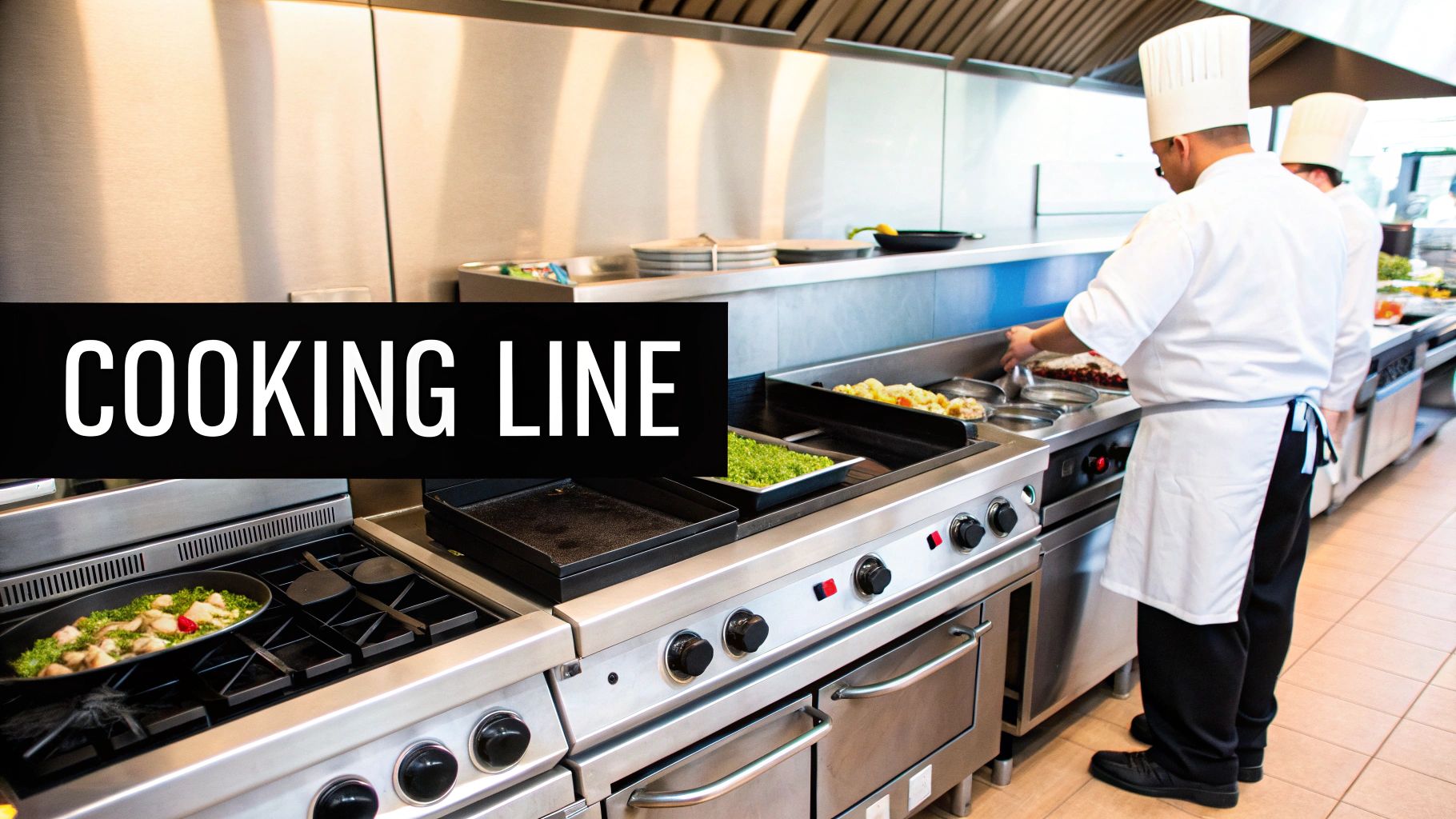
While your cold storage is all about food safety, the cooking line is where your menu really comes to life. This is the energetic heart of your Los Angeles kitchen—the place where raw ingredients become the signature dishes people will talk about. Picking the right gear for this part of your commercial kitchen equipment list is a make-or-break decision that impacts your speed, consistency, and ability to nail every order.
For any LA restaurant, whether it's a bustling downtown Chinese spot or a focused Japanese ramen bar, your cooking equipment has to be a perfect match for your food. You're not just buying appliances; you're building a system that lets your chefs shine, especially when the dinner rush hits hard.
Matching Equipment To Your Los Angeles Cuisine
The incredible diversity of LA's food scene is its biggest strength, and your cooking line needs to reflect that. Your menu is the blueprint for the tools you'll need to win. A modular setup is often the smartest way to go, letting you mix and match pieces to create a line that’s perfectly dialed in for your workflow.
Here’s a look at some essential pieces and how they fit into popular local cuisines:
- Commercial Ranges: The ultimate workhorse. A range with a good set of burners and an oven base is a must-have, giving you the flexibility to sauté, simmer, and bake. It’s a foundational piece for nearly any kitchen concept.
- Griddles and Charbroilers: If you're a Mexican food truck pumping out tacos and quesadillas, a high-output griddle isn't optional—it's essential. In the same way, a Thai kitchen needs a charbroiler to get that perfect smoky char on satay skewers.
- Deep Fryers: From light, crispy tempura in a Japanese restaurant to the perfectly crunchy chicken at a Korean spot, a solid deep fryer is indispensable. Look for models with multiple baskets so you don't end up with shrimp-flavored fries.
- Convection Ovens: These are the engines for baking, roasting, and finishing dishes. They cook food quickly and evenly, making them a cornerstone for any kitchen that needs to handle serious volume.
Ovens are a dominant force in the commercial cooking equipment landscape, capturing the largest market share globally. The market, valued at USD 13.3 billion in 2025, is projected to nearly double by 2035 as the food service industry expands. Full-service restaurants and hotels drive 47.8% of this demand, highlighting the need for efficient, high-performance ovens. To explore more about these trends, you can review the market analysis on commercial cooking equipment from Future Market Insights.
Smart Acquisition Strategies For Your Kitchen
Outfitting a cooking line is a major investment, no two ways about it. The good news is that smart financing options can put top-tier restaurant equipment within reach. Lease-to-own programs, for example, let you get the gear you need right now while keeping your cash free for other vital costs like marketing or payroll.
This approach helps new restaurants get off the ground and lets established businesses grow in the competitive LA market without breaking the bank. For more specialized menus, you'll want to dig into specific oven types, too. Check out our detailed breakdown of commercial rotating pizza ovens to see how specialized equipment can really elevate what you offer. By choosing each piece carefully and using flexible financing, you can build a powerful, efficient cooking line that’s ready for anything.
2. Food Preparation Equipment
Your prep station is the heart of the kitchen. It’s where all the action starts, the bridge between your walk-in cooler and the hot line. Get this right, and your whole operation runs smoother. Get it wrong, and you’re looking at bottlenecks and slow ticket times.
This is where raw ingredients get transformed into ready-to-cook components. The equipment you choose here directly impacts how fast, safe, and consistent your dishes are. Think about it: a Japanese bakery in Little Tokyo absolutely needs a heavy-duty commercial mixer, but a quick-service pizzeria in Echo Park would fall apart without a proper pizza prep table. It's all about designing a workflow that makes sense for your specific menu.
Setting Up Your Prep Workflow
A well-oiled prep station is more than just a table. It's an ecosystem of durable, easy-to-clean equipment that supports your kitchen staff. A smart layout means your team isn't tripping over each other or wasting precious minutes hunting for a tool during the dinner rush.
Here are the foundational pieces every L.A. kitchen needs to consider:
- Stainless Steel Work Tables: This is your main stage for chopping, mixing, and plating. Stainless steel is the gold standard—it’s tough, non-porous, and won’t rust, which is crucial for passing L.A. health inspections.
- Commercial Mixers: Whether it's a versatile planetary mixer or a beastly spiral mixer for dough, this is a must-have for any spot making things from scratch. A 60-quart mixer can be a lifesaver for a busy Chinese restaurant cranking out dumplings, saving hours of labor.
- Specialized Prep Tables: Think sandwich and pizza prep tables with built-in refrigerated wells. This isn't just a convenience; it's a game-changer for high-volume restaurants. Keeping toppings perfectly chilled and right at your fingertips is key to both food safety and speed.
A well-integrated kitchen is a profitable one. Your prep station is the crucial link between your cold storage and cooking line. Ensuring a seamless flow—from pulling produce from the walk-in cooler to plating a finished dish—can reduce ticket times by 15-20% during peak service.
Cuisine-Specific Prep Equipment Recommendations
Every cuisine has its own rhythm and unique prep demands. What works for a taco spot in East L.A. won't fly for an Italian restaurant in Beverly Hills. We've put together a quick guide to help you match your equipment to your menu, ensuring you invest in tools that actually make a difference for your kitchen.
| Cuisine Type | Essential Prep Equipment | Key Smallwares | Why It's Important |
|---|---|---|---|
| Mexican / Taco Shop | Refrigerated Prep Table, Griddle (for tortillas) | Molcajete, Tortilla Press, Squeeze Bottles | Fast assembly and fresh toppings are key. The right tools keep tacos consistent and service speedy. |
| Japanese / Sushi Bar | Sushi Case, Rice Cooker, Work Table | Sushi Knives (Yanagiba), Rice Paddles, Bamboo Mats | Precision and freshness are non-negotiable. A dedicated sushi case maintains perfect temperature and humidity. |
| Chinese | Wok Range, Steamer, Rice Cooker | Cleavers, Strainers, Wok Spatulas | High-heat cooking demands specialized wok ranges, while steamers are essential for dim sum and vegetables. |
| Korean BBQ | Commercial Charbroiler, Griddle, Rice Cooker | Tongs, Scissors, Marinade Bowls | High-output charbroilers and griddles are critical for searing marinated meats to perfection at high volume. |
| Thai | Wok Range, Mortar and Pestle, Rice Steamer | Wok, Spider Strainer, Cutting Boards | A powerful wok range is the centerpiece for stir-fries, while a large mortar and pestle is key for fresh curry pastes. |
This table is just a starting point. The real key is to analyze your menu, item by item, and build your prep stations around the actual tasks your cooks will perform hundreds of times a day.
The Smallwares Checklist You Can't Ignore
Big-ticket items get all the glory, but your kitchen would grind to a halt without the right smallwares. These are the everyday tools your staff relies on for every single order. Skimping here is a classic rookie mistake, and it always costs more in the long run.
Make sure your prep stations are fully loaded with these essentials:
- Knives: Don't mess around here. A complete set of sharp, quality chef's knives, paring knives, and serrated knives is a must for both speed and safety.
- Cutting Boards: Go with color-coded boards to prevent cross-contamination—think red for raw meat, green for veggies. This isn't just good practice; it's a food safety fundamental.
- Mixing Bowls: You can never have too many. Get a variety of stainless steel bowl sizes for everything from tossing salads to marinating steak.
- Measuring Tools: Consistent recipes are the foundation of a great restaurant. A good set of measuring cups and spoons ensures every dish tastes the way it should.
- Food Pans & Storage Containers: Organization is everything. A solid inventory of food-safe pans and containers keeps your prepped ingredients fresh, organized, and ready to go.
Designing Your Warewashing And Sanitation Systems
Staying on the right side of Los Angeles County health codes isn’t just a suggestion—it's an absolute must for any successful restaurant. Your warewashing and sanitation setup is the backbone of your operation, working quietly behind the scenes to make sure every plate, glass, and fork is perfectly clean and safe for your guests. Getting this part of your commercial kitchen equipment list right is fundamental to your kitchen’s flow and your restaurant's reputation.
A smart sanitation workflow does more than just clean dishes. It stops cross-contamination in its tracks, keeps your team moving efficiently, and makes sure you’re always ready for that unannounced health inspection. The right gear, from a powerhouse dishwasher to well-placed hand sinks, is the foundation of a truly hygienic kitchen.
Selecting The Right Commercial Dishwasher
The commercial dishwasher is the star of your sanitation station. The model you pick has to match your restaurant's daily volume and the space you have to work with. A busy Chinese restaurant cranking out hundreds of meals an hour is going to need a very different machine than a quiet, intimate Japanese bistro.
Here’s a breakdown of the main types you'll be looking at:
- Under-Counter Dishwashers: These are compact workhorses, perfect for small bars, cafes, or food trucks across Los Angeles where every square inch counts. They might look like the one you have at home, but they’re built for commercial speed, washing an entire rack in just a few minutes.
- Door-Type/Pass-Through Dishwashers: This is the go-to choice for most small to medium-sized restaurants. Handling anywhere from 30-350 racks per day, they are designed to fit between soiled and clean dishtables, creating a super-efficient pass-through system for your staff.
- Conveyor Dishwashers: When you’re dealing with serious volume, nothing else will do. A conveyor dishwasher is a true beast, washing hundreds of racks an hour. They are absolutely essential for large restaurants, event halls, and cafeterias that see a constant mountain of dirty dishes.
One of the biggest decisions you'll make is whether to go with a high-temp or low-temp dishwasher. High-temp models use a booster heater to get water screaming hot (180°F) for sanitizing, while low-temp models rely on chemical sanitizers. High-temp units cost more upfront, but you'll save on chemical costs down the line, plus dishes flash-dry almost instantly, which really speeds up service.
Essential Sinks And Stations
Beyond the dishwasher, a couple of other key pieces are required by law and are just plain critical for keeping things clean.
A Three-Compartment Sink is a non-negotiable in pretty much every commercial kitchen. This simple setup (Wash, Rinse, Sanitize) is where you’ll tackle all the big pots, pans, and tools that can't go through the dishwasher. Make sure you get one big enough to completely submerge your largest stockpot.
Handwashing Stations have to be set up in all the right places and used only for washing hands. The LA County Health Department is very specific about this, requiring them in food prep and warewashing areas. Keeping them fully stocked with soap, paper towels, and proper signage is mandatory—it’s the single best way to prevent bacteria from spreading and to keep your operation compliant.
Equipping Your Los Angeles Food Truck For Success
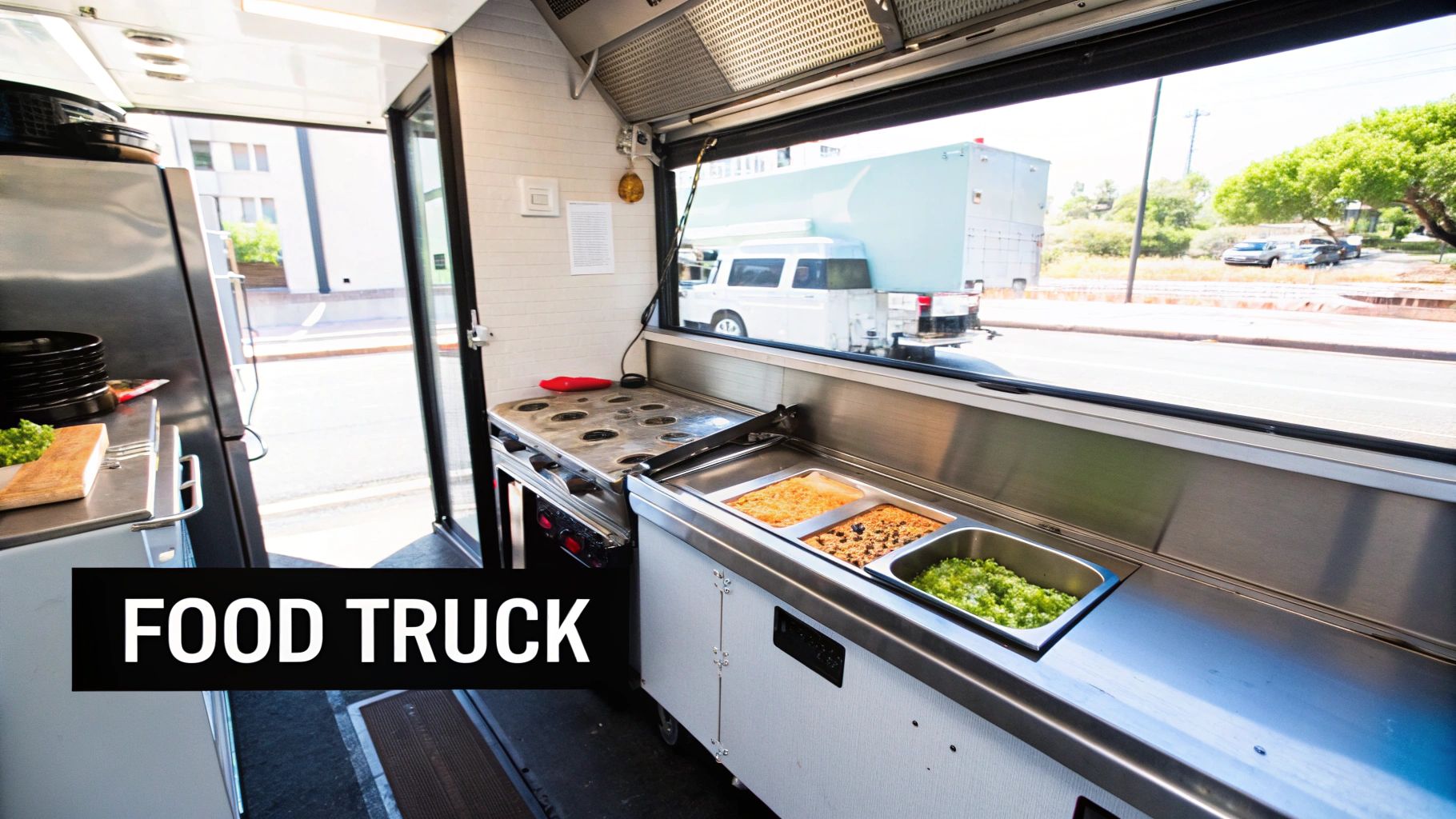
Los Angeles is the undisputed capital of food truck culture. You’ll find innovative chefs serving everything from Korean BBQ tacos to authentic Thai street food on wheels. But behind every successful mobile kitchen is a carefully chosen commercial kitchen equipment list, designed specifically for the unique challenge of a tiny space. Out on the streets of LA, your success depends on gear that's compact, multi-functional, and tough enough for constant motion and high-volume service.
Unlike a traditional restaurant, a food truck kitchen runs on extreme constraints—space, power, and ventilation are all at a premium. Every single piece of restaurant equipment has to earn its spot. This means you have to prioritize gear that can pull double or even triple duty, making sure your mobile operation is just as efficient and powerful as its brick-and-mortar cousins.
Maximizing Your Mobile Kitchen Layout
The real key to a functional food truck is picking equipment that fits a tight footprint without sacrificing an ounce of performance. This is where smart, space-saving designs are absolutely essential for building a workflow that can handle the long lines at a downtown lunch rush or a busy night market.
Here are the non-negotiable categories you need to think about for your truck:
- Compact Cold Storage: Under-counter commercial refrigerators and freezers are the champions of any mobile kitchen. They give you critical cold storage while also providing a valuable stainless steel work surface on top, maximizing every last inch of your prep area.
- Countertop Cooking Power: Full-size ranges just aren't practical. Instead, high-performance countertop griddles, charbroilers, and deep fryers will give you the cooking power you need. A Japanese food truck might need a reliable fryer for tempura, while a Mexican truck will depend on a heavy-duty griddle for searing meats.
- Space-Saving Prep Units: Compact sandwich or salad prep tables with refrigerated rails keep all your ingredients chilled, safe, and right within arm's reach. This is absolutely vital for quick assembly and keeping your service speed up.
A food truck's success is built on reliability. When your entire business is on wheels, equipment downtime is not an option. Prioritize durable, easy-to-service brands that can withstand the vibrations and rigors of daily travel.
Addressing Power and Safety on the Go
Running a food truck brings its own set of unique technical hurdles. Your generator has to be powerful enough to run all your equipment at the same time, from the refrigerators to the entire cooking line. You absolutely cannot overlook the critical step of carefully calculating the total amperage and wattage of your chosen equipment.
Ventilation is another huge challenge. A properly sized and installed hood system is mandatory to manage heat, smoke, and grease in such a confined space, keeping your staff safe and ensuring you comply with LA health codes. On top of that, all equipment must be securely bolted down to stop it from shifting around while you're in transit. For a more detailed breakdown, check out our complete food truck equipment list, which is tailored for LA's mobile vendors.
The demand for this kind of specialized gear is part of a much bigger trend. The global commercial kitchen equipment market is set to grow by an impressive USD 41.81 billion from 2025 to 2029, with a strong CAGR of 7.4%. This growth mirrors the booming food service industry, especially in places like Los Angeles where quick-service options and food trucks just keep thriving. You can find more details about this market growth in a recent analysis by Technavio.
Financing Your Commercial Kitchen Equipment In Los Angeles
Putting together your commercial kitchen equipment list is a huge first step, but the real challenge is figuring out how to pay for it all. For most Los Angeles restaurant owners, especially if you're just starting out with a food truck or a new café, the upfront cost of equipment is easily the biggest financial mountain to climb. The good news is, you don't have to empty your bank account to get the gear you need.
Partnering with a local LA-based supplier gives you a serious leg up. An experienced local team just gets it—they know the struggle of fitting a walk-in into a historic downtown building or how to prep a food truck to survive a brutal summer heatwave. They can give you real advice on the right commercial refrigerators and cooking equipment for your menu, whether you’re opening a high-volume Chinese spot or a specialty Korean dessert shop. That kind of local knowledge is priceless.
Understanding Lease To Own Financing
One of the best financial tools you have is lease-to-own financing. It's a game-changer. This approach lets you get brand-new, top-tier restaurant equipment right away, but you spread the cost out into predictable monthly payments. Instead of one massive bill, you're matching your equipment expenses to the money coming in.
For new and growing businesses in LA, this strategy has some major perks:
- Keeps Your Cash Free: You can hold onto your capital for other must-haves, like payroll, marketing, or those little emergencies that always pop up.
- Builds Your Business Credit: Every on-time lease payment helps you build a solid credit history for your restaurant.
- Predictable Monthly Bills: With fixed payments, budgeting becomes way less stressful, which is a lifesaver in those unpredictable first couple of years.
For a new restaurant, cash flow is everything. Lease-to-own programs can slash your initial equipment spend by over 90%. That’s capital you can pour right back into growing your business when it matters most.
The Importance Of Warranties And Local Support
Your investment doesn't stop the day the equipment arrives. In the LA food scene, you can't afford to have gear go down. A broken freezer or a dead fryer during a dinner rush can cost you a ton of money and ruin your reputation. This is where a good warranty and fast, reliable service become your best friends.
Look for suppliers who stand behind their products with strong warranties, like Atosa's two-year coverage on parts and labor plus five years on compressors for their commercial refrigerators and freezers. Even more important is making sure they have an authorized local service team right here in the area.
When you have certified technicians in LA on call, you know you’ll get help fast. A freezer breaking down in the middle of July isn't just an inconvenience; it's a crisis. Quick support gets you back up and running, protecting your inventory and your bottom line. It's the kind of peace of mind that lets you focus on what you do best—making incredible food.
Your Top Restaurant Equipment Questions Answered
When you're outfitting a new restaurant or upgrading an old one in Los Angeles, you're bound to have questions. Everyone does. From stretching a tight budget to picking the right gear for your specific menu, making smart choices upfront is the name of the game. This section tackles the most common questions we hear from LA restaurateurs putting together their commercial kitchen equipment list.
Getting these answers right can save you from some costly headaches down the road and set you up for a much smoother, more profitable operation.
How Do I Balance Budget and Quality for My LA Kitchen?
This is the big one, especially in a pricey market like Los Angeles. The trick is knowing where you can afford to save and where you absolutely have to invest.
- Invest in Your Workhorses: Your commercial refrigerators, freezers, and the heart of your cook line (ranges, fryers) are running all day, every day. Spending more on reliable, energy-efficient models right out of the gate will literally save you thousands in utility and repair bills over time.
- Go Used for Simple Support Gear: You can find incredible deals on used stainless steel prep tables, shelving, and sinks. These pieces don't have complicated mechanical parts, so it’s easy to see what you're getting.
- Look into Lease-to-Own: Leasing is a powerful tool for getting the essential new equipment you need. It lets you get top-of-the-line, warrantied gear with very little money down, keeping your cash free for critical costs like payroll and marketing. This way, your equipment payments line up with the money coming in.
What's the Best Equipment for High-Volume Food?
Los Angeles is all about high-volume, fast-paced food, from taco trucks cranking out orders to busy KBBQ spots. Your equipment has to be able to keep up.
A Korean restaurant, for example, absolutely needs a lineup of powerful charbroilers and high-capacity commercial refrigerators to handle all that marinated meat. A busy Thai kitchen isn't going anywhere without a multi-burner wok range that can blast intense heat for quick stir-frying. The idea is to pinpoint the one cooking method that defines your menu and invest in heavy-duty, specialized equipment to nail it, even on your busiest night.
When you're setting up a specialized, high-volume kitchen, durability and output are everything. A breakdown during the dinner rush isn't just an inconvenience—it's lost money and a hit to your reputation. Stick to equipment with solid warranties and a local service network you can call.
Should I Actually Plan for Maintenance and Repairs?
One hundred percent, yes. Proactive maintenance is probably the most overlooked part of running a successful kitchen. A well-cared-for freezer or fryer is so much less likely to die on you without warning.
Put a simple maintenance checklist together for your team. It should have daily tasks like cleaning grease traps and weekly checks like inspecting fridge door seals. For the bigger stuff, find a certified local repair service and build a relationship before you're in a panic. Having a technician you trust on speed dial is a lifesaver when a critical piece of equipment fails. It minimizes your downtime and protects your bottom line.
Ready to build the perfect kitchen for your Los Angeles restaurant? The experts at Los Angeles Restaurant Equipment are here to help you select the right gear, from commercial refrigerators to your entire cooking line, all backed by flexible financing and reliable local support. Explore our full catalog and get started today at https://losangelesrestaurantequipment.com.