

Commercial Kitchen Equipment Checklist: LA's Guide to Outfit Your Kitchen
Opening a new restaurant in Los Angeles is a massive undertaking, and it all starts in the kitchen. Your success hinges on having a solid commercial kitchen equipment checklist. This isn't just a shopping list; it's the foundation that makes sure you get the right gear for your specific menu and space. A high-output range for a bustling Thai kitchen has very different requirements than the specialized commercial refrigerators needed for a sushi bar.
Getting this right from the start prevents incredibly costly mistakes and sets your whole operation up for an efficient, smooth-running future.
Your Blueprint for a High-Performance LA Kitchen
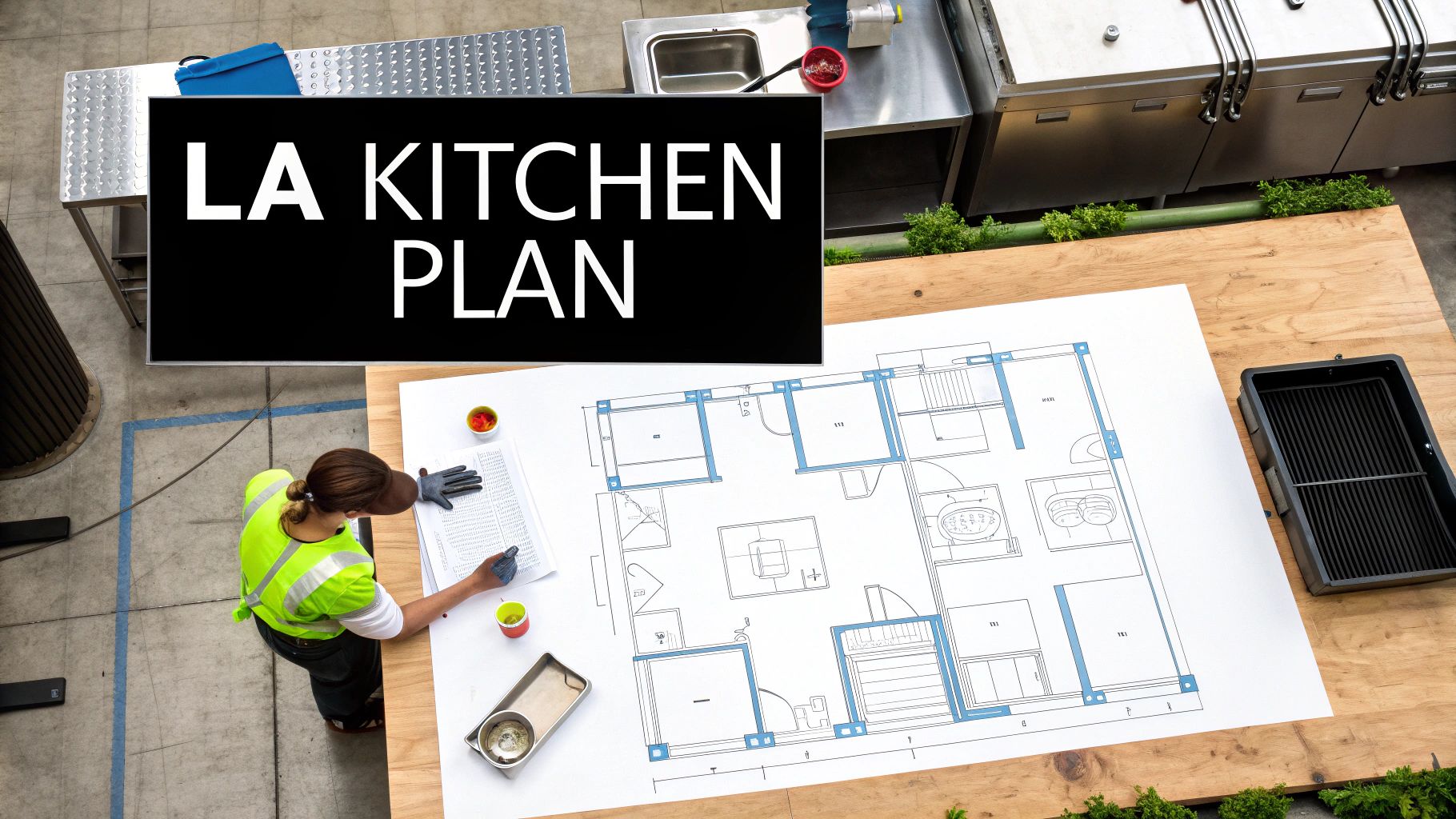
Putting together a kitchen in Los Angeles isn't just about buying appliances. It’s about engineering the high-performance engine that brings your culinary vision to life. The unique demands of your concept—whether that's a Korean BBQ joint in Koreatown or a Mexican food truck cruising through Silver Lake—will dictate every single choice you make. A generic list just won't cut it. You need a blueprint that's built around your menu, your workflow, and your actual physical space.
This means you have to think beyond individual pieces of restaurant equipment and really consider how everything works together as a system. Your kitchen needs to be broken down into logical stations, each one kitted out with exactly what it needs to run seamlessly. This approach doesn't just improve speed and consistency; it's also a critical part of passing those tough LA County health inspections.
Starting with Your Menu and Concept
Before you even think about flipping through an equipment catalog, look at your menu. That’s your real guide. Every single dish you plan to serve has equipment implications.
- High-Volume Chinese Restaurant: Your list absolutely must have high-BTU wok ranges, massive stock pot ranges, and a bank of efficient steamers.
- Downtown Japanese Sushi Bar: Ultra-low temperature commercial freezers are non-negotiable for fish safety, right alongside specialized rice cookers and refrigerated prep tables.
- Mobile LA Food Truck: Here, compact and multi-functional gear is king. Think countertop fryers, versatile griddles, and under-counter refrigerators to make every last square inch count.
When you connect each menu item to the specific equipment it requires, you build a checklist based on actual need. This is how you avoid overspending on shiny gadgets you'll never use or, even worse, under-equipping your team for a busy service.
Organizing Your Checklist by Kitchen Station
The most effective way to plan everything out is to break your list down by station. This framework makes sure no critical component gets overlooked and helps you truly visualize the flow of your entire kitchen. A well-designed layout minimizes how much your staff has to move around, which cuts down on ticket times and creates a much safer place to work.
A common mistake new LA restaurateurs make is buying restaurant equipment before mapping out their kitchen stations. This often leads to an inefficient layout, workflow bottlenecks, and wasted space—costly errors in a city where commercial real estate is at a premium.
To give you a head start, here’s a quick overview of how you might categorize equipment based on its role in the kitchen.
Kitchen Station Equipment at a Glance
| Kitchen Station | Primary Function | Example Equipment |
|---|---|---|
| Cooking & Hot Line | Preparing hot food items | Ranges, ovens, fryers, grills, griddles |
| Cold Prep & Salad | Preparing cold ingredients & dishes | Prep tables, food processors, slicers |
| Refrigeration | Cold storage for perishables | Walk-in coolers, reach-in refrigerators |
| Warewashing | Cleaning dishes, utensils, & cookware | 3-compartment sink, commercial dishwasher |
| Storage & Receiving | Storing dry goods & non-perishables | Dunnage racks, shelving units, carts |
| Smallwares | Hand tools & small appliances | Knives, mixing bowls, blenders, scales |
This table is just a starting point, but it illustrates how thinking in terms of stations brings clarity to a complex process.
This level of detailed planning is more important than ever. The global commercial cooking equipment market is projected to skyrocket from USD 13.3 billion in 2025 to USD 26.5 billion by 2035. This massive growth means LA restaurateurs have to be strategic, prioritizing equipment with high capacity, durability, and energy efficiency to keep costs down and scale up. Your checklist should go beyond brand names and include specs like rated throughput (e.g., pans/hour), ENERGY STAR status, warranty terms, and expected useful life. This ensures your investment can support long-term growth in a fiercely competitive market.
You can dig deeper into the commercial cooking equipment market trends to see how making smart choices now can impact your success down the road.
Equipping Your Cooking and Hot Line Stations
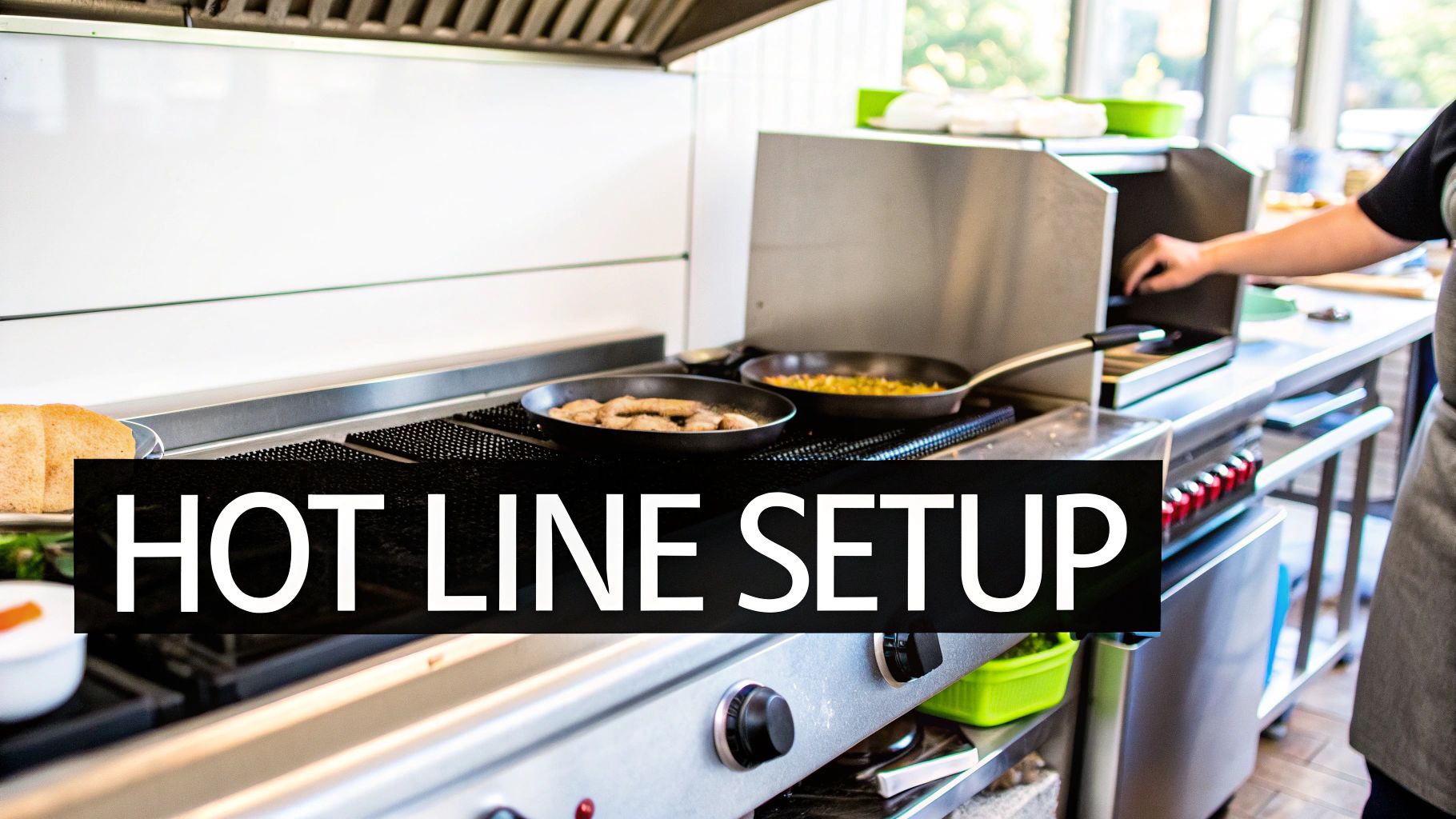
Let’s be honest: the hot line is the heart and soul of your restaurant. It's that high-pressure, high-energy zone where every sizzle and sear brings your culinary vision to life. In a city as diverse as Los Angeles, there’s absolutely no one-size-fits-all setup. The equipment you choose for this station will make or break your ability to pump out consistent, quality dishes, especially when the dinner rush hits.
Everything starts with your menu. A Korean BBQ joint in Koreatown is going to need some serious firepower—powerful charbroilers and a ventilation system that can handle all that smoke and heat. A family-owned Mexican spot in East LA, on the other hand, will probably build its line around versatile, multi-zone griddles and a couple of bomb-proof deep fryers for those crispy carnitas. Your commercial kitchen equipment checklist has to be built from the menu out.
Matching Cooking Equipment to Your LA Concept
Think of your hot line as your kitchen's custom toolkit. You wouldn't use a hammer to turn a screw, right? The same logic applies here, especially in LA's food scene where cuisines from Thai to Mexican to Chinese demand specific tools.
A bustling Thai kitchen in Hollywood cranking out pad see ew needs multi-burner wok ranges that deliver that intense, focused heat for authentic wok hei. But a downtown bistro with a classic American menu? They'll get way more mileage from a six-burner range with a standard oven base for handling roasts and sautés.
Let’s look at a few classic LA scenarios:
- The Packed Food Truck: Space is everything. A compact countertop fryer, a two-burner hot plate, and a small, versatile griddle are your best friends. Every single piece has to pull double or triple duty.
- The High-End Japanese Spot: Here, it’s all about precision. You're looking at specialty gear like tempura fryers that hold an exact oil temperature and high-performance grills for perfect yakitori.
- The Neighborhood Pizzeria: Your oven is the star—whether it's a deck, conveyor, or classic brick oven. Everything else on the line, from ranges for sauce to prep tables, is there to support the main event.
Sizing Your Equipment for Volume and Footprint
So you know what you need. The next big question is how big? This is where a lot of new operators get into trouble. A fryer that's too small creates an instant bottleneck and slows the whole kitchen down. An oversized range just eats up valuable floor space and burns through expensive energy.
Take the deep fryer, for example. A food truck might get by just fine with a 15-pound countertop model for fries. But a restaurant famous for its fried chicken will need a floor-standing beast with a 70-pound oil capacity, or maybe even a whole bank of them, to keep up.
The golden rule for any piece of cooking equipment is this: plan for your busiest hour, not your average one. Skimping on your hot line is a recipe for long ticket times, unhappy customers, and a burned-out crew.
The physical layout of your kitchen is just as crucial. Get out the tape measure and map everything out, making sure to account for mandatory clearance for fire safety and ventilation hoods—something LA city permits are notoriously strict about. A well-designed line has a logical flow, saving your cooks precious steps and creating a safer, more efficient workspace.
Core Components of a Versatile Hot Line
While your cuisine will dictate the specialty items, nearly every LA kitchen is built around a few essential workhorses. A good griddle is a perfect example—it can handle everything from breakfast pancakes to seared burger patties for lunch. You can find a huge range of commercial griddle options that will fit both your menu needs and your kitchen's layout.
Here are the foundational pieces you'll want to consider for your hot line checklist:
- Commercial Range: The classic workhorse with burners up top and an oven below. They come in all sizes, from 4-burners to massive 10-burner units.
- Ovens: Think about what you’re making. Convection ovens for even baking, deck ovens for that perfect pizza crust, or high-tech combination ovens for maximum flexibility.
- Fryers: Tube-type, open-pot, gas, electric—the right choice depends entirely on what you’re frying and how much of it you sell.
- Grills and Charbroilers: Absolutely essential for getting those perfect grill marks and that smoky flavor on meats and veggies.
- Salamander or Broiler: The secret weapon for melting cheese, toasting buns, or giving a dish that perfect golden-brown finish.
By carefully choosing these core pieces based on your menu, your projected volume, and your unique LA space, you’re not just buying equipment—you’re engineering a hot line for success.
Mastering Cold Storage and Food Preparation
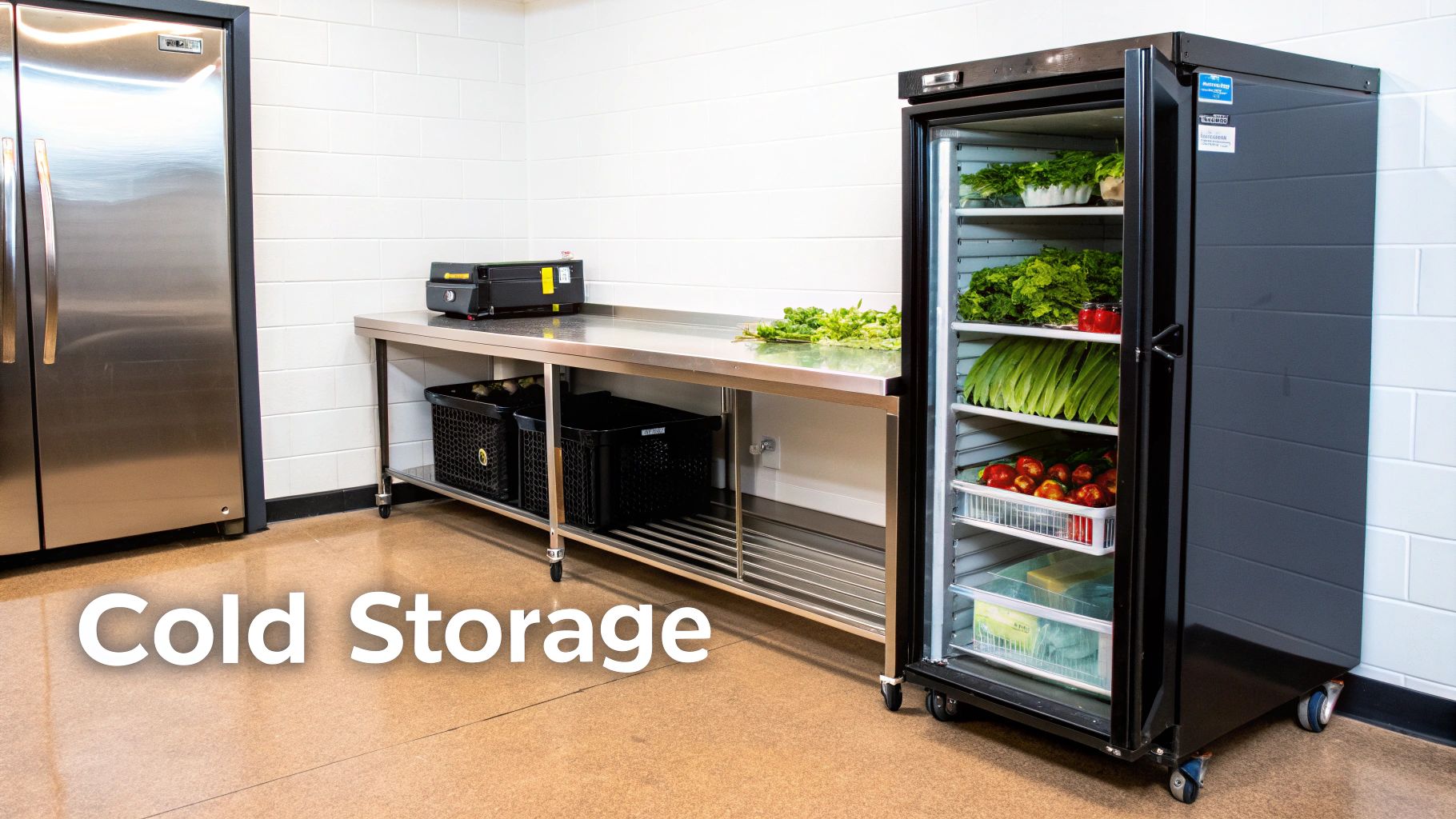
In Los Angeles, your cold storage and prep stations are the absolute heart of your kitchen. The health codes here are no joke, and ingredient quality is everything. These areas aren't just for holding food; they are where you control safety, efficiency, and ultimately, the quality of every single plate you send out.
Get this part right, and you’ll prevent costly spoilage and sail through every LA County health inspection. Your commercial kitchen equipment checklist needs to give refrigeration and prep the same attention you give your flashy hot line equipment. The decisions you make here will echo through your inventory, your workflow, and your bank account.
Selecting the Right Commercial Refrigerators and Freezers
Reliable refrigeration is the foundation. And in a city with a food scene as diverse as LA, that means picking units specifically for what’s on your menu.
Think about a high-end sushi spot in Sawtelle. They’re dealing with incredibly expensive sashimi and need dedicated, ultra-low temperature commercial freezers to maintain that perfect texture and prevent any chance of cross-contamination. It’s a non-negotiable for them. On the other hand, a food truck cruising through downtown needs compact, tough-as-nails under-counter refrigerators that can handle the bumps and vibrations of the road.
Your specific needs will guide your choices:
- Walk-In Coolers and Freezers: If you're a full-service restaurant with a large inventory, these are a must. They give you the most storage space for your money. Our guide on commercial walk-in refrigerators can help you figure out the perfect size for your LA kitchen.
- Reach-In Refrigerators and Freezers: These are the daily workhorses. They keep your most-used ingredients right on the line, exactly where your cooks need them.
- Under-Counter Units: Absolute lifesavers for tight spaces. Perfect for food trucks, coffee shops, or bar stations where you need cold storage within arm's reach.
- Glass-Door Merchandisers: A smart choice for any front-of-house area in a cafe or grab-and-go spot. They put your drinks and prepared items on display, driving those profitable impulse buys.
Building an Efficient and Compliant Prep Station
Your prep station is where the magic begins, turning raw ingredients into something special. This area has to be designed for a smooth workflow, durability, and, above all, easy cleaning to keep the LA health department happy.
Stainless steel is king here. It’s non-porous, meaning it won’t harbor bacteria, and it’s a breeze to sanitize. Your checklist for the prep station should focus on powerhouse equipment that can handle day-in, day-out use.
- Stainless Steel Prep Tables: Look for models with a backsplash to keep your walls clean. Some even come with built-in sinks or shelving, which can be a huge space-saver.
- Food Processors and Slicers: These machines will save you an unbelievable amount of time. Make sure you get a commercial-grade unit with enough power and the right blades for your menu.
- Commercial Mixers: Whether it’s a small countertop model for whipping up sauces or a giant floor mixer for kneading dough, size it based on the batches you’ll actually be making.
Here's a hard-earned lesson: don't even think about using residential-grade appliances. They will break down, and fast. That leads to expensive downtime and can even get you dinged on a health inspection. Always, always invest in NSF-certified restaurant equipment built for the rigors of a professional kitchen.
Prioritizing Energy Efficiency to Control Costs
Let's be real—running a business in Los Angeles is expensive, and your utility bills can be a killer. That’s why energy efficiency isn’t just a "nice-to-have"; it's a critical part of your selection process.
Spotting that ENERGY STAR label is more than just an eco-friendly move; it’s a smart financial decision. These certified appliances can deliver 10–30% energy savings compared to standard models. That adds up, month after month.
When you're shopping, look for the hard numbers: kWh/year for refrigerators, water usage for dishwashers, and standby power consumption. Taking a few minutes to calculate the payback period based on these savings will help you make a much smarter investment for your LA restaurant.
By carefully choosing durable, efficient, and purpose-built gear for your cold storage and prep stations, you're not just buying equipment. You're building the foundation for a safe, compliant, and highly productive Los Angeles kitchen.
Designing Your Warewashing and Storage Systems
The hot line gets all the glory, but if you ask any seasoned chef, they’ll tell you the real heroes of a high-functioning Los Angeles kitchen are the warewashing and storage systems. This is the engine room that keeps your entire operation clean, organized, and compliant.
A poorly planned dish pit or a disorganized storeroom creates instant chaos. Think service delays, health code violations, and a whole lot of unnecessary stress for your team. Focusing on these back-of-house areas in your commercial kitchen equipment checklist isn't just a good idea—it's non-negotiable for a smoother, more profitable operation.
Choosing Your Warewashing Workhorse
That constant clatter of plates and pans demands a powerful, reliable cleaning system. Here in Los Angeles, where water usage is always a top concern, picking the right commercial dishwasher is a critical decision that hits both your utility bills and your compliance.
Your choice really comes down to your volume and your space:
- Under-Counter Dishwashers: These are a perfect fit for bars, cafes, or food trucks. They slide neatly under a standard counter and are great for glassware and smaller loads, saving you precious floor space.
- Door-Type Dishwashers: This is what you'll find in most small to medium-sized restaurants. These single-tank machines can power through dozens of racks per hour, a major step up in capacity.
- Conveyor Dishwashers: For high-volume spots, these are the ultimate solution. Racks move through wash and rinse chambers on a conveyor belt, cleaning hundreds of racks an hour to keep pace with the busiest rush.
No matter which type you go with, look for either high-temperature models that sanitize with hot water (at least 180°F) or low-temperature ones that use chemical sanitizers. High-temp units might cost more upfront, but they can save you a bundle on chemicals down the road. To get a deeper dive, check out our guide to selecting the perfect dishwashing machine for restaurants.
I can't stress this enough: every single kitchen in LA must have a 3-compartment sink. It’s a hard-and-fast rule from the health department for washing, rinsing, and sanitizing anything that can't go through the machine. Overlooking this is an immediate failed inspection, no questions asked.
Implementing Smart and Safe Storage Solutions
Good storage is so much more than just having shelves. It’s about building an organized system that protects your inventory, maximizes every square inch of space, and guarantees food safety. A cluttered storeroom is a recipe for wasted product, slow prep times, and potential pest problems.
Your storage plan should be a core part of your restaurant equipment checklist, with a heavy focus on durability and compliance.
Key Storage Equipment to Include:
- NSF-Certified Shelving: Always, always choose stainless steel or chrome wire shelving. It’s tough, a breeze to clean, and lets air circulate—which is crucial for stopping mold and moisture.
- Dunnage Racks: These low platforms are non-negotiable for keeping bulk items like bags of flour or boxes of produce at least six inches off the floor. That's a strict requirement from the LA County health department.
- Food Storage Containers: Invest in a good set of clear, food-grade plastic containers with tight-fitting lids. They let you see what’s inside at a glance, prevent cross-contamination, and make inventory day so much faster.
- Wall-Mounted Shelves and Racks: In tight quarters like a food truck or a small kitchen, you have to think vertically. Wall-mounted racks for spices, utensils, and smallwares can free up a surprising amount of counter and floor space.
When you strategically plan your warewashing and storage, you’re building the backbone of efficiency and safety for your entire LA restaurant. These areas might not be glamorous, but their impact on your daily operations is immense, ensuring every service runs smoothly from open to close.
Navigating Budgets, Financing, and Installation in LA
Putting together the perfect commercial kitchen equipment checklist is the fun part. Figuring out how to pay for it all—and get it installed correctly in Los Angeles—is a completely different beast. This is where your dream menu and business plan collide with reality.
A rock-solid financial and logistical plan is the only way to sidestep budget blowouts and painful delays that can stop a new restaurant in its tracks before the doors even open.
Whether you're sourcing a high-capacity commercial refrigerator for your new spot in Thai Town or navigating LA's infamous permit maze for a food truck's ventilation hood, every single step needs meticulous planning. Let's walk through how to handle the money, financing, and installation to turn that equipment list into a real, working kitchen.
Building a Realistic Equipment Budget
Your first move is to build a budget that goes way beyond the sticker price on the appliances. For any new restaurant in LA, that initial capital is everything, and you have to make every dollar count.
Start by getting quotes for everything on your list. A Korean BBQ joint will have a much different budget than a Japanese ramen shop, needing to account for high-powered tabletop grills and a serious ventilation system versus specialized noodle cookers and giant stock pot ranges.
Don’t forget about the "soft costs" that sneak up on you:
- Taxes: That Los Angeles County sales tax will add a noticeable chunk to your final bill.
- Delivery & Freight: Getting a walk-in freezer delivered and moved into a second-floor kitchen is a world away from a simple curbside drop-off.
- Installation Fees: This is a big one. Professional work for gas lines, plumbing, and electrical is a major expense.
- Permit Costs: The City of Los Angeles has a specific permit for just about everything, from your plumbing setup to the fire suppression system.
A critical mistake operators make is underestimating installation. These costs can easily hit 20% or more of the equipment's price tag. Always get detailed quotes from licensed contractors who know their way around commercial kitchens. It’ll save you a world of headaches.
Smart Financing, Leases, and Loans
Let's be real: not every restaurant can or should pay for all its equipment with cash upfront. This is especially true for LA's amazing food trucks and smaller independent spots where protecting startup capital is the name of the game. Luckily, you’ve got options.
Lease-to-own financing is an incredibly popular way to go. It lets you get brand-new, top-tier equipment for a predictable monthly payment, which is a lifesaver for your cash flow. At the end of the lease term, you usually own the equipment for a small buyout fee.
This strategy helps you build business credit and get the quality gear you need without draining your bank account. It makes those big-ticket items, like dependable Atosa commercial refrigerators with their five-year compressor warranties, much more accessible.
The Installation and Permitting Maze in LA
Once the truck pulls up and your new equipment arrives, the real work begins. Installation in Los Angeles is a tightly regulated process, and trying to cut corners here is a recipe for disaster.
You're going to need licensed professionals for almost everything. A certified plumber is non-negotiable for connecting your 3-compartment sink and commercial dishwasher to meet health codes. A licensed electrician has to make sure your shiny new convection oven has the right voltage and amperage.
And most importantly, any gas cooking equipment or ventilation hood requires a specialist who deeply understands LA's strict fire and safety rules.
This diagram shows the basic, required flow for a compliant warewashing station—a critical piece of any LA kitchen build-out.
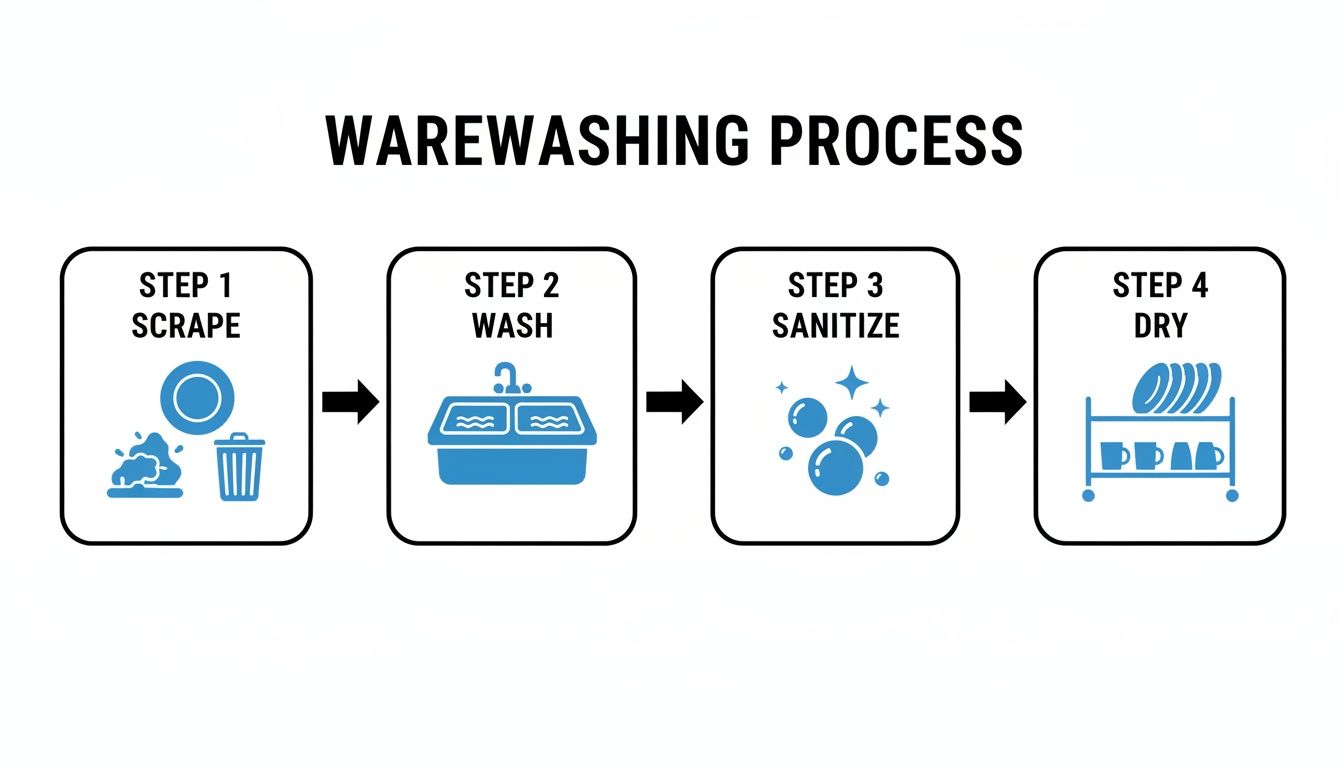
This process shows that proper installation isn't just about plugging things in. It’s about building a system that will pass health department inspections from day one. Using uncertified installers or skipping the right permits will lead to failed inspections, forcing you to pay to get the work redone and pushing back your grand opening. Plan this stage just as carefully as you planned your menu.
Common Questions from LA Restaurant Owners
Running a food business in Los Angeles comes with its own flavor of challenges. You’re not just building a business; you’re navigating specific city health codes, a fiercely competitive market, and tough financial decisions. It’s no surprise that owners need clear, direct answers.
We get a lot of questions from both seasoned restaurateurs and new food truck entrepreneurs across LA. This section tackles the most common ones we hear, giving you quick, practical advice to help you build out your commercial kitchen equipment checklist with confidence.
What Are the Most Critical Pieces of Equipment for a Los Angeles Food Truck?
On an LA food truck, space is everything. You have to maximize a tiny footprint while still pumping out incredible food. Versatility isn't just a nice-to-have; it's how you survive. Your equipment list has to be all about compact, multi-functional gear.
The absolute must-haves start with a dependable under-counter refrigerator and freezer combo. From there, you'll need a workhorse cooking surface like a commercial griddle or charbroiler, a two-burner hot plate, and a small fryer that doesn't eat up your whole line.
But here’s the most important part: you can't operate legally without a compliant 3-compartment sink and a totally separate handwashing sink. This is a deal-breaker for passing LA County health inspections. Your ventilation and fire suppression systems also have to be installed to meet strict local codes.
How Do I Ensure My Kitchen Equipment Will Pass an LA County Health Inspection?
Passing your health inspection doesn't start on the day of the visit; it starts the moment you choose your restaurant equipment. The golden rule is simple: always choose NSF-certified equipment. This certification is the universal stamp of approval for public health and safety in foodservice.
Beyond the NSF sticker, keep these points top of mind:
- Surfaces: Every surface that touches food has to be smooth, non-porous, and a breeze to clean. Stainless steel is the industry standard for a reason.
- Refrigeration: Your commercial fridges and freezers aren't just for keeping food cold; they must hold everything at or below a strict 41°F.
- Sinks: We can't say it enough. You absolutely need a properly installed 3-compartment sink for washing dishes and a separate, dedicated sink just for washing hands, fully stocked with soap and paper towels.
- Ventilation: Your cook line's ventilation hood must be sized and installed perfectly to manage the heat, smoke, and grease from your specific appliances.
Your best bet? Work with a reputable Los Angeles restaurant equipment dealer who lives and breathes these local rules. It's the best defense against a failed inspection.
Should I Buy New or Used Restaurant Equipment in Los Angeles?
This is the classic budget dilemma, and honestly, the smartest answer is usually a mix of both. The right choice really comes down to the equipment’s job and how complicated its moving parts are.
For anything that runs 24/7 and is the heart of your operation—like your commercial refrigerators, main ovens, or fryers—buying new is almost always the best long-term move. You get a full manufacturer's warranty, modern energy efficiency that saves you on utility bills, and the sheer relief of knowing it’s reliable. The cost of repairing a broken-down used freezer can easily erase any money you thought you saved.
Used equipment, on the other hand, is a brilliant choice for the simple, non-mechanical stuff. Think stainless steel prep tables, storage shelving, and dunnage racks. If you do go for used mechanical gear, make sure you buy from a trusted local refurbisher in LA that inspects, services, and offers at least a limited warranty on their products.
What Is the Biggest Mistake to Avoid When Leasing Kitchen Equipment?
Leasing can be a fantastic way to hang onto your cash, but the single biggest mistake is not reading—and truly understanding—every word of the agreement before you sign. The details buried in the fine print can have a huge impact on your finances later on.
Before you put pen to paper, get clear, straight answers to these questions:
- What is the exact interest rate or "money factor"?
- Is this a lease-to-own deal with a $1 buyout at the end, or is it a fair market value (FMV) lease where you might have to pay a lot to keep the equipment?
- Who is on the hook for maintenance and repairs during the lease?
- What happens if I need to end the lease early, and what are all my options when it’s over?
Don't just assume. Talk through every term with a reputable financing company to make sure the deal actually fits your business goals and cash flow.
At Los Angeles Restaurant Equipment, we're here to help LA's incredible food community thrive. From outfitting your first food truck to upgrading a busy commercial kitchen, we supply the professional-grade equipment and expert advice you need. Explore our full catalog and flexible financing options to build the kitchen you've always wanted. Visit us at https://losangelesrestaurantequipment.com.