

Convection Oven vs Conventional Oven: A Los Angeles Restaurant Guide
For any chef or owner running a restaurant or food truck in Los Angeles, the choice between a convection oven vs a conventional oven is a big deal. It’s a decision that hits everything from your kitchen’s pace to the quality of your food, and ultimately, your bottom line.
To put it simply, a convection oven is the go-to workhorse for most fast-paced L.A. kitchens. If you need speed and consistency for things like roasting and baking, it’s your best bet. A conventional oven, though, still has its place for more delicate dishes that need a gentle, steady heat.
Choosing the Right Oven for Your Los Angeles Kitchen
This guide is built for the competitive Los Angeles food scene. We’ll look at everything that matters—what’s on your menu, how fast you need to cook, what it will cost to run, and your return on investment. It's not just about specs on a sheet; it's about finding the right restaurant equipment for your specific business, whether that's a busy spot in Downtown LA or a nimble food truck hitting the streets in Venice. This choice is just as critical as picking out your commercial refrigerators and freezers.
The biggest difference between the two is how they move heat. A conventional oven uses still, or static, heat from elements at the top and bottom. A convection oven takes it a step further by adding a fan to blow that hot air all around the food. It sounds like a small change, but in a pro kitchen, it’s a game-changer.
Key Operational Differences
Let’s say you’re running a popular food truck that serves Korean fried chicken. If you swap a conventional oven for a commercial convection model, you could cut your cooking times by a massive 25%. That turns a 60-minute batch into a quick 45-minute job.
This boost in speed also means you're saving on energy. Convection models typically use about 20% less energy because they just don't need to run as long. Over a year of daily use, that can easily save you $40 to $80 on your utility bills.
In a market as tough as Los Angeles, faster ticket times and lower bills aren't just perks—they're how you stay ahead of the competition. Your oven is the engine of your kitchen.
To help you see the differences clearly, here's a quick side-by-side look.
Convection vs Conventional Oven At A Glance
For a busy L.A. chef, sometimes you just need the highlights. This table cuts right to the chase, outlining the most critical differences to help you make a quick, informed decision.
| Decision Factor | Convection Oven | Conventional Oven |
|---|---|---|
| Best For | High-volume roasting, baking, and even browning | Delicate items like custards, soufflés, and certain cakes |
| Cooking Speed | Up to 25% faster | Standard cooking times |
| Heat Distribution | Even and consistent due to fan circulation | Prone to hot spots; requires pan rotation |
| Energy Efficiency | Higher; cooks faster at lower temperatures | Lower; requires longer preheating and cooking |
| Ideal LA Use Case | Food trucks, high-turnover Mexican restaurants, bakeries | Specialty Japanese dessert shops, fine dining with delicate menus |
Getting a handle on these basic differences is the first step. When you're putting your kitchen together, you need a complete plan. Check out our guide on the essential commercial kitchen equipment checklist to make sure you’ve covered all your bases. The right oven will support your entire operation from day one.
Understanding The Core Oven Technologies
Before you can pick the right oven for your L.A. restaurant, you’ve got to get what’s happening inside the box. The real difference between a convection and a conventional oven comes down to how each one delivers heat to your food. That single factor changes everything—from how fast things cook to the final texture of a dish.
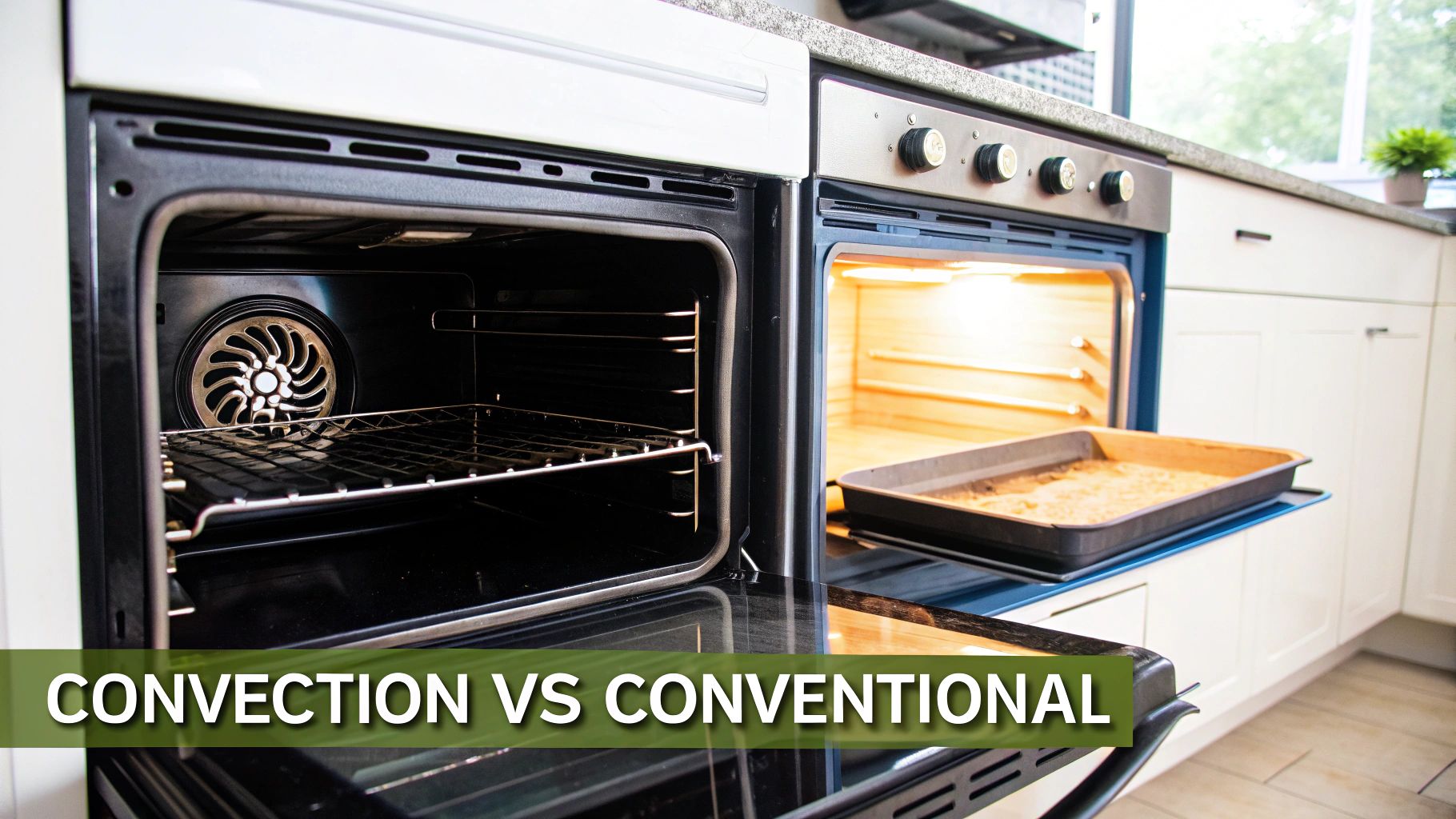
A convection oven is all about its internal fan and exhaust system. This setup actively pushes hot air all around the oven cavity, like a constant, gentle whirlwind. This movement gets rid of temperature variations and stubborn hot spots, making sure everything cooks uniformly.
What that means in practice is that a sheet pan of roasted vegetables or multiple trays of pastries will brown perfectly, no matter where you place them on the racks. It’s this active heat circulation that makes convection a beast for consistency and speed in a busy commercial kitchen.
The Mechanics of a Conventional Oven
On the flip side, a conventional oven works with a much simpler idea: static, radiant heat. The main heating element is usually at the bottom of the oven. As that hot air naturally rises, it creates different temperature zones inside.
The result is a cooking space that’s hotter at the top and cooler toward the bottom. While this can be a good thing for certain delicate baking jobs, it usually means a chef has to constantly rotate pans to get even results—a real time-killer during a Koreatown dinner rush.
The core difference is simple: a conventional oven provides passive, zoned heat, while a convection oven delivers active, uniform heat. This distinction is the source of all performance variations between the two technologies.
Airflow And Its Impact On Food
That circulating air in a convection oven does more than just even out the temperature; it also pulls moisture away from the surface of foods. This is the secret to getting that amazing crispy skin on a roasted chicken or a perfect golden-brown crust on baked goods.
This technology is so good at creating a crisp texture that it has spun off into other popular restaurant equipment. If you’re interested in that capability, our guide on choosing a commercial air fryer has a lot more detail.
A conventional oven, without that airflow, cooks food more gently. This slower, less intense heat is great for delicate items like cheesecakes or custards that could dry out or crack under the force of a fan. The moist environment helps them set just right without getting tough. For anyone looking into advanced convection features, learning about the benefits of an oven with an air fryer function can be a real eye-opener.
Comparing Performance: Speed, Consistency, And Quality
In a busy Los Angeles kitchen, your oven’s performance is everything. The whole convection oven vs conventional oven debate really boils down to three things: speed, consistency, and the quality of the food that comes out. These aren't just minor details; they directly impact your kitchen's throughput, food costs, and whether a customer comes back.
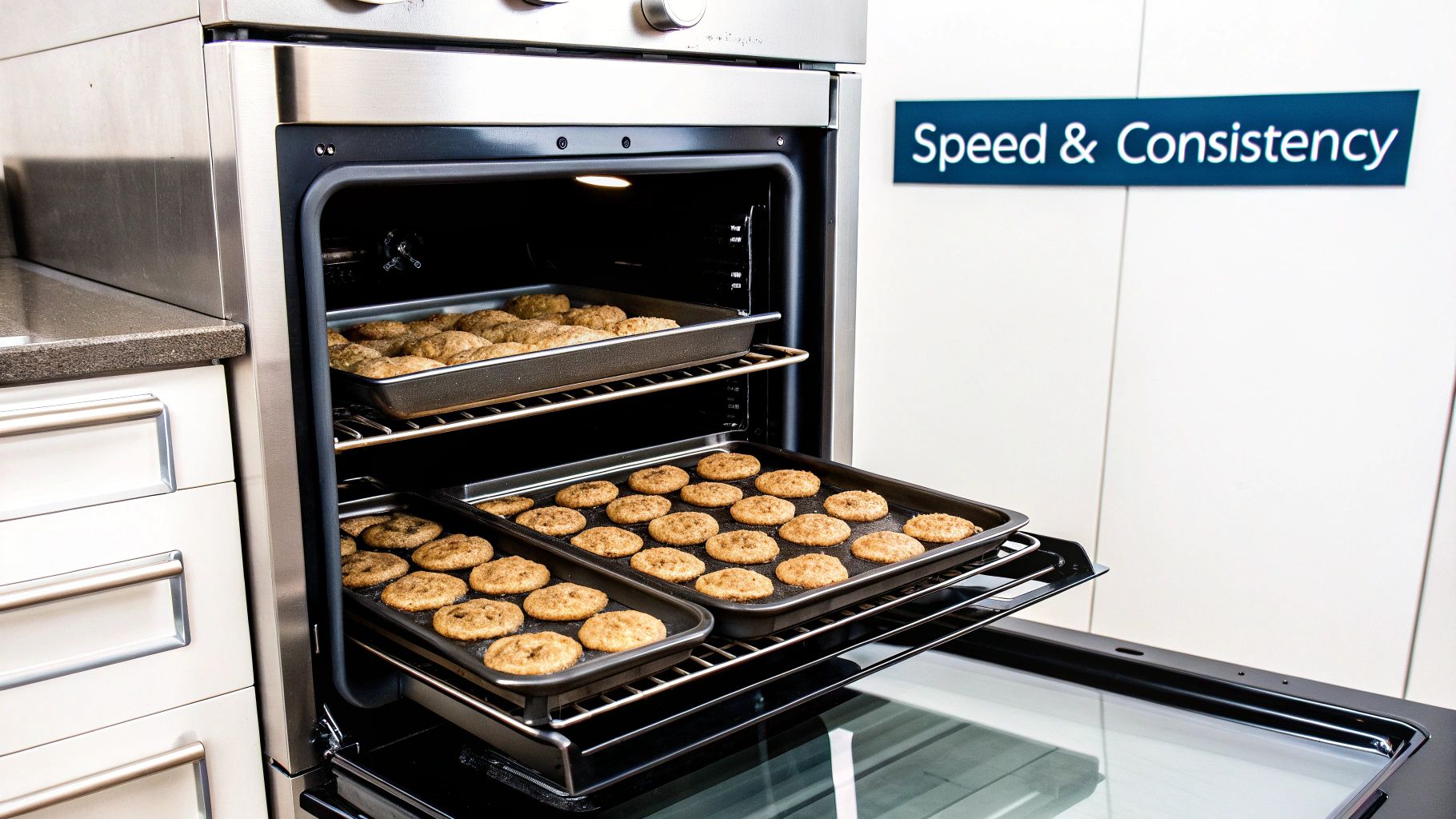
For any fast-paced L.A. restaurant, the first thing you'll notice with convection is the speed. That circulating hot air cooks food up to 25% faster than a conventional model. This is a massive boost to your kitchen's output during a chaotic Friday night dinner rush.
Just picture a food truck in Santa Monica with a line wrapped around the block. Faster cooking means more orders served, more revenue, and happy customers who aren't left waiting forever. That kind of efficiency lets you turn tables faster and really cash in during your peak hours.
Achieving Unwavering Consistency
Consistency is what builds a restaurant's reputation. People come back for the same Thai green curry or that perfectly roasted chicken they loved last time. A conventional oven, with its static heat and notorious hot spots, turns this into a constant fight, forcing chefs to rotate pans and babysit every batch.
Convection ovens solve that problem. That fan pushes hot air all around the cavity, giving you incredibly even heat distribution. Experts will tell you this is why they produce crispier exteriors and moister interiors, especially when roasting meats. Conventional ovens just use radiant heat from the bottom, creating those frustrating hot spots that require constant attention. Because of this efficiency, you can usually drop recipe temps by 25°F and cut cook times by 20-25% in convection mode, and you’ll get better browning, too.
For a high-volume spot, being able to load up multiple racks and know everything will cook uniformly is a total game-changer. It cuts down on labor, minimizes food waste, and guarantees every plate hits your quality standard.
That reliability is absolutely essential, whether you're baking pastries for a Downtown LA cafe or roasting vegetables for a huge catering gig.
Impact on Food Quality and Texture
Beyond pure performance, the cooking method itself really changes the final product. Your choice between a convection oven vs conventional oven can make or break the texture and moisture of your signature dishes.
The dry, circulating heat from a convection oven is your best friend for creating beautifully browned, crispy exteriors. It’s the clear winner for things like:
- Roasting Meats and Poultry: It renders fat perfectly and gets the skin incredibly crisp.
- Toasting and Dehydrating: The constant airflow pulls moisture away from the surface quickly.
- Baking Cookies and Pastries: It helps everything brown evenly and gives you a great crunch.
But that same airflow can be too much for more delicate items. The gentler, static heat of a conventional oven creates a more humid environment, which is much better for:
- Delicate Custards and Cheesecakes: These can easily crack or form a skin in a convection oven.
- Soufflés and Meringues: They need a gentle, undisturbed rise.
- Quick Breads and Soft Cakes: These benefit from the moisture to keep from drying out.
No matter which oven you go with, food safety and consistent results are key. Understanding the guidelines for safe cooking temperatures for meat is crucial for getting the most out of your equipment while protecting your diners. The best oven really depends on your menu, but for sheer performance across the board in the L.A. food scene, convection usually has the edge.
Matching The Oven To Your LA Menu
In the Los Angeles food scene, your oven is so much more than just a piece of equipment—it's at the heart of your kitchen's identity. Getting the convection vs. conventional oven debate right means aligning your gear directly with your menu. This decision is crucial; it ensures every dish you serve is exactly as you envisioned, preventing costly mismatches and letting your kitchen hit its stride.
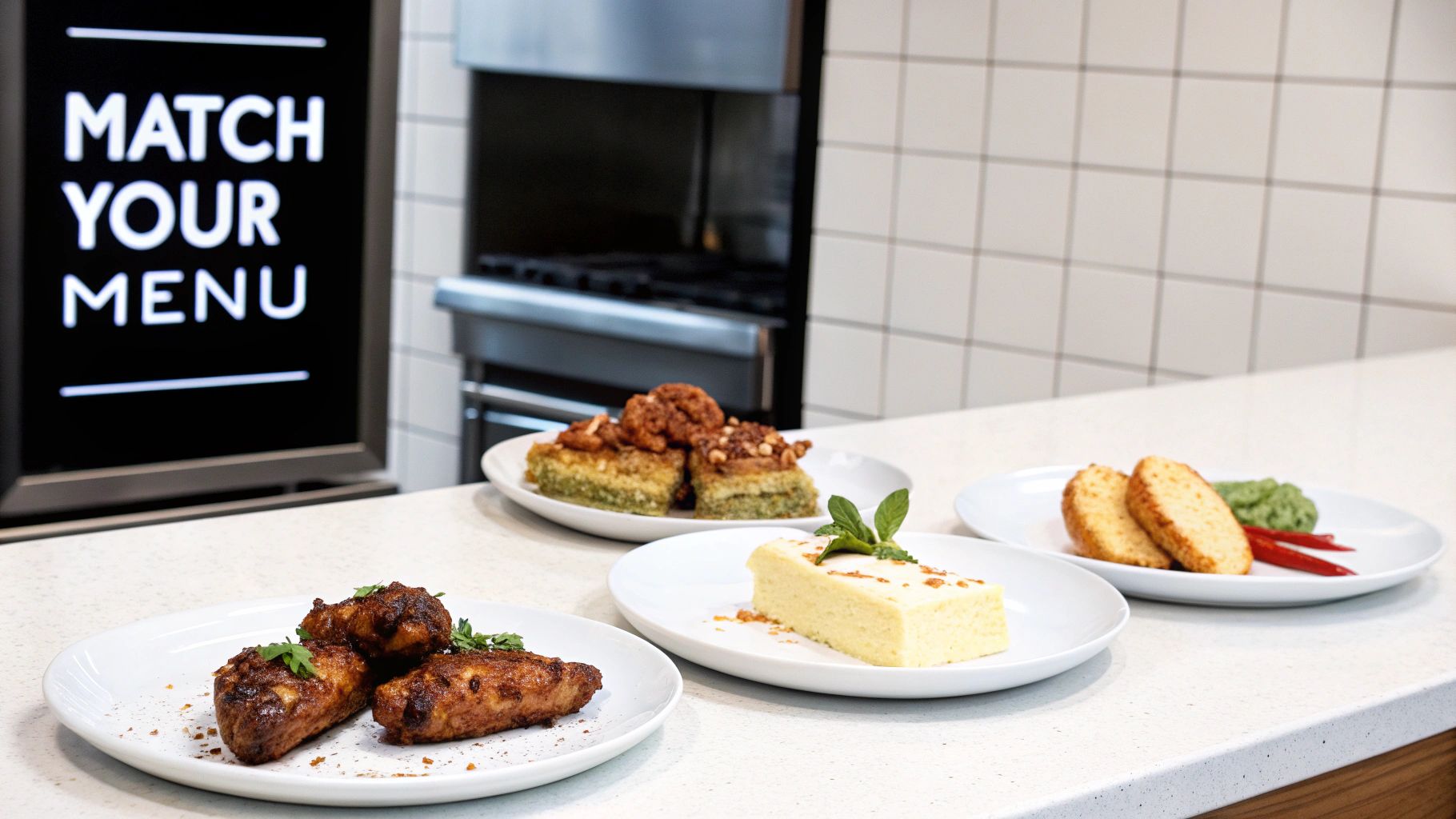
The city’s incredible diversity of cuisines calls for different cooking technologies. Think about a packed Koreatown spot that needs to crank out hundreds of perfectly crispy chicken wings during a dinner rush. For them, a convection oven is absolutely essential. That powerful, circulating heat is the only way to render fat and get that signature crunch at high volume.
It’s the same story for a Mexican restaurant in East LA that’s roasting al pastor or baking huge batches of pan dulce. They need the consistent, even browning that only a convection oven can deliver. It’s a true workhorse for any high-throughput kitchen where speed and uniformity are everything.
When Convection Reigns Supreme In LA Kitchens
For many of LA's most popular foods, a commercial convection oven is the clear winner. The fan-driven heat creates a dry environment that’s a master at browning and crisping, making it the perfect tool for certain jobs.
Just look at these scenarios:
- LA Food Trucks: For a food truck focusing on baked goods or roasted items, a countertop convection oven is a total game-changer. It gives you incredible speed and multi-rack capacity without eating up precious space.
- High-Volume Roasting: Any operation centered on roasted meats—from a Thai restaurant grilling gai yang to a full-scale catering business—will see huge benefits from the faster cook times and crispier skins.
- Bakeries and Pizzerias: Convection is key for ensuring that large batches of cookies, pastries, and even some pizza styles cook evenly across every tray, without needing to constantly rotate pans. For specialized pizza spots, it's also worth looking into options like commercial rotating pizza ovens to really dial in quality and output.
The Case For Conventional Ovens In Niche LA Eateries
But that powerful fan isn't always what you need. Some of Los Angeles' most beloved dishes require a much gentler touch, where the static, humid heat of a conventional oven is actually a major advantage. For delicate items, the lack of circulating air is a feature, not a flaw.
A Japanese bakery in Sawtelle perfecting delicate, moist castella cakes would find a convection fan disastrous; it would dry out the batter and cause an uneven rise. Similarly, a Thai kitchen making sensitive pandan custards needs the gentle, still heat of a conventional oven to get that smooth, silky set without any cracking.
The decision really comes down to texture. If your goal is a crisp, golden-brown exterior, you want convection. If you need to protect a moist, delicate interior, a conventional oven is the safer, more reliable choice.
Here’s a breakdown to help you match your menu to the right oven technology.
Best Oven Choice For Popular LA Cuisines
This table offers some clear recommendations for specific menu items, helping you match your unique cuisine directly to the oven that will make it shine.
| Menu Item / Cuisine Type | Recommended Oven | Operational Advantage |
|---|---|---|
| Korean Fried Chicken | Convection Oven | Delivers exceptionally crispy skin and faster batch cooking for high turnover. |
| Mexican Al Pastor / Carnitas | Convection Oven | Ensures even browning and rendering of fat for large cuts of meat. |
| Japanese Castella Cake | Conventional Oven | Provides gentle, static heat that prevents drying and ensures a delicate, even crumb. |
| Thai Coconut Custard (Khanom Krok) | Conventional Oven | Creates a humid environment for a smooth, creamy set without a tough skin forming. |
| Chinese Roast Duck | Convection Oven | Crucial for drying the skin to achieve the signature crispy texture. |
| General Pastries & Cookies | Convection Oven | Allows for multi-rack baking with consistent, even browning across all batches. |
Ultimately, the best oven for your Los Angeles restaurant is the one that executes your culinary vision flawlessly. By taking a hard look at your signature dishes and production demands, you can invest in a machine that will be a dependable partner in your kitchen's success for years to come.
Analyzing The True Cost of Ownership
When you're looking at a convection oven vs a conventional oven, any smart L.A. restaurant owner knows the decision is about a lot more than just the price tag. A conventional oven might look tempting with its lower upfront cost, but when you dig into the numbers for the long haul, a completely different picture emerges. To build a solid business case, you have to look at the total cost of ownership—that means energy, food waste, and even your revenue potential.
Think of a commercial convection oven as a strategic investment, one built to pay you back over time. Its efficiency goes right after some of the biggest expenses in an L.A. kitchen, from our ridiculously high utility bills to the cost of ingredients that end up in the trash. That initial price difference starts to look less like a hurdle and more like a smart move toward a healthier bottom line.
Calculating The Long-Term Financial Impact
Right away, the biggest financial win with a convection oven is its energy efficiency. It cooks food up to 25% faster, which means the oven is simply running for less time every single day. Over the course of a year, those hours add up to some serious savings on your Southern California Edison bill.
On top of that, the even heat distribution lets you dial back the temperature by about 25°F compared to what you’d need in a conventional oven. That cuts down your energy use even more. This one-two punch of speed and lower temps makes a convection oven an incredible tool for keeping utility costs under control in a market as expensive as Los Angeles.
For a busy L.A. spot running ovens all day, the energy savings alone can often cover the higher initial cost of a convection model within the first couple of years.
Minimizing Food Waste And Maximizing Revenue
In a professional kitchen, inconsistent cooking is a direct shot to your profit margins. A conventional oven is notorious for hot spots that lead to burnt edges and raw centers. That means wasted product and lost money. You can't serve a tray of burnt croissants or an unevenly roasted chicken, turning perfectly good inventory straight into the garbage.
A convection oven’s circulating heat pretty much gets rid of these problems. It guarantees that everything, on every single rack, cooks evenly. This kind of reliability drastically cuts down on food waste, protecting your margins on every plate that leaves the kitchen.
But it’s not just about saving money—convection technology helps you make more. Faster cooking times mean you can get more food out of the kitchen, faster. For a food truck with a line down the block or a restaurant slammed during the dinner rush, this means you can serve more people and boost your daily revenue.
- Higher Throughput: Serve more customers during peak hours by slashing your cooking times.
- Reduced Waste: Consistent results lead to fewer throw-aways and much better inventory control.
- Increased Profitability: When you combine lower operating costs with higher sales, your net profit gets a direct boost.
Maintenance And Durability In A Commercial Setting
It's true, a convection oven has one extra moving part: the fan. But in the world of professional restaurant equipment, that’s a pretty minor detail. Commercial-grade convection ovens, like the workhorses from trusted brands such as Atosa, are built to handle the brutal demands of a high-volume kitchen.
These machines are designed for durability and simple maintenance. The fan and other parts are tough and engineered to last, so you know they can stand up to the daily grind. While you do need to clean the fan from time to time, it’s a small price to pay for the massive gains in efficiency, consistency, and profit. When all is said and done, the true cost of ownership makes the convection oven the smarter, more profitable long-term asset for any serious Los Angeles foodservice business.
Making the Final Decision for Your Business
Choosing between a convection oven vs a conventional oven really comes down to a clear-eyed look at your specific operation. There’s no single right answer that works for every Los Angeles restaurant, food truck, or bakery. The best decision hinges on your menu, your volume, your space, and of course, your budget.
To get to the right answer, you have to ask a few honest questions. What are your signature items? Are they hearty roasted meats that need a crispy finish, or are they delicate custards that demand gentle, even heat? How many people are you serving during a crazy-busy lunch or dinner rush?
A Framework for Your LA Kitchen
Your kitchen’s physical layout and financial realities are just as important as what’s on the menu. A food truck trying to navigate the tight streets of Venice has totally different space constraints than a huge restaurant kitchen in Beverly Hills. In the same way, a brand-new startup’s budget will decide whether the priority is a lower price tag upfront or a better return on investment down the road.
Getting real about these questions will point you in the right direction.
- Menu Focus: Are you doing a lot of baking, roasting, and browning? Convection is your best friend. Making delicate cakes, soufflés, or custards? A conventional oven gives you that gentle heat you need.
- Production Volume: High-volume spots, like a busy Chinese restaurant or a local taqueria, need the speed and multi-rack cooking of a convection oven to keep up with orders and maximize sales.
- Space and Footprint: For kitchens where every inch counts, like a classic LA food truck, a countertop convection oven packs incredible power and efficiency into a small package.
- Financial Priorities: What does your long-term budget look like? This decision tree shows how your financial focus—whether it's initial cost or long-term ROI—steers you toward one oven or the other.
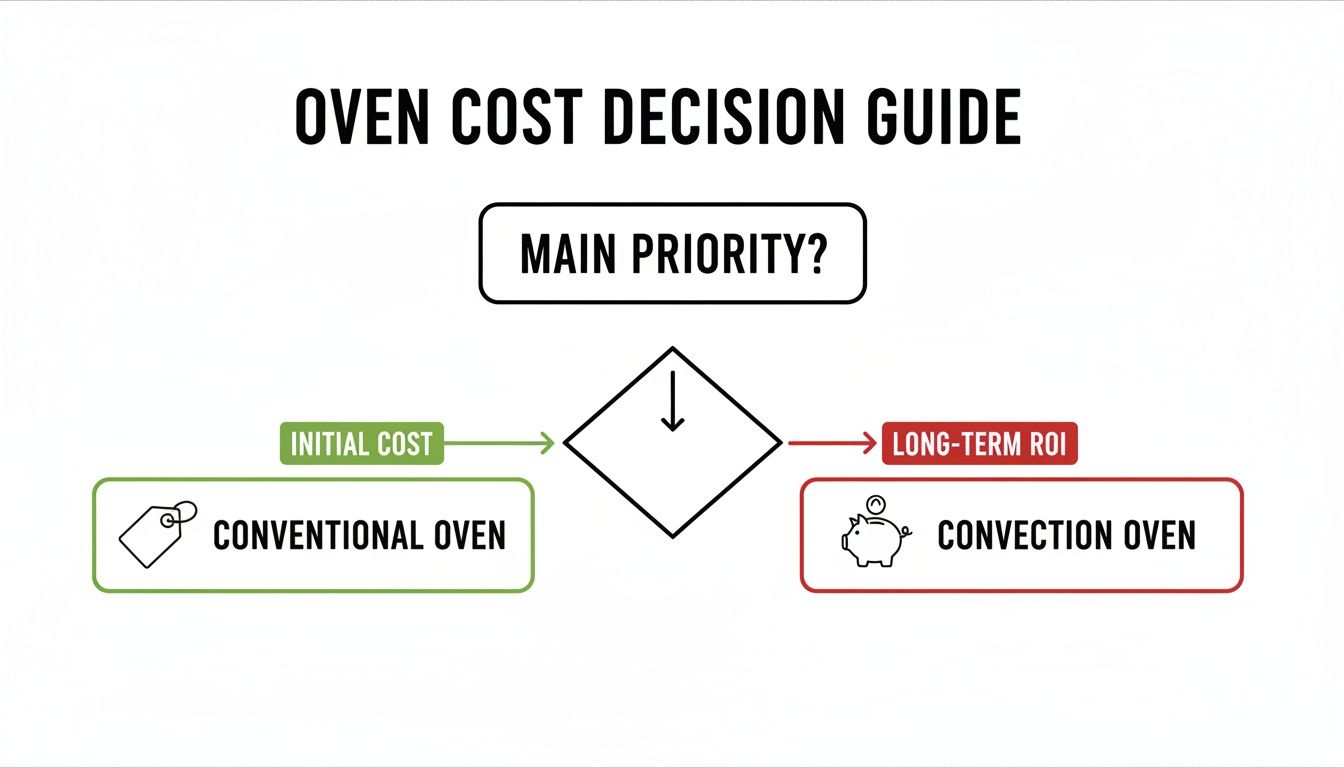
The big takeaway here is that while a conventional oven is cheaper to buy, a convection model’s energy savings and higher output usually deliver a much stronger return over its lifetime.
For a new LA food truck specializing in roasted chicken or baked goods, a convection oven is a no-brainer for speed and efficiency. But a specialty Japanese bakery focused on delicate cheesecakes might find a conventional deck oven is the smarter way to start.
At the end of the day, the best oven is the one that becomes a workhorse for your business. It needs to deliver the quality your customers expect while hitting the profit numbers you need to thrive in the competitive Los Angeles food scene.
Frequently Asked Questions
Choosing between a convection and a conventional oven often brings up a few last-minute questions. For busy Los Angeles restaurant and food truck owners, getting straight answers is key to making a smart investment. Here are the most common things we get asked.
Do I Need To Adjust Recipes For A Convection Oven?
Yes, absolutely. This is a crucial step. Since convection ovens cook food roughly 25% faster and at a lower temperature, you'll have to adapt your recipes. The rule of thumb is to either drop the temperature by 25°F or cut the cooking time by about a quarter.
For any L.A. kitchen that prides itself on consistency, you’ll want to test your most important menu items with these adjustments. This small bit of prep work prevents overcooked or dry food, making sure you deliver the quality your customers expect every single time.
Can A Convection Oven Completely Replace A Conventional Oven?
For the vast majority of Los Angeles restaurants, especially those focused on roasting, general baking, and reheating, the answer is a confident yes. A commercial convection oven can easily handle over 90% of your menu's needs.
However, if your concept is built around very delicate items—think soufflés, light Japanese cheesecakes, or custards that can be ruined by a fan's drying effect—it’s smart to keep a smaller, dedicated conventional oven on hand just for those specific tasks.
Are Convection Ovens Harder To Clean?
They do have one extra part to clean: the fan and the baffle around it. That said, modern commercial models are designed for easy maintenance, and many have removable parts that make the process simple.
While it is one more step compared to a basic conventional oven, the huge benefits in speed, even cooking, and energy savings easily make up for the minimal extra cleaning time. Regular upkeep is vital for the life of any piece of commercial kitchen equipment, anyway.
What Is The Best Oven For A Food Truck?
For just about every food truck in Los Angeles, a countertop commercial convection oven is the undisputed winner. It gives you the speed, even cooking, and multi-rack capacity you need for high-volume service, all while taking up very little of your precious space.
A half-size model, which can usually hold between three and five half-sheet pans, offers incredible throughput for its small footprint. This makes it a powerful and efficient workhorse for any mobile kitchen.
Ready to upgrade your kitchen with the right oven for your Los Angeles business? The experts at Los Angeles Restaurant Equipment can help you choose the perfect commercial convection or conventional oven to match your menu and budget. Explore our full range of professional cooking equipment today!