

How to Cook on a Griddle Like a Pro Los Angeles Chef
To get the most out of your griddle, you have to get the preheating and seasoning right from day one. When you properly season a griddle, you’re creating a natural, non-stick surface. This is what lets everything from delicate eggs to Korean BBQ release perfectly—an absolute must for any high-volume Los Angeles restaurant or food truck.
From Seasoning to Sizzle: Your Griddle's First Service
The commercial griddle is the undisputed workhorse of the Los Angeles foodservice scene. It's way more than just a piece of restaurant equipment; it’s the engine that drives profit, churning out classic smash burgers in a downtown diner or intricate Thai street food from a bustling food truck. Getting it right from the very first service sets the stage for speed, consistency, and a healthier bottom line.
A brand-new griddle comes with a protective coating from the factory that you need to burn off. This "burn-in" is your first and most critical step. Before it ever sees a drop of pancake batter or a slice of carne asada, the griddle has to be thoroughly cleaned and cranked up to a high temperature. This creates a sterile surface that’s ready to season.
The Foundation of Flavor
Seasoning isn't a one-and-done chore; think of it as starting a relationship with your griddle. The process is simple: apply a thin layer of a high-smoke-point oil (like canola or grapeseed) to the hot surface and let it polymerize. This creates that beautiful dark, glassy, non-stick patina that builds up over time. Without this foundation, food will stick, cleanup becomes a nightmare, and you'll never develop that rich flavor essential for authentic Mexican or Chinese cuisines.
This process is so important it can make or break your kitchen's efficiency. In fact, modern griddles are engineered to cut cooking times by nearly 50%—a massive advantage for any LA kitchen. The global commercial griddle market is growing to meet this demand, projected to climb from USD 631.52 million to USD 836.95 million by 2029.
A perfectly seasoned griddle is like a well-worn cast-iron skillet—it just gets better with every use. The flavors from past services subtly infuse new dishes, creating a unique culinary signature that your customers will absolutely notice and appreciate.
Below is a quick guide to get your initial seasoning done right. Following these steps ensures your griddle starts its life on the right foot, ready to perform under pressure.
Initial Griddle Seasoning Quick Guide
| Step | Action Required | Recommended Material | Why It's Important |
|---|---|---|---|
| 1. Clean | Thoroughly wash the surface to remove factory coatings. | Mild soap, water, and a non-abrasive scrub pad. | Removes protective oils and any debris from shipping, creating a clean slate. |
| 2. Dry & Heat | Completely dry the griddle and heat it to 300-350°F. | Lint-free towels. | Ensures no moisture is trapped, allowing the oil to bond directly to the metal. |
| 3. Apply Oil | Spread a very thin, even layer of oil across the entire surface. | High-smoke-point oil (canola, grapeseed, flaxseed). | This is the polymerizing agent that will become your non-stick surface. |
| 4. Burn-In | Let the oil smoke and "bake" onto the surface for 15-20 minutes. | Heat-resistant gloves for safety. | This is the polymerization process where the oil bonds to the steel. |
| 5. Repeat | Turn off the griddle, let it cool slightly, wipe off excess, and repeat steps 3-4. | More oil and paper towels. | Building 3-5 thin layers creates a durable, long-lasting non-stick patina. |
Once these steps are complete, your griddle will have a slick, dark surface ready for its first service.
Of course, this initial setup is just one piece of the puzzle. You need to make sure your entire line is ready, which means having the right commercial refrigerators and freezers to support your griddle station. To make sure your operation is fully prepared for service, you can explore a complete commercial kitchen equipment checklist. For a deeper dive into advanced options, understanding the premium cooking surface of the Hexclad Griddle can provide valuable insight right from the start.
Mastering Heat Zones for Flawless Cooking
The real secret to incredible, consistent food from a commercial griddle isn't about finding one perfect temperature. It's about mastering multiple heat zones at the same time. You have to think of your griddle as a canvas. As the chef, you’re the artist, and controlling the heat is how you create a masterpiece—whether that’s for a bustling Thai food pop-up or a Japanese-inspired breakfast spot in Los Angeles.
Any professional kitchen runs on this principle to pump out food that’s both fast and high-quality. Your griddle surface should never be one uniform temperature. The goal is to create specific zones for different jobs, which lets you juggle multiple orders like a pro.
Mapping Your Griddle Surface
First things first, you need to get to know the unique personality of your griddle. Every single model has its own quirks—its hot and cool spots—and figuring out where they are is mission-critical. Grab an infrared thermometer and take readings all over the surface once it's fully preheated. This gives you a precise "map" of where your heat is most intense.
Once you have your map, you can start setting up your zones intentionally:
- High-Heat Zone (400-450°F): This is your sear station. It’s where you’ll get that perfect, crisp crust on carne asada for Mexican tacos or lock in the flavor on a steak with a powerful Maillard reaction.
- Medium-Heat Zone (325-375°F): Think of this as your workhorse area. It’s perfect for things that need to cook all the way through without scorching, like fluffy Japanese pancakes, Korean-style breakfast burritos, or sautéing a big batch of vegetables for Chinese stir-fry.
- Low-Heat/Holding Zone (200-250°F): This is where you finish and hold. Use this cooler spot to gently melt cheese, warm up tortillas, or keep finished items ready for plating without letting them overcook.
This three-zone system turns your flat-top from a simple cooking surface into a seriously efficient production line. It's the exact technique used in high-volume Los Angeles food trucks to sling orders quickly without ever compromising on quality. It's also the key behind many classic griddle recipes, like when you're figuring out how to cook smash burgers on Blackstone and need that perfect crispy edge.
Of course, before you can even think about managing heat zones, you need a solid foundation.
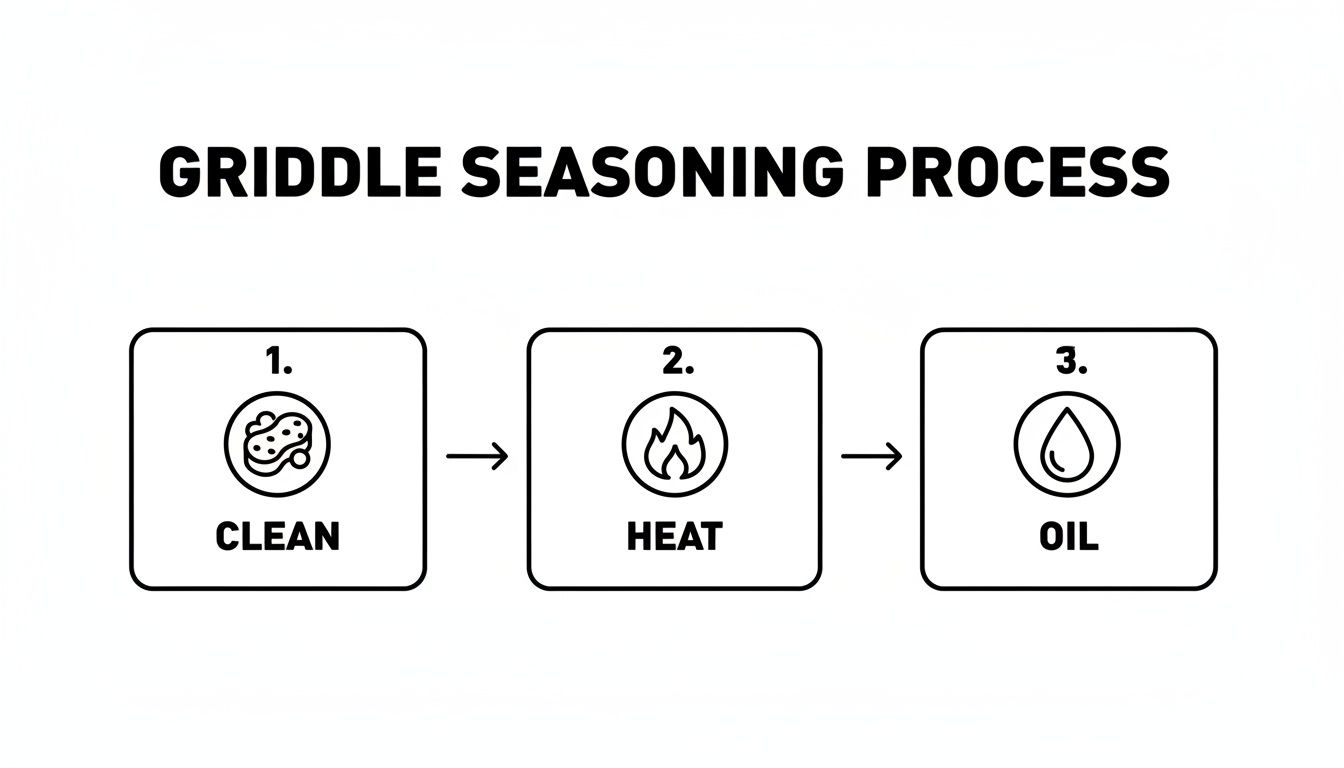
This process is non-negotiable. A clean, well-seasoned surface is the only way you’ll get effective heat transfer and the control you need to run your zones properly.
Griddle Temperature Guide for Common Menu Items
To give you a running start, here’s a quick-glance guide for some common items you’d find on a busy LA menu.
Griddle Temperature Guide for Common Menu Items
| Food Item | Ideal Temperature Range (°F) | Cooking Zone | Pro Tip |
|---|---|---|---|
| Pancakes/French Toast | 350-375°F | Medium | Wait for bubbles to form across the surface and pop before you even think about flipping. That's how you get a golden-brown finish and fluffy middle. |
| Eggs (Scrambled/Fried) | 300-325°F | Medium-Low | Lower heat is your friend here; it prevents rubbery, overcooked eggs. For fried eggs, pop a lid on for a second to steam the tops perfectly. |
| Bacon | 325-350°F | Medium | Always start bacon on a cooler griddle. Let it come up to temperature slowly so the fat renders out, giving you maximum crispiness without burning. |
| Searing Meat (Steak/Burgers) | 400-450°F | High | Make sure the meat is patted completely dry before it hits the steel. Moisture is the enemy of a good sear. |
| Sautéed Vegetables | 350°F | Medium | Keep those veggies moving. This ensures they cook evenly and get a nice sauté instead of just steaming in their own juices. |
By dedicating specific areas of your griddle to different temperatures, you’re really just empowering your line cooks to work faster and more consistently. A well-managed griddle means every plate that leaves the kitchen—from a simple breakfast to complex Chinese-style fried rice—is executed perfectly, every single time.
High-Volume Techniques for the Lunch Rush
When the lunch rush slams your downtown LA food truck, efficiency isn’t just a goal; it's a survival tactic. This is where you move beyond the basics of griddle cooking and into the advanced moves that separate the pros from the amateurs. It’s all about shaving seconds off ticket times without ever sacrificing quality.
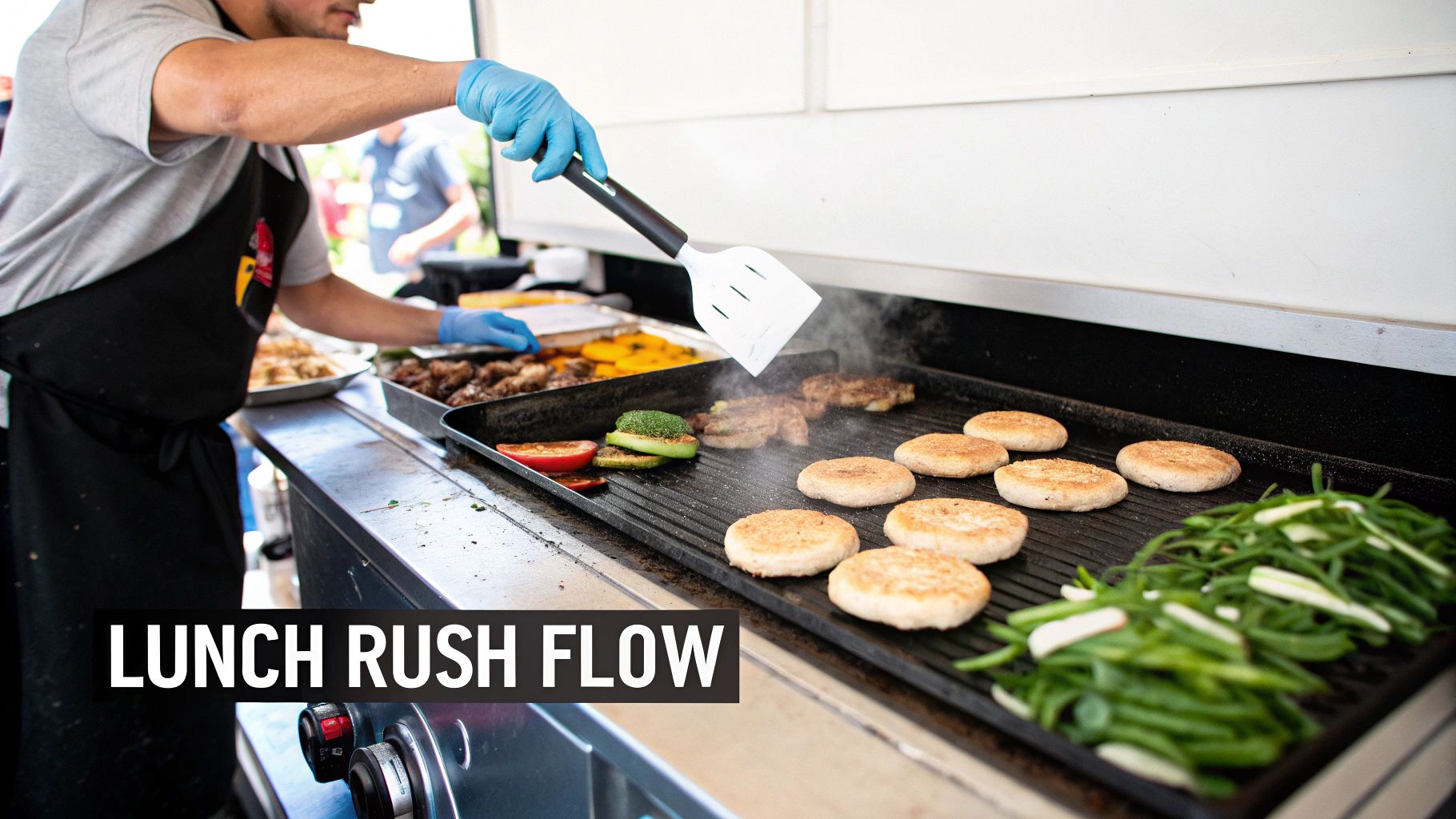
Success during these peak hours comes down to your workflow and your hands. A well-organized griddle becomes an assembly line, turning raw ingredients into finished meals with a seamless rhythm. Think of a busy Koreatown spot juggling orders for bulgogi cheesesteaks—the high-heat zone is searing the beef, the medium zone is hitting the onions and peppers, and the low-heat zone is melting cheese and toasting buns, all at the same time.
Spatula Work Is a Skill, Not a Chore
Your spatula is an extension of your hand, and knowing how to use it is everything. It's not just for flipping pancakes; it’s a multi-tool for smashing, scraping, and controlling your entire cooking surface.
- Flipping: For delicate stuff like eggs or fish, you need a long, flexible spatula. A quick, confident flick of the wrist is the key here—any hesitation and you’re looking at a broken mess.
- Smashing: When you're making smash burgers, a heavy, rigid spatula or a good grill press is non-negotiable. You want firm, even pressure for just a few seconds to create that perfect crust without squeezing all the juice out.
- Scraping: Keep a bench scraper or stiff spatula handy to clear away debris between orders. This keeps flavors from crossing over (nobody wants their fried rice tasting like yesterday's bacon) and stops carbon from building up.
Good technique also protects your griddle's seasoning. Getting aggressive with the wrong tool can gouge the surface, creating spots where food will stick and burn.
Batch Cooking Workflows
A smart workflow turns chaos into controlled speed. Organize your griddle based on the cooking process itself. For a Mexican food truck, that means one side is dedicated to warming tortillas while the other sears carne asada and grills vegetables. Ingredients flow in one direction, and finished plates flow out the other.
This system is crucial for any high-volume setup, from a standalone griddle to a fully equipped food truck. To get your mobile kitchen layout just right, check out our guide on choosing the best food truck grill for your Los Angeles business.
The goal is to eliminate wasted motion. Every step a cook takes away from the griddle is time you can't get back. A solid setup means everything—oil, seasonings, spatulas, and landing plates—is within arm's reach.
Oiling and Seasoning During Service
Keeping that cooking surface perfect is an ongoing job. The amount of oil you use has to change depending on what you’re cooking.
- Porous Foods: Things like eggs and pancakes soak up oil, so you’ll need a slightly more generous layer to keep them from sticking.
- Fatty Proteins: A good steak or some bacon will render its own fat, so you just need a tiny bit of oil to get things started.
The type of oil matters, too. A neutral oil with a high smoke point, like canola, is your best bet for all-around griddle work. This constant cycle of cooking and re-oiling is what reinforces the seasoning and builds that unique flavor only a well-used griddle can deliver.
It's this kind of efficiency that makes the commercial griddle such a vital piece of kitchen equipment. Globally, the industry ships around 1.4 million units every year to kitchens where a single griddle can pump out up to 500 meals per shift, seriously boosting margins in competitive LA markets.
Essential Griddle Cleaning and Maintenance Routines
A clean griddle isn't just about making things look good; it's the heart of a profitable Los Angeles restaurant or food truck. Letting maintenance slide is a fast track to disaster, causing weird flavor transfers between dishes, hot spots that scorch food, and eventually, some seriously expensive repairs. You've got to protect your investment in restaurant equipment, and that means locking in a strict cleaning schedule.
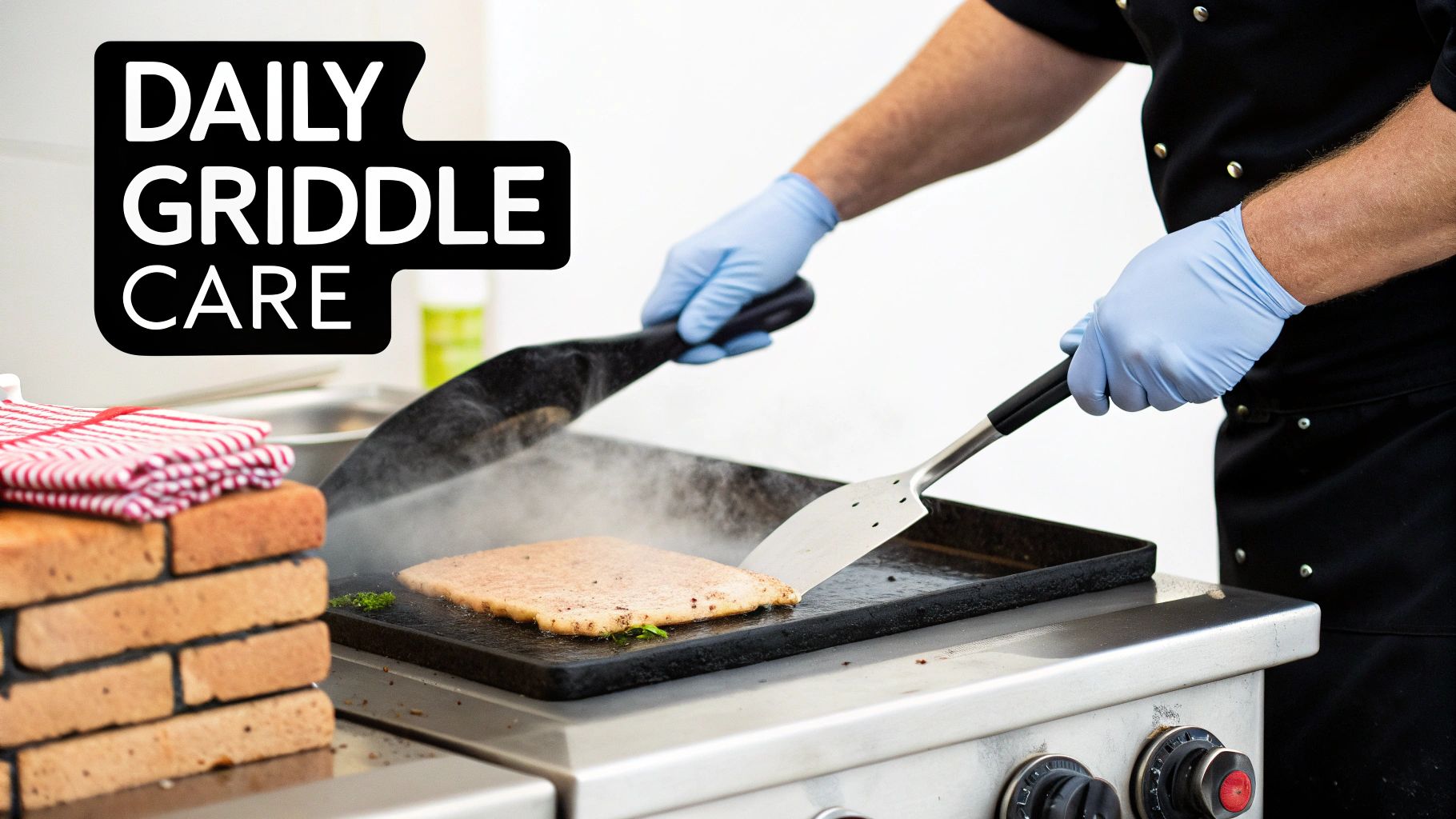
The absolute best time to clean is right after you shut down service for the day, while the griddle is still hot. That heat is your best friend—it makes grease and stuck-on food lift right off the steel with way less elbow grease. A solid scrape-down at this point is non-negotiable and gets you ready for the next day's service.
Daily End-of-Shift Cleaning
Your end-of-day shutdown is the most important routine you have. This isn’t a full-on deep clean. Think of it as a reset that makes sure you're prepped for the morning rush, whether you're slinging Korean BBQ burritos or flipping stacks of classic diner pancakes.
First thing's first: grab your griddle scraper and push all the leftover debris into the grease trap. Then, pour a little bit of warm water or even cooking oil onto the hot surface. The resulting steam and hot oil work together to loosen up any stubborn, baked-on bits without you having to resort to harsh chemicals.
Now, give the surface a good scrub with a griddle pad or brick, using a circular motion. Wipe it all clean with a cloth, and finish by applying a super-thin layer of cooking oil across the entire surface. This last step is crucial—it protects the steel from rust and builds up that all-important seasoning, keeping it ready to cook on a griddle whenever you are. For the rest of your kitchen, you can learn about the best stainless steel cleaner options to keep everything in line with LA health codes.
Weekly and Monthly Deep Cleaning
Even with daily scraping, some carbon buildup is just going to happen. That’s why a weekly or monthly deep clean is so important—it strips away that residue and gets your griddle performing like new again. This is when you can break out the heavy-duty stuff.
Start by heating the griddle up to a medium temperature, around 300°F. Carefully apply a commercial-grade griddle cleaner, following the product's directions, and let it sit for a few minutes. This gives it time to break down all that baked-on carbon. From there, use a griddle brick or screen to scrub away the buildup until you see the bare metal again.
A huge mistake people make is dumping ice or cold water on a blazing hot griddle. This "shocking" can cause thermal stress, which can warp or even crack the steel plate. That’s an expensive repair that is 100% avoidable.
After you've done a deep clean, you have to re-season the surface just like it was brand new. This means applying several thin layers of a high-smoke-point oil and heating the griddle until the oil polymerizes. This process restores that essential non-stick patina that you need for perfect cooking.
Sticking to a maintenance schedule like this does more than just make your restaurant equipment last longer. It's a guarantee that every single dish you serve has the clean, consistent flavor your customers are coming back for.
How to Troubleshoot Common Griddle Problems
Even the most reliable piece of kitchen equipment can have a bad day. When your griddle starts acting up during a packed service in Los Angeles, you don't have time to play guessing games. This is your go-to guide for figuring out what's wrong and getting back on track, fast.
These common issues can bring anything from a Chinese food pop-up to a high-volume food truck to a grinding halt. A little quick troubleshooting saves you from serious downtime and keeps your customers happy.
Diagnosing Uneven Heating
Hot and cold spots are one of the most maddening griddle problems. One minute you're burning a batch of Korean-style pancakes, and the next, they won't cook through. The first thing you need to do is figure out if it's the griddle or the cook.
Did you give it enough time to preheat? A lot of cooks get impatient and rush food onto a griddle that hasn't had at least 15-20 minutes to come to temperature. If it's fully preheated, grab an infrared thermometer and start mapping the surface. If you're seeing huge temperature swings—we're talking 50°F or more—it’s a good sign you have a bad heating element or a clogged burner, and that means it's time to call a pro.
Your griddle's heat zones need to be reliable. If your high-heat zone has cold patches, you won't get that perfect sear for your carne asada, which tanks your food quality and slows down ticket times.
Solving the Sticky Situation
When food starts sticking, it’s almost always about seasoning or temperature—not a broken griddle. This is a headache for everyone, from a breakfast joint flipping hundreds of eggs to a Japanese teppanyaki chef putting on a show.
Before you start worrying, run through this mental checklist:
- Is the griddle hot enough? Throwing food onto a cool surface is the number one reason it sticks.
- Is the food too cold? Proteins straight out of the commercial refrigerators will shock the griddle surface, causing the temperature to plummet. Let your ingredients temper for a few minutes before they hit the heat.
- Is the seasoning worn down? Scraping too hard or using the wrong cleaner can strip that non-stick patina you've worked so hard to build. A quick re-seasoning with a very thin layer of oil can often fix the problem mid-service.
Managing Smoke and Pilot Light Issues
In the cramped space of an LA food truck, a smoky griddle is a big deal. The cause is usually one of two things: you're cooking with oil that has a low smoke point for the temperature you're using, or old grease and food bits are burning on the surface. Make sure your team is using the right heat zones and scraping the griddle clean between every order.
For gas griddles, a pilot light that keeps going out is a major red flag. Most of the time, it's just a draft from an open door or a dirty thermocouple. Check for any air currents first. If that doesn't solve it, the thermocouple might need a good cleaning or a full replacement, which is a job best left for a technician to handle safely.
Common Griddle Questions
Even the most seasoned line cooks run into issues in a slammed Los Angeles kitchen. Questions always come up, so let's get straight to the most common ones we hear from restaurant and food truck crews about cooking on a commercial griddle.
What's the Best Oil for a Commercial Griddle?
You're looking for an oil with a high smoke point and a neutral flavor. It needs to handle the blistering heat of a good sear without burning, which would make everything taste bitter and ruin the dish. That's why you should keep things like extra virgin olive oil or butter away from high-heat griddle work.
For day-in, day-out service, these are your workhorses:
- Canola Oil: The go-to for many kitchens. It's affordable, gets the job done, and has a smoke point around 400°F.
- Grapeseed Oil: A great step up with a very clean taste and a smoke point hitting about 420°F.
- Avocado Oil: This is the premium choice for intense searing. With a smoke point that can top 500°F, it can take pretty much anything you throw at it.
When it comes to seasoning that griddle top, a lot of old-school chefs swear by flaxseed oil because it creates a rock-hard, polymerized layer. Honestly, though, any of the oils above will build up a fantastic non-stick surface with consistent use.
How Do I Keep Food From Sticking?
Nine times out of ten, sticking comes down to three culprits: the wrong temperature, poor seasoning, or just being impatient. First off, your griddle has to be hot before food even thinks about touching it. Tossing cold ingredients from the commercial freezer onto a lukewarm surface is a guaranteed way to make a stuck-on mess, especially with delicate stuff like Japanese-style pancakes or eggs.
Second, you've got to maintain that seasoning. Every cook you do either builds it up or breaks it down. If things suddenly start sticking, your seasoning layer is probably damaged. A quick mid-service fix can be as simple as wiping on an incredibly thin coat of oil. Lastly, just wait. Proteins like chicken or steak will release on their own once they've formed a proper crust. If you try to flip them too early, you'll just tear the meat and have to scrape it off.
Here's a simple rule to drill into your kitchen staff: If you have to force it, it’s not ready. A perfectly seared piece of protein should lift off the griddle with just a gentle nudge from your spatula.
Can I Use Metal Utensils on My Griddle?
Absolutely. In fact, you should. A well-seasoned steel griddle is tough as nails, completely unlike a coated non-stick pan you'd have at home. Metal spatulas, turners, and scrapers are the essential tools of the trade in any professional kitchen, whether you're at a Mexican spot searing carne asada or a Thai food stall stir-frying noodles.
Using a heavy-duty metal spatula actually helps you keep the griddle in top shape. It scrapes away any little carbonized bits between orders, keeping your cooking surface clean, smooth, and ready for the next ticket.
Ready to equip your Los Angeles kitchen with high-performance restaurant equipment? Los Angeles Restaurant Equipment offers a wide selection of commercial griddles, refrigerators, and freezers designed for the demands of a busy foodservice operation. Find the perfect equipment to boost your efficiency and quality by visiting https://losangelesrestaurantequipment.com.