

What Is The Best Stainless Steel Cleaner For LA Restaurants?
For any Los Angeles restaurant, whether it's a busy downtown bistro or a specialty Korean BBQ spot, the best stainless steel cleaner really comes down to the job at hand. For the daily shine on your commercial refrigerators and front-of-house gear, a top-notch oil-based polish is your best friend. But for that tough, baked-on grease behind the cooking line, only a powerful commercial-grade degreaser will do. And for quick, in-between sanitizing? You can't beat the convenience of NSF-certified wipes.
Your Guide To A Gleaming Los Angeles Kitchen
In the competitive L.A. food scene, looks matter. A lot. The shine on your stainless steel equipment—from the walk-in freezers to the food truck counters—says everything about your commitment to quality and hygiene. It's often the first thing a health inspector notices and a subtle signal that builds trust with your customers before they even taste the food, whether they're ordering from a popular Thai food truck or dining in a high-end Japanese restaurant.
Keeping those surfaces pristine in the middle of a busy kitchen rush is a daily battle. Grease from a griddle, fingerprints all over a commercial refrigerator door, and splatters on a prep table can quickly dull your kitchen’s professional image. This is where picking the right restaurant equipment and cleaning products isn’t just about cleaning; it’s a core part of your operational strategy.
More Than Just Shine
Figuring out what is the best stainless steel cleaner goes way beyond just making things look good. The right product is crucial for food safety, protects your expensive restaurant equipment from getting damaged, and makes your team more efficient. Think of your cleaning supplies like a chef's knife set—you wouldn't use a paring knife to break down a side of beef, and you shouldn't use a light polish on heavy grease.
For instance, the cleaner you use on a Japanese sushi bar’s refrigerated display needs to be gentle and food-safe. Meanwhile, the one for a Mexican food truck’s deep fryer needs some serious degreasing muscle. The goal is to create a simple but effective cleaning system that handles every need your specific kitchen throws at you, whether you're serving Korean, Chinese, or Thai food.
In a high-volume kitchen, the best cleaner is one that works fast, meets all health codes, and protects the long-term value of your restaurant equipment. It's not just about cleaning; it’s about maintaining your assets like commercial refrigerators and freezers.
A well-maintained kitchen simply runs better and safer. To help you choose wisely, let's break down the different types of cleaners every Los Angeles foodservice operator should keep stocked.
The Essential Cleaner Types
To tackle every mess your kitchen can produce, you need a few different types of cleaners in your arsenal. Here's a quick look at the main players and where they shine.
Quick Guide To Commercial Stainless Steel Cleaners
| Cleaner Type | Primary Use | Best For Equipment | Key Benefit |
|---|---|---|---|
| Heavy-Duty Degreasers | Cutting through thick, baked-on grime | Fryers, grills, ranges, vent hoods, and backsplashes | Dissolves stubborn grease without heavy scrubbing |
| Daily Cleaners & Polishes | Removing fingerprints and light soil | Commercial refrigerators, service counters, food truck exteriors, front-of-house | Leaves a protective, streak-free barrier |
| Disinfectant Wipes | Quick sanitizing and spot cleaning | Prep tables, high-touch surfaces, and between-task cleanups | Unbeatable convenience and speed |
Having the right tool for the job makes all the difference. Using a heavy-duty degreaser on a front-of-house cooler is overkill and can damage the finish, while trying to clean a greasy vent hood with a simple wipe is a waste of time and effort. Stocking a small but versatile selection ensures your team can handle any cleaning task efficiently and effectively.
Understanding Your Stainless Steel Cleaning Toolkit
Trying to figure out which stainless steel cleaner to buy can feel a lot like stocking a brand-new kitchen. You've got a dozen options, and they all seem to do the same thing. But picking the right one isn't just about getting a nice shine; it’s about saving time, keeping your staff safe, and protecting the expensive restaurant equipment that keeps your Los Angeles restaurant humming.
You wouldn't use a delicate sashimi knife to chop through bone, right? It's the same idea here. You can't expect a gentle, water-based spray to tackle the baked-on grease on a wok range. Getting a handle on the different types of cleaners is the first step to making sure every piece of restaurant equipment, from your commercial refrigerator to your food truck's service counter, looks absolutely pristine.
The Heavy Hitters: Solvent-Based Degreasers
When you're up against serious, caked-on grime, you need to bring out the big guns. Solvent-based degreasers are your best bet for cutting through those thick, stubborn layers of grease, oil, and burnt-on food that just laugh at other cleaners.
Just picture the backsplash behind the grills at a Korean BBQ spot or the vent hood hanging over a deep fryer in a popular Los Angeles food truck. That grease builds up layer by layer until it's practically part of the metal. A solvent-based cleaner is designed to chemically break down those hardened fats, letting you wipe them away without having to scrub so hard you damage the finish. These are your deep-cleaning specialists, and they're a must-have for the hot line.
The Everyday Workhorses: Water-Based Cleaners
For the daily wipe-downs and lighter messes, water-based cleaners are what you'll reach for most often. These are the all-rounders, perfect for surfaces that get a lot of traffic but don't get caked in grease. They’re also generally milder, which makes them safer for your team to use all day long, and many are a bit friendlier to the environment.
Think about the doors on your walk-in freezer, the front of a glass-door merchandiser, or the prep table where you're putting together salads. These spots get covered in fingerprints, minor spills, and water spots. A quick spray and wipe with a water-based cleaner is all it takes to handle that daily soil and keep things looking sharp.
The Time Savers: Dual-Action Cleaner-Polishes
In the fast-paced world of an L.A. restaurant, every minute saved is a win. Dual-action cleaner-polishes are made for exactly that kind of environment. They combine a cleaning agent and a polishing compound into one product, so your crew can clean and protect a surface in a single pass.
These are fantastic for any restaurant equipment that’s in the public eye. The service counter of a food truck, the host stand at your restaurant, or the outside of an espresso machine are all perfect candidates. A cleaner-polish doesn't just get rid of smudges; it leaves behind a thin, protective film that helps repel new fingerprints and streaks, keeping your equipment looking its best for longer.
Specialized Tools For Specific Jobs
Beyond the main players, it's smart to have a few specialized products on hand. A chef needs more than one kind of pan, and you need more than just one or two types of cleaners to be ready for anything.
- Polishing Creams: When you really want a surface to pop with a mirror-like shine, this is what you use. It's a thicker formula that can buff out tiny scratches and bring back that brand-new luster. It's perfect for high-end display cases or any front-of-house restaurant equipment that needs to make a great first impression.
- NSF-Certified Wipes: For speed, convenience, and guaranteed food safety, you can't beat NSF-certified disinfectant wipes. They’re ideal for quickly sanitizing a prep counter between tasks—like after dicing chicken before you start on the veggies—or for fast touch-ups if the health inspector walks in.
Market analyses show that cleaners are segmented by formulation, with liquids, creams, sprays, and wipes being the primary types available. The commercial and foodservice sectors represent a massive portion of the market because restaurant kitchens and household appliances are the most common use cases. You can explore further insights into these market dynamics to understand product trends.
By building out this complete cleaning toolkit, you're setting your team up for success. They'll have the right product for any mess, ensuring your Los Angeles restaurant always reflects the highest standards of cleanliness.
Choosing The Right Cleaner For Your Equipment
Picking the right stainless steel cleaner for a Los Angeles kitchen isn't a one-size-fits-all deal. The heavy-duty stuff you need for a sizzling K-Town BBQ's exhaust hood is worlds away from what a Thai food spot in Hollywood uses on its refrigerated prep station. Getting this choice right is about more than just a good shine—it’s about protecting your expensive restaurant equipment and keeping your food safe.
Think of it like this: a powerful degreaser is your "deep-cleaning specialist" for the really baked-on, greasy messes. On the other hand, a daily cleaner and polish is more of a "finishing artist," perfect for keeping front-of-house surfaces like commercial freezers gleaming where customers can see them. When you match the cleaner to the job, you build a cleaning system that's both smart and efficient.
Key Decision Criteria For Your Kitchen
When you're trying to figure out the best stainless steel cleaner for a specific task, it really boils down to three things. Focusing on these will help you grab a product that works hard and is safe for a busy commercial kitchen.
- Food Safety: This is non-negotiable. Any cleaner touching a food prep surface has to be food-safe. Always look for that NSF (National Sanitation Foundation) certification. That little mark is your guarantee the product is approved for use around food.
- Surface Compatibility: Stainless steel isn't all the same; you’ve got brushed finishes, mirror shines, and everything in between. Using an abrasive cleaner or something like steel wool can leave permanent scratches. Stick with non-abrasive formulas and soft microfiber cloths to protect your investment in restaurant equipment.
- Operational Efficiency: In a slammed kitchen, every second counts. For those high-touch spots like commercial refrigerator doors or service counters, a fast-drying, no-rinse formula is a game-changer, saving your team precious time during a rush.
This chart can help you visualize which path to take depending on what you're trying to clean up.
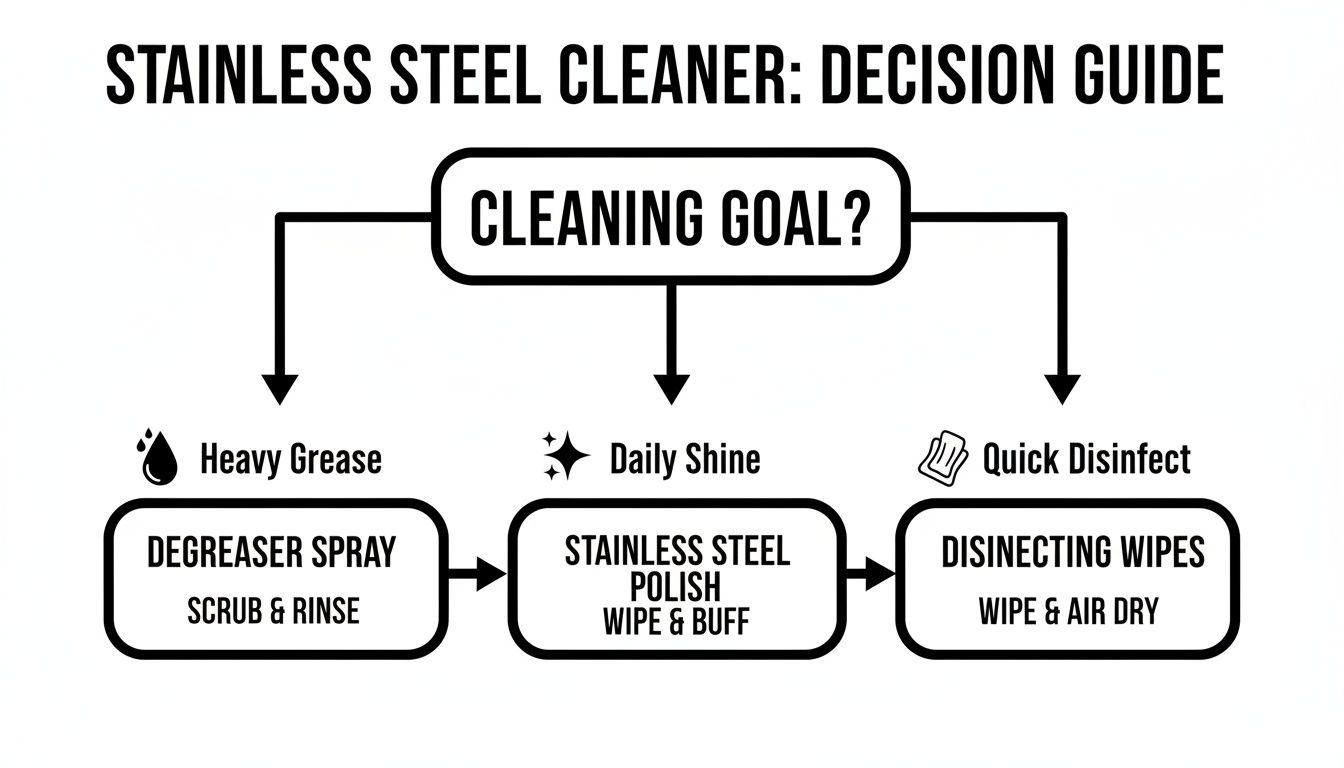
As you can see, the "best" cleaner is simply the one that’s right for the mess you’re facing, whether it’s caked-on grease or just a few fingerprints.
Cleaner Selection Matrix For LA Restaurant Kitchens
To make it even clearer, we've put together a quick guide matching common LA restaurant equipment with the right type of cleaner. This helps take the guesswork out of your daily routine.
| Restaurant Equipment | Common Soil Type | Recommended Cleaner Type | Safety Note |
|---|---|---|---|
| Exhaust Hoods & Backsplashes | Heavy, baked-on grease | Heavy-Duty Degreaser (Solvent-based) | Ensure proper ventilation during use. |
| Grills & Fryer Exteriors | Oily residue, splatters | Alkaline Degreaser (Water-based) | Avoid direct contact with heating elements. |
| Prep Tables & Work Surfaces | Food residue, light oils | Food-Safe Cleaner/Sanitizer (NSF) | Must be NSF-certified for food contact. |
| Commercial Refrigerators & Freezers | Fingerprints, smudges | Polish/Cleaner Combo | Choose a no-streak formula. |
| Front-of-House Counters | Spills, water spots, prints | Wipes or a gentle Polish | Fast-drying formula is ideal for customer areas. |
| Dishwashing Machine Exterior | Hard water stains, residue | Mild Acidic Cleaner or Vinegar/Water | Follow with a polish to restore shine. |
Using a targeted approach like this ensures every piece of restaurant equipment gets exactly what it needs to stay clean, sanitary, and in great shape for years to come.
Matching Cleaner To Equipment
Putting this all into practice is straightforward. For instance, the high-heat cooking line in a Chinese dim sum parlor is going to have baked-on grease on the backsplashes and hoods. That calls for a potent, solvent-based degreaser to cut through it.
Contrast that with the elegant refrigerated display case at an upscale Japanese sushi bar. It just needs a gentle, food-safe polish to wipe away fingerprints without leaving any chemical smells or streaks. And for the workhorses of any kitchen—the stainless steel kitchen prep tables—you need a product that both sanitizes and protects the surface without a long wait time for rinsing and drying.
The ultimate goal is to create a cleaning system where every product serves a specific purpose, ensuring maximum efficiency and hygiene. This targeted approach prevents damage from using the wrong chemical and keeps your kitchen inspection-ready at all times.
By looking at the task, the equipment's finish, and the necessary safety marks, you can confidently stock cleaners that help your operation run smoothly and look fantastic.
Mastering Your Cleaning And Polishing Technique
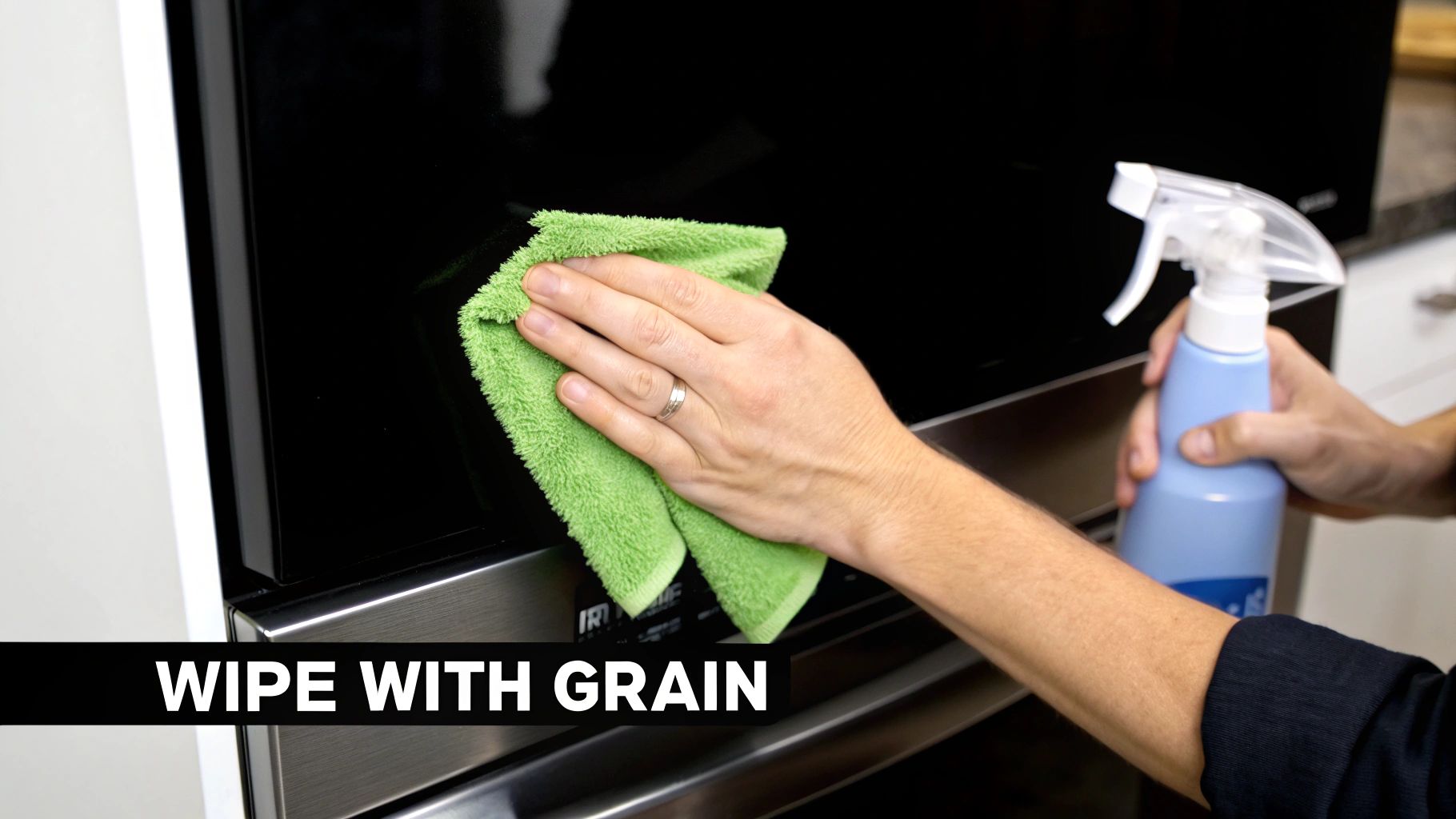
Having the best stainless steel cleaner on hand is one thing, but getting that perfect, flawless finish? That’s all in the technique. The wrong approach can leave behind frustrating streaks, or worse, create tiny scratches that dull the surface and trap bacteria over time.
This is a big deal in a busy Los Angeles restaurant or food truck, where everything from your prep counters to your commercial freezer doors needs to look immaculate. A consistent, correct cleaning method is what keeps your kitchen looking professional for health inspectors and customers alike.
The Secret To A Streak-Free Shine: Go With The Grain
Here’s the detail most people miss: you have to clean stainless steel with the grain. Think of it like sanding a piece of wood—if you go against the grain, you create noticeable scratches. Stainless steel has a similar faint, brushed pattern of parallel lines.
When you wipe against those lines, you’re pushing cleaner and grime into those tiny grooves, which is what causes streaks and a cloudy look. Wiping with the grain gives you that smooth, uniform shine.
Take a close look at your restaurant equipment. You'll see the grain is usually horizontal on commercial refrigerator doors and vertical on upright panels. Training your crew to spot this is the single biggest thing you can do to improve your results.
This simple change also prevents the micro-scratches that build up over years, protecting the long-term value and look of your expensive gear.
A Step-By-Step Guide To Perfect Polishing
For a perfect, streak-free result every single time, this simple four-step process is your new best friend. It works on everything, from a massive walk in cooler and freezer combination to the smallest appliance.
The Four-Step Method:
- Perform a Quick Pre-Clean: Before you even think about polishing, grab a damp cloth with a little mild soap and wipe away loose food bits, dust, or heavy grease. This stops you from just smearing the mess around.
- Apply Cleaner to Your Cloth: Never spray cleaner directly onto the steel. That’s how you get drips, uneven coverage, and waste. Instead, lightly spray your cleaner onto a clean, dry microfiber cloth.
- Wipe With The Grain: Using that cloth, wipe the surface by following the direction of the metal’s grain. Use long, even strokes from top to bottom or side to side to lift away dirt and fingerprints.
- Buff To A High Shine: Now, take a second, completely clean and dry microfiber cloth and buff the surface, again moving with the grain. This final pass removes any leftover cleaner and leaves a brilliant, streak-free shine that helps resist new smudges.
By making this process a standard part of your kitchen's closing routine, you ensure every stainless steel surface—from the side of a Japanese ramen food truck to the commercial refrigerators in a Thai kitchen—starts the next day looking brand new.
Troubleshooting Common Cleaning Problems
Even with the best stainless steel cleaner and the right technique, stainless steel can be a bit fussy. We’ve all been there—stubborn streaks, smudgy fingerprints, or weird discoloration that just won't budge, frustrating even the most seasoned kitchen crew. Think of this as your go-to guide for solving those annoying cleaning problems that pop up in a busy Los Angeles restaurant.
These issues are usually small, but they can make your commercial refrigerators, freezers, and Los Angeles food trucks look less than professional. Tackling them quickly not only brings back the shine but also protects your valuable restaurant equipment.
Conquering Stubborn Streaks And Fingerprints
Streaks are, without a doubt, the number one complaint when it comes to cleaning stainless steel. Most of the time, the problem isn't your cleaner or your cloth—it's your water. Hard water, which is common around here, is loaded with minerals like calcium and magnesium. When that water dries, it leaves those mineral deposits behind, creating a dull, streaky mess.
If you’re stuck in a battle with streaks:
- Go for a final buffing pass. After you’ve cleaned the surface, grab a completely dry, clean microfiber cloth and give it a good, firm buff, always moving with the grain. This simple step wipes away any leftover moisture and mineral residue.
- Bring in a dedicated polish. Sometimes, a quick wipe-down with an oil-based polish is the magic touch. It fills in those tiny surface imperfections and leaves behind a protective barrier that fights off water spots and fingerprints, giving you a consistent, brilliant shine.
Dealing With Heat Tint And Discoloration
Ever see that blueish, rainbow-like shimmer on the backsplash behind a high-heat Chinese wok range? That’s called heat tint. It’s a harmless discoloration that happens when high temperatures thicken the protective oxide layer on the steel. It doesn’t impact performance, but it sure can be an eyesore.
Whatever you do, never try to scrub off heat tint with an abrasive pad or a harsh chemical. You'll permanently scratch the stainless steel, causing way more damage than the tint itself.
To handle heat tint, you need a special, non-abrasive compound made specifically for this. These are gentle polishing creams that work by chemically lifting the tinted layer without hurting the steel underneath. Just apply a small amount to a soft cloth and rub gently with the grain until the discoloration disappears.
Removing Minor Rust Spots
Yes, stainless steel can get rust spots, but it's almost always just surface rust caused by something else. This can happen if a damp cast-iron pan sits on a prep table or if tiny steel wool particles land on the surface. These little orange-colored spots are often called "pitting."
Here’s an easy fix:
- Whip up a simple paste of baking soda and water.
- Apply the paste directly to the rust spot and let it hang out for about 20-30 minutes.
- Gently scrub the spot with a soft cloth or a non-abrasive sponge, making sure to move with the grain.
- Rinse the area thoroughly with clean water and dry it completely to stop new spots from showing up.
As the commercial foodservice industry grows, more and more kitchens are relying on stainless steel for its hygiene and durability. Experts note that even a 1–2% annual increase in stainless steel restaurant equipment leads to a significant bump in demand for the maintenance products needed to solve these exact problems. You can discover more about the growing stainless steel market and how it’s shaping the cleaning industry.
Sourcing Cleaners In The Los Angeles Market
For any restaurant in Los Angeles, from a K-Town BBQ spot to a Thai Town noodle house, making smart buying decisions is what keeps the lights on. That goes for your cleaning supplies, too, especially the best stainless steel cleaner. Buying smart is how you keep your commercial refrigerators, freezers, and prep tables looking sharp without blowing up your budget.
At first, the choice seems simple: buy huge containers from a restaurant supply wholesaler or just grab what you need from a local store. Each route has its perks. Wholesalers give you a better price per ounce, which is great for the stuff you burn through. But a local supplier is a real lifesaver when you run out of something critical in the middle of a dinner rush.
Beyond The Sticker Price: Cost Per Use
To make the smartest financial call, you've got to look past the upfront price and figure out the true cost-per-use. This number tells you what you're really spending every time you clean something, giving you a much clearer picture of value. A big jug of concentrated cleaner might look pricey, but if it makes dozens of spray bottles, its cost-per-use could be pennies compared to a pre-mixed spray.
Figuring this out is pretty straightforward:
- Find the total yield: How many spray bottles can you make from one container? The dilution ratio on the label will tell you.
- Divide the price: Take the total cost of the bulk container and divide it by the number of bottles it makes.
- Compare: The result is your cost-per-use. Now you can compare that concentrate to a ready-to-use product and see which one is actually cheaper.
This quick math often proves that concentrates save you a lot of money in the long run—a huge deal when you're managing the tight margins of a food business like a Los Angeles food truck.
Meeting Demand For Green Cleaning Solutions
In a city as eco-conscious as Los Angeles, what your customers think matters. People are actively looking for businesses that use green or eco-friendly practices, and your cleaning supplies are part of that story. Switching to biodegradable, plant-based stainless steel cleaners can be a subtle but powerful marketing move that clicks with a big chunk of your clientele, whether you serve Mexican, Korean, or Chinese food.
Choosing effective green cleaners shows you care about your staff's safety, the environment, and the community—all things that can make your restaurant stand out in LA's packed market.
These green products aren't the weak formulas they used to be. Many of today's green cleaners are NSF-certified and strong enough to cut through tough kitchen grease while being safer for your team and the planet. Making the switch just makes sense and aligns your brand with what modern diners expect.
The global demand for these specialized cleaners is growing fast. The stainless steel cleaner market was valued at around USD 2.4 billion in 2024 and is expected to climb to about USD 4.1 billion by 2033. North America makes up over 38% of that market, which shows how much we value professional-grade maintenance in places like Los Angeles. A good buying strategy is about more than just a low price; it's about finding products that fit your budget, reflect your brand, and meet the high standards your customers expect. For a closer look at outfitting your kitchen, check out our complete selection of Los Angeles restaurant equipment.
Your Top Stainless Steel Questions Answered
When you're running a busy kitchen in Los Angeles, you've got questions about keeping your restaurant equipment in prime condition. Here are the answers to some of the most common things we hear from local restaurant and food truck owners.
Can I Just Use My Household Stainless Steel Cleaner?
We get this question a lot, and the answer is a hard no. It's really not a good idea to bring household cleaners into a commercial kitchen. While they might do the trick on your home refrigerator, they just aren't designed for the heavy-duty reality of a professional foodservice spot in L.A.
The biggest issue is that most consumer-grade products don't have NSF certification. That seal is your guarantee that a cleaner is safe to use on surfaces that touch food. Plus, household cleaners often have perfumes or chemicals that have no place in a food prep area and simply can't cut through the tough, baked-on grease you find on things like commercial refrigerators and freezers.
How Often Should I Be Deep Cleaning and Polishing?
Consistency is everything. A regular cleaning schedule is what stops grease and grime from building up and keeps your kitchen looking professional. Daily wipedowns of all your stainless steel surfaces are a must.
Beyond that, you'll want to dial in a more intensive routine based on how much use an item of restaurant equipment gets:
- High-Contact Surfaces: Think prep tables, service counters, and the doors of your reach-ins. These should be polished up daily to get rid of fingerprints and help protect the finish.
- Heavy-Duty Equipment: The outside of your fryers, grills, and ranges need to be degreased every single day after you close. At least once a week, this equipment needs a much deeper clean to prevent dangerous grease buildup.
What's The #1 Mistake to Avoid When Cleaning Stainless Steel?
The single worst thing you can do is grab something abrasive. We're talking about steel wool, scouring powders, or those harsh, gritty brushes. Using these tools will permanently scratch up the protective chromium oxide layer on the steel's surface.
Once it's scratched, the steel doesn't just look dull—it now has tiny grooves where bacteria and food bits can get trapped. This not only makes it harder to clean later on but can also become a real hygiene problem. Always, always stick to soft microfiber cloths and non-abrasive cleaners, and remember to wipe with the grain of the metal, not against it.
Are "Green" Cleaners Actually Strong Enough For My Kitchen?
They absolutely are. The science behind eco-friendly cleaners has come a long way, and many of today's green formulas are more than tough enough for a commercial kitchen. You just need to choose products that are specifically made for professional use.
Look for plant-based, biodegradable formulas that also carry that crucial NSF certification for food safety. These cleaners are powerful, effective, and much safer for your staff and the environment. For any business in a city like Los Angeles, using effective green cleaners is a smart move that customers notice and appreciate.
For a full lineup of professional-grade cleaners and restaurant equipment built for the fast-paced L.A. food scene, you can trust Los Angeles Restaurant Equipment. Check out our catalog to find the right solutions to keep your kitchen running smoothly and looking sharp. Visit us at https://losangelesrestaurantequipment.com today.