

Used Restaurant Equipment Los Angeles: A Guide for Savvy Restaurateurs
Sourcing used restaurant equipment in Los Angeles is one of the smartest calls a new or expanding restaurant owner can make. In a city celebrated for its diverse culinary landscape—from bustling Mexican taquerias to refined Japanese sushi bars—opening a restaurant is both exciting and challenging. Going with pre-owned gear means you can get your hands on high-quality, professional-grade items for a fraction of what they’d cost brand new. This frees up crucial cash for other parts of your business, and it’s not just about saving a buck—it's a strategic investment in your restaurant's future.
Why Savvy LA Restaurateurs Buy Used Equipment
In the hyper-competitive Los Angeles food scene, every single dollar counts. The margins are razor-thin and overhead is high, so you have to be smart about where your initial capital goes. Choosing used restaurant equipment is a strategic move that lets savvy operators put money where it really moves the needle—things like marketing, hiring talented staff, buying high-quality ingredients, or snagging that perfect location.
Think about it. Say you're opening a new Korean BBQ spot in Koreatown. Your most important piece of equipment is going to be a reliable, high-capacity ventilation system. By picking up a used, top-tier commercial hood and exhaust fan, you could literally save thousands. That's money you can immediately pump into a local marketing blitz to create buzz before you even open your doors.
It's the same story for one of the many Los Angeles food trucks serving Thai or Chinese cuisine in Silver Lake. A food truck needs a compact but powerful commercial griddle. Finding a pre-owned Vulcan or Wolf griddle gives you that premium performance without the premium price tag. The savings on restaurant equipment can make the difference between a successful launch and a struggle for survival.
The Advantage of the Los Angeles Market
Los Angeles has a culinary scene that’s always moving and shaking. While it's tough for some, the city's high restaurant turnover actually creates a huge, thriving secondary market for kitchen equipment. This constant churn means there’s a steady stream of gently used, high-end gear hitting the resale channels.
This unique local situation is an incredible opportunity for both new and established businesses. You can find equipment from respected brands like True, Atosa, and Blodgett at seriously marked-down prices.
The constant flux in the LA food scene creates a buyer's paradise for used equipment. When one restaurant closes, its assets provide a cost-effective foundation for the next great culinary concept to launch.
This benefits every kind of food business out there. Whether you're launching a ghost kitchen specializing in Thai food and need solid commercial refrigerators, or opening a small Japanese ramen shop that requires specific noodle cookers, the local market probably has exactly what you're looking for. Sourcing used restaurant equipment in Los Angeles can outfit your entire operation for 30–70% below the cost of buying new. For more tips on wrangling startup costs, check out our guide on how to start a restaurant business.
This isn't just a local trend; it's part of a much bigger shift. The global market for used restaurant equipment was valued around USD 24–25 billion in the mid-2020s and is on track to nearly double within a decade. That shows just how much demand is growing for these assets. You can dig into these market dynamics by reading the full industry research on commercial kitchen assets.
Where to Find the Best Deals in Los Angeles
Hunting for used restaurant equipment in Los Angeles can feel a little like trying to find a specific food truck in a city filled with them. But once you know where to look, you're halfway there. Your best bet for sourcing used restaurant equipment in Los Angeles really comes down to your budget, how quickly you need the item, and how much of a risk you’re willing to take.
Because of the high turnover in the LA food scene, one big restaurant closeout can flood the market with tons of quality gear, from commercial refrigerators to specialty cooktops. This constant flow creates some amazing opportunities if you’re clued into the right channels. You can get a better sense of how these liquidation events shape the local market and learn to spot the deals.
Local Dealers and Refurbishment Specialists
If you’re buying something absolutely essential to your operation, a specialized dealer is your safest move. These folks inspect, repair, and often slap a warranty on the equipment they sell, giving you much-needed peace of mind. Let’s say you’re opening a Japanese ramen shop and need a perfectly calibrated noodle boiler—a dealer is where you want to go.
Sure, you’ll pay a bit more than you would at an auction, but what you’re really buying is security. A warranty on a walk-in freezer could save you from a disaster that spoils thousands of dollars worth of inventory.
This infographic really nails the main benefits of going the used route.
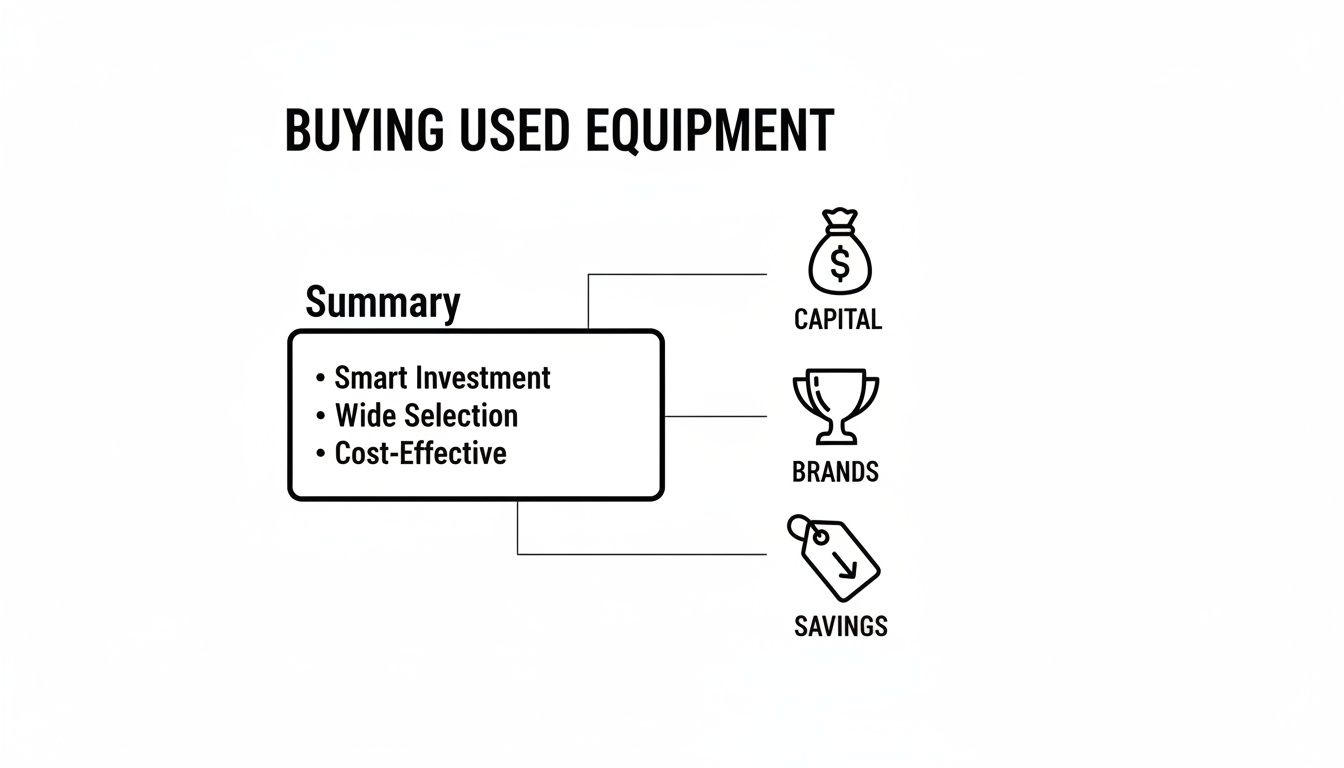
The bottom line? Buying used lets you hang onto your capital, get your hands on premium brands you might not otherwise afford, and see some serious savings.
Online Auctions and Liquidation Sales
Online auctions are where you’ll find the absolute rock-bottom prices. Companies that specialize in restaurant liquidations are constantly hosting sales for businesses that have recently closed. This is a goldmine for sourcing everything from the stainless-steel prep tables you need for a new taqueria to a full set of woks for a Chinese food kitchen.
The process is pretty simple, but you have to do your homework.
- Set Up Alerts: Create saved searches for the specific gear you're after, like a "Traulsen freezer" or "six-burner range."
- Go to the Preview Day: Most auctions have an in-person inspection day. Don't skip it. Photos can easily hide rust, a busted component, or a compressor that's on its last legs.
- Remember the Extra Costs: Don’t forget to add the buyer's premium (usually 10-18%), sales tax, and the cost of hauling the equipment yourself.
Direct From Closing Restaurants
Every now and then, you can score a deal by buying directly from a restaurant that’s shutting down. This method is all about networking and keeping your ear to the ground. Following local restaurant news and joining a few LA-area owner groups on Facebook can tip you off to these opportunities.
Buying straight from another owner can be a huge win. They get cash fast without a middleman, and you can often talk them down on price while getting the full scoop on the equipment's history and quirks.
For example, a pizzeria that's closing might be willing to sell you its entire oven and prep line in one go, saving you the headache of piecing it all together. It's a great way to get functional, road-tested gear.
To make sense of it all, here's a quick breakdown of where to look.
Comparing LA Sourcing Channels for Used Equipment
| Sourcing Channel | Best For | Average Price Point | Key Considerations |
|---|---|---|---|
| Local Dealers | Mission-critical items (refrigeration, ovens) and peace of mind. | Higher | Comes with inspection, refurbishment, and often a warranty. Safest bet. |
| Online Auctions | Bulk purchases and finding deep discounts on standard items. | Lowest | "As-is" condition. You must inspect in person and handle all logistics. |
| Direct from Owner | Getting a good deal on a full line of equipment and its backstory. | Low to Mid | Requires networking and quick action. Great for negotiating. |
Each channel has its place. Your best strategy is to use a mix of all three depending on what you’re looking for and how much you're willing to spend.
Your Essential On-Site Inspection Checklist
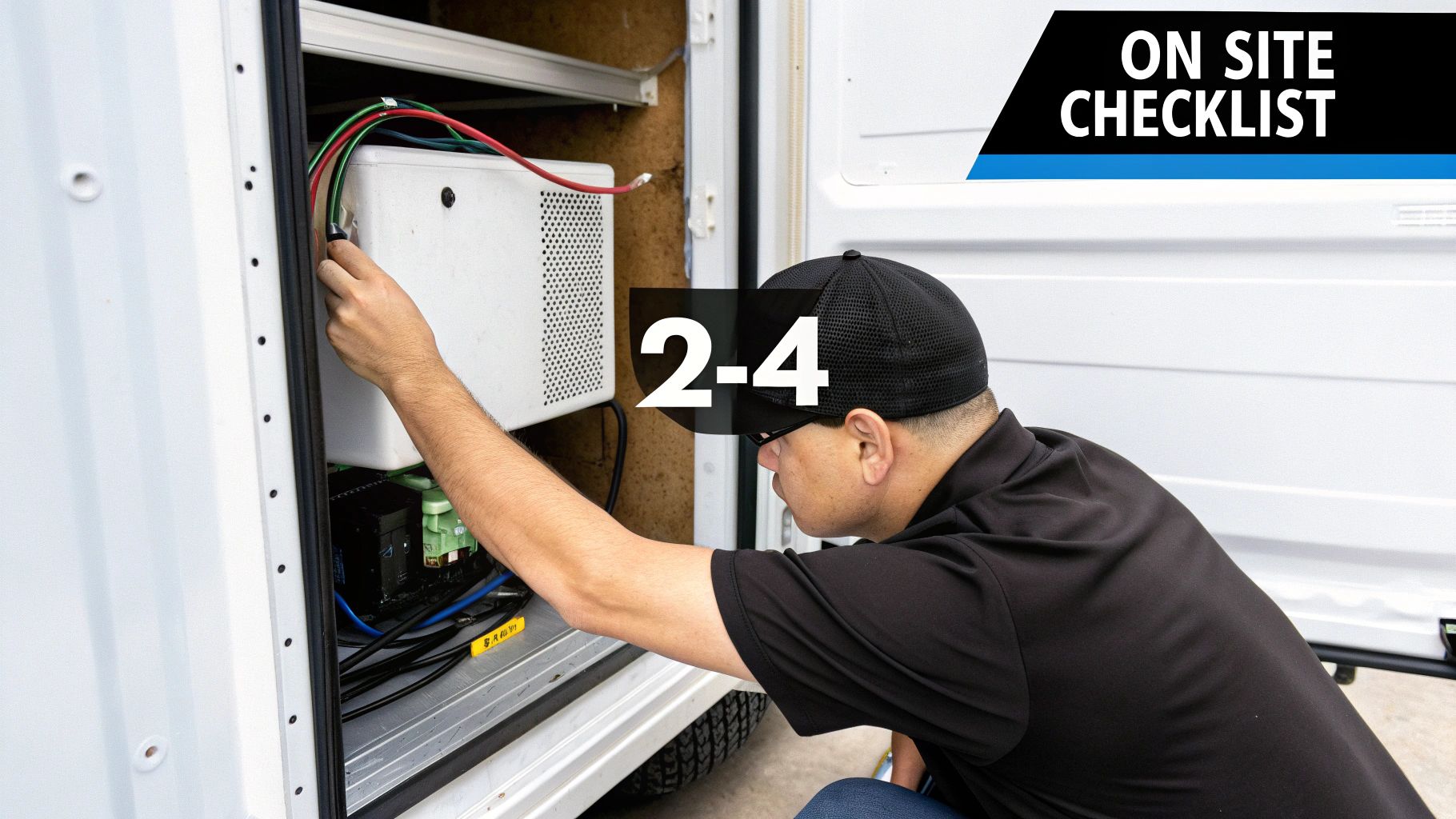
Finding a great price on used equipment means nothing if it dies on you a month later. That’s why getting your eyes on the gear is easily the most important part of the whole process. Never, ever buy a significant piece of restaurant equipment sight unseen—photos can hide the kind of flaws that turn a bargain into a money pit overnight.
This is your chance to do some real detective work. It doesn't matter if you're at an auction in the Arts District or walking through a closing restaurant in the Valley, you have to know what to look for. This isn't just about kicking the tires; it's about spotting the red flags most people miss.
Inspecting Refrigeration and Freezers
For any L.A. kitchen, whether it’s a Korean food spot or a Thai food truck, refrigeration is the heart of the operation. When a commercial refrigerator or one of the freezers goes down, it's a full-blown catastrophe.
Start with the basics. Check the door seals (gaskets) for cracks, tears, or any signs of brittleness. A bad seal makes the compressor work overtime, which kills your electricity bill and leads to failure. Open and close the doors a few times. Do they latch tight?
If you can, have them plug it in. Listen to the compressor. Does it kick on right away? Is it making a loud, rattling, or straining noise? All bad signs. You might not be able to test how well it holds temp on the spot, but you can definitely spot the signs of neglect that point to future headaches.
Evaluating Cooking Equipment
What you look for here really depends on what you're cooking, but the core principles are the same across the board.
- Ranges and Ovens: On a gas range, check the burners for clogs or heavy corrosion. If you can fire it up, you want to see a steady, blue flame. For ovens, look closely at the door hinges and seals—a warped door leaks heat like a sieve and makes for inconsistent cooking.
- Griddles and Planchas: These are everything for a Mexican food spot’s tacos or a diner’s pancakes. The surface has to be right. Run your hand across the flat top (when it’s cool, of course) to feel for warping or deep pits. A warped plancha has hot spots that will burn your food.
- Fryers: Check for any signs of leaks, especially around the tank welds and valves. The condition of the heating elements or burners tells you a lot about how the previous owner maintained the unit.
A thorough inspection protects your investment. Ten minutes of careful examination can save you thousands in future repair bills and prevent the operational nightmare of unexpected downtime.
General Condition and Red Flags
Look past the specific functions and just assess the overall condition. Is it clean? A little grease is normal, but a thick layer of grime suggests a history of poor maintenance. Look for rust, particularly on the legs and frame, which can mess with the unit's structural integrity.
Always find the model and serial number plate. That little piece of metal is pure gold. It tells you the unit’s age, its specs, and lets you look up parts or common problems online before you pull the trigger. If that plate is missing or you can’t read it, that’s a major red flag.
By arming yourself with this knowledge, you can confidently find quality used restaurant equipment in Los Angeles. For a deeper dive, our comprehensive commercial kitchen equipment checklist can give you even more pointers. It's all about learning how to spot a genuine deal versus a disaster waiting to happen.
Navigating Los Angeles Health Codes and Compliance
Trust me on this one: ignoring local regulations is the fastest way to sink your restaurant dream before you even serve a single customer. When you're sourcing used restaurant equipment in Los Angeles, every single piece has to meet the tough standards of the Los Angeles County Department of Public Health. Get this wrong, and you’re looking at huge fines, orders to replace equipment, and delays that can bleed you dry.
Health inspectors don't mess around. Their job is public safety, which means every surface that touches food has to be smooth, non-porous, and a breeze to clean. That second-hand prep table with a few "character" scratches? It might seem like a steal, but an inspector will see a breeding ground for bacteria and flag it instantly.
Why NSF Certification Is Your Best Friend
As you're hunting for gear, train your eyes to spot the NSF (National Sanitation Foundation) certification sticker. This little blue circle is basically the gold standard in foodservice. It tells you—and more importantly, the inspector—that the equipment was built with food safety in mind.
You won't need it on every single item, but for key pieces like commercial refrigerators, ice machines, and prep tables, it's a must-have. Buying used equipment without that NSF mark is a huge gamble. It might be fine, but it could also be a residential-grade piece that has no business in a commercial kitchen. That's a mistake that will absolutely fail an inspection.
Common Compliance Traps with Used Gear
Some pieces of used equipment are just magnets for compliance problems. Knowing what to watch out for can save you a world of headaches and cash down the line.
- Refrigeration Units: A commercial refrigerator or one of its partner freezers has one critical job: holding a specific, safe temperature. An inspector will test this. A used unit with a tired compressor or a dodgy thermostat is an automatic fail.
- Prep Surfaces: Like I mentioned, any cracks, deep gouges, or porous materials are a no-go. Unsealed wood? Forget about it. This is a super common issue with older tables and cutting boards that have seen a lot of action.
- Sinks and Dishwashers: Your washing gear has to hit seriously high temperatures to properly sanitize. A used dishwasher that can’t get its rinse cycle hot enough is useless and won't pass inspection, leaving you with no way to legally clean your dishes.
Before you pull the trigger on any used equipment, just ask yourself this: "Would this pass a surprise inspection tomorrow?" If you have even a shadow of a doubt, walk away. It's not a deal; it's a future liability.
At the end of the day, checking for compliance before you hand over any money is non-negotiable. Look for that NSF sticker, inspect every inch for damage that could hide bacteria, and make sure it works well enough to meet health standards. A little extra diligence here protects your investment and keeps your grand opening on schedule.
Planning Your Equipment Logistics and Installation
You’ve found the perfect piece of used restaurant equipment in Los Angeles—maybe that six-burner range for your new Thai food spot or a massive commercial freezer for your Koreatown BBQ joint. It feels like the hard part is over, right? Not quite. Now you have to figure out how to get that 600-pound behemoth from their warehouse to your kitchen. This is where a little planning goes a long way.
The first hurdle is actually moving the thing. Many auction houses and private sellers have a "you haul it" policy, meaning you’re on your own once the deal is done. Before you even think about buying, figure out if you need to hire professional movers who specialize in heavy equipment. Trust me, trying to move a commercial fridge with a standard dolly and a pickup truck is a recipe for a busted unit or a thrown-out back.
For bigger items like walk-in coolers, the logistics get even more complicated. You’ll be coordinating disassembly, transport, and then reassembly on your end. For a much deeper dive into that process, our guide on walk-in cooler and freezer combinations has some great insights.
Navigating Installation Challenges
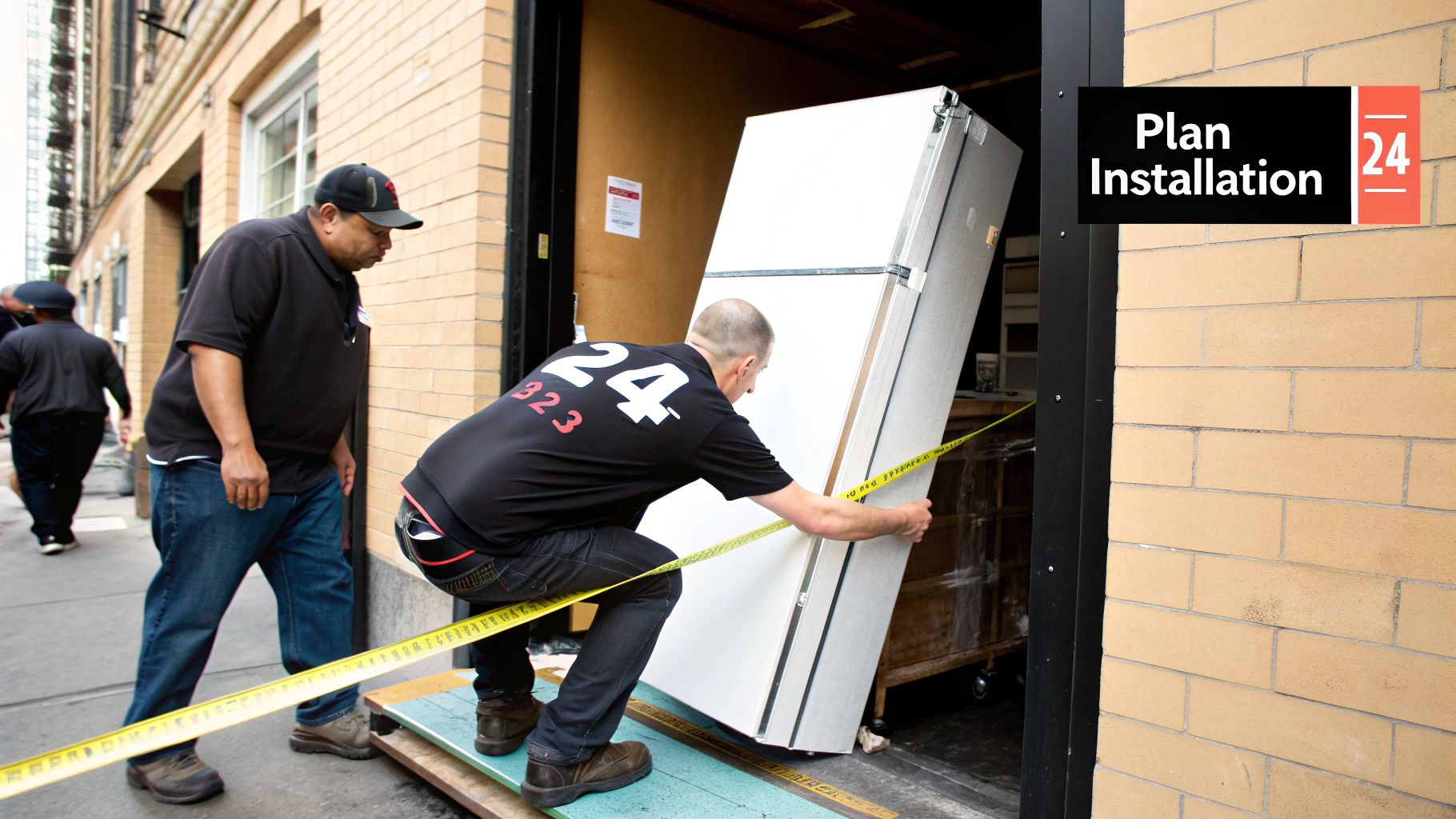
Getting the equipment to your restaurant is one thing; getting it inside and hooked up is a whole other ball game. Restaurants in Los Angeles are often in older buildings with narrow doorways, tight corners, and just plain tricky access. Always measure your entryways, hallways, and the final spot for the equipment before you buy. There’s nothing worse than the delivery truck showing up, only to discover your brand-new oven won’t fit through the kitchen door.
When it’s time for the actual installation, this is absolutely not a DIY job. Commercial kitchen equipment requires specialized gas and electrical hookups that must be handled by licensed professionals to meet city codes and keep everyone safe.
An improper gas line installation isn’t just a code violation; it’s a serious fire hazard that puts your staff, customers, and entire business at risk. Professional installation is non-negotiable for meeting Los Angeles building and safety requirements.
Creating a Seamless Plan
To avoid a logistical mess that could stall your grand opening, you need a clear plan. Try to coordinate the delivery time with your professional installer’s schedule so the equipment isn’t just sitting in the middle of your workspace. If you're outfitting one of the many Los Angeles food trucks, your installer needs to be able to work efficiently in that super-compact space.
Here’s a simple checklist to keep things on track:
- Confirm Delivery Method: Will the seller deliver, or do you need to book a freight company?
- Measure Everything Twice: Double-check every doorway, hall, and the final installation space.
- Schedule Professionals: Book your licensed plumber and electrician way ahead of time.
- Plan for Inspection: Once it's all installed, the city will need to inspect the hookups. Schedule this last step to get your final green light.
A little bit of planning turns a potentially chaotic day into just another smooth step toward opening your doors.
Answering Your Top Questions About Used Equipment in LA
Buying used restaurant gear in Los Angeles can bring up a lot of questions. If you're launching a new Chinese food concept in the San Gabriel Valley or just giving your food truck kitchen a much-needed upgrade, getting the right answers is key. Here are some of the most common things we hear from fellow LA restaurant owners.
Should I Get Refurbished or As-Is Equipment?
This really comes down to how important that piece of equipment is to your daily service. For your most critical gear, like commercial refrigerators and cooktops, refurbished is almost always the way to go. You’ll pay a bit more, but a reputable dealer will have inspected it, made repairs, and will often include a short warranty. That peace of mind is priceless.
"As-is" equipment, like what you’d find at an auction, is where the rock-bottom prices are. It’s a bigger gamble, but a smart way to save money. A great approach is to mix and match. For that new Korean food spot you're opening, you'd want to invest in a warrantied, refurbished grill. But for stainless steel prep tables? Buying "as-is" is a low-risk move that frees up cash.
Can I Finance Used Restaurant Equipment?
Yes, you absolutely can. Many LA-area suppliers and even some lenders have financing or lease-to-own programs designed for used kitchen equipment. It’s a fantastic way to hold onto your startup capital for essentials like rent, inventory, and your first few payrolls.
Financing used equipment allows you to get higher-quality brands into your kitchen without a massive upfront cash outlay. The lower purchase price makes the monthly payments far more manageable for a new business.
You’ll need to have your business plan in order, but even if the interest rates are a touch higher than for new gear, the huge savings on the total cost usually make it a great financial choice.
What Brands of Commercial Refrigerators Should I Look For?
When it comes to a used commercial refrigerator or freezer, stick to the names you know. You want the workhorses of the industry that are built to last and, more importantly, are easy to get serviced locally. Here in Los Angeles, you can’t go wrong with brands like True, Beverage-Air, and Traulsen.
Because they're so common, you’ll have no trouble finding parts and qualified repair techs anywhere in the city. That’s a huge deal. When your walk-in cooler dies on a Friday night, you need a fix now—not in a week while you wait for a special part to be shipped.
The demand for quality used equipment is high, especially with the economic pressures LA restaurants face. In fact, recent studies of the local restaurant scene found that 38% of operators said labor costs were their biggest challenge, while 35% pointed to rent. With numbers like that, finding savings on big-ticket items like ovens and coolers becomes a crucial part of staying afloat. You can see more on these local industry statistics and findings.
Ready to find reliable, professional-grade equipment for your LA kitchen? At Los Angeles Restaurant Equipment, we offer a wide selection of Atosa commercial refrigerators, cooking equipment, and more, all with robust warranties and free freight delivery. Explore our inventory and get the gear you need with financing options that work for your budget at https://losangelesrestaurantequipment.com.