

Food Truck Kitchen Equipment: A Complete Guide for Los Angeles Entrepreneurs
Jumping into the Los Angeles food truck scene is a big move, with big risks and even bigger rewards. Your success really boils down to the choices you make, and none is more important than your food truck kitchen equipment. This is the gear that dictates how fast you can work, how safe your operation is, and whether you can handle the hungry crowds at a downtown food festival or a quiet neighborhood corner.
Building Your Los Angeles Dream on Wheels
Starting a food truck in a market as fierce as Los Angeles isn't just about opening a business—it's about creating a mobile restaurant that has to run perfectly, especially when things get hectic. This guide is your game plan, focusing on how the right restaurant equipment can either make or break your venture in the City of Angels.
We’re going to go way beyond a simple shopping list. We'll explore how specific equipment choices are directly tied to your ability to survive and thrive. From the insane LA lunch rush to navigating the maze of health codes, every single piece of equipment has a job to do, especially when dealing with the diverse cuisines that define this city.
The Foundation of Your Mobile Restaurant
Picture your food truck as a tightly-run culinary machine. Every single part, from your heavy-duty commercial refrigerators and freezers to your compact fryers, has to work together seamlessly. The real goal is to build a workflow that lets your food shine, whether you're serving up:
- Korean BBQ tacos in Koreatown
- Authentic Thai street food in Hollywood
- Classic Mexican birria in East LA
- Innovative Japanese fusion downtown
- Spicy Chinese Szechuan noodles in the San Gabriel Valley
Picking the right food truck kitchen equipment isn't just about being able to cook. It's about building a business that's reliable, compliant with all the rules, and actually profitable from day one. The decisions you make right now will shape your daily grind and your future on the streets of Los Angeles.
This guide will walk you through outfitting your truck to meet the unique challenges of the LA food world. You'll learn how to choose gear that’s tough, efficient, and fits just right, making sure your mobile kitchen is ready for anything. Let’s start building your dream on wheels, one essential piece of restaurant equipment at a time.
The Four Pillars of a Food Truck Kitchen
Outfitting a food truck in Los Angeles is more than just buying a grill and a fridge. To really succeed, you need to think of your mobile kitchen as being built on four core pillars. Each one is essential for speed, safety, and staying on the right side of the health department, whether you're serving on the Venice boardwalk or catching the downtown lunch crowd.
Think of it like a high-performance team—if one player is weak, the whole operation suffers. Let's break down these four pillars to help you build a smart and efficient kitchen on wheels.
Pillar 1: Cooking Equipment – The Engine of Your Menu
This is the heart of your operation. Your cooking gear is what turns ingredients into the food that defines your brand. In a fast-paced city like L.A., this equipment has to be quick, reliable, and seriously compact. A Korean BBQ truck needs a charbroiler that gets screaming hot for that perfect sear, while a Thai street food concept is lost without a powerful wok range. For a Chinese food truck, a multi-burner range is crucial for stir-frying.
The trick is to match your equipment to your menu. A big, flat-top griddle is a workhorse for smash burgers and breakfast burritos. A deep fryer is a must-have for everything from french fries to crispy tempura. This restaurant equipment is what drives your business, pure and simple.
It's no surprise that demand for this equipment is exploding. The global market for commercial kitchen gear is expected to grow by USD 41.81 billion, with a 7.4% annual growth rate. Food trucks are a huge part of that. Here in North America, where the market hit USD 10,738.6 million, kitchen-specific tools took a 36.9% share of the revenue, showing just how critical they are for any high-volume mobile spot. You can dig into more data on the U.S. food truck market to see the trends for yourself.
To give you a better idea of what you might need, here's a quick look at some popular L.A. food truck concepts and their essential gear.
Essential Equipment Checklist by LA Cuisine Type
| Cuisine Type | Essential Hot Equipment | Essential Cold Equipment | Key Prep Equipment |
|---|---|---|---|
| Mexican | Griddle (Plancha), Charbroiler, Fryer | Refrigerated Prep Table, Under-counter Cooler | Food Processor, Steam Table (for toppings) |
| Japanese | Rice Cooker, Fryer (for tempura), Teppanyaki Griddle | Sushi Case, Under-counter Refrigerator | Rice Warmer, Mandoline Slicer |
| Korean BBQ | Gas Charbroiler, Griddle, Rice Cooker | Under-counter Refrigerator, Kimchi Fridge | Mandoline Slicer, Meat Slicer |
| Chinese | Wok Range, Steamer, Fryer | Under-counter Refrigerator, Reach-in Freezer | Meat Slicer, Noodle Cooker |
| Thai | Wok Range, Stock Pot Burner, Grill | Refrigerated Prep Table, Under-counter Freezer | Mortar and Pestle, Food Processor |
This is just a starting point, of course. Your unique menu will determine the final loadout, but it shows how different concepts rely on different core pieces of restaurant equipment to bring their food to life.
Pillar 2: Refrigeration – Your Food Safety Lifeline
In the Southern California heat, good refrigeration isn't a luxury—it's everything. Your commercial refrigerators and freezers are what protect thousands of dollars in food and keep you in line with strict L.A. County health codes. One breakdown can shut you down for the day, costing you money and your reputation.
In a food truck, refrigeration is about more than keeping things cold. It's about preserving your investment and protecting your customers. Choosing durable, NSF-certified units that can handle the bumps and vibrations of the road is an absolute must.
Every inch of space counts. That's why under-counter refrigerators and sandwich prep tables are so popular; they give you cold storage and a workspace all in one. If you're running a Japanese sushi or poke truck, a refrigerated prep rail is non-negotiable for keeping delicate fish safe right up until you serve it.
Pillar 3: Food Preparation and Sanitation
This pillar covers the unsung heroes of the kitchen: the surfaces and systems that keep your operation clean and running smoothly. It all starts with stainless steel prep tables, which give you a durable, sanitary space for everything from chopping veggies for a Thai noodle bowl to assembling Mexican tacos.
Just as important is your water and sink setup. L.A. health codes are famously strict, and they require a three-compartment sink for washing, rinsing, and sanitizing, plus a totally separate sink just for washing hands. This isn't optional—it's a must-have for passing your inspection and running a clean kitchen.
Pillar 4: Safety and Ventilation
The final pillar is all about keeping your team—and your truck—safe. In such a tight space, heat, grease, and fumes build up fast, creating a real hazard. A commercial ventilation hood is required by law to suck all that smoke and greasy air out of the kitchen, which clears the air and dramatically lowers the risk of a fire.
This system goes hand-in-hand with an integrated fire suppression system. This is designed to automatically put out a grease fire before it gets out of control. These two pieces of equipment are easily the most important safety features you'll have, protecting your crew and making sure you're up to code.
Designing a High-Efficiency Mobile Kitchen Workflow
In a food truck, space is your most valuable commodity. Once you’ve figured out what restaurant equipment you need, the next big challenge is deciding how to arrange it all for speed and efficiency. Think of your layout like a submarine galley—every single inch has to be optimized for flow and safety, especially when you’re slammed during the Los Angeles lunch rush.
A clumsy workflow breeds chaos. It leads to slower service, a frustrated crew, and ultimately, lost sales. The real goal is to create a logical path for your food, from the moment ingredients leave your commercial freezers to the final handoff at the service window. This lets your team move with purpose, not constantly trip over each other.
The demand for smart mobile kitchen design is booming. The U.S. food truck market, currently valued at USD 1.09 billion, is expected to climb to USD 1.51 billion with a strong 6.60% annual growth rate. California is at the heart of this trend, showing the fastest regional growth at 6.80%, which means operators here need reliable, well-thought-out setups to compete. Mid-range trucks (16 to 25 feet) are the most popular, making up 50.95% of the market because they hit that sweet spot between having enough kitchen space and being agile enough for city streets. You can dig into more details about the growing United States food truck market and its local trends.
This diagram shows the core equipment categories you need to build your workflow around.
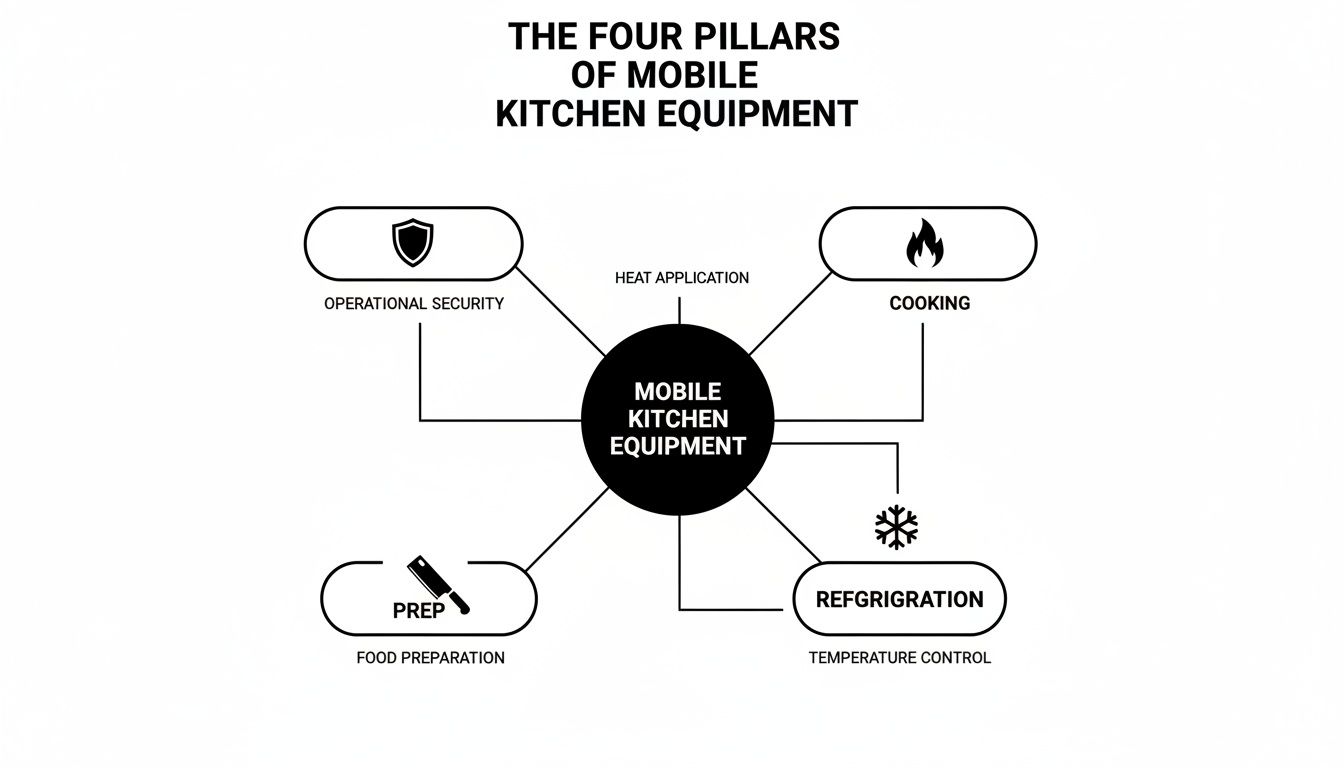
As you can see, a great mobile kitchen isn't just about the grill—it’s about how your cooking, refrigeration, prep, and safety systems all work together smoothly.
Choosing Your Layout Strategy
Your menu is the blueprint for your layout. A straightforward, linear menu is perfect for an assembly-line setup, while a more varied menu might need a zone-based approach.
- Assembly-Line Layout: This is your go-to for high-volume, simple menus like burgers or Mexican tacos. You set up each station in order: grill, then cold prep for lettuce and salsa, then the service window. It creates a natural, forward-moving flow that’s incredibly fast.
- Zone-Based Layout: If you're cooking up something more complex, like Japanese or Chinese food with different cooking methods, a zone layout is better. You could have a dedicated fry zone, a separate griddle zone, and a cold prep/plating area. This allows multiple cooks to work on different parts of an order at the same time without getting in each other's way.
No matter which layout you pick, the main idea is to cut down on wasted movement. A chef shouldn’t have to walk from one end of the truck to the other just to get from the lowboy fridge to the griddle. Saving a few seconds on every order really adds up to more money in your pocket during a busy shift.
Maximizing Every Inch of Space
Making your workflow functional is all about smart space utilization. Don’t just think about floor space; the walls are prime real estate, too.
- Go Vertical: Install heavy-duty, wall-mounted shelves above your prep counters. This is the perfect spot for frequently used spices, smallwares, and dry goods, keeping your work surfaces clear and organized.
- Multi-Functional Equipment: Use under-counter refrigerators and freezers as extra prep surfaces. Their stainless steel tops are durable enough for chopping or assembly, giving you cold storage and a workstation in one compact unit. You can learn more in our guide to the versatility of stainless steel kitchen prep tables.
- Ergonomics Matter: Keep your most-used tools and ingredients within arm's reach of where they’ll be used. This simple step reduces physical strain on your team and makes the whole cooking process faster.
A well-designed workflow is the silent engine of a profitable food truck. It cuts down on stress, boosts your speed, and lets your culinary vision shine, even on the busiest street corners in L.A.
Powering Your Operation: Gas, Water, and Ventilation
All that state-of-the-art food truck kitchen equipment is fantastic, but it's completely useless without the systems that make it run. Think of your truck’s infrastructure like the electrical grid and plumbing of a house—if that's not working, nothing else is. This is where we get into the technical guts of your Los Angeles food truck, making sure you have the power, water, and air quality to operate safely and legally.
Getting these utility systems right from the very beginning is non-negotiable. Seriously. It will save you from painful fines, failed inspections, and the kind of mid-service shutdowns that can kill a business before it ever gets rolling. Let's break down the three critical lifelines of your mobile kitchen.
Choosing Your Power Source
Every single piece of equipment, from your commercial refrigerators down to your blenders, needs a reliable stream of electricity. Out on the road, you have a few core options, and each one comes with its own set of pros and cons.
- Generators: This is what you’ll see most often, and for good reason. Generators give you consistent, independent power no matter where you park, running on gas, propane, or diesel. The trick is to correctly calculate your total energy needs (wattage) so you don't overload the system and trip the breaker right in the middle of a lunch rush.
- Shore Power: This just means plugging your truck directly into an external electrical outlet. You’ll find these at commissaries or dedicated event spaces. It's a great option—quiet and clean—but it does tie you down to locations with the right hookups.
- Battery Systems (Inverters): A much quieter and more eco-friendly choice, battery banks store power you can use to run equipment. While they are fantastic for smaller loads, they usually need a generator to back them up for the real energy hogs like deep fryers and big griddles.
The goal here is to match your power solution to how you actually plan to operate. A generator gives you total freedom, but using shore power whenever it's available is a smart way to save on fuel and keep the noise down.
Navigating Water and Sanitation Requirements
Water is another utility that Los Angeles County watches like a hawk. Your food truck must be a totally self-contained operation, which means having its own onboard systems for both clean and used water. Messing this up is one of the quickest ways to get shut down by a health inspector.
A compliant water system has a few key parts:
- Freshwater Tank: This holds all the potable water for cooking, cleaning, and washing hands. The size you need will depend on your menu and daily volume, but most trucks fall in the 30-50 gallon range.
- Greywater Tank: This is where all the used water from your sinks collects. Here’s a rule you absolutely cannot forget: your greywater tank must be at least 15% larger than your freshwater tank. This is to prevent disgusting, hazardous overflows.
- Water Heater: Hot running water isn't a suggestion; it's a requirement. Your system has to deliver a steady supply of hot water to every sink on the truck.
- Sinks: LA County is very specific about this. You need a three-compartment sink for washing, rinsing, and sanitizing your dishes, plus a completely separate sink used only for handwashing.
Mastering Ventilation and Fire Safety
The last piece of the infrastructure puzzle is managing all the heat, smoke, and grease your cooking equipment kicks out. In a tight space like a food truck, good ventilation isn't just about keeping things comfortable—it's a massive legal and safety issue. If you’re using open flames or grease-producing equipment like a charbroiler, a professional ventilation system is a must. And if you're trying to figure out what cooking line to build, our guide on choosing the right food truck grill is a great place to start.
Your truck has to be equipped with a commercial-grade ventilation hood installed right over your cooking line. This beast of a system is designed to pull all that hot, greasy, smoky air out of your kitchen before it becomes a hazard. It also works hand-in-hand with an integrated fire suppression system, an absolute non-negotiable that automatically detects and puts out grease fires. This system is your first line of defense against the single most common and dangerous threat in any kitchen.
Acquiring Your Equipment the Smart Way
Once you’ve got your kitchen mapped out, the next step is actually getting the gear. This is where a lot of new Los Angeles food truck operators hit a wall, trying to find that sweet spot between quality and cost. Partnering with a local expert like Los Angeles Restaurant Equipment can give you a major leg up right from the start.
When you work with a supplier who gets the L.A. restaurant market, you’re getting more than just a delivery. They understand the unique headaches of operating here—from navigating local health codes to recommending equipment that can stand up to the Southern California heat inside a metal box on wheels.
The Advantage of a Local Partner
Picking the right supplier is really about building a support system for your business. A local partner can help you pick out perfectly sized, tough-as-nails units from trusted brands like Atosa, making sure every piece of your food truck kitchen equipment is an investment that pays off.
Think about the value that goes beyond the price tag. With a partner like us, you get some key perks designed for operators on the go:
- Free Freight Delivery: This can save you hundreds, maybe even thousands, in shipping costs. That’s cash you can put right back into other startup needs.
- Comprehensive Warranties: Atosa products come with solid protection—two years on parts and labor and five years on the compressor—which means you can sleep a little easier at night.
- Authorized Service Network: When a commercial refrigerator gives out in the middle of a summer heatwave, you need a fix, fast. An authorized network means you get reliable service without losing a day's sales.
This kind of support is a game-changer in a competitive scene where a single day of downtime can really sting.
A smart equipment strategy isn't just about buying gear; it's about investing in reliability. Your supplier should be a partner who helps you stay operational, compliant, and profitable on the streets of Los Angeles.
Investing in quality food truck kitchen equipment is a proven move, especially in a market that's on fire. The U.S. food truck scene is valued at USD 4.36 billion with over 48,000 units on the road, all driven by killer menus and lower overhead. This is what fuels the demand for dependable fryers, ranges, and commercial refrigerators. And it's not just a local thing; the global market is expected to jump from USD 2.4 billion to USD 3.6 billion by 2030. To see the numbers for yourself, you can check out the full food truck market report.
Unlocking Growth with Smart Financing
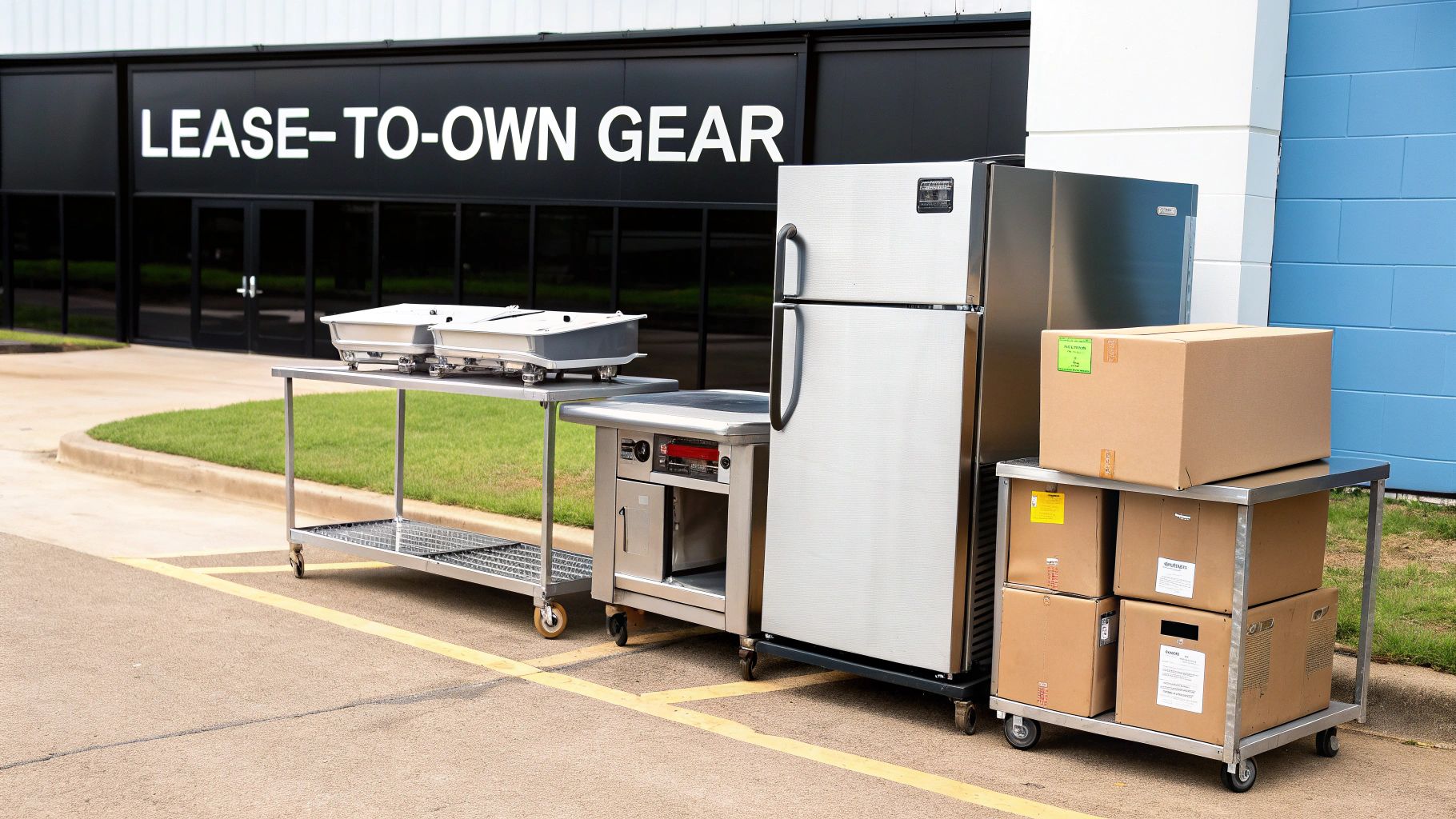
For many startups, the upfront cost of new equipment is the single biggest roadblock. That’s where a lease-to-own financing strategy can make all the difference, turning a huge capital expense into a predictable monthly payment.
This approach has some serious benefits for a new food truck business:
- Conserve Your Capital: Instead of draining your startup fund on equipment, you can keep that cash for inventory, marketing, and getting your permits in order.
- Improve Cash Flow: When your equipment payments line up with your monthly revenue, budgeting becomes way more manageable and a lot less stressful.
- Get Top-Tier Equipment: You can afford brand-new, reliable gear with full warranties instead of taking a gamble on used equipment with a questionable past.
- Build Business Credit: Making your lease payments on time helps you build a solid credit history for your business, which can open up even better financing options later on.
By choosing a smart financing route, you can launch your Los Angeles food truck with the high-quality kitchen you need to succeed, all without breaking the bank. To get a better handle on your options, take a look at our guide on how restaurant equipment lease-to-own programs work.
Your Blueprint for a High-Performance LA Food Truck
Building a successful Los Angeles food truck is about more than just a great recipe—it’s about making smart choices every step of the way. Think of this guide as your complete blueprint, taking you from picking out individual pieces of food truck kitchen equipment to creating a solid plan for your entire operation. Your truck is a complex machine, and every part needs to work together perfectly to make a name for yourself in the competitive LA food scene.
We’ve walked through the four key pillars of outfitting your truck, showing you how to choose equipment that supports your unique menu, whether you're serving up Thai, Japanese, Korean, Chinese, or classic Mexican fare. From there, we dove into the art of designing a smooth kitchen workflow, a must-have for serving customers quickly and keeping your cool in a tight space. We also covered the essential utility systems—power, water, and ventilation—that bring your kitchen to life and keep you in line with LA's strict health codes.
Turning Your Plan into Action
Finally, we looked at how to get all this gear without breaking the bank. Understanding your options, like lease-to-own financing, can get you those high-quality commercial refrigerators and cooking stations you need without wiping out your startup cash. Now, it's time to take this plan off the page and start building your dream on wheels.
Your high-performance mobile kitchen is within reach. The difference between a good idea and a profitable business often comes down to execution and having the right partners.
The next step is to connect with experts who really get the Los Angeles food scene. They can help you find the perfect, right-sized equipment for your concept, making sure every dollar you spend is a direct investment in your success. From the first sketch of your layout to passing that final inspection, making informed decisions now sets you up for a business that can handle the busiest corners of LA. Your blueprint is ready—it’s time to start building.
Frequently Asked Questions
Getting into the Los Angeles food truck scene is exciting, but figuring out the kitchen gear can be a real headache. New operators are always asking us what they really need to get started right. Here are some straight answers to the questions we get asked the most.
What Is the Most Important Piece of Food Truck Kitchen Equipment?
Hands down, your commercial refrigeration. Think about it: in the middle of a Southern California summer, reliable commercial refrigerators and freezers are the only things standing between you and disaster. If your cooling goes down, you could be forced to toss thousands of dollars of inventory. That’s a massive financial blow, not to mention a serious health code violation.
Once you’ve locked down your refrigeration, your next priority is whatever piece of cooking equipment is central to your menu. If you’re slinging classic LA-style smash burgers, that’s your flat-top griddle. If you're doing Korean fried chicken, it’s a high-capacity deep fryer. This one piece is the engine of your whole operation—it dictates how fast you can serve and how good your food tastes.
Should I Buy New or Used Equipment for My Food Truck?
For a food truck in Los Angeles, buying new equipment for your main cooking and cooling units is almost always the best move. It really comes down to one word: warranty. New gear from a solid brand like Atosa gives you serious protection—we're talking two years on parts and labor and five on the compressor. That’s your safety net when something breaks down unexpectedly, which can easily shut you down for days.
Going with used equipment is a roll of the dice. You’re taking on a much higher risk of it failing, it might not be NSF-certified for LA County health codes, and it comes with zero warranty. You might save a little cash upfront on things like prep tables or shelves, but modern financing like lease-to-own programs make brand new, reliable food truck kitchen equipment totally affordable without a huge initial investment. It’s all about peace of mind and having predictable monthly costs.
A food truck lives and dies on consistency. A new fridge with a warranty might cost more at first, but it saves you from the catastrophe of a used unit dying in the middle of a lunch rush.
What Are the Key Differences Between Restaurant and Food Truck Equipment?
The big three differences are size, durability, and power consumption. Standard restaurant equipment is designed for a big, stable kitchen with all the power it needs. Food truck gear is a different animal, built for a much tougher life on the road.
Here's how they stack up:
- Size and Footprint: Space is everything in a truck, so the equipment has to be compact. You'll see smaller dimensions, under-counter units that double as prep surfaces, and sleeker profiles that fit into tight spots.
- Durability and Construction: This gear is built to take a beating. It has to handle the constant bumps, vibrations, and movement of driving around all day without falling apart.
- Power Consumption: Your truck runs on a generator, not an endless supply from the grid. Food truck equipment is designed to be super efficient, using less electricity or gas than the full-size versions you’d find in a restaurant.
You absolutely have to choose commercial-grade equipment made specifically for mobile kitchens. Trying to use standard restaurant gear in a truck is a recipe for breakdowns, safety issues, and a constant battle with your power supply. The right setup is built for performance and keeps you compliant with the health department.
Ready to build a food truck kitchen that can keep up with the LA crowds? Los Angeles Restaurant Equipment is your local source for perfectly sized, tough, and reliable equipment from the best brands. We offer free freight delivery, solid warranties, and flexible lease-to-own financing to get your dream on the road. Check out our full catalog of commercial refrigerators, cooking equipment, and prep stations today.
Find the perfect equipment for your LA food truck at https://losangelesrestaurantequipment.com.