

The Ultimate Guide to Full Size Steam Table Pans for LA Kitchens
From the busiest food trucks cruising through Downtown LA to the expansive buffets dotting Koreatown, the full size steam table pan is the quiet workhorse behind every successful food business. This simple tool is the backbone for holding, serving, and storing everything from hot carne asada to chilled kimchi, making it absolutely essential in the city's dynamic food scene.
The Foundation of the Modern LA Kitchen
Picture the lunch rush at a popular Thai spot in Los Angeles. The pad see ew has to stay perfectly hot, the fresh spring rolls need to be cool, and the prep line must be organized chaos. The one piece of restaurant equipment tying it all together? The full size steam table pan. It's so much more than a simple container; it’s a standardized system that brings a sense of order to the kitchen madness.
This entire system is built on the universal Gastronorm (GN) 1/1 standard, a fancy way of saying every full-size pan has the exact same footprint. This simple bit of standardization is a game-changer. It means a single pan can go straight from a commercial refrigerator where it was holding marinating meats, into an oven to cook, and then slide right into a steam table for serving. That kind of versatility is gold in kitchens where every inch of space counts.
Why Standardization is a Big Deal
Having a universal size for a full size steam table pan gives any Los Angeles food operation a few major advantages:
- Total Interchangeability: Pans from one brand will fit perfectly into any standard piece of restaurant equipment, from your prep tables to the final serving line.
- A Smoother Workflow: Your team can prep, cook, store, and serve all in the same pan. This cuts down on dishwashing in a huge way and gets food out to customers faster.
- Smarter Space Use: Standard sizes mean you can stack them neatly and keep your commercial refrigerators and freezers organized.
This isn't just about convenience; it's about the bottom line. Full-size steam table pans are the industry standard worldwide for a reason. They can hold a serious amount of food—often up to 20 quarts or about 5 gallons—which is perfect for high-volume service. The global steam table pan market was recently valued at $1.14 billion and is expected to keep growing, largely because of the demand for these indispensable pans. For a deeper dive, you can check out more data on the steam table pan market.
Think of a full size steam table pan as a universal adapter for your entire kitchen. It’s what connects your hot line, your cold line, and all your storage, letting every piece of restaurant equipment play nicely together. That compatibility is the secret to a fast, organized, and profitable service, whether you're running a Los Angeles food truck or a full-scale restaurant.
Choosing The Right Pan Material and Gauge
Picking the right full-size steam table pan isn’t just about size. It’s a strategic choice you make based on your menu, how you serve customers, and the daily grind your kitchen endures. The material of your pan impacts everything from how well it holds heat on the hot line to whether it survives a chaotic dinner rush. For any L.A. food business, from a packed Thai spot in Hollywood to a food truck cruising through Silver Lake, getting this right is a smart investment.
You're mainly going to run into three materials: stainless steel, aluminum, and polycarbonate. Each one has a specific job to do in a pro kitchen.
Stainless Steel: The Kitchen Workhorse
When heat is involved, stainless steel is the hands-down winner. It’s tough, it won’t react with your food, and it holds temperature like a champ, making it perfect for keeping Chinese chow mein or Mexican carnitas hot for hours. There's a reason stainless steel pans make up around 60% of the market and are a staple in pretty much every commercial kitchen.
This isn't just hype; it's backed by performance. Stainless steel is incredibly durable and easy to keep sanitary, meeting strict NSF/ANSI standards that help prevent cross-contamination. That's a huge deal when you consider foodborne illnesses cost the U.S. economy an estimated $15.5 billion every year. For a deeper dive into the numbers, you can check out more research on the global steam table pan industry.
One crucial detail you can't overlook is the steel's thickness, known as its gauge. Think of it like the body of a classic car: the lower the number, the thicker and tougher the metal.
- 22-Gauge: This is your premium, heavy-duty option. It’s thicker, much more resistant to dents and warping, and built for high-volume kitchens where pans are getting a real workout day in and day out.
- 24-Gauge: This is the standard, medium-duty thickness. It's a fantastic all-around choice that balances cost and durability, making it a solid pick for most restaurant applications.
If you want to learn more about how stainless steel holds up in other parts of the kitchen, you might like our guide on choosing stainless steel kitchen prep tables.
This decision tree helps map out how to pick the right pan based on what your operation truly needs, from high-volume output to temperature flexibility.
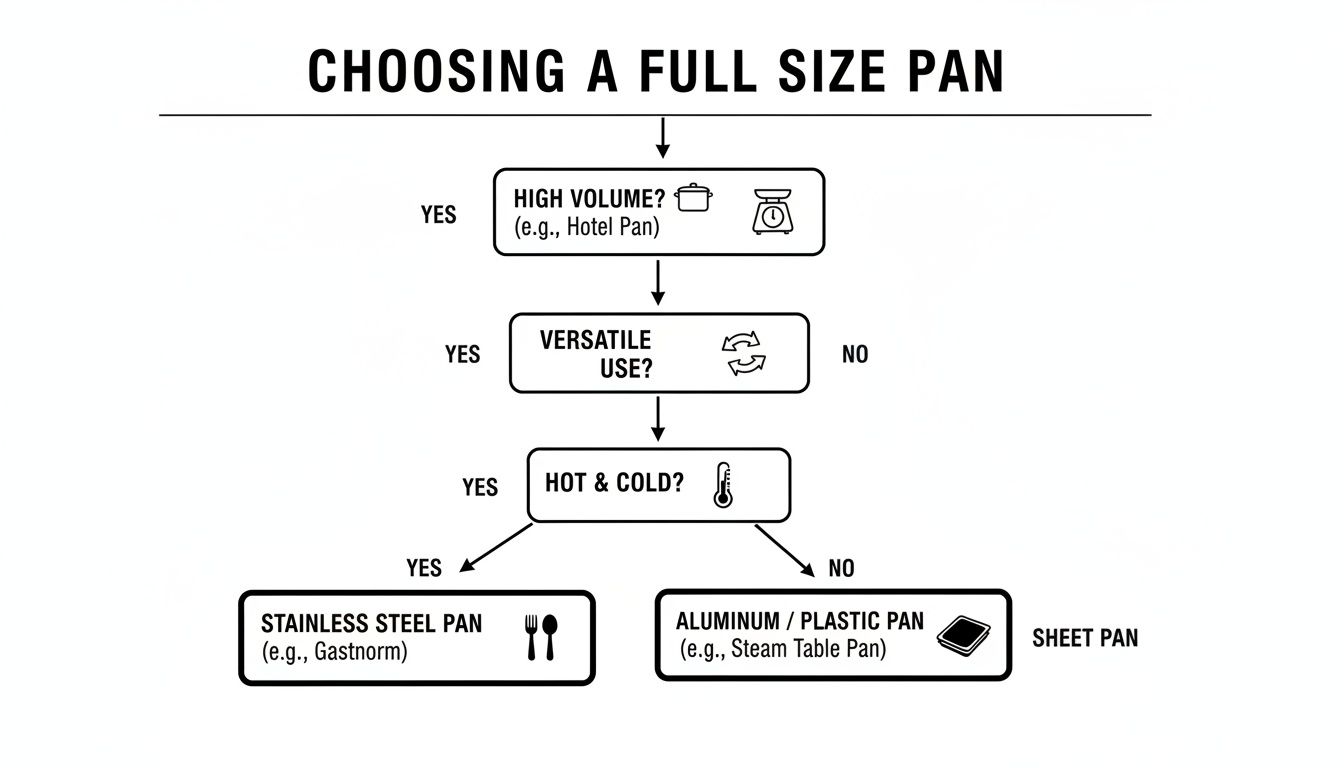
As you can see, for high-volume service that needs to handle both hot and cold items, stainless steel is the obvious choice. Other materials really shine in more specialized roles.
To help you compare your options at a glance, here's a quick breakdown of the most common materials.
Full Size Steam Table Pan Material Comparison
| Material | Best For | Heat Retention | Durability | Price Point |
|---|---|---|---|---|
| Stainless Steel | Hot holding, high-volume buffets, heavy-duty daily use. | Excellent | High (resists dents/warping) | $$ - $$$ |
| Aluminum | Catering, food transport, temporary storage. | Fair | Low (dents easily) | $ |
| Polycarbonate | Cold prep stations, salad bars, refrigeration, storage. | Poor (for heat) | Very Good (shatter-resistant) | $$ |
Ultimately, stainless steel is the undisputed king for most hot-side applications due to its ruggedness and heat-holding power. But for specialized tasks like transport or cold prep, aluminum and polycarbonate offer clear advantages.
Aluminum: The Lightweight Traveler
When your operation is on the move, like a catering business hustling to events all over Los Angeles, aluminum pans are a lifesaver. Aluminum is way lighter than stainless steel, which makes it much easier for your staff to haul large amounts of food without throwing out their backs.
It doesn’t hold heat as well as steel and it will dent if you look at it wrong, but its light weight and lower price make it a practical pick for transport and short-term holding. Just be aware that aluminum can sometimes react with acidic foods like tomato sauces, which might affect the taste.
Polycarbonate: The Clear Choice for Cold Prep
Over on the cold side of your kitchen, polycarbonate pans are a total game-changer. These are the clear, tough plastic pans you see in commercial refrigerators and prep tables. Their biggest advantage is obvious: you can see right through them.
Picture your line cook in the middle of a frantic lunch rush, needing to grab diced onions. With a clear polycarbonate pan, they see exactly what's inside without opening a single lid. That saves precious seconds and cuts down on mistakes—a massive boost to your kitchen's workflow.
Polycarbonate pans are built for the cold, are hard to shatter, and won’t react with acidic ingredients. This makes them perfect for storing prepped vegetables, sauces, and marinated proteins. They're an absolute must-have for keeping your cold line organized and moving at speed.
Navigating Pan Depths, Sizes, and Features
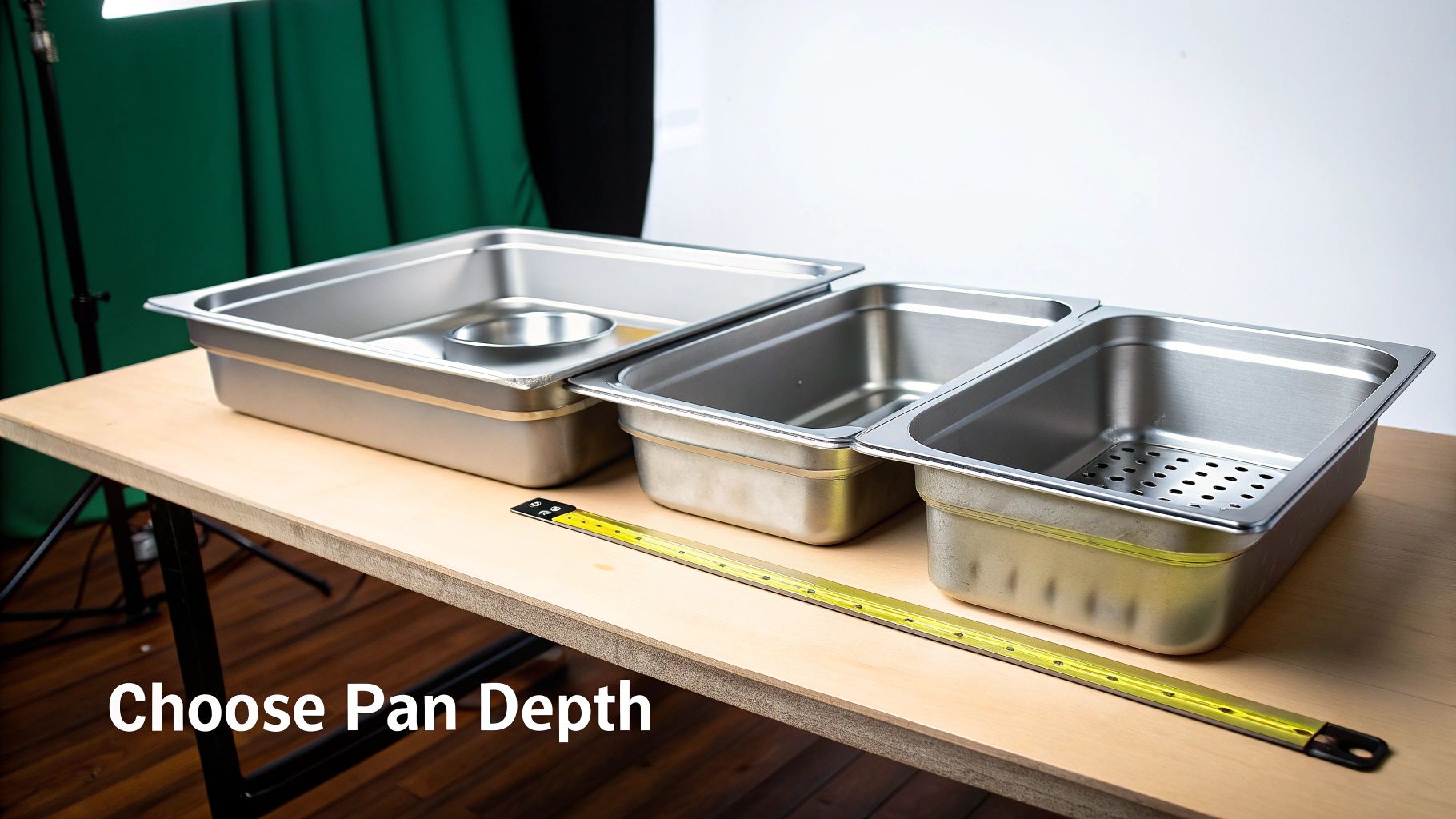
While that standard 20.75" x 12.75" footprint is what guarantees a full-size steam table pan will slot perfectly into your restaurant equipment, the depth is what really defines its job in the kitchen. Pan depth isn't just a measurement; it’s a strategic choice that directly shapes your kitchen's workflow, food quality, and how many people you can serve. Nailing this choice means perfectly matching the amount of food you have with how fast it's flying out the door.
Think about a packed buffet line at a hotel in downtown Los Angeles. Those shallow pans are perfect for showing off beautifully roasted vegetables or delicate seafood. If you used a deep pan, the food would get lost, look unappetizing, and be a pain to serve. On the flip side, a busy Mexican spot trying to serve gallons of birria from a shallow pan would be running back to the kitchen for refills every five minutes, creating a major logjam during the lunch rush.
Decoding Common Pan Depths
Picking the right depth comes down to knowing what each size is best for. If you have items that sell fast, a shallower pan might be the way to go to keep things fresh. For your high-volume staples, though, deep pans are non-negotiable.
- 2.5-Inch Deep Pans: These are your shallow workhorses. They're ideal for items that move quickly or need a great presentation, like sautéed veggies, appetizers, or even pre-portioned desserts in a reach-in cooler.
- 4-Inch Deep Pans: This is the jack-of-all-trades, a versatile middle-ground option. It gives you a solid balance of capacity and easy access, making it a favorite for side dishes, casseroles, and entrees like mac and cheese or enchiladas.
- 6-Inch Deep Pans: When you need to hold a serious amount of food, this is your pan. It’s perfect for big batches of soups, stews, Thai curries, or any bulk item you need to last through a long service without constant top-ups.
- 8-Inch Deep Pans: As the deepest option out there, these pans are usually saved for the highest-volume dishes imaginable—think chili, soup stock, or transporting huge batches of food for catering jobs across Los Angeles.
Exploring Specialized Pan Features
Beyond just depth, some clever designs have been created to solve common kitchen headaches and make a standard pan even more useful. These specialized pans are built with specific cooking styles and service problems in mind.
A fantastic example is the perforated pan. Imagine a Japanese restaurant that needs to steam dozens of gyoza at once. A perforated pan can sit inside another pan filled with water, letting steam circulate perfectly around every single dumpling. It's a way more efficient setup than steaming in small batches.
One of the biggest frustrations in any fast-paced kitchen is dealing with pans that get vacuum-sealed together when you stack them. The anti-jam design is a deceptively simple fix—a small, beveled edge on the corners that prevents that suction effect. It's a tiny detail that saves a ton of time and stops pans from getting bent during a chaotic shift.
Another handy variation is the false bottom pan. This insert lifts food up and away from any liquids that collect at the bottom, which is perfect for keeping fried chicken crispy or letting steamed items drain properly. If you're curious about how these pans fit into the bigger picture of a buffet or catering setup, you might want to learn more about the various sizes of chafing dishes that hold them. These smart features show just how a basic pan can be fine-tuned for very specific jobs in the kitchen.
Real-World Pan Strategies for LA Cuisines
Knowing the different types, materials, and depths of a full size steam table pan is one thing. But putting them to work in a real Los Angeles kitchen? That’s where the magic happens. A smart pan strategy can completely change your workflow, whether you're serving a massive buffet line or slinging tacos from a food truck.
Let's look at some practical blueprints from across the diverse LA food scene.
Imagine a popular Japanese spot in Little Tokyo. Their whole service hinges on serving perfectly steamed gyoza and mountains of fluffy rice. For the gyoza, they'll use a full-size perforated stainless steel pan. They nest it right inside a standard 4-inch deep pan filled with simmering water, turning their steam table into a high-volume steamer. This setup ensures every single dumpling is cooked gently and consistently.
For their rice, they use a solid 4-inch deep pan to hold a huge batch. This keeps it perfectly warm and moist throughout service without ever scorching the bottom. This simple combination of a specialized pan and a standard one is what lets them execute their menu flawlessly, night after night.
The High-Volume Chinese Buffet Blueprint
Now, let's head over to a bustling Chinese buffet in the San Gabriel Valley. Here, it’s all about volume and variety. The game is to keep massive quantities of chow mein, orange chicken, and beef with broccoli hot, fresh, and looking great for hours.
Their entire strategy is built around deep, tough-as-nails pans:
- Main Entrees: They pretty much exclusively use 6-inch deep, 22-gauge stainless steel full-size pans. That depth holds a serious amount of food, which means the kitchen staff isn't constantly running back and forth to refill the line during a rush. The heavier gauge steel can take a beating from constant scooping and scraping without getting dented.
- Sauce Management: For dishes like sweet and sour pork, they use a false bottom insert. It's a simple trick, but it elevates the crispy pork just above the sauce that pools at the bottom. This keeps it from turning into a soggy mess and maintains that crucial texture customers love.
This setup is a masterclass in efficiency. It's designed from the ground up to serve a ton of people while keeping the food quality high over a long service. It’s a pure workhorse system built for capacity and durability.
Here's the key takeaway: your pans aren't just containers. They are active tools in your service strategy. Using the right pan for the right dish has a direct impact on your food quality, speed, and ultimately, how happy your customers are.
Maximizing a Food Truck's Tight Quarters
A Los Angeles food truck cruising down Venice Beach has the exact opposite problem: almost no space. Every single inch of the hot line has to be optimized. For them, a mix-and-match approach with full-size and fractional pans isn't just a good idea—it's essential for survival.
A typical LA food truck might set up their steam table well like this:
- Main Protein: A half-size, 6-inch deep pan holds their star attraction, like carne asada or Korean BBQ beef. This gives them enough volume for the rush without taking over the whole well.
- Hot Toppings: Right next to it, they'll drop in two quarter-size, 4-inch deep pans for essentials like grilled onions and peppers or nacho cheese sauce.
- Buns/Tortillas: A third-size perforated pan is perfect for steaming tortillas or buns, keeping them soft, pliable, and ready to go.
This fractional setup lets an operator serve multiple hot items from a single full-size well. It's a brilliant space-saving move that keeps the line moving fast.
The Unseen Role in Cold Applications
Don't forget, the usefulness of a full size steam table pan goes way beyond the hot line. They are just as critical inside the commercial refrigerators and freezers that are the backbone of any LA kitchen. Their standard sizes bring a sense of order to your cold storage.
A deli in West LA, for instance, can prep for the lunch rush by organizing all their sandwich fixings in clear polycarbonate fractional pans. These sit right in their refrigerated prep table, and the transparency means the staff can see every ingredient instantly, speeding up the whole assembly line.
Meanwhile, a Korean restaurant in K-Town might use a deep, 6-inch stainless steel pan to marinate pounds of galbi overnight in their walk-in commercial freezer. The non-reactive steel is perfect for acidic marinades, and its durability means it can go from freezing cold to the prep line without a problem. These cold-side strategies are the foundation of a smooth, organized, and efficient kitchen.
Essential Accessories and Care for Peak Performance
A top-notch full-size steam table pan is a great start, but it's the right accessories and a solid care routine that turn it into a true kitchen workhorse. Equipping your pans correctly and keeping them in good shape protects your investment, keeps food quality high, and makes sure you're always ready for service—whether you're running a food truck in Venice or a buffet in Koreatown.
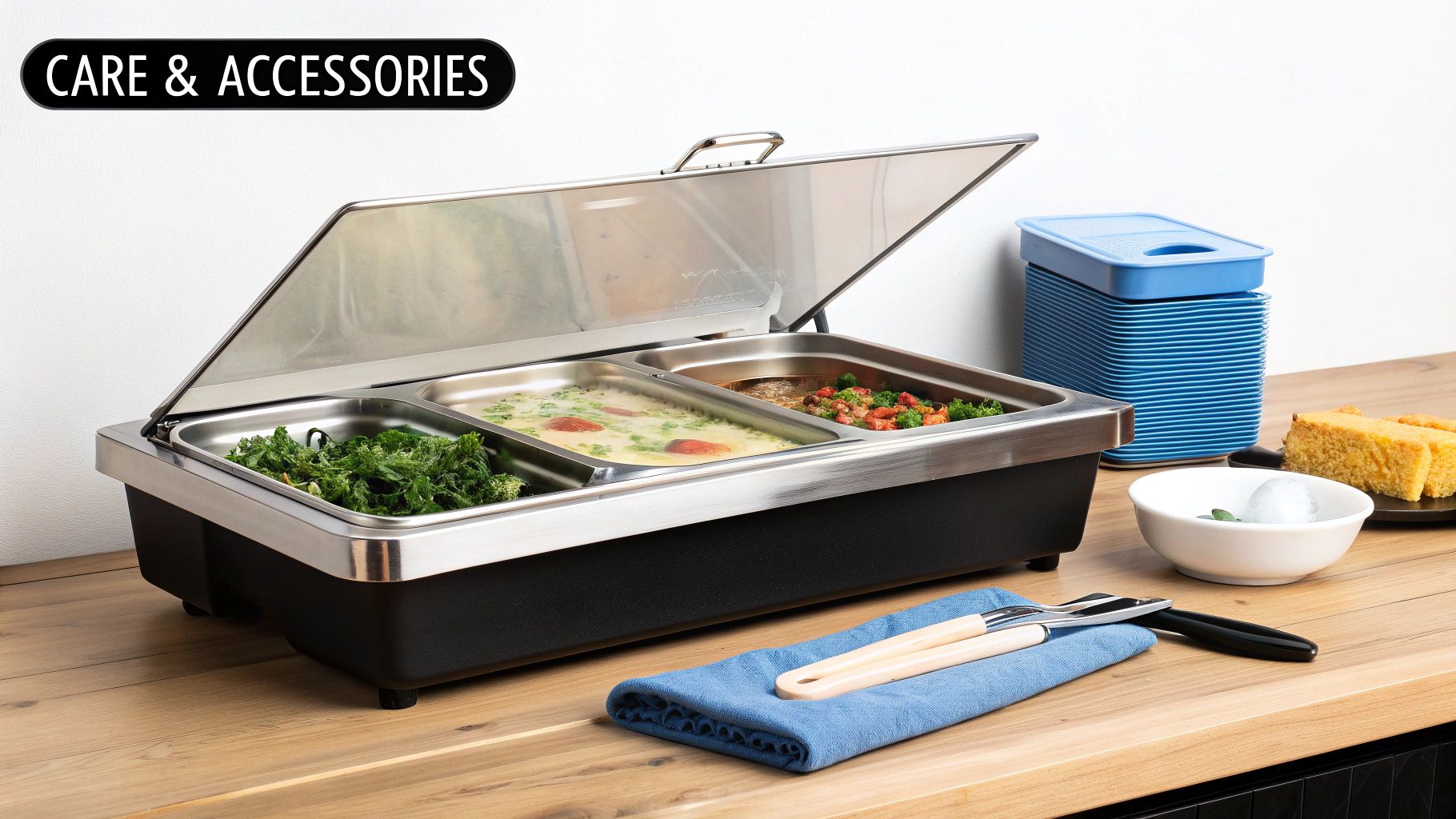
The whole ecosystem of accessories built around these pans is designed to solve real-world kitchen problems. From holding heat better to making service a breeze, these add-ons are small but make a huge difference.
The Right Lid for Every Job
Picking a lid might seem like a no-brainer, but the right one has a direct impact on your temperature control and how fast your line moves.
- Solid Lids: These are your go-to for locking in heat and moisture. A solid lid traps all that steam, keeping dishes like Mexican birria or Thai green curry at the perfect temperature in your steam table.
- Slotted Lids: Designed with a little cutout, these lids let a serving spoon or ladle stay right in the pan. It’s a simple feature that prevents cross-contamination and keeps utensils from making a mess on your counter.
- Hinged Lids: Super convenient for both staff and customers, a hinged lid can be propped open without having to be set down somewhere. This makes self-service buffets much cleaner and more efficient.
Functional Inserts and Transport Solutions
Beyond just lids, a few other accessories can completely change what a single pan can do. Pan dividers are a game-changer for food trucks or any kitchen tight on steam table space. These inserts let you serve multiple items, like different taco fillings, from just one full-size pan, basically doubling your hot-holding capacity.
For caterers schlepping food all over Los Angeles, insulated pan carriers are absolutely essential. These heavy-duty boxes are built to hold multiple full-size pans securely while keeping food at safe temperatures for hours. They guarantee that food arriving at an event is just as hot or cold as it was when it left your kitchen.
Proper pan maintenance isn't just about looking clean; it’s about proving your commitment to food safety. A well-cared-for pan reflects your restaurant's standards and is a big deal when it comes to passing LA County health inspections.
Cleaning and Maintenance Best Practices
Keeping your stainless steel pans in prime condition means they’ll last longer and keep you on the right side of the health department. Pans that are scratched, dented, or not properly cleaned can harbor bacteria and even affect the taste of your food.
Rule number one: stay away from abrasive materials. Steel wool and harsh scouring pads will create tiny scratches all over the steel's surface. These scratches make the pan harder to clean over time and give bacteria a place to hide. Stick to soft cloths or non-abrasive scrubbers instead.
For that stubborn, baked-on gunk after a crazy service, soaking is your best friend. Just fill the pan with hot, soapy water and let it sit for a bit before you start scrubbing. For a deeper dive into keeping all your gear spotless, you might find our guide on the best stainless steel cleaners useful for the whole kitchen. This gentle approach protects the pan's finish and makes cleanup way less of a headache.
Finally, a simple but crucial tip is to prevent pans from jamming when you stack them. Always make sure pans are completely dry before stacking. Any trapped moisture can create a powerful vacuum seal, making them nearly impossible to pull apart and often leading to bent edges when someone inevitably tries to pry them open. Store them right, and they’ll stay out of trouble and keep your kitchen humming.
Smart Sourcing for Los Angeles Restaurants
Once you've zeroed in on the right full-size steam table pan for your kitchen, the next question is how to get it there. For any restaurant, food truck, or catering business in Los Angeles, how you buy your restaurant equipment can be just as important as what you buy. It impacts your budget, your cash flow, and your ability to bounce back when things break. Going with a local supplier has some serious perks you just won't find with the big national online stores.
A huge one is the possibility of free freight delivery. When you're ordering heavy-duty gear—especially a big batch of stainless steel pans, a new commercial refrigerator, or a walk-in freezer—shipping costs can be a real gut punch. A local supplier who can waive those fees might save you hundreds, if not thousands, right out of the gate. That's money you can put toward inventory, marketing, or your payroll.
Financing That Works for Your Business
Getting a new Los Angeles food truck on the road or expanding a catering operation means a mountain of upfront costs. Outfitting a kitchen from scratch can feel impossible, which is where smart financing options become your best friend.
Lease-to-own financing is a game-changer for new or growing businesses. It lets you get fully decked out with all the hot and cold station gear you need without wiping out your startup capital. You can line up your monthly payments with the money you have coming in.
This strategy doesn't just protect your cash reserves; it helps build your business credit along the way. It makes getting top-tier essentials, like commercial refrigerators or a complete set of steam table pans, totally achievable for a new L.A. food business. To keep things running smoothly, many L.A. restaurants also invest in other operational tools, like efficient restaurant phone systems, to keep communication with suppliers and customers crystal clear.
The Value of Local Service and Strong Warranties
In the breakneck pace of the L.A. restaurant scene, equipment downtime isn't just an annoyance—it's a catastrophe. If your commercial freezer dies during a July heatwave, you're looking at thousands of dollars in spoiled food and lost sales. That’s why a solid warranty backed by a local service team is non-negotiable.
You want a supplier who offers great warranties, like two years on parts and labor and five years on compressors. But even more important is making sure they have an authorized service network right here in Los Angeles. That local connection means when a commercial freezer gives out or a griddle goes cold, you can get a certified tech to your door fast. Minimizing that downtime protects your bottom line. Choosing a supplier who gets the urgency of our local food scene is a strategic move that pays off long after you've made the purchase.
Frequently Asked Questions
When you're outfitting a busy L.A. kitchen, questions always pop up—even about something as straightforward as a full size steam table pan. Let's tackle some of the most common ones we hear from local restaurant owners.
Are All Full Size Steam Table Pans the Same Dimensions?
Yes, for the most part, "full size" is a standardized term. These pans follow the Gastronorm (GN) 1/1 sizing, which means they all have a footprint of roughly 20.75 x 12.75 inches (that's 530 x 325 mm).
This universal size is a massive help in any commercial kitchen. It guarantees your pan will slot perfectly into any compatible steam table, prep station, or walk-in cooler, no matter who made it. The real choice comes down to depth, which can run anywhere from a shallow 2.5 inches to a deep 8 inches, depending on how much food you need to hold.
What Is the Best Way to Clean Pans and Prevent Sticking?
For day-to-day cleaning, stick with a non-abrasive detergent and a soft cloth. Whatever you do, stay away from steel wool—it will scratch the surface, creating tiny crevices where bacteria can hide and making future cleanups even harder.
If you're dealing with stubborn, baked-on food after a hectic dinner rush, let the pan soak in hot, soapy water before you start scrubbing. A pro tip to prevent food from sticking in the first place is to lightly coat the pan with oil before adding hot items. For really messy foods like chili or cheese sauce, disposable pan liners can be a lifesaver.
Can I Use a Steam Table Pan in the Oven?
Absolutely. A high-quality stainless steel pan is built to handle the heat and works great for baking, roasting, or reheating. Think of a Japanese restaurant baking a large batch of teriyaki chicken and moving it straight to the serving line—these pans are perfect for that.
Just remember, they aren't meant for direct flame on a stovetop. The metal is too thin and will warp or scorch under that kind of intense, focused heat. For that, you'll want to grab a heavier-duty roasting pan or a stockpot. It's always a good idea to check the manufacturer's guidelines just to be safe.
Ready to equip your kitchen with the best? Los Angeles Restaurant Equipment has the durable, high-quality full size steam table pans and accessories your business needs to thrive. Shop our full collection today!