

How to Start a Catering Business in Los Angeles
Before you even think about buying a single sheet pan or pricing out commercial mixers, the most critical ingredient for a successful Los Angeles catering business is a solid plan. LA is an incredible city for food, but it's also packed with competition. Just being a good cook won't cut it here. You need a smart strategy to find your spot in this crowded, delicious landscape.
Building Your Foundation in the LA Food Scene
This first phase is all about doing your homework. It’s about research, focus, and getting your ducks in a row before you launch.
It all starts with getting to know the local scene. Go beyond a few Google searches and really dive into LA’s food culture. Who are the big catering players? What are they known for? You absolutely have to pay attention to the city’s legendary Los Angeles food trucks, too—they're often setting the trends and could be your direct competition.
Finding Your Niche in a Crowded Market
This is probably the most important decision you'll make early on. Trying to be a generic, "we cater everything" company is a recipe for disaster in a market as savvy as Los Angeles. You have to specialize. You have to find your lane.
Think about what makes you unique.
- Cuisine-Specific: Could you be the go-to for authentic Mexican food for corporate lunches in Silicon Beach? Or maybe you're the master of elegant, multi-course Japanese food menus for private dinners in the Hollywood Hills.
- Event-Specific: Maybe high-energy events are your thing. You could specialize in trendy Korean-Thai food fusion bites perfect for art gallery openings and tech product launches downtown.
- Client-Specific: You could also target a specific industry. Think about creating specialized menus and service packages for film production companies or the music industry, catering to their unique schedules and needs.
Look at what successful LA caterers and Los Angeles food trucks are doing, and more importantly, what they aren't doing. Is there a gap for high-end, plant-based wedding catering? Does anyone offer epic, family-style Thai food feasts for big backyard parties? Finding and filling one of those gaps is how you’ll get noticed.
Crafting Your Business Plan
Once you have an idea for your niche, it's time to put it all down on paper in a business plan. This isn't just a document for getting a loan; it's your personal roadmap. It’s the playbook that will guide every decision you make, forcing you to think through every single detail of your business.
A business plan isn't just for investors; it's a commitment to yourself. It transforms a passion for food into a viable enterprise by forcing you to define your mission, identify your ideal customer, and chart a clear path to profitability.
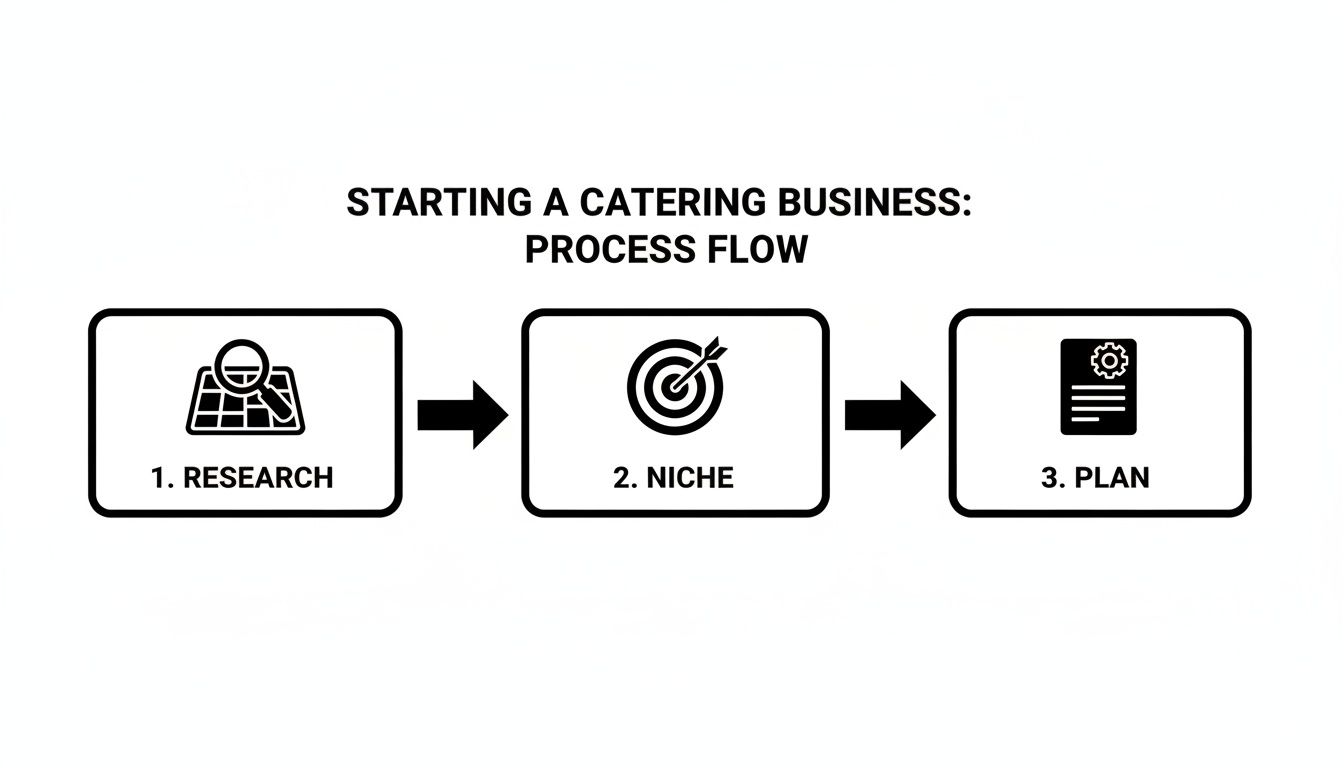
This process—researching the market, zeroing in on a niche, and writing a solid plan—is the bedrock of any new catering company.
The potential in this industry is huge if you start off on the right foot. You'd be tapping into a global market that’s projected to hit $498 billion by 2032. Right here in the US, the industry reached $72 billion in 2023.
And the opportunities are growing—48% of caterers say corporate events are their biggest growth area. In fact, you can explore more catering statistics and see for yourself how 53% of corporate food buyers are actually increasing their budgets. The demand is there.
Securing Your Permits and Food Safety Credentials
With your business strategy mapped out, it's time to build a solid legal foundation. I won't sugarcoat it—navigating the world of permits and licenses in Los Angeles County can feel like a lot to handle. But this is a non-negotiable step. Getting everything in order from day one protects your business, your clients, and your hard-earned reputation.

Think of this process as earning your official license to operate. It shows your commitment to professionalism and safety, which is crucial for building trust with clients, whether they need elegant Japanese food bento boxes for a corporate lunch or a vibrant Mexican food spread for a huge wedding.
Key LA County Health and Business Permits
Your first—and most important—stop is the LA County Department of Public Health. They are the gatekeepers for every food business, and their rules exist for one reason: public safety. You'll need to lock in a few key items.
- Catering Permit (Public Health Permit): This is the big one. It’s the primary license you need, certifying that your operation meets all health and safety codes.
- Commissary Kitchen Agreement: You cannot legally run a catering business from your home kitchen in Los Angeles. It's a hard rule. You must have a signed agreement with a licensed commercial kitchen, also known as a commissary, where you'll handle all your food prep, cooking, and storage. The health department will demand proof of this agreement.
- Plan Check Submission: Before you get that permit, you’ll probably need to submit your operational plans for review. This document details everything from your food sources and prep methods to how you'll keep food safe during transport.
A licensed commissary isn't just a legal hoop to jump through—it's your operational hub. It gives you access to professional-grade restaurant equipment, from walk-in coolers to the proper sanitation stations required by law.
Working out of a commissary also ensures you have access to correctly installed essentials. Even something as simple as a janitorial sink is highly regulated. You can learn more about specific details like the proper mop basin faucet height to get a sense of the detail involved in a commercial kitchen inspection.
Essential Food Safety Certifications
Beyond the business permits, you and your team absolutely must be certified in food safety. This isn't just a good idea; it's a legal requirement and a major selling point for savvy clients.
- ServSafe Certification: At least one person in a supervisory role (that’s you, in the beginning) must hold a ServSafe Manager Certification. This is an in-depth course covering everything from foodborne illness prevention to proper sanitation.
- Food Handler Certificate: Every single person on your team who touches food—from prep cooks to servers—is required to have a California Food Handler Card. This ensures everyone on deck understands the fundamentals of safe food handling.
To help you keep track of all the moving parts, here’s a quick-glance checklist of the essential legal and operational steps for launching in Los Angeles.
Essential LA Catering Business Startup Checklist
| Category | Action Item | Key Consideration |
|---|---|---|
| Health & Safety | Obtain a Catering Permit (Public Health Permit) | This is your primary license to operate legally. |
| Secure a Commissary Kitchen Agreement | Operating from a home kitchen is not permitted in LA. | |
| Complete a Plan Check Submission | Detail your food handling, prep, and transport processes. | |
| Certifications | Earn a ServSafe Manager Certification | Required for at least one supervisor on staff. |
| Ensure all staff get a Food Handler Card | Mandatory for anyone handling food. | |
| Business Legal | Obtain a City Business License | Register in the city where your commissary is located. |
| Get an Employer Identification Number (EIN) | Required if you plan to hire any employees. |
Think of this table as your roadmap. It simplifies the process and makes sure you don't miss a critical step on your journey to becoming a fully licensed and compliant catering professional in LA.
Finalizing Your Business Registration
With your health permits and safety certifications underway, the final step is to make your business official.
- Business License: You'll need to register your business with the city of Los Angeles (or whichever city your commissary is in) to get a general business license.
- Employer Identification Number (EIN): Planning to hire a team? You'll need to get an EIN from the IRS. It’s free and you can apply right on their website. This is basically a Social Security number for your business.
4. Equipping Your Commercial Kitchen for Success
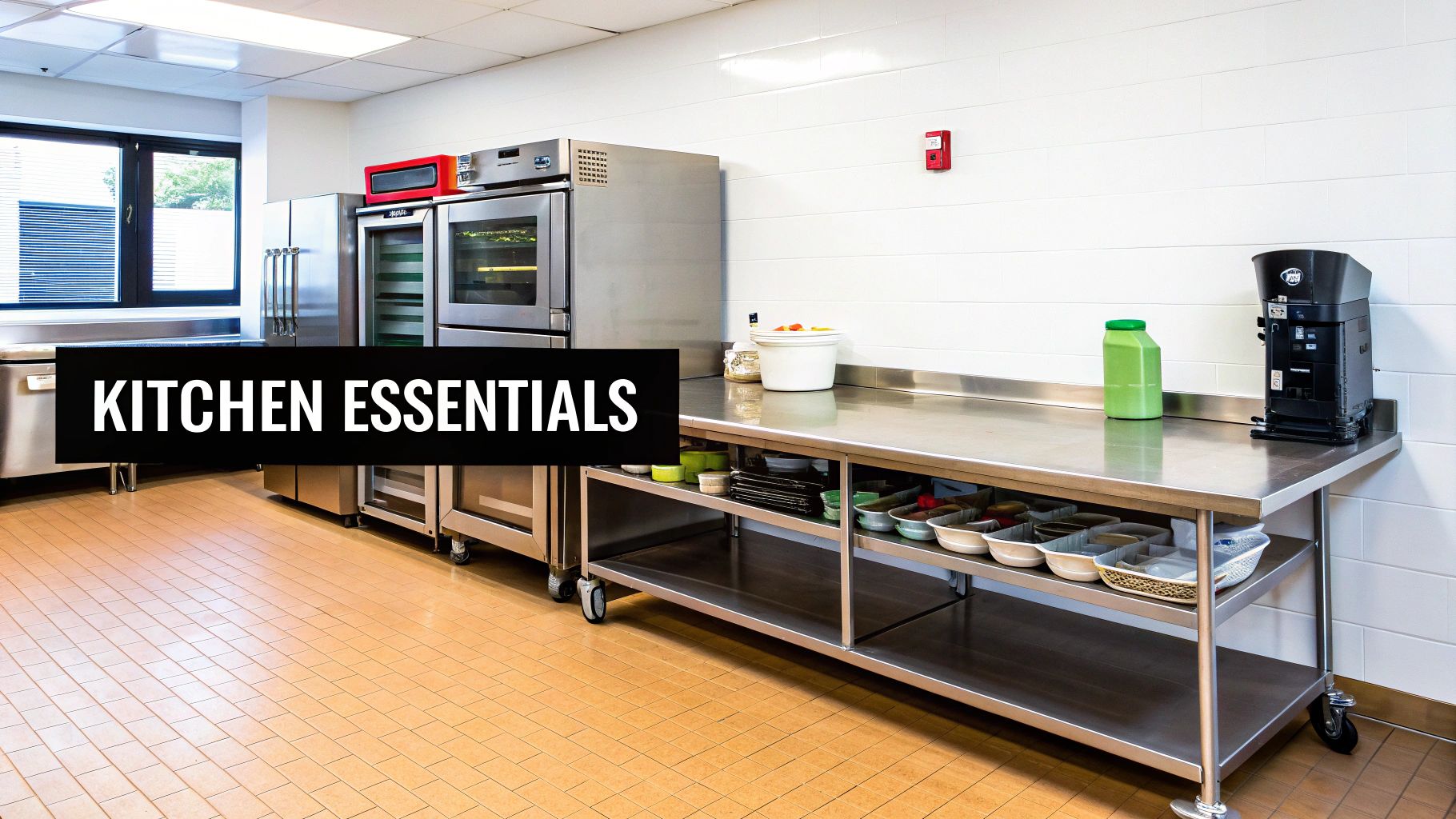
Your kitchen is the heart of your entire catering operation. It’s the engine that powers every single event. One of the first things to know about starting out in Los Angeles is you can't legally run a catering business from your home kitchen. This means finding a licensed commercial kitchen—often called a commissary—is a non-negotiable first step for all your prep, cooking, and storage.
This choice is a big one. It will directly shape your startup costs, your day-to-day workflow, and how easily you can grow. For most new caterers in LA, leasing space in a shared commissary kitchen is the smartest and most affordable way to get started. These places give you turn-key access to professional-grade restaurant equipment without the massive upfront cost of building out your own space.
Choosing Your LA Kitchen Workspace
When you start scouting for a commissary, don’t just sign the first lease that comes your way. Think of it like buying a car—you need to look under the hood. Make sure you schedule tours and inspect every potential kitchen with a critical eye.
- Check for Cleanliness and Maintenance: Is the facility genuinely spotless? Are the big-ticket items, like the walk-in commercial refrigerators and freezers, in good working order? A poorly kept kitchen is a huge red flag and a shortcut to health code violations.
- Evaluate the Available Equipment: Does the kitchen have the specific tools you actually need? If your specialty is Thai food, for instance, you’ll want to see high-BTU wok ranges. If you’re planning a high-volume business, you’ll need access to multiple convection ovens.
- Assess Scheduling and Accessibility: How do you book kitchen time? Is there enough availability during your peak prep hours? Some commissaries get incredibly crowded, so you need to be sure their system works for your schedule.
Your commissary isn't just a rental space; it's a strategic partner. A well-run, well-equipped facility provides the foundation you need to pull off flawless events and grow your business without getting bogged down by facility management.
Finding a great commissary in LA can be competitive, so get a head start on your search. Once you’ve locked down your workspace, your next job is to get the essential restaurant equipment that will make or break your efficiency.
Must-Have Restaurant Equipment for Caterers
While a commissary provides the heavy-duty stuff, you'll still need your own arsenal of specific tools and gear. Your initial investment should be all about versatile, durable equipment that champions food safety and can handle high-volume production.
The absolute must-haves are reliable commercial refrigerators and freezers. This isn't just a suggestion; it’s a core requirement from the health department to ensure all your ingredients are stored at safe temperatures.
Next, think about your cooking line. Even if the commissary has ovens, having your own countertop convection oven can be a lifesaver for smaller jobs or specific baking tasks. For diverse menus, like those heavy on Mexican or Chinese food, powerful commercial ranges and griddles are essential for hitting those authentic flavors and textures.
Don't overlook the specialized tools that define your food. If you’re making huge batches of Japanese sushi rice, a high-capacity rice cooker is a must. If you specialize in Korean barbecue, a quality charbroiler will be one of your most important pieces of restaurant equipment. For a full rundown, our commercial kitchen equipment checklist is a great resource to help you figure out exactly what you need.
To Buy New, Used, or Lease Your Equipment
Managing your startup cash is everything, and how you get your restaurant equipment plays a major role. You've basically got three paths, and each has its own set of pros and cons.
| Acquisition Method | Pros | Cons | Best For... |
|---|---|---|---|
| Buying New | Full warranty, latest technology, high reliability. | Highest upfront cost, fast depreciation. | Well-funded startups that need long-term reliability. |
| Buying Used | Significantly lower initial cost, great value potential. | No warranty, risk of breakdowns, needs careful inspection. | Bootstrapped businesses on a tight budget with some mechanical know-how. |
| Leasing | Low upfront cost, predictable monthly payments, access to better gear. | Higher total cost over time, you don't own it at the end. | New caterers who need to conserve cash while building the business. |
For many new caterers, a hybrid approach is the sweet spot. Think about leasing the big, expensive items like commercial refrigerators and freezers while buying smaller, durable essentials like prep tables and shelving outright. This strategy helps balance your cash flow and ensures you have rock-solid restaurant equipment where it matters most, setting your Los Angeles catering business up for success right from the start.
Designing a Profitable Menu and Pricing Strategy
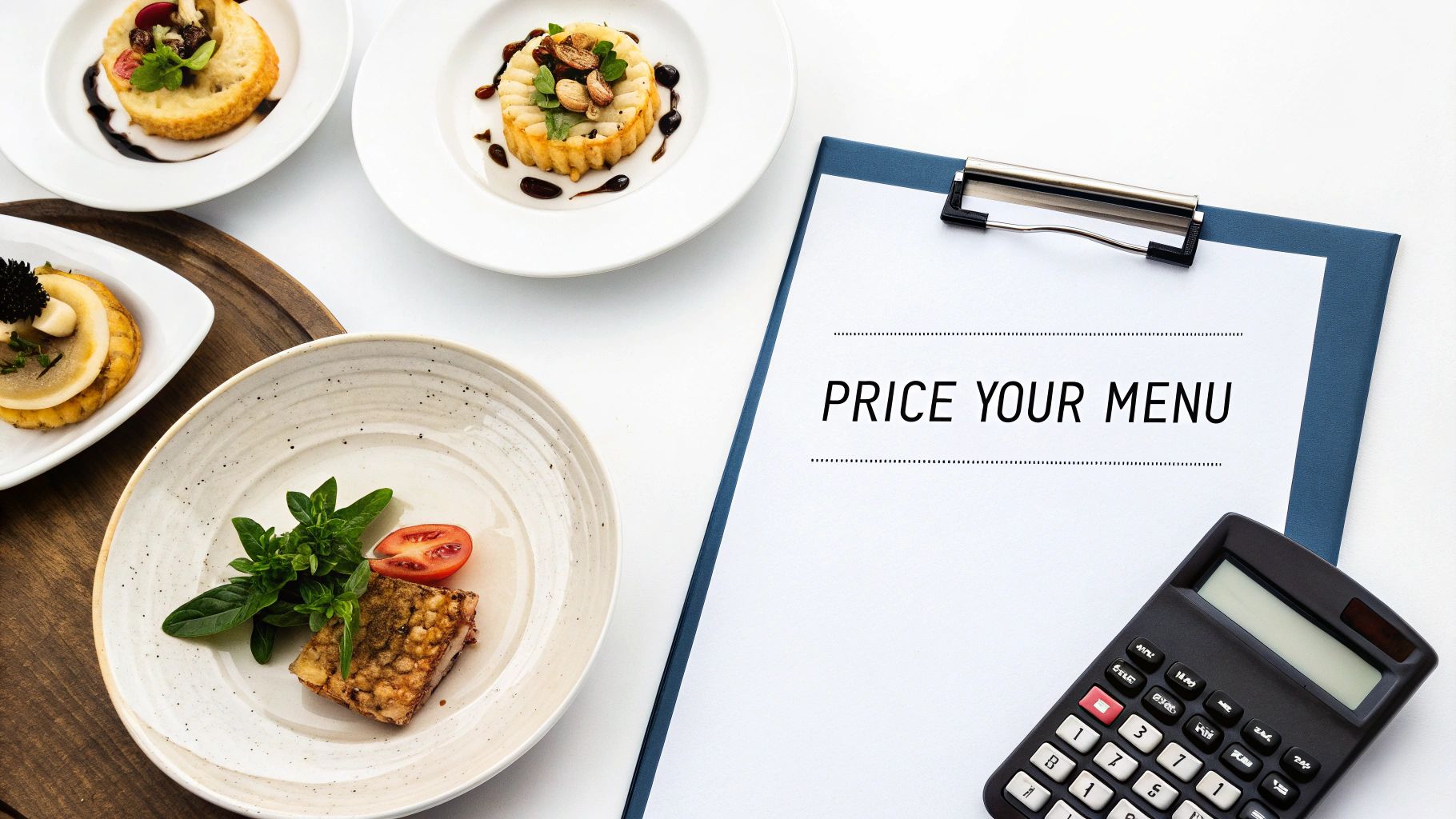
Your menu is so much more than a list of dishes. Think of it as your most powerful marketing tool and the very heart of your brand. In a place as competitive as Los Angeles, a well-designed menu has to hit three key points: it must be delicious, profitable, and practical for large-scale production. Get this right, and you go from being just another option to the go-to caterer in your niche.
The whole process kicks off by designing dishes that can be scaled up without falling apart in quality. You have to think about the unique hurdles of catering—food needs to travel well, hold its temperature for hours, and look fantastic on a buffet line, not just fresh out of the kitchen.
Crafting a Scalable and Transportable Menu
The best catering menus are built from recipes that taste incredible whether you're making them for 20 people or 200. This is non-negotiable, especially for popular Los Angeles cuisines where authentic flavor is king.
- Japanese Cuisine Example: Fresh, delicate sushi might be a logistical nightmare for huge events. Instead, focus on dishes like chicken katsu, teriyaki salmon, and agedashi tofu. These are perfect because they can be prepped in batches, cooked efficiently, and hold up beautifully in chafing dishes while keeping that authentic taste.
- Korean Cuisine Example: A full-blown Korean BBQ setup at an event can get complicated fast. You can capture those same bold flavors with options that scale. Think big batches of japchae (glass noodle stir fry) or slow-braised kalbi-jjim (braised short ribs). These dishes are made for communal eating and often taste even better as the flavors have time to meld.
The idea is to pick dishes that make your production process in the commercial kitchen smoother. This cuts down on stress on event days and makes sure every single guest gets a top-notch meal. Of course, a huge part of this is having the right restaurant equipment. To get a better handle on this, check out our guide on selecting the proper size of chafing dish—it's key to keeping your food perfect from kitchen to client.
Accurately Costing Your Recipes
Guessing your prices is the quickest route to closing your doors. To build a profitable catering company, you need to know the exact cost of every single ingredient in every dish. This is called food costing, and it’s non-negotiable.
The industry standard is to aim for a food cost percentage between 28% and 35%. What does that mean? If a dish costs you $7 in raw ingredients, you should be charging somewhere between $20 to $25 for it on your menu.
Your menu price isn't just covering ingredients. It has to pay for your labor, commissary kitchen rent, insurance, marketing, and—most importantly—your profit. Underpricing is a mistake you simply can't afford to make.
Get started by creating a spreadsheet for each recipe. List every ingredient, its unit cost, and the precise amount you use. This detailed breakdown gives you the power to price with confidence and protect your profit margins.
Building Your Pricing Model and Contracts
Once your recipes are costed out, you can start building your pricing structure. I've found that giving clients a few clear options works much better than throwing a massive à la carte list at them.
Here are a few popular models that work well:
- Tiered Packages: Offer Bronze, Silver, and Gold packages at different per-person price points. This makes the decision-making process much easier for clients and simplifies upselling for you.
- Per-Person Pricing: This is a straightforward model where the price is set based on the number of guests. It’s the standard for buffet-style service and plated dinners.
- À La Carte: This works best for add-ons or fully custom menus, letting clients build their own experience. Just be sure your pricing for individual items is high enough to be profitable on its own.
Finally, every single booking needs to be locked in with a professional proposal and a signed contract. This document protects you and your client by laying out all the details in black and white. Your contract must specify the menu, guest count, event date and time, total cost, payment schedule, and your cancellation policy. This isn't just paperwork; it’s the final step to securing a profitable event and building a solid, professional reputation in the Los Angeles catering scene.
Marketing Your Catering Business and Landing Clients
Okay, so you’ve got your kitchen sorted and your menu is looking incredible. Now it’s time to switch gears to what really keeps a business alive: finding customers. You can have the best Thai food green curry or the most authentic Japanese food katsu in all of Los Angeles, but it means nothing if people don't know you exist. Smart, effective marketing is how you'll start filling that calendar with events and building a name for yourself.
This all starts with a powerful online presence. In a city like LA, which is so driven by visuals, the look and feel of your brand are just as crucial as the taste of your food.
Building Your Digital Storefront
Think of your website as your digital business card, your menu, and your sales pitch, all in one. It has to be clean, professional, and dead simple for people to use. Most importantly, it needs to showcase absolutely stunning photos of your food. Grainy phone pictures just won't fly here. Investing in a professional food photographer is one of the smartest marketing decisions you can make.
Right alongside your website, Instagram is your best friend in the LA food scene. It’s the perfect place to tell your story visually.
- Showcase Your Cuisine: Post vibrant, mouth-watering photos and videos of your dishes. Think of a colorful spread of Mexican food street tacos or an elegant display of Chinese food dim sum.
- Behind-the-Scenes Content: Give your followers a peek into your commercial kitchen, introduce the team, and let them see the passion that goes into your cooking.
- Engage with the Community: Start following and interacting with Los Angeles event planners, wedding venues, and corporate offices. This is how you get on their radar.
This digital-first strategy isn't just a suggestion anymore; it's essential. The reality is that a staggering 75% of all catering orders are now placed online, either from a phone or a computer. This shift is massive, with 97% of corporate food buyers now expecting features like real-time delivery tracking. You have to meet this demand with a seamless digital experience. You can read more about the transformation of online catering to truly grasp how critical this is for any new business.
In today's market, your website and social media are just as vital as your commercial refrigerator. They're the tools that keep your brand fresh and in front of a constantly connected audience.
Forging Strategic Local Partnerships
While a strong online game is key for grabbing attention, it’s the real-world relationships that will sustain your business in Los Angeles. You've got to step out from behind the stove and start networking.
The goal here is simple: become the trusted, go-to caterer for the people who plan events for a living. These relationships are your direct pipeline to a steady stream of gigs.
Actionable Networking Strategies for LA
- Connect with Event Planners: Pinpoint the top wedding and corporate event planners in LA. Send a simple, professional email and offer to drop off a complimentary tasting box. A delicious sample of your food speaks volumes more than a sales pitch ever could.
- Partner with Venues: A lot of venues keep a list of preferred caterers they recommend. Do your research and find venues that match your brand's vibe—from chic downtown art galleries to stunning Malibu estates—and schedule a meeting to introduce yourself.
- Join Industry Associations: Get involved with local chapters of groups like NACE (National Association for Catering and Events). Showing up to their meetings is a fantastic way to meet the key players in the industry.
Leveraging Catering Marketplaces
When you’re just starting out and your brand isn't well-known yet, catering marketplaces can be an absolute goldmine for leads. Platforms like ezCater and Caterspot connect businesses and individuals with local caterers like you.
Sure, they take a commission on each order, but for a new business, the benefits usually outweigh the cost. They handle the marketing and payment processing, which frees you up to focus on what you do best—cooking amazing food. Think of it as a paid lead generation service that helps you get those first crucial clients in the door, build up some great reviews, and establish the reputation you need to start getting direct bookings down the road.
Common Questions for New LA Caterers
Starting a catering business in Los Angeles is an exciting venture, but it's natural to have a few questions. From legal requirements to equipment and pricing, let's dive into some of the most common things new caterers ask.
Can I Start a Catering Business From My Home in Los Angeles?
This is a big one, and the answer is a straightforward no. In Los Angeles County, you cannot legally run a full-scale catering operation out of your home kitchen. The California Health and Safety Code is very specific: any food sold to the public has to be made in a licensed commercial kitchen, often called a commissary.
These kitchens are built to meet health and safety standards that a residential kitchen just can't match. To operate above board, you'll need to rent space and sign an agreement with a permitted commissary. This is where you'll do all your prep, cooking, and food storage, ensuring you're fully compliant with the LA County Department of Public Health.
What Restaurant Equipment Should I Prioritize Buying First?
When you're just starting out, every dollar counts. It's tempting to buy all the cool gadgets, but it’s smarter to focus on the essentials that protect your food and make your workflow efficient.
Here's what should be at the top of your shopping list:
- Commercial Refrigerators and Freezers: This is your number one priority. Reliable cold storage is the bedrock of food safety. A good commercial refrigerator ensures your ingredients, whether for a big Mexican food fiesta or a delicate Japanese food menu, are always held at safe temperatures.
- High-Capacity Cooking Equipment: Your workhorses will be a versatile convection oven and a powerful commercial range. These can handle the volume you need for catering events, from searing meats for a Korean food-inspired menu to baking trays of appetizers.
- Insulated Food Carriers: You'll often hear these called "cambros." They are absolutely critical for keeping hot food hot and cold food cold while you're driving from the commissary to the event. This is a core part of being a professional caterer.
- Stainless Steel Prep Tables: You need space to work that’s durable and easy to clean. Stainless steel is the industry standard for a reason—it’s essential for a hygienic kitchen.
You can hold off on the specialty items, like a dedicated wok range for Chinese food or specific Thai food cooking tools, until you've got steady business coming in.
So many new caterers make the mistake of buying niche restaurant equipment before they've even secured the basics. Your first big investment should always be in the gear that guarantees food quality and safety—like a top-tier commercial refrigerator and reliable transport carriers. Everything else can wait.
How Should I Price My Catering Menu for Profit?
Good pricing isn't just about covering costs; it's about building a business that lasts. It’s a blend of hard numbers and knowing your market.
First, you have to break down your food cost for every single item you make. The industry standard is to keep food costs between 28-35% of your menu price. So, if the ingredients for a dish cost you $10, you should be charging somewhere between $28 and $35.
Next, you need to account for your labor and overhead. This isn't just your time cooking; it's the rent for the commissary kitchen, your insurance, marketing, and all the hours spent shopping, prepping, driving, and cleaning up. All of that has to be baked into your prices.
Finally, see what everyone else is doing. Research what other caterers in your LA niche are charging. Your final price needs to do three things at once: cover every single cost, give you a healthy profit margin (aim for 10-20%), and be competitive enough to land you clients in the crowded LA scene.
Ready to equip your new catering kitchen? Los Angeles Restaurant Equipment provides the professional-grade gear you need to succeed. From essential Atosa commercial refrigerators and freezers to the ranges and ovens that will bring your menu to life, we offer competitive pricing and free freight delivery to get you started on the right foot. Explore our full catalog and flexible financing options at https://losangelesrestaurantequipment.com.