

A Practical Guide on How to Stock a Bar in Los Angeles
Stocking a bar in Los Angeles isn't just about buying a bunch of bottles; it's about crafting a smart, strategic plan that will make or break your profitability from the get-go. Whether you're opening a high-end cocktail lounge in Koreatown or running a food truck that slings drinks in Silver Lake, a well-stocked bar is a careful balance between your unique concept and your budget. The trick is to start with a clear vision, figure out your liquor tiers, and lock in precise inventory levels so you’re not wasting cash while still keeping customers happy.
Building Your Foundation for a Profitable LA Bar
Long before you pour that first drink, the financial health of your bar is being decided by the inventory plan you put together. This is a huge deal, especially in a market as competitive as Los Angeles, where every single dollar counts.
From a busy Thai spot in East Hollywood to a sleek Japanese izakaya downtown, your drink menu needs to perfectly match your food, your brand, and your financial goals. A solid stocking strategy makes sure you have what people want without tying up your cash in bottles that just collect dust.
Think of this initial planning stage as creating the blueprint for your bar's success. Your menu tells you what you need, your sales forecasts give you an idea of how much, and your brand's vibe dictates the quality of what you'll serve.
Defining Your Bar's Inventory Tiers
The first real step in that blueprint is defining your liquor tiers. It's a simple system for organizing spirits by quality and price, which directly sets your drink prices and profit margins. A smart inventory has a little something from each tier to appeal to all kinds of customers and budgets.
To give you a better idea of how this works for a specific L.A. concept, let's break down the tiers.
Essential Bar Inventory Tiers Explained
| Tier Level | Description | Example Brands (e.g., for a Japanese Izakaya or a Thai restaurant) | Typical Price Point | Role in Your Bar |
|---|---|---|---|---|
| Well | Your house spirits. These are the affordable workhorses for simple mixed drinks and cocktails where the spirit isn't the star. | Haku Vodka, Roku Gin, Toki Whisky (for a Japanese bar); Mekhong Rum, Singha beer (for a Thai spot). | $ | The foundation for high-volume, lower-cost drinks. |
| Call | A step up in quality and name recognition. These are the brands customers ask for by name. | Tito's, Jack Daniel's, Espolòn Tequila. Brands with strong marketing and consistent quality. | $$ | Your reliable mid-range options that satisfy most customer requests. |
| Premium | Higher-end, well-known brands recognized for superior quality and smoother taste profiles. | Grey Goose, Patrón Silver, Hendrick's Gin. Often used in spirit-forward cocktails. | $$$ | Elevates your cocktail menu and offers guests a more refined experience. |
| Super-Premium | Top-shelf, often aged, small-batch, or rare spirits that command the highest prices. For the connoisseurs. | Yamazaki 12 Year Whisky, Hibiki Harmony, Clase Azul Reposado Tequila. | $$$$ | Your "wow factor" bottles. Great for special occasions and upselling. |
For a new food truck in L.A. doing Korean fusion tacos, you'd probably stick mostly to well and call spirits to keep menu prices approachable, maybe adding one or two premium tequilas for an upgraded margarita. On the other hand, a fancy Chinese restaurant in Beverly Hills would lean heavily on premium and super-premium selections to match its clientele's expectations.
Establishing Initial Par Levels
Once you've sorted your tiers, you need to set your par levels. This is just the minimum amount of every single item—from vodka to limes—that you need on hand at all times. It's the most critical tool you have to avoid running out of a bestseller on a busy Saturday night or, just as bad, having too much money tied up in stock.
Setting pars is basically an educated guess at first. You'll need to think about your bar's size, how many customers you expect, and what drinks are central to your menu.
Setting pars is not a one-time task. It’s a dynamic process that should be reviewed and adjusted regularly based on sales data. What sells well in December might sit on the shelf in July.
Knowing what’s happening in the market helps, too. The global bar and cafe market is expected to jump from $502.55 billion in 2025 to a massive $627.19 billion by 2029. A huge chunk of that growth is driven by beer, which is why some experts suggest dedicating 40-50% of your inventory in commercial beer coolers to cash in on the trend.
Of course, you have to protect that investment. Good refrigeration is a must-have. Quality commercial refrigerators and under-counter freezers keep your beers, wines, juices, and garnishes fresh, cutting down on waste and making sure your drinks taste exactly as they should. A smart bar layout that makes these units easy to access for your bartenders is the final piece of the puzzle. This is how you turn a shelf full of bottles into a buzzing, profitable business.
The Ultimate Shopping List for Spirits and Mixers
Alright, you've got a solid strategy for your tiers and par levels. Now it's time for the fun part: turning that plan into your very first purchase order.
Putting together the perfect shopping list is a real balancing act. You need to stock the universal crowd-pleasers, but also capture the unique vibe of your Los Angeles spot. What works for a Koreatown BBQ joint won't be the same as a chic Thai Town cocktail bar.
And this isn't just about booze. We're talking about every single liquid that goes into crafting a fantastic drink. From the base spirit down to the last drop of fresh juice, each item is a crucial piece of the puzzle. Quality and freshness are everything, which means having reliable commercial refrigerators ready to go from day one is non-negotiable.
Building Your Core Spirits Collection
No matter what your concept is, every bar needs a strong foundation built on the "big five" spirits. Think of these as the workhorses that will anchor the majority of your cocktails. For any L.A. bar, this means having dependable options across your well, call, and premium tiers for each category.
- Vodka: An absolute must for its neutrality in classics like the Moscow Mule and Cosmopolitan. Your well vodka will be for simple highballs, while a premium name like Ketel One or Grey Goose is there for the discerning martini drinkers.
- Gin: This botanical spirit is the star of timeless drinks like the Gin & Tonic and the Negroni. You'll want a classic London Dry (like Beefeater) and maybe a more modern, floral gin to give your menu some range.
- Rum: The soul of any tropical or tiki drink program. A versatile light rum is essential for Mojitos and Daiquiris, and a dark or spiced rum is needed for those deeper, more complex cocktails.
- Whiskey: This is a huge and vital category. You have to stock a solid Bourbon (like Maker's Mark), a Rye for classic cocktails like the Sazerac, and at least one Scotch. An Irish whiskey and a local craft option can really round out your selection.
- Tequila: In Los Angeles, this is a non-negotiable headliner. A quality Blanco is critical for margaritas and Palomas. Offering Reposado and Añejo options is just as important for upselling and for customers who like to sip their spirits.
The LA Edge: Agave Spirits and Premiumization
Here in Los Angeles, tequila isn't just another bottle on the shelf—it’s a main event. The market has completely shifted, mirroring a national trend toward premium spirits and a serious love for all things agave. Ignoring this would be like opening a Chinese restaurant without a wok. It just won't fly.
This isn't just a hunch; the numbers are striking. In 2024, tequila officially outsold vodka in American bars for the first time, and a massive 64% of operators are planning to expand their agave offerings. Mezcal production alone has blown up, jumping from 1.45 million liters in 2014 to over 12.2 million in 2023.
For L.A. bar owners, this means you need to dedicate a significant 30-40% of your prime backbar real estate to high-quality tequilas and whiskeys. A great tip is to use glass-door merchandisers to showcase these high-margin bottles—a move that can bump your profit margins by 15-20%. Staying on top of these alcohol and beverage trends is key to staying ahead.
Liqueurs and Modifiers: The Flavor Arsenal
If spirits are the base, then liqueurs are the secret weapons that give your cocktails depth, complexity, and personality. You don't need to buy every bottle out there, but a well-curated selection is vital.
Here's your starting lineup:
- Triple Sec/Orange Liqueur: Essential for Margaritas and Sidecars. Have a well option (basic triple sec) and a premium one (like Cointreau or Grand Marnier).
- Vermouth: You'll need both dry vermouth for your martinis and sweet vermouth for Manhattans and Negronis.
- Amaro/Bitters: A bitter liqueur like Campari or Aperol is a must-have. And Angostura bitters are the absolute gold standard for aromatic bitters.
Think of liqueurs as your spice rack. A small, well-chosen collection allows you to create an incredible range of flavor profiles without overstocking your bar.
Wine, Beer, and Non-Alcoholic Essentials
Your beverage program is more than just hard liquor. A thoughtful selection of wine and beer is a smart way to capture a huge part of your customer base.
- Wine: Start with at least one red (like a Cabernet Sauvignon or Pinot Noir) and one white (like a Sauvignon Blanc or Chardonnay). Adding a rosé and a sparkling wine will cover most requests.
- Beer: Offer a mix. A light lager, a popular IPA (especially a local one), and maybe a stout or wheat beer is a great starting point. Having both draft and bottled/canned options is ideal.
Finally, don't ever underestimate the power of high-quality mixers and garnishes. These are the finishing touches that scream quality to your guests. Fresh-squeezed citrus juice (lemon, lime, orange) is an absolute must, and it needs proper cold storage in a commercial prep table refrigerator.
Be sure to also stock up on sodas, tonic water, ginger beer, simple syrup, and a variety of fresh garnishes like olives, cherries, and seasonal herbs. This is the kind of attention to detail that separates a forgettable bar from a great one.
Choosing Your Essential Bar Equipment and Tools
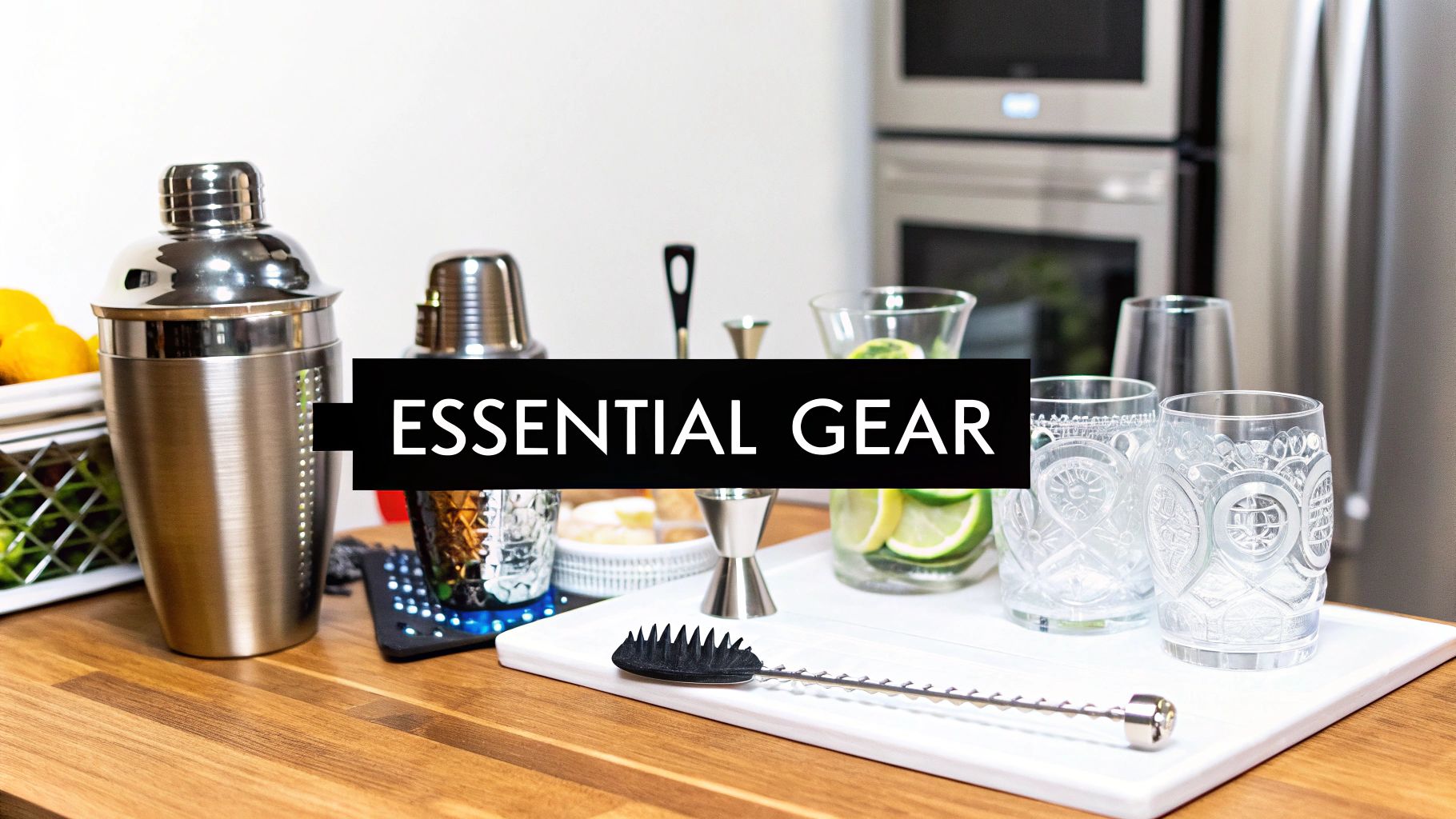
So you’ve got your inventory all mapped out. That's a great start, but it's only half the battle. Now you need the hardware to actually bring your drink menu to life. Equipping your bar is a serious investment, and it directly hits your team's speed, consistency, and overall efficiency—three things that are absolutely make-or-break in the competitive Los Angeles service scene.
Whether you're building out a huge bar for a new Chinese restaurant or cramming a full-service setup into a food truck in Koreatown, the core principles don't change. You need gear that's reliable, durable, and sized right for your space. It's all about giving your bartenders the tools they need to perform at their best, from the big-ticket appliances down to the smallest hand tools.
Major Appliances: The Heartbeat of Your Bar
Let's talk about the big stuff first. These are the foundational pieces of your bar's entire operation. Choosing the right commercial refrigerators, freezers, and ice machines is critical. If you get this wrong, you're looking at spoiled product, sluggish service, and some major headaches you just don't need.
Commercial Refrigeration and Freezers What you need here really depends on your space and your menu. A high-volume cocktail spot is going to need a ton of under-counter refrigeration for juices, syrups, and garnishes. On the other hand, a beer-centric bar will need powerful back bar coolers to keep things frosty.
- Under-Counter Refrigerators: These are the real workhorses behind the bar, keeping all your essential mixers, juices, and prepped garnishes right where you need them. They’re a lifesaver in tight spots, like a food truck slinging Mexican-inspired cocktails.
- Back Bar Coolers: These units, often with glass doors, are fantastic for both storage and showing off what you’ve got. They let you merchandise your craft beer selection while keeping every can and bottle at the perfect temperature.
- Commercial Freezers: You absolutely need one for things like frozen fruit purees, specialty ice, and keeping those glasses perfectly frosted. An under-counter freezer can be a great space-saving option for smaller venues.
A really functional piece to consider is a complete 30 Bar Center, which handily combines many of these functions into a single unit.
Ice Machines Seriously, never underestimate how much ice you're going to go through. Running out of ice in the middle of a rush is a disaster. A commercial ice maker is completely non-negotiable. Base your machine's production capacity on your busiest nights, and don't just think about drinks—factor in the ice for your service wells, too.
To help you figure out what's best for your concept, we've put together a quick comparison of refrigeration solutions that work well for different L.A. spots.
Commercial Refrigeration Solutions for Your L.A. Bar
Choosing the right refrigeration isn't just about temperature; it's about workflow and what fits your specific business model. An Atosa unit that’s perfect for a Venice food truck might not be the best fit for a sprawling restaurant in Hollywood. This table breaks it down.
| Equipment Type | Best For | Key Feature (e.g., Footprint, Visibility) | L.A. Concept Example |
|---|---|---|---|
| Atosa Under-Counter Refrigerator | Storing mixers, fresh juices, and garnishes within the bartender's immediate reach. | Compact footprint, designed to fit seamlessly under the bar counter for maximum efficiency. | A mobile food truck in Venice Beach serving fresh-squeezed juice cocktails. |
| Atosa Glass-Door Back Bar Cooler | Chilling and displaying a curated selection of bottled and canned beers and wines. | High visibility, turning inventory into a customer-facing display that can drive sales. | A Japanese izakaya in Little Tokyo showcasing its premium sake and craft beer list. |
| Atosa Sandwich/Pizza Prep Table | Organizing and chilling a wide array of cocktail garnishes in one accessible station. | Integrated refrigerated storage with easy-access ingredient wells on top. | A high-volume Thai restaurant in Hollywood that uses numerous fresh herb and fruit garnishes. |
| Atosa Glass-Door Merchandiser | Displaying a large inventory of non-alcoholic craft sodas, bottled water, and energy drinks. | Vertical design maximizes storage capacity while using minimal floor space. | A quick-service Korean spot in a busy downtown food court. |
Ultimately, the goal is to create an efficient, reliable setup. The right gear helps you serve customers faster, keep your product fresh, and showcase what makes your bar unique.
Investing in high-quality, reliable equipment from the start saves you money in the long run. Fewer breakdowns, consistent temperatures, and energy efficiency mean lower operating costs and less stress.
The Small Tools That Make a Big Difference
Beyond the big machines, your bartenders need a full arsenal of smallwares. These are the tools of their trade, and believe me, quality matters. Durable, well-designed tools are what allow for precision and speed, ensuring a margarita tastes exactly the same on a slow Tuesday afternoon as it does during the Saturday night crush.
Your essential toolkit needs to include:
- Shakers: You'll want both Boston shakers (a favorite of seasoned pros) and cobbler shakers.
- Jiggers: Get multiple jiggers with clear, easy-to-read measurement lines. This is crucial for consistency and controlling your pour costs.
- Strainers: You’ll need Hawthorne strainers for your shakers and fine-mesh strainers for getting rid of tiny ice chips or fruit pulp.
- Bar Spoons: Long-handled spoons are a must for properly stirring cocktails like an Old Fashioned.
- Muddlers, Peelers, and Knives: For prepping all those fresh garnishes and releasing the essential oils from herbs.
Finally, let's talk glassware. The right glass makes a huge difference—it enhances a drink's aroma, its look, and the whole experience. Having a good variety of glasses on hand—like rocks, highball, coupe, and martini—is essential. You can find a more detailed breakdown by checking out our complete commercial kitchen equipment list for more ideas.
Organizing Your Bar for Speed and Profit
Once your inventory is stocked and the equipment is in, it's time to turn that space into a well-oiled machine. The way you arrange every bottle, tool, and ingredient has a huge impact on how fast your bartenders can work—and that speed translates directly to your bottom line. A messy, poorly planned bar costs you precious seconds on every single drink. In a city like Los Angeles, those seconds add up fast and can mean real money lost.
The whole point is to create a workspace where everything is just a quick reach away, cutting down on extra steps and wasted movement. This is especially true for the unique, often tight spaces you find all over LA, whether it's a food truck in Koreatown or a bustling Thai spot in Hollywood. A smartly organized bar isn't just about looking clean; it's a core part of your business strategy.
Designing the Bartender's Cockpit
You want to think of your main well station as the "bartender's cockpit." Everything a bartender needs to make 80% of your drinks should be right there, accessible with no more than a step or two. Get this right, and you'll be able to handle even the craziest rushes with ease.
A logical layout keeps the rhythm going and prevents those frustrating bottlenecks behind the bar. This idea works for any kind of place, from a high-volume Mexican restaurant slinging margaritas to a quiet Japanese bar crafting detailed cocktails. The goal is always speed.
It all starts with building your station around the ice well.
- Ice Well: This is ground zero. It needs to be easy to get to with either hand because pretty much every drink involves ice at some point.
- Speed Rail: This sits right in front of the ice well. It’s where you keep your workhorses—the well spirits and popular call liquors you pour all night long.
- Garnish Station: Keep this right next to the well, stocked with all your prepped garnishes like lime wedges, olives, and cherries so they stay fresh and ready to go.
- Glassware: Your most-used glasses—rocks, highballs, coupes—should be on a shelf directly above or below the station for a quick, no-look grab.
The most profitable bars are designed like assembly lines. Every movement is planned, every tool has a home, and every second is optimized for drink production.
Strategic Back Bar and Under-Counter Layout
If the cockpit is for speed, the back bar is your showroom. This is where you put your high-margin, top-shelf bottles to catch a customer's eye and encourage them to upgrade their drink. Arrange these premium spirits right at eye level. Your less expensive, call-level spirits can go on the lower shelves, still easy to grab but not hogging the prime real estate.
In Los Angeles, every square foot of space is gold, which makes your under-counter area incredibly important.
- Under-Counter Refrigerators: Perfect for storing backup juices, house-made syrups, white wines, and beer. This keeps your main well clean and ensures you don't run out of cold essentials during a rush.
- Under-Counter Freezers: Use these for specialty ice, frozen fruit purees, or keeping glassware frosted for that signature cocktail, all without cluttering up your back bar.
Organizing for LA's Unique Spaces
These principles work anywhere, but they often need a creative twist to fit into the kinds of spots you find around LA. For a food truck serving Chinese-inspired craft cocktails, you might need to use vertical shelving and multi-level speed rails to make the most of a tiny footprint.
For a downtown cafe with just a small bar counter, under-counter commercial refrigerators and freezers aren't just a nice-to-have; they're an absolute must. They allow a tiny space to offer a surprisingly deep menu. And in these high-demand spots, keeping your ice machine in top shape is critical. If it goes down on a busy night, knowing some basic commercial ice maker troubleshooting can be a lifesaver. When you really think through your layout, you can turn a tight space into a powerhouse of efficiency.
Mastering Inventory and Supplier Relationships
So, you've got your bar stocked and the equipment is humming. Great. But stocking a bar isn't a one-and-done project. It's a living, breathing part of your business—an ongoing cycle of smart inventory management that directly hits your profitability every single day.
This really boils down to constantly counting what you have, figuring out what’s selling, and mercilessly cutting what isn't. The data you pull from this process is your roadmap to a healthier bottom line. It shows you exactly where to trim waste and where to double down on your winners.
The Rhythm of Inventory Management
The first thing to do is get into a consistent inventory schedule. For most bars I’ve seen, a weekly count hits the sweet spot. It’s frequent enough to catch problems before they balloon but not so often that it becomes a soul-crushing chore for your staff.
During this routine count, you'll compare what's on the shelf against the sales data from your POS system. The gap between those two numbers reveals your pour cost, a critical metric that shows the cost of inventory you’ve used as a percentage of your revenue.
For a bar in Los Angeles, a healthy pour cost typically lands somewhere between 18-24%.
If you see that number creeping up, it’s a huge red flag. It could mean anything from over-pouring and unrecorded spills to outright theft. Catching these discrepancies early is the key to protecting your margins.
This simple flow chart gives you a visual on how the core stations work together for an efficient bartender, moving from the speed rail to the ice well and then to the garnish station.
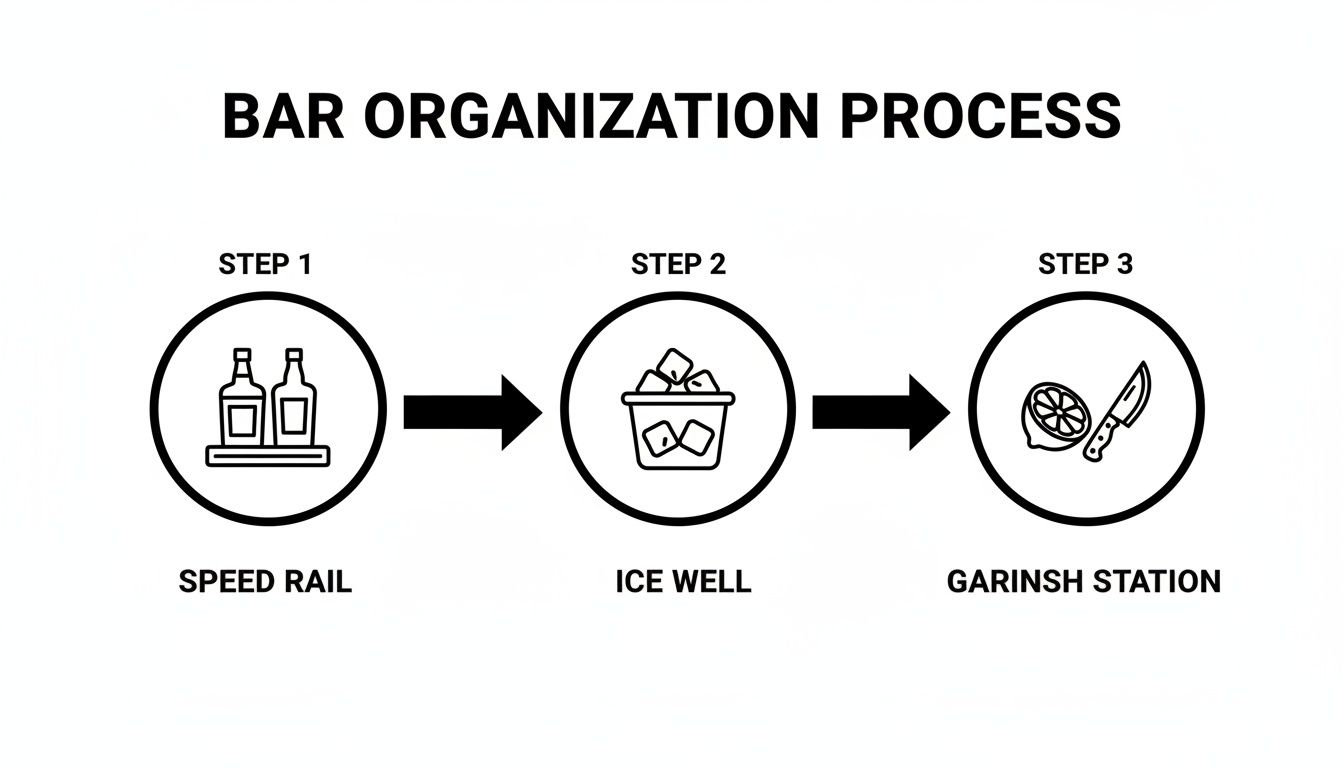
As you can see, a logical layout—spirit, ice, then garnish—cuts down on wasted steps and makes service much, much faster.
Building Strong Supplier Relationships in LA
Your inventory data does more than just track your costs; it makes your ordering a whole lot smarter. When you know exactly how much you pour each week, you can dial in your par levels and create a predictable ordering rhythm with your Los Angeles liquor distributors.
Don't underestimate the power of a solid relationship with your suppliers. A good rep is worth their weight in gold. They’ll keep you in the loop on new products, special deals, and potential supply chain hiccups—which is absolutely vital for LA food truck operators and other concepts with limited storage space.
Think of your supplier as a partner in your business. Clear communication and consistent orders build trust, which can pay off when you need a last-minute delivery on a busy holiday weekend.
This partnership is even more critical when you're trying to keep up with the market. Today, that means balancing your alcoholic staples with the explosion in non-alcoholic and low-ABV drinks. It’s surprising, but in the U.S., a full 29% of bar sales now come from low/no-alc options.
For an L.A. food truck or a local brewery, this might mean dedicating 25-30% of cooler space to these items. The data also shows how reactive ordering can be: 36% of bars place same-day orders, with another 15% being last-minute. This just goes to show how much you need a nimble ordering process and suppliers you can count on.
Staying Agile and Adapting to Trends
Your inventory should never be set in stone. The Los Angeles market changes fast, and your drink menu has to keep up. Use your sales data to see what’s hot and what’s not.
- Identify Your Stars: These are your best-selling, high-margin drinks. Always keep them in stock and make sure they’re front and center on the menu.
- Cut Your Duds: Remember that obscure bottle of liqueur you were sure would be a hit? If it's been collecting dust for months, it's just tying up cash. Run a special to move it or cut it from your next order.
- Experiment Wisely: Keep an eye on what's trending. Seeing a growing demand for Japanese gin or Korean soju cocktails? Bring in a few bottles, test them out as specials, and see how they sell before giving them a permanent spot.
As you get the hang of inventory, learning about preserving spirits for the long haul is a pro move. It helps maintain the quality of your product and minimizes waste from opened bottles. Proper storage, especially for your premium spirits, protects your investment and makes sure every single pour is perfect.
Common Questions About Stocking a Bar in LA
Setting up a bar in Los Angeles is an exciting venture, but it's natural to have a few big questions swirling around. Getting the initial stock right can feel like a make-or-break moment. From figuring out the budget to choosing the right bottles for your menu, let's tackle the questions that come up time and time again.
How Much Does It Cost to Initially Stock a Bar in Los Angeles?
There's no single price tag, but you can expect your initial bar stock in Los Angeles to run anywhere from $5,000 for a tight, focused setup (like in a food truck) to over $25,000 if you're building out a full-service restaurant with a top-shelf cocktail program. The final number really depends on your venue's size, how deep your menu goes (beer, wine, and full liquor), and the quality of spirits you're pouring.
For a solid starting point with a good mix of well and call spirits, a curated list of local craft beers, and a handful of essential wines, you're likely looking at the $8,000 to $12,000 range. Don't forget to tack on another 15-20% to that initial budget for all the extras—mixers, fresh garnishes, and a full set of glassware.
What Are the Most Common Stocking Mistakes to Avoid?
One of the biggest pitfalls is over-ordering. It's tempting to stock obscure, interesting bottles, but they often just tie up cash and collect dust on the shelf. On the flip side, underestimating the demand for quality non-alcoholic options is an increasingly common misstep. Another classic error is failing to set and stick to par levels, which leads to frantic last-minute store runs and inconsistent inventory.
A critical mistake we see all too often is skimping on proper refrigeration. Trying to save a few bucks on a commercial beer cooler or under-counter freezer can backfire spectacularly, leading to spoiled products and major financial losses that wipe out any initial savings.
Lastly, a messy walk-in or disorganized under-counter fridge slows down your bartenders and leads to waste. A clean, well-managed cold storage system is just as crucial as the bottles on your back bar.
How Do I Adapt My Bar Stock for Specific Cuisines?
Your drink menu should feel like it belongs with your food. The right beverage selection can elevate the entire dining experience, making it feel more intentional and cohesive. The goal is to find drinks that complement the flavors coming out of your kitchen, not fight against them.
For different Los Angeles restaurant concepts, that might look something like this:
- A Japanese Restaurant: You'll want a deep selection of sake, of course, but also a good lineup of Japanese whiskies (like Suntory or Nikka). Clean spirits like high-quality gin and vodka are also essential for more minimalist cocktails.
- A Thai Restaurant: Think light, crisp lagers (like Singha) that can cut through the spice. Spirits that play well with aromatic and tropical flavors, like rum and gin, are a must for creating cocktails with ingredients like lychee, coconut, and chili.
- A Korean BBQ Joint: Soju is non-negotiable. Stock up on that, along with a few Korean beers and maybe some makgeolli. For spirits, whiskey and tequila are great choices that have the backbone to stand up to those bold, savory marinades.
- A Mexican Cantina: It's all about agave. A wide range of tequilas (Blanco, Reposado, Añejo) and mezcals is the heart of your bar. Round it out with plenty of Mexican lagers and all the fresh ingredients for perfect margaritas and palomas.
The trick is to always think about how the drink in the glass will pair with the food on the plate.
At Los Angeles Restaurant Equipment, we provide the professional-grade commercial refrigerators, freezers, and bar equipment you need to protect your inventory and serve with confidence. From under-counter units for food trucks to full-size glass-door merchandisers for busy restaurants, we have the reliable Atosa equipment to build a profitable bar from the ground up.