

A Guide to the Perfect Layout of Bars in Los Angeles
When you think about the ideal layout for a bar, it’s all about making every square foot count. The goal is to create a space that keeps your staff moving efficiently, gives customers a great experience, and ultimately drives your profits. A great design is more than just looks; it's the blueprint that cuts down on unnecessary steps for your bartenders, speeds up service, and creates a vibe that makes people want to stick around.
Designing a Bar Layout for the LA Market
In a market as fierce as Los Angeles, your bar's layout is its engine. Whether you're working with a tight spot in Silver Lake or a sprawling, high-volume venue in Beverly Hills, a smart plan is essential. It's the science of workflow that really separates the bars that thrive from the ones that just get by.
A well-thought-out bar makes life easier for your staff, creating a workspace that’s comfortable and intuitive. This lets them pump out more drinks with less effort. That speed directly translates to a better customer experience, creating an atmosphere from Downtown LA to the Westside that encourages guests to settle in, order another round, and spend more.
Evolving for the Modern Customer
The modern bar is a far cry from the simple drink counters of the past. Customer habits have changed, especially in big cities, pushing owners to design spaces with multiple zones. The data tells the story: before 2020, about 58% of orders at bars and restaurants were for customers dining in. By mid-2022, that number had dropped to just 47%, and analysts don't expect it to bounce back completely.
This shift has forced operators to rethink their floor plans. Now, you’ll see distinct areas like high-speed service bars for takeout and delivery, traditional counter seating, and relaxed lounge areas, all designed to capture different types of business.
A thoughtfully planned layout does more than just look good—it transforms every square foot into a potential profit center. This mindset is critical for any LA operator aiming for long-term success.
This intense focus on flow isn't just for the front of the house. The same principles that make a bar efficient apply directly to a well-run kitchen. For a deeper look at optimizing your entire operation, check out our guide on commercial kitchen layout design.
Choosing the Right Bar Layout Design
Picking the perfect layout for your bar is a lot like choosing the right car to get around Los Angeles. A tight, efficient car is what you need for squeezing into a parking spot in Koreatown, but you'd want a big SUV for hauling gear to a pop-up on Venice Beach. Every bar layout has a specific job, and it shapes everything from how your staff moves to how customers feel about your brand.
Nailing this decision from the very beginning saves you from expensive renovations and operational nightmares later. It’s what makes your workflow feel natural, your space feel right, and ensures that your equipment, from the commercial refrigerators to the ice wells, is exactly where it needs to be. This choice is the direct line connecting your physical space to your bottom line.
This isn't just a theory; it's a process. A smart layout creates a better workflow, and a better workflow drives profit.
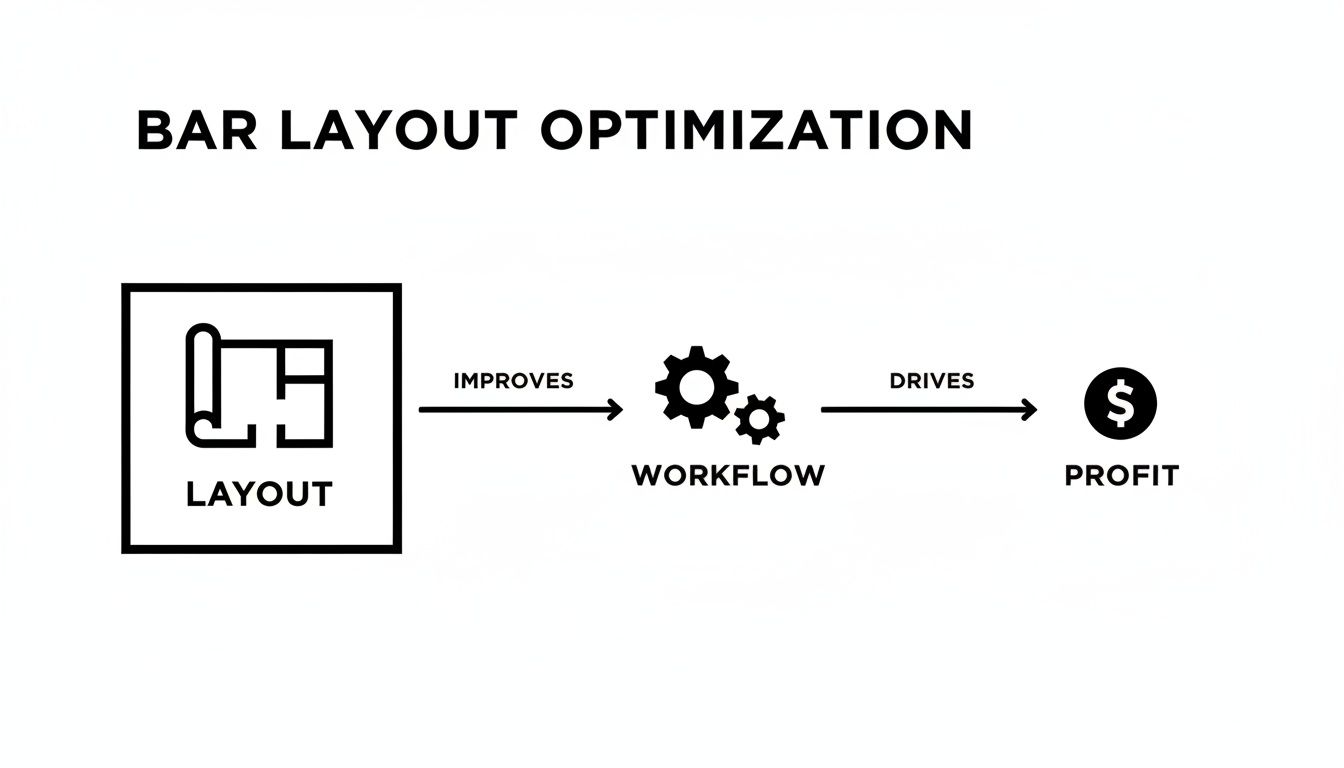
As you can see, these aren't three separate things to worry about. They're all part of one interconnected system where thoughtful design is the true starting point for success.
Exploring Common Bar Layouts
Let's dive into the most popular designs and see how they fit into the L.A. scene. Each one has its own vibe and strengths that can match your bar's concept and location.
-
Linear Bar: This is the classic straight bar, the workhorse you see in long, narrow spaces. Think of it as an assembly line for making drinks. It's incredibly space-efficient, which is why you’ll find it in cozy Hollywood cocktail lounges or as the service counter for a bustling food truck serving anything from Japanese ramen to Mexican street tacos. Everything is just a few steps away, perfect for one or two bartenders holding down the fort.
-
L-Shaped Bar: By adding a corner, the L-shaped bar creates a natural social hub. This setup is great for bartender efficiency, allowing them to create separate workstations on each leg of the "L." It's a solid choice for medium-sized spots, giving you more seating and a clear focal point without taking over the entire room.
-
Island Bar: An island bar is the ultimate centerpiece, a 360-degree stage for your bartending team. It's built for large, open venues like an Arts District brewery, where it commands attention and draws people in. While it encourages interaction from every angle, you've got to be meticulous with your planning for plumbing, power, and equipment.
-
Horseshoe (or U-Shaped) Bar: This layout is all about maximizing bartender efficiency, putting everything within arm's reach inside the "U." It also creates a really intimate vibe for guests sitting along the curve, making conversation easy. The trade-off? It can feel a bit tight for staff and usually limits how many bartenders can work at once.
Here's a quick look at how these layouts stack up for different types of venues you might find around Los Angeles.
Bar Layout Comparison for Los Angeles Venues
| Layout Type | Best For | Space Efficiency | Customer Interaction |
|---|---|---|---|
| Linear | Narrow spaces, cocktail lounges, food trucks | High | Direct, face-to-face |
| L-Shaped | Medium-sized pubs, neighborhood bars | Moderate | Good, creates a social corner |
| Island | Large breweries, hotel lobbies, open-plan venues | Low | High, 360-degree engagement |
| Horseshoe/U-Shaped | Dive bars, intimate cocktail spots, service bars | High (for bartenders) | Very high, conversational |
Ultimately, picking the right layout comes down to balancing what feels right for your brand with the practical needs of your space and your team.
Your layout choice is more than just an aesthetic decision; it's a strategic commitment. A space-saving Linear bar maximizes a tight floor plan, while a dynamic Island bar can define the entire social energy of a larger venue.
These days, customer expectations play a huge role. In a recent analysis, 58% of designers pointed to "nostalgic" design as the top trend, which means prominent bars and glowing back-bar shelving that show off high-end spirits. This style often needs a layout that can handle high-volume service while also looking great. You can explore more about these evolving bar design trends to see how looks and function are coming together.
Choosing the right layout of bars is all about that balance—your vision, your space, and your operational needs.
How to Optimize Workflow with Service Zones
A great bar runs like a well-oiled machine, especially during the chaos of a weekend rush. The secret isn't just fast bartenders; it's a smart layout built around service zones. Think of it like a chef’s mise en place—everything has a designated spot, which cuts down on wasted steps and frantic energy.
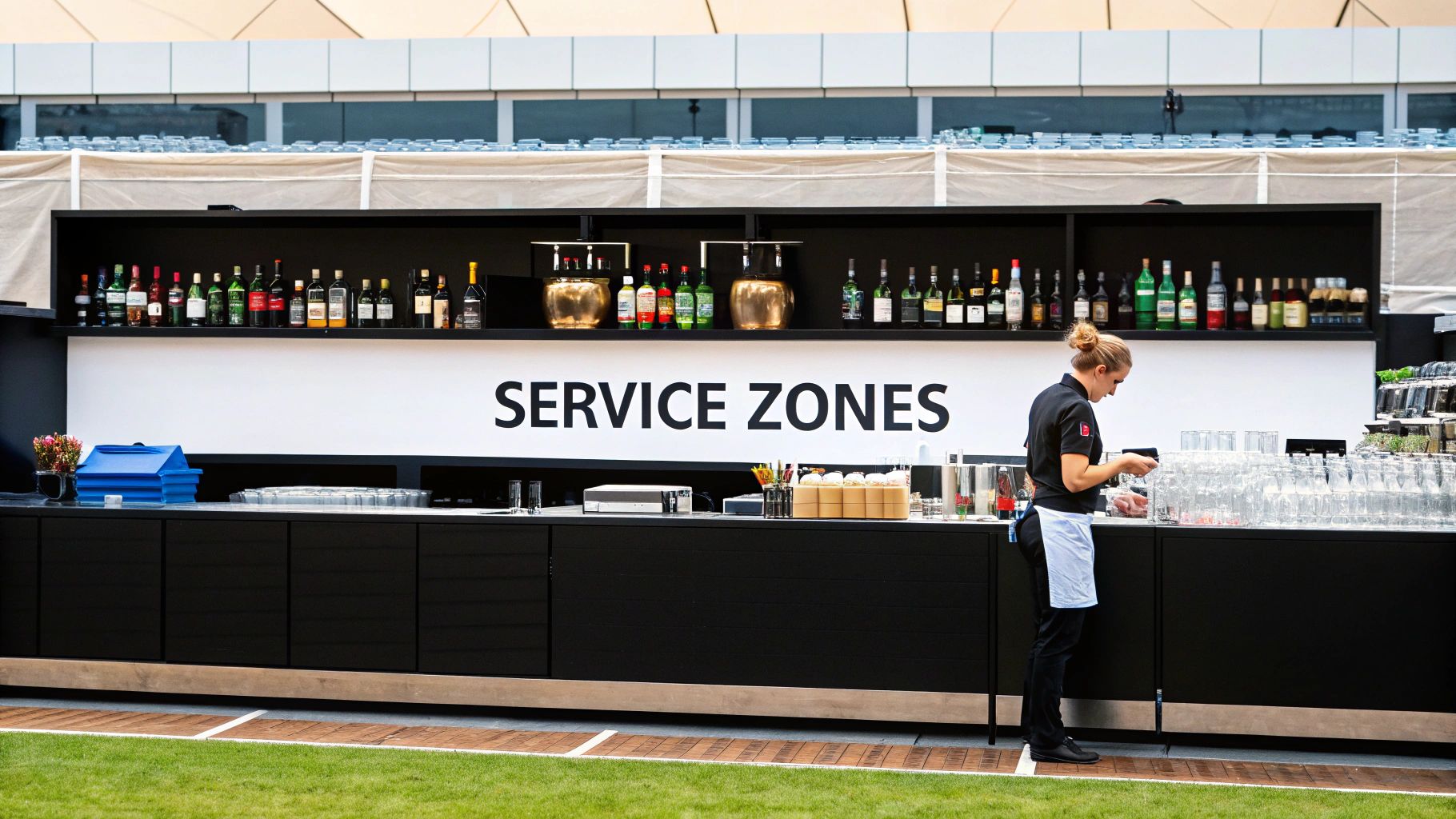
When you strategically map out your floor plan, you create a natural, logical flow for both your staff and your guests. This simple step prevents the frustrating bottlenecks that can grind service to a halt on a busy Friday night on the Sunset Strip. It’s all about making sure every drink order moves smoothly from the moment it’s placed to the moment it’s served.
Mapping Your Essential Bar Zones
A well-designed layout has four distinct areas. Each zone serves a specific purpose, and getting the arrangement right is the key to preventing servers from bumping into guests who are trying to order. The goal is to create clear, separate paths for everyone.
Here are the four essential zones you need to define:
- Greeting Zone: This is where guests first arrive and get their first impression. It needs to feel open and welcoming, set away from the main ordering area to avoid a pile-up right at the door.
- Order Zone: This is the designated spot along the bar where customers place their orders. Make sure there’s enough room for people to stand without blocking the path for your servers.
- Production Zone: This is the bartender's command center. It’s the behind-the-bar space where the magic happens. Everything—ice wells, glassware, speed rails—has to be within arm’s reach. This is where durable surfaces, like the ones in our guide to stainless steel kitchen prep tables, really pay off.
- Service Zone: This is a dedicated pickup station, usually at one end of the bar, just for servers. It keeps them out of the bartender's workspace, so your drink-makers can stay focused and efficient.
By clearly defining these zones, you build an intuitive workflow that directs traffic and improves communication between your bar team and your floor staff. It's the foundation of a smooth, high-volume operation.
This isn't just about speed; it's about reducing stress and mistakes. When every person on your team knows exactly where to go for every step of the process, the entire bar feels calmer and more professional, even when it’s packed. It's that kind of thoughtful design that separates a good LA bar from a truly great one.
Mastering Bar Ergonomics and ADA Compliance
A stunning bar design can be a total flop if it’s a nightmare to work in or a pain for guests to access. Getting the layout right means diving deep into ergonomics and compliance—these are the non-negotiable details that protect your staff, your customers, and your business.
Think of it this way: you wouldn't send a professional athlete onto the field with the wrong gear. A poorly designed workspace is a recipe for fatigue, repetitive stress injuries, and burnout, which are huge drivers of staff turnover. The right measurements set your team up to perform at their best all shift long.
The Bartender’s Workspace
The single most important measurement behind any bar is the working aisle. This is your bartender's command center, the space where all the magic happens. Getting it wrong kills efficiency and puts a real strain on your team.
- Ideal Aisle Width: The sweet spot is between 31 and 37 inches. This gives two bartenders just enough room to squeeze past each other without bumping elbows, while keeping everything from under-counter commercial refrigerators to ice bins just one step away.
- Bar Height: A standard bar top should sit 42 to 45 inches off the floor. This is the perfect height for guests to stand comfortably and gives bartenders an ergonomic surface to work on.
- Countertop Depth: You’ll want a depth of 24 to 30 inches. This provides plenty of room for making drinks and serving without forcing your bartenders to constantly overreach.
Nailing these dimensions is all about eliminating wasted motion. Every extra step a bartender takes to grab a bottle or pull from a commercial freezer adds up over a packed Saturday night, slowing down service and adding physical stress.
Ensuring ADA Accessibility
Beyond keeping your staff happy, your bar has to be welcoming to every single guest. The Americans with Disabilities Act (ADA) has very clear rules for accessibility, and if you’re operating in Los Angeles, compliance isn't optional.
Building an inclusive space is not just a legal requirement; it's a fundamental part of good hospitality. An ADA-compliant layout of bars ensures that every person who enters your establishment feels considered and welcome.
To meet ADA standards, a section of your bar needs to be fully accessible for individuals in wheelchairs. It’s crucial to build these specific measurements into your design from the very beginning.
- Accessible Counter Height: Part of your counter can be no higher than 34 inches from the floor.
- Knee Clearance: This section needs a clear space underneath it that’s at least 30 inches wide and 17 inches deep so a wheelchair can fit comfortably.
- Accessible Length: The accessible counter area must run for at least 36 inches long.
Getting these elements right from day one saves you from expensive fixes down the road and shows everyone in the Los Angeles community that you’re committed to great service for all.
Strategic Placement for Your Bar Equipment
Once you've nailed down the blueprint for your bar, the next big step is bringing that layout to life with the right hardware. This is where strategic equipment placement turns a good design into a high-performance machine, making every station a hub of pure efficiency. It’s all about deciding exactly where your essential restaurant equipment will live.
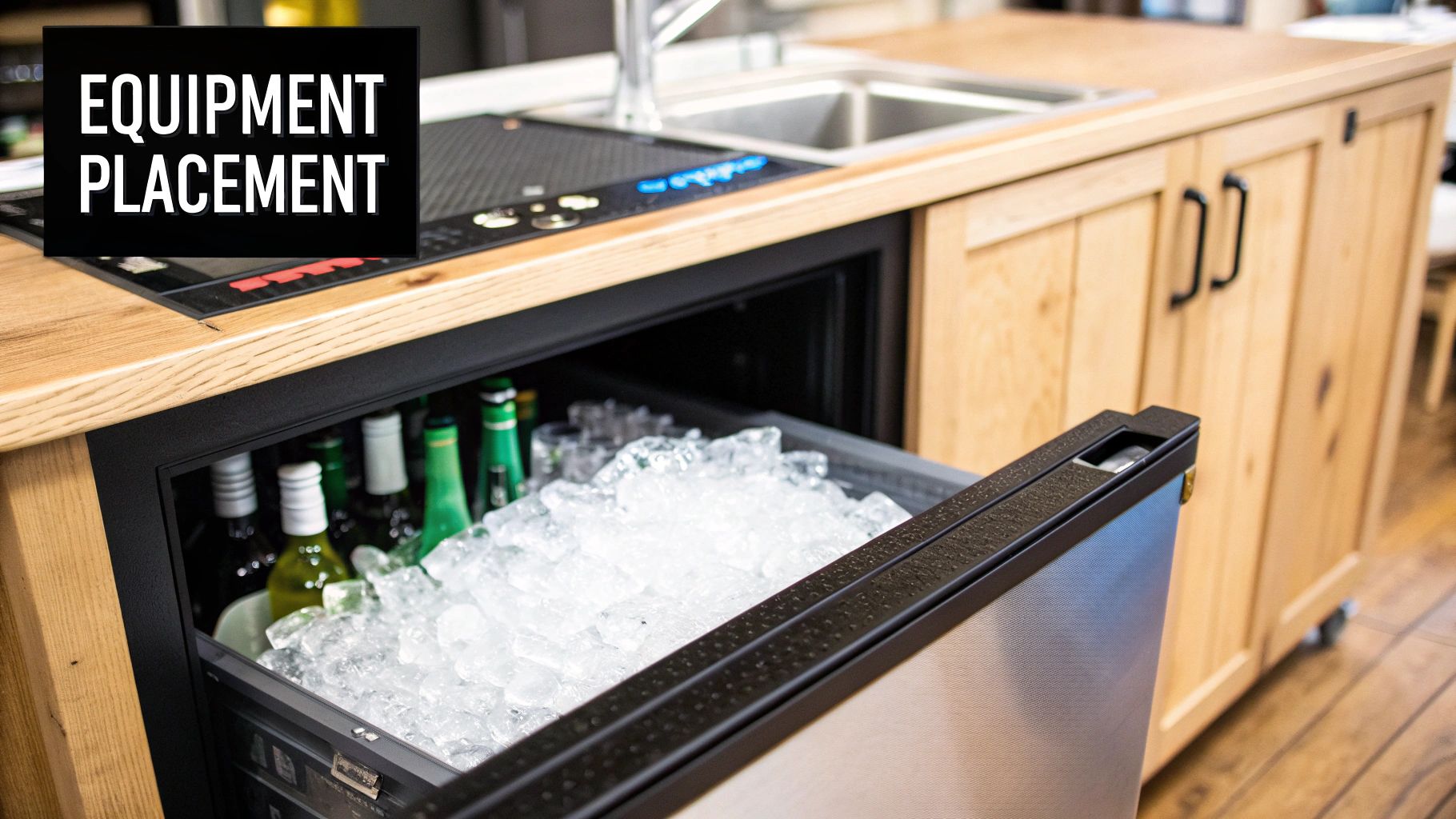
Think of it this way: every extra step a bartender takes to grab a bottle, find a clean glass, or scoop ice adds up. Those seconds slow down service and ultimately hit your bottom line. Smart placement makes sure everything needed for an order is just a single step away.
Building Around the Bartender’s Cockpit
The most effective way to set up your bar is to build each workstation around its most critical component. This approach creates a flow that's so logical and intuitive, even new staff can pick it up in a heartbeat.
-
Anchor with the Ice Bin: Ice is the single most-used ingredient in any bar, from a Koreatown karaoke lounge serving soju cocktails to a bustling Hollywood nightclub. The ice bin should be the absolute center of every production zone. By putting it in the middle, you anchor the entire workflow, making it the sun that all other equipment orbits.
-
Position Refrigeration for Speed: Your under-counter commercial refrigerators and freezers should flank the ice bin. This gives bartenders immediate access to beers, juices, and house-made mixers without ever taking more than a quick pivot.
-
Streamline Your Glassware: A glass washer and dedicated storage for clean glasses should be close to the production zone, but not so close that they're in the way. This setup allows barbacks to restock glassware efficiently without breaking a bartender's rhythm during a busy service.
The goal is to create a seamless loop. A bartender should be able to rinse, build, and serve without ever leaving their station. This level of efficiency is also key for mobile setups, where compact units are a must for LA's thriving food truck scene. If you're running a beer-focused bar, you'll want to get the details right; check out our complete guide on draft beer system installation for more insights.
Every piece of equipment has a role, but their placement determines the pace of your entire operation. A well-placed ice machine and strategically located POS system are just as important as the layout of bars itself.
Recent trends show that customers want to be closer to the action. In fact, research shows a 26% increase in counter seating and a 23% jump in bar seating year-over-year. This shift is a huge plus for compact, modular equipment like under-counter fridges that fit perfectly into interactive bar designs. You can see more on how seating trends are shaping bar layouts on webstaurantstore.com.
Common Questions About Designing a Bar Layout
Planning a bar layout in a city like Los Angeles is one thing on paper, but making it work in the real world is another. Let's get straight to the practical questions that always come up during the design process. These are the quick, real-world answers you need to build a bar that’s not just beautiful, but also a smooth, money-making machine.
How Much Space Should I Leave Behind The Bar?
The workspace behind your bar is all about striking the right balance. You need enough room for bartenders to move freely, but you also want everything within arm's reach. Every wasted step is a wasted second, and that adds up to lost sales on a busy night.
You should aim for an aisle width somewhere between 31 and 37 inches. This is the sweet spot for efficiency and ergonomics. It’s just enough space for two bartenders to slide past each other without bumping elbows, yet tight enough that they can turn and grab a bottle or open a commercial freezer in one smooth motion.
Anything under 30 inches is a definite safety hazard, creating a cramped, high-stress workspace. On the flip side, if you go wider than 40 inches, you're forcing your team to take extra steps for every single drink, which leads to slower service. For most spots in Los Angeles where every last square foot counts, a 3-foot (36-inch) clearance is the perfect target.
What Is The Most Important Equipment To Position First?
When you start laying out your bar, there's one piece of equipment that should anchor your entire design. The most efficient bar layouts always build out from the same central component of every bartender's station.
Always, always build your workstation around the ice bin. Think about it—ice is the single most-used ingredient in any bar, from a craft cocktail spot in Silver Lake to a Thai Town restaurant. By placing it right in the center, you cut down on movement and create a natural, logical flow for building drinks.
Once the ice bin is set, everything else just falls into place. Your speed rail clips on right in front of it. Your main under-counter commercial refrigerators and glassware storage should sit on either side. This "ice-first" approach is the true foundation of an efficient and profitable bar.
How Do I Make My Bar Counter ADA Compliant?
Making your bar a welcoming place for every single guest isn't just a nice idea—it's the law. Following the Americans with Disabilities Act (ADA) is a non-negotiable part of your design, and it's much easier to plan for it from day one than to try and fix it later.
To make sure your bar is accessible, you need to have a section of the counter that meets specific ADA guidelines. This allows guests who use wheelchairs to comfortably pull up, order, and enjoy their time at your establishment.
Here are the key measurements to build into your design:
- Counter Height: A portion of your bar top must be between 28 and 34 inches from the floor.
- Knee Clearance: Make sure there's clear space underneath this section that is at least 36 inches long so a wheelchair can fit comfortably.
- Welcoming Design: This accessible section should feel like a natural part of your bar, not a tacked-on afterthought.
What Is The Best Layout For a Small Bar or Food Truck?
In Los Angeles, making the most of a small space is practically an art form. Whether you're working with a narrow storefront or a food truck slinging Thai green curry or Korean BBQ tacos, your layout is the key to success.
For any compact space, the Linear layout is the clear winner. It works just like a production line, keeping everything—ordering, making, and serving—in a simple, straight path. This is by far the most efficient design for any LA food truck, whether it's specializing in Mexican, Japanese, or Chinese cuisine.
To really make it work, think vertically. Use back-bar shelving to get your storage off the floor. Choose compact restaurant equipment, like under-counter commercial refrigerators and freezers that pull double duty. A well-planned linear bar creates an incredibly fast workflow, so you can keep the orders flying no matter how small your footprint is.
Planning the perfect bar layout starts with having the right equipment. At Los Angeles Restaurant Equipment, we provide the professional-grade commercial refrigerators, freezers, and prep tables you need to build a high-performance bar. https://losangelesrestaurantequipment.com