

How to Use a Chafing Dish: A Pro Guide for LA Restaurants
At its core, using a chafing dish is pretty straightforward: assemble the frame, add hot water to the water pan, light the fuel, and set your pre-cooked food pan on top. This simple setup uses gentle steam to keep food perfectly warm for service without drying it out or overcooking it—an absolute must for any buffet or catering gig, especially for Los Angeles restaurants.
Why Mastering the Chafing Dish Matters in Los Angeles
In the cutthroat Los Angeles food scene, you can’t compromise on presentation or food quality. It doesn't matter if you're running a packed taco truck in East LA serving Mexican food or a high-end buffet in Beverly Hills featuring Japanese cuisine; that humble chafing dish is one of the most critical pieces of restaurant equipment you own. It's the key to making sure every plate you serve is at the perfect temperature, keeping customers happy from the first bite to the last. This is crucial whether you're using it in a food truck or alongside your commercial refrigerators.
Beyond Basic Warming
This guide is about more than just putting the pieces together. We’re diving into the real-world ins and outs of using a chafing dish in a hectic commercial kitchen. Everything from the initial setup and picking the right fuel to smart food rotation and proper cleaning makes a difference. For any LA restaurant, getting this right means you can:
- Maintain food safety by keeping everything well outside the temperature danger zone.
- Preserve food quality, making sure dishes like Mexican carnitas, Thai pad thai, or Korean bulgogi stay moist and delicious for hours.
- Enhance presentation, creating a professional, inviting serving line that pulls people in.
Avoiding common mistakes—like serving dry, lukewarm, or just plain unappetizing food—is everything for your reputation. There’s a reason these things are everywhere. In 2024, the North American market sold over 2.8 million electric chafing dishes, with the United States alone making up 2.1 million of those. That growth is fueled by over 660,000 restaurants that need reliable ways to keep their food service-ready. You can discover more insights about the electric chafing dish market growth.
A well-managed chafing dish isn’t just a food warmer; it's a silent partner in your operation. It ensures the last customer of the day enjoys the same quality as the first, building the consistency that defines a successful Los Angeles eatery.
Assembling Your Chafing Dish for Flawless Service
A solid setup is the absolute foundation for getting your chafing dish to perform. This isn’t just about slotting pieces together; it's about building a stable, efficient heating station that keeps your food looking and tasting its best.
First things first, get that chafing dish frame onto a completely level surface. If you’re in a food truck parked on a classic, uneven Los Angeles street, this is non-negotiable. A wobbly setup is a disaster waiting to happen, risking spills of scalding water or your perfectly prepped food.
Setting Up the Pans and Water
Once the frame is solid, drop the empty water pan inside. Here’s a massive time-saver for any busy kitchen: pour about one inch of hot or even boiling water into this pan. Starting with cold water is a rookie mistake that just wastes fuel and precious prep time.
Next, gently nestle your food pan right on top of the water pan. You want to make sure it sits comfortably above the waterline, not swimming in it. This gap is what allows steam to circulate freely underneath, heating the food evenly and gently. It’s this steam bath that keeps dishes like Thai green curry or Korean japchae perfectly moist without ever scorching the bottom.
Proper assembly is more than a checklist—it’s a critical food safety protocol. Making sure the food pan sits above the hot water, not in it, prevents direct heat from overcooking your food and creates the perfect steaming environment to hold everything above that crucial 140°F mark.
For anyone operating outdoors, like so many LA food trucks or catering events, stability and flame protection are everything. You might need to make a few practical adjustments to get a professional setup, no matter the location:
- Secure the Base: On uneven ground, a few small, sturdy shims under the frame legs will eliminate any wobble. Just don't use anything flammable like folded cardboard.
- Use Wind Guards: A steady breeze can snuff out your fuel cans or cause major hot and cold spots. Try to set up in a sheltered area, or better yet, use purpose-built wind guards around the frame to shield the flame.
- Check the Fit: Before service kicks off, do a quick check to make sure all the parts—frame, water pan, food pan, and lid—fit together snugly. Any gaps let steam escape, which kills your efficiency and means you’ll be refilling the water pan constantly.
Getting familiar with the different components and how they work together is key. To get a better handle on which setup is right for your menu, you can learn more about the various sizes of chafing dishes and their applications. A well-assembled chafer doesn’t just guarantee food quality; it projects a professional image that your customers will notice.
Choosing the Right Heat Source for Your Needs
The heat source you pick for your chafing dishes is a bigger deal than you might think. It’s going to affect everything from the quality of your food to your bottom line. Especially here in Los Angeles, where things move fast and safety is always a concern for restaurants and food trucks, making the right choice is one of the first things you need to nail down.
This isn’t just about lighting a flame. It's about matching the heat to your menu and your service style. A food truck slinging Korean BBQ tacos at a farmers market has totally different needs than a hotel buffet line downtown.
Before you even think about the heat, though, let’s talk about the absolute most important first step: stability.
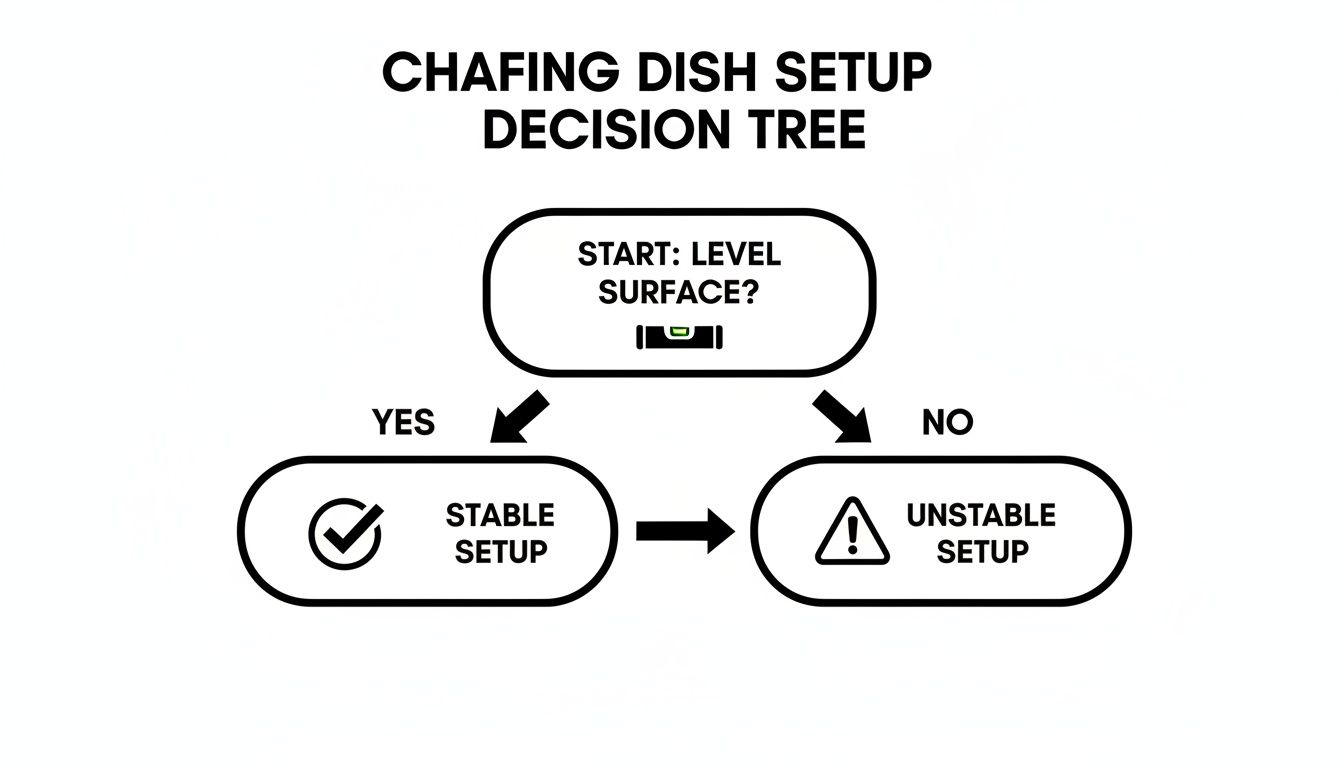
This diagram says it all. Your setup has to start on a level, stable surface. It's a non-negotiable. Once you've got that locked down, you can start thinking about which heat source makes the most sense for your operation.
Picking the right heat source can feel complicated, but it really comes down to a few key factors: your location (indoor vs. outdoor), power availability, and the type of food you're serving. Here’s a quick rundown of the most common options you’ll see in L.A. foodservice.
Chafing Dish Heat Source Comparison
| Heat Source Type | Average Burn Time / Power | Pros | Cons | Best For |
|---|---|---|---|---|
| Wick Fuel | 2, 4, or 6 hours | Portable, inexpensive, easy to find, consistent flame. | Open flame risk, potential fumes in tight spaces, disposable. | Outdoor catering, Los Angeles food trucks, events without power access. |
| Gel Fuel | ~2 hours | Higher heat output, good for boiling water quickly. | Shorter burn time, open flame, can have an odor. | Short events, situations needing a quick, hot flame. |
| Electric Heater | Continuous (with power) | Precise temperature control, no open flame, reusable, no fumes. | Requires an outlet, potential trip hazard from cords, higher initial cost. | Indoor buffets, hotel breakfast bars, long-service events with power. |
Ultimately, the choice between fuel and electric often comes down to portability versus precision. Both have their place in a professional kitchen's toolkit.
Fuel-Based Heaters
Traditional wicked or gel chafing fuels are the old-school standard for a reason. They're what you grab for catering gigs, outdoor parties, and food truck rallies because you can take them anywhere. They’re cheap, you can find them easily, and they give you predictable burn times of two, four, or six hours.
But they have their downsides. An open flame is always a safety concern, especially when you’re dealing with big crowds or a breezy day at an outdoor venue. You have to be smart about placement under the water pan, and always—always—use a long-reach lighter to keep your hands clear. The fumes can also be an issue if you’re in a space without great ventilation.
Electric Heaters
For any kind of fixed buffet line, electric chafing dishes are quickly taking over. The numbers don't lie: controlled-temperature electric models already make up 55% of global sales, with a 20% jump in 2023 alone. Hospitality businesses are driving this trend, accounting for nearly 50% of the demand.
For L.A. restaurant owners, this isn't just a trend; it's a smart investment. Reliable catering can add 5-10% to your total sales, and electric chafers are the kind of restaurant equipment that makes it happen. You can find out more about how this market is growing and see why so many operators are making the switch.
The biggest win with electric is precise temperature control. This is a complete game-changer when you’re holding delicate items like seafood in a Thai curry or a creamy béchamel sauce that would break with inconsistent heat. You get rid of the open flames, the fumes, and the ongoing cost of buying fuel canisters.
Of course, the main thing to think about is power. You need access to outlets, and you’ll have to be diligent about cord management to avoid creating a trip hazard. If you're running a food truck, this might mean having a solid generator, but the safety and consistency are often worth it. An electric model guarantees your food stays at the perfect temp from the minute you open to the last plate you serve.
Maintaining Perfect Food Temperature and Quality
Once your chafing fuel is lit and glowing, the real game begins. This isn't just about keeping food warm; it's about mastering temperature management to keep every dish safe, delicious, and up to the high standards of any Los Angeles restaurant or caterer. Your main goal here is to keep everything out of the dreaded temperature "danger zone," which sits between 40°F and 140°F.
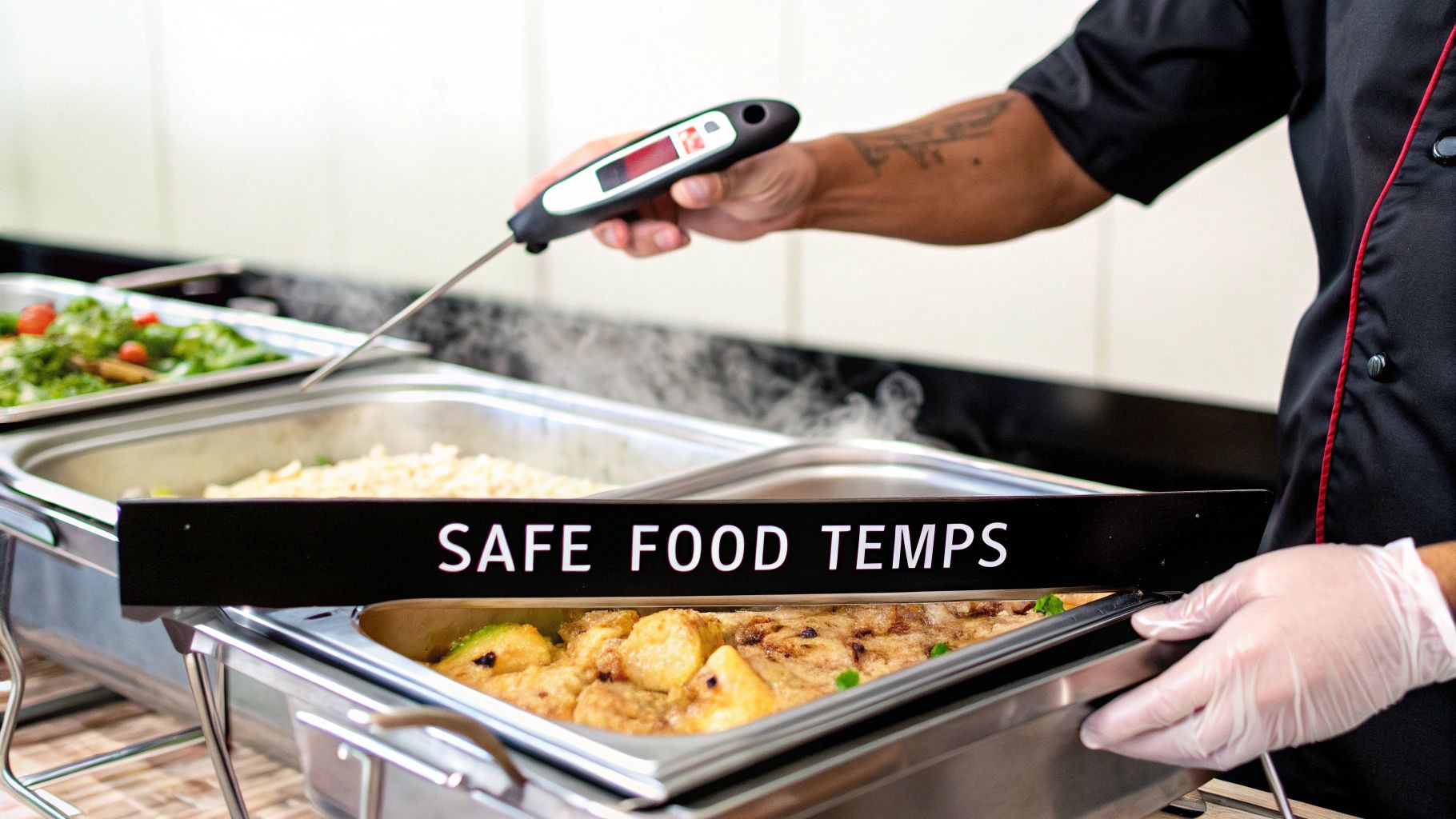
If you take only one thing away from this guide, let it be this: always preheat your food before it ever touches the chafing dish. Chafers are designed to hold hot food at a safe temperature, not to cook it or heat it up from cold. Pulling a pan of Mexican carnitas or Thai pad thai straight from your commercial refrigerators and expecting a small flame to bring it up to temp is a recipe for a food safety nightmare. Proper preheating is absolutely non-negotiable.
Mastering the Water Pan
The water pan is the unsung hero of your buffet line. It creates the gentle, rolling steam that keeps your food from drying out and maintains a consistent temperature. Forgetting to fill it—or letting it run dry—is a rookie mistake that leads to scorched pans and ruined food.
For any service that runs for a while, like a long wedding reception or a Sunday brunch, you've got to keep an eye on that water level. I make it a habit to check and top it off with hot water every 60 to 90 minutes. This simple step ensures a steady supply of steam, preventing hot spots and keeping everything from steamed vegetables to creamy pasta perfectly moist.
The Importance of the Lid
That simple stainless steel lid isn't just for show; it's a critical tool for locking in heat and moisture. Every single time that lid comes off, precious heat and steam escape, and the internal temperature plummets. While guests obviously need to serve themselves, a gentle reminder to cover the dish back up can go a long way.
For dishes that are especially prone to drying out—think rice for Chinese or Japanese food, saucy entrees, or delicate vegetables—keeping that lid on is essential. It traps the moisture, guaranteeing the last person in line gets a serving that’s just as good as the first.
A chafer's job is to maintain the temperature you've already established in the kitchen. Think of it as a crucial handoff from your main cooking line to the service line—it can't fix cold food, but it can perfectly preserve hot food.
In a high-volume buffet setting, a smart rotation strategy is your best friend. Instead of putting out one giant, full-sized pan that sits for hours, switch to using smaller, half-size pans. You can swap them out more frequently with fresh, hot replacements straight from the kitchen. This ensures every guest gets that "just-cooked" quality, which is the hallmark of great service.
Of course, chafing dishes aren't the only solution. For a deeper dive into all the available options, it’s worth exploring other catering food warmers to see what else can elevate your service. Remember, effective temperature management starts long before the buffet line; it's a core part of your entire kitchen operation, right down to your cold storage. A well-maintained walk-in cooler and freezer combination is just as crucial for food safety and quality as a properly managed chafing dish.
Elevating Presentation with Smart Serving Techniques
A chafing dish is so much more than a food warmer—it’s the centerpiece of your entire buffet line. How you present your food has a huge impact on how guests perceive its quality. In a place like Los Angeles, making your setup look as good as the food tastes is everything, whether you're running a food truck, catering a wedding, or setting up for a corporate lunch.
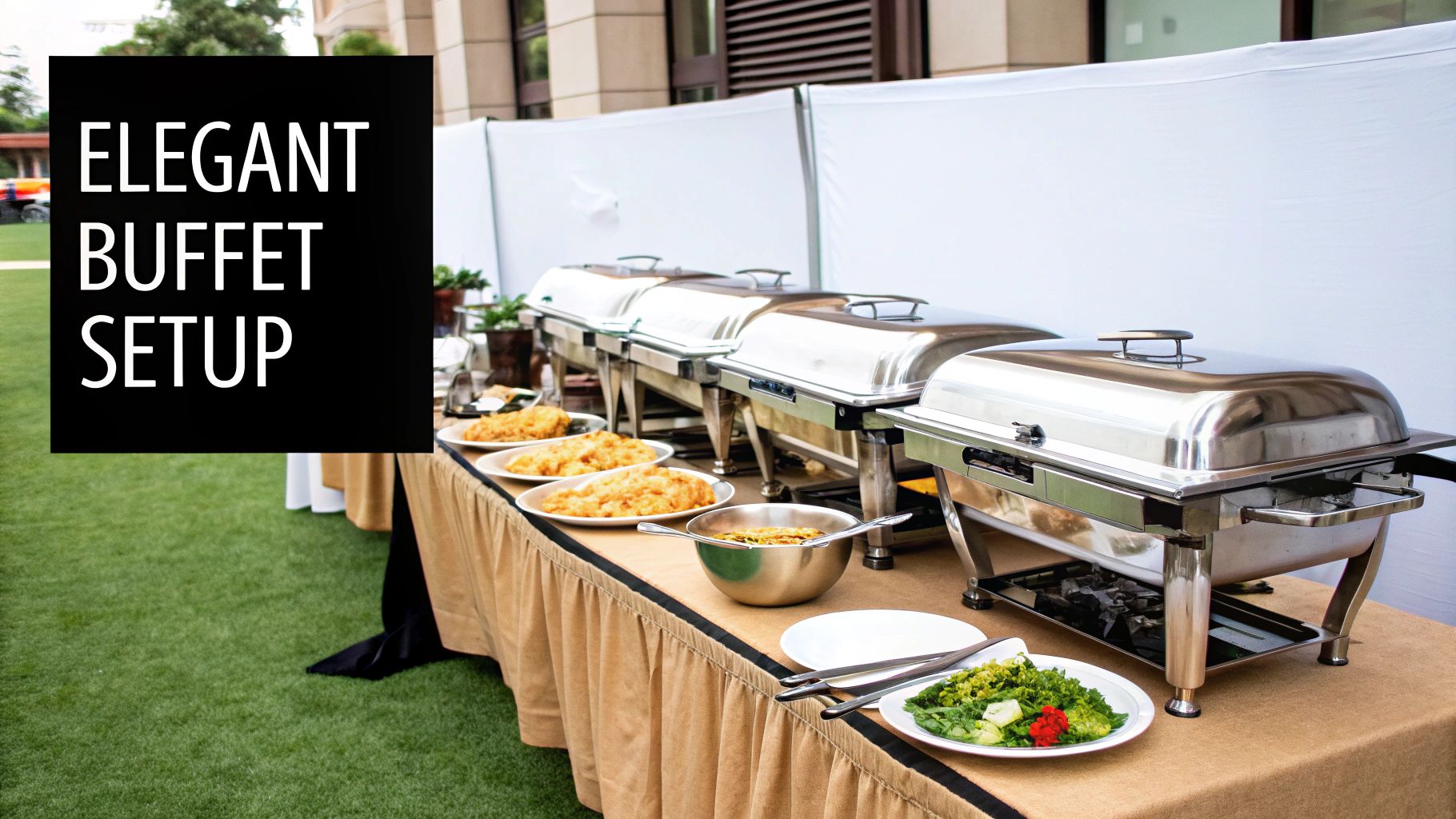
It all comes down to a smart, logical flow. Think about the guest's journey. You’ll want to arrange your dishes in an intuitive order: plates first, then main courses like Mexican-style grilled chicken or Japanese teriyaki salmon, followed by sides, and finally, utensils and napkins at the very end. This simple bit of organization prevents traffic jams and keeps the line moving.
Visual Appeal and Portion Control
The arrangement inside the food pan matters just as much as the overall table setup. Don't just dump food in there; take a minute to make it look inviting. It can be as simple as neatly lining up Chinese dumplings in a row or creating a vibrant pattern with colorful grilled vegetables.
Just as important is managing your portion sizes, because that directly hits your bottom line. Using the right serving utensils is the easiest way to control costs and cut down on waste.
- Slotted Spoons: These are perfect for items like steamed vegetables or Thai-style fish, letting any extra liquid drain away.
- Solid Spoons: Your go-to for saucy dishes like Korean beef bulgogi or Mexican mole, making sure guests get a generous scoop of the good stuff.
- Tongs: The best choice for anything that needs to be picked up individually, from grilled chicken breasts to Japanese tempura.
- Ladles: Essential for soups, stews, and chili. Look for ones with ounce markings to help keep portions consistent.
Keeping the entire serving area spotless is non-negotiable. A stray noodle or a sauce drip can make an otherwise beautiful setup look messy. Always keep a clean, damp cloth nearby to wipe up spills immediately.
Enhancing the Guest Experience
For professional caterers and restaurant operators, clear communication is just part of good service. Make sure you label each dish clearly and concisely. Note any key ingredients and—most importantly—call out common allergens like nuts, dairy, or gluten. This doesn’t just help guests make safe choices; it shows a level of care that sets you apart.
Mastering the art of presentation and temperature control is a huge part of learning how to host a dinner party that people will remember. It’s these thoughtful little details that turn a simple meal into a genuinely exceptional dining experience.
Cleaning and Storing Your Equipment for Longevity
Taking care of your restaurant equipment is non-negotiable if you want to protect your investment. For any busy Los Angeles food truck or catering operation, knowing the right way to clean and store your chafing dishes means they’ll last for years and always be ready for the next gig.
It all starts with a proper cool-down. Before you even think about cleaning, let every part—the frame, pans, and lid—cool down completely. This simple step prevents the metal from warping and, more importantly, keeps you and your staff safe. Once everything is cool, safely get rid of any used fuel canisters based on local rules. Never walk away from a smoldering can.
Best Cleaning Practices
When it comes to the stainless steel food and water pans, handwashing is the only way to go. Stick with a non-abrasive sponge and a mild detergent. If you use harsh chemicals or steel wool, you’ll scratch up that nice polished finish, giving bacteria a perfect place to hide.
Here’s how to handle the common stuff you’ll run into:
- Water Spots: Annoying but easy to fix. Just wipe the surface with a soft cloth dipped in a bit of white vinegar, then give it a good rinse and dry.
- Heat Tint: You know that bluish or golden stain you get from high heat? It’s called heat tint, and you’ll need a specialized cleanser to deal with it. For some solid advice on picking the right product, check out our guide on what is the best stainless steel cleaner.
- Stuck-on Food: If you’ve got some stubborn remnants from serving a sticky Korean BBQ or a rich Thai curry, just soak the pan in hot, soapy water for a bit before you start scrubbing.
Storing your chafing dishes the right way is just as critical as cleaning them. In the tight quarters of an LA kitchen or food truck, smart storage stops damage and prevents you from losing parts, which saves you a major headache before a big event.
Stack your components neatly. A pro tip is to place a soft cloth or even just a paper towel between the pans to keep them from getting scratched. Try to keep lids with their matching pans and fold or stack the frames separately. Giving them a dedicated shelf ensures everything is accounted for and ready for a flawless service.
Common Chafing Dish Questions Answered
Even the most experienced pros hit a snag now and then when setting up for a big service. Here are some quick answers to the questions we hear most from Los Angeles restaurant and food truck operators about getting the most out of their chafing dishes.
Can I Cook Raw Food in a Chafing Dish?
That’s a hard no. A chafing dish is built for one thing: holding and warming food that's already been cooked through. The gentle, indirect steam it produces is perfect for keeping food hot, but it’s nowhere near powerful enough to cook raw ingredients—especially not meats—to a safe temperature.
Always cook your food completely in the kitchen first, then transfer it to the chafer to keep it perfect for service.
How Long Can Food Safely Stay in a Chafing Dish?
As long as you’re keeping that food above 140°F (60°C), you can safely hold it for up to four hours. This is non-negotiable for food safety.
Get in the habit of temping your dishes, like Korean beef or Thai curries, with a food thermometer every so often. A quick stir also helps keep the heat distributed evenly. Once you pass that four-hour mark, you're risking a drop in both food quality and safety.
Remember, a chafing dish maintains heat; it doesn't cook. The four-hour rule is a food safety guideline designed to keep food out of the temperature "danger zone" where bacteria can multiply rapidly.
Why Does My Chafing Fuel Keep Going Out?
This is a classic headache at outdoor events all over Los Angeles, and nine times out of ten, the culprit is wind. Even a little breeze can snuff out the flame.
Your best defense is to create a shield. Some chafing dish frames come with built-in wind guards, but if yours doesn't, try to set up in a sheltered spot. It’s also worth checking that the fuel canister's wick isn't clogged up or damp.
Do I Need Hot Water in the Water Pan?
Yes, always start with hot or even boiling water. If you use cold water, the fuel has to work overtime just to heat the water before it can even start warming your food. That’s a huge waste of time and fuel.
Starting with hot water gets the chafer up to a safe holding temperature right away, making your entire service run that much smoother.
For professional-grade chafing dishes, commercial refrigerators, and other essential restaurant equipment designed for the demands of the LA food scene, trust Los Angeles Restaurant Equipment. Explore our full catalog and find the reliable tools you need to succeed at https://losangelesrestaurantequipment.com.