

A Complete Manitow-oc Ice Machine Troubleshooting Guide for Los Angeles Restaurants
When your Manitowoc ice machine suddenly stops making ice—or worse, can't keep up with the dinner rush—it's more than an inconvenience; it's a full-blown crisis for any busy Los Angeles restaurant. From a food truck in Silver Lake to a high-end Japanese restaurant in Beverly Hills, reliable restaurant equipment is non-negotiable. This Manitowoc ice machine troubleshooting guide is your first line of defense, walking you through the most common culprits so you can get back online fast.
Diagnosing Low or No Ice Production
Nothing throws a wrench in a busy service like an empty ice bin. Whether you're making aguas frescas for a bustling Mexican restaurant or pouring Thai iced teas on a sweltering L.A. day, a failing ice machine is a major problem. Fortunately, the cause is often a simple fix you can handle without a pricey service call for your restaurant equipment.
To get started, here's a quick flowchart your staff can use to walk through the first steps when troubleshooting a 'no ice' scenario.
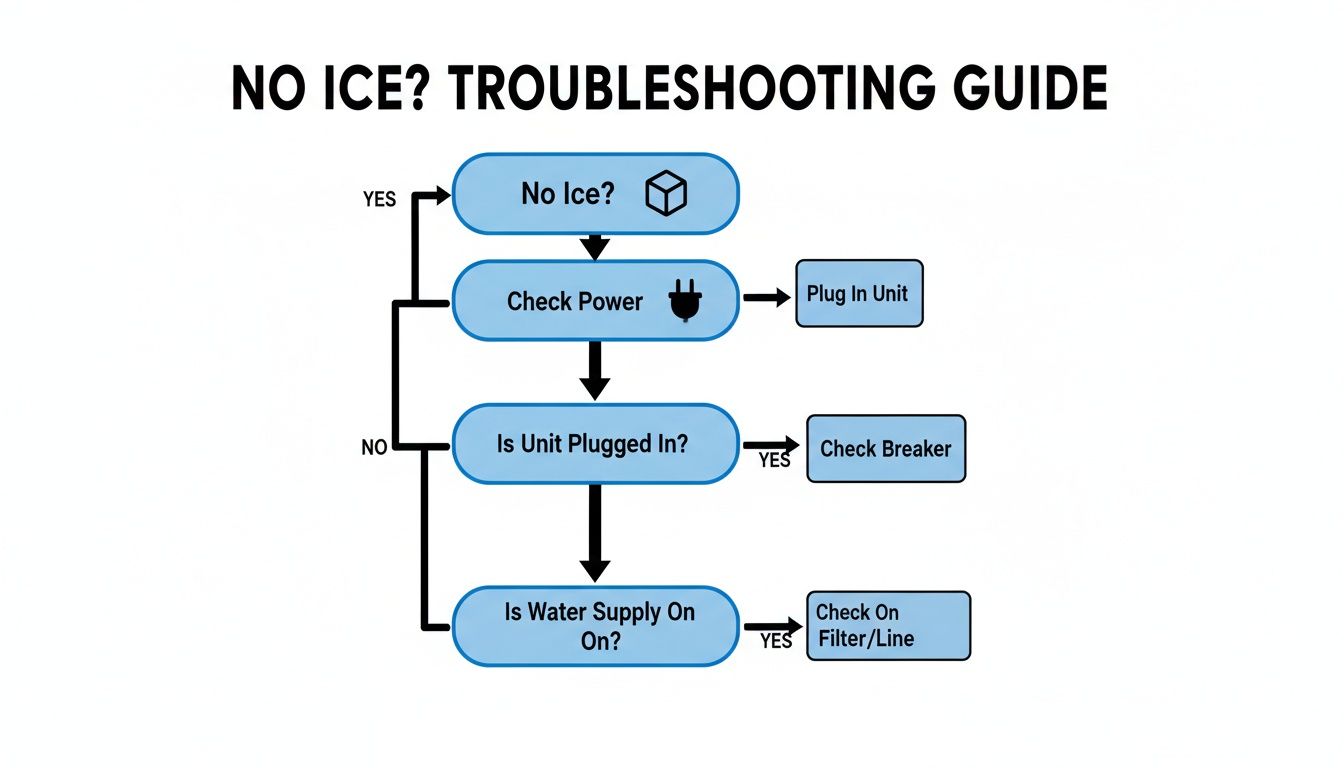
As you can see, it all starts with the two essentials your machine needs to function: a solid power source and a consistent water supply.
Common Causes in Los Angeles Kitchens
The intense, high-heat environment of a Los Angeles kitchen, from a cramped food truck serving Korean-Mexican fusion to a sprawling Chinese restaurant in the San Gabriel Valley, puts serious strain on your equipment like commercial refrigerators and freezers. Two issues, in particular, consistently cause problems for ice machines across the city.
-
High Ambient Temperature: The heat in your kitchen directly impacts your ice machine's ability to do its job. Manitowoc air-cooled models are designed to operate within specific temperature ranges. When your kitchen gets hotter than 90°F—a common occurrence during L.A. summers—the machine can't cool itself effectively, causing ice production to plummet.
-
Hard Water and Scale Buildup: Los Angeles is infamous for its hard water, which is loaded with minerals like calcium. Over time, these minerals create a chalky deposit called scale. This scale clogs up water filters, blocks the water inlet valve, and coats the evaporator plate, literally choking off your machine's ability to produce ice.
Initial Checks for Your Staff
Before you call a technician, have your team run through a few basic checks. These simple steps can often pinpoint the problem in just a few minutes, saving you both time and money.
Industry service logs show that low ice production affects about 40% of commercial units in high-demand spots like cafes and bars. Think about it: your kitchen is humming along, but your Manitowoc, rated for 500 pounds of ice a day, is barely hitting 300. Statistics reveal that a staggering 65% of these cases trace back to water issues, especially in a hard-water city like L.A., where mineral content often tops 200 ppm. On top of that, high ambient temperatures can slash output by another 25%.
The first thing to do is always check the basics. Make sure the water supply line is fully open and isn't kinked or crushed behind the machine. A partially closed valve is a surprisingly common culprit.
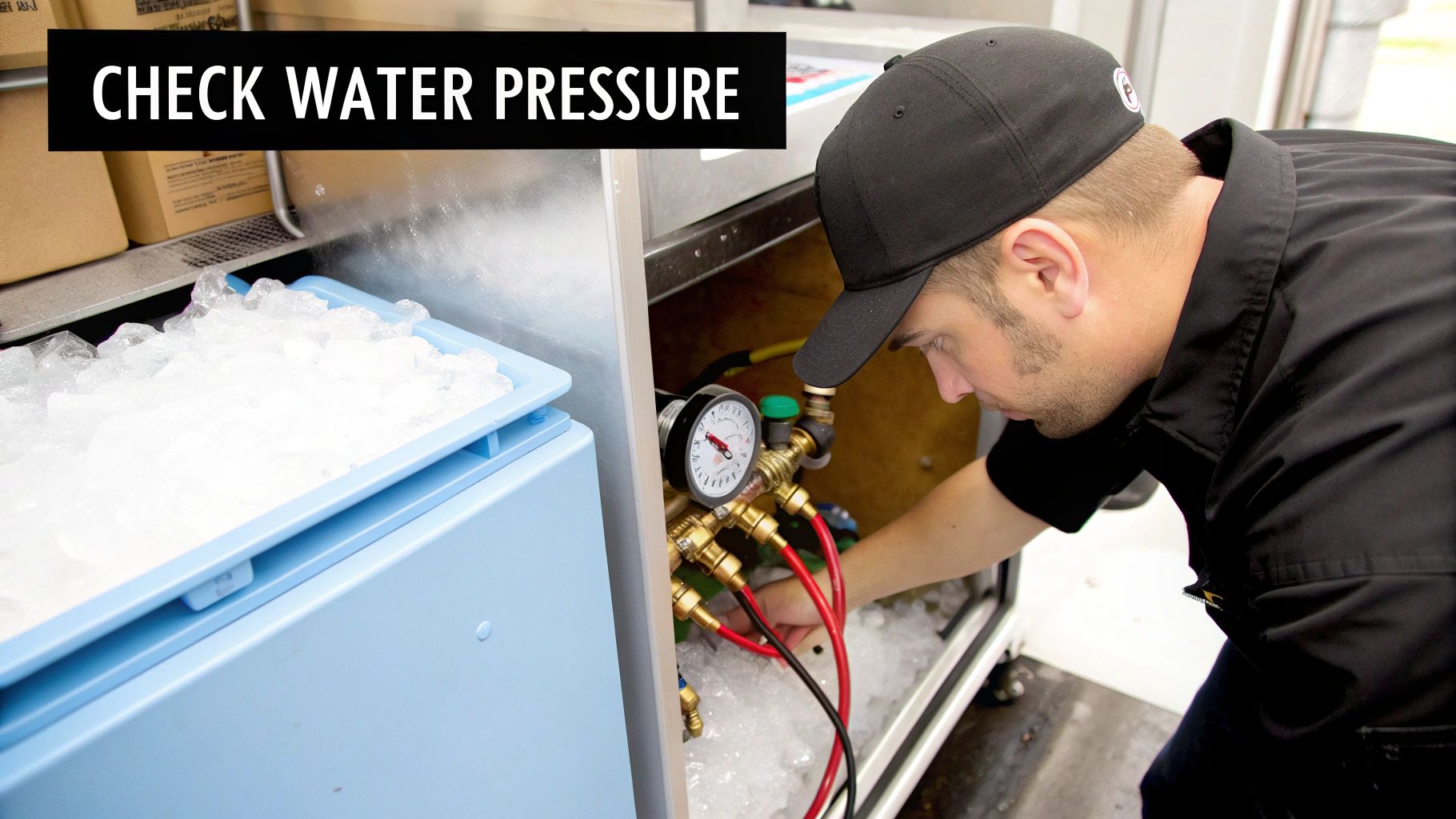
Next, look at the water pressure. Manitowoc machines need a steady pressure between 20-75 PSI to work correctly. If it drops below that, the machine won't get enough water, and you'll end up with thin ice, incomplete cubes, or no ice at all. This is an especially critical check for Los Angeles food trucks relying on mobile water tanks.
For a restaurant manager, a quick diagnostic checklist can empower your staff to identify these common issues before they become major problems.
Quick Diagnostic Checklist for Low Ice Production
| Symptom | Potential Cause | Quick Check and Simple Fix |
|---|---|---|
| Machine is on, but no ice is forming | No water supply | Check that the main water valve is fully open. Ensure the water line isn't bent or kinked. |
| Ice cubes are small, thin, or cloudy | Low water pressure or clogged filter | Verify water pressure is above 20 PSI. Check and replace the external water filter if it's dirty. |
| Ice production is very slow | High ambient temperature or poor airflow | Check the kitchen temperature. Make sure the machine has at least 6 inches of clearance on all sides for ventilation. Clean the air filter and condenser coils. |
| Machine cycles on and off without dropping ice | Scale buildup on components | Inspect the water trough and evaporator plate for white, chalky mineral deposits. If visible, the machine is due for a cleaning and descaling cycle. |
Running through these quick checks can often resolve the issue without needing to call for professional service, getting your ice supply back on track quickly.
For a more comprehensive look at these and other common problems, take a look at our complete guide on commercial ice maker troubleshooting.
Decoding Common Manitowoc Error Codes
Nothing strikes fear into the heart of a kitchen manager like a cryptic error code flashing on the ice machine, especially during a hectic dinner rush. But don't panic. Think of these codes less as a sign of catastrophic failure and more as your Manitowoc’s way of telling you exactly where to look.
For any busy Los Angeles restaurant, from a bustling Japanese kitchen in Little Tokyo to a high-volume Thai spot in Hollywood, knowing these codes can be the difference between a five-minute fix and a three-hour service call.
Let's translate the most common error codes into plain English so you can take quick, actionable steps and get your kitchen back on track.
E01 Long Freeze Cycle
The E01 error code is probably the most frequent alert you'll see. It simply means the machine is taking way too long to form a full sheet of ice. In a hot L.A. kitchen, this is almost always tied to the environment or a simple maintenance issue.
Imagine you're running one of the many popular Los Angeles food trucks at a festival, and E01 pops up. Your first thought might be a major breakdown, but the cause is often much simpler. High kitchen temperatures, a clogged air filter, or poor ventilation can all force the machine to work overtime just to freeze water.
Pro Tip: Before you even think about calling for service on an E01 error, do a quick check of the machine's surroundings. Is there at least six inches of clearance on all sides for good airflow? Is the air filter caked in dust and grease? A simple cleaning often makes this error disappear in minutes.
Another huge culprit, especially with L.A.'s notoriously hard water, is scale buildup on the evaporator plate. This crust of minerals acts like an insulator, making it much harder for the machine to get cold enough. If you see this code, it's a giant red flag that a descaling cycle is long overdue.
Faults With The Ice Thickness Probe
Another set of common errors revolves around the ice thickness probe. This small but vital part tells the machine when the ice sheet is thick enough to harvest. If it's dirty, knocked out of place, or broken, your whole ice-making process grinds to a halt.
You might see a code that points directly to this probe. The most common reasons are pretty straightforward:
- Mineral Buildup: Just like the evaporator, the probe gets coated in scale, which stops it from sensing the ice correctly.
- Misalignment: If the probe got bumped or moved during cleaning, it might not be in the right position to touch the ice as it forms.
- Damage: It’s less common, but the probe can get damaged and will need to be replaced.
A quick visual check and a gentle wipe-down with a nickel-safe cleaning solution can often solve the problem. This is a simple task your staff can handle, preventing downtime right when your Mexican restaurant needs a mountain of ice for its famous margaritas.
High Pressure Alerts and Safe Mode
Manitowoc machines are built smart, with safety features to protect expensive parts like the compressor. A high-pressure error means the refrigeration system is under too much strain, which almost always points to a problem with getting rid of heat.
The most likely causes are a dirty condenser coil clogged with grease and dust, or a failing condenser fan motor. When the machine can’t breathe out that hot air, pressure skyrockets, and the unit shuts itself down to prevent a catastrophic failure. This is often called entering ‘Safe Mode.’
When your machine goes into Safe Mode, it will stop making ice completely until the problem is fixed and the unit is reset. Resetting is easy—just power it off for a few seconds and turn it back on. But if you don't clean the coils or fix the fan, it’s just going to go right back into Safe Mode. Regularly cleaning your condenser coils is the single best thing you can do to prevent this error.
How to Fix Leaks and Strange Noises
There are two things that can ruin a restaurant owner’s day: a mysterious puddle of water spreading from the ice machine, or a sudden grinding noise cutting through the kitchen clamor. These aren’t just minor annoyances. Think of them as early warning signs for a much bigger, more expensive headache with your restaurant equipment down the road.
Ignoring a small leak today could mean costly floor damage tomorrow. That strange new sound? It might just be a critical part screaming for help before it fails completely. The good news is, with a little know-how, you can often track down and solve these issues yourself, keeping your ice supply flowing and your repair bills down.
Pinpointing the Source of a Leak
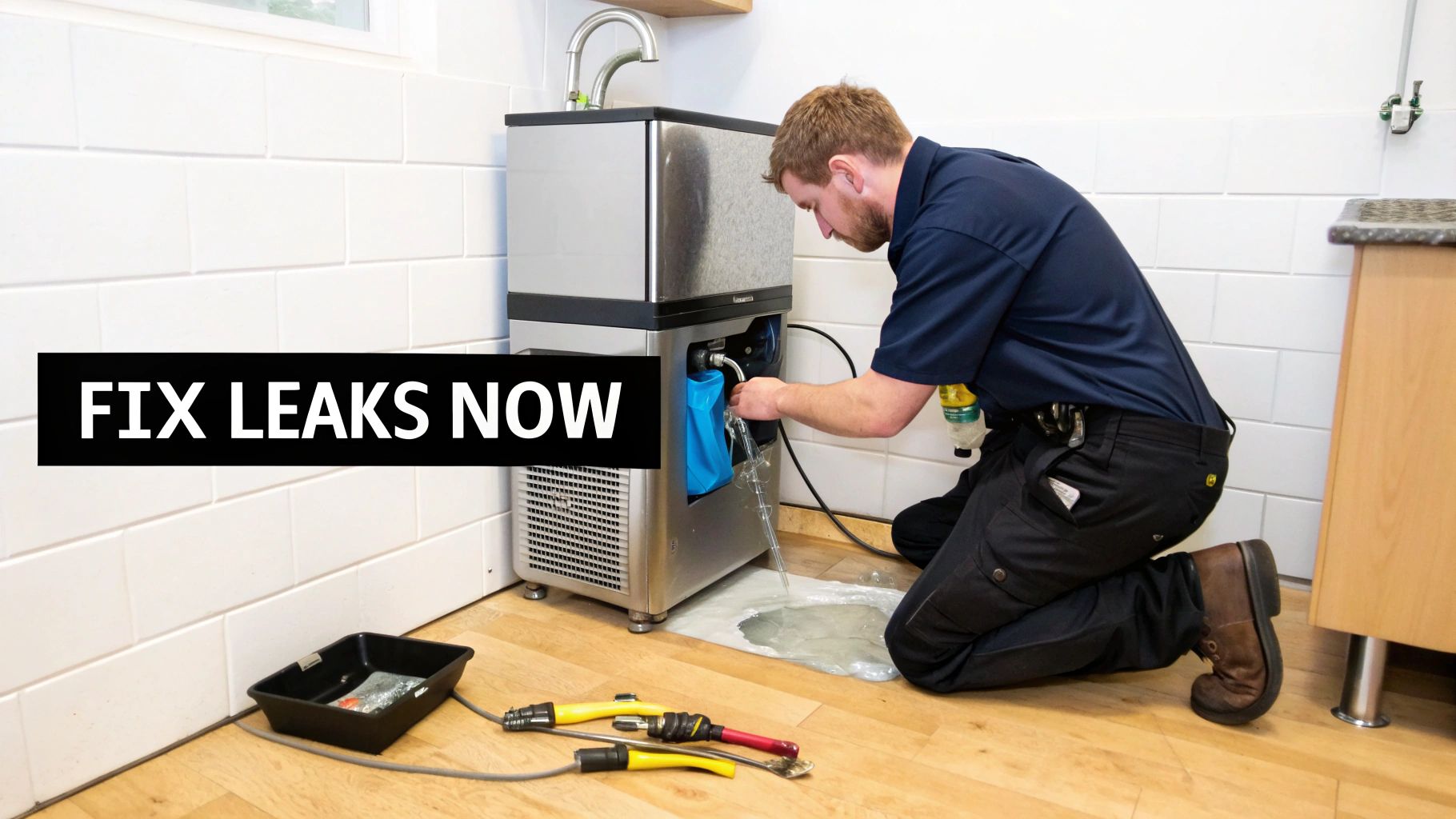
Finding a puddle under your Manitowoc means it’s time to play detective. Leaks almost never fix themselves, and they create a serious slip-and-fall hazard for your staff. The trick is to methodically trace the water back to its origin by checking the usual suspects.
Your investigation should start at the back of the unit, where all the utility lines connect.
-
Water Inlet Valve and Supply Line: This is ground zero for water entering the machine. Feel around the connection point for any drips. Fittings can loosen with vibration over time, and the internal rubber washers can wear out. Don't forget to run your hand along the entire length of the supply hose, checking for any cracks or tiny pinhole leaks.
-
Drain Lines: Your machine has two drains—one for the ice-making process and one for the bin. Make sure both are securely attached and free of cracks. A clog in the main drain is a classic cause of water backing up and spilling out onto the floor.
-
Water Trough and Distribution Tube: Pop the cover off and take a look inside. A cracked water trough can cause a slow, persistent leak. Also, check that the distribution tube is seated correctly; if it's knocked out of alignment, it can spray water where it doesn't belong, leading to leaks out the side of the unit.
For those really tricky, hard-to-see drips, a specialized leak detector can be a lifesaver, helping you find the exact source of moisture without tearing everything apart.
Translating Your Machine's Noises
You get used to the normal rhythm of your ice machine—the low hum of the compressor, the click of a relay, the familiar crash of ice dropping into the bin. It’s the new noises, the ones that break that rhythm, that you need to listen for. They’re direct clues about your machine’s health.
A change in your machine’s sound profile is one of the clearest indicators of a developing mechanical problem. Learning to distinguish between normal operational sounds and warning noises is a critical part of any good Manitowoc ice machine troubleshooting guide.
Here’s a quick guide to what those problem sounds are likely telling you:
Squealing or Chirping
A high-pitched squeal usually points to a worn-out bearing in a motor. This could be the condenser fan motor, the water pump motor, or the gear motor that powers the harvest arms. If the noise is pretty much constant while the machine is running, the fan motor is your most likely culprit.
Grinding or Scraping
This is one of those sounds that makes your stomach drop, and for good reason. A grinding noise could mean a failing water pump with broken internal bits, or a gear motor fighting against a stripped gear. If you hear this, shut the machine down immediately to prevent catastrophic damage and start investigating.
Loud Humming or Buzzing
Your machine should hum, but it shouldn't buzz loudly. A loud, vibrating buzz often signals an electrical problem. It could be a compressor struggling to start or a bad electrical relay. This is another noise that demands immediate attention before a key component burns itself out.
A Practical Cleaning and Maintenance Routine
Let’s be honest: in a packed LA restaurant, preventative maintenance can easily fall by the wayside. But when it comes to your Manitowoc ice machine, a consistent cleaning routine isn't just a "nice-to-have"—it's a non-negotiable part of food safety, ice quality, and protecting a very expensive piece of equipment.
Whether you're running a high-volume spot in East LA or a food truck in the Valley, this is the practical routine that keeps ice pure and your machine out of trouble.
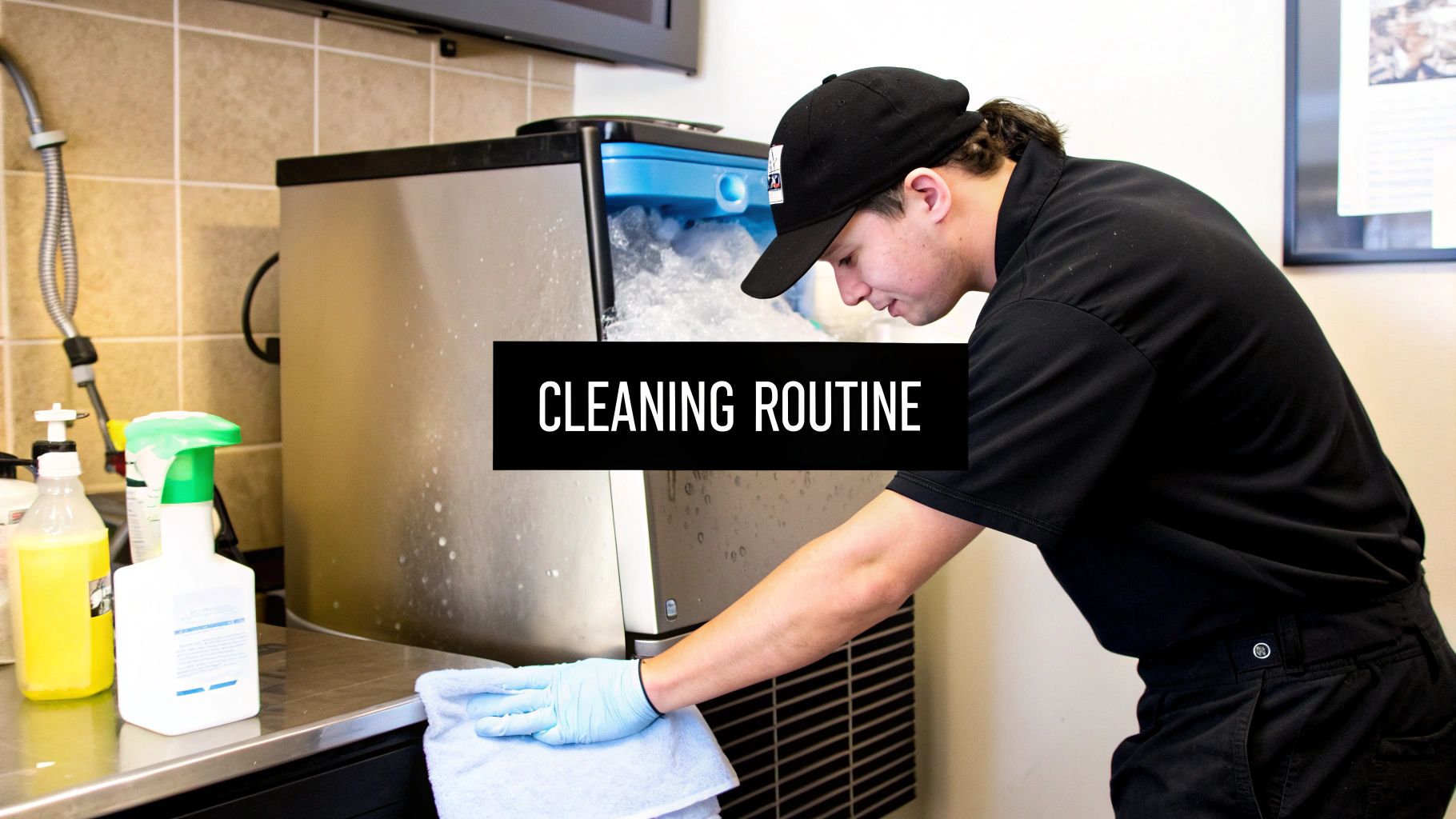
Most of the service calls we get—for slow ice production or weird-tasting ice—boil down to a lack of cleaning. The goal here isn't to add another complicated task to your day, but to create a simple, repeatable schedule your team can actually follow.
Kicking Off the Cleaning Cycle
Manitowoc makes the basic process pretty simple. On most units, you'll see a toggle switch. Just flip it over to the 'Clean' setting to kick off the automated cycle. This sends a cleaning solution through all the guts of the machine where water flows.
Heads up: you absolutely must use a Manitowoc-approved, nickel-safe ice machine cleaner. We’ve seen operators try to use bleach or other harsh chemicals, and it’s a disaster. It will eat away the sensitive nickel plating on the evaporator, and that’s an incredibly expensive repair. The right stuff is designed to destroy scale and slime without destroying your machine.
Getting Hands-On with Key Components
While the automated cycle handles the internal plumbing, a few parts need a little manual attention to get the job done right. It's like taking your car through an automatic wash—it gets the major dirt off, but you still need to wipe down the inside yourself.
Here's your checklist for after the cycle finishes:
- Water Trough & Distribution Tube: Pop these parts out and give them a good scrub with a soft brush and the same cleaning solution. This gets rid of any stubborn gunk the cycle might have missed.
- Ice Thickness & Water Probes: These little sensors are the brains of the ice-making process. Gently wipe them down with the cleaner. Any mineral buildup on them can throw off the whole system.
- The Ice Bin: After the machine is clean and rinsed, empty the bin completely. Scrub it out with a proper sanitizer to stop any cross-contamination.
Regular maintenance isn’t an expense; it’s an investment. Industry data suggests that a well-maintained ice machine can last up to 50% longer than a neglected one, saving thousands in premature replacement costs.
Don't forget the outside, either. A clean exterior is just part of running a professional kitchen. For tips on keeping your stainless steel units looking sharp, take a look at our guide on what is the best stainless steel cleaner.
Cleaning the Air Filter and Condenser Coils
In any LA kitchen, grease and dust are just part of the atmosphere. For an air-cooled machine like your Manitowoc, airflow is everything. A choked-out air filter or condenser coil is probably the #1 reason for high-pressure errors and sluggish ice production.
The air filter is usually right on the front or side and pops out easily. Just wash it in the sink with warm, soapy water, give it a good rinse, and let it dry completely before putting it back. This is a simple task that should happen at least once a month.
Cleaning the condenser coils takes a bit more effort but is just as important. First, kill the power to the unit. Then, grab a stiff brush or a shop vac and gently clear out the blanket of dust and grease that's covering the fins. This lets the machine breathe and get rid of heat, which is critical in a hot kitchen environment.
Establishing a Repeatable Schedule
The key to all of this is consistency. A simple schedule taped to the wall near the machine can make all the difference. For a really busy kitchen, like a high-volume Chinese or Korean spot, you might even need to do this more often.
Here’s a solid maintenance schedule that works for most restaurants and food service operations.
Recommended Manitowoc Maintenance Schedule
| Frequency | Task | Why It's Important |
|---|---|---|
| Weekly | Wipe down the exterior surfaces of the machine. | Keeps your kitchen looking professional and clean. |
| Monthly | Remove and clean the air filter. | Guarantees proper airflow, preventing overheating and boosting efficiency. |
| Every 3-6 Months | Run a full cleaning and sanitizing cycle with approved chemicals. | Obliterates scale and slime from internal parts, ensuring food safety and top-tier ice production. |
| Semi-Annually | Clean the condenser coils. Inspect water lines and drains for leaks. | Prevents high-pressure shutdowns, eases strain on the compressor, and catches tiny leaks before they turn into major floods. |
By making this routine a standard part of your kitchen's workflow, you'll see a huge drop in unexpected downtime and always have that clean, clear ice ready for your customers.
Knowing When to Call a Certified Technician
Look, I get it. As a restaurant owner in Los Angeles, every minute of downtime and every dollar spent on a service call counts. This guide is all about empowering you to handle the common hiccups with your Manitowoc ice machine. But there's a fine line between a smart DIY fix and a costly mistake.
Attempting a complex repair without the right training can go sideways fast. You could create a bigger problem, introduce a safety hazard, or even void your warranty. Knowing when to put down the wrench and call in a pro is one of the smartest decisions you can make for your business.
Some problems are just out of bounds for an in-house repair. These are the red flags that scream "call for backup."
Non-Negotiable Service Calls
Certain issues go way beyond a simple cleaning or a filter change. If you run into any of these scenarios—whether you're running a busy Korean BBQ kitchen in the SGV or a packed food truck in Venice—it's time to get an expert on the phone.
- Suspected Refrigerant Leaks: If you hear a distinct hissing sound or spot an oily film building up around the machine's components, you could be dealing with a refrigerant leak. This stuff is hazardous, and by law, only a certified professional can handle it.
- Compressor Failures: The compressor is the engine of your ice machine. Loud clanking, grinding noises, or a unit that struggles to kick on (or won't at all) signals a major mechanical failure. This is not a DIY job.
- Complex Electrical Faults: You've checked the breaker and the power cord, but the machine is either completely dead or acting erratically. This points to a deeper issue, likely with the control board or internal wiring. Messing with live electrical components is incredibly dangerous—don't risk it.
Trying to tackle these yourself isn't just a safety gamble; you could cause permanent damage to your expensive restaurant equipment. Sometimes, the best move is admitting a problem is out of your league.
Preparing for an Efficient Service Call
When you do need to bring in a technician, a little prep work can make the whole process smoother and faster, which means less downtime for your restaurant. Before you even dial, pull together some key information.
Key Takeaway: Having your machine's model number, serial number, and a clear description of the symptoms ready can cut diagnostic time by as much as 30%. That means your ice is flowing again that much sooner.
Jot down exactly what the machine is doing (or not doing). Make a note of any error codes on the display, describe strange noises with as much detail as you can, and tell them what you've already tried. Trust me, a good tech will appreciate this info.
Finding a qualified technician in Los Angeles isn't hard, but you want to make sure they're certified for commercial refrigeration and have specific experience with Manitowoc gear. A seasoned pro can pinpoint the problem quickly. And if it turns out to be the end of the road for your old unit, exploring a quality selection of commercial ice makers can help you find a dependable replacement that can keep up with your restaurant's demands.
Frequently Asked Questions
Even with a detailed guide, questions always come up, especially when you're slammed during a dinner rush. Here are some quick, straight-to-the-point answers to the questions we hear most from fellow Los Angeles restaurant owners about their Manitowoc ice machines.
How Often Should I Clean My Manitowoc in a Busy LA Restaurant?
For a high-volume spot in Los Angeles—think a bustling Thai kitchen or a packed Mexican cantina—a full cleaning and sanitizing cycle is a must at least every six months.
But let's be realistic. L.A. has notoriously hard water. To really keep scale from building up and choking your machine's performance, you’re much better off running a full cycle quarterly.
On top of that, some things need a quicker look. Your machine’s air filters are magnets for all the grease and dust floating around a kitchen. Clean those monthly to keep air flowing and prevent it from overheating. If your ice starts looking cloudy or tastes off, that’s your machine telling you it’s past due for a cleaning.
What Should I Check First if My Manitowoc Stops Working?
Before you pick up the phone for a service call, take a breath and check the simple stuff. You’d be surprised how many "emergency" calls we see that are solved in under two minutes with one of these fixes.
- Power Supply: Is it plugged in securely? It sounds obvious, but you’d be amazed. Then, walk over to your breaker panel and see if the circuit for the ice machine has tripped.
- Toggle Switch: Find the main toggle switch on the unit and make sure it’s set to ‘ICE.’ During a hasty wipe-down, it’s easy for someone to knock it to the ‘OFF’ or ‘CLEAN’ position by accident.
- Water Supply: Follow the water line back to the wall. Make sure the valve is turned all the way on. Also, check that the line hasn't been kinked or squashed behind your commercial refrigerators or other equipment.
Managing all your kitchen equipment, from commercial freezers to Los Angeles food trucks gear, gets easier when you have a go-to troubleshooting process for each. For a wider range of general appliance troubleshooting guides, having a good collection of tips can be a huge help for the whole kitchen crew.
Can I Use Any Cleaner on My Manitowoc Machine?
No. Absolutely not. Getting this wrong is a fast way to cause catastrophic damage and get stuck with a massive repair bill. You have to use a Manitowoc-approved, nickel-safe ice machine cleaner and a separate, approved sanitizer.
It’s tempting to grab common chemicals like bleach or a harsh descaler you already have on hand, thinking "clean is clean." But these will permanently ruin sensitive parts inside your machine. The evaporator plate is nickel-plated, and the wrong chemicals will eat away that coating, destroying it. This kind of mistake almost always voids your warranty, too.
Why Does My Ice Taste or Smell Bad?
Bad-tasting ice is a major red flag for your customers. It almost always boils down to one of two things: the machine is dirty, or your water filter is shot. Something is getting into the water and contaminating it as it freezes.
First, run a full cleaning and sanitizing cycle, just like we outlined in the maintenance section. This will get rid of any slime or mold that’s started to grow in the water system. If that doesn't fix it, your next move is to replace the water filter cartridge. An old filter can’t do its job, letting impurities and bacteria pass right through into your ice. For restaurants in L.A. areas with particularly bad water quality, investing in a better filtration system is always a smart move.
At Los Angeles Restaurant Equipment, we understand that reliable equipment is the backbone of your foodservice operation. We provide the high-quality ice machines, commercial refrigerators, commercial freezers, and cooking equipment you need to keep your kitchen running at peak performance. Explore our selection and discover how our flexible financing and free delivery can help your business thrive. Visit us at https://losangelesrestaurantequipment.com to learn more.