

Open Air Coolers: A Guide for LA Restaurants and Food Trucks
Picture your display of chilled drinks, fresh salads, or parfaits working as a silent salesperson, tirelessly boosting your revenue around the clock. That’s the magic of an open air cooler in the fast-paced Los Angeles food scene. These are commercial refrigerators designed without doors, using an "air curtain" to keep everything inside perfectly chilled while giving customers instant, grab-and-go access.
How Open Air Coolers Drive Grab-And-Go Sales
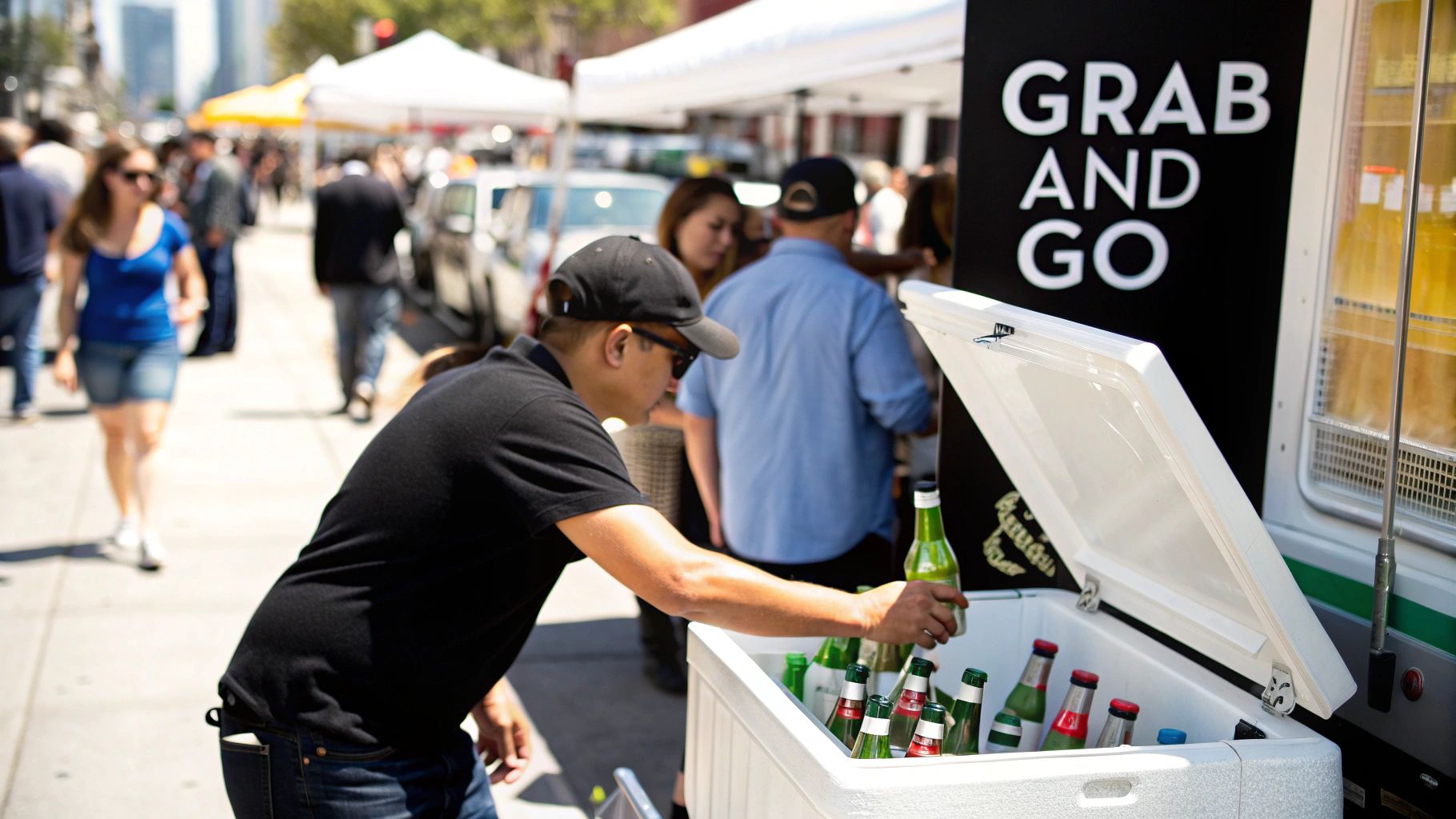
By removing the physical barrier of a door, you’re creating an open invitation for customers to grab what catches their eye. It’s a simple change, but it taps directly into the psychology of impulse buying.
Imagine a customer in Los Angeles waiting for their order of Korean BBQ tacos or Thai green curry. They might spot a perfectly chilled bottle of water or a vibrant mango sticky rice parfait. Without needing to open a door, the decision to add that item to their purchase becomes almost frictionless.
The Power of Visibility and Access
Think about the difference between a shop with its doors closed and a bustling farmers' market stall. The market stall, with all its fresh produce laid out for everyone to see and touch, just feels more engaging. An open air cooler works on the exact same principle, turning a standard commercial refrigerator into a dynamic merchandising platform.
For a Los Angeles food truck, this piece of restaurant equipment can be a total game-changer. Space is precious, and every part of your setup has to contribute to sales. An open air cooler can turn a cramped corner into a profit center, showcasing bottled horchata for a Mexican food truck or Japanese ramune soda to customers right as they place their orders.
The real value of an open air cooler is its ability to convert passing foot traffic into guaranteed sales. It's not just about keeping things cold; it's about presenting your products in the most appealing and accessible way possible, reducing hesitation and maximizing every customer interaction.
This approach is so effective that the market for these units is booming. In a major food hub like Los Angeles, displaying chilled beverages and grab-and-go items is critical for driving impulse sales. The global Open Air Merchandiser Coolers Market hit USD 1.5 billion in 2024 and is projected to reach USD 3.2 billion by 2034, growing at an impressive 8.1% CAGR.
To get the most out of your cooler, it helps to understand the core concepts of retail presentation. Learning more about what visual merchandising is in retail and how it drives sales can help you turn your cooler into a true sales powerhouse.
The Science of Keeping Food Safe Without a Door
At first, an open-air cooler doesn't seem to make much sense. How does it keep food perfectly chilled when it's wide open to the warmer air in your Los Angeles restaurant or food truck? The secret is a brilliant bit of engineering called an air curtain.
Think of it as an invisible waterfall. A steady stream of cold air flows down from the top of the unit, across the open front, and gets pulled back in at the bottom. This cycle creates a protective shield—a curtain of air—that separates your chilled products from the room's ambient temperature. It’s what keeps your Thai iced tea and pre-packaged Chinese chicken salads in the safe zone.
This isn't simple tech; it's a finely tuned system where a few key parts have to work together perfectly.
The Core Components of an Air Curtain
For that air curtain to do its job and hold a consistent temperature, three main components must work in harmony. Each one has a specific role in creating the invisible barrier that protects your grab-and-go items.
- High-Efficiency Fans: These are the engines driving the whole system. They're placed just right to generate a smooth, steady airflow that forms the curtain, pushing cold air down at the perfect speed to keep it from mixing with outside air.
- Evaporator Coils: This is where the magic happens. Refrigerant runs through these coils, making them intensely cold. The fans blow air over them, and that super-chilled air is what forms your protective curtain.
- Intelligent Airflow Design: This isn't a single part but the overall smart design of the unit. The placement of vents, the angle of the airflow, and the internal structure are all engineered to guide the cold air exactly where it needs to go, preventing any "cold air spill."
This careful engineering is exactly why a modern open air cooler can reliably keep temperatures between 33°F and 40°F—the most critical range for food safety.
A critical component of keeping food safe in any commercial environment, especially without a door, involves mastering essential food safety temperature control. Understanding these principles ensures your equipment is protecting both your products and your customers.
For any food operator in Los Angeles, following strict health codes isn't optional. Whether you're selling fresh-pressed juices in a café or pre-made Korean banchan from a ghost kitchen, you have to trust your commercial refrigerators and freezers. The science behind open-air coolers is designed to meet these exact standards. It gives you the merchandising pop of an open display with the food safety of a traditional closed-door unit. This technology builds confidence, letting you show off your products openly without ever cutting corners on safety or quality. It's no wonder these units are becoming must-have restaurant equipment in busy, quick-service spots all over the city.
Choosing the Right Open Air Cooler for Your Business
Picking the perfect open-air cooler for your Los Angeles spot might feel like a big deal, but it gets a lot easier when you break it down by what you actually need. There are models built for different spaces and different foods, so finding the right fit is all about matching the unit to your menu, your floor plan, and the way your customers move.
Whether you're running a slammed food truck or a full-on restaurant, the right cooler is out there. The three main players are vertical, horizontal, and under-counter coolers, and each one brings something different to the table. A tall, eye-catching vertical unit could be perfect for drinks, while a low-profile horizontal model is a great stage for pre-made meals.
Vertical Coolers: Maximum Visibility
Think of vertical open-air coolers as the superstars of grab-and-go. They’re tall, they’re impressive, and they’re almost impossible for customers to ignore, making them masters of the impulse buy. These are your go-to for items that stack neatly and look great from a few feet away.
For a Mexican restaurant in LA, a vertical cooler is the perfect home for vibrant Jarritos sodas or big bottles of horchata. A Thai spot could line its shelves with colorful Thai iced teas and coconut waters. Because they don’t take up much floor space, they can slide into a corner or cap an aisle without getting in the way, making them a smart move for a ton of LA eateries.
Horizontal Coolers: Easy Access Merchandising
Horizontal open-air coolers, sometimes called "air curtain merchandisers," have a totally different vibe. They’re lower to the ground, giving customers a wide-open, top-down view of everything inside. It feels incredibly approachable—people can just lean over and see the whole spread at once.
This style is a no-brainer for items that look best from above. Imagine a Japanese restaurant showcasing perfectly arranged onigiri, bento boxes, or fresh sushi rolls. For a Korean spot, it’s an amazing way to display colorful, pre-packaged banchan like kimchi or seasoned spinach.
These coolers are getting seriously popular. In fact, coolers over 50 quarts now claim a 53.8% market share in 2024, which is perfect for high-volume LA restaurants juggling big orders or catering gigs. And since 2015, digital upgrades—like LED lighting and smart temperature controls—have made them way more efficient, cutting spoilage by 15-20% in many quick-service restaurants. You can dig into more stats on the growth of the retail cooler market on internationalcoolers.com.
Under-Counter Coolers: Compact and Convenient
For the tight squeeze of an LA food truck or a small café, the under-counter open-air cooler is a game-changer. These little powerhouses give you all the grab-and-go convenience without eating up your precious floor space. They just tuck right under a counter, putting cold drinks and snacks right at the checkout.
This is the ultimate setup for a food truck slinging Chinese dumplings, letting you place bottled soy milk and chilled teas right where people are paying. They’re small, sure, but their prime real estate placement often leads to more last-minute buys, making every inch of your commercial refrigerator space work for you. For more ideas, check out our guide on the best commercial refrigerators for LA businesses.
To help you decide, let's break down which type of open-air cooler might be the best match for your LA-based food business.
Comparing Open Air Cooler Models for LA Food Businesses
Use this table to compare vertical, horizontal, and under-counter open air coolers to find the best match for your restaurant, food truck, or cafe's unique needs.
| Cooler Type | Ideal For (LA Venues) | Typical Capacity | Space Footprint | Best For Cuisines |
|---|---|---|---|---|
| Vertical | Cafes, QSRs, markets, convenience stores | 20 - 70 cu. ft. | Small (Tall) | Mexican (Jarritos), Thai (Iced Tea), Italian (Sodas) |
| Horizontal | Sushi bars, delis, cafeterias, high-end grab-and-go spots | 10 - 50 cu. ft. | Medium (Wide) | Japanese (Sushi/Bento), Korean (Banchan), Deli (Salads) |
| Under-Counter | Food trucks, coffee shops, concession stands, bars | 2 - 15 cu. ft. | Very Small (Compact) | Chinese (Soy Milk), Food Trucks (Any drinks/snacks) |
This table should give you a clearer picture of how each cooler's strengths align with different types of operations and cuisines common across Los Angeles.
This chart shows how the "air curtain" technology works its magic, creating an invisible shield between the cool air inside and the warm air of your restaurant.
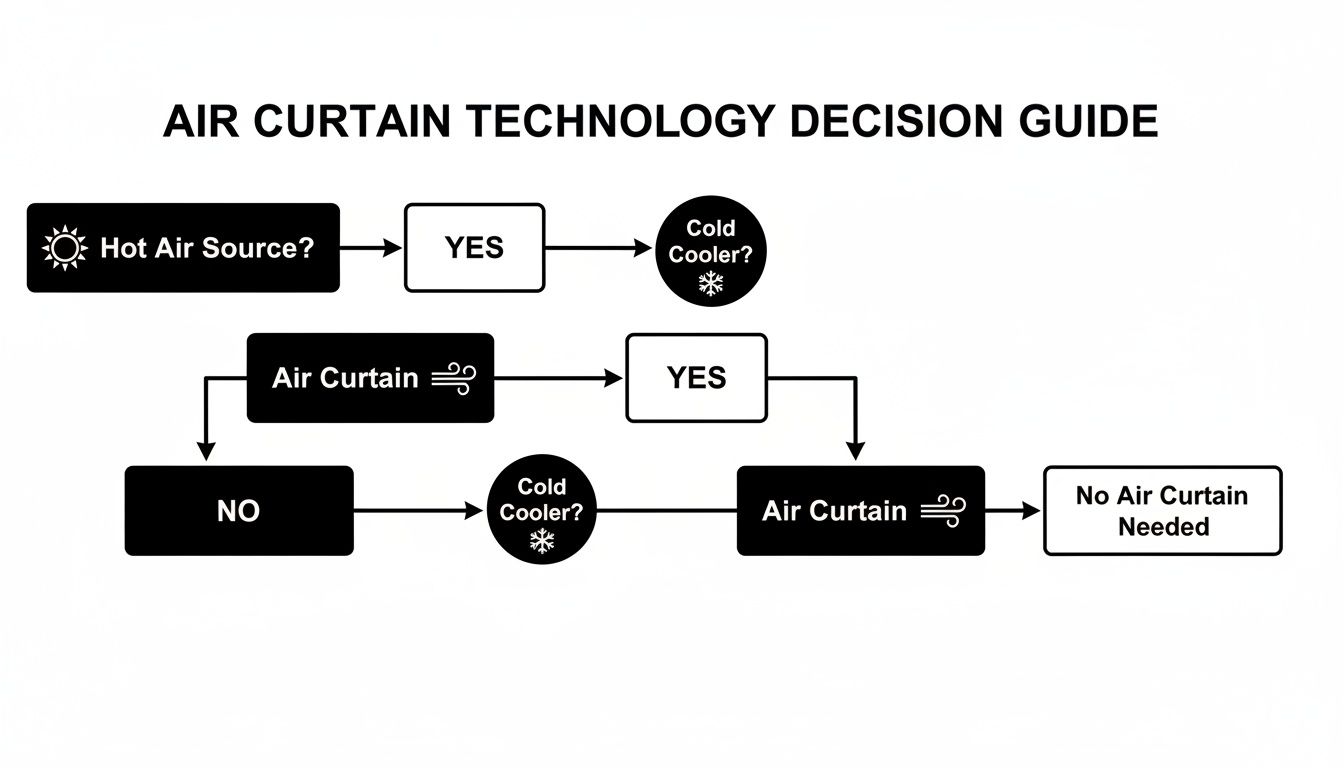
The key takeaway is that this constant stream of cold air acts like an invisible door, keeping the warm air out so your products stay at a safe, consistent temperature.
When choosing your cooler, think about your best-selling grab-and-go items first. The product should dictate the type of cooler you select, not the other way around. Let your menu guide your restaurant equipment decision to ensure you're creating the most effective and profitable display.
At the end of the day, the right open-air cooler is the one that fits into your workflow, makes your specific menu look amazing, and helps you make more sales. By thinking through these models, you’ll find the perfect unit to turn a casual glance into a sale.
Maximizing Energy Efficiency to Lower Your Costs
Let’s talk about one of the biggest headaches for any Los Angeles restaurant owner: the sky-high utility bill. There’s a common myth that open-air coolers, being doorless, are complete energy hogs. But modern units are engineered to flip that assumption on its head, turning a potential expense into a smart, cost-saving investment.The secret is the smart technology packed inside today's models. These aren't just empty, open boxes; they're highly efficient machines designed to keep power consumption low while making your products look irresistible.
Built-In Features That Cut Down Costs
Modern open-air coolers come standard with several features specifically designed to lighten their energy footprint. These aren't optional add-ons but core components that work together to keep your electricity costs down.
- Eco-Friendly R290 Refrigerant: This isn't just better for the planet; it's more efficient. R290 propane refrigerant has a lower global warming potential and can significantly reduce energy use compared to older coolants.
- High-Efficiency Compressors: The compressor is the heart of any commercial refrigerator or freezer. Newer models use advanced compressors that cool faster and use less energy to hold the target temperature, which directly slims down your monthly bill.
- Bright, Cool LED Lighting: Gone are the days of hot, buzzing fluorescent bulbs. LED lighting makes your products pop without generating extra heat, meaning the cooling system doesn't have to work harder to compensate.
- Included Night Covers: This simple feature is a total game-changer. At closing time, you just pull down the cover. This traps the cold air inside, letting the compressor run far less overnight and saving a ton of energy during off-hours.
These features completely challenge the old notion of open coolers being wasteful. Atosa under-counter and merchandiser units, for example, can slash operational costs with up to 40% lower energy use than some closed-door fridges, all while keeping products perfectly fresh. In fact, stats from 2023 show that 62% of quick-service operators in major markets reported a 10-15% sales lift after installing open displays.
Smart Placement and Simple Maintenance
Beyond the built-in tech, how you use your open-air cooler makes a huge difference. Following a few simple best practices can boost its efficiency even more and save you real money.
Strategic placement is your first line of defense. The air curtain is a delicate, invisible barrier, and you need to protect it. Always place your cooler away from direct sunlight, exterior doors, and HVAC vents. A draft from an air conditioner or a blast of hot LA sun can easily disrupt the air curtain, forcing the compressor to work overtime.
Your open-air cooler performs best in a stable environment. Think of the air curtain like a soap bubble—you want to keep it away from anything that might 'pop' it, like strong air currents or heat sources. This simple step is one of the easiest ways to maximize efficiency.
Regular maintenance is also non-negotiable. The condenser coil is the unit's radiator; if it gets clogged with dust and grease, the cooler can't get rid of heat effectively. Wiping down the coils once a month ensures the system runs smoothly and uses less power. It’s a five-minute task that easily pays for itself in energy savings. For a deeper dive, check out our guide on energy-efficient commercial refrigerators.
Turning Your Cooler Into a Sales Powerhouse
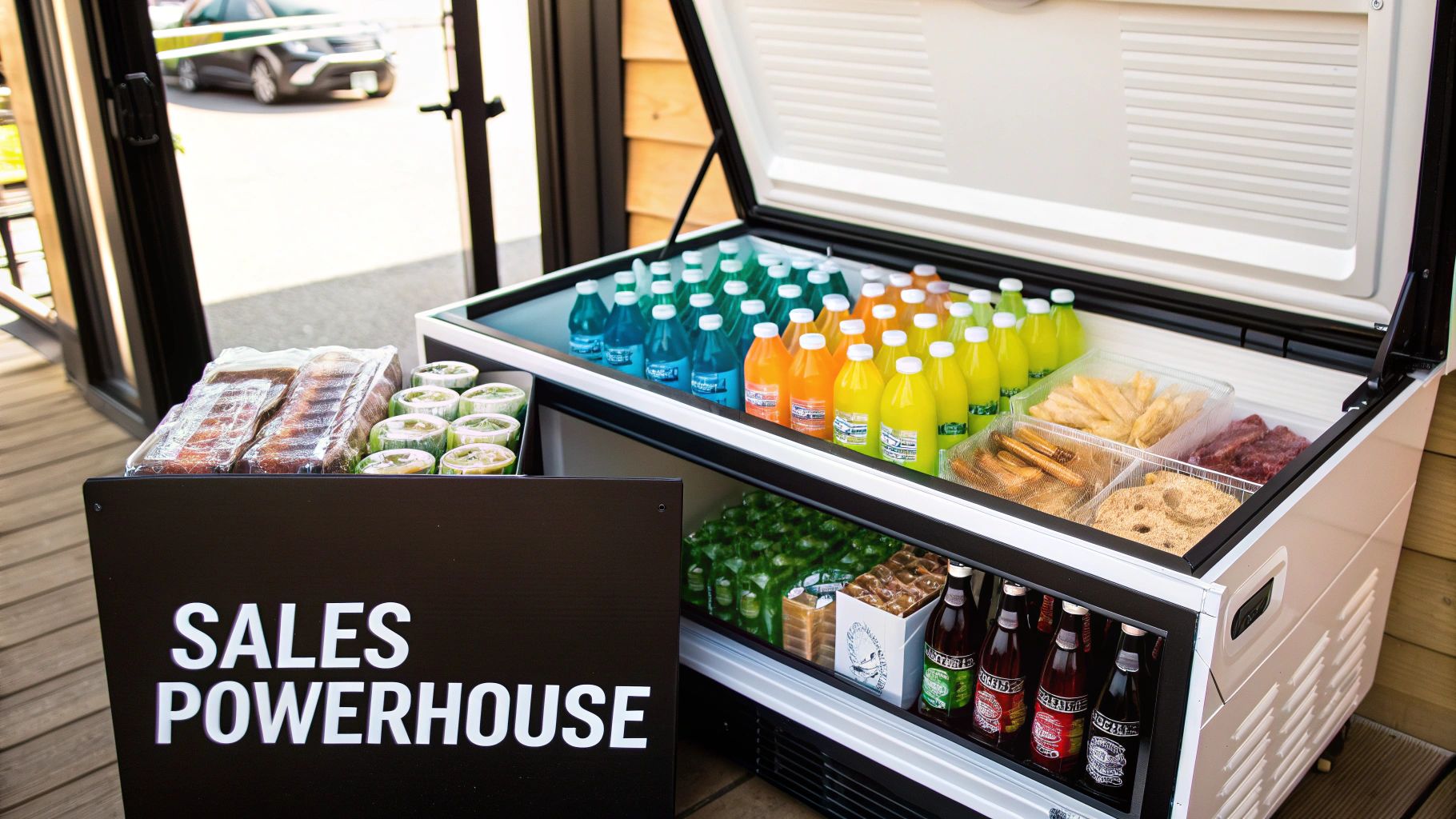
Let's be clear: your open-air cooler is way more than just a cold box. It’s one of your hardest-working salespeople. Think of it as a brightly lit stage for your grab-and-go items, where the right setup can easily turn a casual glance into an impulse buy. In a food scene as competitive as Los Angeles, a well-merchandised cooler can make a huge difference to your daily sales.
The idea is simple: make your products look so irresistible that customers can't walk past without grabbing something. This isn't just about stocking shelves. It’s about creating a visual story that tempts people and guides their choices. When you arrange everything with a clear plan, you grab their attention, create desire, and give your bottom line a nice little boost.
Arranging for Maximum Visual Appeal
First things first, let’s talk color and grouping. A messy, chaotic cooler is a turn-off. A well-organized one, however, looks clean, professional, and makes it easy for customers to find what they’re looking for. Grouping similar items together is the easiest way to achieve this.
For example, put all your colorful, fresh-pressed juices on one shelf and your dairy-based drinks like milk and yogurt on another. This creates clean, visual blocks that the eye can process quickly. The human eye is naturally drawn to bright colors and contrast, so use that to your advantage and put your most profitable items where they’ll get noticed.
Place your highest-margin products directly at eye level. This is the most valuable real estate in any retail display. It ensures the first thing your customers see is what you most want them to buy.
Don't just group items; think about how the colors can play off each other. Imagine a display of Mexican aguas frescas—the deep red of hibiscus, the bright green of lime, and the creamy white of horchata. That kind of vibrant display practically sells itself.
Cuisine-Specific Merchandising Strategies
A generic display just won't cut it in L.A. Your merchandising needs to feel like it belongs to your brand and your menu.
- For a Chinese Restaurant: Show off grab-and-go dim sum like har gow or shumai in clear containers. Place them next to bottled soy milk and popular teas to create a perfect, convenient meal combo.
- For a Thai Food Truck: Arrange bottles of classic Thai iced tea right next to containers of fresh mango sticky rice. The pop of bright orange next to the soft yellow of the mango is a beautiful and tempting sight.
- For a Japanese Eatery: Lean into that minimalist aesthetic. Neatly line up bento boxes, onigiri, and colorful mochi, leaving just a little space between items for a clean, high-end feel.
This targeted approach makes your cooler feel like a thoughtful extension of your kitchen, not just an afterthought.
Storytelling and Creating Combos
Finally, use your cooler to tell a story and suggest pairings. Place small side salads next to bottled dressings, or position sandwiches next to single-serving bags of chips. You're not only encouraging add-on sales, you're also making the customer's decision a whole lot easier.
You could even create a dedicated "lunch combo" section with a main, a drink, and a side all grouped together. For a Korean spot, this might be a pre-packaged kimbap roll, a small container of kimchi, and a can of Milkis. You’re no longer just selling items; you're selling a complete, delicious solution. By thinking like a merchandiser, you can transform your open-air cooler from simple storage into a true sales powerhouse.
Getting Your Cooler From Us
Alright, you’ve done the homework. You know all about the different models, the science behind the air curtain, and how to merchandise like a pro. Now for the easy part: getting the right open-air cooler for your Los Angeles food truck or restaurant, without the headache.
When you work with a local supplier like Los Angeles Restaurant Equipment, you're getting more than just a box dropped at your curb. You're tapping into our direct relationships with top brands like Atosa, which means you get great prices on the best restaurant equipment.
Why Go Local?
We get the L.A. food scene. We know the challenges of a tight food truck kitchen and the fast pace of a QSR. We’ve built our entire service around what operators like you actually need.
- Free Freight Delivery: Forget about surprise shipping fees. We offer free freight delivery to commercial spots right here in the Los Angeles area.
- Real-World Advice: Not sure which model will fit your space or your menu? Our team has been equipping L.A. kitchens for years and can give you practical, straightforward advice.
- A Warranty That Works: Peace of mind is huge. Atosa units come with a solid warranty: two years on all parts and labor, plus an extra five years on the compressor.
Choosing a local partner means you have a support system right here in town. If you ever have an issue, help is just a local call away—not halfway across the country.
Smart Ways to Pay
Cash flow is king, especially when you’re running a food truck or just starting a new restaurant. That's why we have lease-to-own financing options that make sense. You can get the high-quality cooler you need now without emptying your bank account.
Instead of a big payment upfront, you make smaller monthly payments that work with your budget. This keeps your cash free for other important things like ingredients or marketing, and it helps build your business credit at the same time. It’s a smarter way to set your business up for success.
Got Questions? We’ve Got Answers.
When you’re thinking about a big purchase like a new cooler, a few questions are bound to pop up. It's a smart move to get all the details before you commit. We've heard just about every question from LA restaurant and food truck owners, so we’ve put the most common ones right here with some straight-up answers.
From daily cleaning to figuring out the best spot for it in a food truck, getting these things sorted out now means you can hit the ground running.
Are These Coolers a Pain to Clean and Maintain?
Not at all. We know you’re busy, which is why Atosa open-air coolers are built for real-world LA kitchens. For daily upkeep, a quick wipe-down of the shelves and surfaces is all it takes to keep things looking sharp for your customers.
The main thing to remember is the condenser coils. Give them a good cleaning about once a month to get rid of any dust or grease. This one simple step keeps the unit running efficiently and saves you money on energy bills. If you need a hand, we have easy guides, and our local service network is always on call for bigger tune-ups.
Can I Actually Use an Open-Air Cooler in a Food Truck?
You absolutely can, but where you put it is everything. These coolers work their magic in stable, indoor spots where that curtain of cold air isn't fighting against wind, direct sun, or wild temperature changes.
In a food truck, that means installing it inside and away from the service window. A smaller, under-counter model is a fantastic pick for tight spaces. You get that awesome grab-and-go display for drinks and snacks without sacrificing precious room—perfect for boosting sales during a busy lunch rush.
Key Tip for Food Trucks: Your number one job is to protect that air curtain. Keep the cooler shielded from the elements, and it'll hold its temperature perfectly, keeping your products safe and cool even on the hottest LA days.
How Does Lease-To-Own Financing Work?
Think of lease-to-own as a smart way to get the gear you need today without draining your bank account. It’s perfect for keeping your cash free for other important stuff like stocking up on ingredients, making payroll, or getting the word out about your new menu.
It's pretty simple: you make regular monthly payments for a set amount of time. Once the term is up, you’ll usually have the option to own the cooler for good. It's a go-to choice for new food businesses across Los Angeles looking to build up their kitchen without the massive upfront cost.
Ready to see your grab-and-go sales climb? Check out our complete lineup of Atosa commercial refrigerators and freezers at Los Angeles Restaurant Equipment and find the perfect match for your spot. https://losangelesrestaurantequipment.com