

Mastering the size of under counter fridge: A LA Kitchen Guide
When you're outfitting a commercial kitchen, especially in a place like Los Angeles where every inch counts, the size of an under counter fridge is a make-or-break decision. These workhorses are designed to tuck neatly under standard countertops, giving you critical cold storage right where you need it without eating up precious floor space.
Generally, you'll find they measure between 24 to 48 inches wide, 28 to 34 inches deep, and 32 to 36 inches high.
Finding The Perfect Fit Under Your Counter
For any restaurant operator in Los Angeles, from a busy Hollywood cafe to a craft cocktail bar in Silver Lake, space is everything. An under-counter fridge isn't just another piece of restaurant equipment; it’s a key part of an efficient kitchen workflow. Getting the dimensions right from the start is the first step to a smoother, faster service.
Breaking Down Standard Dimensions
Think of these measurements as the industry standard. While specific models from different brands might vary slightly, most stick to a common range so they can easily slot into existing kitchen layouts.
Here’s a quick rundown of what to expect:
- Width: This is where you'll see the most variation. A slim, single-door unit can be as narrow as 24 inches, while larger three-door models can stretch to 72 inches or more. A popular 48-inch two-door model is often the sweet spot for a two-person prep station.
- Height: Most of these units are built to be "counter-height," which usually means between 32 and 36 inches. This allows them to slide right under a standard 36-inch-high commercial counter, leaving just enough room on top for proper air circulation.
- Depth: You’ll typically find depths between 28 and 34 inches. This measurement is key to making sure the front of the fridge sits flush with your other cabinets, giving the kitchen a clean, professional look while still offering plenty of storage inside.
From External Size to Internal Capacity
The outside dimensions of an under-counter fridge tell you how much floor space it will take up, but the inside capacity—measured in cubic feet—tells you how much it can hold. It’s a direct trade-off.
For example, a compact 27-inch model might give you around 7 cubic feet of storage, perfect for a Los Angeles food truck that needs to keep a day's worth of prepped ingredients chilled. Step up to a wider 60-inch unit, and you could be looking at over 15 cubic feet, which is more suitable for a high-volume restaurant in Koreatown that needs to hold batches of kimchi, marinades, and fresh produce.
The real trick is to match the fridge’s footprint to your kitchen’s daily rhythm. A bigger unit holds more, but it also takes up more space—a critical balance to strike in any L.A. kitchen.
Here's a quick reference table to help visualize how these dimensions translate to usable space.
Standard Commercial Under Counter Fridge Dimensions at a Glance
| Dimension Type | Common Range (Inches) | Typical Capacity (Cubic Feet) | Best For |
|---|---|---|---|
| Width | 24" - 72"+ | 5 - 20+ cu. ft. | Single-door units for bars; multi-door for prep lines. |
| Height | 32" - 36" | N/A | Fits under standard 36" commercial countertops. |
| Depth | 28" - 34" | N/A | Standard fits flush; shallow for tight walkways. |
Ultimately, choosing the right size is all about balancing your storage needs with the physical space you have to work with. If you're really looking to make every inch work for you, it's worth exploring some practical renovation ideas for maximizing kitchen space. This single decision can impact everything from how your team moves around the kitchen to how quickly you can get plates out to customers.
Why Every LA Restaurant Needs Under Counter Refrigeration
In the Los Angeles food scene, efficiency is the name of the game. From a busy Mexican food truck cranking out tacos in East LA to a high-end Japanese spot in Downtown, space is always at a premium. Every single square inch of a kitchen has to pull its weight. This is why we're seeing a huge move towards smarter, more flexible kitchen layouts, with under-counter refrigeration right at the heart of it all.
These aren't just small fridges; they're game-changers for your workflow. When you put essential cold storage right under your prep counters, your chefs can stop wasting steps and speed up service, all while keeping food safety top-notch. Just picture a line cook in a Thai restaurant grabbing fresh herbs and sauces without ever leaving their station. That's the kind of smart, on-the-spot cooling we're talking about.
The Rise of Compact Cooling Solutions
This isn't just a trend we're noticing around town; it's a major shift in the market. The demand for small, powerful cooling is booming across the globe, driven by the same challenges LA restaurant owners deal with every day. The global undercounter refrigerator market recently soared to USD 3.42 billion, which just goes to show how essential these units have become.
This growth proves that kitchens need restaurant equipment that can turn a tight space into a productive powerhouse—a big part of our focus here at Los Angeles Restaurant Equipment. For more on this market trend, you can check out this report from Dataintelo.com.
This move to smaller, more nimble equipment is especially crucial for the city's food trucks and ghost kitchens. For these businesses, getting the most out of a tiny footprint isn't just a nice-to-have, it's a must for survival. Getting the right size of under counter fridge can be the difference between a chaotic workspace and a smooth, money-making operation.
Built for the Commercial Grind
Don't mistake a commercial-grade unit for the mini-fridge in your garage. They are built completely differently, designed for the non-stop punishment of a professional kitchen.
An under-counter refrigerator in a busy LA kitchen is more than just an appliance; it's a strategic investment in speed and consistency. It ensures every ingredient is perfectly chilled and exactly where it needs to be, moment by moment.
Brands like Atosa get this. They build their commercial refrigerators with heavy-duty compressors that can handle the heat of a busy kitchen and tough stainless steel that won't buckle under constant use. Their cooling systems are powerful, bouncing back to the right temperature quickly even when the doors are constantly being opened. Plus, they come with solid warranties that protect your investment, like Atosa's two-year parts and labor and five-year compressor coverage, giving you peace of mind when you need it most.
How to Measure Your Kitchen Space Accurately
Ordering new restaurant equipment like an under-counter fridge without measuring first is a recipe for disaster. It's like sending a food order to the wrong table—it just creates headaches and wastes time. To make sure your new unit fits perfectly and runs like a dream from day one, you need to measure more than just the spot where it will live.
Think of it like creating a blueprint before you build. Grab your tape measure, and let’s get this right.
The Three Critical Measurements
Before you even start looking at different models, you need to know the exact dimensions of the space you're working with. This means taking three key measurements.
- Height: Measure from the floor to the bottom of the countertop. You'll want to do this in a couple of different spots, since floors in older Los Angeles buildings aren't always perfectly level. Always go with the smallest number you get.
- Width: Measure the space from one side to the other, whether it's between two cabinets or a cabinet and a wall. Just like with the height, take this measurement at the front and back of the opening to catch any weird angles.
- Depth: Measure from the back wall to the front edge of your cabinets. This is crucial for ensuring the unit will sit flush and not stick out, which can be a real pain in a busy kitchen.
This guide simplifies the whole process, breaking it down into measuring the space, the path to get it there, and the clearance it needs to run properly.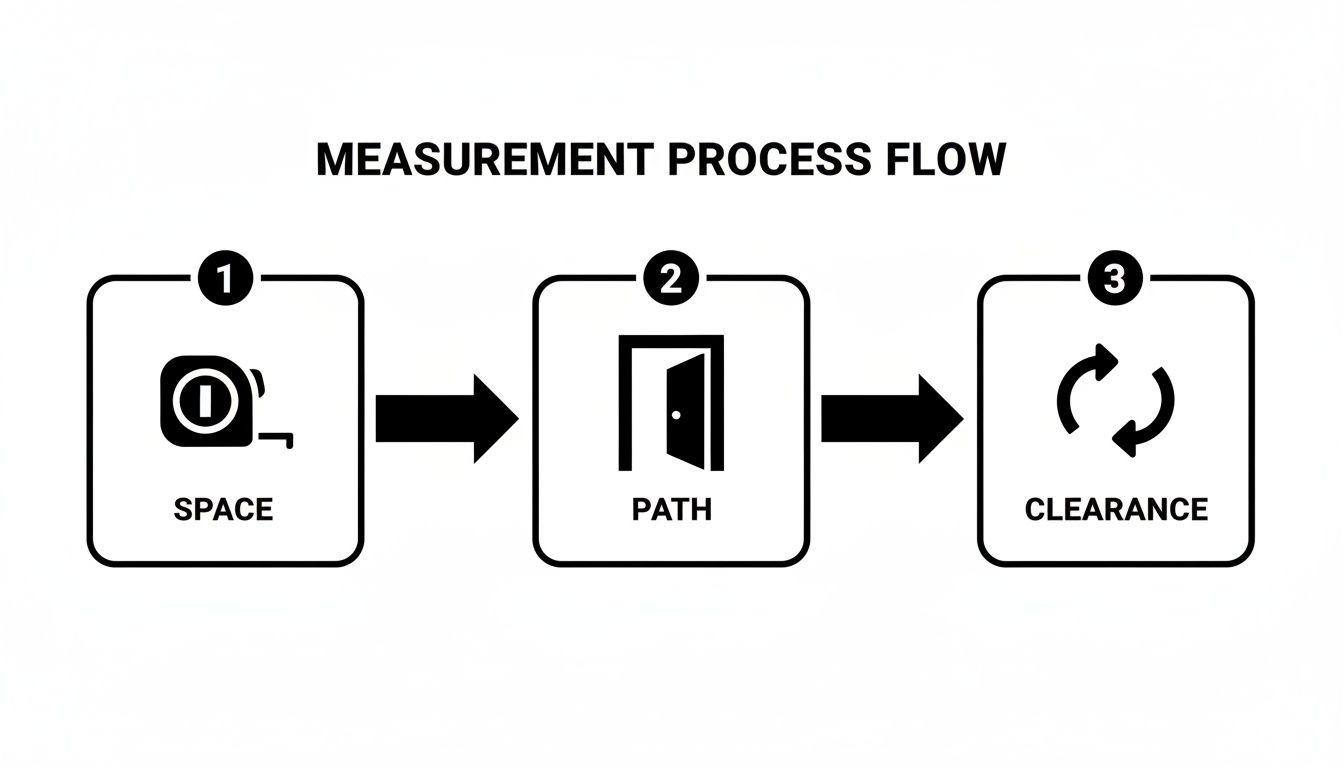
Following these three steps—space, path, then clearance—is the best way to avoid the most common and frustrating installation problems.
Accounting for Breathing Room
A commercial fridge's compressor is its engine, and just like any engine, it generates heat and needs to breathe. If you squeeze it into a space that's too tight, you're essentially choking it. This will make it overheat, work harder, guzzle more electricity, and eventually burn out way too soon.
This is why you must add 1 to 2 inches of extra space on the sides and back for ventilation. This gap lets heat escape, keeping the compressor cool and making your fridge last a whole lot longer.
Now, some units are designed specifically for tight fits. These are called front-breathing or front-venting models, and they're perfect for a packed Koreatown bar or a small food truck. They pull air in and push it out from a grille on the front, so they don't need side or back clearance. Still, you should always check the manufacturer’s specs first. For more details on getting your setup right, our guide on commercial refrigerator installation has more pro tips.
Mapping the Delivery Path and Door Swing
Don't forget about the journey from the delivery truck to the kitchen. There's nothing worse than getting the perfect unit, only to find it won't fit through the back door. Measure every doorway, hallway, and tight corner it has to navigate.
You also have to think about the door swing. Will it open right into a high-traffic walkway and block someone? Or will it constantly bang against another piece of restaurant equipment? Plan it out so the door can open all the way without creating a bottleneck, keeping your kitchen's workflow smooth and efficient.
Choosing the Right Features for Your LA Kitchen
Once you’ve got the size figured out, it’s time to think about the features that will make or break your under-counter fridge in a hectic Los Angeles kitchen. A commercial unit is a specialized tool, and picking the right components is like a chef choosing the perfect knife for a specific job. These features have a direct line to your kitchen's efficiency, workflow, and even your energy bills.
The first big decision is usually the doors. For a busy prep line in a Thai Town kitchen, solid stainless steel doors are the workhorse you need. They provide much better insulation, which is key for keeping temperatures steady during the dinner rush and can save you a surprising amount on energy costs over time. You can learn more about how equipment choices affect your bottom line in our guide to energy-efficient commercial refrigerators.
On the other hand, if you’re running a lively Koreatown bar or a downtown L.A. café, glass doors are a game-changer. These units double as merchandisers, showing off your craft beers, cold brews, and other drinks to tempt customers. They also make it incredibly easy for your staff to see what’s in stock with just a glance.
Compressor Placement Is Critical
Another detail that’s easy to overlook but absolutely vital is the compressor's ventilation. This little feature dictates where you can actually install the unit and how much "breathing room" it needs to operate properly.
- Rear-Breathing Models: These are the most common type you'll see. The compressor pushes hot air out from the back, so they need a few inches of clearance between the unit and the wall. They’re a great fit for open kitchen designs where space isn’t as tight.
- Front-Breathing Models: These are the heroes of small spaces. They pull air in and push it out through a grille on the front of the unit. This clever design allows for a zero-clearance installation, meaning you can build them right into a cabinet run or slide them flush against a wall. It’s a lifesaver for cramped Los Angeles food trucks and cozy sushi bars.
The global undercounter refrigerator market is on track to become a USD 5.7 billion industry by 2033, and it's driven by the very needs of quick-service restaurants and mobile kitchens where these features matter most. Standard commercial models, usually 27 to 48 inches wide with capacities from 7-18 cubic feet, are at the center of this trend. For LA businesses, this means more choices than ever.
Ensuring ADA Compliance
Finally, don’t forget about accessibility. The Americans with Disabilities Act (ADA) has clear standards for creating an inclusive kitchen, and that includes countertop height.
ADA-compliant counters can't be higher than 34 inches from the floor. Luckily, most commercial under-counter refrigerators are built with this in mind, with heights usually falling between 32 and 34 inches, letting them slide perfectly under an accessible workspace.
Checking this spec is a must for any Los Angeles establishment that wants to create a safe and welcoming environment for every employee. It's about more than just following the rules; it's about building a kitchen that works for everyone and avoiding expensive fixes later on.
Smart Layouts for LA Restaurants and Food Trucks
Knowing the right size for an under-counter fridge is a great start, but knowing where to put it is what really turns a chaotic Los Angeles kitchen into a finely tuned machine. This isn't just about finding an empty corner. It's about designing a workflow that cuts down on wasted steps, cranks up the speed, and keeps your team moving smoothly when the dinner rush hits.
The idea is to build an efficient "work triangle"—that classic kitchen setup connecting storage, prep, and cooking. When you place your under-counter units right in the middle of that triangle, you're putting chilled ingredients exactly where your cooks need them. That simple move can slash the amount of running around your staff does, which means they’re less tired and orders fly out faster.
Optimizing Workflows in LA Kitchens
Every kitchen has its own rhythm. Whether you’re running a huge restaurant or slinging food from a truck, the right fridge placement can make all the difference for your specific menu.
Think about these L.A. food scenes:
- Mexican Food Truck: A refrigerated prep table is the engine of the whole operation. With storage for meats, cheeses, salsas, and produce right under the cutting board, one person can build tacos and burritos in a single, fluid motion.
- Japanese Sushi Bar: Here, it’s all about precision. Small under-counter fridges tucked beneath the bar give sushi chefs immediate access to high-end fish and ingredients. Everything stays perfectly chilled and pristine for every single order.
- Thai Restaurant Prep Line: Picture a cook grabbing fresh herbs, chopped veggies, and curry pastes from under-counter drawers without ever stepping away from the wok. That's a setup that speeds up every dish and keeps the quality consistent.
This is where having a smart plan pays off. If you want to go deeper on designing your space for top-tier efficiency, check out our guide on commercial kitchen layout design.
The Mobile Kitchen Advantage
In L.A.'s booming food truck scene, a smart layout isn't just nice to have—it's essential for staying in business. Space is tight, and every single inch needs to work for you. An under-counter refrigerator lets you pack in a ton of cold storage without eating up precious vertical space needed for other restaurant equipment.
By building under-counter refrigeration directly into prep stations, food truck owners create a powerful, self-contained workflow. This is absolutely critical for surviving a high-volume lunch rush without the whole operation grinding to a halt.
At the end of the day, a great layout does more than just save room. It keeps food safer by holding perishable ingredients at the right temperature until the second they’re used. It cuts down on the physical strain on your crew and leads directly to faster, more profitable service. Taking the time to plan where your commercial refrigerators go is one of the best investments you can make for your business.
Your Partner in Los Angeles Restaurant Equipment
Figuring out the right size of under counter fridge is a huge first step toward building a more efficient kitchen here in Los Angeles. From getting the dimensions right and measuring your space to picking the best commercial-grade features for your food truck or restaurant, every little choice affects your daily grind. Now, it's time to make it happen.
At Los Angeles Restaurant Equipment, we’re more than just a supplier. We're your local partner, and we’re here to help your culinary business thrive. We get the unique challenges LA operators face, whether you're trying to maximize a tiny spot in a Koreatown bar or outfit a new Mexican food truck for crazy-busy service. Our mission is simple: to get you the best tools for the job.
We believe the right restaurant equipment is the foundation of a great restaurant. That’s why we focus on providing reliable, high-performance commercial refrigerators and freezers that work as hard as you do, day in and day out.
We’re proud to stock a huge selection of Atosa commercial refrigerators, a brand known for its toughness and performance in kitchens that don't quit. When you work with us, you’re not just getting a product; you’re getting a promise of quality and support you can count on.
What We Offer LA Restaurants
- Competitive Pricing: Get the best value without ever having to compromise on quality.
- Free Freight Delivery: We'll deliver right to your spot anywhere in Los Angeles, no extra charge.
- Robust Warranties: Rest easy with the excellent coverage that comes with Atosa units.
- Flexible Financing: Our lease-to-own options help you get the restaurant equipment you need now while protecting your cash flow.
Don't leave your kitchen's efficiency to chance. Get in touch with our team for a personalized consultation.
Common Questions About Under Counter Fridge Sizes
As you get down to the nitty-gritty of choosing an under counter fridge, a few final questions always seem to pop up for Los Angeles restaurant and food truck owners. Getting the right answers is key, whether you’re outfitting a Chinese restaurant in the San Gabriel Valley or a busy Thai prep station in Hollywood.
What Is the Standard Height for an ADA-Compliant Counter Fridge?
Most commercial under counter fridges you'll see are built to be somewhere between 32 to 34 inches tall. This isn't a random number—it’s designed specifically to slide right under ADA-compliant countertops, which can't be higher than 34 inches off the floor. Just make sure you double-check the unit’s total height, including any legs or casters, to ensure you’re fully compliant.
When you're planning your layout, the fridge has to work with your cabinetry. If you're building out a new space or doing a major renovation, looking at guides on standard kitchen cabinet sizes can give you a much clearer picture of how everything will fit together.
How Much Ventilation Space Does My Fridge Need?
Think of ventilation as breathing room for your fridge's compressor. A good rule of thumb is to leave 1-2 inches of clearance around the back and sides to let the heat escape. However, if you're really tight on space, look for a front-breathing model. These are built for zero-clearance installations and are a lifesaver in cramped kitchens. The manufacturer's spec sheet is always your best friend here—check it for the exact requirements.
Can I use a residential under counter fridge in my food truck?
We get this question a lot, and our answer is always a hard no. Commercial units are built tough with heavy-duty parts that can take the heat and abuse of a professional kitchen. More importantly, they are NSF certified for food safety, which is a must-have to pass health inspections in Los Angeles County. Using a residential fridge is a huge gamble that can lead to equipment failure and serious health code violations.
Getting these small details right from the start means your new restaurant equipment will run smoothly and safely for years to come.
Ready to find the perfect commercial-grade under counter fridge for your kitchen? Check out our huge selection at Los Angeles Restaurant Equipment and find the Atosa unit that will make your workflow seamless. Visit us at https://losangelesrestaurantequipment.com.