

Top Rated Commercial Refrigerators: Best Picks for Your LA Kitchen
The very best commercial refrigerators are the ones that nail the perfect trifecta: unwavering reliability, serious energy efficiency, and a design that flows with your kitchen's natural rhythm. It’s no surprise that brands like Atosa have become go-to choices for Los Angeles restaurants; they deliver on these essentials without breaking the bank, making them a savvy investment for any busy foodservice operation.
Choosing Your Kitchen’s Most Valuable Player
For any Los Angeles restaurant owner, picking out a commercial refrigerator isn't just another equipment purchase. Think of it as a strategic investment in the heart and soul of your kitchen.
Whether you're running a high-volume Koreatown BBQ joint, a popular Thai restaurant, or a bustling Mexican food truck, that refrigerator is the silent workhorse protecting thousands of dollars in inventory. It's what guarantees every single dish starts with fresh, safe ingredients. Simply put, it's the MVP of your back-of-house.
This guide goes beyond just listing popular brand names. We're going to break down what 'top rated' actually means in the real world of a fast-paced LA kitchen—the critical blend of reliability, efficiency, and smart design that keeps a unit humming along, service after service. Our goal is to give you the insight you need to make a smart, long-term investment in your restaurant's success.
Why This Matters for LA Restaurants
The restaurant scene here in Los Angeles is famous for its diversity and fierce competition. Your refrigeration needs are going to be completely different if you're slinging authentic tacos from a food truck versus crafting delicate plates at an upscale Japanese spot. The good news? The market for this gear is booming.
The global commercial refrigeration market was valued at around $85.6 billion and is expected to hit $161 billion by 2034. This massive growth means more options, better technology, and more competitive prices for LA restaurant owners.
This boom puts you in a great position. You have access to a huge variety of specialized units, from under-counter models that save precious floor space in food trucks to massive reach-in freezers built for bulk storage in Chinese or Korean restaurants. Knowing what key features to look for helps you cut through the noise and find the perfect unit that actually supports your menu and your kitchen's unique layout. For a head start, check out our guide on the best commercial refrigerator brands available today.
What Makes a Refrigerator Top Rated?
A "top rated" sticker doesn't come from a brand name alone. It’s earned through a specific set of performance metrics that directly impact your daily operations and, most importantly, your bottom line. These are the non-negotiables that separate an average cooler from a true kitchen workhorse.
To help you sort through the options, we've put together a quick guide to the features that truly matter.
Quick Guide to Top Rated Refrigerator Features
| Feature Category | What It Means for Performance | Why It Matters in an LA Kitchen |
|---|---|---|
| Temperature Consistency | Holds a steady, safe temperature, even when the doors are constantly swinging open during a chaotic dinner rush. | Protects your inventory from spoiling, prevents foodborne illness, and ensures you pass health inspections with flying colors. Crucial for Japanese sushi bars and Mexican taquerias alike. |
| Energy Efficiency | Uses less electricity to do its job, thanks to modern compressors, better insulation, and smart design. | Lower DWP bills mean more money in your pocket each month. In a city with high utility costs, this is a huge win for any LA restaurant, from Thai spots to food trucks. |
| Durable Construction | Built with tough, high-grade materials like stainless steel that can handle the daily grind of a commercial kitchen. | Resists dents, scratches, and corrosion from spills. It’s an investment that's built to last for years, not just a season. |
| Service & Warranty | Backed by a strong manufacturer warranty and, crucially, a responsive local service network for quick repairs. | When a fridge goes down, you're losing money by the minute. Fast, reliable service in the LA area is essential to avoid costly downtime. |
Ultimately, focusing on these core features ensures you're not just buying a box that gets cold, but a reliable partner for your business. It's about finding that unit that will keep performing day in and day out, letting you focus on what you do best: making incredible food.
How to Read Refrigerator Specs Like a Pro
Stepping into the world of commercial refrigerators means coming face-to-face with a wall of technical specifications. Those spec sheets, loaded with industry jargon and numbers, can feel pretty intimidating at first. But learning to decode them is like getting a superpower—it lets you see past the shiny stainless steel and understand exactly how a unit will perform under pressure.
Think of a refrigerator's spec sheet as its resume. It tells you everything you need to know about its strengths, weaknesses, and exactly how it will behave in your specific Los Angeles kitchen. From compressor horsepower to temperature recovery time, every single detail paints a picture of its real-world capability.
You don't need an engineering degree for this. With just a few key concepts, you can translate those numbers into insights you can actually use, making sure you pick one of the top rated commercial refrigerators that’s a perfect match for your operation.
This little map breaks down the core pillars of what makes a unit truly top-rated: reliability, efficiency, and design.
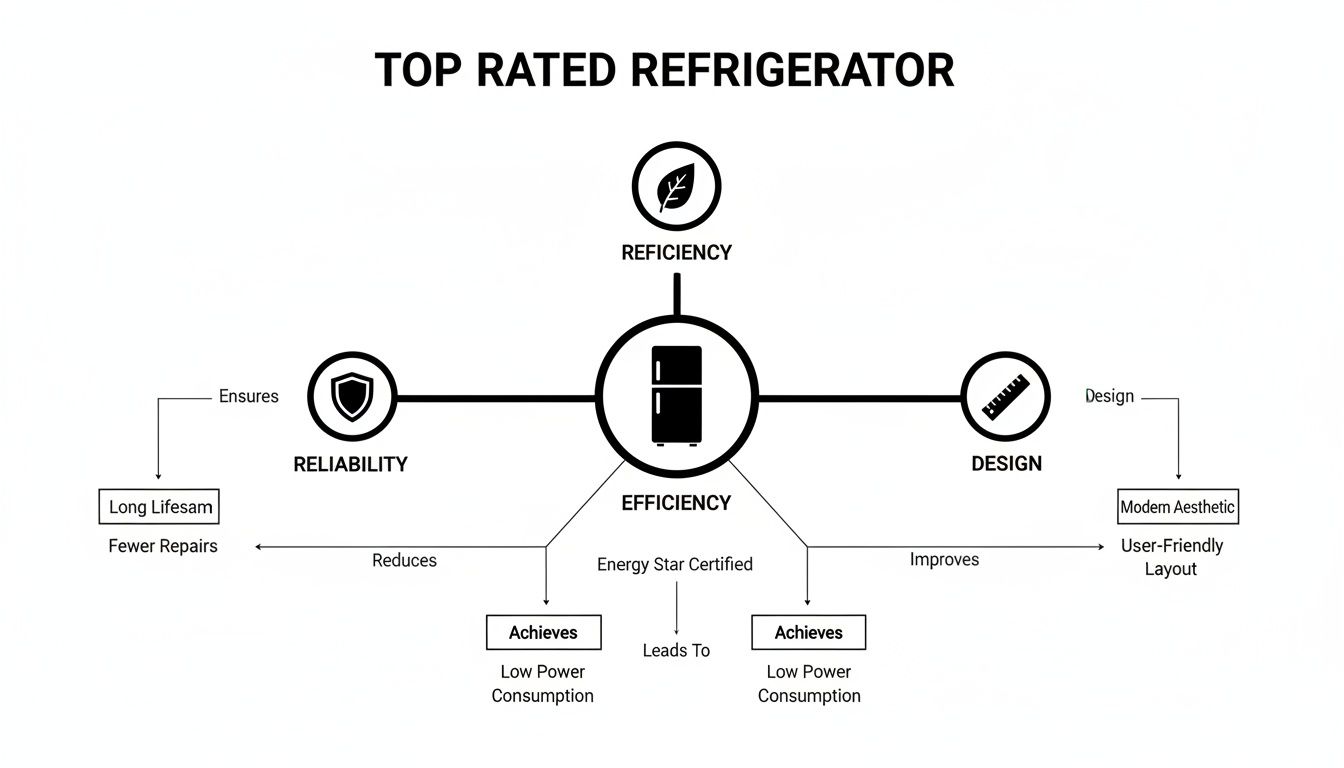
It’s a good reminder that a great refrigerator isn't about excelling in just one area, but striking the perfect balance between all three working together.
Decoding the Engine: Compressor Horsepower
The compressor is the heart of your refrigerator. It’s the engine that powers the entire cooling cycle, and its muscle is measured in horsepower (HP). Generally speaking, a higher HP means a more powerful compressor that can cool down the cabinet faster and handle more demanding conditions.
For a busy Thai restaurant in LA, where the kitchen door is constantly swinging open during a dinner rush, a robust compressor (think 1/3 HP or higher for a standard reach-in) is non-negotiable. It has to be strong enough to fight back against the warm kitchen air and keep all your ingredients safe.
Temperature Recovery: The Ultimate Stress Test
This is one of the most critical specs for any high-volume kitchen, period. Temperature recovery time measures how quickly the refrigerator gets back to its set temperature after the door has been opened. A fast recovery time is absolutely essential for food safety and quality.
Imagine a popular Mexican restaurant prepping for peak hours. That refrigerator door is being opened dozens of times as cooks grab salsa, produce, and meats. A unit with a poor recovery time is going to struggle, letting the internal temperature creep right into the danger zone.
A top-rated unit is built for rapid recovery. For instance, a quality Atosa model might get its temperature back in just a few minutes, while a lower-grade unit could take significantly longer, putting your entire inventory at risk.
Connecting Specs to Your LA Cuisine
The right specs really depend on your menu. The demands of a Japanese sushi bar are worlds apart from a Koreatown BBQ spot.
- For Precision Cuisines (e.g., Japanese Sushi): You need unwavering temperature stability. A unit that holds its temperature with pinpoint accuracy is crucial to preserve the delicate quality of raw fish. Look for models with advanced digital thermostats and powerful, efficient cooling systems.
- For High-Volume Kitchens (e.g., Chinese, Mexican): Fast temperature recovery and a powerful compressor are your top priorities. Your refrigerator has to withstand constant use without flinching, keeping ingredients consistently chilled during those chaotic service periods.
- For Food Trucks: A refrigerator's ability to handle high ambient temperatures is everything. The spec sheet might mention its "climate class," which tells you it can perform reliably even inside a hot truck on a sunny LA day.
By learning to read a spec sheet, you can confidently check out any model, like those from Atosa, and know exactly how it will perform in your unique culinary world. This knowledge transforms you from a regular buyer into a strategic investor, making sure your next refrigerator is a true asset to your kitchen.
Finding the Right Refrigerator for Your Kitchen Layout
In Los Angeles, kitchen space is as valuable as a prime parking spot in Silver Lake. Every square foot has to work for you, turning your kitchen's layout from a simple floor plan into a strategic advantage. The right commercial refrigerator isn't just a box that keeps things cold; it's a central piece of your operation that should help your workflow, not get in the way.
Choosing a unit that fits your footprint perfectly is one of the biggest calls you'll make. This isn't just about whether it can squeeze into a spot—it’s about how it meshes with the daily dance of your kitchen staff. A poorly placed or wrong-sized fridge creates bottlenecks, slows down service, and ultimately hits your bottom line.
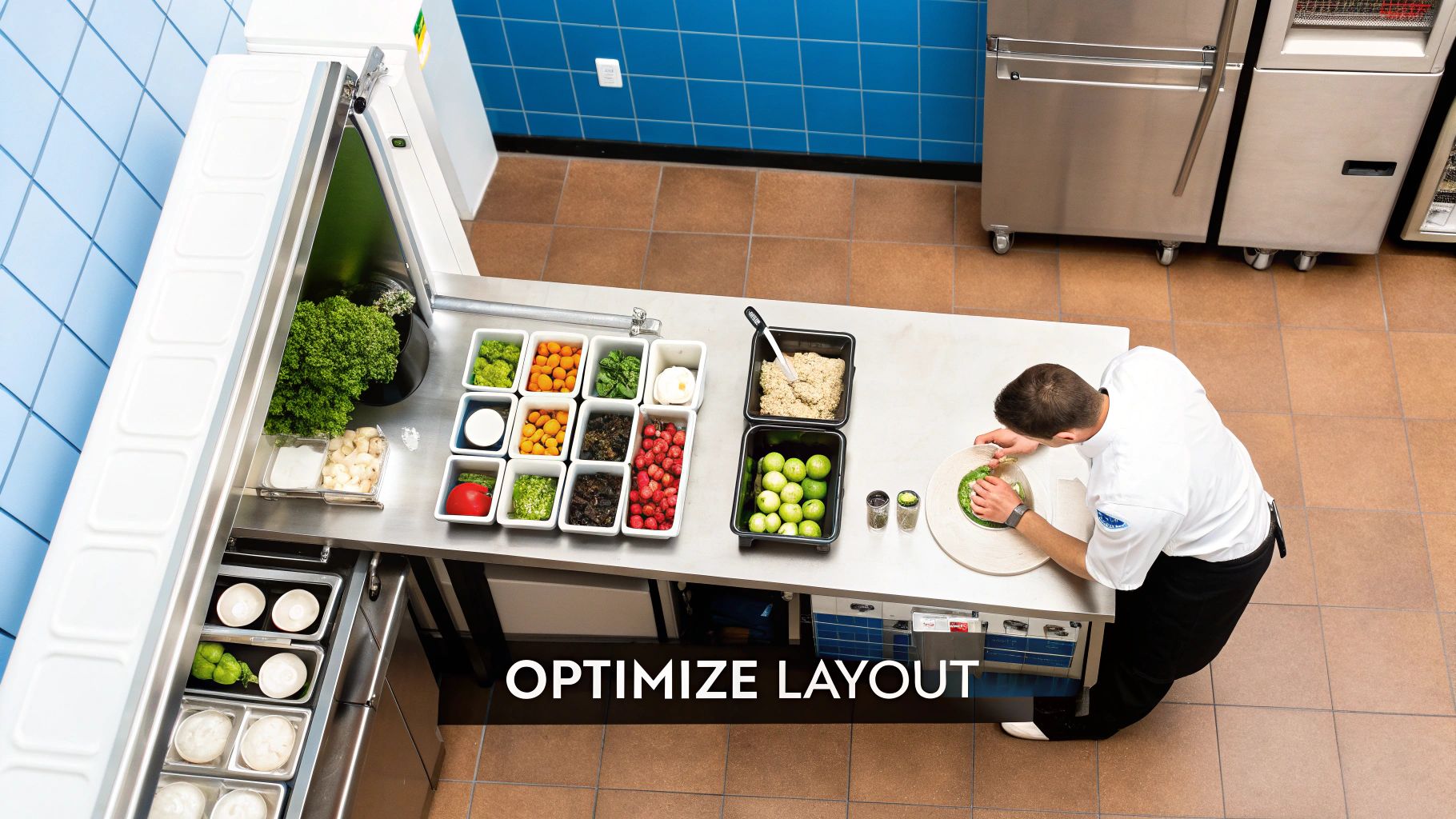
The goal here is to find a model that feels like it was custom-made for your kitchen. Let’s look at the most common setups and see how they fit into different L.A. restaurant scenes.
Reach-In Refrigerators: The Backbone of the Kitchen
The classic reach-in refrigerator is the undisputed workhorse in most professional kitchens. These upright units pack in a ton of storage and are built for quick access to all kinds of ingredients. For a big Chinese restaurant in the San Gabriel Valley, lining up a few of these is a brilliant move.
This setup allows for serious organization. You can have one unit just for fresh produce, another for proteins, and a third for sauces and prepped items. That kind of separation helps prevent cross-contamination and makes the whole cooking process smoother, letting chefs grab exactly what they need in seconds.
Under-Counter and Worktop Models: Maximizing Every Inch
When floor space is tight, under-counter refrigerators are an absolute game-changer. These compact units slide right under prep tables and countertops, putting chilled ingredients directly where they’re needed. This cuts down on wasted steps and keeps your kitchen line flowing.
Picture a busy Thai food truck at an L.A. food festival. Space is incredibly limited, and every inch is precious.
By installing Atosa under-counter units, the operator can transform a standard prep area into a highly efficient refrigerated workstation. This setup keeps everything from fresh herbs to curry pastes perfectly chilled and within arm's reach, dramatically speeding up order fulfillment.
This smart use of space is a growing trend worldwide. The Asia Pacific region has become a leader in commercial refrigeration, with Japan's demand for compact, efficient systems influencing equipment design everywhere. For Los Angeles operators wrestling with small kitchens, this trend means more innovative, space-saving options are hitting the market.
Specialized Prep Tables for High-Volume Assembly
For restaurants that are all about assembled dishes—think tacos, sandwiches, or pizzas—a refrigerated prep table is non-negotiable. These units combine a refrigerated base with a top rail designed to hold cold food pans, creating the perfect assembly line.
Imagine a popular taqueria in East LA during the lunch rush. A sandwich prep table lets one person assemble hundreds of tacos at lightning speed, with all the ingredients—from marinated meats to chopped onions and cilantro—held at safe, cool temperatures right in front of them. This kind of specialized design is the key to a high-speed, high-volume operation. To see what might work for your space, you might want to check out our guide on undercounter refrigerator sizes.
Choosing from the top rated commercial refrigerators means finding the model that not only performs well but also fits seamlessly into your kitchen’s unique flow. By thinking carefully about your space and how you work, you can pick a unit that doesn't just store food, but actually makes your kitchen more efficient.
How Energy Efficiency Impacts Your Bottom Line
For any restaurant owner in Los Angeles, keeping utility costs in check is a constant battle. Your commercial refrigerator is one of the biggest culprits, running 24/7 and quietly adding to your power bill. Choosing an energy-efficient model isn’t just about being "green"—it's a smart financial move that directly pads your profit margins month after month.
Think of it this way: you could buy a cheap, old pickup for deliveries, but you'd spend a fortune on gas. Or, you could invest a little more upfront in a modern, fuel-efficient van that saves you money on every single run. The exact same logic applies to the top rated commercial refrigerators.
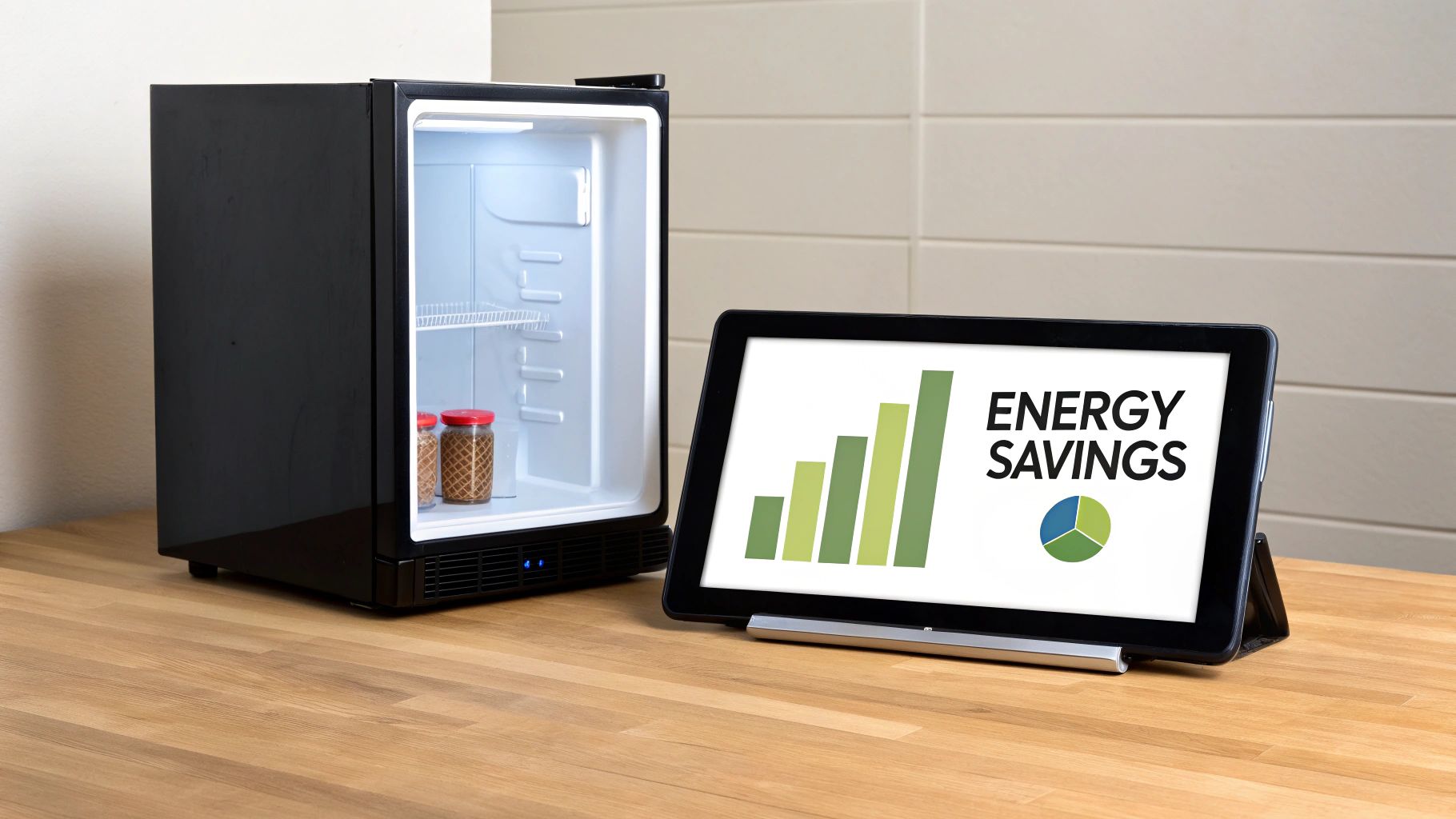
Let's break down how making a smart choice here puts real money back into your business.
Decoding Energy Certifications
The easiest way to spot an efficient unit is to look for the ENERGY STAR logo. This isn’t just some sticker; it’s a certification backed by the U.S. Environmental Protection Agency, guaranteeing the refrigerator meets strict performance standards. On average, an ENERGY STAR certified commercial refrigerator is 15-20% more efficient than a standard model.
For a busy LA spot, that percentage is huge. An ENERGY STAR certified solid-door refrigerator can save a business around $700 over its lifetime compared to a standard model.
This isn't magic—it's just smarter engineering. These units typically feature:
- High-Efficiency Compressors: Think of these as modern engines that use less power to get the same cooling job done.
- Advanced Insulation: Better polyurethane foam keeps the cold air locked in tight, so the compressor doesn't have to kick on as often.
- Electronically Commutated Motors: The small fan motors in these units are way more efficient than older styles, cutting down on wasted energy.
The Power of Modern Refrigerants
Beyond certifications, the type of gas a unit uses—its refrigerant—plays a massive role. The old standard, HFCs, got the job done but wasn't great for the environment. Today, the gold standard is R290, a natural hydrocarbon refrigerant.
R290 is a game-changer. It’s not only eco-friendly but also much more efficient at absorbing heat. This means the compressor runs less often and cools the unit down faster when the door is opened. Atosa exclusively uses R290 in its refrigerators, which is a key reason they perform so well while keeping your energy bills low. For a deeper dive, you can learn more about the benefits of energy-efficient commercial refrigerators in our detailed article.
A Real-World LA Savings Example
Let's put some real numbers to this. Picture a restaurant in Koreatown replacing an old two-door reach-in.
- Old, Inefficient Model: It might be using around 10,000 kWh a year. With LA's commercial electricity rates, that’s about $2,300 annually just for one fridge.
- New, ENERGY STAR Atosa Model: This modern unit could use as little as 6,500 kWh per year. That drops the annual cost to roughly $1,500.
That’s $800 in savings in the very first year. Over the typical 10-year lifespan of the unit, the restaurant saves $8,000—often way more than the initial price difference. It’s clear that paying a bit more upfront for an efficient model is one of the shrewdest financial decisions a Los Angeles restaurant owner can make for long-term success.
Why Local Service and Support Matter Most
Picture this: It's a slammed Saturday night at your L.A. spot, tickets are lining up, and your main reach-in decides to call it quits. That’s the nightmare scenario every restaurant owner dreads. A profitable night turns into a disaster of lost inventory and angry customers in the blink of an eye.
The hard truth is that even the most impressive, top rated commercial refrigerators are still machines. And all machines, eventually, can break down. This is where you find out what your equipment is really worth. It’s not just about the heavy-gauge stainless steel or the beefy compressor; it's about the team and the promise standing behind it.
The Power of a Strong Warranty
Think of a warranty as more than just a piece of paper. It’s the manufacturer's handshake, their promise to you that they’ve built a quality piece of equipment. A flimsy warranty screams a lack of confidence. A strong one, on the other hand, tells you they expect their unit to go the distance and they’re willing to bet on it.
A perfect example of this is the Atosa warranty, which has really set the standard in the industry.
- Two Years on Parts & Labor: This covers the whole unit. If something goes wrong in the first two years, you’re not getting hit with unexpected repair bills.
- Five Years on the Compressor: This is the big one. The compressor is the heart of your refrigerator—it's the most critical and most expensive part to fix. A five-year warranty here is a huge deal and offers serious peace of mind.
When you're shopping around, look at the warranty as a direct reflection of how long that manufacturer expects their unit to last.
Why Local Authorized Service is Non-Negotiable
A great warranty doesn't mean much if you can't get someone to your kitchen to honor it. Waiting days for a technician to drive in from out of state just isn't an option when you have thousands of dollars in product starting to warm up. That’s why having a local, authorized service network right here in the Los Angeles area is an absolute must.
When your refrigerator goes down, every minute is money. Having a local team of factory-trained technicians who can get to your Koreatown kitchen or Santa Monica food truck quickly, with the right parts already in their van, is the difference between a minor hiccup and a major financial disaster.
This kind of immediate access to an expert minimizes your downtime, saving both your inventory and your reputation. It’s not just about getting a repair; it's about having a local partner like LA Restaurant Equipment who gets the insane pace of the foodservice world. You're not just buying a box that keeps things cold—you're investing in the guarantee that help is right around the corner when you need it most.
Making Your Purchase and Financing Simple
You’ve done the hard work. You’ve pored over the specs, measured your kitchen footprint, and found the perfect top rated commercial refrigerator for your Los Angeles restaurant. Now for the final step: getting that workhorse into your kitchen. Thankfully, buying essential equipment today is easier than ever, designed to get you what you need without slowing down your business.
At LA Restaurant Equipment, we keep things simple. Our online catalog lets you browse, compare, and buy from anywhere—your office, your home, or even on the go. Plus, with free freight delivery on most of our gear, the price you see is what you pay. No last-minute surprises or hidden shipping fees that blow up the budget. For busy L.A. owners and chefs, that kind of straightforward process is everything.
A Smarter Way to Pay: Lease-to-Own Financing
For a lot of restaurant owners—whether you're just launching a new food truck or running an established spot in Koreatown—dropping a huge chunk of cash on new equipment isn't ideal. This is where lease-to-own financing really shines. It’s a financial tool that gets you the high-quality fridge you need today while letting you hang onto your cash for other things that keep the lights on, like payroll, inventory, and marketing.
Think of it this way: instead of one massive payment, you make smaller, predictable monthly payments. Once the term is up, the equipment is all yours. For any L.A. foodservice business, this approach is a total game-changer.
With a lease-to-own plan, you can put a top-tier Atosa refrigerator to work right away, letting it generate revenue from day one. The equipment basically pays for itself, all while you keep your cash flow healthy for daily operations.
Key Benefits of Financing Your Equipment
Financing is more than just kicking a big payment down the road; it’s a strategic move that helps you build a stronger, more stable business. It’s the smart path to getting the best tools for the job without putting your finances on the line.
Here’s why it works so well for restaurant operators:
- Manage Your Cash Flow: Breaking down a big purchase into fixed monthly payments keeps your cash flow steady and predictable. That’s huge, especially for businesses that deal with seasonal ups and downs.
- Get the Best Equipment Now: Don’t settle for a cheaper, less reliable unit just because of the price tag. Financing gives you the power to invest in a durable, energy-efficient model that will save you money and stress in the long run.
- Build Your Business Credit: Making your lease payments on time, every time, is a great way to build a strong credit history for your business. That can open up doors for other types of funding as you grow.
The Path to Ownership Is Clear
The whole process is built for speed. You can usually apply for financing online in a few minutes and get a decision back in no time. That means you can go from picking out your ideal refrigerator to having it delivered and humming away in your kitchen without a long, drawn-out approval process.
This modern way of buying equipment closes the final gap between finding the perfect unit and putting it to work. It makes sure every Los Angeles restaurant, big or small, has access to the top rated commercial refrigerators they need to thrive in this town.
Common Questions About Commercial Refrigerators
Stepping into the world of commercial refrigeration can feel overwhelming, especially when you're running a busy Los Angeles restaurant. You've got questions, and getting solid, no-nonsense answers is the key to choosing your equipment with confidence. Let's tackle some of the most common questions we hear every day.
What Is the Best Refrigerator for a Food Truck?
For a Los Angeles food truck, it’s all about a compact footprint and serious durability. You’ll want an under-counter or worktop refrigerator—they are masters at maximizing tight spaces while keeping your ingredients right where you need them.
More importantly, your unit has to be tough enough to handle the constant bumps, vibrations, and movement of a mobile kitchen. Look for rugged stainless steel construction and a powerful compressor that won't quit, just like the ones you'll find in Atosa models built for demanding environments.
How Much Can an Energy Star Refrigerator Save Me?
An ENERGY STAR certified commercial refrigerator is a game-changer for your utility bills, using 30-40% less energy than older, standard models. For a high-volume L.A. restaurant, that easily adds up to hundreds, or even thousands, of dollars in savings each year, per unit.
It might feel like a bigger investment upfront, but an energy-efficient unit usually pays for itself in just a few years. It’s one of the smartest financial moves you can make for your kitchen's bottom line.
For any commercial kitchen, adhering to HACCP food safety principles is critical, with proper refrigeration being a key control point. Consistent, safe temperatures are the foundation of this system, making a reliable refrigerator your most important food safety tool.
Should I Get a Reach In Cooler or a Walk In Cooler?
This really boils down to your kitchen's size and your daily workflow. Reach-in refrigerators are the workhorses of the main kitchen line, giving your chefs instant access to everything they need during a busy service.
Walk-in coolers are all about bulk storage. They’re the inventory powerhouses, usually located in a separate area to hold your large deliveries of produce, meat, and dairy. Most successful Los Angeles restaurants, from bustling Thai kitchens to local taquerias, use a mix of both. The walk-in keeps inventory organized and fresh, while the reach-ins provide the speed and agility you need on the line.
What Maintenance Does a Commercial Refrigerator Need?
A little bit of consistent, simple maintenance is the secret to a long, happy life for your equipment. A few key tasks performed regularly will save you from the headache of expensive emergency repairs and keep your unit running at its best.
Here’s what’s most critical:
- Clean the condenser coils every 90 days. This keeps air flowing properly and stops the compressor from overworking itself.
- Wipe down door gaskets weekly. A clean gasket creates a tight seal, which saves energy and keeps cold air in.
- Clear interior drainage lines to prevent clogs, leaks, and nasty backups.
Sticking to a basic maintenance schedule is the best way to protect your investment and ensure your top rated commercial refrigerators keep performing day in and day out.
Ready to find the perfect refrigeration solution for your Los Angeles kitchen? At LA Restaurant Equipment, we offer a wide selection of top-rated Atosa refrigerators and freezers designed for the demands of any foodservice operation. Explore our collection and get free freight delivery today!