

A Guide to the Walk In Cooler and Freezer Combo for LA Kitchens
Think of a walk-in cooler and freezer combo as the central hub for your entire kitchen's cold storage. It's one piece of restaurant equipment, built as a single structure, that handles both your refrigerated and frozen goods. For a busy Los Angeles kitchen where every inch counts, this isn't just a smart upgrade—it's a massive operational advantage.
Why a Combo Unit Is a Game Changer for LA Restaurants
In the Los Angeles food scene, you have to be efficient to survive. Whether you’re running a packed taqueria in East LA, a high-end Japanese restaurant in Little Tokyo, or a tight-squeeze food truck in Venice, you need every square foot to pull its weight. A walk-in cooler and freezer combo tackles this problem head-on by merging two essential pieces of commercial refrigerators and freezers into one.
Instead of carving out separate spots for a walk-in cooler and a walk-in freezer, a combo unit brings them together. It's like a duplex for your food inventory: two separate temperature zones, one shared building. This smart design immediately frees up precious floor space you can use for another prep table, more cooking equipment, or just to give your team a little more room to breathe.
Maximizing Your Culinary Footprint
You'll feel the benefits of this combined design right away, especially if your menu is diverse. A Thai spot in Thai Town can keep cases of fresh lemongrass and galangal in the cooler section, while the bulk frozen curry pastes and seafood are right next door in the freezer. A Japanese sushi restaurant can hold its fresh fish at the perfect chill, knowing the frozen edamame is just a few steps away. For Mexican cuisine, it's perfect for storing fresh produce for salsa and frozen meats for carnitas side-by-side.
This setup isn't just about saving space; it's about saving time and movement. When the dinner rush hits, your crew can grab chilled and frozen ingredients without having to run across the kitchen. This helps you:
- Cut down ticket times by making it faster to get ingredients.
- Improve the kitchen's flow and prevent traffic jams in the back-of-house.
- Make inventory simpler by keeping all your cold storage in one place.
A well-designed combo unit becomes the heart of your kitchen's storage. It's perfect for the needs of all kinds of cuisines, from a Korean BBQ joint in K-Town that needs tons of room for marinated meats and frozen banchan to a Chinese kitchen in the SGV stocking fresh vegetables and frozen dumplings.
The Financial and Operational Edge
Beyond just saving space, a walk-in cooler and freezer combo delivers a real financial punch. Many models use a single condensing unit to power both sections, which cuts down on your initial restaurant equipment cost and your monthly energy bill. With LA's high utility rates, that can add up to hundreds or even thousands of dollars in savings each year.
At the end of the day, this one piece of equipment makes your entire back-of-house run smoother. It helps you save space, lower your energy costs, and reduce the daily headaches of running a kitchen. It sets you up with a smarter, more efficient operation that's ready to succeed in the tough LA restaurant world.
Combo Units Versus Separate Walk-Ins: A Tale of Two Kitchens
When you're setting up a restaurant in Los Angeles, your cold storage decision is a big one. It's a real fork-in-the-road moment that affects everything from your daily operations to your bottom line.
Let's picture two different LA kitchens getting ready to open. One is a sprawling Korean BBQ joint in K-Town, and the other is a nimble Thai street food truck getting started in Silver Lake. Their choice in refrigeration equipment will define their future.
The K-Town spot, we'll call it "Seoul Spice," decides on two separate walk-in units—a cooler for all their fresh banchan and marinated meats, and a dedicated freezer for everything else. At the same time, the "Bangkok Bites" food truck, dealing with the classic LA space crunch, goes for a single walk-in cooler and freezer combo.
Footprint And Installation: The First Hurdle
For Seoul Spice, putting in two separate boxes is a bigger headache than they expected. It eats up a ton of floor space, which is precious in any LA back-of-house. The installation is a whole project on its own, needing two refrigeration systems, double the electrical work, and more hours from the crew, which drives that initial restaurant equipment cost way up.
Bangkok Bites has a much smoother ride. Their combo unit shows up as one self-contained structure. It fits neatly into its designated spot on the food truck, making the most of every square inch. With just one refrigeration system to hook up, the installation is quicker and cheaper, getting them on the road and serving customers much faster.
This decision tree breaks down why a combo unit is often the smarter play when you're looking at space, energy, and workflow.
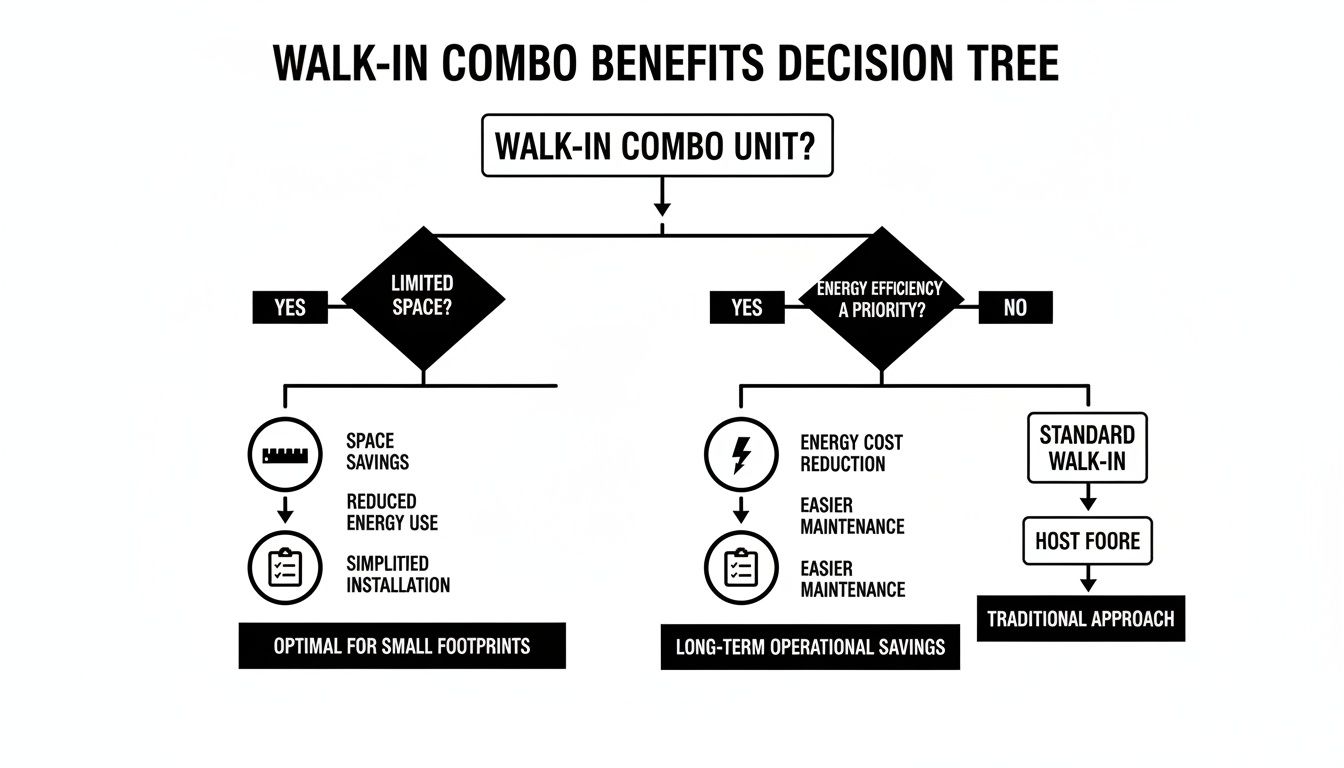
As you can see, the all-in-one design is a direct path to saving on real estate and your monthly power bill, all while making life in the kitchen a little easier.
The True Cost Of Operation
Once both businesses are up and running, the real differences start to show. At Seoul Spice, two separate compressors are always running, leading to a much higher utility bill—a real pain given LA’s energy prices. The constant drone from two units also makes for a louder, more chaotic kitchen.
Now look at Bangkok Bites. They have one highly efficient refrigeration system that handles both the cooler and freezer. This single-system approach uses way less energy. It’s no surprise the whole industry is moving in this direction.
The worldwide market for walk-in coolers and freezers, driven by versatile combo units, is booming. It shot up from USD 11.93 billion in 2020 and is expected to hit USD 20.22 billion by 2028. This growth comes straight from the foodservice industry, where smart, space-saving restaurant equipment is a must-have. You can dig into more cold storage market insights on Fortune Business Insights.
Having just one system also simplifies maintenance. The crew at Seoul Spice has to book service for two different condenser and evaporator coils. The Bangkok Bites team only has one system to maintain, cutting potential repair costs and downtime in half.
To make the choice crystal clear, let's put these two options side-by-side.
Walk-In Combo Unit vs. Two Separate Units: A Head-to-Head Comparison
| Factor | Walk-In Cooler/Freezer Combo | Separate Cooler & Freezer Units |
|---|---|---|
| Space Footprint | Excellent. One unit, minimal space. Ideal for tight LA kitchens or food trucks. | Poor. Requires double the floor space, a major drawback in expensive real estate. |
| Initial Cost | Lower. One unit, one installation, less labor, and fewer materials. | Higher. Two units, two installations, separate electrical—costs add up quickly. |
| Energy Efficiency | High. One efficient compressor for both sections. Noticeably lower utility bills. | Low. Two compressors running independently, leading to higher energy consumption. |
| Installation | Simple & Fast. One consolidated structure means a quicker, less disruptive setup. | Complex & Slow. Requires more coordination, time, and labor for two separate builds. |
| Maintenance | Easier. One refrigeration system to service, reducing potential downtime and costs. | More Demanding. Two systems to maintain, doubling the chance of service calls. |
| Workflow | Streamlined. Access both cold and frozen storage in one trip. Saves time and steps. | Fragmented. Requires movement between two different locations, slowing down prep. |
This comparison really highlights how a combo unit's efficiency can give an LA operator a serious competitive edge, especially when every dollar and every square foot counts.
Workflow And Daily Efficiency
In the day-to-day grind, the combo unit’s design really proves its worth. For the Bangkok Bites crew, grabbing fresh basil from the cooler and frozen shrimp from the freezer is a single, fluid motion. This kind of easy access is a game-changer for a fast-paced food truck where every second counts.
Over at Seoul Spice, the chefs are constantly walking between the two separate units. It works, but it’s not as smooth. It adds extra steps and time to nearly every task.
For any restaurant in Los Angeles—from a Japanese sushi bar in Little Tokyo to a Mexican taqueria in Boyle Heights—those saved seconds add up. They prove that making the right restaurant equipment choice isn't just about storage; it's about building a smarter, more profitable kitchen from the ground up.
Choosing the Right Size and Layout for Your LA Kitchen
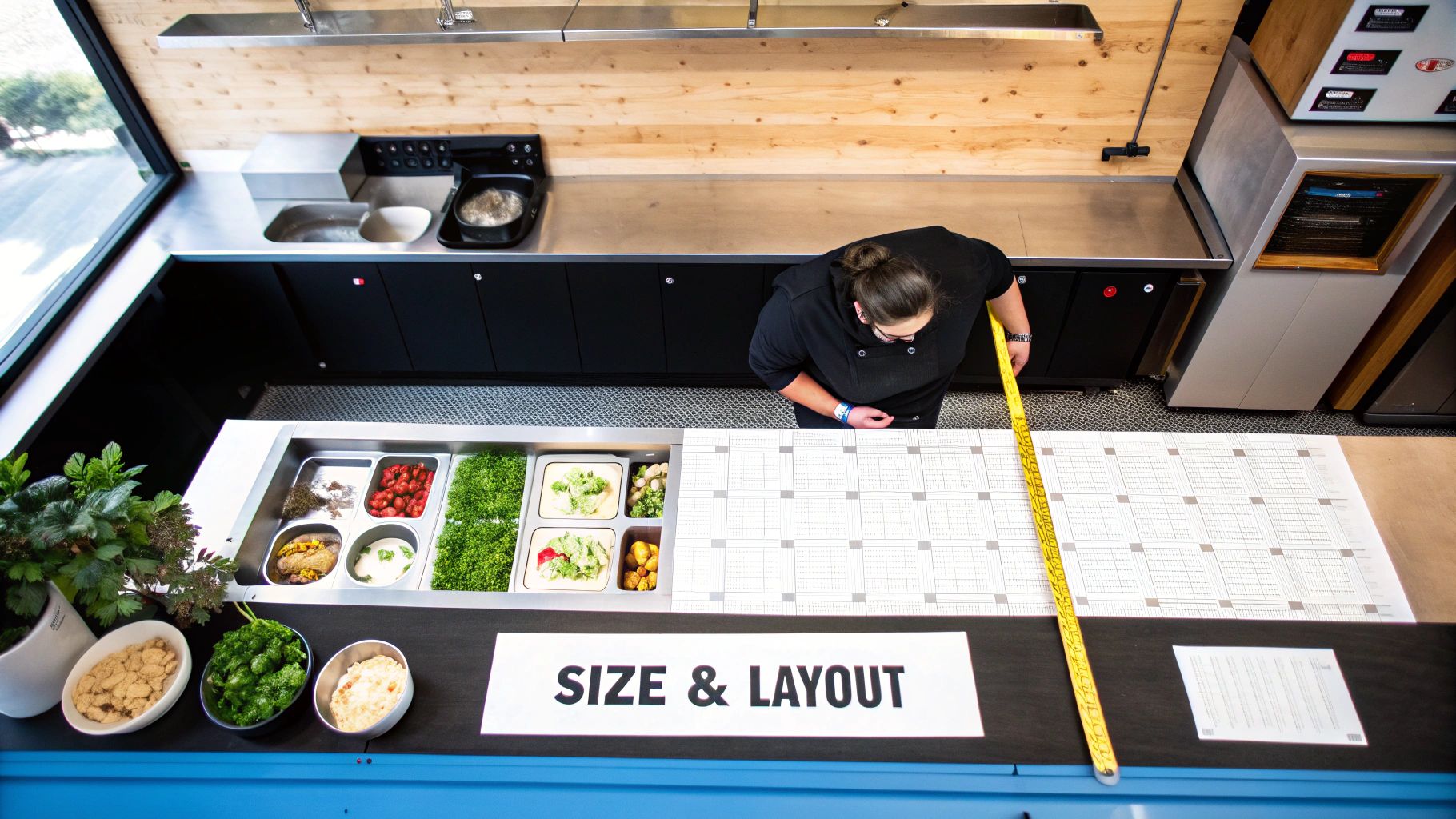
Picking the right walk-in isn't just about measuring space; it's about making sure the unit fits your kitchen's unique rhythm. A one-size-fits-all approach just doesn’t cut it in a city with a food scene as diverse as Los Angeles. You're looking for a walk-in cooler and freezer combo that feels like it was built just for your operation.
Just think about two totally different LA spots. A bustling Thai restaurant in North Hollywood needs tons of cooler space for cases of fresh produce—Thai basil, chiles, and coconuts. On the flip side, a high-end Japanese place in Little Tokyo is all about precise, stable freezer temperatures for its expensive, delicate seafood. Two different needs, two different walk-in solutions.
Calculating Your Perfect Storage Volume
Before you even start browsing models, you need to figure out how much storage you actually need. Guessing too big means you're paying for empty space and higher energy bills. Guessing too small? That leads to chaos, cramped shelves, and wasted food.
To get a solid estimate, think about your inventory turnover—how often you get deliveries—and what kind of ingredients you're storing. A restaurant getting fresh produce delivered daily will need less long-term cooler space than one getting a massive weekly shipment.
Simple Sizing Formula: A good rule of thumb is to plan for about 28-30 pounds of food per cubic foot of storage. So, if your kitchen needs to hold around 2,000 pounds of refrigerated and frozen goods between deliveries, you should be looking for a unit with roughly 70 cubic feet of usable space.
Always plan for success. Adding a 10-15% buffer to your calculation can save you from a massive headache and a costly upgrade when your LA spot inevitably takes off.
Popular Layouts for LA Kitchen Workflows
Once you’ve got your size dialed in, it’s time to think about the layout. The way your walk-in combo is configured has a huge impact on your team's efficiency. The whole point is to cut down on unnecessary steps and streamline the flow from storage to prep to the line.
Here are a few common setups and how they work for different LA concepts:
-
Side-by-Side Doors: This is the most popular kid on the block for a reason. With separate doors for the cooler and freezer, your crew can grab exactly what they need without messing with the temperature in the other section. It’s perfect for most full-service restaurants, whether it’s a Mexican spot in Boyle Heights grabbing fresh salsa ingredients and frozen meats, or a Chinese restaurant in the SGV that needs easy access to both fresh veggies and frozen dumplings.
-
L-Shaped Configuration: Got an awkward corner? An L-shaped unit is your best friend. It can wrap around a corner, making great use of a space that would otherwise be wasted. This is a brilliant fix for a tight café in Downtown LA or a crowded ghost kitchen.
-
Pass-Through Design: This layout is a game-changer for high-volume kitchens. It has doors on both the front and back, so you can load new inventory from a back hallway while your chefs pull ingredients from the front, right onto the prep line. It naturally enforces a "first-in, first-out" (FIFO) system, which is key for keeping your inventory fresh.
Picking the right layout is all about knowing your kitchen’s flow. Picture your team during the dinner rush—where are they moving? What’s the journey an ingredient takes from delivery to the plate? Answering those questions will point you to a walk-in cooler and freezer combo that doesn’t just store your food, but actually makes your kitchen run smoother.
Decoding Refrigeration Systems for Peak Efficiency
Choosing a walk in cooler and freezer combo is about more than just its dimensions; you have to get under the hood and look at the engine. The refrigeration system is the heart of your unit, and picking the right one is absolutely critical for efficiency, noise control, and managing your kitchen’s temperature—especially in the Los Angeles heat.
Think of it like picking an air conditioner for your house. You have different options that move heat and sound around in various ways. A walk-in’s refrigeration system works on the same basic idea, and your choice will hit your staff’s comfort and your LADWP bill directly.
Self-Contained Systems: The All-in-One Solution
A self-contained system is the most straightforward of the bunch. The condenser and evaporator—the parts that do the cooling and vent the heat—are all packed into one unit, usually sitting on top of the walk-in. It's basically a window AC unit for your cold storage; it’s simple to install and completely self-sufficient.
This setup is perfect for kitchens that need a no-fuss, plug-and-play solution. But there’s a catch: it pumps all the heat and noise it creates right back into your kitchen. For a small, bustling LA spot like a food truck or a quick-service ramen shop, that extra heat can make an already hot workspace unbearable and force your HVAC to work overtime.
Remote Systems: Keeping Your Kitchen Cool and Quiet
A remote system splits up the components to solve the heat and noise problem. The evaporator coil stays inside the walk-in to do the chilling, but the loud, heat-producing condensing unit gets installed outside—often on the roof or behind your building. This is just like a central air conditioning system for a home, where the noisy outdoor unit keeps all the racket and heat far away from your living space.
For most restaurants in Los Angeles, this is the way to go. Moving the condenser outside gives you two huge wins:
- Reduced Indoor Heat: Your kitchen stays much cooler, which makes for a happier team and eases the strain on your main air conditioning system.
- Quieter Operation: The back-of-house becomes a calmer, less chaotic environment. Better communication and less stress during a hectic dinner rush? Yes, please.
A pre-assembled remote system is a nice middle ground. The components are still separate, but they show up from the factory already pre-wired and filled with refrigerant. This makes installation a lot simpler while still giving you all the benefits of a remote setup. You can dive deeper into how a condensing unit for a walk-in cooler works in our detailed guide.
Why Energy Efficiency Is Your Best Investment
No matter which system you lean toward, energy efficiency needs to be at the top of your list. The market for walk-in cooler and freezer combos is huge—valued at USD 8.627 billion and expected to hit USD 14.7 billion by 2035. One of the biggest reasons for that growth is the push for energy efficiency, as these combo units can slash operating costs by 20-25% compared to running separate commercial refrigerators and freezers.
When you're comparing models, hunt for those high-efficiency ratings. A unit from a trusted brand like Atosa with a top-tier energy performance rating is an investment that pays you back over time with lower utility bills. It's not just about the sticker price; it's about the total cost of ownership over the equipment's lifespan. Choosing an efficient refrigeration system ensures your walk in cooler and freezer combo is a cost-effective workhorse for your LA kitchen.
Navigating LA Installation and Maintenance
So you've decided on a new walk in cooler and freezer combo. Getting it up and running in a city like Los Angeles is a bit more involved than just finding a spot and plugging it in. To get the most out of your investment and ensure it lasts for years, you need to nail the installation and stay on top of maintenance.
First things first, you have to play by the local rules. Before a single wire is connected, you’ll need the right permits from the Los Angeles Department of Building and Safety (LADBS). This is the city’s way of ensuring everything from the electrical hookup to the drainage plumbing is up to code. Trust me, trying to cut corners here is a recipe for disaster, leading to big fines or even a shutdown order.
Why Professional Installation Is a Must
Trying to save a few bucks by installing the unit yourself or hiring a non-certified handyman is one of the costliest mistakes a restaurant owner can make. For starters, manufacturers like Atosa make professional installation a condition of their warranty. If a unit you installed yourself fails, you could be staring at a massive repair bill—and waving goodbye to the two-year parts and labor and five-year compressor warranties.
More importantly, a pro knows what they're doing. They'll make sure the seals are perfectly airtight, the refrigerant lines are charged correctly, and the whole system is calibrated for your kitchen's unique environment, whether you're running a busy Korean BBQ spot in K-Town or a Mexican food truck parked on Abbot Kinney.
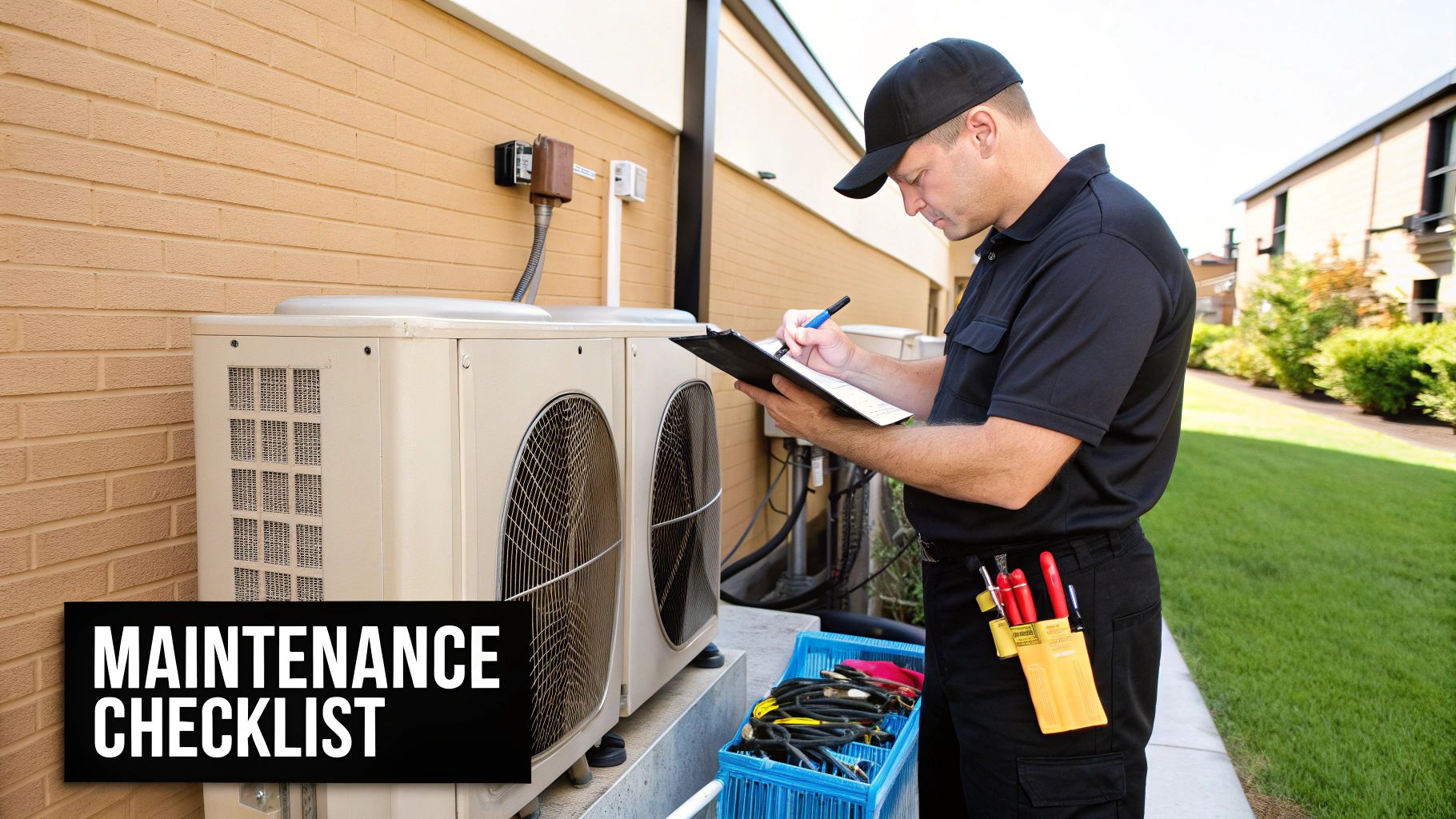
A Simple Maintenance Checklist That Actually Works
Once your unit is installed and humming along, keeping it that way is up to you. Major breakdowns don't just happen out of the blue; they're almost always the result of small, ignored problems. A simple maintenance routine can empower your whole team to spot trouble before it starts.
Think of your walk-in as the heart of your kitchen. Regular maintenance isn't just a chore—it's your best insurance policy against thousands of dollars in spoiled food and emergency service calls.
This doesn't have to be complicated. By breaking tasks down into daily, weekly, and monthly jobs, you can build a sustainable system that keeps your unit in top shape.
Your Team's Go-To Maintenance Plan:
-
Daily Checks:
- Log the Temps: First thing every shift, someone should check and write down the temperatures for both the cooler and freezer. This simple log is the fastest way to spot a performance dip.
- Listen Up: Your staff knows the normal sound of the unit. If they hear any weird grinding, clanking, or squealing, they need to report it right away.
-
Weekly Checks:
- Clean the Coils: Grease and dust are killers for efficiency. A quick wipe-down of the condenser and evaporator coils stops the buildup that forces the compressor to work overtime and spike your utility bill.
- Sweep and Mop: Keeping the inside clean does more than look good—it stops gunk from getting into the evaporator fans or clogging up the drain.
-
Monthly Checks:
- Inspect Door Seals: Take a close look at the gaskets around the doors. Are there any cracks, tears, or hard spots? A bad seal lets cold air out and warm air in, causing frost and wasting energy.
- Clear the Drain Line: Make sure the condensation drain line isn't blocked. A clog can cause water to back up and freeze, leading to serious damage.
To keep everything organized, you might even consider using a field service management software to schedule and track these tasks. Following these simple steps will ensure your Atosa warranty stays valid and your walk in cooler and freezer combo remains a dependable workhorse for your business.
Smart Financing and Understanding the True Cost
Let's talk about the numbers. Buying a new walk in cooler and freezer combo is a big step, and the real cost is more than just the number on the price tag. You also have to think about professional installation and the ongoing energy costs that will show up on your LADWP bill.
For a new restaurant in Koreatown or a Los Angeles food truck just getting off the ground, a huge upfront payment for restaurant equipment can wipe out the cash you need for things like marketing, payroll, and inventory. This is where financing isn't just about managing debt—it's about smart growth.
Lease-to-Own: A Strategy for Cash Flow
Instead of one massive hit to your bank account, lease-to-own financing lets you break down the cost into monthly payments you can actually plan for. It’s a total game-changer for protecting your cash. You can get a top-quality, reliable unit in your kitchen right away without emptying your accounts.
This approach is perfect for matching your expenses to your revenue. You get a high-performance unit working and making money for you from day one, essentially letting it help pay for itself over time. Our detailed guide has more on how restaurant equipment financing can work for you.
Think of it this way: financing your walk-in combo isn't just buying equipment. You're investing in your restaurant's future. It helps you build good business credit while keeping your cash free for all the other things your business needs to thrive.
The Bigger Picture: Market Growth and Smart Investments
Choosing a walk-in cooler and freezer combo is also a move that sets you up for the future. This type of equipment is taking over the cold storage market and is expected to see some serious growth, which shows just how vital it is for anyone in the food business.
As the entire cold chain logistics network gets bigger, these efficient combo units help make sure your operation is ready for what's next. For business owners, lease-to-own plans make it possible to tap into this growth by aligning your payments with your revenue, all while holding onto your cash. You can explore more about the global walk-in market trends on Grand View Research.
At the end of the day, financing your walk-in combo is a strategic play. It gives you the power to get the right restaurant equipment for your Los Angeles kitchen now, manage your cash flow, and build a solid financial footing for years of success.
Your Walk-In Combo Questions Answered
Even after covering the basics, a few specific questions always seem to pop up for Los Angeles restaurant owners thinking about a walk-in cooler and freezer combo. We've pulled together the most common ones to give you quick, straight-to-the-point answers.
How Much Space Do I Really Save?
It’s more than you’d think. A typical 8x10 combo unit can easily take the place of two separate 6x8 units, which frees up over 20 square feet of your precious floor space.
For an LA food truck, where every single inch is prime real estate, that’s a massive win. This could be the difference between adding another prep table or just feeling cramped. The single refrigeration system also means less clearance is needed on the outside, a real game-changer when you’re trying to squeeze every bit of earning potential out of a tight kitchen.
Can a Combo Unit Handle High Volume?
Absolutely. A high-quality walk-in cooler and freezer combo, like the ones from Atosa, is built for the chaos of a real commercial kitchen. They come with powerful compressors and top-notch insulation designed to keep the cooler and freezer sections at their exact, separate temperatures, even when your staff is constantly opening the doors during a dinner rush.
This kind of reliability means the marinated meats for your Korean BBQ spot stay perfectly chilled while your frozen goods stay rock solid. It’s more than capable of handling the demands of a busy LA service, protecting your inventory and your reputation.
The Los Angeles County Department of Public Health is strict: walk-in units must hold cold foods at or below 41°F and frozen foods at 0°F or below. Getting a professional installation is the best way to make sure you’re up to code from day one.
What Are the Key LA Health Codes to Know?
Temperature is just the start. The LA County health department has a few other non-negotiables for your walk-in. For one, the unit has to be installed on a smooth, easy-to-clean surface. Think flooring with coved bases that prevent dirt and grime from building up in the corners.
Your walk-in also needs good lighting and a thermometer that’s easy to see in each compartment. Door seals have to be airtight to stop temperature leaks and keep pests out. Honestly, hiring a professional installer who knows the local LA regulations like the back of their hand isn’t just a good idea—it’s essential for passing your inspections without any headaches.
Ready to find the perfect cold storage solution for your Los Angeles kitchen? At Los Angeles Restaurant Equipment, we offer a wide selection of high-performance walk-in combos and flexible financing to fit your needs. Explore our catalog today at https://losangelesrestaurantequipment.com.