

A Guide to 3 Compartment Sink Temperature Rules in Los Angeles
For any restaurant owner in Los Angeles, getting the 3 compartment sink temperature right isn't just a suggestion—it's a critical part of your daily operation that ensures food safety and keeps you on the right side of the health inspector. From a bustling Mexican restaurant in East LA to a high-end Japanese kitchen in Beverly Hills, the rules are the same: the wash sink needs to be at a minimum of 110°F, and if you’re sanitizing with hot water, that third sink has to hit a steamy 171°F.
Mastering LA's Three Compartment Sink Rules

From a Korean BBQ spot in K-Town dealing with greasy grills to a Thai food truck in North Hollywood that needs fast, safe turnover, the three-compartment sink is the unsung hero of kitchen hygiene. Hitting the right temperatures is about more than just checking a box; it's an active defense protecting your customers from foodborne illness and your restaurant's hard-earned reputation. The Los Angeles County Department of Public Health is laser-focused on these standards because they are the foundation of any safe food business, whether you're serving Chinese dumplings or crafting delicate sushi.
This guide is built for the incredible diversity of LA's food scene. We get the pressures you face, whether you're running a high-volume spot in the San Gabriel Valley or a trendy cafe in Silver Lake. Proper warewashing, supported by reliable restaurant equipment, is the one thing that connects every single successful kitchen in this city.
Why Temperature Is Your First Line of Defense
Think of your three sinks as a coordinated attack on grime and germs. Each compartment has a very specific job to do, and the water temperature is what makes it all work. This step-by-step process is absolutely essential for stopping cross-contamination, which is a leading cause of health code dings.
Getting this right means:
- Real Cleaning Power: That 110°F water in the first sink is what melts away the stubborn grease from Mexican carnitas or food particles stuck to your dishes.
- Killing the Invisible Threats: The intense heat or powerful chemical sanitizer in the final sink is what eliminates the dangerous bacteria that soap and water can't touch.
- Inspection Day Confidence: Knowing your temps are perfect gives you total peace of mind when that health inspector walks through the door.
For a quick reference, here’s a breakdown of what LA County health inspectors are looking for in each sink.
LA County Sink Temperature Requirements at a Glance
| Sink Compartment | Required Temperature (Hot Water Sanitizing) | Required Temperature (Chemical Sanitizing) | Purpose |
|---|---|---|---|
| 1: Wash | 110°F (Minimum) | 110°F (Minimum) | To remove food debris with soap. |
| 2: Rinse | Warm, clean water | Warm, clean water | To remove all soap residue. |
| 3: Sanitize | 171°F (Minimum) | 75°F (Typically) | To kill remaining bacteria. |
This table gives you the at-a-glance numbers you need to post by your sink and drill into your team.
The FDA's strict temperature rules are the national standard, but they are enforced with serious attention to detail right here in LA. This isn't just a best practice; it's a rule with real consequences.
In fact, a 2023 industry study revealed that almost 30% of kitchens that failed inspections did so because their final sanitizing sink was too cool or their chemical sanitizer concentration wasn't at the right parts-per-million (ppm). To ensure you're always prepared, you can dive deeper into this sink rule water temperature guide and make compliance second nature.
The Role of Each Sink in Food Safety
Think of your three-compartment sink less like just a sink and more like a crucial assembly line for food safety. Every basin has a specific, non-negotiable job in a process that takes dishes from dirty, to clean, and finally to fully sanitized. Just like you wouldn't mix raw ingredients on a finished plate, you can’t skip or combine these steps without creating a huge health risk right in your kitchen.
This deliberate progression is exactly what allows a bustling San Gabriel Valley Chinese restaurant or a high-end downtown Japanese sushi bar to operate safely day in and day out. The whole point is to first physically remove the grime and food, then chemically or thermally kill the dangerous stuff you can't see. Getting this flow down is the first step to mastering your warewashing game and keeping your Los Angeles kitchen in the clear with health inspectors.
The First Basin: Wash
The journey from dirty to safe starts in the first compartment, the Wash sink. This is where all the tough work happens. The main goal here is to scrub away every bit of visible food debris, grease, and sauce using hot, soapy water.
The Los Angeles County Department of Public Health is very clear on this: the water in this first sink absolutely must stay at a minimum of 110°F. This isn't just a random number. That heat is what activates your detergent, and even more importantly, it's what starts to break down and melt the fats and oils. Anyone who's tried to clean a greasy pan from a Thai green curry or Korean BBQ marinade in lukewarm water knows it’s a lost cause—the grease just smears around and sticks to everything else.
This hot, soapy scrub ensures that by the time a pan or plate leaves this basin, it's physically clean and ready for the next phase.
The Second Basin: Rinse
After a solid scrubbing, the dish moves to the middle sink: the Rinse compartment. Its job sounds simple, but it's absolutely vital. This step is all about washing away every last trace of soap and any lingering food bits that were dislodged in the first sink.
This basin should be filled with clean, warm water. While the health code isn't as strict on a specific temperature here, keeping it warm is a good move. It helps prevent cracking your dishware from a sudden temperature change and makes sure any leftover greasy film gets flushed away completely. If you skimp on this step, you’re basically trying to sanitize a soapy dish, which is a big problem. The soap residue can neutralize the sanitizer in the final sink, making the entire process worthless.
A proper rinse is the crucial link between washing and sanitizing. Without it, the chemical reaction needed to kill bacteria in the third sink simply won't happen correctly, rendering the entire process useless.
The Third Basin: Sanitize
The last stop is the Sanitize sink, and this is where you take out the invisible enemies. Once an item is physically clean and totally rinsed of soap, this is where you destroy the harmful bacteria and pathogens that cause foodborne illnesses. For restaurants in Los Angeles, you have two approved ways to handle this final, critical step.
Two Paths to a Safe Sanitize:
- High-Heat Sanitizing: This method uses nothing but extremely hot water to kill germs. The water must be held at a blistering 171°F minimum, and every item has to be submerged for at least 30 seconds. This is a great option for kitchens that have powerful commercial water heaters or booster heaters that can consistently keep water that hot.
- Chemical Sanitizing: This is the go-to method for most places, especially Los Angeles food trucks or smaller spots where getting water to 171°F is a real challenge. This approach uses an approved chemical sanitizer mixed with water that's usually kept around 75°F (or whatever the manufacturer’s instructions say).
You have to pick one method and do it perfectly every single time. The specific 3 compartment sink temperature and sanitizer concentration levels aren't suggestions—they are hard-and-fast rules based on science, designed to protect public health in your establishment.
How to Measure Temperatures and Sanitizers Correctly
Knowing the required 3 compartment sink temperature is one thing; proving it to a health inspector is another ball game entirely. For any Los Angeles kitchen, from a high-end Japanese restaurant in Beverly Hills to a beloved Mexican food truck in East LA, accurate measurement is non-negotiable. This isn’t a situation where “close enough” cuts it—precision is everything.
The good news? The tools for the job are simple: a calibrated thermometer and chemical test strips. Once you master how to use them, compliance stops being a guessing game and becomes a routine, easy-to-document process. This is what separates the kitchens that just cross their fingers from the ones that operate with total confidence.
Taking an Accurate Temperature Reading
It seems basic, but you'd be surprised how many people get a bad thermometer reading. Small mistakes can lead to a failed inspection. Whether you're checking the 110°F wash sink or a 171°F high-heat sanitize sink, your technique matters.
Just follow these quick steps for a perfect reading every time:
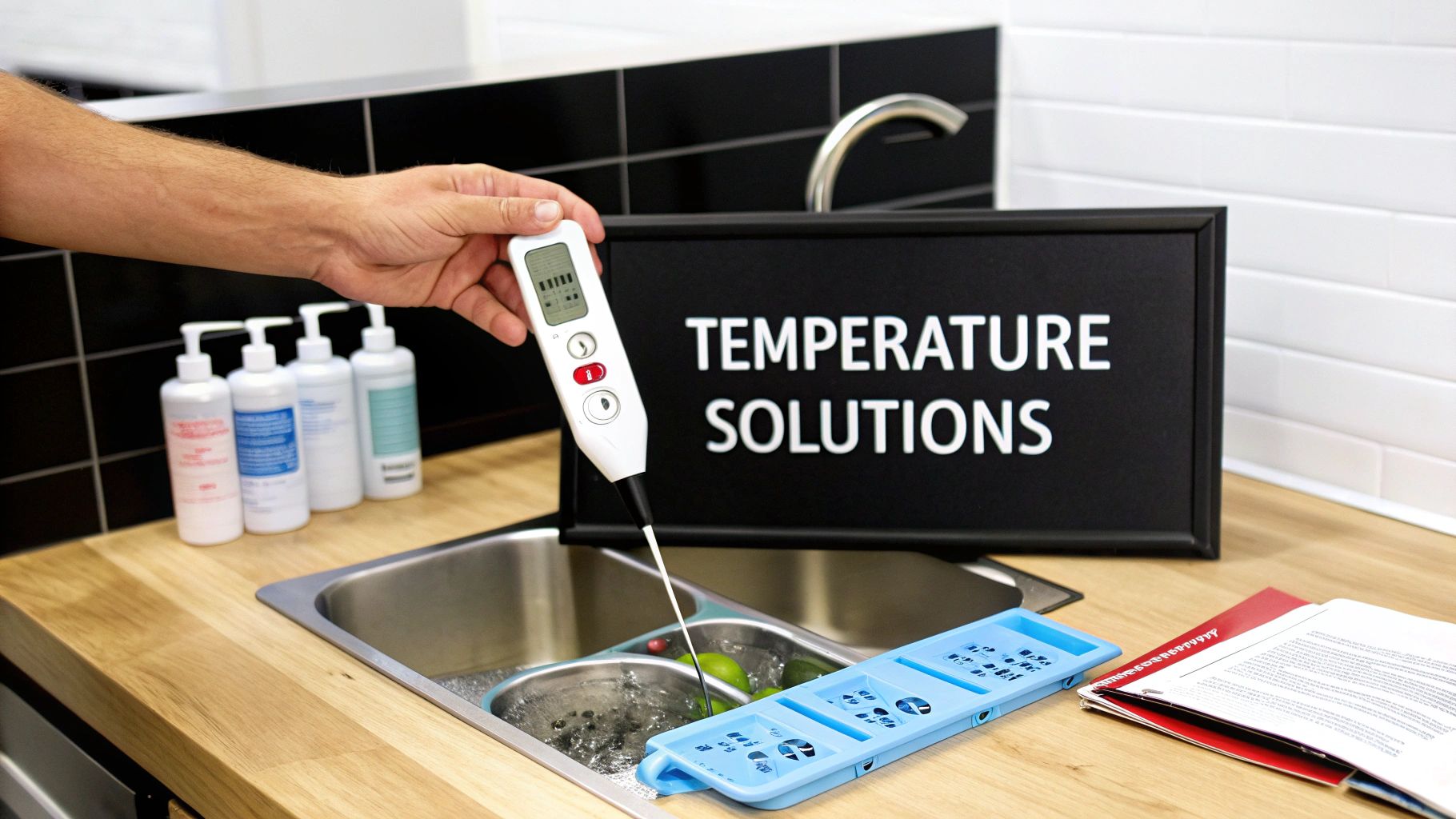
- Calibrate First: Make sure your probe thermometer is accurate. A quick check in an ice bath (32°F) at the start of each shift is all it takes to know your readings are legit.
- Go Mid-Depth: Don't just dip the tip in. You need to submerge the thermometer stem at least halfway into the water to get a true reading of the basin's temperature.
- Avoid the Edges: Keep that probe away from the sink walls, bottom, or any metal dish racks. The stainless steel can throw off your reading, making it seem hotter or colder than the water actually is.
- Give It a Second: Let the thermometer sit for at least 15-20 seconds. The numbers need time to stabilize before you lock in the temperature.
This whole process takes less than a minute and ensures the temperature you record is the same one the LA County inspector is going to find.
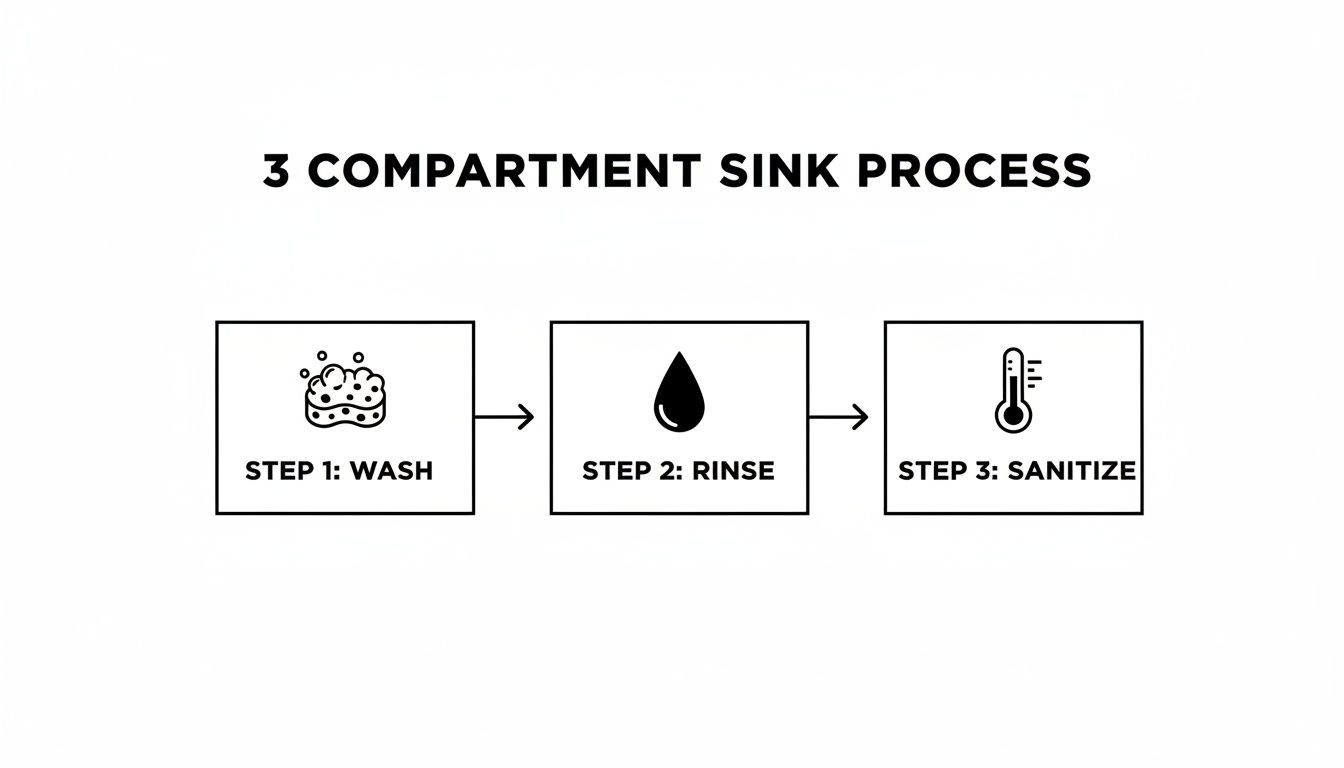
Each step here—wash, rinse, sanitize—is a critical link in your food safety chain. One weak link and the whole system fails.
Verifying Chemical Sanitizer Strength
If you’re using chemicals to sanitize, temperature is only part of the equation. The sanitizer's concentration, measured in parts per million (ppm), is just as important. The only way to know for sure is by using the right test strips. And to get it right, you first have to understand the crucial difference between sanitizing and cleaning.
The process couldn't be easier. Just dip the test strip into your sanitizer solution for a second (or whatever the instructions say), pull it out, and match the color to the chart on the vial. This gives you an instant "go" or "no-go"—letting you know if your mix is strong enough to kill germs but not so strong that it’s a chemical hazard.
An LA County health inspector will ask to see your test strips. Not having the correct strips on hand for your specific sanitizer (chlorine, quat, or iodine) is an automatic violation, even if your solution is perfectly mixed.
The Power of Daily Logs
The final piece of the puzzle is simply writing it down. A daily temperature and sanitizer log is your best friend when an inspector shows up. It’s hard evidence that your team consistently follows the rules.
Keep the log simple and post it right by the sink. All you need are a few columns:
- Date and Time: Shows you’re checking throughout the day.
- Wash Temp: The reading from your first sink.
- Sanitize Temp/PPM: The reading from your third sink.
- Employee Initials: Creates accountability and shows who did the check.
This simple sheet of paper shows an inspector that managing your 3 compartment sink temperature is just part of your kitchen's DNA—not something you scramble to do when you see them pull up.
Navigating Specific Los Angeles Health Codes
Meeting state and federal guidelines for 3 compartment sink temperature is just the starting line. For any restaurant operator in Los Angeles, the real test comes from the local rules. The LA County Department of Public Health has its own playbook, and it covers everything from the physical setup of your warewashing station to the size of your sinks. Knowing these hyper-local codes is what separates a smooth inspection from a costly headache.
These local regulations are built for the unique pace and density of the LA food scene. Think about a high-volume Chinese restaurant in the San Gabriel Valley trying to keep water hot during a chaotic dinner rush, or one of the many Los Angeles food trucks in Venice with very limited space—the rules are there to create a universal standard of safety. You simply can't ignore them.
Beyond Temperature: Common LA County Requirements
While an inspector will definitely pull out their thermometer first, their checklist goes a lot deeper. You can have perfectly hot water and still get hit with a violation if the rest of your setup isn't up to par.
Here are a few key things LA inspectors zero in on:
- Adequate Sink Size: Your sink basins have to be large enough to completely submerge your biggest pieces of equipment. If you can't fit your largest stockpot all the way under the water, that’s an immediate red flag.
- Integral Drainboards: Your sink needs drainboards attached on both sides. One is for dirty items waiting to be washed, and the other is for clean, sanitized items to air dry. Placing freshly sanitized pans on a random countertop is a major cross-contamination risk.
- Proper Signage: This one’s easy but often missed. Each sink compartment must be clearly labeled: "WASH," "RINSE," and "SANITIZE." It’s a simple step that prevents mistakes when the kitchen gets slammed.
These physical requirements are just as critical as your temperature readings. Inspectors will also look for correct plumbing, like faucet height and air gaps. You can get a better sense of this by reading up on the essentials of mop basin faucet height, since many of the same sanitary principles apply.
Top Violations in Los Angeles Kitchens
Certain violations pop up again and again on LA County inspection reports, tripping up even the most seasoned operators. A common one, especially for Los Angeles food trucks, is an undersized water heater that just can't keep up. When the sanitize sink temperature drops below the required 171°F, it's an instant critical violation.
Another frequent issue is failing to maintain hot water during peak hours. A busy kitchen puts a massive strain on the water heater. If your system isn't robust enough, the wash sink can easily dip below the mandatory 110°F, making it nearly impossible to cut through grease from Mexican food or grime on dirty dishes.
To stay on top of these specific health codes, establishing clear Standard Operating Procedures (SOPs) is a game-changer. Documented procedures make sure every single team member handles warewashing the right way, every time.
By understanding these common pitfalls, you can be proactive. Check your systems, train your staff, and turn a potential weakness into a strength. When you're prepared for the specifics of an LA County health inspection, you’re not just aiming to pass—you’re building a culture of food safety that protects your customers and your business.
Essential Restaurant Equipment for Compliance
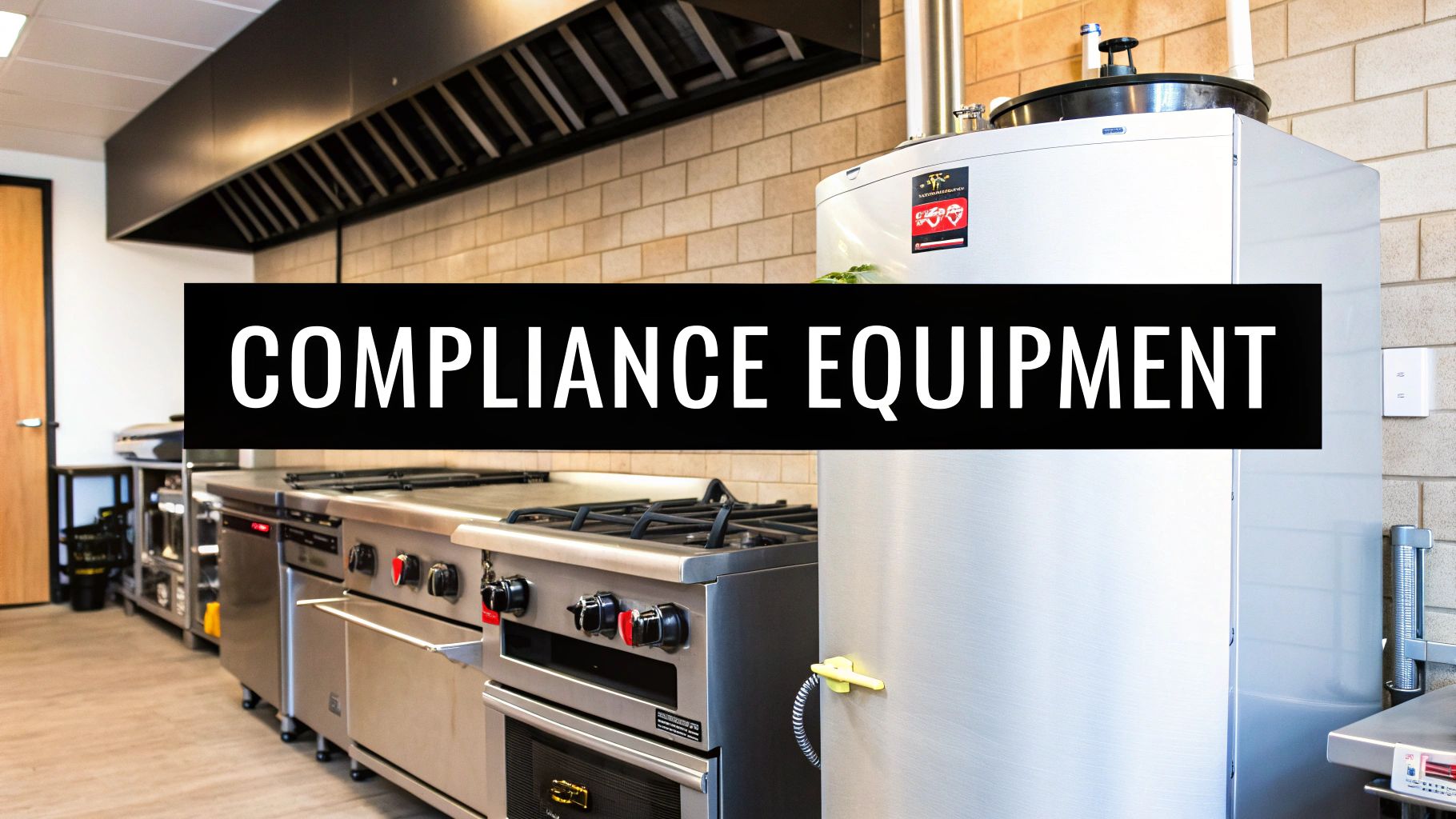
Hitting those Los Angeles health code numbers starts long before you ever wash a dish. It all comes down to having the right hardware from the get-go. Nailing the proper 3 compartment sink temperature—especially that critical 171°F for sanitizing with hot water—is flat-out impossible without serious commercial restaurant equipment. A powerful water heater is the heart of your entire warewashing operation.
Picture a packed Thai spot in Hollywood on a Friday night. The woks are blazing, tickets are piling up, and the dish pit looks like a war zone. A water heater meant for a house would give up in minutes. It couldn't hope to keep the wash water at a steady 110°F, let alone generate the blistering heat required for the sanitize sink. This is exactly why professional-grade equipment isn't just a suggestion; it's non-negotiable.
Choosing a Water Heater That Can Keep Up
For any L.A. kitchen using the high-heat sanitizing method, a standard commercial water heater might not even cut it. It’s common practice for operators to install a booster heater just for the third sink. This smaller, dedicated unit grabs the already hot water from your main tank and kicks it up to the required 171°F. This simple setup ensures you hit your mark every single time without demanding the impossible from your primary system.
When you’re shopping for a water heater, keep these things in mind:
- Capacity and Recovery Rate: You need a unit with a high recovery rate. This number tells you how many gallons it can heat back up in an hour—a crucial spec for getting through a dinner rush without temperatures dropping.
- Fuel Type: Gas heaters almost always have a faster recovery rate than electric models. That speed makes them the go-to choice for most high-volume restaurants.
- Booster Heater Compatibility: If a booster heater is in your plan, make sure your main unit is designed to work alongside it efficiently.
This hardware is the foundation of compliance. If your water isn't hot enough, even the most diligent staff can't meet health department standards.
The Broader Food Safety Ecosystem
Your three-compartment sink isn’t an island. It’s a key player in a much larger system of commercial equipment, all working together to ensure food safety. The same obsession with precise temperature control applies to everything on your cold line, too.
Top-tier commercial refrigerators and freezers are every bit as important as your water heater. A commercial fridge absolutely must hold food below 41°F to stop bacteria in its tracks, while a freezer has to stay at 0°F or colder. For a Japanese restaurant where the quality of raw fish is the entire business, rock-solid, stable refrigeration is everything. An investment in reliable Atosa commercial refrigerators is an investment in safety, compliance, and the quality of what you serve.
Comparing Sinks and Dishwashers
While the three-compartment sink is the manual-labor hero of the kitchen, many larger operations also rely on a high-temperature commercial dishwasher. It’s important to know they have very different appetites for hot water.
A manual sink needs a constant, large basin of 171°F water. An automatic dishwasher, on the other hand, has its own unique needs. Industry standards typically require 150-160°F for the wash cycle and a final rinse that hits 180°F to sanitize properly. You can find a great breakdown of different dishwashing machine options for restaurants to see what makes sense for your workflow.
The alternative is a low-temperature dishwasher, which uses chemical sanitizers and only needs water between 120-140°F. Whether you're running a food truck or a fine dining establishment, your equipment has to be sized and ready for the specific temperature demands of your chosen sanitation method.
Solving Common Sink Temperature Issues
Even in the most dialed-in L.A. kitchens, problems with your 3 compartment sink temperature can pop up. And naturally, it always seems to happen right in the middle of a dinner rush. These issues are frustrating, for sure, but they usually have pretty simple fixes. Think of this as your go-to guide for figuring out what’s wrong and fixing it fast.
From a Los Angeles food truck parked in Silver Lake to a packed-out Mexican restaurant over in Boyle Heights, keeping those temps and sanitizer levels right is a challenge everyone faces. Knowing what to look for when things go south can be the difference between a smooth service and a failed health inspection. Let's get right into the most common headaches.
Why Won't My Sanitize Sink Get Hot Enough?
This is a big one. If you’re using hot water to sanitize, failing to hit that critical 171°F mark is a major health code violation. Let's be real—if your water isn't hot enough, you're not actually sanitizing anything.
Before you start stressing, run through this checklist of common culprits:
- Check the Water Heater: First thing's first—is the thermostat set correctly? It needs to be high enough to push that hot water all the way to the sink. Sometimes, these settings just get bumped or the unit itself starts to fail.
- Look for Sediment Buildup: L.A. has some notoriously hard water, which can lead to mineral sediment building up inside your water heater. This gunk acts like an insulator, forcing the unit to work overtime and often preventing it from reaching the right temperature.
- Consider a Booster Heater: If your main water heater is trying to supply the whole restaurant, it might be spread too thin. The most reliable fix is often a dedicated booster heater installed right at the third sink. It’s a surefire way to nail that 171°F every single time.
Sometimes, the issue can be deeper in your plumbing. Getting a handle on how a proper commercial setup works is key, and you can learn more about professional water line installation for restaurants to see what’s involved.
Why Are My Chemical Sanitizer Levels Off?
If you're using chemical sanitizers, getting the parts-per-million (ppm) reading wrong is just as serious as having the wrong water temperature. When your test strips are coming back too weak or way too strong, the reason is usually straightforward.
A sanitizer solution that's too weak won't kill germs, and one that's too strong can leave a nasty chemical residue on your dishes. You have to be precise for both safety and compliance.
Here’s what you should look into:
- Incorrect Mixing: This is the number one offender. Your team might be "eyeballing" the sanitizer-to-water ratio instead of using proper measurements. A quick training refresher can fix this fast.
- Wrong Water Temperature: Every chemical sanitizer has a sweet spot, and it's usually around 75°F. Water that’s too hot or cold can mess with the chemical's effectiveness, basically making it useless.
- Expired Chemicals: Just like food, sanitizers have a shelf life and lose their power over time. Always, always check the expiration date on the container.
Common Questions About Sink Temperatures
Even when you know the rules inside and out, questions about your 3 compartment sink temperature always seem to pop up—usually during the middle of a crazy dinner rush or while you're getting a new kitchen off the ground. Here are some clear, no-nonsense answers to the questions we hear most from restaurant and food truck owners across Los Angeles.
Can I Use a Chemical Sanitizer if My Water Heater Is Not Hot Enough?
Yes, you absolutely can. The LA County Health Department fully recognizes approved chemical sanitizers as a compliant and common alternative. If your water heater just can't consistently hit that 171°F mark, switching to a chemical sanitizer is your best move.
When you go this route, the water in your third sink usually only needs to be at least 75°F, though you should always double-check the sanitizer's label for specific instructions. The most important part of using chemical sanitizers is making sure your concentration is right on the money, which means using test strips every time.
- Chlorine: Keep it between 50-100 ppm.
- Iodine: The sweet spot is 12.5-25 ppm.
- Quaternary Ammonium (Quat): Always follow what the manufacturer recommends on the bottle.
For LA food trucks and smaller kitchens where space and power are tight, this is often the most practical and reliable way to stay compliant.
Do These Temperature Rules Apply to My Los Angeles Food Truck?
They sure do. The LA County Department of Public Health holds Los Angeles food trucks and other mobile food facilities to the very same food safety standards as any brick-and-mortar restaurant. Being on wheels doesn't get you a pass.
Your truck has to be set up with a working three-compartment sink with both hot and cold running water that can meet all the temperature requirements. This is exactly why a powerful, commercial-grade water heater is one of the most vital pieces of restaurant equipment you can have in a food truck. An inspector will check your sink temps and sanitizer levels just like they would in a permanent kitchen.
The number one sink-related violation for LA food trucks is an undersized water heater. It just can't keep up with demand, causing temperatures to dip below the required minimums during service.
What Is the Most Common 3 Compartment Sink Violation in LA?
In Los Angeles, the violations inspectors see most often are water temperatures that don't meet the minimums—either in the wash sink (110°F) or the high-heat sanitize sink (171°F). Running a close second is an incorrect chemical sanitizer concentration.
A lot of the time, the sanitizer is either too weak to actually kill germs or way too strong, which can leave a harmful residue on your dishes. Another surprisingly common slip-up is simply not having the right chemical test strips on hand for the inspector. Your mix could be perfect, but if you can't prove it with a test strip, it's an automatic violation. The best way to avoid these easy-to-make mistakes is through consistent monitoring and keeping a daily log.
For any Los Angeles restaurant or food truck, having the right equipment is the foundation of food safety and compliance. Los Angeles Restaurant Equipment offers a full range of Atosa commercial refrigerators, freezers, and essential warewashing hardware to ensure your kitchen is ready for inspection day. Equip your business for success by visiting us at https://losangelesrestaurantequipment.com.