

Your Guide to Choosing a Commercial Combo Oven in Los Angeles
A commercial combo oven is one of the most powerful tools you can add to your kitchen. It’s a brilliant all-in-one appliance that brings together convection (that’s your dry, roasting heat), steam (moist heat), and a combination of both into a single unit. Just think of it as the ultimate Swiss Army knife for a professional kitchen—it can literally replace multiple other pieces of restaurant equipment. For any high-demand foodservice spot in Los Angeles, from a Koreatown BBQ joint to a high-end Japanese restaurant, that kind of versatility is an absolute game-changer.
The Secret Weapon of LA’s Top Kitchens
If you step into any high-performing kitchen in Los Angeles, you’ll probably find this secret weapon humming away behind the scenes. This isn't just another appliance; it's the answer to some of the biggest challenges we face in LA: ridiculously tight kitchen spaces, skyrocketing utility bills, and the constant pressure to deliver top-notch food, every single time.
Whether it's one of the bustling Los Angeles food trucks slinging Korean BBQ tacos or a high-end Chinese dining room in Beverly Hills, the commercial combo oven is often the key to unlocking a bigger menu and a smoother operation. Imagine getting rid of your bulky convection oven and your separate steamer for one intelligent machine that can roast, steam, bake, and braise to perfection, all while saving space for essential commercial refrigerators and freezers.
Why Every LA Restaurant Needs to Pay Attention
The food scene here in Los Angeles is incredibly competitive. It takes a lot more than just great recipes to succeed; you need speed, consistency, and a smart way to manage your resources. A combo oven hits all those marks, delivering real benefits that you’ll see in your food quality and on your bottom line.
Just think about the incredible diversity of food across LA. A Thai restaurant can use the steam function for perfect sticky rice and delicate fish. A few blocks away, a Mexican kitchen can use the combination mode to slow-roast carnitas, keeping the meat incredibly juicy while getting that perfect crispy exterior.
The advantages are pretty clear right from the start:
- Space Savings: In a city where every square foot of rent costs a fortune, combining multiple appliances into one is a huge win, both financially and logistically. This is a lifesaver for smaller spots and especially for the iconic Los Angeles food trucks.
- Improved Food Quality: The precise control over heat and humidity is incredible. It can reduce product shrinkage by up to 15%, which means you get a higher yield from pricey proteins. It also guarantees your dishes come out the same way, every single time.
- Operational Speed: Plain and simple, combo ovens cook faster. This helps slash ticket times during those chaotic lunch and dinner rushes we all know so well.
- Menu Versatility: Being able to bake, roast, steam, braise, and even air fry in one machine means chefs can get creative and expand their menus without needing a ton of new restaurant equipment or extra commercial refrigerators and freezers to hold specialized ingredients.
This piece of equipment is an indispensable asset for any LA culinary professional looking to elevate their craft and streamline their workflow. It's not just about cooking food; it’s about creating a more efficient, profitable, and dynamic kitchen environment. This guide will walk you through everything you need to know about choosing, installing, and mastering a commercial combo oven for your Los Angeles business.
How a Commercial Combo Oven Actually Works
Think of a commercial combo oven as the Swiss Army knife for your Los Angeles kitchen. It’s not just one appliance, but three distinct cooking powerhouses fused into a single, smart unit. This machine gives you incredible control by combining dry heat, steam, and a perfect mix of both.
At its heart, the oven has three main modes. Each one offers a specific advantage, whether you're running a Thai spot in Hollywood or a classic Mexican restaurant in East LA.
The Three Core Cooking Modes
The real brilliance of a combo oven is how it can seamlessly switch between—or blend—these three cooking methods.
-
Convection Mode (Dry Heat): This is what most people think of when they hear "oven." A powerful fan circulates hot, dry air, creating an intense and even heat that’s perfect for browning roasted meats or getting a consistent rise on baked goods. It's your go-to for anything that needs a crispy finish. You can get a closer look at this function in our deep dive on the commercial convection oven.
-
Steam Mode (Moist Heat): In this mode, the oven fills the cooking chamber with pure steam. This gentle, moist heat is ideal for delicate foods like fish and custards. It’s also perfect for steaming vegetables while locking in their nutrients and bright colors. For a Japanese restaurant, this means flawless gyoza or chawanmushi every single time.
-
Combination Mode (Dry Heat + Steam): This is where things get really interesting. The oven precisely mixes fan-driven dry heat with controlled bursts of steam. This synergy lets you roast a chicken that’s unbelievably juicy on the inside with perfectly crisp skin on the outside. This mode also cuts down cooking times and reduces product shrinkage, which is a huge win for your bottom line.
By mastering the balance of hot air and humidity, a commercial combo oven gives you complete control over your final product. It delivers consistency, boosts flavor, and improves yield—all essential for making it in LA's competitive food scene.
Understanding the Steam Generation System
How a combo oven creates its steam is a key difference that affects performance, maintenance, and the initial price tag. There are two main systems to know about. To really get a handle on your oven, it's also helpful to understand its key parts, like how an oven sensor works, which is critical for hitting those precise temperatures.
Boiler-Based Systems A boiler-based oven, also called a steam generator, uses a separate, dedicated tank to heat water. This produces a large volume of pure, high-quality steam that gets piped into the oven cavity when you need it.
- Pros: Delivers a powerful and steady supply of clean steam. It’s ideal for high-volume steaming and delicate baking.
- Cons: These units usually cost more, have a more involved installation, and need regular descaling and maintenance to prevent mineral buildup—especially with LA’s hard water.
Boilerless (Injection) Systems With a boilerless system, water is sprayed right onto the heating element or a super-hot plate inside the oven itself, which instantly flashes it into steam.
- Pros: They are more affordable, easier to maintain, and use less energy and water. This makes them a great pick for kitchens that mostly roast and bake but need steam occasionally.
- Cons: Steam production might not be as consistent as a boiler model for heavy, back-to-back steaming jobs.
Deciding between the two really comes down to your menu. A high-end Chinese restaurant steaming hundreds of dumplings a day would probably need a boiler system. On the other hand, a food truck that focuses on roasted meats would do great with a more practical boilerless unit.
Finding the Right Size for Your LA Kitchen
Choosing the right size for your commercial combo oven is one of the most important calls you'll make for your kitchen. It's a real balancing act—you need enough muscle to crush the dinner rush, but you don't want to sink your capital into a massive unit that eats up precious LA kitchen space you just don't have. This decision directly shapes your kitchen's throughput, which is just a fancy way of talking about how much food you can pump out.
The goal is to match the oven's capacity to your specific operation. A little countertop model could be the perfect workhorse for a food truck slinging Thai green curry in the Arts District or a Silver Lake café that needs to bake a few dozen pastries every morning. But if you’re running a huge catering operation or a bustling restaurant in DTLA, you'll need a full-size, double-stacked beast to keep the orders flying.
This is what a combo oven is all about—blending different cooking styles into one super-efficient piece of equipment.
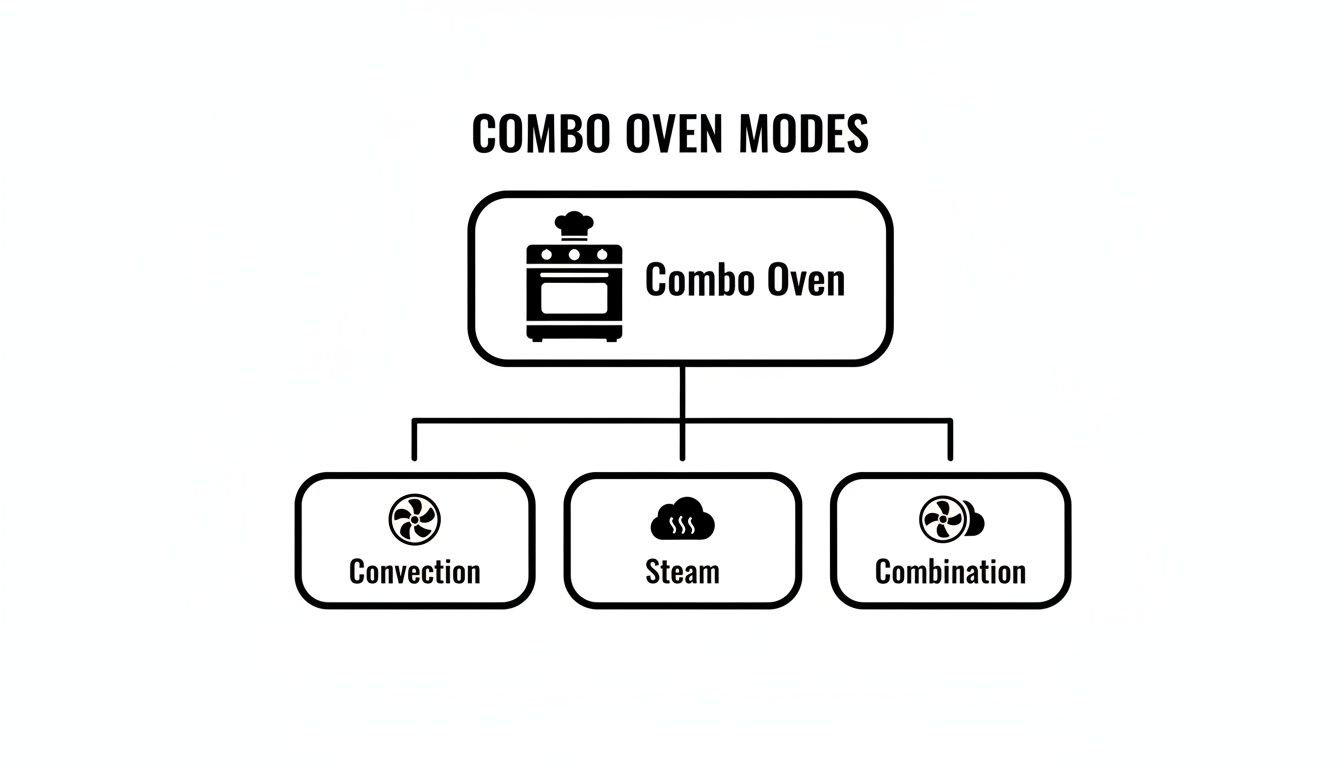
The diagram above breaks it down perfectly. You get Convection, Steam, and the game-changing Combination mode all in one box, giving you incredible versatility no matter what's on the menu.
Calculating Your Throughput Needs
Before you even start browsing models, you have to get a handle on your kitchen's peak demand. The magic number here is pans per hour. How many full-size sheet pans of roasted vegetables or hotel pans of braised short ribs do you really need to get out the door during your busiest service?
Start by digging into your sales data. Pinpoint your most popular dishes that will live in the combo oven. Then, figure out how many you sell during that peak hour—think Friday night from 7 PM to 8 PM.
Once you have that number, just work backward. If a single hotel pan holds 20 servings of carnitas and you sell 80 servings during that peak hour, you need an oven that can cook at least four hotel pans in that timeframe. This simple math gives you a concrete target for the capacity you're looking for.
From Countertop to Full-Size Models
Commercial combo ovens come in all shapes and sizes, and there's a fit for just about any LA foodservice business.
-
Compact/Countertop Models: These little guys typically hold three to six half-size or full-size sheet pans. They’re a godsend for places with tight footprints, like food trucks, coffee shops, or even as a specialty oven in a bigger kitchen. In dense spots like Echo Park or Venice, that small footprint is everything.
-
Medium-Capacity Models: Holding between six and ten full-size pans, these are the daily drivers for most mid-sized restaurants. They strike that perfect balance between capacity and kitchen real estate.
-
Full-Size/Roll-In Models: These are the giants, built for serious volume. They can hold anywhere from 20 to 40 pans on a roll-in rack and are made for huge restaurants, hotels, and catering companies that are feeding hundreds, if not thousands, of people a day.
When you're making the final call, it’s always smart to plan for a little extra room to breathe. A slightly larger oven gives you the flexibility to expand your menu or handle those unexpectedly slammed nights without creating a massive bottleneck in your kitchen.
Combo Oven Sizing Guide for Los Angeles Food Businesses
Match your business type and daily meal output to the right combo oven capacity to ensure you meet customer demand without overspending.
| Oven Capacity (Pan Size) | Best For (Business Type) | Typical LA Application | Approximate Meals Per Hour |
|---|---|---|---|
| 3-6 Pan (Countertop) | Cafés, Food Trucks, Delis | Baking pastries in a Silver Lake coffee shop, reheating meals on a food truck in Venice. | 20-60 |
| 6-10 Pan (Half-Size) | Small to Mid-Size Restaurants, Bistros | Roasting chicken for a neighborhood spot in Pasadena, steaming vegetables for a health-focused eatery. | 60-150 |
| 10-20 Pan (Full-Size) | Large Restaurants, Small Catering | Powering the dinner rush at a popular restaurant in West Hollywood, handling small catering events. | 150-300 |
| 20-40 Pan (Roll-In) | Hotels, Large Catering, Institutions | High-volume production for a DTLA hotel's room service and banquet hall, institutional foodservice. | 300+ |
This table gives you a solid starting point, but always factor in your unique menu and peak service volume before making a final decision.
The market data backs this up. Full-size combi ovens pulled in a massive 44.6% revenue share in 2025, driving the high-volume kitchens that need serious power. At the same time, the compact mini units are exploding, growing at a 10.4% CAGR. They're the perfect fit for LA's booming cloud kitchens and space-cramped food trucks where every inch is gold. You can dive deeper into the numbers by checking out the full research about combi oven trends.
Navigating Installation and Utility Requirements
Getting a commercial combo oven up and running in your Los Angeles kitchen is about more than just finding a spot for it. You need a solid handle on your building's utilities, local codes, and what the machine itself demands. Nailing these details upfront saves you from expensive headaches down the road and makes sure your new workhorse performs like a champ.
The first big question is always gas or electric. Gas has been a kitchen staple for years, but the game is changing here in California. Many parts of Los Angeles County are pushing for all-electric kitchens to hit tougher emission standards. This makes electric combi ovens a very smart, forward-thinking choice.
The market trends back this up. Electric combi ovens are projected to hold a 61.2% market share in 2024 and are growing at a rate of 8.95% through 2030. That lines up perfectly with California's push for zero-emission kitchens. While boiler-based models have been the standard, the easier-to-maintain boilerless injector types are catching on fast—something every busy operator should keep in mind. You can dive deeper into the rise of electric combi ovens at Grand View Research.
Understanding Power Specifications
Whether you choose gas or electric, you have to match the oven's needs to what your kitchen can supply. Always have a licensed professional check your connections to make sure they can handle the load.
- For Gas Ovens: Power is measured in British Thermal Units (BTUs). Your gas line has to deliver enough pressure and volume to hit the oven's specified BTU rating.
- For Electric Ovens: You’ll need to check the voltage (208V, 240V) and phase (single-phase or three-phase). This kind of powerful equipment often requires a three-phase connection, which is pretty common in commercial buildings but you can't just assume you have it.
A mismatch in utilities can lead to an underperforming oven, damage your new investment, or create serious safety risks. If you're weighing your fuel options, our article on converting from natural gas to propane for your equipment has some useful insights.
Ventilation and Hood Requirements
Proper ventilation isn't just a good idea; it's a critical safety requirement. A commercial combo oven kicks out grease-laden vapor, so most setups in Los Angeles County will demand a Type I hood. These hoods are built to handle the heat, smoke, and grease from commercial cooking and come equipped with a fire suppression system.
But what if you're in a historic building or a spot where a traditional hood just isn't possible? You have another option.
Ventless Combo Ovens A certified ventless combi oven can be a total game-changer. These units have a built-in catalytic converter that scrubs the air, pulling out grease and odors before it recirculates. This lets you install a high-powered oven without the huge expense of ductwork. Just be sure to confirm your specific model is approved by the LA County Department of Public Health for your menu.
The Critical Role of Water Filtration
Finally, let's talk water. Southern California is famous for its hard water, which is full of minerals like calcium and magnesium. When that water gets heated up to make steam, it leaves behind limescale deposits. This scale can absolutely cripple your oven's internal parts, especially in boiler-based systems.
That mineral buildup makes the oven work harder, drains its efficiency, and can lead to pricey repairs that are almost never covered by the manufacturer's warranty. A commercial-grade water filtration system isn't just a suggestion—it's essential insurance for your investment. It guarantees your oven produces clean, pure steam and runs reliably for years to come.
Mastering Cleaning and Long-Term Maintenance
Your commercial combo oven is a serious investment, and it’s likely the engine of your entire kitchen. Protecting it means putting a consistent maintenance routine in place—one that goes far beyond a simple wipe-down at the end of the night. For any busy LA restaurant manager, proper care is the secret to getting consistent performance, ironclad food safety, and the maximum possible lifespan out of your equipment.
Think of maintenance as a non-negotiable part of your kitchen’s daily rhythm. It's just as important as prepping ingredients for service. Daily cleaning ensures your oven is always ready to perform, preventing any flavor transfer between that delicate steamed fish and your robust roasted meats.
Creating Your Cleaning Protocol
A solid cleaning schedule keeps small issues from snowballing into major, costly repairs. The good news is that most modern combi ovens make this easy with automated cleaning cycles, which are a massive labor-saver for any kitchen.
But the process is a bit more than just hitting a button. It means using the right tools for the job.
- Daily Tasks: Run the recommended automated cleaning cycle at the end of each day. You should also take a moment to wipe down the exterior and clean the door gasket with a soft cloth to get rid of any food debris.
- Weekly Checks: Take a closer look at that door gasket. You're looking for any signs of cracking or wear, because a bad seal wastes energy and throws off your cooking consistency. It's also a good idea to make sure the interior drain is clear of blockages.
- Monthly Inspections: Now’s the time for a deeper clean. Check and clean the air filters to guarantee proper airflow—it's crucial for both cooking performance and the health of the oven’s internal components.
Protecting your commercial combo oven isn’t just about cleanliness; it's about operational readiness. A well-maintained oven upholds food safety standards, produces consistent results, and avoids the kind of unexpected downtime that can cripple a busy service.
The Importance of Preventative Maintenance
Beyond your daily routine, it's the preventative care that truly extends your oven’s life. One of the most important rules here is to only use manufacturer-approved cleaning chemicals. It might be tempting to use a generic or harsher cleaner, but they can easily corrode sensitive internal parts, leading to expensive damage that your warranty won’t cover.
Scheduling regular professional service is another smart move. An authorized technician can handle tasks you can't, like calibrating temperature probes for cooking accuracy or inspecting internal systems for wear and tear. For a bigger-picture look at keeping your entire workspace in top shape, check out this great guide on cleaning commercial kitchens.
For any Los Angeles operator, having a reliable, authorized service network nearby gives you invaluable peace of mind. Knowing that an expert is just a phone call away lets you focus on what you do best—creating amazing food for your customers.
Financing Your New Commercial Combo Oven
A commercial combo oven is a serious investment, but that high sticker price shouldn't stop your Los Angeles business from getting the best. Smart financing can put this powerhouse piece of equipment in your kitchen, whether you're launching a new Thai food truck or upgrading a classic Japanese spot.
Let's be real—dropping that much cash on one piece of equipment is a huge capital expense, and it's a hurdle for operators everywhere. The global market for these ovens hit USD 771 million in 2024 and is still climbing. Even with the high upfront cost, businesses are getting creative with financing to get what they need. You can see more about the growing combi oven market on intelmarketresearch.com.
Leasing a Commercial Combo Oven
Instead of draining your bank account all at once, lease-to-own programs are a fantastic way to hold onto your cash. This lets you get the equipment you need now—the combo oven, a new commercial refrigerator, or that walk-in freezer you've been dreaming of—and pay it off over time with manageable monthly payments.
For an L.A. restaurant, this strategy has some major perks:
- Better Cash Flow: It keeps your money free for other things that matter, like payroll, inventory, and getting the word out.
- Potential Tax Breaks: Lease payments can often be written off as a business expense. Of course, you should always double-check with your tax advisor on that.
- Builds Business Credit: Making your payments on time, every time, helps build a solid credit history for your business.
For a lot of L.A. food businesses, leasing is the most sensible way to get top-of-the-line equipment. You get the tools you need to grow right away, and the costs line up with your income. That's a huge deal in a market this competitive. You can dive deeper into your options in our complete guide on restaurant equipment financing in Los Angeles.
Looking Beyond the Sticker Price
It’s easy to get fixated on that initial number, but the true value of a commercial combo oven comes from its total cost of ownership and return on investment (ROI). This isn't just another bill to pay; it's an asset that generates revenue and eventually pays for itself.
Think about the long game. Modern combo ovens are incredibly efficient, which means lower utility bills from day one. Their ability to control moisture with precision also cuts down on food shrinkage, so you get more finished product out of your expensive proteins. On top of that, features like programmable cooking and automated cleaning save you a ton of money on labor. When you add it all up, that initial investment starts looking like one of the smartest moves you can make for your L.A. restaurant.
Your Top Combo Oven Questions Answered
Even after covering all the benefits, sizing, and maintenance, you probably still have a few questions. We get it. Here, we'll tackle the most common things we hear from Los Angeles restaurant and food truck operators, giving you straight answers to help you make the right call.
Can a Combo Oven Truly Replace My Steamer and Convection Oven?
It absolutely can. A commercial combo oven isn't just a machine that does two things; it's engineered to master the jobs of both a dedicated steamer and a convection oven. Plus, you get that game-changing 'combination' mode that blends moist and dry heat together.
For any kitchen in LA, bringing these functions into one unit is a huge win. We all know space is gold, whether you're running a food truck in Koreatown or a cozy bistro in Los Feliz. Replacing two big machines with one saves precious floor and hood space. It also simplifies your cook line and can seriously cut down your energy bills.
How Will a Combo Oven Impact My LA Utility Bills?
While the initial price tag is higher, a modern combo oven is a powerhouse of efficiency. It cooks faster and with more precision, which often means you'll use less energy than you would running two separate appliances. Electric models are especially efficient and a great fit for California's push toward greener kitchens.
But the real money-saver? It's all about yield. Using the steam function can cut down on protein shrinkage by up to 15%. That means you get more sellable portions out of your expensive ingredients—think prime rib or carnitas—which goes straight to your bottom line. Always look for ENERGY STAR certified models to get the most savings on your LADWP bill.
What Water Filtration Is Necessary in Southern California?
Let's be honest, Southern California's water is notoriously hard. It's loaded with minerals that build up as scale inside a combo oven's steam generator. That scale kills efficiency and can lead to expensive repairs that your warranty won't cover.
A commercial-grade water filtration system isn't just a suggestion; it's essential. Your equipment supplier can test your water and hook you up with the right system to protect your investment. This makes sure you always get high-quality, clean steam for everything from delicate Japanese custards to perfectly cooked Thai fish.
Are Ventless Combo Ovens an Option for My Location?
Yes, and they can be a lifesaver for many LA businesses. Many top manufacturers now offer certified ventless combo ovens. These come with a built-in catalytic converter that scrubs the grease and vapor right out of the air.
This technology means you don't need a traditional Type I ventilation hood at all. This is a perfect solution for historic buildings downtown, small kiosks, or any spot where installing a full hood system is just too expensive or not structurally possible. Before you buy, just be sure to verify that the model is certified and approved by the Los Angeles County Department of Public Health for your specific menu.
Ready to upgrade your kitchen with the power and versatility of a commercial combo oven? Explore our curated selection at Los Angeles Restaurant Equipment and find the perfect model to fit your space, menu, and budget. We offer flexible financing and free delivery across LA to help you get started. Check out our collection at https://losangelesrestaurantequipment.com.