

Commercial Kitchen Equipment: Your Essential Guide to Smart Buying
Opening a restaurant in Los Angeles is a big deal. Every single choice you make adds up, but picking out your commercial kitchen equipment might just be the most important one of all. This is more than just buying some new appliances; you're literally building the engine that will power your restaurant’s speed, quality, and, ultimately, its success.
Laying the Foundation for Your Los Angeles Kitchen
Think of your equipment as the cast of a blockbuster movie. Each piece has a critical role in your daily culinary show. When you get it right, everything flows. Your team can glide through the craziest dinner rush, turning out consistently great food like a well-oiled machine. But if you get it wrong? You're looking at kitchen traffic jams, inconsistent dishes, and wasted food—headaches no LA restaurant can afford.
This guide is your roadmap. Whether you're dreaming up a busy Thai spot in Hollywood, a tight-squeeze Korean food truck for K-Town, or a classic Mexican cantina in East LA, we'll walk you through the essentials. From the heavy-duty commercial refrigerators and freezers that protect your investment to the specific cooking line that makes your menu possible, every piece matters.
Your Menu Is Your Blueprint
Before you even think about equipment, look at your menu. Your menu is the blueprint for your entire kitchen. The food you plan to serve tells you exactly what tools you need.
- A Japanese Ramen Shop isn't going anywhere without high-BTU stock pot ranges for those deep, flavorful broths and, of course, specialized noodle cookers.
- A Chinese Dim Sum Restaurant absolutely needs powerful steamers and multi-burner wok ranges to get that signature high-heat sear.
- A Thai Curry House will rely heavily on versatile ranges that can handle different pots and pans, plus some seriously reliable rice cookers.
This direct line between your food and your hardware is the golden rule of kitchen design. Don't fall into the trap of a one-size-fits-all setup. Your equipment needs to be a perfect match for your culinary vision. For a complete list to get you started, check out our commercial kitchen equipment checklist.
The whole world is catching on to how vital this is. The market for commercial cooking gear is expected to shoot up from USD 13.3 billion in 2025 to a staggering USD 26.5 billion by 2035. This boom is fueled by the explosive growth of restaurants and hotels, which are projected to make up a massive 47.8% of the market. You can see more details on these global commercial cooking equipment market trends on futuremarketinsights.com.
Matching Equipment to Your Restaurant Concept
Your menu isn't just a list of dishes; it’s the blueprint for your entire kitchen. Every piece of commercial kitchen equipment you bring in should be there for a reason, directly supporting the food you’re famous for. This is where the dream meets the reality in the LA food scene, and getting it right from the jump saves a world of headaches and money later.
Think of it like this: you wouldn't cast a comedian in a serious drama and expect a masterpiece. In the same way, the gear needed for a high-volume Thai spot in Hollywood is completely different from what a Koreatown food truck needs to kill it.
Cuisine-Specific Equipment Choices
The style of food you cook dictates the workhorses of your kitchen. A bustling Mexican restaurant in East LA, for example, lives and dies by its multi-burner range and a big, flat griddle for tortillas and meats. Service would grind to a halt without them.
Let’s look at a few other popular LA concepts:
- Japanese Sushi Bar: The real heroes here are specialized sushi case refrigerators that hold the perfect temperature and humidity, plus some high-capacity rice cookers that deliver flawless results, every single time.
- Chinese Noodle House: Success hangs on powerful, high-BTU wok ranges. They deliver that intense, smoky "wok hei" flavor that a standard stove just can't touch.
- Thai Kitchen: A versatile setup is everything. You need multi-burner ranges to juggle a bunch of pots and woks at once, backed by solid commercial refrigerators to keep delicate herbs and produce at their peak freshness.
This flowchart breaks down the whole decision-making process into three simple steps to guide your choices.
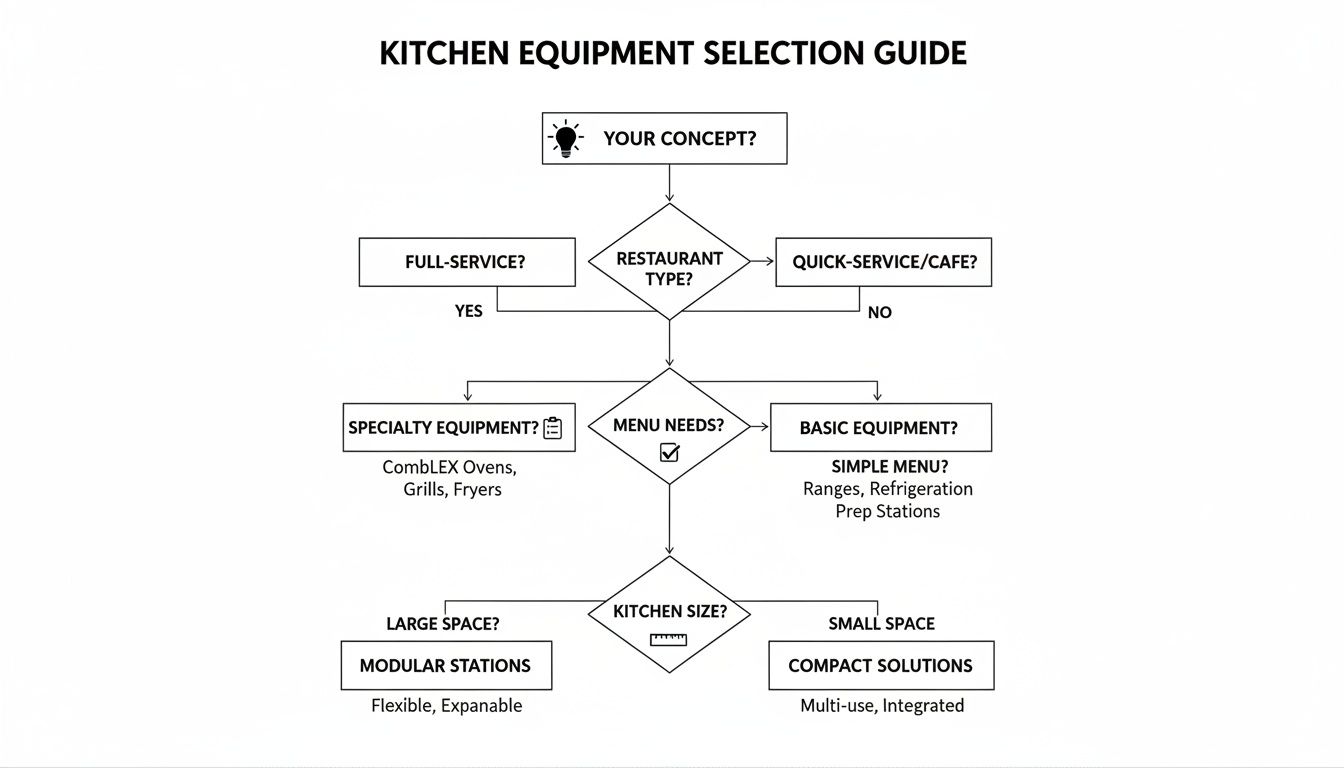
As you can see, your concept, your menu, and your physical space are the three pillars holding up every equipment decision you'll make.
Adapting to Different Service Models
Beyond the type of food, your business model completely changes your shopping list. A full-service restaurant has very different needs than a food truck or a bar that's mostly about drinks and a few snacks.
A Los Angeles food truck, for instance, is a masterclass in making every inch count. Space is the biggest luxury you don't have. The game shifts to compact, hard-working gear like under-counter commercial refrigerators and freezers, countertop fryers, and multi-functional griddles. It’s all about maximum output from a tiny footprint.
On the flip side, a downtown LA bar probably cares more about its beverage service. Their essential list often revolves around:
- High-volume commercial ice machines to keep up with a packed house.
- Glass-door beverage merchandisers to show off the goods and allow for quick grabs.
- Underbar sinks and glass washers to keep the bar line clean and moving fast.
Understanding these differences is crucial. Globally, North America leads the commercial appliance market, holding a 31.96% share in cooking equipment as of 2023. This is fueled by new hospitality trends and the explosion of cloud kitchens, which are growing at a 10.32% CAGR and demand efficient, smaller-footprint equipment perfect for delivery-only models.
To make it even clearer, here’s a quick rundown of what some popular LA restaurant types absolutely need to get started.
Essential Equipment for Popular LA Restaurant Types
| Foodservice Type | Essential Refrigeration | Essential Cooking Line | Key Specialty Item |
|---|---|---|---|
| Pizzeria | Reach-In Refrigerator, Pizza Prep Table | Commercial Pizza Oven (Deck or Conveyor) | Dough Mixer |
| Coffee Shop/Café | Undercounter Refrigerator, Pastry Display Case | Convection Oven, Panini Press | Commercial Espresso Machine |
| Food Truck | Undercounter Refrigerator & Freezer | Flat-Top Griddle, Countertop Fryer | Steam Table/Food Warmer |
| Full-Service Diner | Walk-In Cooler, Reach-In Freezer | 6-Burner Range w/ Oven, Charbroiler | High-Volume Commercial Coffee Brewer |
| Bar/Tavern | Back Bar Cooler, Glass Chiller | Countertop Fryer, Microwave | High-Capacity Ice Machine |
This table gives you a starting point, but always circle back to your unique menu and workflow to fill in the gaps.
When you carefully match your menu and service style to your equipment, you build a kitchen that works for you, not against you. That alignment is the secret to a smooth operation and long-term success.
And don't forget, your operation isn't just about the hardware in the kitchen. Modern tools can make a huge difference in your efficiency and how customers see you. For example, you can streamline your restaurant concept with QR codes for a smoother ordering and payment process. Blending the right physical equipment with smart digital tools creates a more cohesive experience that helps you stand out in the crowded LA market.
Mastering Your Kitchen's Cold Storage
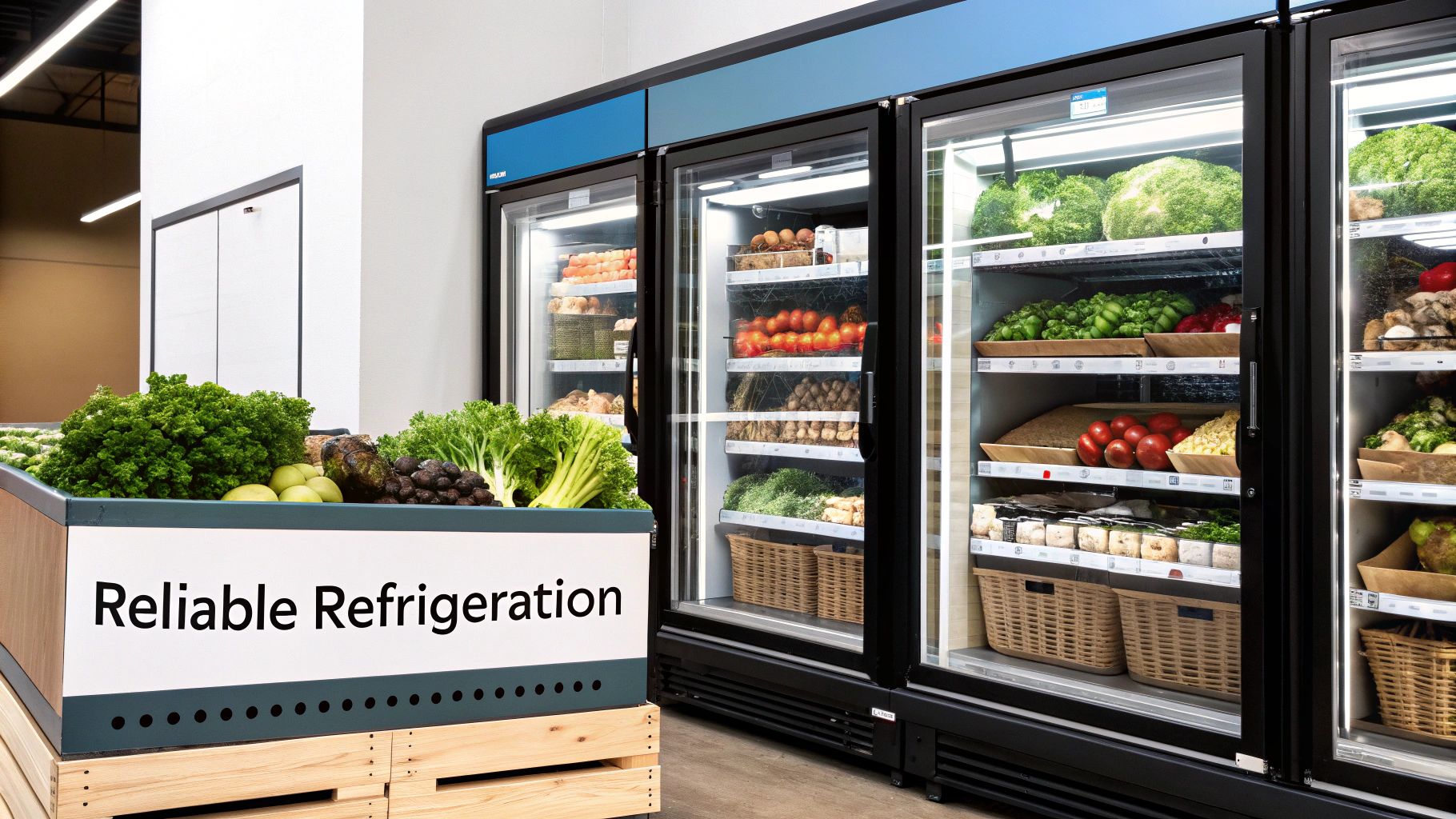
In the relentless Los Angeles warmth, your refrigeration isn't just another piece of commercial kitchen equipment—it’s the beating heart of your food safety, quality control, and inventory. A busted compressor on a hot August day isn't just an inconvenience; it's a full-blown disaster that can cost you thousands in spoiled food and lost business. This is why getting your cold storage right is absolutely non-negotiable.
Think of your commercial refrigerators and freezers as the silent guardians of your kitchen. They work around the clock, 24/7, protecting the fresh ingredients that make your menu special—from the crisp cilantro for an East LA taqueria to the delicate fish for a sushi bar in Sawtelle. Nailing this means you're not just meeting strict LA County health codes, you're guaranteeing every dish that leaves your kitchen is top-notch.
Differentiating Your Cold Storage Arsenal
Not all refrigeration is built the same, and a smart kitchen uses a mix of different units designed for specific jobs. Picking the right combination, like those from robust brands such as Atosa, is essential for a smooth and efficient workflow.
Here’s a breakdown of the main players you’ll be working with:
- Reach-In Refrigerators and Freezers: These are your daily workhorses. You’ll find them on the cooking line or in prep areas, giving your cooks quick access to ingredients they need all day long. A Thai kitchen might use one to keep prepped veggies and curry pastes perfectly chilled and ready for the dinner rush.
- Undercounter Refrigerators and Freezers: In tight spaces like a Los Angeles food truck or a packed bar station, these units are a lifesaver. They tuck right under your countertops, saving valuable floor space while keeping key items right where you need them.
- Walk-In Coolers and Freezers: This is where you store the big stuff. A high-volume Chinese restaurant in the SGV depends on its walk-in to hold massive weekly deliveries of produce, meats, and sauces, ensuring they’re stocked and ready for the weekend crowds.
Proper cold storage is more than just keeping things cold; it's about creating a system. By combining large-format storage with smaller, point-of-use units, you reduce the number of steps your staff takes, which speeds up service and minimizes errors.
The demand for this kind of efficient, high-capacity restaurant equipment is blowing up. The global market is expected to grow by a massive USD 41.81 billion between 2024 and 2029, with refrigeration leading the charge. As a culinary hub like Los Angeles keeps growing, the need for reliable, energy-efficient appliances only gets more intense. You can learn more about these commercial kitchen equipment market projections on technavio.com.
Specialized Units for Niche Needs
Beyond the basics, certain specialty refrigerators can make a world of difference for specific menus. A Silver Lake pizzeria, for instance, wouldn’t be complete without a pizza prep table. This genius piece of equipment combines refrigerated compartments for toppings with a cool work surface, keeping everything organized and chilled right where the magic happens.
Likewise, a Venice beach café can seriously boost impulse buys with a glass-door merchandiser. Sticking one near the register filled with cold drinks and grab-and-go snacks is a surefire way to increase your average ticket price. Even a high-end Korean BBQ joint might use a special meat-aging refrigerator to perfect its premium cuts.
Making the Smart Choice for Your LA Business
When you’re choosing commercial refrigerators, a few key factors come into play, especially here in the demanding Los Angeles market.
- Energy Efficiency: LA utility bills are no joke. Investing in an ENERGY STAR® certified model might cost a bit more upfront, but it can save you a bundle over the unit's lifespan, often paying for itself in just a few years.
- Compressor Warranty: The compressor is the engine of your refrigerator. Always look for a solid warranty, like a five-year compressor warranty. It's a good sign that the manufacturer trusts their own product to last.
- Sizing and Capacity: Take the time to really think about your storage needs. Base your calculations on your menu, delivery schedule, and how many customers you serve. For a deeper dive, check out our article on choosing a walk-in cooler and freezer combination.
At the end of the day, picking the right cold storage is an investment in your restaurant's stability and its reputation. It’s what makes sure every plate you serve starts with the freshest ingredients possible.
Building a High-Performance Cooking Line
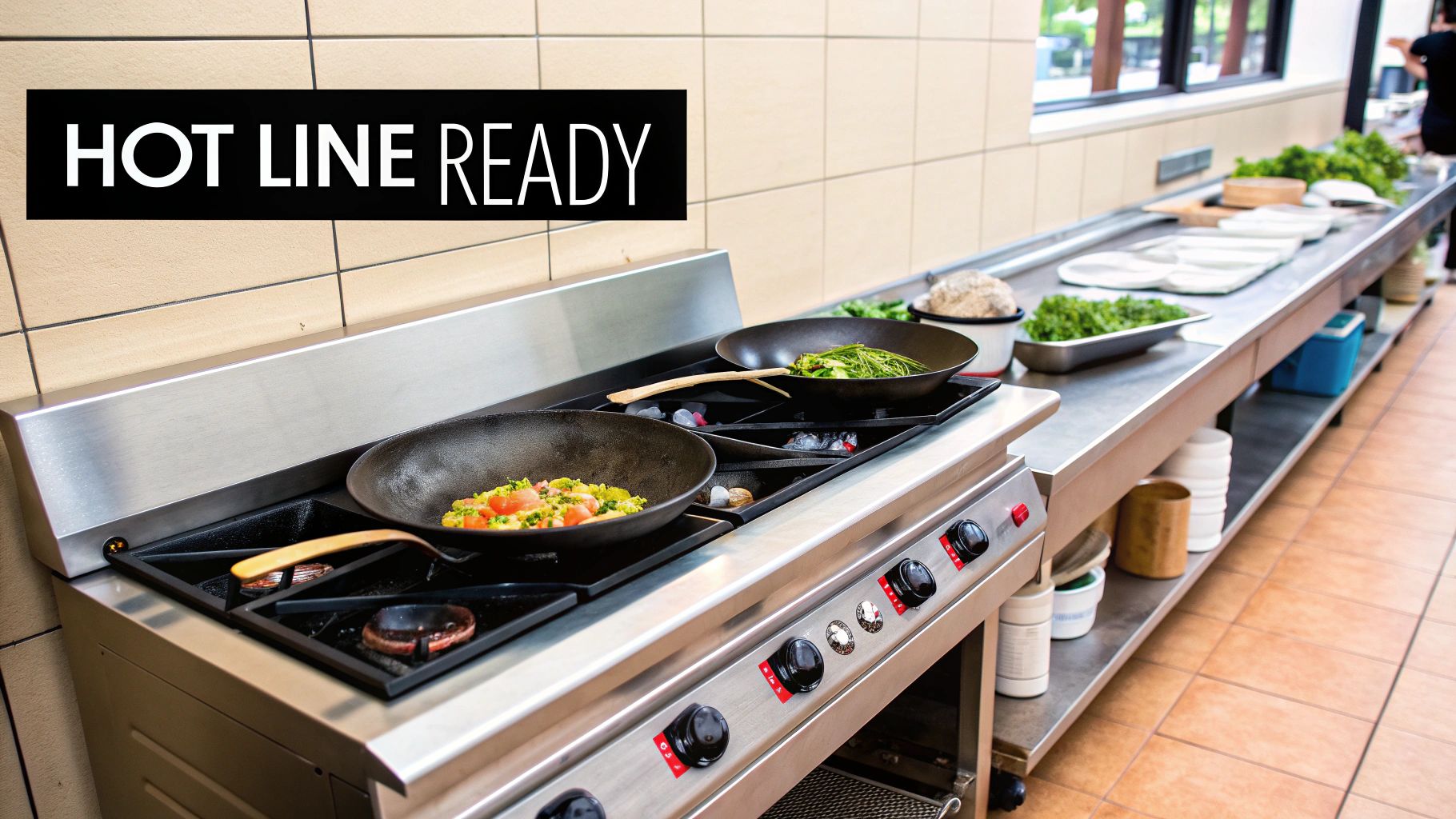
If your cold storage is where ingredients wait, the hot line is where your food truly comes alive. This is the heart of your kitchen, the very stage where raw product gets transformed into the dishes your Los Angeles customers are dreaming about. Choosing the right commercial kitchen equipment for your cooking line means finding a perfect balance between raw power and fine-tuned precision, between speed and consistency, and between your culinary ambition and the actual footprint of your space.
The real goal here is to create a seamless workflow, a place where your chefs can move like a well-oiled machine during the chaos of a dinner rush. Every single piece of equipment has to be a total workhorse, ready to handle the intense pressure of a packed LA service, night after night.
Matching Cooking Power to Your LA Cuisine
The exact cooking equipment you’ll need is decided entirely by your menu. A one-size-fits-all setup just won't work in a city with such a diverse and savvy food scene. Your hot line has to be custom-built for what you cook.
Take, for instance, a Japanese ramen shop in Sawtelle. They absolutely need a high-BTU stock pot range. That specialized piece of restaurant equipment is designed for one thing: maintaining the constant, rolling boil required to develop the deep, complex flavors in a signature tonkotsu broth for hours on end.
In the same way, an East LA taqueria's success often boils down to a powerhouse combo of a multi-burner range and a flat-top griddle. The burners are busy with simmering salsas and fillings, while the griddle is searing meats and warming tortillas, creating an efficient assembly line for high-volume service.
Core Components of a Modern Hot Line
While every kitchen is different, most high-performance cooking lines are built around a few key players. Knowing what each one does helps you assemble a kitchen that's both powerful and versatile.
- Commercial Ranges: This is the foundation of almost any kitchen, combining open burners up top with an oven below. They’re critical for a Thai spot juggling multiple woks or a Korean kitchen prepping a dozen different banchan at once.
- Charbroilers: For getting that perfect smoky char on steaks, burgers, or even vegetables, nothing beats a charbroiler. It's an absolute must-have for steakhouses and tons of modern American restaurants.
- Deep Fryers: Whether it's a Los Angeles food truck serving up crispy fries or a Chinese restaurant making spring rolls, a dependable deep fryer is essential. You’ll want to look for models with fast recovery times to keep pace with orders.
- Convection Ovens: These ovens use fans to blow hot air around, which cooks food faster and more evenly than a standard oven. They are game-changers for bakeries, cafes, and any restaurant that does a lot of baking or roasting.
Your hot line is a system, not just a row of appliances. When the layout and equipment are right, you create a rhythm that lets your team produce amazing food at speed. This ensures that even on your busiest nights, every plate that leaves the kitchen is perfect.
Balancing Power and Footprint
A huge challenge for LA restaurant owners is space. Kitchens can be incredibly tight, forcing you to make smart choices to get the most out of every square inch. This is where modern, multi-function commercial kitchen equipment really shines.
Think about combo units, like a range that has a griddle built right into the top, or powerful countertop versions of equipment like fryers and charbroilers. These pieces give you all the cooking power you need without taking up a massive amount of floor space, letting you build a high-performance line even in a smaller kitchen.
At the end of the day, building your cook line is an investment in consistency. Your customers come back because they want that dish they fell in love with last time. The right equipment makes sure you can deliver that exact same quality experience, every single time, turning first-time visitors into regulars.
Smart Budgeting and Financing Your Equipment
Getting the right commercial kitchen equipment is easily one of the biggest financial hurdles for any new Los Angeles entrepreneur. The sticker price on that shiny new walk-in cooler or six-burner range? That’s just the opening act. A smart financial game plan looks way beyond the initial cost to build a budget that sets your restaurant up for long-term success, not short-term panic.
Think of your budget less like a shopping list and more like a blueprint for your entire project. It has to account for all the "hidden" costs that sneak up and drain your bank account. These are the details that trip up so many new restaurant owners, so getting ahead of them is absolutely critical.
Looking Beyond the Sticker Price
Building a solid budget means thinking through the entire lifecycle of your equipment purchase, from the moment you hit "buy" to the day it's fired up and ready to go. A realistic budget must include:
- Delivery and Freight: Getting heavy-duty restaurant equipment from a warehouse to your L.A. location isn't free. That LA traffic doesn't help, either.
- Installation Fees: Professional installation isn't a luxury—it's often a requirement to meet city codes and keep your warranty valid. This can mean calling in specialized plumbers, electricians, or gas line experts.
- Utility Upgrades: Does that powerful new convection oven need a bigger electrical circuit? Will your high-capacity ice machine require its own dedicated water line? These infrastructure upgrades can be a significant, and unexpected, expense.
- Permits and Inspections: The City of Los Angeles has specific rules for kitchen installations. Pulling the right permits and passing inspections always comes with fees.
If you don't account for these items, you can blow your budget before you even serve your first customer. A detailed plan keeps the surprises at bay and your finances on solid ground.
The Power of Lease-to-Own Financing
For most startups, especially in a market as expensive as Los Angeles, protecting your cash is priority number one. This is where lease-to-own financing really shines. Instead of wiping out your bank account on a massive upfront purchase, leasing gets you the top-tier commercial kitchen equipment you need for a predictable, manageable monthly payment.
This approach brings some huge advantages to the table:
- Capital Preservation: You keep your cash free for all the other things you need to launch, like marketing, paying your new staff, and stocking the pantry.
- Cash Flow Alignment: Your monthly equipment payments line up with your incoming revenue, which makes managing your money a whole lot easier as you get your footing.
- Credit Building: Making those lease payments on time helps build a strong business credit profile—something that will be invaluable down the road.
Think of it this way: buying outright is like paying for a year's worth of groceries in one go. Leasing is like paying for them each week as you need them. It's far more manageable and fits the natural rhythm of your business.
Once the lease term is up, you own the equipment. It's a strategic way to get everything you need without the financial strain, supporting your restaurant's health from day one. To get a deeper dive into the nuts and bolts, check out this guide on understanding restaurant equipment financing. It breaks down how you can get your dream kitchen running without breaking the bank.
Comparing Outright Purchase vs Lease-to-Own Financing
To help you decide which path is right for your L.A. restaurant, let's break down the pros and cons of buying your equipment outright versus using a flexible lease-to-own financing option.
| Consideration | Outright Purchase | Lease-to-Own Financing |
|---|---|---|
| Upfront Cost | High. Requires significant capital investment. | Low. Minimal initial cash outlay, often first/last payment. |
| Cash Flow Impact | Major. Drains working capital immediately. | Manageable. Predictable, small monthly payments. |
| Ownership | Immediate. You own it from day one. | At End of Term. You own it after the final payment. |
| Balance Sheet | Appears as an asset, but depletes cash. | Payments are operating expenses, preserving capital. |
| Credit Impact | No direct impact on building business credit. | On-time payments help build a strong credit history. |
| Flexibility | Less flexible. Capital is tied up in equipment. | High. Frees up cash for marketing, inventory, and payroll. |
Ultimately, the right choice depends on your specific financial situation. For a new business in a competitive market like Los Angeles, preserving cash is often the smartest move, making lease-to-own a powerful tool for growth.
Installation Warranties and Long-Term Maintenance
Your journey with new commercial kitchen equipment doesn’t stop once you’ve paid for it—in many ways, it's just getting started. Making sure that huge investment pays off for years to come is all about what happens next. The right setup, a solid warranty, and a simple upkeep routine are what separate gear that lasts from gear that lets you down.
First things first: professional installation. This isn't just about getting things plugged in. It’s about making sure every piece of your restaurant equipment is set up to meet the very specific Los Angeles city codes for gas, plumbing, and electrical. Getting it right from the jump ensures your equipment performs at its best and, just as important, keeps your manufacturer's warranty valid.
Understanding Your Warranty Protection
Think of a warranty as the manufacturer’s promise. It's their way of saying, "We stand by this product," and it's your safety net against a sudden breakdown. But not all warranties are built the same, so you’ve got to get familiar with the details.
A great warranty is comprehensive. For refrigeration units, a good benchmark to look for is a two-year parts and labor warranty plus a five-year compressor warranty. This is a huge deal for essential pieces like commercial refrigerators and freezers, since the compressor is the heart of the machine and the most expensive part to fix.
Another critical piece is an authorized service network. When your fryer dies in the middle of a packed Friday night in L.A., you can’t afford to wait around. Access to certified local techs means you get back in the game fast, minimizing the hit to your service and your sales.
Empowering Your Team with a Maintenance Checklist
Honestly, the best way to deal with emergency repairs is to prevent them from happening in the first place. Giving your kitchen crew a simple, daily checklist can add years to your equipment's life and make it far more reliable. These don't need to be complicated tasks; it's the small, consistent actions that make all the difference.
Proactive maintenance is the cheapest insurance policy you can buy. A few minutes of care each day can prevent thousands of dollars in repairs and lost business down the line.
Here’s a practical checklist your team can easily follow for some of your most important equipment:
- Commercial Refrigerators: Once a month, take a brush and vacuum to the condenser coils to get rid of dust. This one step helps the unit run cooler and more efficiently, taking a ton of strain off the compressor.
- Deep Fryers: Filter the oil at the end of every single day. Not only does this make your food taste better, but it stops the carbon gunk from building up and wrecking the fryer's heating elements.
- Convection Ovens: After service, give the interior and the door gaskets a good wipe-down to clear out any food bits. Make sure the fan isn't blocked and check the oven's temperature against an external thermometer every few months to ensure it's cooking accurately.
When you make these simple checks part of your closing routine, you build a culture of care. That culture protects your valuable commercial kitchen equipment and is key to keeping your Los Angeles restaurant running without a hitch.
Frequently Asked Questions
Stepping into the world of commercial kitchen equipment can feel overwhelming, especially in a market as fast-paced as Los Angeles. We hear a lot of the same questions from both seasoned restaurateurs and new food truck owners, so we've put together some quick answers to get you on the right track.
What Is the Most Important Equipment for a New LA Food Truck?
For any Los Angeles food truck, your first and most critical investment is solid, compact refrigeration. Between LA's warm climate and strict health codes, an under-counter refrigerator or a sandwich prep table isn't just a good idea—it's essential for keeping your ingredients safe and fresh.
Once your cold storage is handled, the next piece of the puzzle is your main cooking appliance. This choice is all about your menu. Are you flipping burgers on a flat-top griddle, frying up sides in a deep fryer, or simmering sauces on a small range? Whatever you choose, make sure it's NSF-certified restaurant equipment designed for the tight spaces and constant motion of a food truck.
How Do I Choose the Right Size Commercial Refrigerator?
Sizing your commercial refrigerators and freezers comes down to three key things: what's on your menu, how often you get ingredient deliveries, and how many customers you serve on your busiest day. A good starting point is to aim for 1.5 to 2 cubic feet of cold storage for every seat in your dining room.
But raw capacity isn't the whole story. Think about your kitchen's workflow. For most busy LA kitchens, the best setup is a mix of a large walk-in or reach-in unit for bulk supplies and smaller under-counter fridges at key prep stations. This simple strategy keeps your line cooks moving efficiently and cuts down on wasted steps during a hectic service.
Is Lease-to-Own a Good Option for a New LA Restaurant?
Absolutely. For new Los Angeles restaurants, lease-to-own financing can be a game-changer. It’s a smart way to get the equipment you need without draining your startup capital on a huge upfront purchase. You get to make predictable monthly payments that work with your budget as you grow.
This approach keeps your cash free for other crucial expenses like marketing, payroll, and your first big inventory order. Plus, it's a great way to build up your business credit. At the end of the lease term, you own the commercial kitchen equipment outright, making it a powerful tool for building a sustainable business.
Ready to build the perfect kitchen for your Los Angeles restaurant or food truck? Explore a complete catalog of professional-grade equipment at Los Angeles Restaurant Equipment. Find everything from Atosa refrigerators to high-performance cooking lines, all with free delivery and flexible financing options. Visit us at https://losangelesrestaurantequipment.com to get started today.