

Ultimate Los Angeles Food Truck Equipment List & Restaurant Gear Guide for Operators
When you’re planning a Los Angeles food truck or restaurant pop-up, think in six zones: Hot Cooking, Cold Storage, Prep, Service, Power, and Smallwares. Getting organized from the start keeps build-outs on budget—even in a tight footprint, whether you’re on wheels or opening a casual brick-and-mortar eatery.
Breaking Down Your Food Truck Equipment List

Essential Equipment Overview
Below is an at-a-glance table comparing each station to its core gear. It’s a handy starting point when inches matter in L.A. restaurants and food trucks alike.
| Station | Key Equipment Examples |
|---|---|
| Hot Cooking | Commercial ranges, griddles, fryers, specialty ovens |
| Cold Storage | Atosa refrigerators, under-counter freezers, walk-in units |
| Prep | stainless steel kitchen prep tables, utensil trays |
| Service | Counters, heat lamps, sneeze guards, display cases |
| Power | Generators, gas regulators, plumbing kits, three-phase hookups |
| Smallwares | Knives, trays, serving containers, cutting boards |
Use this snapshot to visualize your workspace before diving into the details below.
Equipment By Station
Laying out your workflow this way helps you see how ingredients and tools move from start to finish—whether in a mobile kitchen or a casual L.A. restaurant.
- Hot Cooking: Outfit a range, flat-top griddle, and fryer for Korean BBQ sizzles or Japanese yakitori skewers. Brick-and-mortar spots may add a commercial convection oven or pizza deck.
- Cold Storage: Keep Mexican salsas crisp and Thai curry pastes chilled with sturdy upright refrigerators, under-counter freezers, or walk-in coolers. Consider blast chillers for rapid cooldown in restaurant kitchens.
- Prep: Streamline Chinese dim sum assembly on a robust stainless steel table, complete with an organized utensil tray and integrated sink module for busy prep lines.
- Service: A well-placed counter, heat lamps, and easy-grab shelves keep lines moving during L.A.’s lunch rush. Restaurants might include salad bars or merchandisers.
- Power And Utilities: Rely on a compact generator or three-phase connection, plus plumbing kits to light up your truck or power a brick-and-mortar kitchen—no surprises.
- Smallwares: Sharp knives, stackable trays, durable serving containers, plus color-coded cutting boards—the unsung heroes of daily service.
Grouping each station right at the start cuts down on clutter and helps you serve more orders, faster.
Service counters, power systems, and smallwares round out the essentials, tying the whole operation together.
Check out our guide on stainless steel kitchen prep tables for layout tips.
Understanding Core Equipment Concepts
Imagine your food truck or small restaurant as a compact assembly line, where every ingredient makes a journey from chilled storage to the service window or dining counter. This mental picture helps you spot layout snags before you spend a single dollar on equipment.
Cold items slide in at one end, get prepped on stainless tables, move under the cooking hood, and finally reach customers through a tidy service counter or dining pass. Seeing it this way clarifies which station does what—and which gear belongs where.
- Cold Storage holds perishables at safe temps, setting the stage for fresh flavors. This includes commercial refrigerators, glass-door merchandisers, and chest freezers popular in restaurant kitchens.
- Prep Station offers stainless surfaces and sinks for everything from dicing veggies to marinating proteins.
- Hot Cooking generates heat via ranges, griddles, fryers, or specialty ovens to bring your menu to life.
- Service Counter keeps finished plates warm under heat lamps or in display cases, ensuring both speed and hygiene.
- Power And Utilities deliver electricity, gas, and water exactly where they’re needed—generators on trucks, three-phase on-site.
- Smallwares—like knives, trays, containers, and cutting boards—are the unsung heroes of daily service.
Grouping these elements by station not only streamlines your workflow but also cuts down cross-contamination risks. During the lunch rush, you’ll thank yourself for fewer trips across tight quarters and tools that live right where you need them.
Los Angeles health codes often demand triple-compartment sinks, dedicated handwash stations, NSF-certified refrigeration, and commercial ventilation. Factoring these in can bump your build-out cost by 12–30%, but they earn you faster inspections and happier customers. For more on cost trends, check out the Future Market Insights food truck market report.
Regulatory Considerations
Positioning your sinks, refrigeration, and vents early on prevents last-minute code red flags. A quick sit-down with LA inspectors before fabrication can shave days off your approval timeline.
That upfront planning keeps your permit process smooth and ensures your build schedule stays on track.
Equipment Station Comparison
Below is a snapshot of each station’s core purpose and must-have components. Use this overview to guide your layout and purchases.
| Station | Primary Function | Key Items |
|---|---|---|
| Hot Cooking | Apply heat for menu items | Ranges, griddles, fryers, ovens |
| Cold Storage | Preserve ingredient freshness | Refrigerators, freezers, chillers |
| Prep Station | Assemble dishes efficiently | Stainless tables, sinks |
| Service | Deliver orders safely | Counters, heat lamps, display cases |
| Power & Utilities | Keep systems powered and flowing | Generators, plumbing kits |
| Smallwares | Support day-to-day tasks | Knives, trays, containers |
This table clarifies where each piece of equipment sits and how it interacts with nearby stations.
Workflow Optimization
Think of your ingredient flow as a conveyor belt—spotting bottlenecks becomes a lot easier. Follow these steps:
- Draft a to-scale floor plan marking every station.
- Sketch arrowed paths for both food and staff.
- Tweak station positions to minimize cross-traffic.
- Run a few dry rehearsals before finalizing the build.
A well-tuned flow frees up room for extra gear or gives staff the wiggle room they need during peak hours. These principles also apply to pop-up restaurants and ghost kitchens across Los Angeles.
Power Utility Layout
Dedicate a compact corner for your generator, gas regulators, and plumbing hookups. Proper spacing around the generator cuts down vibration noise and streamlines maintenance.
A dedicated utility zone slashes setup time and keeps cables and hoses from turning into trip hazards during the dinner rush.
By weaving utilities into adjacent stations, you ensure every cycle—from firing up a fryer to draining a sink—moves without a hitch. In the next section, we’ll group must-have and optional gear by station, complete with sizing advice for popular LA menus.
Planning Your Equipment Stations
Think of your food truck or restaurant kitchen as a mini restaurant on wheels—or in a brick-and-mortar space. Mapping out six distinct zones turns a tangled gear list into a smooth workflow—even inside an 8-foot-wide Los Angeles truck or tight back-of-house.
We organize everything into these stations: Hot Cooking, Cold Storage, Prep, Service Counter, Power & Utilities, and Smallwares. For each, you’ll find required gear, optional extras, and layout tips that respect tight footprints and local codes.
Below is an infographic visualizing equipment flow from cold storage through prep to cooking in a horizontal layout.
This diagram highlights how placing your fridge, prep table, and range in sequence can cut wasted steps and keep service humming.
Hot Cooking Essentials
Hot cooking is the engine of your truck and restaurant line. In an 8-foot width, tuck a 24-inch commercial range next to a 12-inch griddle—perfect for Korean BBQ skewers, yakitori, or stir-fry stations in casual eateries.
- Ensure your hood meets NFPA 96 and delivers 200 CFM per linear foot.
- Cover all cooking units with hood depth that captures smoke.
- Schedule quarterly filter cleanings to keep airflow strong.
- Mount the exhaust fan on the roof or wall, away from heat-sensitive parts.
Cold Storage And Prep
Cold storage and prep form a tag team to keep ingredients fresh and within reach. Restaurants often opt for two-door upright units or walk-in coolers, while trucks benefit from under-counter refrigerators (around 6 cu ft) under a stainless steel prep table.
- For taco setups, a 30-inch-deep table holds trays of tortillas and salsas.
- Steam bun fans need about 3 cu ft of cold space per 100 buns.
- BBQ operators should allow 8 inches of drawer width per meat type.
- Consider a blast chiller if you’re doing large batches of proteins or dough.
Service Counter And Smallwares
Your service counter bridges the kitchen and your customers. Heat lamps and sneeze guards are nonnegotiable for temperature control and health-code compliance.
- Add optional condiment bays, chip racks, or mini merch displays to boost add-ons.
- Keep color-coded cutting boards, spatulas, and scoopers within arm’s reach.
Outfitting essential equipment accounts for 25–40% of total startup costs—often USD 30,000–120,000—with refrigeration eating up 10–20% of spend and cooking gear plus ventilation covering 30–40% of the budget. Learn more about these industry cost findings on IBISWorld
Power And Utilities
Under the hood, power and utilities are the unseen heroes that keep grills, fans, and lights running.
- A 5kW generator paired with a tankless water heater and reliable gas regulators typically covers basic loads.
- Brick-and-mortar restaurants may require three-phase electrical service and backup UPS systems.
- Stow generators and tanks at the rear corner to isolate vibration and noise.
- Clearly label shut-offs and store spare belts or hoses in a dedicated utility drawer.
Before finalizing your layout, review electrical loads and gas line specs to avoid costly rework.
Station Equipment List And Capacity Advice
Below is a quick reference to balance space, functionality, and service volume across each station.
| Station | Required Items | Optional Items | Sizing Advice |
|---|---|---|---|
| Hot Cooking | Commercial range, griddle | Pizza oven, smoker | 24" range + 12" griddle |
| Cold Storage | Under-counter fridge, walk-in unit | Blast chiller | 6 cu ft fridge per 100 orders |
| Prep | Stainless table | Knife holder, sink module | 30" wide table |
| Service Counter | Heat lamp, sneeze guard | Merchandiser | 4 ft counter length |
| Power & Utilities | Generator, water heater | Extra gas regulator | 5kW generator capacity |
| Smallwares | Knives, trays | Specialty utensils | 1 drawer per type |
Use this table to adjust your build based on expected order volume and menu complexity.
Final Layout Tips
Sketch at least three floor plans and run mock services with your crew to spot bottlenecks. Keep high-traffic lanes clear and store frequently used tools within two steps.
Don’t forget to audit local health and fire codes before fabrication. With stations laid out thoughtfully, you’ll turn your equipment list into a high-octane, street-ready kitchen—or a nimble brick-and-mortar prep line—that thrives on L.A.’s tight turf.
Check out our guide on food truck grill options for insights on choosing and sizing specialty cooking gear that complements your station layout.
Budget and Financing Strategies
Effective budgeting is what turns your food-truck dream—or a new restaurant launch—into a working rig on LA’s bustling roads or popular dining corridors. Start by sketching out how you’ll divvy up dollars among commercial refrigeration, freezers, cooking gear, POS systems, and custom fabrication. A clear map of percentages prevents sudden shortfalls down the line.
Imagine a taco truck—flames licking burners and baskets brimming with tortillas. That setup leans heavily on 30–35% of your equipment budget for cooking gear and ventilation. Conversely, a steam bun cart or small sit-down ramen bar pours more cash into specialized refrigeration and steamers, shifting those numbers in your favor.
- Refrigeration and freezers: 15–20% of equipment spend
- Cooking gear and ventilation: 30–35%
- POS and smallwares: 5–10%
- Custom fabrication and hood work: 20–25%
Financing Options
Deciding between buying and leasing equipment is more than a checkbox—it shapes your cash flow curve. In LA, roughly 35–50% of food-truck and restaurant startups secure small business loans or equipment leases, 20–30% tap personal savings, and 10–15% call on investor equity. These operators typically slot $30,000–$120,000 into kitchen gear. You can dive deeper at IBISWorld.
Leasing slashes up-front spending but stacks months of payments. Buying outright asks for more cash early on but builds real equity.
- List the essentials on your food-truck equipment sheet
- Gather lease vs. buy quotes from Atosa and other vendors
- Crunch the total cost of ownership over 3–5 years
- Weigh tax breaks and depreciation benefits
Grants And Incubator Programs
LA is rich with grants and mobile-kitchen incubators that lighten your equipment tab. Many of these initiatives prioritize underrepresented chefs or niche cuisines.
“Securing a local grant can cut your equipment budget by up to 20%, giving you room to scale faster.”
– LA Mobile Kitchen Initiative Coordinator
Check out:
- Small Business Improvement Fund
- LA County Economic Development Grants
- Local cuisine incubators (e.g., Root 101 for Asian American chefs)
- USDA Value-Added Producer Grants for specialty foods
Pro-Forma And Budget Planning
A solid pro-forma links every menu item to its gear cost. Estimate your expected sales per dish—tacos, baos, BBQ sliders—and tag each with an equipment amortization line.
Negotiate vendor terms to protect your cash reserves. Bulk discounts on refrigeration combos or payment windows of 60–90 days can keep your bank account happy during slow weeks.
| Option | Up-Front Cost | Monthly Payment | Maintenance Included | Equity Buildup |
|---|---|---|---|---|
| Lease | Low | $500–$1,200 | Often included | None |
| Purchase | High | N/A | Owner’s responsibility | Full |
By blending grants, leases, and savvy vendor talks, LA operators find a financing mix that matches their menu dreams. A thoughtful budget paves a clear path for growth.
Before you finalize numbers, loop in a financial advisor or CPA. They’ll sharpen assumptions and verify your revenue and cost estimates in the LA market.
Don’t forget to tuck away a 10% contingency in your pro-forma. That buffer handles permit delays, surprise repairs, initial vendor deposits, and freight hiccups.
Tracking your actual expenses each month helps your budget become a living document. You’ll spot which investments pay off and know exactly when it’s time to upgrade or expand.
Maintenance And Warranty Planning
Protecting your food truck or restaurant kitchen is like caring for a high-performance vehicle—you want to avoid surprises on a busy LA street or crowded dining room. A well-thought-out maintenance plan keeps downtime to a minimum. On hot days, your commercial refrigerators and freezers work overtime, so planning ahead transforms costly breakdowns into predictable, budgeted expenses.
Typical Equipment Lifespans
Knowing the average lifespan of each piece of gear helps you swap out units before they fail. These rule-of-thumb figures are based on steady use:
- Commercial Refrigerators and Freezers: 7–12 years
- Fryers and Ventilation Hoods: 5–8 years
- POS Systems: Refresh every 3–4 years
- Compressors and Thermostats: Check twice a year
Think of these numbers as guideposts—if your taco truck blasts out fryer orders all day, hoods will wear faster. A dosa station running gentle griddles might outlast the lower end of that range.
To cover mid-life repairs, stash away 3–7% of your equipment’s original cost each year. For instance, budgeting 5% on a $50,000 setup means carving out $2,500 annually. You can read more on annual maintenance budgets at GM Insights.
Preventive Maintenance Best Practices
A stitch in time saves nine—especially when summer festivals fill LA’s streets or dinner services fill restaurant dining rooms. Simple steps keep your truck or kitchen running smoothly:
- Schedule quarterly compressor inspections.
- Replace worn belts and gaskets immediately.
- Clean condenser coils monthly.
- Lubricate moving parts on hoods and fryers.
- Inspect gas lines and regulators annually.
Adjust your calendar for peak seasons—when crowds pack weekend markets or dinner services, you’ll thank yourself for proactive checks.
Consistent maintenance can boost uptime by up to 30%, cutting emergency repairs by half.
Warranty Coverage And Replacement Scheduling
Most manufacturers warranty refrigeration compressors and electronics for 2–5 years. A smart approach is to stagger replacements—swap out fryers in year six, for example, so you spread costs evenly rather than shelling out in one lump sum.
- Register each unit within 30 days of delivery
- Archive purchase receipts and service records
Brands like Atosa typically offer a two-year parts-and-labor warranty plus a five-year compressor warranty. Keep those warranties active with timely registrations and documented maintenance.
Working With Authorized Service Networks
In Los Angeles, partnering with authorized service technicians means faster fixes and compliance with local health codes. Stick to OEM-approved parts to keep your warranty intact and meet NSF standards.
- Use only manufacturer-approved spare parts
- Schedule annual tune-ups with factory-trained techs
Maintenance Checklist Example
| Task | Frequency | Responsible Role |
|---|---|---|
| Clean condenser coils | Monthly | Technician |
| Inspect gas connections | Quarterly | Operator |
| Check thermostat accuracy | Quarterly | Technician |
| Replace fryer oil filter | Every 6 months | Operator |
| Review warranty expirations | Annually | Manager |
Hook this table up to your digital calendar for automatic reminders. Mobile apps or simple spreadsheets let you attach photos of completed work and ping you before warranties lapse.
Stay proactive—tick off maintenance tasks every day to keep your truck rolling without a hitch.
Real Examples From LA Cuisines
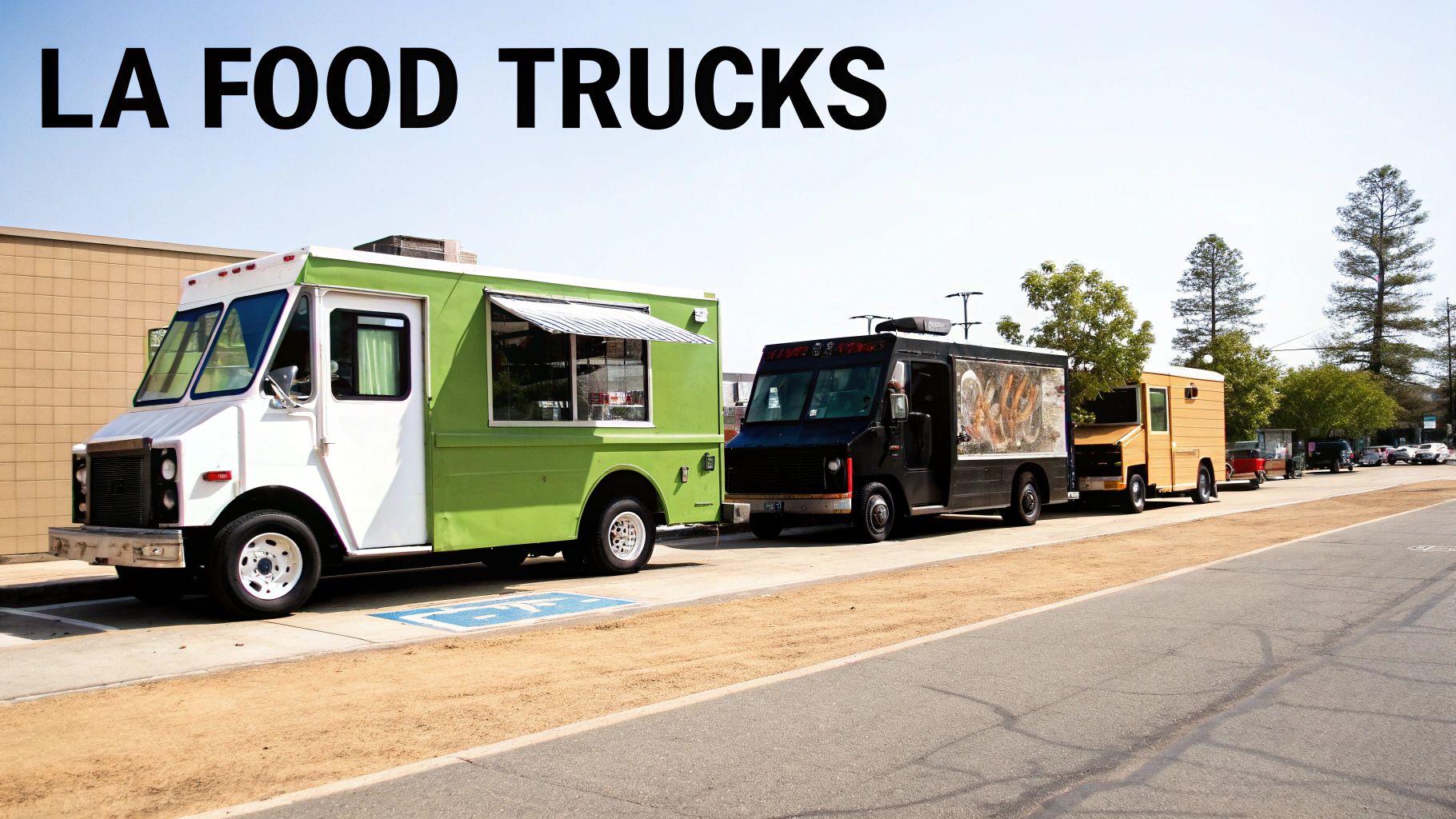
Los Angeles chefs draw on the city’s street-food heritage to make every inch count in their mobile kitchens and tight restaurant setups. They choose gear that fits snugly into narrow truck footprints without sacrificing performance.
Core gear often looks like this:
- Double griddle for high-volume grilling
- 3-door under-counter refrigerator to keep ingredients cold
- Stainless steel prep table for fast, sanitary work
On top of that, many add:
- A compact fryer for crispy flautas
- A refrigerated taco topper rail that stays within arm’s reach
This setup slides trays under service windows on an 8-foot truck, with side rails guiding each tray smoothly into the hands of hungry customers.
Korean BBQ Taco Truck Profile
Seoul BBQ Tacos works off a 7-foot chassis, blending Korean and Mexican flavors in every bite. They swapped a full-size oven for a portable charbroiler and a high-output vent hood, freeing up room for a more flexible cooking zone.
- 24-inch portable charbroiler as the cooking centerpiece
- Mini under-counter freezer dedicated to DIY kimchi storage
“Balancing gas and electrical loads was tricky, but it ensures consistent heat for both tortillas and bulgogi.”
– Truck Owner
Japanese Ramen Truck Profile
Tokyo Taste built a lean, 8-foot ramen concept focused on broth done right. Instead of a fryer, they installed a sous-vide immersion circulator to batch-prep stock days in advance.
- High-capacity induction burner for rapid noodle boiling
- Integrated stock pot rack with heat shields
- Countertop bain-marie to keep toppings and condiments organized
Their narrow layout staggers a hot zone, a cold prep drawer, and a service pass in sequence. A compact ventilation system whisks steam and aroma out cleanly.
Chinese Steam Bun Operation
Shanghai Steam House turns out fluffy baos from a vertical steamer stack. To manage both filling ingredients and dough proofing, they opted for a dual-zone chiller station over a standard fridge.
| Component | Required | Optional |
|---|---|---|
| Steamer Stack | Vertical multi-tier | Automated timer |
| Chiller Station | Dual-zone | Blast chiller |
| Prep Counter | 24-inch stainless | Folding shelf |
This design tucks three steamer tiers into less than 30 inches of counter space. The drawer beneath the top shelf serves as a humidity-controlled proofing chamber.
Thai Curry Truck Layout
Bangkok Curry Wheels balances saucy curries with a compact steam kettle for rice. A pull-out prep bin holds fresh garnishes, while a small freezer stores blocks of coconut milk.
- 10-quart steam kettle, 2.5 cu ft freezer, and a spice rack are must-haves
- Optional adds: dual hot wells for soups or fried sides, entry-level induction burner
By stacking shelves and bins vertically, they fit seamlessly into windows and side doors on a tight chassis.
Across these profiles, core equipment builds your operational backbone, while optional items let you get creative without overcrowding the truck. Brick-and-mortar Mexican taquerias in L.A. mirror this approach at scale, swapping under-counter units for upright refrigerators and adding display cases to serve hundreds of orders a day. For a fusion menu twist, consider how a rotating pizza oven could fit into a small footprint. Check out our guide on commercial rotating pizza ovens for sizing and layout tips.
Key Takeaways For Your Food Truck
Start with a sketch of your floor plan, borrowing layout cues from these case studies. Measure clearances for items like fryers and refrigerators before you commit.
Adjust capacity to match projected volumes:
- 200 tacos, 150 baos, or 100 curry bowls per day
Keep budget splits in mind:
- Refrigeration: 15–20%
- Cooking gear: 30–35%
- Custom build-outs: 20–25%
Consult LA vendors about lease-to-own plans and warranty options on key equipment. Then, label switches and hoses clearly to cut downtime during maintenance.
These five real-world profiles prove that targeted gear lists save space, cut costs, and serve authentic flavors. Armed with simple floor plans and dimension callouts, you’ll avoid expensive revisions down the road. Always plan ahead—and your truck will be ready to roll.
Conclusion And Downloadable Checklist
Now that you’ve mapped out every station—Hot Cooking, Cold Storage, Prep, Service, Power, and Smallwares—and balanced your budget lines and maintenance plan with L.A. code requirements, you’re primed to roll out a high-performance food truck or pop-up restaurant.
To hit the ground running, remember to carve out 15–20% of your equipment budget for refrigeration and freezers, and 30–35% for cooking gear. And don’t forget a yearly maintenance reserve of 3–7% of your total equipment spend; it’s the best hedge against surprise breakdowns and voided warranties.
Key Recap
-
Station Essentials
• Lay out zones in the order you cook to slash unnecessary steps
• Sneak an under-counter freezer right under your prep tables -
Budget Takeaways
• Stash away a 10% contingency fund for unexpected code upgrades
• Run the numbers on leasing vs. buying over a five-year stretch -
Maintenance Strategies
• Book compressor and hood inspections every quarter
• Always opt for OEM replacement parts to keep warranties intact -
L.A. Reminders
• Triple-compartment sinks and dedicated handwash stations are non-negotiable
• Ventilation hoods must comply with NFPA 96 standards
“A clear checklist is your last guard against missing items before build-out.” – Industry Expert
Download Your Fill-In Checklist
We’ve turned this guide into a printable, fillable PDF that organizes required and optional equipment by station. Inside, you’ll find space to tick off:
- Commercial refrigerators and freezers
- Prep tables and cutting boards
- Ventilation hoods and exhaust systems
- Generators (don’t forget your 5 kW backup)
- All the smallwares you need to serve L.A. crowds
Once you’ve marked off sinks, generators, and more, share your completed list with fabricators, plumbers, and inspectors. A final cross-check against the Los Angeles Health Department and fire codes will sidestep last-minute hiccups, extra fees, and permit delays.
For professional-grade equipment sourcing, visit Los Angeles Restaurant Equipment