

Your Guide to Essential Food Truck Cooking Equipment
Building out a food truck is about more than just picking appliances; it's about making a strategic choice of food truck cooking equipment built for life on the move. Your gear, from the workhorse griddle to the commercial fridges, is the real backbone of your business. It has a direct line to your workflow, how good your food tastes, and ultimately, how much money you make.
Building Your Mobile Kitchen From the Ground Up
Kicking off a food truck in Los Angeles is a wild culinary ride, but your journey to success really begins inside that truck. Think of this guide as your blueprint for setting up a mobile kitchen that can keep up with the city's relentless pace. Whether you're slinging Korean BBQ tacos in Koreatown or serving up Japanese-inspired hot dogs in Venice, having the right restaurant equipment is what makes it all possible.
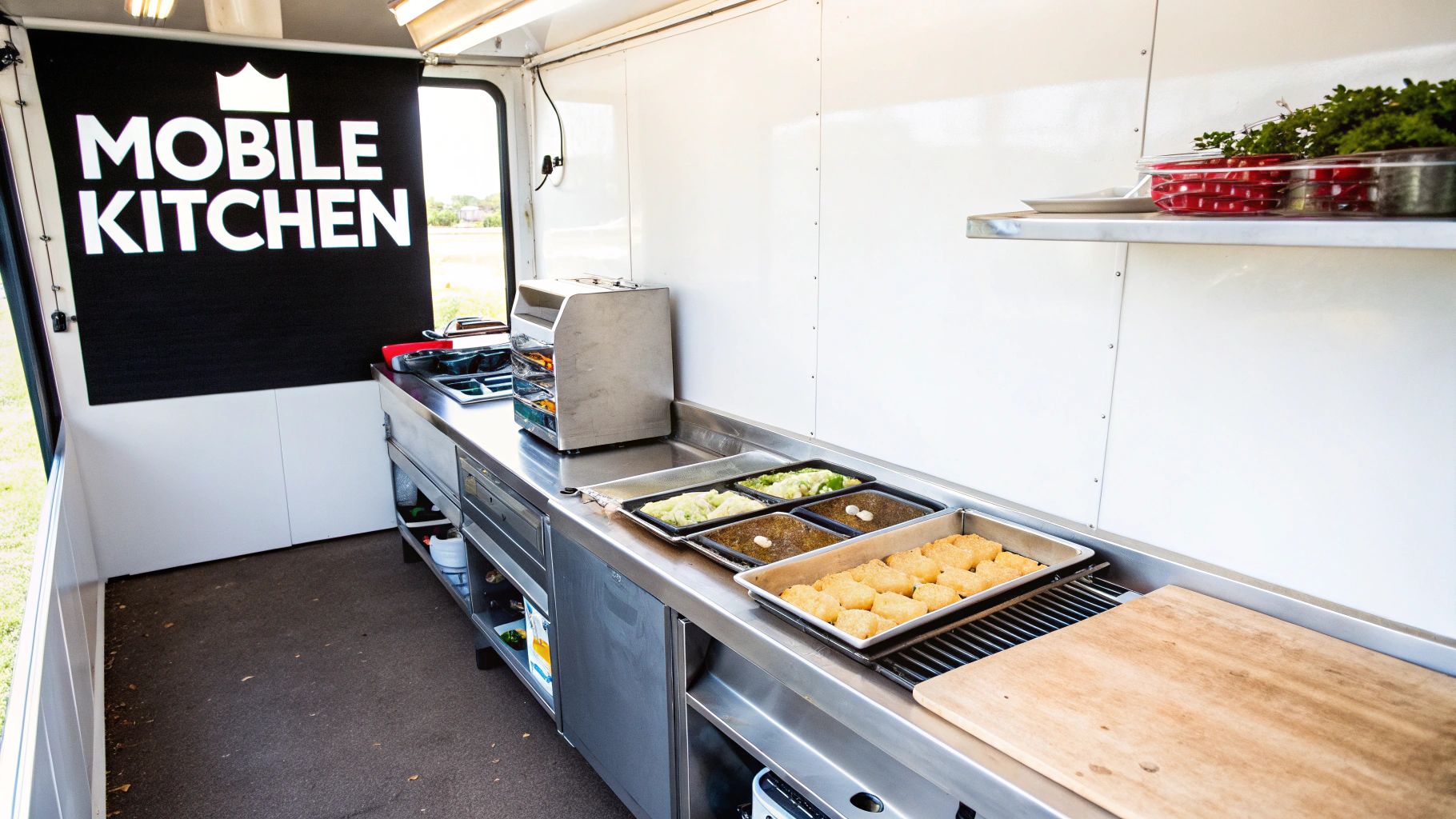
The first hurdle every single operator hits is trying to cram maximum cooking power into a tiny space. A food truck kitchen is an exercise in efficiency, usually clocking in at just 120 to 200 square feet. Every single inch has to count.
The Foundation of a Successful Mobile Kitchen
Don't think of your truck's interior as a cramped kitchen—see it as a high-performance, specialized workspace. Your success hinges on a few core principles that will guide every piece of equipment you buy. A well-designed mobile kitchen has to:
- Optimize Workflow: Your equipment layout should create a natural assembly line, moving from prep to cooking to the service window. This cuts down on wasted steps for your crew and gets orders out faster during that chaotic LA lunch rush.
- Manage Power Smartly: That generator can only handle so much. Choosing energy-efficient gear, like ENERGY STAR certified commercial freezers or induction cooktops, helps prevent blown fuses and keeps your fuel costs down.
- Ensure Compliance: Los Angeles County doesn't mess around with its health and safety codes. Every piece of equipment, especially your ventilation hoods and commercial refrigerators, has to meet strict standards to keep you in business and protect your customers.
A food truck is an exercise in intentional design. Unlike a traditional restaurant with ample storage and space, your truck must be a self-contained, high-output machine where every tool earns its place.
This guide is here to cut through the confusion of picking out equipment. We’ll break down the essential categories, from the high-heat heroes that define your menu—like griddles for Mexican street corn or deep fryers for Thai-style fried chicken—to the non-negotiable cold storage that keeps your expensive inventory safe. Our goal is to help you make smart investments that will pay off on the vibrant streets of LA.
Choosing Your High-Volume Hot Line Equipment
Think of the hot line as the engine room of your food truck. This is where the magic happens, where your ingredients become the signature dishes that get people talking all over Los Angeles. Picking the right food truck cooking equipment isn’t just about buying gear; it's about choosing compact, powerful models that can keep up with a relentless lunch rush without tripping your generator.
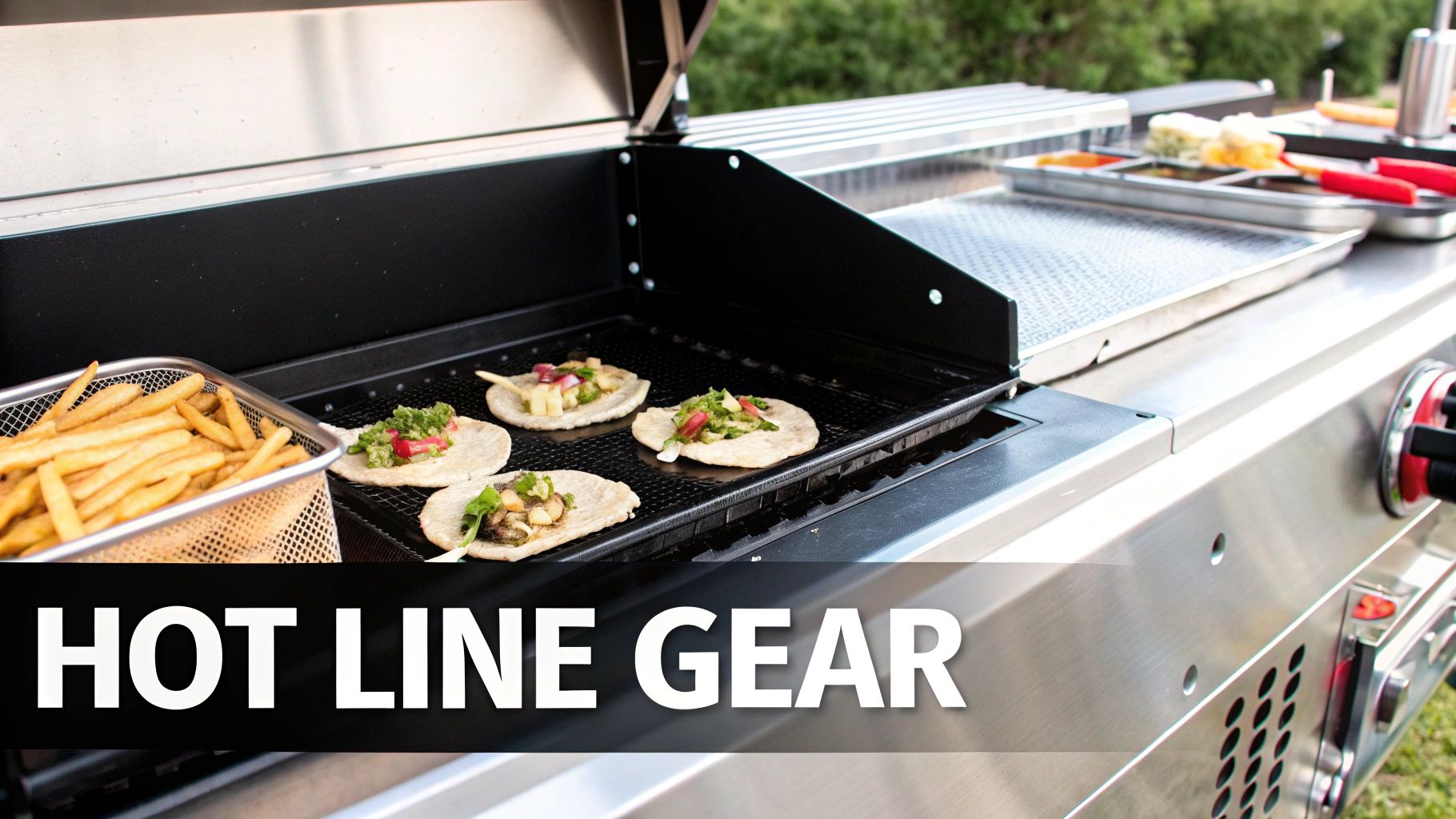
This is a strategic move that directly impacts your speed and quality. The global market for commercial cooking equipment is set to jump from USD 37.44 billion to USD 54.35 billion by 2032, and a huge part of that growth is coming from North America. Quick-service spots, especially mobile kitchens, are leading the charge. Why? Because customers want great food, fast. Food trucks thrive by packing that same efficiency into a small space, a perfect formula for the L.A. scene.
To help you get started, here's a look at the essential hot line equipment that powers some of LA's most popular food truck concepts.
Hot Line Equipment for Popular LA Food Truck Cuisines
| Equipment Type | Primary Use | Ideal LA Cuisine | Key Selection Factor |
|---|---|---|---|
| Commercial Griddle | Searing proteins, toasting buns, sautéing veggies, cooking pancakes | Mexican Tacos, Chinese Scallion Pancakes, Burgers | Multi-zone heating for versatility |
| Deep Fryer | Frying fries, chicken, onion rings, donuts, or tempura | Thai Fried Chicken, Japanese Tempura, Desserts | Fast temperature recovery for non-stop service |
| Charbroiler | Grilling meats and vegetables for a smoky, charred flavor | Korean BBQ, Japanese Yakitori, American Burgers | Radiant vs. lava rock style; ventilation capacity |
| Range/Stovetop | Boiling, simmering sauces, pan-frying small-batch items | Thai Curries, Soups, Italian Pasta | Compact footprint with powerful BTU output |
This table gives you a starting point, but let's dive deeper into the workhorses you'll be relying on day in and day out.
The Griddle: The Versatile Workhorse
For so many food trucks, the commercial griddle is the undisputed MVP. Picture a classic Los Angeles taco truck: the griddle is searing carne asada for authentic Mexican street food, warming tortillas, and grilling peppers and onions all at once. That's the power of a multi-zone griddle—it gives you the flexibility to cook delicate items on low heat while blasting proteins on high in a different section.
When you're shopping for a griddle, keep these things in mind:
- Size: A 36-inch model is a solid starting point. It offers plenty of cooking real estate for a busy service without hogging your entire counter.
- Material: Steel is the industry standard for a reason. It holds heat like a champ and is tough enough to handle constant scraping and flipping.
- Heat Source: Propane is the king for most trucks. It delivers the powerful, consistent heat you need to get that perfect sear every time.
The Deep Fryer: For Golden Perfection
Whether it's crispy fries for a gourmet burger concept or perfectly fried chicken for a Thai-inspired menu, a reliable deep fryer is a must-have. You'll want to look for countertop models designed specifically for mobile kitchens. These units are compact, heat up fast, and—most importantly—recover their temperature quickly after you drop in frozen food. That last part is critical for keeping the line moving.
A double-basket fryer can be a total game-changer, letting you cook two different things (like Japanese tempura vegetables and shrimp) without the flavors mingling. No matter what, make sure the fryer is NSF-certified. The LA County Department of Public Health requires it, and it's your guarantee that the equipment is built for safe, sanitary commercial use.
In a food truck, every piece of equipment must be a multi-tasker or an absolute specialist. There's no room for single-use gadgets or inefficient appliances. Your hot line gear must deliver maximum output for every square inch it occupies.
The Charbroiler: Capturing Smoky Flavor
For a lot of L.A. foodies, nothing beats that distinct, smoky char from a grill. A charbroiler is the heart and soul of trucks slinging Korean BBQ, Japanese yakitori, or classic American burgers. It creates a beautiful crust and a deep, smoky flavor that a flat-top griddle just can't touch. For a closer look, you can find a ton of info in our detailed guide to food truck grills.
Charbroilers come in a few different styles, like radiant and lava rock. Lava rock models are popular because they create extra smoke as drippings hit the hot rocks, infusing the food with more flavor, but they do require more cleaning. Beyond the grill itself, don't forget about your fuel. The type of fuel you pick can seriously impact flavor, so it's worth learning more about choosing charcoal for restaurant equipment. Whatever you choose, make absolutely sure your ventilation hood can handle the smoke and heat—it’s a matter of safety and staying compliant with fire codes.
Mastering Cold Storage in a Compact Space
In the fast-paced world of Los Angeles food trucks, solid cold storage isn't just a nice-to-have—it’s the absolute lifeline of your business. Your commercial refrigerators and freezers are the silent workhorses, making sure everything from your Korean bulgogi marinade to your Thai chili sauce stays fresh, safe, and ready to go. If your cooling fails, you’re not just risking food safety; you’re watching your profits melt away.
Think of your food truck's refrigeration as its immune system. A regular fridge from a big-box store just can't hang. It wasn't built for the constant vibrations of LA traffic or the blistering heat that builds up inside a truck on a sunny day. Commercial refrigerators and freezers, however, are built for this fight. They have powerful compressors and heavy-duty construction designed to handle the abuse and hold safe temperatures, no matter what.
Choosing Your Commercial Refrigeration
Picking the right cold storage is all about balancing what your menu demands with the tiny amount of space you actually have. You need restaurant equipment that’s both a beast at cooling and a master of space efficiency.
Here are the go-to options for LA food trucks:
- Under-Counter Refrigerators: These are the undisputed champions of saving space. They tuck right under your prep counters, giving you instant access to your most-used ingredients. This keeps your workflow moving and your service line humming.
- Sandwich and Salad Prep Tables: For a lot of menus, these are a total game-changer. They're a hybrid unit with refrigerated storage on the bottom and a chilled rail on top holding pans of ingredients. It’s your prep station and cold storage in one, perfect for building out Mexican tacos, burgers, or salads on the fly.
- Reach-In Refrigerators and Freezers: They take up more room, but a slim-profile reach-in is often a necessity for your bulk items. This is where you’ll stash extra proteins, backup Chinese sauces, and anything that doesn't need to be within arm's reach.
Your cold storage setup has a direct line to your service speed. When everything is organized and easy to grab, you spend less time hunting for ingredients and more time serving customers. In a short lunch rush, that’s how you make your money.
Calculating Your Cold Storage Needs
So, how much cold storage do you really need? Start with your menu and picture your busiest day ever. Make a list of every single perishable item and guess the maximum amount you'd need to get through a full service without running out. That number is your north star for choosing the size and type of units you buy.
In a food truck, every inch of space and every ingredient matters. Learning how to organize your fridge for less waste is a critical skill for keeping profits high and service efficient. Good organization means less spoilage and makes taking inventory a breeze.
Going for ENERGY STAR certified models is another smart play. Commercial refrigeration runs 24/7, making it one of the biggest power hogs on your generator. An energy-efficient unit will noticeably cut down on your fuel costs and take some strain off your whole power system. To get a better handle on what might work for you, it's worth learning more about the different undercounter refrigerator sizes out there. At the end of the day, the right mix of commercial refrigerators and freezers is what allows you to serve safe, top-quality food to every single customer.
Designing a Smart and Efficient Truck Layout
A killer menu is a great start, but the real secret to a fast, profitable, and low-stress food truck is the layout. It's not just about cramming appliances in; it’s about designing a mobile kitchen that functions like a well-oiled machine. A smart layout is all about creating a logical flow between your cooking, prep, and service stations to cut down on wasted movement and shave seconds off every ticket.
Think of your truck's interior as a carefully choreographed dance. The goal is simple: reduce the number of steps your crew takes between the refrigerator, the prep counter, and the hot line. Every single second you save adds up during a chaotic Los Angeles lunch rush, which directly translates to how many customers you can serve and, ultimately, how much money you make.
Getting this right is more important than ever. The U.S. food truck market is expected to hit USD 1.59 billion by 2031, and California is at the heart of that boom. This means operators in packed markets like L.A. have to fit professional-grade gear into seriously tight spaces. That's why mid-range trucks, typically 16 to 25 feet long, are so popular—they give you enough room for a full kitchen but are still nimble enough to navigate city streets.
Mapping Your Kitchen Workflow
Before you bolt down a single piece of food truck cooking equipment, grab a measuring tape and start sketching. The best layouts follow a straight, simple line from raw ingredients to the finished meal handed out the window.
- Cold Storage to Prep: Your under-counter commercial refrigerators and freezers should be right next to your prep station. This way, your team can grab what they need without having to walk through the cooking zone.
- Prep to Hot Line: The prep table needs to be adjacent to your griddle, fryer, and charbroiler. This creates a seamless handoff, moving from chopping veggies or forming burger patties straight to the heat.
- Hot Line to Service Window: Finally, your cooking station should be as close as possible to the service window. This ensures every plate gets to the customer piping hot and fresh.
Thinking through this flow helps you visualize exactly how your team will use the space you’ve designed.
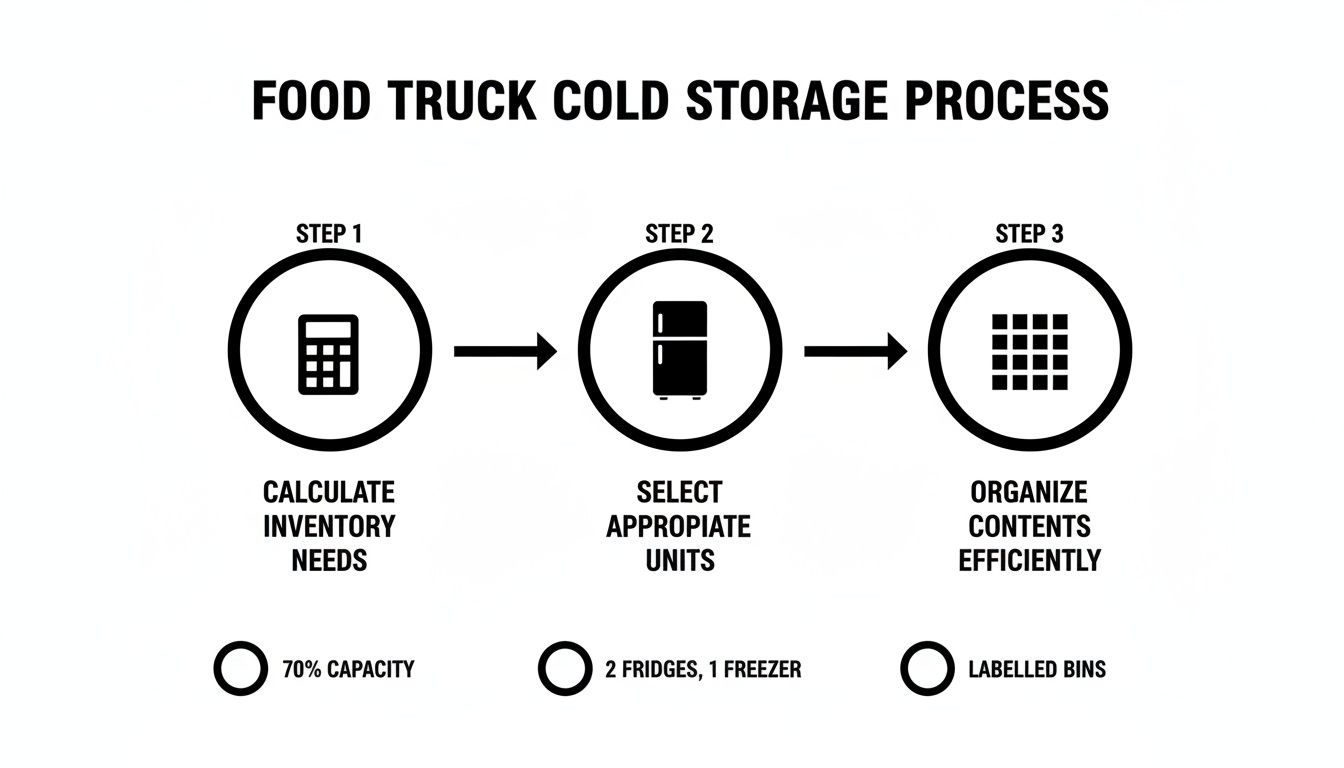
The process is straightforward: figure out what you need to store, pick the right units for the job, and organize them for pure efficiency.
The Big Three of Truck Utilities
Your layout is only as good as the systems that power it. Your power, gas, and ventilation are the lifeblood of your operation, and they have to be sized correctly to meet California’s tough health and fire codes.
- Power: Add up the total amps for all your electrical gear, from the commercial freezer to the blenders. Your generator needs to provide at least 20% more power than your peak load to prevent it from tripping during a rush.
- Gas (Propane): Tally up the total BTUs (British Thermal Units) for your gas appliances like the griddle and deep fryer. This number tells you what size and how many propane tanks you’ll need to get through a busy service without running out.
- Ventilation: Your ventilation hood is non-negotiable. It must extend at least six inches past your cooking equipment on all sides and have a fan powerful enough to pull out all the heat, smoke, and grease. This is one of the first things a Los Angeles fire inspector will check.
A well-planned layout does more than just organize your equipment; it creates a safer, less stressful, and more productive work environment. It's the invisible ingredient that separates struggling trucks from highly profitable ones.
Nailing your kitchen design from the very beginning saves you from expensive changes down the road and sets your truck up for high-volume service from day one. If you want to dive deeper into the nuts and bolts of kitchen ergonomics, our guide on commercial kitchen layout design has some great insights that work just as well for mobile kitchens as they do for traditional restaurants.
How to Budget and Finance Your Equipment
Outfitting your food truck with the right gear is easily one of the biggest checks you'll write, but a smart financial plan turns that hurdle into a strategic advantage. The first step is getting real about your budget. This isn't just a simple list of the big-ticket items like a griddle or freezer; it's a complete roadmap of every single cost.
A solid budget doesn't stop at the main cooking appliances. It needs to account for the smaller countertop units, all the essential smallwares like pans and utensils, and the costs for professional installation—a must for staying safe and compliant in Los Angeles. Always, and I mean always, build in a contingency fund of at least 10-15% of your total equipment cost. You’ll thank yourself later when something unexpected pops up.
Creating Your Food Truck Equipment Budget
To build a budget that actually works, start by breaking down your needs into categories. This is the best way to make sure you don't forget anything crucial, whether you're planning on serving up Thai curries or Korean BBQ tacos on the streets of LA.
- Primary Cooking Equipment: These are your workhorses—the charbroiler, griddle, and deep fryer. They're your biggest expenses, so spend time researching compact, high-efficiency models that can handle the rush.
- Cold Storage: You'll need to factor in commercial refrigerators and freezers. A common setup that works great is an under-counter unit for your main line and a slim reach-in for extra storage.
- Prep and Smallwares: This is everything from your stainless steel prep tables down to the mixing bowls, knives, and storage containers. These little costs add up fast, so list them out one by one.
- Installation and Permits: Set aside funds for a licensed pro to install your gas lines and ventilation hood. This isn't a place to cut corners; it’s a non-negotiable step for passing LA County health and fire inspections.
Smart Financing with Lease-To-Own Options
Once your budget is locked in, the next big question is how to pay for it all. Dropping all your startup capital on equipment right away can leave your bank account dangerously low for day-to-day operations. This is where financing options like lease-to-own programs become a game-changer for new food truck owners.
Think of leasing as a "pay-as-you-earn" model. Instead of a massive upfront cost, you make manageable monthly payments, allowing your new equipment to generate revenue and essentially pay for itself over time.
This approach gives you a few major advantages. It keeps your cash free for essentials like inventory, marketing, and payroll—all critical in the early days. It also helps you build business credit and can even offer tax benefits, since lease payments are often deductible as a business expense.
The global food truck market is set to hit USD 3.6 billion by 2030, and the U.S. is a huge part of that growth. For anyone operating in a hot market like Los Angeles, smart financing is key. Lease-to-own options free up the cash flow you need to invest in reliable, warrantied food truck cooking equipment that can handle high-volume sales at festivals and busy street corners. You can dig deeper into these numbers in this detailed food truck market report. By financing, you can start strong with top-tier gear without putting your financial stability at risk.
Choosing an Equipment Partner for Long-Term Success
Picking out your food truck cooking equipment is just the beginning. The real key to making money on the competitive streets of Los Angeles is long-term reliability. The supplier you choose is more than just a place to buy gear; they become a crucial partner in your business. A great partner doesn't just sell you a fryer—they provide the support that keeps your mobile kitchen humming when things inevitably go wrong.
Think about it: if your griddle dies in the middle of a lunch rush, that's not just an inconvenience. It's lost sales and a hit to your reputation. This is where a solid equipment partner really proves their worth, acting as a safety net that protects your investment and keeps expensive downtime to a minimum.
The Value of Warranties and Local Service
When you're comparing suppliers, don't just look at the price tag. Go straight to the warranty details. A strong warranty is your financial shield against surprise repair bills. For example, top brands will often provide comprehensive coverage, like two years on parts and labor and an extended five-year warranty on compressors for your commercial refrigerators and freezers.
For any food truck operator in LA, that kind of peace of mind is priceless. But a warranty is only as good as the service team behind it.
Choosing an equipment supplier is like picking a co-pilot for your business. You need someone who can help you navigate turbulence with speed and expertise, not just sell you the plane.
You absolutely need a partner with responsive customer support and access to a local, authorized service network. When a fryer stops working, you need a technician who can get to you fast, not someone stuck in traffic a hundred miles away. A strong local presence means repairs get done quickly, so you can get back to serving customers without missing a beat.
More Than Just a Transaction
The best suppliers in the Los Angeles area get the unique pressures of the food truck business. They step up and act as true partners by offering solutions that make your life easier from day one.
Look for a supplier that provides:
- Flexible Financing: Lease-to-own options can be a total lifeline for new trucks. They let you get high-quality, warrantied equipment without burning through all your startup cash, aligning your payments with the money you're bringing in.
- Streamlined Purchasing: Simple online ordering and clear invoicing save you a ton of time—time you can spend on your menu and your customers instead of paperwork.
- Logistical Support: Services like free freight delivery right to your commissary or build-out location take a massive operational headache off your plate.
At the end of the day, investing in quality restaurant equipment from a partner who has your back is one of the smartest moves you can make. It builds a strong foundation for your food business, setting you up to succeed in LA’s exciting culinary scene.
Frequently Asked Questions
Getting a food truck rolling in a competitive market like Los Angeles brings up a lot of questions. We get it. Here are some straightforward answers to the things new and veteran truck operators ask us most often.
What Is the Most Important Piece of Cooking Equipment for a New Food Truck?
Every menu is unique, but if you have to pick one MVP, it's the commercial griddle. A high-quality griddle is a true workhorse, and it's versatile enough to handle the incredible variety of food that people crave in L.A.
Think about it: you can sear carne asada for authentic Mexican food, flip burgers, cook up Chinese scallion pancakes, and toast buns all on the same surface. It gives you massive production power in a tiny footprint. Investing in a solid griddle means you can easily switch things up for the breakfast, lunch, or late-night crowds without a complete equipment overhaul.
A great griddle is the foundation of a flexible food truck. It allows you to pivot your menu to meet customer demand without needing to purchase new, specialized equipment.
How Do I Determine the Right Size Refrigerator for My Food Truck?
Getting your commercial refrigerators sized correctly is non-negotiable for food safety and just keeping your sanity during a rush. Start by figuring out your ingredient needs for your absolute busiest day. Map out your menu and be honest about the maximum amount of perishables you need to have on hand so you don't sell out.
A setup that works great for many Los Angeles food trucks is combining an under-counter refrigerator for the prep line with a larger, slim-profile reach-in unit for your backup stock. When in doubt, it’s always better to have a little extra space. Jamming a refrigerator full compromises airflow, which leads to hot spots and serious food safety risks.
Should I Buy New or Used Equipment for My LA Food Truck?
That low price tag on used equipment can be really tempting, but it’s a huge gamble for a mobile business. Used gear almost never comes with a warranty and has a much higher chance of breaking down—a total disaster when you have a line of hungry customers waiting.
New equipment from a trusted supplier, on the other hand, comes with solid warranties that protect your investment and let you sleep at night. For instance, brands like Atosa offer two years on parts and labor plus an extra five-year warranty on compressors.
Plus, financing options make new restaurant equipment totally accessible.
- Lease-to-own programs let you get top-tier equipment without killing your startup cash.
- The payments are structured to match your income, so the gear basically helps pay for itself.
- This keeps your cash free for essentials like inventory and marketing, all while you build your business credit.
In a business where reliability is everything, investing in new, warrantied equipment is just the smarter long-term play for succeeding in Los Angeles.
At Los Angeles Restaurant Equipment, we live and breathe the unique challenges of mobile kitchens. We offer competitively priced, professional-grade equipment backed by strong warranties and flexible financing to help your food truck win. Check out our complete catalog of Atosa commercial refrigerators, cooking stations, and prep tables at https://losangelesrestaurantequipment.com.