

Food Truck Health Inspection Checklist: 8 Keys to Master Your LA Review
For any Los Angeles food truck operator, the sight of a health inspector can be a source of intense anxiety. From the bustling streets of Downtown LA serving Korean BBQ tacos to the beachside boardwalks offering fresh Mexican seafood, success hinges not just on delicious recipes but on impeccable food safety. An 'A' grade posted on your window is more than a sticker; it's a testament to your commitment to quality and a crucial factor in building customer trust in a competitive market. A failed inspection can halt operations, damage your reputation, and lead to significant financial loss.
This comprehensive food truck health inspection checklist is designed specifically to demystify the process for LA's mobile food vendors. We will break down the 8 critical areas inspectors scrutinize, providing a clear and actionable roadmap to compliance. This guide moves beyond generic advice, offering practical steps you can implement immediately.
Whether you're ensuring your commercial refrigerators and Atosa freezers maintain precise temperatures for Japanese-style sushi or verifying your team's hygiene protocols for serving Thai street food, this checklist is your definitive guide. It covers everything from temperature control and cross-contamination prevention to waste management and proper documentation. Consider this your go-to resource for ensuring your mobile kitchen is always inspection-ready, protecting both your business and your customers.
1. Temperature Control and Monitoring (Cold Storage Equipment)
Maintaining precise temperature control in your cold storage units is non-negotiable for passing a health inspection and ensuring food safety. This critical point on any food truck health inspection checklist verifies that your refrigeration and freezer units are operating at temperatures that inhibit harmful bacterial growth. For Los Angeles food trucks, this means all refrigerated items must be held at or below 41°F (5°C), and all frozen goods must be kept at 0°F (-18°C) or colder.
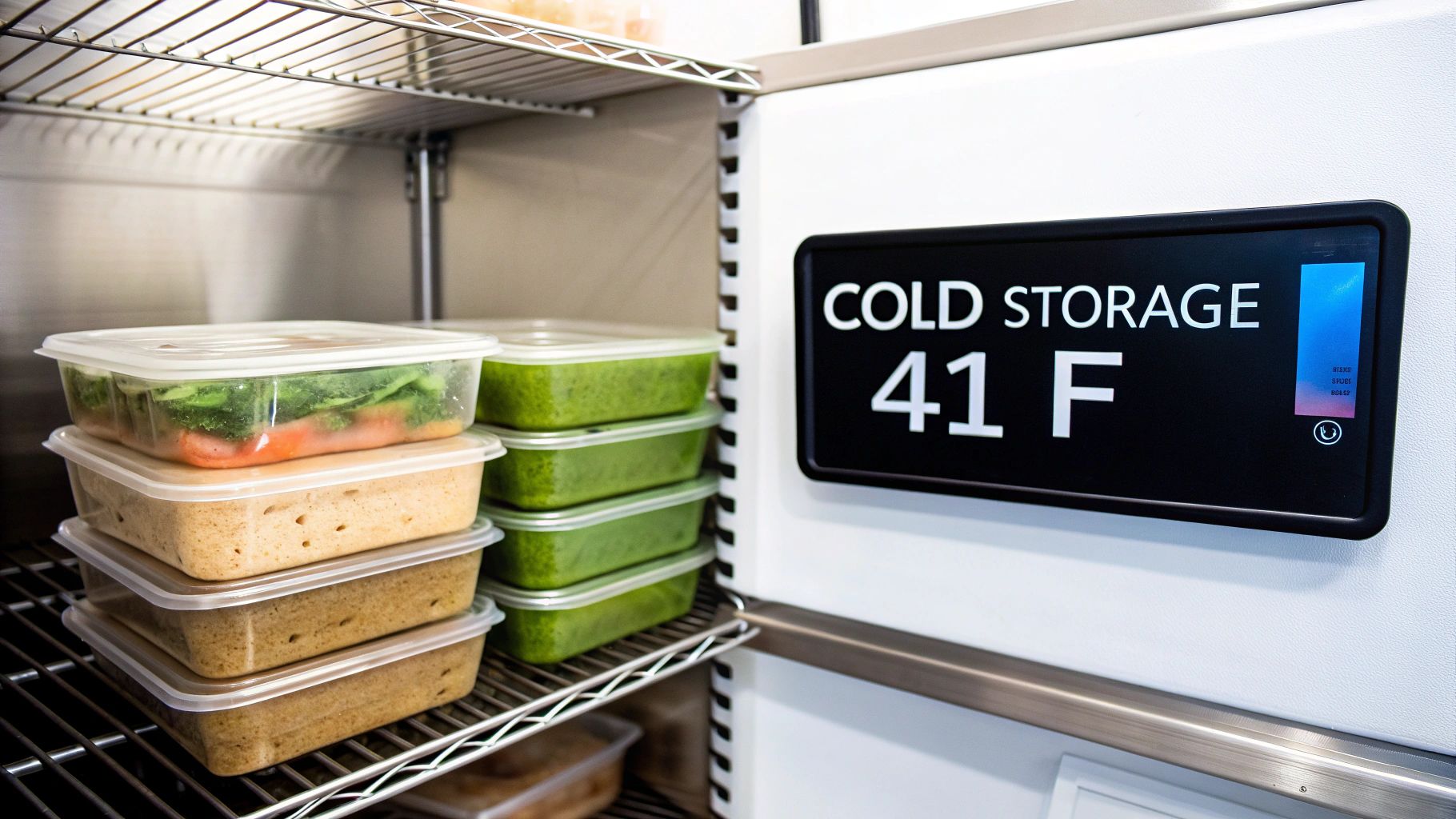
The mobile nature of a food truck introduces unique challenges, such as fluctuating ambient temperatures and vibrations from travel, which can impact equipment performance. Consistent monitoring is the only way to guarantee your ingredients, whether it's fresh salsa for a Mexican taco truck or marinated beef for a Korean BBQ concept, remain safe for consumption.
Why It's a Top Priority
Failing to maintain proper temperatures is one of the fastest ways to receive a critical violation during a health inspection. It directly correlates with the risk of foodborne illness. Health inspectors will check the internal temperature of your food products and the ambient temperature of your refrigerators and freezers. Without proper logs and functioning equipment, you risk immediate closure. A Los Angeles food truck specializing in Japanese cuisine, for instance, must prove its fresh fish is consistently stored below 41°F to prevent dangerous pathogen growth.
Actionable Tips for Compliance
To ensure your cold storage is always inspection-ready, implement these practices:
- Install Digital Thermometers: Place calibrated digital thermometers inside each cold storage unit for accurate, at-a-glance readings. Don't rely solely on the unit's built-in display.
- Maintain Daily Temperature Logs: Create a simple chart where staff record the temperature of each refrigerator and freezer at the beginning, middle, and end of every shift. This log serves as crucial evidence of due diligence for inspectors.
- Ensure Proper Air Circulation: Avoid over-packing units. Leave space between containers and walls to allow cold air to circulate freely, preventing warm spots.
- Schedule Routine Maintenance: Have a qualified technician service your refrigeration equipment every six months. For reliable units well-suited to the demands of a mobile kitchen, many operators in Los Angeles choose brands like Atosa, known for their durability. Investing in energy-efficient models can also offer long-term savings. You can find more information about selecting the right equipment by reading about energy-efficient commercial refrigerators.
2. Food Storage and Separation (Cross-Contamination Prevention)
Proper food storage and separation are foundational pillars of a successful health inspection, directly addressing the critical risk of cross-contamination. This point on any food truck health inspection checklist focuses on how you organize raw and ready-to-eat (RTE) foods to prevent harmful bacteria from transferring. For food trucks in Los Angeles, inspectors meticulously check that there is a clear and consistent hierarchy in all storage units, from prep tables to refrigerators.
The tight quarters of a mobile kitchen make this challenge even more acute. A Mexican taco truck, for instance, must have a system that keeps raw carne asada completely separate from fresh cilantro and onions. Without disciplined organization, the risk of contaminating RTE ingredients with pathogens from raw meat, poultry, or seafood is dangerously high.
Why It's a Top Priority
Cross-contamination is a leading cause of foodborne illness and a major red flag for health inspectors. A single instance of raw chicken drippings landing on salad greens can lead to an immediate critical violation and potential closure. Inspectors will verify your storage hierarchy, the use of designated containers, and the separation of food types during preparation. Food trucks in the Los Angeles County Green Star Program are recognized for their exemplary food safety records, which always include flawless cross-contamination prevention protocols. This isn't just about passing an inspection; it's about protecting your customers and your reputation.
Actionable Tips for Compliance
To master food storage and separation in your mobile kitchen, implement these non-negotiable practices:
- Establish a Clear Storage Hierarchy: Always store food in this order from top to bottom: ready-to-eat foods, whole seafood, whole cuts of beef and pork, ground meats and fish, and whole and ground poultry on the bottom shelf.
- Use Designated and Labeled Containers: Invest in food-grade, sealed containers. Label every container with the item's name, the date it was received, and its use-by date to ensure a strict First-In, First-Out (FIFO) system.
- Create Physical Separation: Use separate cutting boards and utensils for different food categories. Many operations adopt a color-coded system: red for raw meat, green for produce, blue for seafood, and so on.
- Optimize Your Prep Stations: Utilize equipment designed for separation. For example, Atosa sandwich and pizza prep tables offer multiple refrigerated compartments, allowing you to keep raw proteins, vegetables, and cheeses organized and isolated within the same unit. This built-in organization is invaluable in a compact space.
- Conduct Regular Staff Training: Train every team member on your cross-contamination and FIFO policies during onboarding and hold regular refreshers. Consistent adherence is key to preventing mistakes.
3. Personal Hygiene and Hand Washing Stations
Impeccable personal hygiene and properly equipped hand washing stations are foundational pillars of food safety, making them a high-priority item on any food truck health inspection checklist. Inspectors verify not just the presence of a dedicated hand washing sink but also that it's fully stocked and easily accessible to all staff. For Los Angeles food trucks, this means a separate station with hot and cold running water, soap, and single-use towels, distinct from any food preparation or dishwashing sinks.
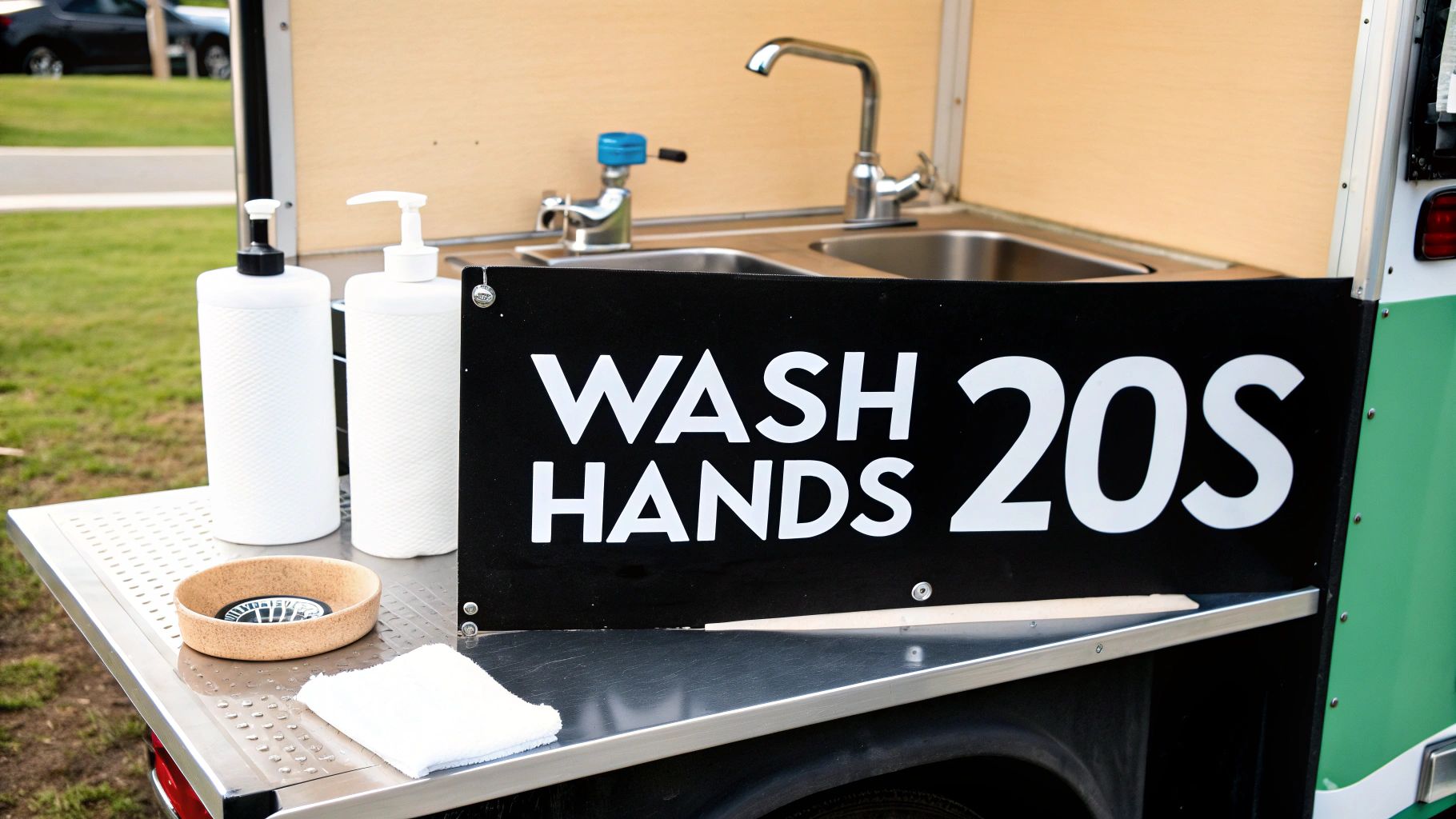
The close quarters of a mobile kitchen make cross-contamination an elevated risk. A dedicated, well-maintained hand washing station is the primary defense against the spread of pathogens from hands to food. Whether you're assembling Mexican tacos or hand-rolling Japanese sushi, clean hands are a non-negotiable component of the food preparation process.
Why It's a Top Priority
A missing or improperly supplied hand washing station is a critical violation that can lead to an immediate shutdown of your food truck. Health inspectors view this as a direct threat to public health. They will check that the water reaches an adequate temperature (typically 100°F to 110°F), that soap and paper towels are available, and that staff understands when and how to wash their hands properly. For a Korean BBQ truck in LA, for example, staff must wash hands between handling raw marinated meats and assembling customer orders to prevent cross-contamination.
Actionable Tips for Compliance
To ensure your hygiene practices exceed health department standards, implement these procedures:
- Install a Dedicated Sink: Your food truck must have an NSF-certified hand washing sink used exclusively for this purpose. It cannot be used for rinsing food or washing utensils.
- Post Clear Signage: Place a visible sign above the hand washing station instructing staff on proper hand washing techniques. The sign should remind them to scrub with soap for at least 20 seconds.
- Keep It Fully Stocked: Always maintain a full supply of liquid soap in a dispenser, single-use paper towels, and a trash receptacle for used towels. A nail brush should also be available.
- Mandate and Monitor Hand Washing: Train staff to wash hands at critical points: before starting a shift, after handling raw food, after using the restroom, after touching their face or hair, and after handling money.
- Ensure Proper Water Temperature: Equip your truck with a water heater capable of consistently delivering hot water. Regular checks of the water temperature and plumbing system are essential to avoid violations.
- Maintain Staff Hygiene: Enforce a strict dress code that includes clean uniforms, aprons, and effective hair restraints like hats or hairnets. This demonstrates a comprehensive approach to food safety.
4. Cooking and Time-Temperature Controls
Properly cooking food to safe internal temperatures is a fundamental pillar of food safety, making it a heavily scrutinized item on any food truck health inspection checklist. This process involves using a calibrated thermometer to verify that potentially hazardous foods reach a temperature sufficient to destroy harmful pathogens. For Los Angeles food trucks, specific minimum internal temperatures are mandated: 165°F (74°C) for poultry, 160°F (71°C) for ground meats, and 145°F (63°C) for seafood and whole cuts of beef or pork.
The tight quarters of a food truck kitchen demand precision and reliable equipment. Whether you're a Mexican taco truck grilling carne asada or a Thai food truck searing chicken satay, achieving and verifying these temperatures is a non-negotiable step to prevent foodborne illness and pass your inspection with flying colors. Once cooked, hot foods must be held at or above 135°F (57°C) until served.
Why It's a Top Priority
Improper cooking and holding temperatures are critical violations that can lead to immediate health risks and severe inspection penalties, including suspension of your permit. Health inspectors will use their own calibrated thermometers to check the internal temperature of your cooked foods, both on the line and in hot holding units. A Korean BBQ food truck in Los Angeles, for example, must not only prove its brisket reached a safe internal temperature but also that it's being held consistently above 135°F in a warming cabinet. Failure to do so indicates a breakdown in food safety protocols.
Actionable Tips for Compliance
To ensure every dish you serve is cooked safely and held correctly, integrate these essential practices into your daily operations:
- Calibrate Thermometers Daily: Before every shift, calibrate your food thermometers using the ice water method (32°F or 0°C) and the boiling water method (212°F or 100°C at sea level). This ensures your readings are accurate.
- Use the Right Tools: Equip your staff with reliable, instant-read digital thermometers. Train them on proper technique: inserting the probe into the thickest part of the food, avoiding contact with bone or fat.
- Maintain Cooking and Holding Logs: Document the final cooking temperature of batches of high-risk items. Similarly, log the temperature of foods in your hot holding units every two hours to prove they remain above the 135°F threshold.
- Invest in Precise Equipment: High-quality cooking equipment is crucial for consistent results. Atosa ranges and griddles offer precise temperature controls that help chefs consistently hit their target temperatures, reducing the risk of undercooking.
- Create Visual Aids: Post charts near cooking stations that clearly display the required minimum internal temperatures for all menu items. This serves as a constant reminder for your culinary team.
5. Cleaning and Sanitization Protocols
A spotless kitchen is the foundation of food safety, and for a food truck, it's a direct reflection of your commitment to quality. This point on the food truck health inspection checklist ensures that all food contact surfaces, equipment, and utensils are meticulously cleaned and sanitized using approved procedures. In Los Angeles, inspectors pay close attention to the visible cleanliness of your truck, from cutting boards to countertops, as it's a primary defense against cross-contamination and foodborne pathogens.
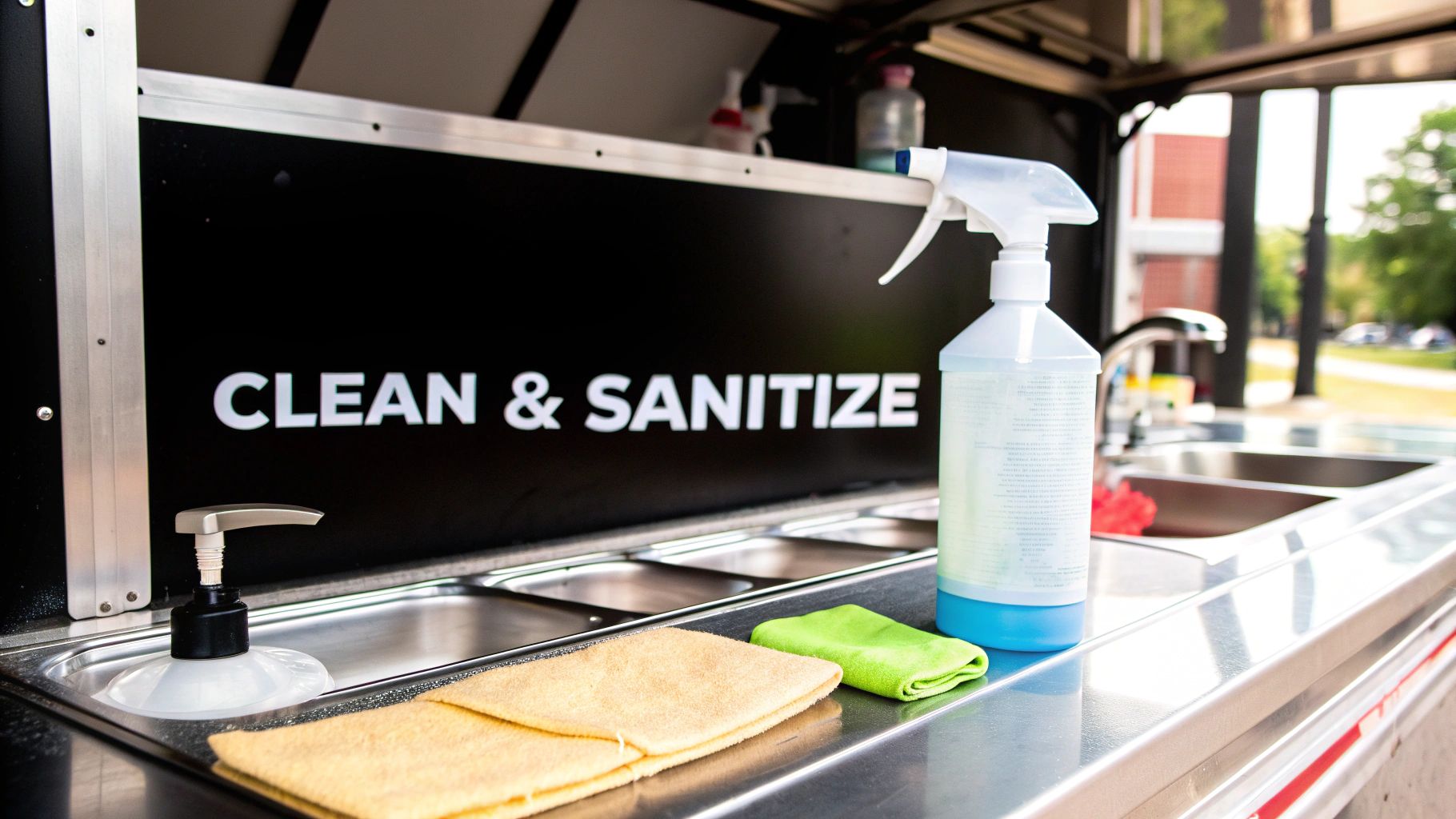
Food contact surfaces must be cleaned after each use and especially between handling different food types, like switching from raw chicken to fresh vegetables. Non-food contact surfaces also require regular cleaning to maintain overall sanitary conditions. A key aspect of food truck hygiene, and often misunderstood, is understanding the fundamental difference between cleaning and sanitizing; cleaning removes visible grime, while sanitizing reduces microorganisms to safe levels.
Why It's a Top Priority
Neglecting cleaning and sanitization protocols is a major red flag for health inspectors and can lead to immediate critical violations. The high-volume, fast-paced environment of a food truck makes it easy for bacteria to spread if proper procedures aren't followed. Whether you're running a Thai food truck handling multiple fresh herbs, a Chinese food truck with complex sauces, or a Mexican food concept working with various proteins, documented cleaning schedules are essential proof of your safety measures.
Actionable Tips for Compliance
To ensure your cleaning and sanitization practices meet and exceed health department standards, integrate these steps into your daily operations:
- Implement a Strict Cleaning Schedule: Create and post a schedule detailing what needs to be cleaned, when, and by whom. High-touch surfaces should be sanitized hourly, while prep surfaces must be cleaned between food types.
- Master the Three-Compartment Sink: Follow the correct wash-rinse-sanitize sequence. This involves using hot soapy water (at least 110°F), a clean water rinse, and a chemical sanitizer at the proper concentration. You can find detailed guidance by reviewing the specifics of 3 compartment sink requirements.
- Verify Sanitizer Concentration: Regularly use test strips to confirm your chemical sanitizer is at the correct strength, typically 200-400 ppm for chlorine-based solutions.
- Use Easy-to-Clean Equipment: Invest in NSF-certified equipment from brands like Atosa, designed with smooth surfaces and removable parts that simplify deep cleaning.
- Maintain Detailed Logs: Keep a daily log where staff sign off on completed cleaning tasks. This documentation is invaluable during a health inspection.
- Conduct Weekly Deep Cleans: Schedule a weekly deep clean to address areas like refrigerator coils, floor drains, and exhaust hoods that are not part of the daily routine.
6. Waste Management and Pest Control
Effective waste management and pest control are foundational elements of a sanitary operation and a non-negotiable part of any food truck health inspection checklist. This involves the proper containment and disposal of all garbage, grease, and wastewater, coupled with proactive measures to prevent pests. For Los Angeles food trucks, inspectors from the Department of Public Health will rigorously check for any signs of infestation or improper waste handling, which can lead to immediate closure.
The compact environment of a food truck makes it particularly vulnerable to pest issues if waste is not managed meticulously. Odors from overflowing trash or improperly disposed grease can attract rodents and insects, creating a significant health hazard and a critical violation waiting to happen. Whether you’re running a Thai food truck with fragrant ingredients or a Mexican dessert truck with sweet syrups, a robust system is essential.
Why It's a Top Priority
Neglecting waste management is a direct invitation to pests and a clear sign of poor operational standards to a health inspector. A food truck found with evidence of rodents or cockroaches faces an automatic shutdown. Beyond inspections, improper waste disposal can lead to foul odors, customer complaints, and environmental fines. Major restaurant brands invest heavily in integrated pest management (IPM) precisely because they understand that prevention is far more effective and less costly than dealing with an active infestation.
Actionable Tips for Compliance
To keep your mobile kitchen clean, compliant, and pest-free, implement these critical practices:
- Use Sealed Containers: All trash and recycling bins must have tight-fitting, self-closing lids to contain odors and block pest access.
- Establish a Disposal Schedule: Partner with a licensed waste management company familiar with food truck needs for daily or frequent removal. Never let trash overflow.
- Manage Grease and Oil Correctly: Install and regularly maintain a grease trap or interceptor as required by local regulations. To maintain hygiene and comply with health regulations, understanding proper commercial kitchen oil disposal best practices is crucial for preventing plumbing issues and environmental contamination.
- Implement Integrated Pest Management (IPM): Contract with a professional pest control service for regular inspections and preventative treatments. Keep detailed logs of every service visit as proof of due diligence for inspectors.
- Seal All Entry Points: Regularly inspect your truck for any gaps, cracks, or holes in the walls, floors, and around plumbing or electrical conduits. Seal them immediately to deny pests entry.
- Train Your Staff: Ensure your team understands the importance of cleaning spills immediately, not leaving food sources exposed, and keeping storage areas clean and organized to eliminate potential pest harborage areas.
7. Equipment Maintenance and Food Contact Surface Integrity
Ensuring all equipment is in excellent condition and that food contact surfaces are safe is a fundamental requirement on any food truck health inspection checklist. This point covers the integrity of your equipment, from commercial refrigerators to cutting boards, verifying they are well-maintained, free of damage, and constructed from appropriate materials. For food trucks in Los Angeles, this means all food contact surfaces must be smooth, non-absorbent, non-toxic, and easily cleanable, and equipment should ideally be NSF-certified.
The harsh environment of a food truck, with constant movement and vibrations, accelerates wear and tear. A small crack in a prep counter or a patch of rust inside a commercial freezer can become a breeding ground for bacteria, leading to cross-contamination and significant health risks. A Thai food truck, for example, must ensure its stainless-steel prep surfaces are free from deep scratches where curry paste or raw chicken residue could accumulate.
Why It's a Top Priority
Damaged or improperly maintained equipment is a red flag for health inspectors, signaling potential contamination hazards. They will meticulously examine your gear for rust, corrosion, broken seals, and other defects that could compromise food safety. Using non-commercial or damaged restaurant equipment can result in immediate violations. Los Angeles health inspectors frequently cite food trucks for using rusted shelving or refrigeration units with deteriorating gaskets, which fail to maintain safe temperatures and harbor mold. Major restaurant chains use exclusively NSF-certified equipment and keep detailed service records to avoid these issues.
Actionable Tips for Compliance
To keep your equipment in top shape and ready for inspection, implement these best practices:
- Invest in NSF-Certified Equipment: Purchase only commercial-grade, NSF-certified restaurant equipment. Brands like Atosa design their products to meet these standards and withstand the demanding conditions of a mobile kitchen.
- Establish a Maintenance Schedule: Create a preventative maintenance plan with daily, weekly, and monthly checks. This includes inspecting seals, calibrating thermometers, and cleaning condenser coils on all commercial refrigerators and freezers.
- Keep Detailed Logs: Maintain a logbook for all restaurant equipment, documenting maintenance checks, repairs, and part replacements. This provides inspectors with clear evidence of your commitment to safety.
- Address Damage Immediately: Promptly repair or replace any equipment showing signs of rust, corrosion, or physical damage. Don't wait for an inspection to fix a known problem.
- Train Staff on Proper Use: Teach your team how to operate and clean equipment correctly to prevent damage and extend its lifespan.
- Upgrade Strategically: As older equipment becomes unreliable, consider upgrading. Programs like lease-to-own financing can make it easier to acquire new, compliant equipment without a large upfront investment. You can explore these options to ensure your truck is always outfitted with reliable gear.
8. Permits, Licenses, Documentation, Water Supply, and Wastewater Management
Proper documentation and compliant water systems are the foundational pillars of a legally operating food truck. This point on the food truck health inspection checklist ensures you have all required permits, licenses, and records readily available, alongside a safe, potable water supply and a sanitary wastewater disposal system. For Los Angeles food trucks, this means navigating a complex web of city and county requirements, from health permits and business licenses to fire department approvals and specific commissary agreements.
The mobility of a food truck doesn't exempt it from the same stringent health and safety standards as a brick-and-mortar restaurant. In fact, it adds layers of complexity, as your water and waste systems must be self-contained and function flawlessly on the go. An inspector will verify that every piece of paper is current and that your water and wastewater systems are designed and maintained to prevent contamination.
Why It's a Top Priority
Operating without the correct permits or a non-compliant water system is a surefire way to get shut down on the spot. These are considered critical violations because they pose a direct and immediate threat to public health. A Mexican taco truck in East Los Angeles without a valid health permit or one that improperly disposes of its greywater into a storm drain faces severe fines and immediate suspension of operations. Inspectors will meticulously review your paperwork and scrutinize your plumbing, from the water tank to the disposal logs.
Actionable Tips for Compliance
To ensure your documentation and water systems are always inspection-ready, implement these practices:
- Create a Permit Binder: Keep a clearly organized binder on the truck at all times containing hard copies of your Mobile Food Facility permit, business license, fire clearance, staff Food Handler Cards (or ServSafe certifications), and your commissary agreement.
- Document Everything: Maintain daily logs for wastewater disposal, potable water refills, and any water system maintenance or cleaning. This documentation demonstrates your commitment to safe practices.
- Use NSF-Certified Equipment: Ensure your water tanks, pumps, and hoses are all NSF-certified and food-grade. Never use a common garden hose to fill your potable water tank, as it can leach harmful chemicals.
- Maintain Water Temperature: Your system must be capable of providing a continuous supply of hot water at a minimum of 120°F (49°C) for proper warewashing and sanitation.
- Establish Proper Disposal Protocols: Have a formal agreement with a licensed commissary or other approved facility for the legal disposal of greywater and grease. Keep receipts and logs as proof of compliance. For a seamless setup, understanding the specifics of your system is crucial; you can find more information about the requirements for a compliant setup by reading about commercial water line installation.
8-Point Food Truck Health Inspection Comparison
| Item | Implementation Complexity 🔄 | Resource & Efficiency ⚡ | Expected Effectiveness ⭐ | Results / Compliance 📊 | Ideal Use Cases | Practical Tips 💡 |
|---|---|---|---|---|---|---|
| Temperature Control and Monitoring (Cold Storage Equipment) | Moderate — install units, alarms, calibration | High equipment & energy cost; continuous power needed | Very high — prevents bacterial growth and spoilage | Strong compliance (keep ≤41°F refrigeration, 0°F freezer) | Mobile food trucks, catering, high-volume cold storage | Use digital thermometers, daily logs, backup cooling, biannual maintenance |
| Food Storage and Separation (Cross-Contamination Prevention) | Low–Moderate — reorganize layout, train staff | Low capital; requires space and color-coded supplies | Very high — major barrier to cross-contamination | Improves inventory control; reduces contamination incidents | Small/mobile kitchens; multi-item prep lines | Implement FIFO, label containers, separate shelves, color-code tools |
| Personal Hygiene and Hand Washing Stations | Moderate — plumbing and fixture installation in vans | Moderate: water heater, soap/towels, dedicated space | Very high — directly reduces pathogen transmission | Meets CA/L.A. health regs; avoids immediate citations | All food operations; mandatory for mobile units | Install NSF stations, post signs, maintain supplies, train staff monthly |
| Cooking and Time-Temperature Controls | Moderate — equip with calibrated tools and holding units | Moderate equipment & energy needs; thermometer upkeep | Very high — kills pathogens when temps met | Ensures safe menu items; legal hot-holding (≥135°F) | Operations cooking meats, poultry, seafood | Calibrate thermometers daily, keep logs, use instant-read devices |
| Cleaning and Sanitization Protocols | Moderate — schedule procedures, sinks, chemicals | Moderate recurring cost: sanitizers, labor, sinks | High — removes residues and pathogens from surfaces | Improves inspection scores; lowers contamination risk | All food operations; high-touch prep areas | Use three-compartment sink, test strips, hourly schedules, detailed logs |
| Waste Management and Pest Control | Moderate — service contracts; grease trap setup | Moderate to high: waste removal, pest treatments, space | High when maintained — prevents infestations & contamination | Reduces citations, odors; meets environmental regs | Urban food trucks; high-volume or long-shift operations | Use sealed lids, licensed waste partners, scheduled grease pumping |
| Equipment Maintenance & Surface Integrity | Moderate–High — preventive maintenance programs | High initial cost for NSF gear; ongoing service fees | High — prevents physical contamination and equipment failure | Extends equipment life; reduces emergency repairs and citations | High-volume or long-running kitchens, mobile fleets | Buy NSF-certified gear, keep service logs, promptly repair damage |
| Permits, Licenses, Water & Wastewater Management | High — multi-agency approvals and ongoing renewals | High time and cost: permits, water systems, insurance | Critical — required for legal operation and safety | Legal authorization; access to locations; inspection readiness | New operators; any truck operating in regulated jurisdictions | Apply early (30–60 days), keep permits onboard, use NSF water systems, schedule renewals |
From Checklist to Confidence: Equipping Your LA Food Truck for Success
The journey from a promising food truck concept to a beloved Los Angeles staple is paved with more than just great recipes; it's built on a foundation of trust, safety, and operational excellence. This comprehensive food truck health inspection checklist is not merely a tool for passing a single inspection. It is a blueprint for embedding a culture of food safety into the very DNA of your mobile kitchen. Moving beyond the stress of a one-time audit to a state of constant readiness transforms how you operate, empowering you to serve your customers with absolute confidence.
The Shift from Reactive to Proactive Food Safety
The key takeaway from our detailed breakdown is the essential shift from a reactive, pre-inspection scramble to a proactive, daily commitment. You didn’t get into the LA food scene to spend your days worrying about health codes. You’re here to perfect that Mexican al pastor taco, innovate that Japanese sushi burrito, or serve up the most authentic Thai green curry on four wheels. Integrating these checklist items into your routine frees you to focus on your culinary passion.
Think of it this way:
- Consistent Temperature Logs: These are not just tedious paperwork. They are the ongoing story of your food's safety, a crucial narrative that protects both your customers and your business from the risk of foodborne illness.
- Organized Documentation: Having your permits, licenses, and HACCP plan readily accessible isn’t just about satisfying an inspector. It’s a sign of a well-managed, professional operation that takes its responsibilities seriously.
- Daily Sanitation Schedules: A rigorously followed cleaning protocol does more than prevent violations. It maintains the integrity of your restaurant equipment, creates a safer working environment for your staff, and communicates a standard of quality to every customer who peeks inside your truck.
Your Equipment: The Unsung Hero of Health Code Compliance
Throughout this guide, a consistent theme has emerged: your restaurant equipment is your greatest ally in maintaining compliance. It is nearly impossible to pass an LA County health inspection with faulty or non-compliant equipment. A commercial refrigerator that can’t hold its temperature below 41°F is a critical violation waiting to happen. A prep surface with cracks and crevices is a breeding ground for bacteria, no matter how often you sanitize it.
Investing in reliable, NSF-certified restaurant equipment is a direct investment in your truck’s success and longevity. High-quality Atosa freezers that guarantee stable temperatures, stainless steel prep tables that are simple to clean and sanitize, and efficient cooking equipment that heats food to safe internal temperatures are not expenses; they are essential components of your food safety system. They make following your food truck health inspection checklist easier, more efficient, and far more effective.
Serving Los Angeles with Pride and Assurance
Ultimately, mastering the health inspection process is about more than avoiding fines or shutdowns. It’s about honoring the trust your customers place in you every time they order. In a competitive market like Los Angeles, your reputation for quality and safety is your most valuable asset. By transforming this checklist from a document into a daily discipline, you build a resilient business prepared for any challenge. You equip your team with the knowledge and tools they need to excel, ensuring that every dish you serve, from Koreatown to the Westside, is as safe as it is delicious. Operate with the peace of mind that comes from knowing you’re not just ready for an inspection, you’re ready for success.
Are you looking to upgrade your mobile kitchen to meet LA’s rigorous standards? Los Angeles Restaurant Equipment offers a wide selection of NSF-certified commercial refrigerators, freezers, and prep tables perfect for any food truck. Equip your business for success and make health code compliance second nature with reliable equipment from Los Angeles Restaurant Equipment.