

A Los Angeles Restaurant Owner's Guide to Reducing Food Waste
Let's be clear: cutting down on food waste isn't just a nice-to-have, eco-friendly goal. For any restaurant trying to make it in a market as tough as Los Angeles, it's a core financial strategy. Every dollar you don't spend on food that ends up in the bin is a dollar that goes straight back to your bottom line.
Think of it as turning a potential loss directly into savings and boosting your profitability.
The Real Cost of Food Waste in Your LA Kitchen
In a city with thousands of restaurants, from Koreatown BBQ spots to Downtown LA food trucks, you need every possible advantage. Reducing food waste is one of the most powerful levers you can pull to improve your restaurant's financial health. That food in the trash represents way more than just a lost ingredient—it's wasted labor, wasted utilities, and profit that's literally evaporating from your kitchen.
These scenarios play out all over Los Angeles every single day. For a Japanese restaurant in Sawtelle, maybe it's the slight over-portioning of that pricey bluefin tuna. For a Mexican kitchen in East LA, it could be the bunch of cilantro that wilts before it ever makes it into the fresh salsa. These little losses might seem small, but they add up to a massive financial drain over the year.
Uncovering Hidden Expenses
The real sticker shock comes when you look beyond the purchase price of the ingredients themselves. The true cost of waste is much bigger.
- Labor Costs: Your cooks and prep staff spent paid time chopping, dicing, and preparing food that ultimately got thrown out.
- Utility Bills: You paid for the gas and electricity to refrigerate, cook, and then dispose of that wasted food.
- Disposal Fees: The more you toss, the higher your waste management bill climbs.
- Missed Opportunity: Every ingredient in the bin is a lost sale—a chance to generate revenue from a customer that you can't get back.
This is a huge burden on the entire industry. The restaurant sector as a whole spends an estimated $162 billion a year on costs related to wasted food. But here's the good news: for every single dollar a restaurant invests in programs to reduce waste, it can see around $8 in cost savings. That’s an incredible return on investment, turning waste management from a chore into a high-yield business move. You can learn more about these restaurant waste reduction findings and how they can seriously impact your P&L.
The smartest LA restaurant owners I know treat food waste like any other line item on their financial statements. They understand that a forgotten case of avocados spoiling in a faulty commercial refrigerator isn't just bad luck—it's a direct hit to their weekly profit margin.
At the end of the day, getting a handle on food waste is about a shift in mindset. It’s not about some grand, expensive overhaul. It’s about making smart, incremental changes that are supported by solid, reliable restaurant equipment. A high-efficiency commercial freezer that prevents freezer burn or a prep table that keeps a consistent, safe temperature can be the difference between profit and loss. When you focus on these practical, profit-driven strategies, you can put that money back where it belongs: in your pocket.
Mastering Inventory and Prep to Minimize Waste
The fight against food waste doesn't start when a plate comes back half-eaten. It begins long before that, deep in the back-of-house. For any LA restaurant, whether it's a bustling food truck or a high-end dining room, nailing your inventory control and prep work is where you protect your bottom line.
Think about a Japanese restaurant in Sawtelle that brings in pricey, high-grade tuna. A simple mistake in ordering or a failure to rotate stock properly can mean hundreds of dollars down the drain. Or consider a Thai kitchen in Hollywood working with delicate fresh herbs that can wilt and become useless in a single day if they aren't managed with precision. This is where the real wins in waste reduction happen.
Adopting a Bulletproof FIFO System
The ‘first-in, first-out’ (FIFO) method is the absolute bedrock of a professional kitchen's inventory system. The concept is simple: use your older stock before you touch the new stuff. But simple doesn't always mean easy. The difference between a profitable kitchen and one hemorrhaging cash often comes down to how consistently this rule is followed.
- Label Everything Clearly: The moment an order comes through the door, it needs a label with the delivery date and the use-by date. No exceptions.
- Organize Your Storage: Set up your walk-in commercial refrigerators and dry storage so older products are physically in front of newer ones. This makes it second nature for your crew to grab the right item.
- Train and Reinforce: Your team has to know that FIFO is a hard-and-fast rule, not just a friendly suggestion. A quick mention in pre-shift meetings is a great way to keep it on everyone’s radar.
This is how you stop ingredients from getting lost and expiring on the back of a shelf. It turns what could have been waste into actual revenue. Getting this right is a lot easier when you have the right restaurant food storage bins to keep things organized.
Conducting Meaningful Waste Audits
You can’t manage what you don’t measure. A weekly waste audit is your secret weapon, giving you a crystal-clear look at what’s getting tossed, why, and when. This isn't about pointing fingers at staff—it’s about collecting hard data to make smarter decisions.
The logic is simple: a small investment in tracking your waste pays off big time in cost savings.
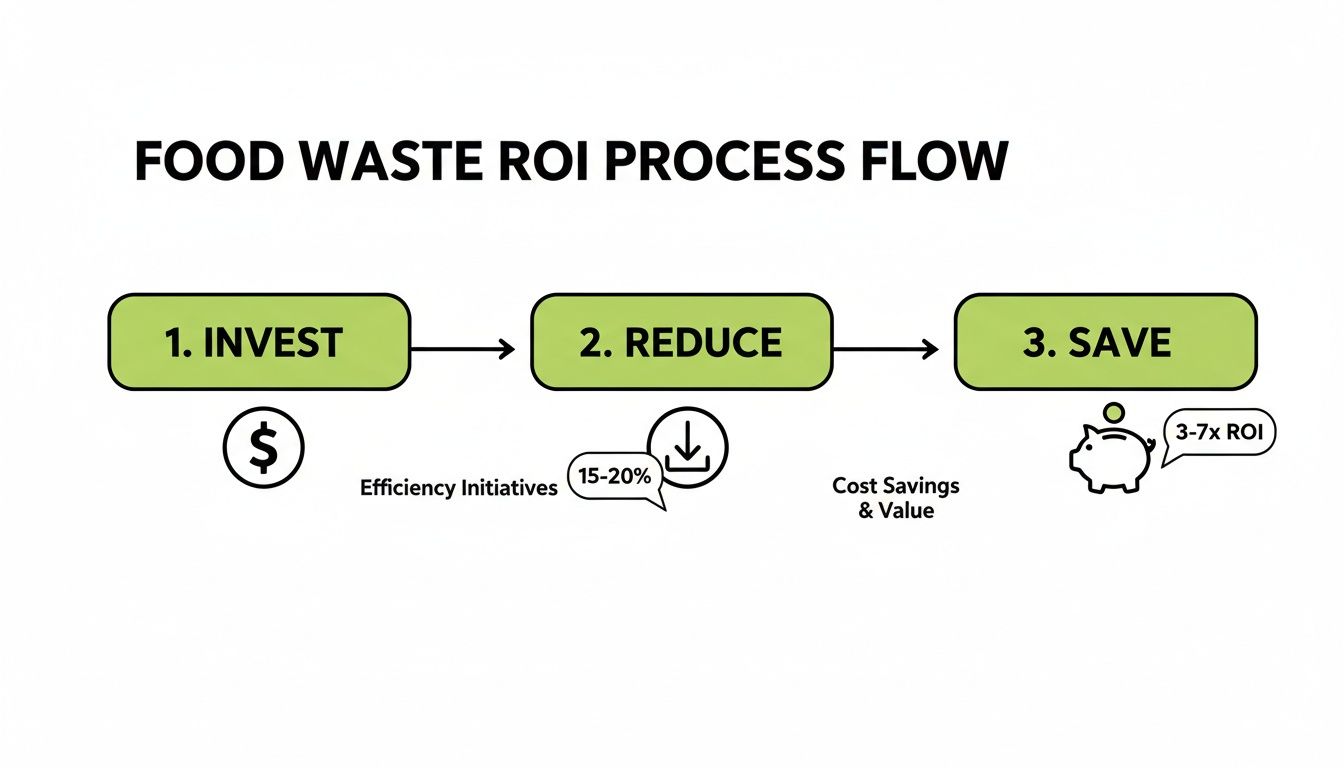
To get started, just set up a few labeled bins for different types of waste. Tracking this data helps you spot patterns you'd otherwise miss.
Weekly Waste Audit Checklist for LA Restaurants
This checklist is a straightforward tool for managers to conduct a weekly food waste audit. It helps pinpoint exactly where waste is happening so you can take targeted action.
| Waste Category | What to Track | Potential Action |
|---|---|---|
| Spoilage | Items that expired or went bad before use. | Adjust purchasing frequency or quantities. Check commercial freezer and refrigerator temperature settings. |
| Prep Waste | Vegetable peels, protein trim, and other prep byproducts. | Explore cross-utilization (e.g., turning trim into stocks or staff meals). Refine cutting techniques. |
| Plate Waste | Food returned uneaten from the front-of-house. | Analyze portion sizes. Gather feedback from servers on why certain dishes are coming back. |
After just one week, you'll start seeing things. Maybe your Korean BBQ joint is over-prepping banchan on slow weekdays. Perhaps your Chinese restaurant is noticing a lot of leftover rice, which is a clear signal to rethink your portion sizes. This data is pure gold.
Standardizing Prep and Portioning
Once you know where the waste is coming from, you can build Standard Operating Procedures (SOPs) to stop it. These need to be simple, visual, and easy for the whole team to follow. Even something as basic as choosing the right containers for food packaging can make a huge difference in keeping prepped ingredients fresh and preventing spoilage.
A well-run kitchen operates on precision, not guesswork. Standardized portioning tools—like scales, specific ladles, and measuring cups—are some of the most important pieces of restaurant equipment you can own for controlling costs.
When you build recipes with exact weights and measures, you give customers a consistent product every time and give yourself a predictable budget. This is how you put a stop to over-portioning and make sure every single ingredient contributes to a profitable plate.
The Critical Role of Commercial Refrigeration
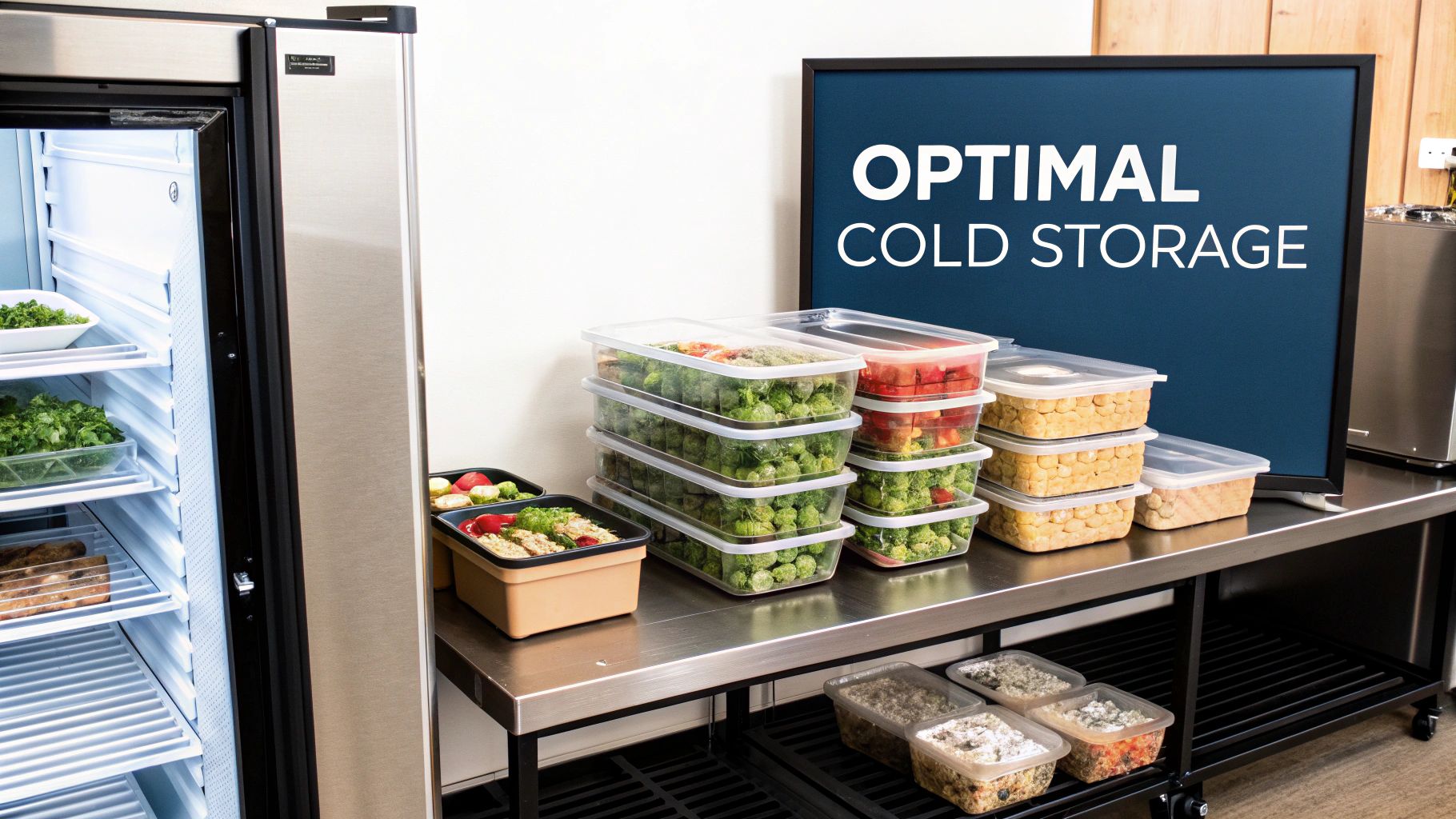
Let's shift gears from inventory sheets and prep lines to an unsung hero in your kitchen: your cold storage. High-quality commercial refrigerators and freezers aren't just a nice-to-have; they're a non-negotiable investment for any serious Los Angeles food business. It doesn't matter if you're running a busy food truck in Silver Lake or a fine-dining spot in Beverly Hills—your ability to control temperature is directly tied to your ability to control costs.
Think of it this way: your commercial refrigerator is the guardian of your most expensive assets. We're talking proteins, fresh produce, and dairy. When it’s running flawlessly, your ingredients last longer, stay safer, and keep their quality. The moment it starts to fail, even slightly, you're literally throwing money in the trash.
Temperature Zones and Ingredient Integrity
Different ingredients need different environments. A one-size-fits-all approach to your walk-in is a recipe for spoilage. Meats, for example, have to be kept just above freezing, but delicate herbs and leafy greens need slightly warmer, more humid conditions to keep from wilting.
- Proteins: Fish, poultry, and meat need to be stored between 32°F and 40°F. You'll want them in the coldest part of the unit to slow down any bacterial growth.
- Dairy & Eggs: These items do best in a stable environment around 38°F to 40°F, tucked away from the door where temperatures swing every time it's opened.
- Fresh Produce: Most vegetables are happiest between 40°F and 45°F, which is why dedicated crisper drawers that manage humidity are so important.
This is especially true for the diverse cuisines across Los Angeles. A Korean restaurant needs a commercial freezer that maintains the perfect temperature to preserve the quality of its marinated galbi. In the same way, a Thai kitchen depends on precise refrigeration to keep its basil, lemongrass, and kaffir lime leaves fresh and aromatic.
Think about a popular Mexican restaurant in East LA during a dinner rush. Cooks are pulling from a sandwich prep table with refrigerated wells. If that unit can’t hold a consistent, safe temperature, the pico de gallo, shredded cheese, and carne asada start to break down. That's a huge food safety risk and leads to a ton of waste by the end of the night.
This is a perfect example of how dependable restaurant equipment is your first line of defense against spoilage during a hectic service.
Connecting Equipment Reliability to Financial Savings
An old, inefficient commercial refrigerator is a constant drain on your profits. It fights to maintain temperature, its seals leak cold air, and the compressor works overtime, which sends your utility bills through the roof. These subtle equipment problems are often the real reason for what looks like random spoilage.
Upgrading to a reliable, modern commercial refrigerator or freezer gives you an almost immediate return on your investment. A new unit with precise digital temperature controls makes sure your ingredients are always held in their sweet spot. This can extend their shelf life by days, giving you a much bigger window to use them.
For busy LA kitchens, that can be the difference between selling a product and tossing it. Our guide on energy-efficient commercial refrigerators gets into more of the cost-saving details.
At the end of the day, investing in quality cold storage isn’t just about buying a piece of equipment. It’s about buying consistency, safety, and profitability. Whether you're a food truck with a small under-counter refrigerator or a high-volume Chinese restaurant in the San Gabriel Valley with a massive walk-in freezer, the principle is the same. Dependable refrigeration is a core part of any strategy for reducing food waste, protecting your inventory and your bottom line.
Designing a Waste-Conscious Menu and Training Your Team
Your menu is so much more than a list of what you sell. Think of it as a strategic roadmap. It can either generate a ton of waste or be your best tool for preventing it. And once you have that smart menu in place, your team becomes your greatest asset, turning those plans into real, everyday savings.
A well-designed menu has cross-utilization built right into its DNA. Picture a Chinese restaurant in the San Gabriel Valley that buys a specific cut of pork. Instead of featuring it in just one dish and tossing the trim, they use it everywhere—in pork and chive dumplings, dan dan noodles, and a signature stir-fry. That's how you minimize trim waste and make sure every ounce of a pricey ingredient pulls its weight.

Engineering Your Menu for Maximum Efficiency
Menu engineering isn't just about putting stars next to your high-profit items. It's about designing a cohesive list of dishes that use ingredients intelligently. This is a game-changer for LA restaurants that work with a huge variety of fresh, and sometimes delicate, ingredients.
- Ingredient Overlap: Design dishes that share components. A Korean spot can use the same base vegetable mix (like cabbage, carrots, and onions) for its japchae, bibimbap, and as a side for its galbi.
- Utilize Byproducts: Get creative with the stuff you'd normally throw out. Turn vegetable peels and ends into a fantastic house-made stock. Use leftover citrus peels to infuse simple syrups for the bar.
- Offer Flexible Portions: So many diners would prefer smaller portion options. Offering half-portions or lunch specials isn't just great customer service—it dramatically cuts down on what gets scraped into the trash.
This kind of strategic thinking goes all the way down to your equipment. For example, having well-organized stainless steel kitchen prep tables makes it far easier for your team to manage and cross-utilize ingredients, especially when the dinner rush hits.
Building a Team of Waste Warriors
Your staff is on the front lines, every single day. If they aren't on board, even the most brilliant plans will fall apart. But an empowered team? They'll find savings opportunities you never even thought of. The trick is to build a culture where reducing waste is a shared mission, not just another rule from the top.
And this isn't a small problem. The United States throws out nearly 60 million tons of food every year, which is almost 40% of our entire food supply. While households are part of that, restaurants and food service businesses account for a massive 40% of the total. That means you have a huge amount of control over a major source of waste.
Getting your team on board comes down to clear, consistent communication. This is where things like ongoing restaurant employee training become essential for making waste-conscious habits stick and ensuring everyone knows the part they play.
A chef I know in Los Angeles started a "waste-to-taste" challenge. Each week, the kitchen team had to create the most delicious staff meal using only ingredients that were about to go bad. It turned a chore into a creative competition and saved the restaurant thousands of dollars a year.
Actionable Training for Real Results
Training can't be a one-and-done meeting. It has to be an ongoing conversation that reinforces good habits and celebrates the wins along the way.
For the Back-of-House (BOH):
- Precise Prep Techniques: Train your cooks on knife skills that get the most out of every vegetable and protein. Show them exactly how to turn trim into something profitable.
- Portion Control Mastery: Everyone in the BOH needs to be trained to use scales, scoops, and spoodles for every single dish. There's no room for guesswork here; consistency is everything for cost control.
- Waste Tracking: Teach your staff how to properly log any food that gets thrown out. Make it clear this data isn't about blaming anyone—it's about finding solutions together.
For the Front-of-House (FOH):
- Strategic Upselling: Servers can be trained to guide guests toward dishes that use ingredients you need to move, helping prevent spoilage before it happens.
- Gathering Feedback: Teach them to ask why a plate came back with food on it. Was the portion too big? Did they not like something? This feedback is gold for making menu adjustments.
- Accurate Order Taking: Simply double-checking an order before firing it to the kitchen is a small step that prevents a lot of costly mistakes and wasted food.
When you arm your team with knowledge and empower them to be part of the solution, your kitchen transforms. You go from a group of individuals to a highly efficient, collaborative team that's focused on quality and profitability.
Implementing Responsible Disposal and Diversion Programs
Let's be realistic. Even with the sharpest prep cooks and the smartest menus, some food waste is just part of the game. So, what do you do with the scraps? This is the final, crucial piece of a smart waste reduction plan. For any restaurant in Los Angeles, from a Koreatown BBQ spot to a Venice food truck, it’s time to think beyond the dumpster.
This isn’t just about being green; it's a solid business decision. Smart disposal can slash your hauling fees and build a great reputation in your neighborhood. The goal is simple: make the landfill the absolute last resort, never the default.
Forging Food Donation Partnerships in Los Angeles
Before any edible food even gets close to a compost bin, your first thought should be donation. You'd be surprised how much perfectly good, high-quality surplus food from restaurants can be rescued. Partnering with a local LA food recovery organization is one of the most powerful moves you can make.
Groups like Food Forward and the Los Angeles Regional Food Bank are set up to work directly with kitchens like yours. They rescue surplus food and get it to people who need it, turning your potential waste into a community win.
Making it work is straightforward:
- Get the Guidelines: Talk to your donation partner to get a crystal-clear understanding of what they can and cannot take.
- Keep it Safe: Follow proper food safety. Unserved, pre-packaged meals need to be chilled down fast and held in your commercial refrigerators or freezers until they're picked up.
- Pick a Point Person: Have a manager or trusted shift lead own the donation process. They’ll make sure everything is logged and handled the right way.
A lot of operators worry about liability, but you don't have to. The federal Bill Emerson Good Samaritan Food Donation Act gives liability protection to businesses that donate food in good faith. It's a safe, responsible practice.
Navigating Local Composting and Diversion Services
What about the stuff you can't donate? Think prep scraps, vegetable trim, and plate scrapings. That's where composting comes in. Instead of letting organic matter rot in a landfill and produce harmful methane gas, composting turns it into something valuable for local farms and landscapers.
Most waste haulers in Los Angeles offer dedicated organics collection for businesses. Usually, setting up a composting program is as easy as asking your provider for a separate bin and showing your team what goes inside.
This isn't just a local trend; it's a global movement with proven results. Restaurants and food service contribute to about 28% of the 1.05 billion tonnes of food waste generated worldwide. Look at IKEA—their restaurants managed to cut food waste by a whopping 54%, hitting their goal years early by using smart scales and partnering with programs that sell surplus food. You can learn more about how major food services are tackling waste.
Best Practices for Your Diversion Program
Just adding a few new bins isn't enough—you need a system.
- Label Everything Clearly: Use color-coded bins with big, obvious signs. Pictures work wonders in multilingual kitchens to show what goes in the landfill, recycling, and compost bins.
- Smart Placement: Put the compost bins where the action is, like right next to the dish pit and main prep stations. Make it easy for your crew to do the right thing.
- Keep Training: Make it a regular topic in your pre-shift meetings. Remind everyone what goes where and, more importantly, why it matters. Getting your team to buy in is half the battle.
For a Japanese spot in Little Tokyo, this means composting vegetable ends from sushi prep. For a Mexican restaurant in Boyle Heights, it’s all about diverting leftover masa and onion peels. By taking these final steps, you close the loop on your kitchen's waste stream. You’ll turn a problem into a community asset and a win for the environment.
Your Questions About Restaurant Food Waste, Answered
Putting a waste reduction plan into action can feel like a lot, especially in a city as fast-paced as Los Angeles. We hear the same questions from everyone, whether they’re running a Thai Town kitchen, a Mexican food truck, or a Japanese izakaya. Here are some no-nonsense answers to the most common concerns we hear about budgets, staff, and equipment.
Where Should I Start If I Have A Small Budget?
This is the reality for most L.A. restaurants, so you're in good company. The best news? Your most powerful first move is completely free. Just run a simple waste audit. For one week, grab a few clear bins and label them: spoilage, prep trim, and plate leftovers. You'll instantly see where your money is going.
Often, the biggest savings come from tweaking your process, not buying new tech.
- Enforce Strict FIFO: "First-in, first-out" needs to be a non-negotiable rule for your commercial refrigerators and dry storage.
- Adjust Portion Sizes: Are plates coming back half-full? Pay close attention to what's left over from the dining room and adjust your portions.
- Standardize Prep: Train your team to use standardized measuring tools for all prep work. This simple discipline has a huge impact on consistency and cost control.
These steps cost you nothing but a bit of focus, but they can start putting money back in your pocket immediately—whether you’re running a Chinese restaurant in the SGV or a food truck parked in Venice.
How Do I Get My Kitchen Staff to Care About Food Waste?
You can't win this fight alone. Getting your team on board is everything. The key is to frame waste reduction as a team goal that benefits everyone, not just another order from the top. You have to explain the "why." Show them the actual dollar value of food being tossed out each week.
Talk about how those savings could be reinvested. Maybe it means better equipment that makes their jobs easier, or even team bonuses. You could create a "waste champion" role that rotates weekly to give different people ownership. A friendly competition between the morning and evening shifts can also make it more engaging.
The most important thing you can do is ask for their ideas. Your line cooks and prep staff are on the front lines. They often have the most brilliant, practical solutions. When your team feels heard, they become partners in the process.
This holds true for any kind of kitchen. A prep cook at a Korean restaurant knows exactly which banchan is being overproduced. A server at a Thai spot knows which curry portion is always too big for the lunch crowd.
Is Investing in New Commercial Refrigeration Really Worth It?
Absolutely. It’s a big upfront cost, but you need to see new commercial refrigeration as a strategic investment with a clear ROI, not just an expense. Old, inefficient coolers are silent profit killers. They have unreliable temperature zones and bad seals, creating hot spots that spoil your expensive proteins and produce way too fast.
Think about the ingredients in a Japanese or Mexican kitchen—fresh fish for sushi, vibrant salsas, crisp produce. Their quality and safety rely completely on precise temperature control.
Modern commercial refrigerators and freezers hold stable temperatures, which dramatically extends the shelf life of your inventory. That means less product goes straight into the trash. When you calculate the cost of food you’re losing to spoilage right now over a single year, the case for upgrading your cold storage becomes crystal clear. It's a cornerstone of any serious strategy for reducing food waste in restaurants. Your refrigeration isn't just a box; it's a tool that protects your inventory and your profits.
Ready to upgrade your kitchen and start cutting down on waste? Los Angeles Restaurant Equipment offers a wide range of professional-grade commercial refrigerators, freezers, and other essential restaurant equipment to help you run a more profitable and efficient operation. Explore our full catalog and find the perfect tools to protect your bottom line at https://losangelesrestaurantequipment.com.