

Small Restaurant Kitchen Layout: Optimize Your Space for Faster Service
A well-thought-out small restaurant kitchen layout is the absolute foundation for success. It’s what turns a potentially chaotic, cramped space into a high-powered engine for your culinary creations. The goal is to design a space driven by workflow, where every station and piece of equipment has a clear purpose, ensuring everything runs smoothly from open to close.
Designing a Blueprint for Your Compact LA Kitchen
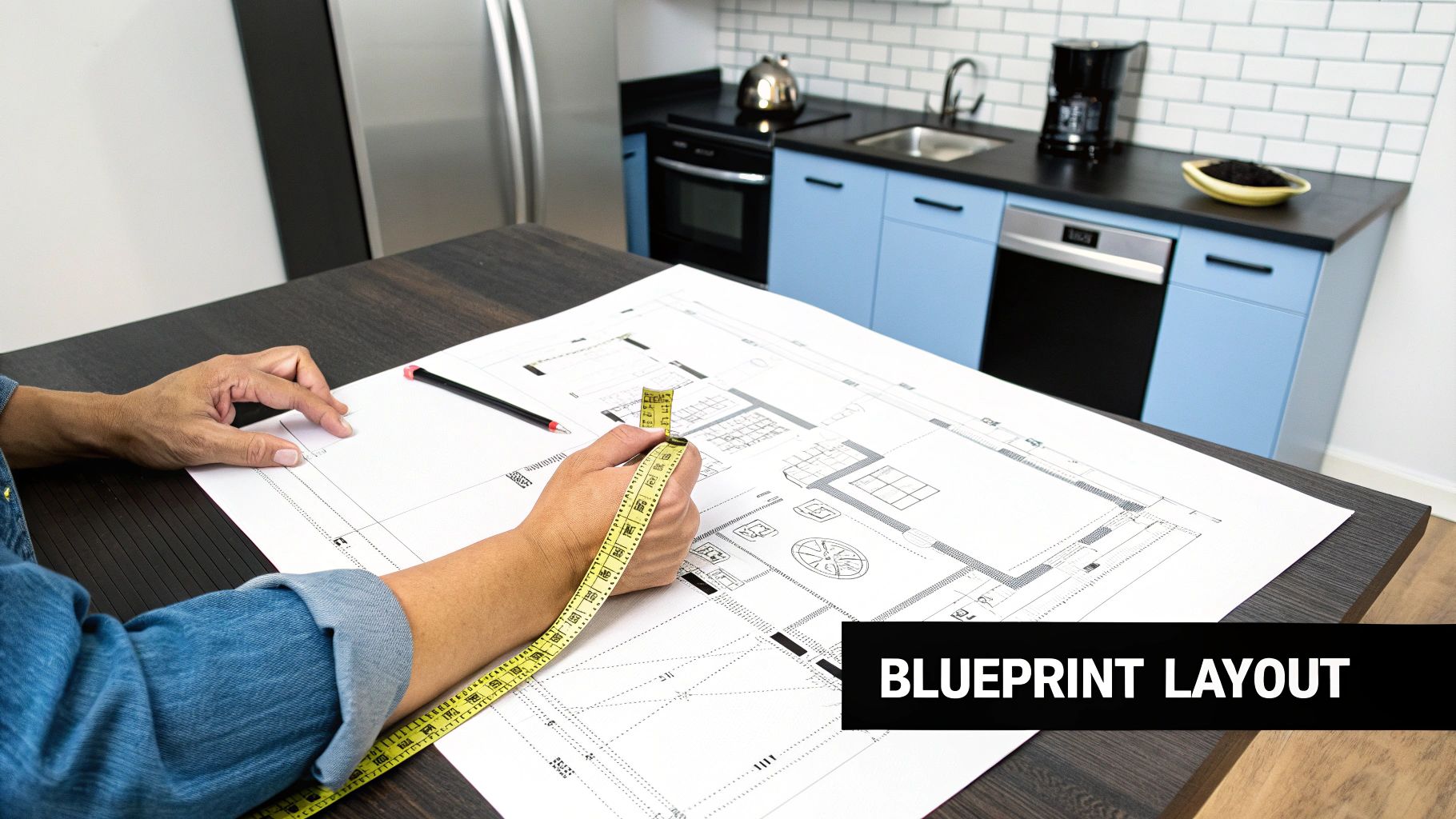
So you're staring at a tight space, trying to figure out how to squeeze a fully functional kitchen in. Don't worry, you're in good company. In the hyper-competitive Los Angeles food scene—whether it’s a 150 sq ft food truck in Silver Lake or a 600 sq ft cafe in Santa Monica—a smart layout isn't just nice to have; it's essential for survival.
The most important rule is simple: your menu dictates everything. The equipment and flow for a Thai spot in Hollywood are going to look completely different from a Korean BBQ joint in K-Town. When you plan around your actual dishes, you create a natural rhythm that keeps your staff from tripping over each other and puts every tool right where it needs to be.
Defining Your Kitchen's Footprint
Before you even think about buying a single appliance, you have to get real about your spatial constraints and how they stack up against industry standards. In a market like LA, space is everything. A good rule of thumb is to dedicate 30-40% of your total floor area to the kitchen.
For most food trucks or quick-service spots, that usually means a kitchen between 200-1,200 sq ft. If you have a modest 2,000 sq ft venue, you're looking at a 600-800 sq ft back-of-house. Of course, startups often have to get creative, sometimes shrinking that down to 500 sq ft for concepts that rely heavily on prepped ingredients. Sticking to this ratio is crucial for preventing bottlenecks between your prep, cooking, storage, and cleaning zones.
A well-designed kitchen doesn't just look good; it feels intuitive. Every step is logical, every piece of equipment is within reach, and the entire space works to support your team, not hinder them.
Key Considerations for LA Concepts
For any restaurateur in Los Angeles, especially when space is at a premium, a few things are absolutely non-negotiable. Your design must account for:
- Menu Complexity: How complicated are your dishes? A simple Mexican taqueria might just need a griddle, a steam table, and a refrigerated prep station. A diverse Japanese menu, on the other hand, needs separate, distinct areas for making sushi, frying tempura, and grilling.
- Equipment Sizing: Every single inch matters. Opting for space-saving restaurant equipment can be a game-changer. Think about versatile Atosa prep tables or powerful under-counter commercial refrigerators that do double duty. Always think vertically—use shelving to your advantage and look for multi-functional units.
- Workflow Logic: The journey from a food delivery to a finished plate has to be seamless. This means your commercial freezers should be near the receiving door and your prep stations should be right next to the cooking line. For more on this, our detailed guide on commercial kitchen layout design offers a ton of tips to help you optimize that flow.
Focusing on these fundamentals will help you create a layout that not only supports your culinary vision but also thrives within the unique challenges of the LA market.
Choosing the Right Layout for Your Restaurant Concept
Before you start knocking down walls or buying restaurant equipment, you need to look at your menu. What you’re serving is the single most important factor in designing your kitchen. This is especially true in Los Angeles, where a small restaurant kitchen layout has to be incredibly smart and efficient to keep up with the pace.
The real goal isn't just to make everything fit; it's to create a kitchen that flows. For a Korean BBQ taco truck cruising through Koreatown or a tight Thai noodle spot in Hollywood, every single step a cook takes matters. Let's look at the classic layouts through the lens of the LA food scene and see what works best.
The Galley Layout: Champion of Compact Kitchens
When space is tight, the galley layout is your best friend. Just picture two parallel counters with a narrow walkway in between. It’s a simple but powerful design that has become the backbone of almost every successful Los Angeles food truck and countless quick-service restaurants across LA.
This setup creates a natural, linear workflow, cutting down on wasted movement. Everything is just a quick turn away, which makes a huge difference during a slammed lunch rush. In dense spots like Los Angeles, where every square foot comes at a premium, the galley layout is king. You'll see it in operations squeezed into 200-600 square feet, with the central aisle typically just 4-5 feet wide. It's perfect for fitting in essentials like Atosa sandwich prep tables, under-counter commercial refrigerators, and compact griddles.
Industry data shows that the average small commercial kitchen for a fast food concept is around 500 sq ft. These spots rely on pre-made ingredients to save space, but they still need that efficient flow to get orders out the door. You can explore more insights on boosting restaurant efficiency with smart kitchen layouts to see just how much this design can impact your business.
Pro Tip: In a galley kitchen, think in zones. Designate one wall as your "hot side" for grills and fryers, and the other as your "cold side" for prep and refrigeration. This keeps the workflow clean, organized, and helps prevent cross-contamination.
Before settling on a layout, it's worth comparing the big three to see how they stack up against different LA-style restaurant concepts. Each has its own strengths and weaknesses depending on your menu and space.
Small Kitchen Layout Comparison for LA Food Concepts
| Layout Type | Best For (LA Concept) | Typical Footprint (Sq. Ft.) | Workflow Pros | Workflow Cons |
|---|---|---|---|---|
| Galley | Food Trucks, QSR Takeout (e.g., K-Town taco truck, Hollywood noodle bar) | 100 - 600 | Highly efficient; minimizes steps. Everything is within reach. | Can feel cramped; limits number of staff in the aisle at one time. |
| Assembly Line | Fast-Casual Concepts (e.g., Downtown LA poke bowl or custom pizza spot) | 400 - 1,000 | Extremely fast for high-volume, standardized orders. Reduces errors. | Inflexible; not suited for complex or varied menus. |
| Island | Open Kitchens (e.g., Sawtelle sushi bar, artisanal cafe) | 600 - 1,200 | Great for customer engagement and chef interaction. Good communication. | Requires more space; everything is on display, so it must be kept spotless. |
This table gives you a quick snapshot, but the best choice always comes back to your specific menu, your team's size, and the unique footprint of your location.
The Assembly Line Layout for High-Volume Concepts
Think about all the build-your-own spots popping up in Downtown LA, from custom pizzas to poke bowls. They succeed because they are fast and consistent, and the assembly line layout is the engine that makes it happen. This layout arranges your stations in a straight, logical line that follows the order of operations for making your food.
An order starts at one end—maybe a refrigerated prep table for the base—and moves down the line through proteins, toppings, and sauces before it gets to the cashier. It's the perfect setup for any menu with customizable but standardized items.
- Prep Station: This is ground zero. An Atosa sandwich prep table with refrigerated wells is a great choice here, keeping all your fresh ingredients cool and ready to go.
- Cooking Station: For a fast-casual Chinese spot, this could be a row of woks. For a pizzeria, it’s the oven. The key is placing it in the correct spot in the sequence.
- Finishing & Plating: This is the last stop where final touches and sauces are added before the dish is packaged. It needs to be closest to your front counter or takeout window for a smooth handoff.
This linear flow is incredibly efficient for high-volume service. Each team member becomes an expert at their station, which means faster ticket times and fewer mistakes. It’s what powers the entire LA fast-casual scene.
Adapting the Island Layout for Open Kitchens
The island layout is usually found in bigger kitchens, but a smaller, modified version can be a real showstopper. It works great for small, open-concept spots like a cafe or a Japanese sushi bar in Sawtelle, where watching the chef work is part of the experience. The idea is to have a central block for cooking or prep, with everything else arranged along the outer walls.
In a smaller space, your "island" might just be a single chef station with a small cooktop and an under-counter fridge. This becomes the focal point where customers can watch the magic happen. The surrounding walls can then be used for storage, dishwashing, and other prep tasks.
This design is fantastic for communication and can be a great marketing tool, but it demands that you stay obsessively organized and clean since everyone can see everything. It’s an excellent choice if the craft of making the food is just as important as the final dish.
Mapping Kitchen Workflow Zones for Maximum Output
A great kitchen flows like a well-rehearsed dance. This is true even when you're working in a tight spot. The secret to ditching the chaos and boosting your speed is mapping out distinct zones for every task. This simple strategy turns every square foot into a productive part of your operation, creating a logical path for every ingredient—from the back door to the final plate.
In a city like Los Angeles, efficiency is everything. Just imagine a dedicated prep station for fresh guacamole and salsas in a packed Mexican kitchen in East LA, or a specialized spot just for rolling sushi in a Sawtelle Japanese joint. This kind of zoning makes your kitchen safer, faster, and ultimately, more profitable.
This chart breaks down the typical workflow for common small kitchen layouts, helping you see the journey from raw ingredients to a finished dish.
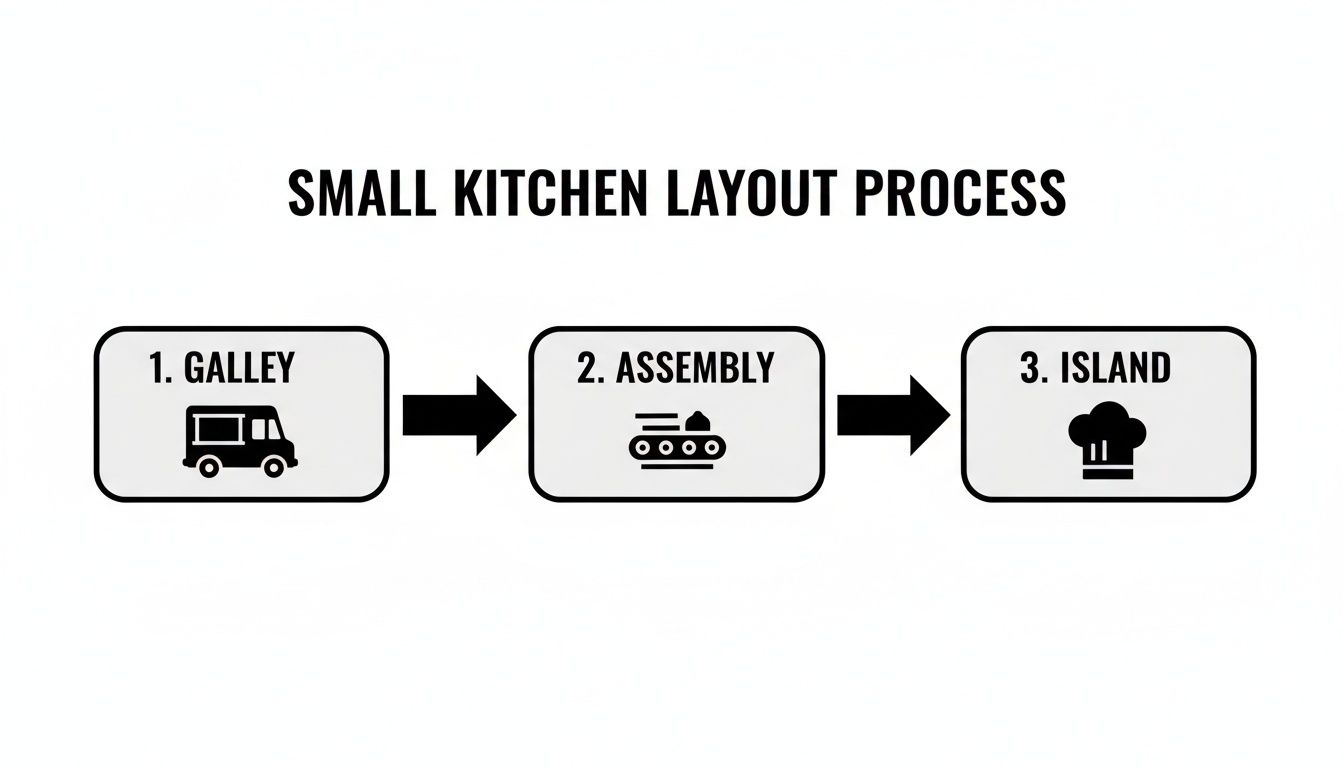
You can see how layouts like the Galley and Assembly Line create a straight, step-by-step process. It's all about cutting down on wasted motion and getting the most out of a compact space.
The Receiving and Storage Zone
Your kitchen's journey starts the second a delivery truck pulls up. This receiving and storage zone needs to be as close to your back door as possible. The last thing you want is staff lugging heavy boxes through a busy kitchen—it’s slow and a major safety hazard.
This is where you’ll put your main storage equipment. For LA spots that get frequent deliveries to manage their limited space, having an Atosa commercial freezer and a walk-in or reach-in commercial refrigerator right here is a must. You can get temperature-sensitive items stored away immediately, protecting your inventory. Your dry storage shelving for non-perishables should live here too, keeping everything organized and within reach.
The Food Preparation Zone
After ingredients are pulled from storage, they head to the prep zone. This area is all about turning raw goods into ready-to-cook components. To keep things moving smoothly, you’ll want to position this zone right between your storage area and the main cooking line.
Your prep zone needs plenty of counter space, dedicated sinks for washing produce, and easy access to all your tools. For a concept like a Thai food stall, this is where all the chopping and marinating happens. An Atosa refrigerated prep table is a game-changer here, keeping ingredients like fresh herbs and chopped onions perfectly chilled and right where you need them.
A smart layout is all about minimizing steps. The distance between your refrigerator, prep counter, and cooking station should be as short as possible. Every saved second adds up to faster service and less staff fatigue during a busy shift.
The Hot and Cold Cooking Line
The cooking line is the heart of your kitchen. This is where the magic happens, whether you’re in a Chinese restaurant in the San Gabriel Valley or a bustling LA food truck. It’s absolutely critical to separate your hot and cold lines for both food safety and efficiency.
- Hot Line: This is for your ranges, griddles, fryers, and ovens. Proper ventilation is non-negotiable here.
- Cold Line: This spot is for building salads, sandwiches, or plating cold appetizers. It should be kitted out with under-counter refrigeration.
The gains from a well-zoned small restaurant kitchen layout are huge. Galley and assembly line setups in 200-600 sq ft spaces can slash staff steps by up to 50%, a massive productivity boost for high-turnover LA spots. These tight layouts, perfect for Atosa deep fryers and ranges, can also trim prep time by 20-30%. You can find more tips on how modular setups lead to big labor savings over at The Restaurant Warehouse.
The Sanitation and Dishwashing Zone
Finally, the journey ends at the sanitation zone. This area gets overlooked in planning all the time, but it’s essential for meeting health codes. To avoid cross-contamination from dirty dishes, you need to place it away from your food prep and cooking areas.
This zone requires a three-compartment sink for washing, rinsing, and sanitizing, plus a commercial dishwasher if you’ve got the volume. You'll also need space for air-drying racks and storage for clean dishes. Keeping this area humming ensures you never run out of clean cookware—preventing a major bottleneck when you’re in the weeds.
Selecting and Sizing Your Commercial Equipment
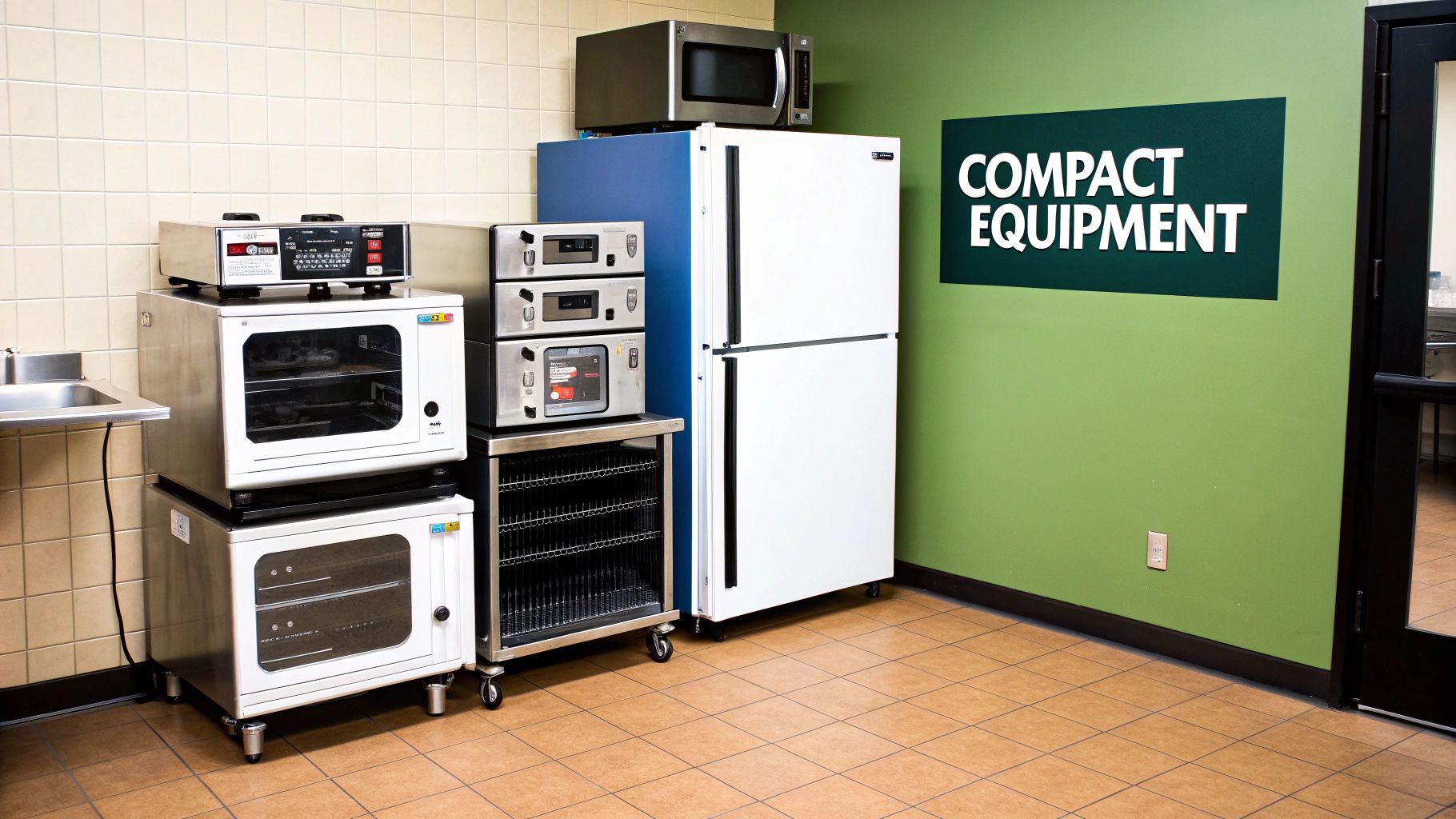
The right restaurant equipment is the heart of your kitchen. In a small restaurant kitchen layout, every single piece has to earn its spot. Once you've mapped out your workflow zones, it's time to pick the hardware that will actually bring your menu to life. This is about more than just price—it's about finding the perfect fit.
In a city like Los Angeles, where every square foot comes at a premium, choosing equipment is a strategic game of inches. You’re looking for gear that packs maximum function into a minimal footprint. That means prioritizing multi-functional units and clever, space-saving designs that let you build up instead of out.
Maximizing Your Footprint with Smart Choices
For any L.A. restaurant owner, the first rule is to look beyond standard dimensions. You need equipment built for tight quarters. Instead of a bulky, standard-depth fridge, a narrow-depth Atosa commercial refrigerator can save you precious floor space without cutting into your critical cold storage.
The same logic applies right down your cook line. Why install a wide, six-burner range if your menu only really needs four? More importantly, think vertically. A stackable convection oven, for example, instantly doubles your baking or roasting capacity without using a single extra square inch of floor.
Your equipment is an investment in efficiency. The right piece doesn't just perform a task—it saves you steps, conserves energy, and helps your team get orders out faster, which is the lifeblood of any LA food business.
This philosophy of "function over form" is what separates a chaotic, cramped kitchen from a high-output, efficient one. Before you buy anything, ask yourself: does this piece serve multiple purposes? A chef base, which is a refrigerated unit that your griddle or charbroiler sits on, is a perfect example. It combines cooking and cold storage into one powerhouse station.
Matching Equipment to Your LA Concept
Don't just stare at spec sheets. Think about why a certain piece of restaurant equipment fits your specific Los-Angeles-based concept. The context of your menu and neighborhood is everything.
- For a Venice beachside cafe: A glass-door merchandiser is more than a refrigerator; it’s a marketing tool. Placed near the counter, it drives impulse buys of cold drinks and grab-and-go items—a must for that beach foot traffic.
- For a Koreatown food truck: An under-counter commercial freezer is non-negotiable. With barely any room to move, a powerful freezer tucked under your prep table means you have enough bulgogi and dumplings for a crazy service without cluttering the aisle.
- For a Thai Town noodle shop: A multi-well steam table is essential. It keeps your broths, noodles, and toppings at the perfect serving temp, letting you assemble complex dishes in seconds.
- For a Downtown LA Japanese restaurant: A compact, high-quality sushi case doesn't just guarantee food safety. It showcases the freshness of your fish, which is absolutely critical for building trust with customers.
This tailored approach makes sure every piece of equipment actively helps your bottom line, whether by increasing speed, boosting sales, or improving quality. To get your shopping list organized, this commercial kitchen equipment checklist is a great resource that breaks down the essentials by station.
Essential Certifications and Protections
When you’re investing thousands of dollars, you need to protect yourself. On every piece of equipment you consider, look for two key things: certifications and warranties.
NSF Certification is the gold standard for food safety. That little NSF mark means the equipment is designed and built for easy cleaning and food safety, which is a hard requirement for passing any Los Angeles County health inspection. Never buy a primary piece of equipment that isn't NSF-certified.
Energy Efficiency, usually shown by an ENERGY STAR® label, is another huge factor. These units might cost a little more upfront, but they can save you hundreds or even thousands of dollars a year on your utility bills. For a small business, that's a significant saving.
Finally, always, always check the warranty. A solid warranty is a sign that the manufacturer stands behind their product. Atosa equipment, for instance, often comes with strong protections like two years on parts and labor and five years on the compressor. That coverage is your safety net. If a critical piece of gear fails, you can get it fixed fast without facing a massive, unexpected repair bill. It's the peace of mind you need to focus on what really matters—your food and your customers.
Budgeting and Procuring Your Kitchen with Confidence
A brilliant small restaurant kitchen layout is just a drawing until you have a smart budget to bring it to life. This is where the dream meets reality. The financial side of a kitchen build-out can feel like a huge hurdle, but if you approach it with a clear strategy, you can get everything you need without sinking your business before you even open the doors.
For restaurant owners in Los Angeles, this means looking beyond just the sticker price. Your budget has to cover the whole picture: the gear itself, delivery fees, installation costs, and even the permits the city requires. It’s a complete financial plan, not just a shopping list.
Smart Procurement Strategies for LA Operators
In a market as tough as Los Angeles, every dollar you save on overhead is a dollar you can put back into your food and marketing. A smart place to start is finding the right restaurant equipment supplier—one that gets the pressures of the local scene.
Look for partners who offer transparent pricing and, just as important, free freight delivery. Shipping heavy commercial refrigerators and freezers can tack on thousands to your startup costs. Finding a supplier who eats that cost is a massive win for your bottom line.
Another key is to focus on equipment that gives you long-term value. A used piece of gear might seem cheaper at first, but it usually comes with no warranty and an unknown history. On the other hand, new equipment from brands like Atosa comes with solid warranties—often two years on parts and labor and five years on the compressor. That’s a crucial safety net for any new business.
Don’t just budget for the equipment; budget for the long haul. A reliable warranty and energy-efficient appliances can save you far more over five years than the discount on a second-hand freezer will save you today.
The Power of Lease-to-Own Financing
For many new restaurant entrepreneurs, protecting startup capital is the number one goal. This is where lease-to-own financing becomes an incredibly powerful tool. Instead of dropping a massive lump sum on your entire kitchen package, you can get high-quality, brand-new equipment for a manageable monthly payment.
This approach has some major advantages for an LA food business, whether you're opening a new Thai spot in Hollywood or running a Korean food truck in K-Town:
- Conserves Cash: It keeps your precious startup money free for other must-haves like rent, payroll, and getting the word out.
- Aligns with Cash Flow: Your payments are predictable and spread out, which makes managing your monthly budget way easier while you're building a customer base.
- Builds Business Credit: Making your lease payments on time helps establish a positive credit history for your business, which is a huge asset for future growth.
This financing model can be the difference between getting reliable, efficient equipment and having to cut corners. For instance, you can get a top-tier walk-in unit without draining your bank account. To see what different setups look like, our guide on choosing a walk-in cooler and freezer combination can help you pick the right size and type for your space. Getting the best gear without a huge upfront investment gives you a serious edge in a city where the competition is always on.
Common Questions About Small Kitchen Layouts
Even with a perfect blueprint, questions always pop up when you’re deep in the design process. For restaurant owners in Los Angeles, the challenges are unique—from decoding health codes to maximizing a tiny footprint. We hear these questions a lot, so here are some clear answers to help you get your kitchen built with confidence.
What Is the First Step in Designing a Small Restaurant Kitchen Layout
The very first thing you need to do? Lock in your menu. Before you sketch a single line or even look at equipment, you have to know exactly what food you'll be serving. Your menu is the foundation for every decision that comes next.
Think about it: the equipment needed for a Chinese spot in the San Gabriel Valley that's all about wok-fired dishes is completely different from a Mexican taqueria that runs on a plancha and steam table. Knowing your dishes inside and out is what defines your workflow. It's what stops you from making expensive mistakes, like buying a huge commercial freezer when your whole concept is built on fresh, daily deliveries.
How Much Space Should I Allocate for a Food Truck Kitchen
For a standard Los Angeles food truck, you're typically working with a kitchen space between 100 and 200 square feet. In a space that tight, efficiency is everything. That’s why the galley layout is the undisputed champion for mobile kitchens. The name of the game is maximizing vertical space with smart shelving and picking restaurant equipment that does more than one job.
A perfect example is a refrigerated chef base that slides right under your griddle. It combines your hot and cold stations into one compact unit, saving precious floor space and keeping ingredients right where you need them.
While a three-foot aisle is the dream, many successful L.A. food trucks get by with less. Just be sure to talk with the Los Angeles County Department of Public Health about their specific rules for ventilation and sink placement before you finalize your design.
What Are the Most Common Layout Mistakes to Avoid
The single biggest mistake we see new owners make is completely ignoring the workflow. They get excited, buy all the equipment, and then try to shove it into the space. The result is a chaotic kitchen where staff are tripping over each other. It’s not just inefficient—it’s a major safety hazard.
Another common slip-up is underestimating storage. This goes for both cold storage, like commercial freezers, and dry storage. When you don't plan for enough room, your aisles become a maze of boxes and supplies. That’s a recipe for tripping hazards and an instant health code violation.
Finally, don't overlook your ventilation. This is a critical error that can get you shut down fast. A properly sized ventilation hood isn’t a suggestion; it’s required by law. You absolutely must plan your cooking line and your ventilation system together from day one to avoid costly, complicated fixes down the road.
Can I Use Residential Refrigerators in My Commercial Kitchen
No. Absolutely not. It might seem like a smart way for a startup to save a few bucks, but using residential appliances is a serious violation of Los Angeles health codes and a guaranteed headache.
Commercial refrigerators and freezers, like the ones from Atosa, are NSF-certified. That means they’re built to handle the intense, non-stop demands of a restaurant. A fridge from your house just can't keep up. Its compressor will burn out from the constant door openings, and it won't hold the safe temperatures needed for food storage. This leads to spoiled food, lost money, and an automatic F on your health inspection. Investing in proper commercial-grade restaurant equipment isn't optional; it's essential.
Ready to build a kitchen that powers your L.A. dream? At Los Angeles Restaurant Equipment, we provide the high-quality, space-saving gear you need with the support you deserve. From Atosa commercial refrigerators to complete cooking lines, we offer free freight delivery and flexible financing to get you started. Explore our full catalog at https://losangelesrestaurantequipment.com and let's build your perfect kitchen together.