

A Restaurant Owner's Guide to Walk In Cooler Temperatures
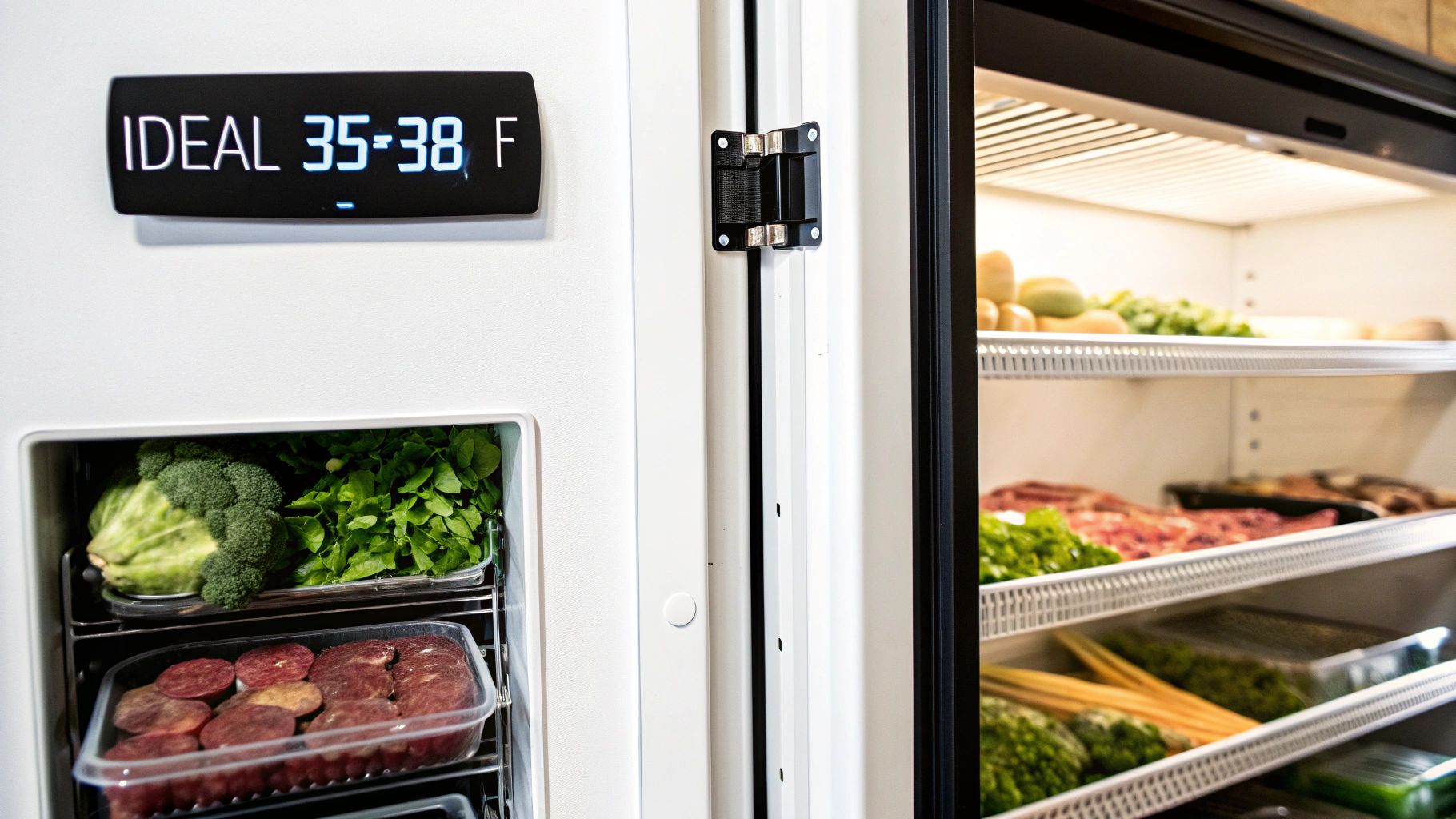
So, what's the magic number for a commercial walk-in cooler? The sweet spot is generally between 35°F and 38°F. Keeping your unit in this range is your first line of defense against bacterial growth, making sure your ingredients stay safe and fresh. This isn't just a suggestion—it's a critical standard for every LA restaurant, from a Koreatown BBQ spot to a food truck slinging Thai food.
Your Quick Guide to Ideal Walk In Cooler Temperatures
For any Los Angeles restaurant owner, nailing your cooler temperature isn't about setting it to one number and forgetting it. It’s about knowing what your specific inventory needs to thrive. While 35°F to 38°F is the golden rule for overall safety, different foods are happiest at slightly different temps within that band. Getting this right prevents spoilage, keeps textures and flavors sharp, and protects your bottom line.
Think of your walk-in as a specialized care unit for your food. Just like different patients need different treatments, your inventory requires specific conditions to stay at peak quality. The delicate greens for a Japanese salad, for example, need a different touch than the fresh dairy for a Mexican restaurant's signature flan.
Recommended Walk In Cooler Temperatures by Food Type
Here’s a quick reference guide to help you dial in the perfect temperatures for the different perishable foods that are likely stocking the shelves of your LA kitchen.
| Food Category | Ideal Temperature Range (°F) | Key Storage Considerations |
|---|---|---|
| Meat & Poultry | 35°F - 36°F | Keep it as cold as possible without freezing. Store on the lowest shelves to prevent cross-contamination. |
| Dairy & Eggs | 35°F - 37°F | Consistency is key. Avoid storing on the door where temperatures fluctuate the most. |
| Fresh Produce | 36°F - 38°F | A slightly warmer, more humid environment prevents wilting and frost damage to delicate greens and vegetables. |
| Seafood | 32°F - 34°F | Needs to be kept on ice or at the coldest possible temperature just above freezing to maintain freshness. |
| Prepped Foods | 36°F - 38°F | Ensure items are properly covered and dated. Consistent cooling prevents spoilage of sauces, stocks, and cut vegetables. |
Following these guidelines helps maximize the freshness and safety of every ingredient you bring into your kitchen, which is a non-negotiable in this business.
To make things easier for your busy kitchen crew, it helps to create "micro-climates" inside your walk-in. Organizing your shelves based on these temperature needs is a simple trick to ensure everything from your prime cuts to your fresh produce stays perfect for longer.
- Meat and Poultry (35°F - 36°F): This is the coldest you can go without freezing. Storing raw meat and poultry at these chilly temps is your best defense against bacteria.
- Dairy and Eggs (35°F - 37°F): Milk, cheese, and eggs hate temperature swings. A steady, cool environment is crucial for preventing spoilage and keeping their flavor intact.
- Fresh Produce (36°F - 38°F): Most fruits and veggies do best with a bit more humidity and a temperature that's cool but won't cause freezer burn or wilting.
This simple infographic is a great visual reminder of where your core food groups should be.
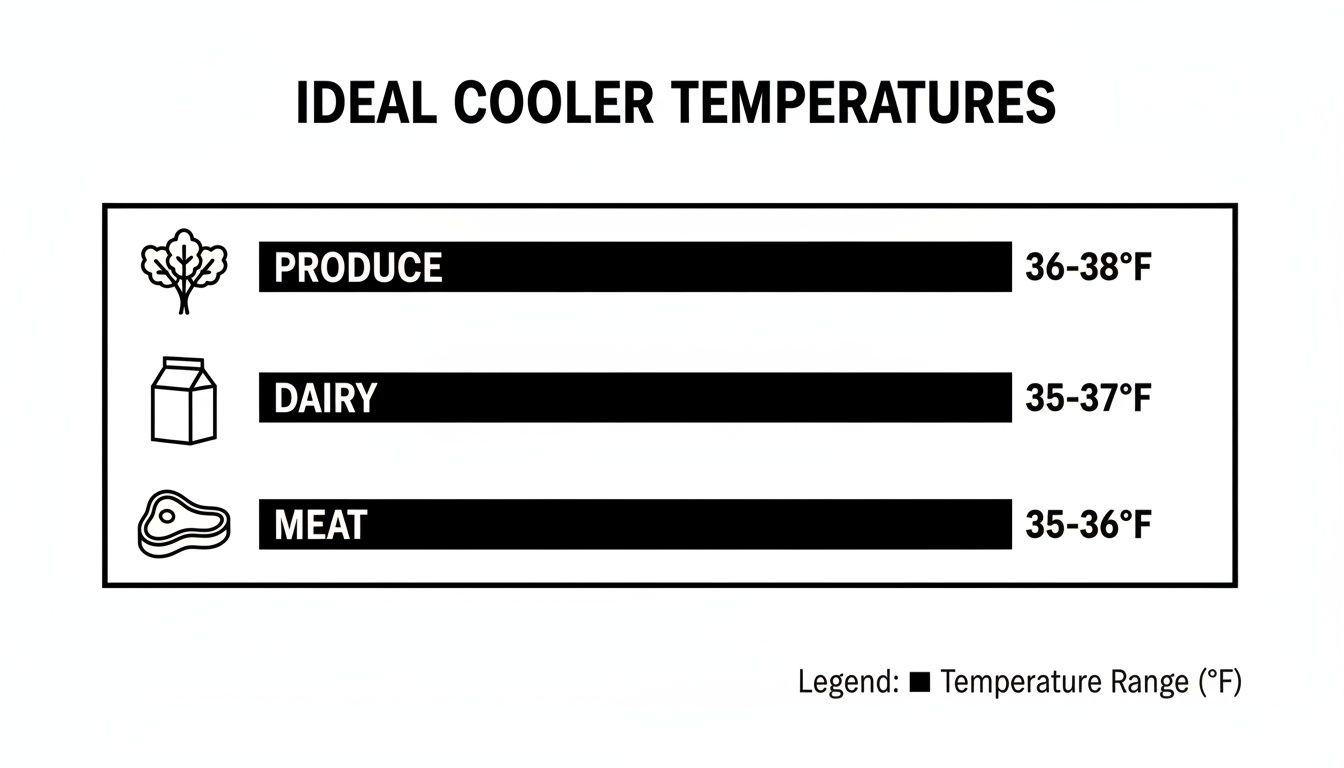
It really shows how just a degree or two can make a massive difference in the shelf life of your perishables.
Properly managing these zones isn't just about passing health inspections—it directly hits your food costs by cutting down on waste. If you're looking to upgrade your setup, you can learn more about commercial walk-in refrigerators in our detailed guide. In LA's tough restaurant scene, smart temperature management is one of the keys to success.
Why Precise Temperatures Are Your Restaurant's Best Investment
Think of your walk-in cooler as less of a cold box and more of a bank vault. It’s protecting your most valuable assets: your ingredients. For any restaurant in Los Angeles, whether you’re a busy sushi spot downtown or a food truck slinging tacos in East LA, a few degrees can be the difference between profit and loss. Getting the temperature right is an investment in consistency, safety, and quality.
Keeping walk-in cooler temperatures precise is about a lot more than just stopping food from going bad. It's your first line of defense against foodborne pathogens like Salmonella and E. coli. When things heat up into the "danger zone" (above 41°F), bacteria can multiply like crazy, turning your expensive inventory into a major health hazard.
Protecting Your Inventory and Your Wallet
Every single item sitting in your walk-in cooler is money you've already spent. Unsteady temperatures eat away at that investment from every angle. For a Thai kitchen, it’s wilted basil and cilantro. For a Chinese restaurant, it might mean losing the satisfying crunch of fresh bok choy.
When your cooler can't hold a steady temperature, you start seeing real, tangible losses that pile up fast.
- Food Spoilage: The most obvious hit is the food you have to toss. Improper storage is a massive contributor to food waste, and studies show restaurants can lose thousands of dollars a year because of it.
- Reduced Shelf Life: Even if food isn't totally spoiled, temperature swings speed up its decline. Produce loses its pop of color, dairy goes sour faster, and meats lose their proper texture.
- Energy Waste: A cooler that’s fighting to stay cold forces the compressor to work overtime, which you’ll see on your monthly energy bills. That constant strain also wears out your expensive restaurant equipment much faster.
Safeguarding Flavor and Customer Trust
In a food city as competitive as Los Angeles, your reputation is everything. Customers expect a top-notch experience every single time, no matter if they're grabbing a quick lunch from a food truck or sitting down at a high-end Japanese restaurant. Precise temperature control is your silent partner in making that happen.
Think about the delicate fish for a sushi platter. If it's stored just a few degrees too warm, its texture gets soft and the flavor is compromised. The same goes for the fresh produce in a vibrant Korean banchan—it needs that cold, crisp environment to keep its signature snap.
Your walk-in cooler is where quality begins. It's the starting point for every dish that leaves your kitchen. Inconsistent temperatures are a silent killer of texture, flavor, and, ultimately, your restaurant's reputation.
This commitment to quality builds customer trust. When diners know they can count on you for a fresh, safe meal, they come back. On the other hand, just one case of foodborne illness or a single subpar dish from poor ingredients can do damage that’s hard to fix.
The Bottom Line for LA Restaurateurs
For any restaurant owner in Los Angeles, managing walk-in cooler temperatures isn't just a chore—it’s an active strategy for staying profitable. The upfront cost of a quality commercial refrigerator or freezer and the daily effort to maintain it are small prices to pay for the security they offer.
Being vigilant protects you from:
- Inventory Loss: Keeping spoilage and waste to a minimum.
- Reputational Damage: Making sure every plate meets your standards.
- Regulatory Penalties: Staying on the right side of LA County health codes.
- Excessive Costs: Keeping energy bills and repair costs down.
At the end of the day, your walk-in cooler is more than just a piece of equipment; it’s the heart of your kitchen's entire back-of-house operation. Treating its temperature with care and precision is one of the smartest business moves you can make to protect your assets and help your LA restaurant thrive.
Navigating Los Angeles Health Codes and Regulations
Keeping up with the Los Angeles County Department of Public Health isn't just a good practice—it's the foundation of any successful restaurant. When it comes to walk-in cooler temperatures, there's one number every single LA operator needs to burn into their memory: 41°F.
Whether you're running a high-end sushi bar or a neighborhood food truck, 41°F is the absolute maximum temperature allowed for your cold-held foods. This isn't some arbitrary rule; it’s a critical food safety standard designed to stop harmful bacteria from multiplying. Trust me, the health inspector's thermometer is one of the first things they'll pull out, so mastering these codes is fundamental to running a respected and legal business.
What LA Health Inspectors Look For
An inspector's visit can be nerve-wracking, but knowing what they're looking for can take a lot of the stress out of the process. They don’t just peek at your cooler’s thermostat and move on. They’re conducting a thorough assessment of your entire cold storage operation to ensure you’re actively preventing foodborne illness.
Here's what they're focusing on:
- Accurate Thermometers: They'll check for a working, visible thermometer placed in the warmest part of your walk-in, which is usually right by the door.
- Temperature Logs: They will almost always ask to see your daily temperature logs. This is your proof that you’re on top of your equipment and keeping things safe around the clock.
- Proper Food Storage: Are raw meats stored on the bottom shelf, safely below ready-to-eat foods? This prevents cross-contamination from drips and is a huge check-point.
- Cleanliness and Organization: A clean, organized cooler signals good food handling habits. They’ll be looking for spills, expired food, and making sure there’s enough space for air to circulate properly.
These elements give them a complete picture of your commitment to food safety. Nail these points, and an inspection becomes a smooth, professional check-in. The standards are just as strict for mobile kitchens; check out our detailed guide for a complete food truck health inspection checklist.
Avoiding Common and Costly Violations
Small slip-ups in temperature management can snowball into big problems, from fines and closures to a tarnished reputation. The most common violations are, thankfully, the easiest to prevent with solid training and daily routines.
One of the biggest pitfalls is the "set it and forget it" mindset. Just assuming your walk-in is running correctly without checking it every day is a massive gamble. A failing compressor or a bad door seal can send temperatures creeping into the danger zone, and you might not notice until it's too late.
Another all-too-common issue is improper stacking that blocks airflow. When your staff shoves boxes right up against the walls or in front of the fans, it creates warm spots where bacteria can thrive—even if the unit’s thermostat says everything is fine. Training your team to organize shelves for optimal circulation is absolutely essential.
A passing health inspection score isn't just a piece of paper to tape to your window. It's a direct reflection of your kitchen's values. It tells every single customer that you put their health and safety first, building the kind of trust that's priceless in the LA food scene.
You simply can't overstate how vital reliable cold storage is. That’s why the global walk-in cooler market was valued at $12.67 billion in 2021 and is expected to hit $20.22 billion by 2028. Here in the U.S., a staggering 78% of food service buildings rely on walk-in refrigerators, which shows just how central they are to our entire industry. For more on this, you can read the full research on commercial building energy consumption.
Mastering Daily Temperature Monitoring and Organization
Keeping your walk-in cooler at the perfect temperature isn't a "set it and forget it" task—it’s an active, daily practice. This is where professional Los Angeles kitchens separate themselves from the amateurs. Proper monitoring and smart organization are the two pillars that support food safety, keep your inventory fresh, and ensure you're always ready for a health inspection.
Don't just trust the digital thermostat on the outside of your cooler. That number only tells you what the unit is trying to do, not the actual temperature where your expensive inventory is stored. Think about the chaos of a dinner rush in a popular Thai spot—frequent door openings and the heat from a fresh delivery can cause big temperature swings inside.
The Power of Independent Thermometers
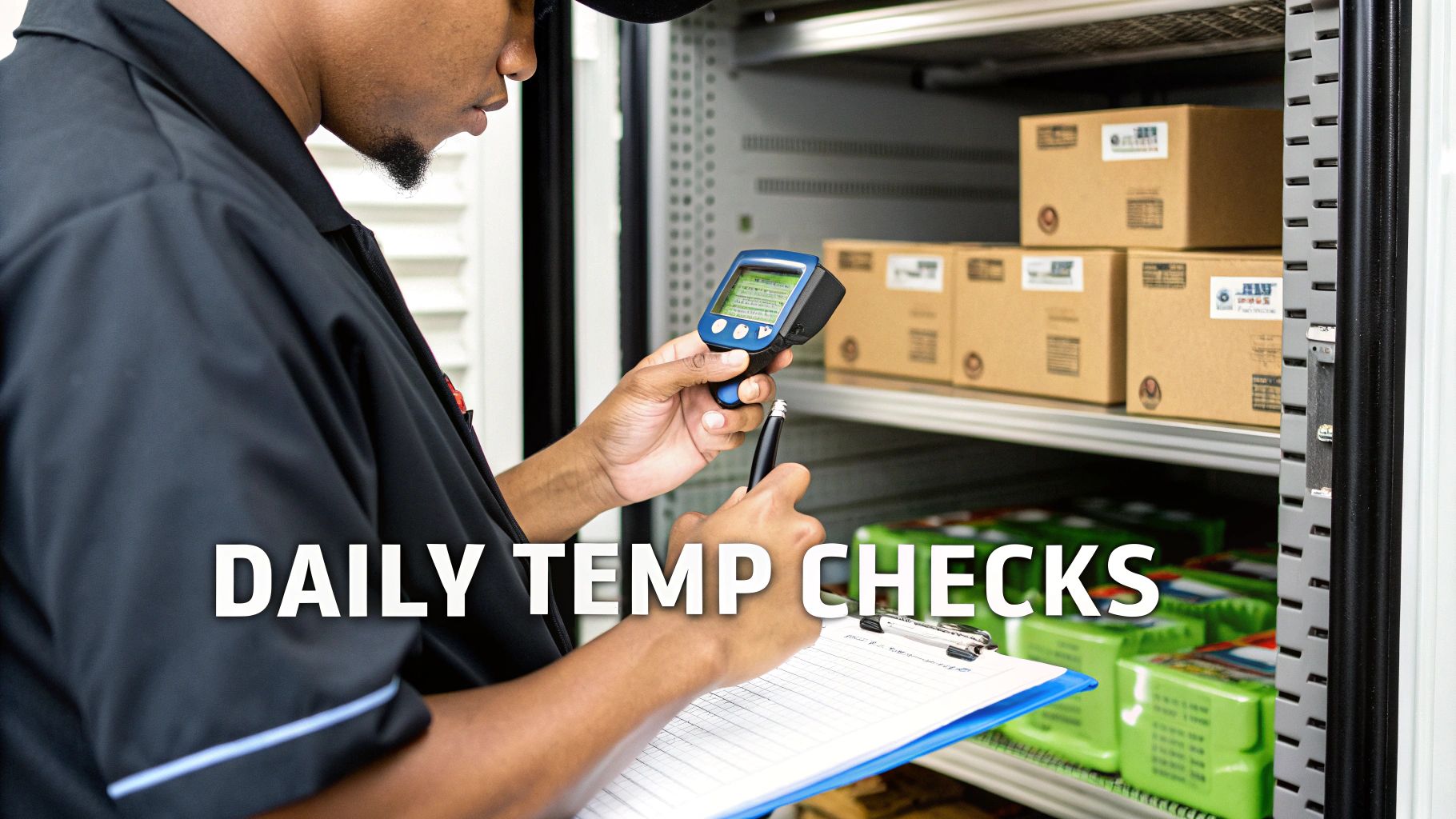
To get the real story, you need independent thermometers inside the unit. Placing at least two gives you a much clearer picture of what's happening. Put one near the door, which is almost always the warmest spot, and another toward the back.
This simple step helps you catch problems before they turn into disasters. For example, if the thermometer by the door is always reading higher than the one in the back, you might have a worn-out door gasket that needs replacing. It’s a cheap fix that can save you thousands.
Constant vigilance is the price of food safety. A detailed temperature log is more than just a piece of paper; it's your restaurant's daily health record, proving your commitment to quality and providing a crucial early warning system for equipment failure.
Whether you're running a huge Chinese restaurant or a tiny food truck, a daily log is non-negotiable. It keeps your team accountable and gives health inspectors and maintenance techs the data they need.
Choosing Your Monitoring Method
Restaurants in Los Angeles generally have two ways to track temperatures, and the best one for you depends on the size and style of your kitchen.
- Manual Logging: The classic clipboard method is perfect for smaller cafes, pop-ups, and food trucks. Just keep a log sheet right outside the walk-in. Staff check and write down the temperatures at least twice a day—once in the morning and again during a shift change. It’s cheap, easy, and builds good habits.
- Automated Digital Systems: For bigger, high-volume kitchens, automated systems are a lifesaver. They use wireless sensors inside the cooler that track temperatures 24/7 and record the data for you. The best part? They can shoot you a text or email if the temperature goes out of the safe zone, letting you prevent a crisis even when you’re not there.
Organization: The Key to Temperature Stability
How you organize your walk-in has a massive impact on its ability to stay cold. A messy, overstuffed cooler is an inefficient one, full of warm pockets where bacteria can go wild. Smart organization is just as critical as checking the thermometer.
- Enforce FIFO (First-In, First-Out): This is the golden rule. New deliveries always go behind the existing stock, so older products get used first. This simple habit cuts down on spoilage and waste, which goes straight to your bottom line.
- Label Everything Clearly: Every single container—whether it’s prepped ingredients for a Mexican kitchen or marinade for a Korean BBQ spot—needs a clear label with the item name and the prep date. This takes the guesswork out of it and makes sure nothing gets lost and forgotten.
- Guarantee Air Circulation: Never, ever block the evaporator fans or stack boxes right up against the walls. Cold air has to move freely to cool the whole space. Train your staff to leave a few inches of space around everything to stop dangerous warm spots from forming.
These daily habits are the foundation of a professionally run kitchen. They make sure your expensive commercial refrigerator runs efficiently, your ingredients stay perfect, and your LA restaurant serves the safest, best-tasting food possible.
Troubleshooting Common Walk In Cooler Problems
It’s a hot afternoon in Los Angeles, and you see it—the temperature on your walk-in cooler is slowly creeping up. Before you hit the panic button, just know that most temperature issues are caused by a handful of common, often simple, problems. Think of this as your first-response plan for figuring out what’s wrong before you lose a fortune in spoiled inventory.
Often, a quick diagnostic check is all it takes to find the source of the trouble. Knowing what to look for empowers you to handle the small stuff yourself, saving your food and helping you make a smarter call on when you really need a professional technician.
Identifying the Usual Suspects
When your walk-in temperatures start to rise, a few common culprits are almost always the ones to blame. Before you pick up the phone for a pricey emergency repair, run through this quick checklist.
- Worn-Out Door Gaskets: That rubber seal around your cooler door is the only thing keeping warm kitchen air out. Over time, gaskets get brittle, crack, and tear, letting cold air seep out and forcing your compressor to work overtime just to keep up.
- Iced-Over Evaporator Coil: The evaporator coil is what actually absorbs the heat inside the cooler. If it gets caked in ice, it can’t do its job, and the temperature will climb. This is usually a red flag for poor airflow or a defrost cycle that isn't working right.
- Obstructed Airflow: Proper air circulation is everything. If your team has stacked boxes right up against the walls or blocked the fans, you’ll end up with warm spots that throw the whole system out of whack.
- Dirty Condenser Coils: The condenser coils sit outside the cooler and release all the heat pulled from the inside. When they get coated in the dust and grease—a guarantee in any busy kitchen—they can't get rid of heat efficiently.
If you keep running into the same issues, using a structured root cause analysis format can help you dig deeper to find and fix the real problem for good.
Simple Diagnostic Checks You Can Do Now
You don’t need to be an HVAC expert to spot some of the most frequent problems. Here are a few dead-simple tests you or your kitchen manager can do in minutes to narrow down the issue.
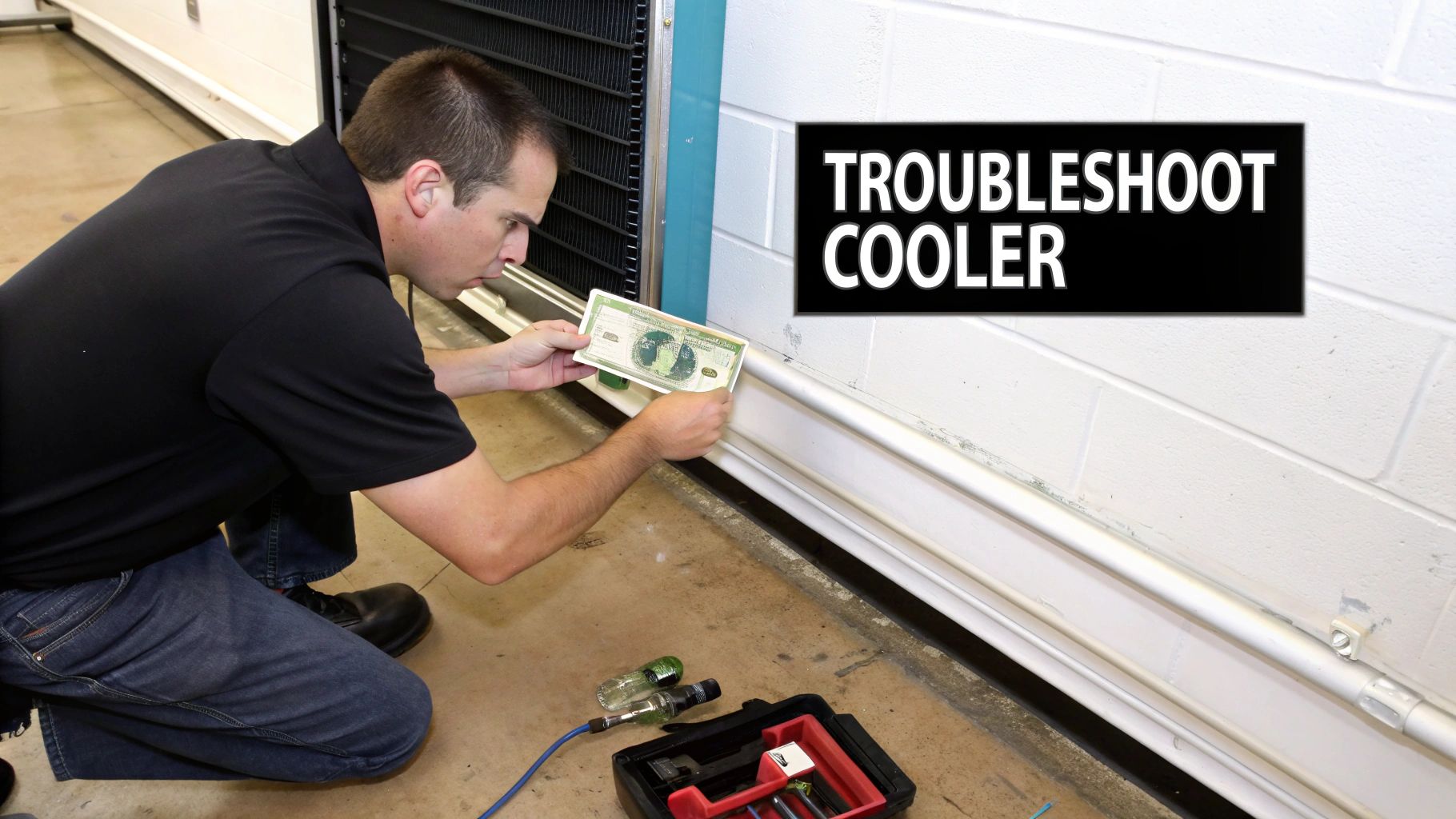
1. The Dollar Bill Test for Door Seals: This one’s a classic for a reason. Close the walk-in door on a dollar bill. If you can slide it out with little to no resistance, your gasket is shot and needs to be replaced. Make sure to try this in a few different spots all the way around the door.
2. Visual Check for Ice Buildup: Open the cooler and take a good look at the evaporator unit—that’s the boxy part with the fans. See a thick layer of frost or, even worse, solid ice? You’ve found a major problem right there.
3. Condenser Coil Inspection: Now, check the condenser unit outside the box. Is it covered in a thick blanket of dust or kitchen grime? If you can't see the metal fins clearly, it’s way overdue for a cleaning.
A rising temperature gauge is your cooler's cry for help. Addressing the small, obvious issues like a bad seal or a dirty coil can often solve the problem immediately, saving your inventory and preventing a much larger, more expensive breakdown down the line.
Lowering Energy Costs with Smart Maintenance
For any restaurant owner in Los Angeles, the monthly utility bill can be a real killer. Your walk-in cooler is one of the hardest-working pieces of equipment in your kitchen, and it’s also one of the hungriest for power. Smart maintenance isn't just about preventing a catastrophic breakdown; it's a direct line to protecting your profits.
A well-cared-for cooler doesn't just keep your ingredients safe—it actively shaves dollars off your overhead each month. When you connect simple, routine habits to direct cost savings, you can turn a major expense into something much more manageable.
The Financial Impact of Routine Maintenance
Think of routine maintenance as an investment that pays you back every single month. A neglected cooler has to fight to maintain the correct walk in cooler temperatures, and that struggle shows up directly on your energy bill. A little proactive care keeps the system humming along at peak efficiency, trimming the fat from your utility costs.
Walk-in coolers are serious energy hogs. Refrigeration alone accounts for about 15% of the total energy use in most food service businesses. In a place like California, where restaurants spend an average of $3.77 per square foot on electricity annually, every little bit saved makes a difference.
Just upgrading an older unit to a modern one can cut energy use from 18,000 kWh down to 12,000 kWh per year. That could put around $900 back in your pocket annually.
High-Impact Maintenance Tasks
You don't need to be a refrigeration tech to make a huge difference. Focusing on a few key tasks can slash energy waste and seriously extend the life of your unit.
- Clean Condenser Coils Regularly: These coils, located on the outside of the cooler, are responsible for releasing heat. In a busy LA kitchen, they get caked with grease and dust in no time, forcing the compressor to run longer and harder. Cleaning them every few months is one of the single most effective things you can do.
- Inspect Door Seals and Gaskets: A bad door gasket is like leaving a window wide open in July. Cold air pours out, warm air rushes in, and your system works overtime to compensate. Check the seal monthly with the "dollar bill test"—if you can pull a bill out easily when the door is closed, it's time for a new gasket.
- Ensure Proper Airflow: Make sure your staff knows not to block the evaporator fans inside the cooler. Stacking boxes right up against the walls or in front of the fans traps heat, creates warm spots, and forces the whole unit to work less efficiently.
Simple Upgrades for Big Savings
Beyond the basic upkeep, a couple of small, inexpensive upgrades can give you an immediate and noticeable return on your investment.
Smart maintenance is an operational strategy, not just a chore. Each cleaned coil and sealed door is a direct contribution to your restaurant's financial health, turning a potential liability into a reliable, efficient asset.
For LA food truck operators and restaurant owners alike, these are some easy wins:
- Install Vinyl Strip Curtains: These create a simple but effective thermal barrier. They dramatically reduce how much cold air escapes when the door is opened during a busy service, which helps stabilize temperatures and cuts down on how often the compressor has to kick on.
- Switch to LED Lighting: Those old-school incandescent bulbs actually generate a surprising amount of heat, which your cooler then has to work to remove. Swapping them for efficient LEDs not only reduces that heat load but also uses less electricity and the bulbs last way longer.
Putting these habits into practice doesn't just extend the life of your walk-in cooler; it makes a real dent in your operational budget. For more ideas on cutting utility expenses, check out this guide on energy efficiency in commercial buildings. And for more specific advice, see our guide on finding the most energy-efficient commercial refrigerators for your business.
Your Questions, Answered
For any restaurant or food truck owner in Los Angeles, keeping that walk-in cooler at the perfect temperature isn't just a suggestion—it's a critical part of your daily routine. We hear a lot of the same questions, so here are some quick, straightforward answers to clear things up.
What's the Absolute Hottest My Cooler Can Be?
The Los Angeles County Department of Public Health is crystal clear on this: all cold food has to be stored at or below 41°F. That's the hard-and-fast rule, and you can bet a health inspector will have their thermometer ready to check it.
But let's talk about what the pros do. Whether you're running a Chinese, Mexican, or Japanese spot, the best practice is to set your cooler's ambient temperature between 35°F and 38°F. This gives you a crucial safety buffer. It ensures that even when your staff is constantly in and out during a busy service, your food never creeps into that dangerous temperature zone.
How Often Do I Really Need to Check the Temperature?
You should be checking and writing down your cooler's temperature at least twice a day. Think of your temperature log as your best friend—it’s proof for the health department and your first red flag if your equipment is starting to fail.
A great schedule to get into is:
- Once in the morning: Before the prep work and service kicks off.
- Once around the shift change: Before the dinner rush really gets going.
This simple habit is a game-changer for everyone, from a massive commercial kitchen to a cozy L.A. food truck. It creates a daily record of your cooler's health and shows you’re serious about food safety.
That temperature log is more than just a piece of paper for compliance; it's a powerful diagnostic tool. A good technician can look at your log and spot a struggling compressor or a slow refrigerant leak days before it turns into a disaster that costs you thousands in spoiled food.
Does an Open Door Really Affect Food Safety That Much?
Oh, absolutely. Every single time that door swings open, warm, humid air from your busy kitchen floods in. This makes your refrigeration system work overtime to cool things back down, creating temperature swings that can ruin the quality and safety of your food. For a Korean restaurant trying to keep banchan fresh or a Thai kitchen storing delicate herbs, these fluctuations can make things spoil much faster.
The key is to be efficient. Organize your commercial refrigerator so your team can grab what they need in just a few seconds. Another simple and cheap fix is to install vinyl strip curtains. They're incredibly effective at trapping the cold air inside, which helps keep your walk-in cooler's temperature steady and safe.
Ready to make sure your kitchen's cold storage is as reliable as your recipes? Los Angeles Restaurant Equipment has a huge selection of professional-grade Atosa walk-in coolers, commercial refrigerators, and freezers that are perfect for any L.A. restaurant or food truck. Check out our inventory and make a solid investment in your food's safety and quality. Find your perfect unit at https://losangelesrestaurantequipment.com.